By Anas Abbas
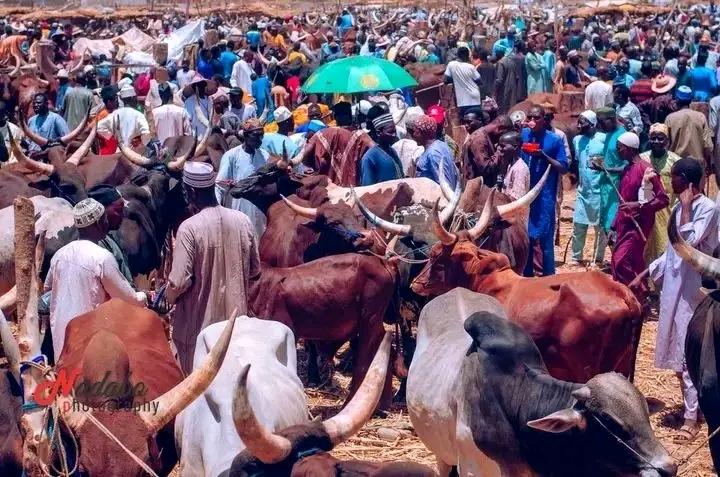
As Muslims prepare for the Eid-el-Kabir celebration, popularly known as Sallah, cattle dealers are expressing deep concern over poor patronage in major livestock markets despite the festive season drawing near.
Traditionally, the period before Sallah witnesses massive sales of rams, cows and camels as Muslim faithful purchase animals for sacrifice, which referred to as “Layya.” However, this year’s market atmosphere appears unusually quiet as many residents struggle with the harsh economic realities facing the country.
The Daily Reality (TDR) gathered that several livestock markets revealed that while buyers troop to inspect animals and negotiate prices, only a few eventually make purchases. Traders say the situation is affecting their businesses seriously, leaving many uncertain about recovering the huge capital invested in the animals.
According to some sellers, the high cost of transportation, feeding and insecurity along supply routes has forced prices upward, making it difficult for average Nigerians to afford livestock for the religious exercise.
A cattle dealer, Musa Ibrahim, lamented that sales this season are far below expectations compared to previous years.
“In the past, people would buy animals weeks before Sallah, but now many only come to ask for prices and leave because they cannot afford them,” he said.
Mallam Ibrahim Indabo, a cattle dealer at Wudil Market, told TDR that most buyers now prefer medium-sized cows priced between N500,000 and N700,000, rather than the bigger ones valued at about N2.5 million.
He explained that the economic hardship has forced many customers to settle for affordable options.
“I sold more than 10 medium-sized cows during the last Wudil market day, leaving me mainly with the bigger ones,” he said.
At Maigatari Market, TDR observed that livestock prices remain relatively stable and affordable contrary to public expectations.
Speaking with TDR, Mallam Inuwa Yahaya of Maigatari said many people wrongly believe the prices are beyond reach.
“Some people think the prices are too high and unaffordable, but the slow sales and lack of money in the hands of the people have actually helped stabilize prices,” he stated.
Similarly, at Ungogo Market in Kano, Alhaji Chika confirmed to TDR that business activities have been moving slowly.
According to him, traders are still optimistic that patronage will improve significantly as Sallah draws closer.
“The market is moving slowly for now, but we expect better sales and more customers when Sallah is just two days away,” he said.
Some prospective buyers who spoke also admitted that they are finding it difficult to balance household expenses with the desire to fulfill the religious obligation.
A civil servant, Abdullahi Sani, noted that many families are now considering contributing money jointly to buy a single animal due to the high prices.
Experts say the increasing cost of commodities, fuel prices and general inflation continue to reduce disposable income among citizens, forcing many households to prioritize basic needs over festive spending.
Despite the slow sales, traders remain hopeful that patronage may improve as Sallah draws closer, as many buyers traditionally wait until the final days before making purchases.
Nevertheless, the mood across several livestock markets remains mixed, with sellers anxiously watching and hoping for better turnout in the days ahead.
People Want to Buy, But There’s No Money – Cattle Sellers Lament Low Sallah Sales

ByAdmin
24 May 2026