



Russian Strike Hits Kyiv Academy; One Killed, Three Hurt
By Abdullahi Mukhtar Algasgaini
A Russian strike hit the National Academy of Sciences building in central Kyiv on Sept. 28, triggering a fire and a major emergency response, Ukrainian authorities said.
One woman was killed and three people were injured in the attack, according to Kyiv officials. Emergency crews continued rescue and firefighting operations at the site.
Russian strikes also targeted other locations in Kyiv, including a medical facility and other civilian infrastructure, officials said.
Ukrainian President Volodymyr Zelenskyy condemned the attacks and said Russia must face stronger international pressure and consequences. He called on Europe, the United States and other partners to strengthen support for Ukraine and help protect civilian lives.

Police Arrest Woman Over Alleged Killing of Co-Wife in Bauchi
By Uzair Adam
The Bauchi State Police Command has arrested a 33-year-old housewife over the alleged killing of her co-wife during a domestic incident in Bauchi metropolis.
The command’s spokesperson, SP Nafiu Habib, disclosed this in a statement issued on Monday in Bauchi.
According to Habib, the suspect, whose name was withheld, was arrested on September 27 following the alleged killing at Tafawa Balewa Housing Estate in the state capital.
He said the Police C-Division, Bauchi, received credible information at about 4:05 p.m. that a domestic incident had occurred between two wives living in the same household.
“Preliminary investigation revealed that the 33-year-old suspect, who is the second wife, allegedly, acting under hallucinations, struck the first wife with a pestle on the forehead, and the victim fell unconscious,” Habib said.
He added that detectives attached to the division immediately mobilised to the scene after receiving the report.
Habib said the victim was rushed to the Specialist Hospital, Bauchi, where a medical doctor certified her dead.
He said the victim’s remains had been deposited at the hospital mortuary for autopsy, while the police recovered the pestle allegedly used in the incident.
The spokesperson said the suspect was being investigated for alleged culpable homicide.
He quoted the Commissioner of Police, Sani-Omolori Aliyu, as directing that the case be transferred to the State Criminal Investigation Department for discreet investigation and prosecution.
The commissioner condoled with the family of the deceased and warned against domestic violence.
Aliyu also advised families to seek timely medical and psychosocial support for members experiencing mental health challenges.
Africa Academy Graduates 3,500 Students, Awards Umrah, $100 to Top Graduates
By Uzair Adam
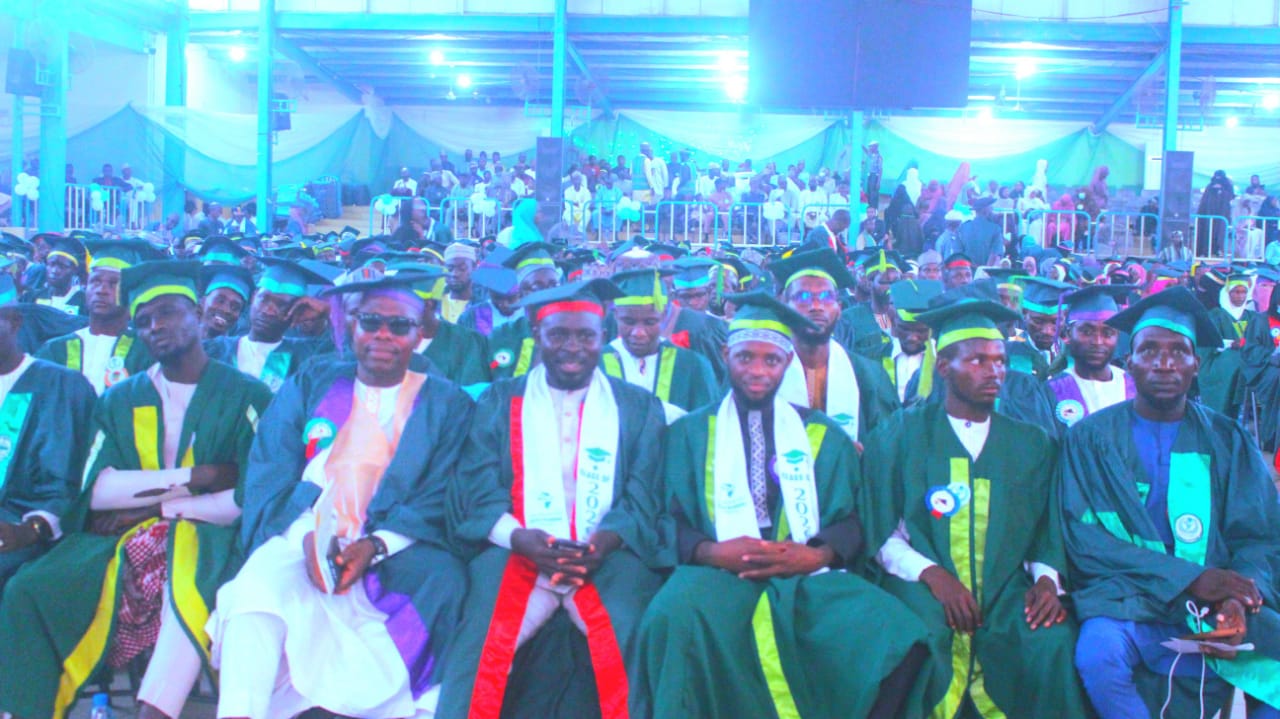
Africa Academy, an Islamic online learning platform under Africa Media Network, on Saturday graduated 3,500 students who completed its free Diploma programme in Islamic studies at a ceremony held at Bayero University Kano (BUK).
The graduation marked the academy’s second convocation, established to make Islamic education accessible to Muslims regardless of location, occupation, or level of formal education.
Speaking at the ceremony, the Managing Director of Africa Media Network, Dr Habib Tijjani Tahir, said the academy was created to give people the opportunity to acquire Islamic knowledge despite their busy schedules.
He explained that the initiative was driven by the need to help Muslims understand how to worship Allah correctly, stressing that people were created to worship Him.
According to him, the academy provides free online lessons that enable students to learn at their convenience from anywhere.
Tahir said the curriculum covers various areas of Islamic studies, including Fiqh, Seerah, Tafsir and Hadith, among others.
He said the academy also encourages academic excellence by rewarding outstanding students.
Tahir said top-performing students would receive incentives, including Umrah packages and cash rewards, while other outstanding students would also receive financial rewards.
He further announced that the academy would sponsor the marriages of four students by covering major wedding expenses, including dowry, wedding trousseau, rent and other associated costs.
“We want to encourage our students not only to acquire knowledge but also to remain committed to their studies and strive for excellence,” Tahir said.
He said the academy initially offered short one-week Islamic courses with certificates but later introduced its free Diploma programme, known as “Tsangaya,” following increasing demand from learners.
Tahir noted that 2,200 students graduated in the previous edition, while the number rose to 3,500 this year.
He said the academy was targeting between 50,000 and 60,000 graduates in subsequent years, or even more.
According to him, any Muslim who can read and write and meets the required level can enrol in the programme without presenting a previous academic certificate.
He added that the initiative therefore gives students of Qur’anic and Tsangaya schools, as well as people with conventional academic backgrounds, an opportunity to acquire further Islamic knowledge.
Representing the teachers, Prof Abdulqadir Ismail congratulated the graduates and prayed that Allah would make the knowledge they acquired beneficial to them and society.
He urged the graduates to put their knowledge into practice and use it to benefit others.
“Knowledge becomes more valuable when it is practised and used to benefit other people,” Prof Ismail said.
He also appealed to the graduates to continue praying for the academy as it works towards introducing online degree programmes similar to those offered by universities around the world.
Also speaking, Sheikh Abubakar Abdussalam Baban Gwale said opportunities to acquire Islamic knowledge through platforms such as Africa Academy were not readily available in the past.
He recalled that even people with the financial means sometimes struggled to find accessible opportunities for Islamic education.
“Today, Allah has made it easy for people to acquire this knowledge,” Baban Gwale said, urging parents to encourage their children to participate in such programmes.
He added that even people with conventional academic qualifications could benefit from the opportunity, describing access to Islamic education as a blessing.
Among the graduates, Fatima Usman, 40, emerged as the best-performing student.
A mother of nine, she said she learnt about the academy through a television announcement and continued following its activities until registration opened.
“I was determined to study despite my responsibilities as a mother of nine children,” she said, adding that she remained committed to her studies throughout the programme.
Muhammad Saminu, who came second, attributed his success to consistency and effective use of the academy’s learning materials.
He said he listened to audio lessons while travelling or working and studied the PDF materials more thoroughly whenever he had time to sit down and concentrate.
Amira Nuhu Umar, who emerged third, described her success as a source of immense joy, saying the lessons had significantly influenced her life.
“My joy cannot be described. The lessons have had a great impact on my life,” she said.
She thanked her parents and teachers for their support and dedication throughout her studies.

Suspected Rabid Dog Bites 18 in Kano Community as NFSS Deploys Personnel
By Uzair Adam
The Nigerian Forest Security Service (NFSS), Kano State Command, has deployed personnel to Garko Local Government Area to track and contain dogs suspected of carrying rabies after one dog reportedly attacked and bit 18 people in the area.
The State Commander, Abdullahi Al’ameen, disclosed this in a statement signed by the command’s Public Relations Officer, Usman Abdullahi-Umar, on Sunday in Kano.
Al’ameen said the command received a distress report at about 2 p.m. that a dog suspected to be rabid had attacked residents in Garko town.
According to him, the dog initially attacked and bit 11 people in Garko town before moving into neighbouring communities, where it attacked seven additional residents.
“The dog had so far bitten 11 persons in Garko town before moving to neighbouring communities, including Raba, Kadage, Gurjiya and Dausai,” he said.
The commander added that the command had received another report indicating that two more dogs were suspected to have contracted rabies in the area.
He said personnel from the NFSS Garko Division, led by the Divisional Forest Officer, Auwalu Muhammad, had been deployed to the affected communities to track and contain the suspected rabid dogs.
Al’ameen urged residents of Garko and neighbouring communities to remain vigilant and promptly report sightings of stray or suspected rabid dogs to the nearest NFSS office or other security agencies.
He also advised anyone bitten by a suspected rabid dog to seek immediate medical attention, stressing the importance of prompt treatment.
Al’ameen assured residents that the NFSS would continue to monitor the situation and take necessary measures to prevent further attacks.

Expert Alleges Plan to Sell NNPCL Majority Stake to Private Investors After 2027 Election
By Abdullahi Mukhtar Algasgaini
Energy policy expert Izielen Agbon claims the Tinubu government intends to reduce federal ownership of the Nigerian National Petroleum Company Limited to a minority 35% stake shortly after the 2027 general election, warning it would effectively privatise the nation’s oil resources.
Speaking at a webinar organised by the Alliance on Surviving COVID-19 and Beyond (ASCAB) and chaired by human rights lawyer Femi Falana (SAN), Agbon said the alleged plan dates back to 2023 and would see the government’s controlling stake in NNPCL transferred to private investors once electoral pressure has passed.
“The Tinubu government is planning to sell the shares of NNPCL immediately after the election,” Agbon said. “The plan they made in 2023 was that after the election, before 2030, they are going to sell the shares of NNPCL to private investors… so that the government will only own 35% of the shares.”
He described the intended model as one already applied to Nigeria LNG (NLNG), where international oil companies hold a 51% majority stake. “They call it the energy model,” he said. “They claim that the Nigerian liquefied gas model is sufficient because the government owns less than 50%.”
Agbon outlined NNPCL’s current ownership structure under the Petroleum Industry Act (PIA), with 50% held by the Ministry of Finance Incorporated and 50% by the Ministry of Petroleum Resources, a portfolio held by the President. He said the company is presently “100% owned by the Nigerian government.”
He warned that selling shares to private hands would amount to privatising the nation’s resources, given NNPCL’s statutory role in managing government oil revenues. “If you control NNPCL and the law says NNPCL is the one in charge of all our government resources, then you actually have access to our government resources,” he said. “That will be very, very terrible for us. Because we will have no government-owned oil-producing company, no government-owned refinery… Anything belonging to NNPCL will be privatized.”
Agbon alleged that opacity has shielded similar arrangements from scrutiny, pointing to NLNG as a precedent. “Nobody hears about all this corruption with our LNG because it’s run by private sector business,” he said.
Falana, responding to the presentation, said the alleged plan was not new but should be elevated as a campaign issue ahead of the 2027 election. He also disputed aspects of the NLNG comparison, stating that Nigeria owns 49% of NLNG shares while IOCs hold 51%.
He added that while 95% of NLNG’s staff are Nigerians, dividend accounting has remained contentious. “The federal government, or rather the NNPC, collects the dividends on behalf of Nigeria. It has always stolen. That money is not paid into the federal account,” Falana alleged, citing NEITI’s repeated position that the funds ought to be paid into the federation account.
Falana said NLNG has made about $49 billion in dividends, with only about $22 billion reaching the federal government.
Agbon called for the matter to be forced onto candidates ahead of the 2027 election, alongside demands for lower petrol prices and a higher minimum wage. “There is a need for us to stop and use this opportunity, not only to fight to sell lower petrol prices, but to fight them to increase minimum wage, and to fight them to say you cannot sell the shares of NNPCL,” he said.
He described the company’s assets as the inheritance of the Nigerian people. “It’s not for sale. People are just elected to be leaders for four years, at maximum eight years. You cannot sell the whole house because you’ve been elected to serve the people for eight years.”

Adamawa Police Arrest Teacher Over Alleged Rape Of 10-Year-Old
By Uzair Adam
Police in Adamawa State have arrested a 54-year-old primary school teacher, Garba Suleiman, over the alleged defilement of a 10-year-old girl.
The Police Public Relations Officer (PPRO) in the state, SP Suleiman Nguroje, disclosed this while parading the suspect.
Nguroje said the arrest followed a complaint lodged by the victim’s family at the Divisional Police Headquarters in Yola South Local Government Area.
According to him, operatives of the command acted swiftly after receiving the complaint and arrested the suspect.
He said preliminary investigations indicated that Suleiman allegedly lured the minor and had unlawful carnal knowledge of her.
Nguroje added that the victim had been taken to a hospital for medical examination.
He further disclosed that the Commissioner of Police, CP Kabir Umar Hassan, had ordered the transfer of the case to the State Criminal Investigation Department (SCID), Yola, for discreet investigation and prosecution.
“The CP condemns in strong terms all forms of Gender-Based Violence and assures the public that justice will be served,” Nguroje stated.
He also urged parents and guardians to remain vigilant and promptly report any suspicious person or activity to the police.
Criticism: The Beauty of Democracy
By Isyaka Laminu Badamasi
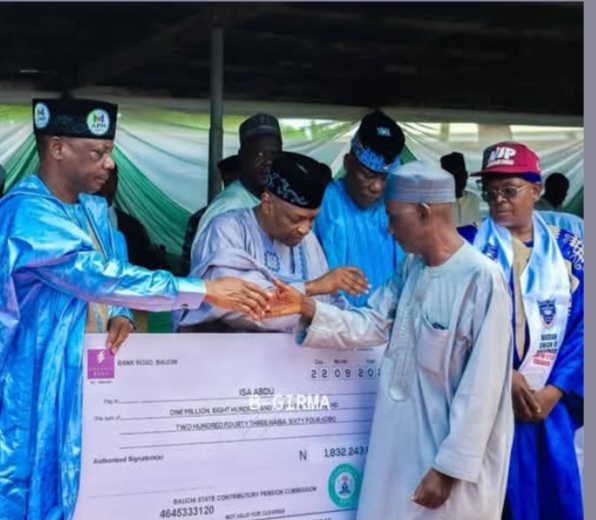
As the gratuity payments commence, as approved and directed by His Excellency, Governor Bala Abdulkadir Mohammed, some critics of his administration find it difficult to appreciate what they have long asked the governor to do. This is especially true since the beneficiaries have spent their lives serving the state and are in dire need of their hard-earned entitlements.
As much as criticism remains the beauty of democracy, they should be happy that their loud voices were heard, the governor acted, and the retired civil servants will now get paid. Instead, they have resorted to cheap blackmail, arguing that the payment is delayed and that the governor deserves no applause because it’s long overdue, even though he inherited these huge burdens from previous administrations dating back to 2013.
While they have an inalienable right to hold an opinion and express it, anyone who does something worthy of applause deserves commendation and a standing ovation. They should also raise other important aspects of governance that they feel require His Excellency’s attention. By doing so, they will turn into partners in progress rather than mere critics.
This is how criticism works in sane democracies: critics and opposition figures matter, playing a key role in providing checks and balances so government stays on track while earning applause from its supporters. His Excellency’s response to the voices of wisdom suggests our democracy has matured and begun embracing constructive feedback, as shown by the payment of gratuities.
While congratulating our retired civil servants, I also commend His Excellency for making this important day a reality.
Isyaka Laminu Badamasi writes from no 555 Ajiya Adamu Road, Bauchi, Bauchi State.
Nigerian University Lecturers and the Self-Normalisation of Poverty
By Prof. Abdelghaffar Amoka Abdelmalik
I was invited to conduct an external examination for three postgraduate students (1 PhD and 2 MSc) at an institution about 87 kilometres from my university. The three theses were sent days before the scheduled examination for me to read page by page, contribute to improving the work, prepare questions, and then schedule a date to travel to examine the students.
I did not drive there.
I had an instinct that whatever mileage they would pay would not cover my fuel costs. I wasn’t prepared to spend my own money to finance an examination for which I had already done several days of intellectual work. You don’t want to know the honorarium for the several days of intellectual work.
So I took a bike to the park, boarded public transport, and travelled to the institution. To make the journey comfortable, I paid for two seats. The two seats cost ₦5,000. The examination lasted 6 hours without a break because it had to be concluded that day. At the end of the day, they brought me a claim to sign, and the mileage was ₦40 per kilometre. They quoted the distance to be 74 kilometres. That meant I was entitled to ₦2,960 for travelling to an institution approximately 87 kilometres away. That’s the worth we placed on ourselves. I laughed very hard, not because it was funny but because it was absurd and ridiculous.
Then, I asked them: So academics sat down and agreed that the cost of travelling one kilometre for a professor conducting a postgraduate external examination is ₦40? That was the moment I decided that this would be my first and last time honouring a postgraduate examination invitation from that institution.
I was lamenting this experience, and what I see as the self-normalisation of poverty in our universities, to a colleague. His response shocked me. He told me that, as a postgraduate coordinator, he does receive phone calls from senior colleagues asking to be considered for external examinations. They were not invited. They were calling to ask for the opportunity. That is when I began to think more deeply about self-normalisation of poverty.
Self-normalisation of poverty is the process by which people gradually begin to accept poverty, deprivation, and poor living conditions as normal, inevitable, or even acceptable. Poverty initially produces frustration. Prolonged poverty produces adaptation. Prolonged adaptation produces acceptance. And acceptance has eventually produced defence of the very conditions that created the poverty.
The danger is not merely that lecturers become poor. The greater danger is that poverty becomes normalised by the very people who should be challenging the conditions that produced it.
Meanwhile, I got an interesting response to my last piece from a professor who is proudly saving ₦500,000 per month. I must applaud the professor for sustaining his family and all his needs with an amount equivalent to the 2025 salary that ASUU thought was not enough for him. He was able to save from his pre-CATA salary, add it to the new CATA and professorial allowance, and save ₦500k every month. Seriously, saving ₦500,000 every month in Nigeria today is not a small achievement.
Within 2 years and with consistency, the professor will be able to save about ₦12 million, ignoring interest and unforeseen circumstances. But the reality is that the current value of that 10 million is about the same as the value of ₦700,000 that an Assistant Lecturer saved within 2 years from 2005 to 2007. A 15-year-old car that cost between ₦700 and ₦1m in 2007 costs about ₦10m now.
So what exactly are we celebrating? The fact that a professor said he can now save ₦500,000 every month?
Or the fact that it takes a professor two years of disciplined saving to accumulate money whose purchasing power may resemble what a much more junior academic could accumulate much earlier?
For a lecturer celebrating a professor achieving in 2026, what an Assistant Lecturer could achieve in 2007 is a testament to the self-normalisation of poverty.
Let’s remember where we are coming from.
When I was employed in 2005, an Assistant Lecturer’s net salary was about ₦37,000. At the exchange rate of the time, that was roughly $280. In 2006, it rose to about ₦57,000, approximately $445. By 2009, during the Yar’Adua administration, the net salary of AL increased to around ₦110,000, approximately $738.
By 2022, ₦110,000 was worth only about $246 at the prevailing exchange rate. After subsidy removal in 2023 and naira devaluation, ₦110,000 dropped to as low as $73. By 2026, an Assistant Lecturer’s salary rose to roughly ₦250,000. That’s about $180. That is what we are celebrating.
What happened to Nigerian professors?
In March 2012, I purchased a London-Abuja British Airways round-trip ticket for £552.09 (₦138,574.59). In 2012, a professor’s salary was about ₦460,000 (£1,832.7). That means that by May 2015, a professor at the bar could afford a week’s holiday in London with his one-month salary. The ticket cost less than one third of the salary, and the remainder would comfortably cover the living expenses.
From comfort to survival.
Since 2015, after Buhari came to power, the comfort that Obasanjo, Yar’Adua and Jonathan gave to university lecturers was taken away. Buhari’s 2022 strangulation of Academics is still very fresh. Then, Tinubu crushed that comfort in May 2023 (₦416,000, worth 277 USD for a professor at the bar) by withdrawing fuel subsidies and devaluing the naira, before a raise in 2026 to about ₦1m (750 USD) for a professor. But the value is still less than what Buhari left it at: ₦416,000 (930 USD) for a professor at the bar.
The Stalin Chicken.
This is where the Joseph Stalin-Chicken metaphor becomes powerful. A chicken is being plucked. It is painful. It is losing its feathers. It has nowhere to go. Then the same hand that has been plucking its feathers throws a few grains of food in front of it. The chicken follows the hand.
Not because the hand has stopped hurting it. But because survival has become more important than resistance.
That is what poverty can do to human beings. It can make people grateful for crumbs from the very system whose structure has impoverished them. And I fear that some academics have become so desperate for survival that they follow the very hand that has caused their suffering, simply because that hand is now offering them crumbs.
The application of the Stalin Chicken model, especially on academics, is a brilliant one from PBAT.
I will excuse those relatively young academics who do not know where we are coming from. They cannot compare what they have with what existed before they entered the system.
Of course, we are grateful to God for our current situations. We should also be grateful for the improvements that have occurred. But gratitude should not kill critical thinking. Real academics are not supposed to become professional worshippers of crumbs. We should interrogate systems. We should ask questions. We should challenge policies. We should understand the difference between survival and progress.
However, as more senior academics mobilise for endorsement, don’t go in with self-normalised poverty in academia. Ensure that you negotiate for an endorsement package that can at least change your car. Don’t go for crumbs.
Best wishes!
Nigeria, UK Customs Move To Finalise Trade Cooperation Agreement
By Sabiu Abdullahi
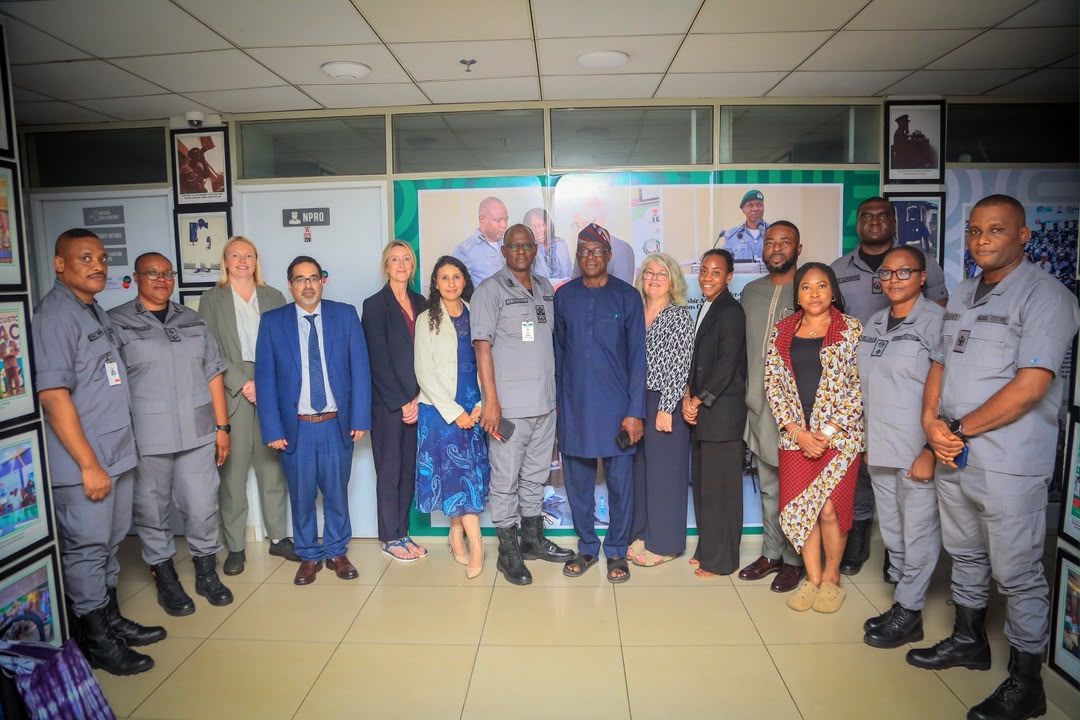
The Nigeria Customs Service (NCS) and the United Kingdom’s His Majesty’s Revenue and Customs (HMRC) are moving towards concluding a Customs Mutual Administrative Assistance Agreement (CMAA) aimed at strengthening cooperation on trade, compliance and information sharing.
The proposed agreement, which has been under negotiation for about six months, is expected to establish a formal framework for the exchange of customs information and intelligence between both countries.
It is also expected to strengthen compliance measures and support the facilitation of legitimate trade between Nigeria and the UK.
The development followed a two-day high-level meeting between officials of the NCS and HMRC at the Customs headquarters in Maitama, Abuja, from September 25 to 26, 2026.
Representing the Comptroller-General of Customs, Adewale Adeniyi, at the meeting, Assistant Comptroller-General Nafi’u Isyaku, who oversees the Strategic, Research and Policy Department, said the physical engagement was organised to resolve outstanding issues before the agreement is signed.
Isyaku said negotiations had been conducted virtually for six months but both administrations considered a physical meeting necessary to move the process towards completion.
He said the agreement was expected to be signed in the first week of December during the World Customs Organisation Policy Commission meeting, subject to the completion of the remaining processes.
Senior Policy Adviser at HMRC, Syed Moinuddin, said the meeting provided an opportunity for both customs administrations to address areas of mutual interest and develop a framework for stronger cooperation within the international customs community.
Louisa Bentley, Head of Bilateral Relations and Agreements at HMRC, also described the negotiations as successful and said the two sides were close to finalising the agreement.
According to Bentley, the proposed pact would enhance compliance and information sharing while creating better conditions for trade facilitation and greater participation by Nigeria and the UK in global trade opportunities.
The HMRC delegation also inspected key facilities at the NCS headquarters, including the Trade Modernisation Project Limited office, the Pre-Arrival Assessment Report office and the Nigeria Customs Broadcasting Network station.
Bentley commended the NCS for its ongoing reforms, particularly its deployment of technology and investment in personnel development.
She said the initiatives demonstrated progress towards more modern and efficient customs operations.
The engagement concluded with a tour of other departments and operational units, which gave the British delegation an opportunity to observe ongoing reforms and technological innovations within the Nigeria Customs Service.
Kano Govt Allocates Land to Over 1,000 Party Marshals, Support Groups
By Uzair Adam
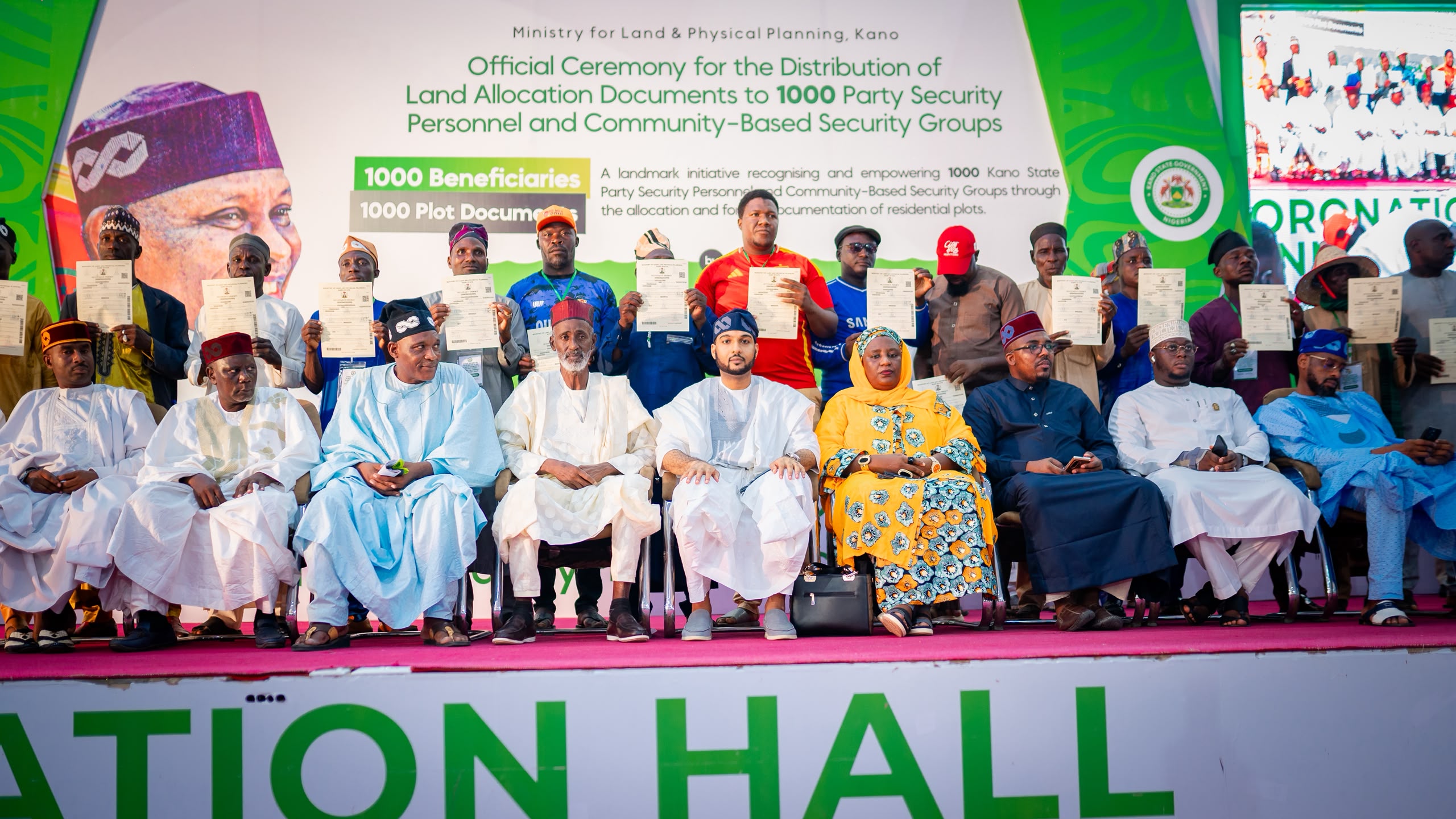
The Kano State Government has allocated plots of land to more than 1,000 party marshals, volunteers and members of community-based support groups as part of efforts to empower young people and provide them with assets to build their future.
The Daily Reality reports that the land allocation ceremony took place on Saturday at the Government House, Kano, with beneficiaries, government officials, party supporters and other stakeholders in attendance.
Speaking at the event, the Kano State Governor, Alhaji Abba Kabir Yusuf, said the beneficiaries had contributed their time, energy and efforts to their communities and the development of the state, describing the allocation as an opportunity for them to build more secure futures.
The governor, who was represented at the occasion by the Secretary to the State Government, Umar Farouk, said the government’s decision to allocate the land was based on the belief that young people should be given opportunities to own assets and become economically productive.
“Today, we are giving you land because land can change the life of a person. It can become a home. It can become a business. It can become security for a family. And with time, it can become wealth that you leave for your children,” he said.
Governor Yusuf urged the beneficiaries to protect and develop their plots, stressing that the allocation should not be regarded merely as a piece of paper but as an opportunity to build something meaningful.
He cautioned them against selling the land, urging them to use it to establish homes, businesses or other productive ventures that could benefit their families.
“Do not waste this opportunity. Do not sell your future cheaply. Make something out of what the Government has given you,” the governor said.
The governor also urged youths in the state to channel their energy towards productive activities and shun violence and unnecessary conflicts.
He called on the beneficiaries to help promote government programmes in their communities, calm tensions and discourage young people from engaging in activities capable of undermining their future.
“Where there is misunderstanding, help people understand. Where there is tension, help calm it down. Where young people are being led in the wrong direction, call them back,” he said.
The governor said the land allocation was part of his administration’s broader development agenda, which includes investments in education, healthcare, roads, water supply, agriculture, power, housing, urban development and youth empowerment.
He said the government would continue to create opportunities for young people, noting that empowerment should go beyond providing temporary financial assistance.
“We want young people to have something to protect, something to develop and something they can proudly call their own,” Yusuf said.
He added that the ultimate objective was to ensure that the beneficiaries turned the allocations into homes, businesses and other productive assets that would contribute to the development of their communities.
Also speaking at the event, the Commissioner for Land and Physical Planning, Abduljabbar Muhammad Umar, said the exercise was part of the state government’s policy of using land as an instrument of empowerment, housing development and economic inclusion.
Umar said the administration had previously allocated land to various categories of beneficiaries, including political appointees, grassroots supporters, polling agents and youths drawn from the 44 local government areas of the state.
He described the latest allocation as a continuation of the government’s effort to give citizens tangible assets around which they could plan their future and improve the economic security of their families.
The commissioner said the economic impact of the allocations would extend beyond the beneficiaries because the development of the plots would create jobs for professionals, artisans and businesses involved in the construction sector.
“When land is allocated and development begins, an entire chain of economic activity follows. Surveyors are engaged. Architects and draftsmen get work. Masons, carpenters, electricians, plumbers, welders and labourers are employed,” he said.
He added that construction activities would also increase demand for building materials and transportation services while creating opportunities for businesses around the new layouts.
Umar said the government was committed to developing properly planned settlements with roads, drainage systems, schools, health facilities, markets, mosques, open spaces and other basic amenities.
According to him, the aim was to ensure that new settlements were properly planned and capable of supporting economic activities rather than becoming future challenges due to inadequate infrastructure.
The commissioner urged the beneficiaries to make productive use of the land and avoid disposing of the allocations carelessly.
He said the Ministry of Land and Physical Planning would continue to support the administration’s efforts to expand land ownership, housing development and planned urban growth across Kano State.
Governor Yusuf said the success of the programme would ultimately be measured not by the number of plots allocated but by what the beneficiaries were able to achieve with them.
“When the history of this programme is written, I do not want people to remember only that we allocated more than one thousand plots. I want them to say that from these allocations came new homes, new businesses, stronger families and more peaceful communities,” he said.