Opinion

Gov. Kaura’s Defection to APM: A Political Suicide or a Stitch in Time?

By Usman Muhammad Salihu

In politics, timing is everything; at the same time, timing alone is never enough.

The defection of Governor Bala Abdulkadir Mohammed (Kauran Bauchi) to the Allied Peoples Movement (APM) has continued to generate debate. With key loyalists reportedly moving with him, what initially appeared as a risky political leap is now being interpreted by some as a calculated repositioning.

But beneath the surface of strategy lies a more complex electoral reality, one that could ultimately decide whether this move succeeds or collapses. At the heart of the argument is the voter.

While Bauchi State has seen moments when lesser-known parties gained traction, particularly at the legislative level, where individuals have won seats in the State House of Assembly outside dominant party structures, statewide or nationwide politics operate on a far wider and more demanding scale.

The dynamics are different. The visibility is broader. The stakes are higher. And most importantly, party identity still carries significant weight.

At the level of electoral reality, however, the risks cannot be dismissed. Nigerian elections—especially at the governorship level—are still heavily influenced by party identity. Voters, particularly in rural strongholds, often associate credibility with established platforms rather than emerging ones.

In that sense, defecting to a less dominant structure, such as the Allied Peoples Movement, introduces an immediate disadvantage: the loss of automatic party loyalty.

Campaigning under such conditions creates a double burden. It is no longer just about selling a candidate—it is about introducing and legitimising a political platform simultaneously. That dual responsibility can stretch time, resources, and political influence thin, especially in a competitive race involving the All Progressives Congress (APC) and the emerging coalition around the African Democratic Congress (ADC).

From this view, the move carries a real risk of political isolation if voter perception does not align quickly enough with elite-level strategy.

Yet, it would be premature to interpret the move purely as risk. Nigerian political history also rewards early structural repositioning. Movements that eventually became influential often began as unpopular or misunderstood alignments.

In that context, Gov. Kaura’s move may be less about immediate electoral gain and more about long-term political architecture—building a platform where loyalty is personal, structure is controlled, and direction is defined internally rather than inherited from party hierarchies.

There is also a strategic possibility that this move is an attempt to build or shape a movement similar in political culture, if not in scale, to the Kwankwasiyya associated with Rabiu Musa Kwankwaso, a structure rooted in identity, loyalty, and grassroots emotional connection rather than party stability alone.

If sustained, such a model can evolve into a political identity strong enough to survive beyond a single election cycle. But like all movements, it requires time, consistency, and deep voter penetration.

If the electorate does not understand or accept the new platform in time, the strategy weakens. If the structure grows slowly but steadily, the strategy strengthens. Either outcome is possible.

Because while elite political calculations move fast, voter acceptance does not. And in elections, voters, not strategy rooms, ultimately decide outcomes. So, is Gov. Kaura’s defection a political suicide or a stitch in time?

From one angle, it introduces clear electoral risks that cannot be ignored. From another, it suggests a longer-term ambition to build something more controlled and identity-driven. Both interpretations hold weight.

So whether this move is a masterstroke or a misstep remains uncertain. The calculations may be clear. The intentions may be bold. But in politics, certainty is a luxury.

For now, all eyes remain on the unfolding reality… because, in the end, time will tell.

Usman Muhammad Salihu writes from Jos, Nigeria, via muhammadu5363@gmail.com.

World Press Freedom Day 2026: Ink, Blood and the Burden of Truth

By Lamara Garba

There is something sacred about ink when it refuses to lie.

There is something stubborn about truth when it insists on being heard, even in the presence of guns, prisons, and power.

And there is something profoundly human about the journalist, who stands between silence and society, choosing again and again to speak.

Perhaps we often forget how this day itself came to be. It was the United Nations, at its 1993 General Assembly, that proclaimed every 3rd of May as World Press Freedom Day, a date set aside not for ceremony alone, but for reflection, resistance, and renewal of commitment to the ideals of a free press.

This year’s theme, “Shaping a Future at Peace,” is not a slogan to be admired from a distance. It is a challenge. It is a responsibility. It is a warning. It reminds the world that journalism, free expression, and access to information are not just democratic ornaments but powerful instruments for peace, security, sustainable development, and economic recovery. At a time when global press freedom is increasingly under pressure, the theme speaks directly to a fragile world struggling to hold itself together.

Peace is not built in silence.

Peace is built in truth.

On this year’s World Press Freedom Day, the words of the European Union arrive not as distant diplomacy but as a moral echo of a world in distress: democracy cannot exist without a free press. That is not poetry. That is not theory. That is survival.

A nation without a free press is not a nation at all. It is a carefully managed illusion.

The European Union reminds us, with the clarity of law and the urgency of conscience, that independent media is not a luxury. It is not decoration. It is the spine of democracy. Freedom of expression is not a polite suggestion; it is a fundamental human right. And when that right is bruised, beaten, or buried, the entire body of society limps.

Yet, across continents and conflict zones, the journalist has become both witness and victim.

In the rubble and fire of Gaza, no fewer than over 100 journalists have been killed since the escalation of war, making it one of the deadliest places on earth for the press in modern history. These were not soldiers. They carried no weapons. Their only armour was a camera, a notebook, and courage. Still, they fell.

In the long and grinding war in Ukraine, more than 15 journalists have lost their lives, caught in the crossfire of a conflict that has redrawn maps and erased lives. Each death is a page torn from the book of truth, each silence a victory for darkness.

And beyond the bombs and bullets, in quieter but no less dangerous ways, journalists across the world face abuse, harassment, detention, and exile. Hundreds, well over 300 annually, are subjected to intimidation, a chilling reminder that repression does not always wear the uniform of war. Sometimes it wears a suit, signs a law, or hides behind a keyboard.

The UNESCO has repeatedly warned that the world is witnessing an alarming rise in attacks on journalists, especially women, who endure not only professional risks but targeted gender-based violence and online abuse designed to silence them.

Silence, after all, is the ultimate goal.

And yet, silence is what the journalist refuses.

In Nigeria, the story is painfully familiar.

We recall the troubling case of Agba Jalingo, a journalist who was arrested and detained for months over his reporting on alleged corruption. His ordeal was not just about one man. It was about a system uneasy with scrutiny. It was about the price of asking questions in a space where answers are often guarded like state secrets.

But even within this difficult landscape, voices of reform continue to rise.

The President of the Nigeria Union of Journalists, Alhassan Yahaya Abdullahi, has re-echoed the urgent need for a truly free press in Nigeria, insisting that democracy in the country will remain fragile without journalists who can operate without fear. He has also drawn attention to a quieter crisis within the profession itself: the poor working conditions faced by many Nigerian journalists.

From irregular salaries to the absence of adequate insurance and welfare packages, the reality for many practitioners is harsh and discouraging. Abdullahi’s call is clear and necessary that the dignity of the journalist must be restored, that media owners and stakeholders must rise to their responsibility, and that no society can expect courage from a press that is neglected and unprotected.

Because a hungry journalist is vulnerable.

And a vulnerable journalist is easily silenced.

The European Union’s statement goes further, pointing to a dangerous trend: the rise of Strategic Lawsuits Against Public Participation, legal weapons used not to seek justice, but to intimidate journalists into silence. Add to that the growing flood of disinformation, propaganda disguised as news, and the deliberate erosion of trust in credible media, and one begins to see the battlefield has expanded.

Truth itself is under siege.

And in this siege, the journalist stands as both witness and shield.

There is a philosophical burden here, one that goes beyond headlines and deadlines. The journalist is not merely a recorder of events but a custodian of memory. When societies forget, it is often because someone was prevented from writing. When injustice thrives, it is often because someone was stopped from reporting.

So, to attack a journalist is not just to harm an individual. It is to wound history. It is to distort reality. It is to gamble with the future.

The European Union, in reaffirming its commitment to defending free and independent journalism, aligns itself with institutions like the Council of Europe and the OSCE, recognizing that this fight is not regional but universal.

Because truth does not belong to Europe, or Africa, or Asia.

Truth belongs to humanity.

And here lies the deeper meaning of this year’s theme: a future at peace is not negotiated in secrecy, nor manufactured through propaganda. It is shaped in the open, through credible information, fearless reporting, and a society willing to confront its own realities.

Without a free press, there is no informed citizenry.

Without informed citizens, there is no accountability.

And without accountability, peace itself becomes an illusion.

So today, we do not merely celebrate the press.

We remember its martyrs.

We honour those who wrote until their last breath.

We stand with those who continue to report under threat.

And we ask ourselves, quietly but urgently: what kind of world do we want to live in?

One where truth is negotiated, edited, and suppressed?

Or one where it is pursued, protected, and proclaimed?

The answer lies not just in the newsroom, but in the conscience of every society.

For as long as a single journalist dares to write freely, hope remains alive.

And as long as hope remains alive, democracy still has a fighting chance.

Lamara Garba, a veteran journalist, is Director of Public Affairs at Bayero University, Kano.

Mitigating the Scourge of Flooding in Nigeria

By Faith Mamman

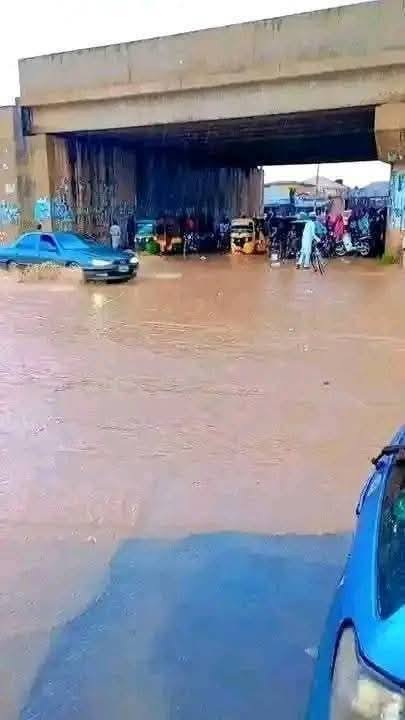
Flooding is one of the most pressing environmental challenges facing Nigeria today. The devastating effects of flooding have been felt across the country, with many communities being displaced, homes destroyed, and lives lost. Despite the severity of the problem, it appears that the Nigerian government is not taking the necessary steps to mitigate the effects of flooding.

The frequency and severity of flooding in Nigeria have increased significantly over the years. The country has experienced some of the worst flooding in its history, with the 2012 flooding being a stark reminder of the devastating effects of flooding. The flooding, which affected over 30 states and displaced over 2 million people, is still fresh in the minds of many Nigerians. Similarly, the 2018 flooding, which affected over 20 states and resulted in the loss of many lives, is another stark reminder of the devastating effects of flooding in Nigeria.

Despite the severity of the problem, the Nigerian government’s response to flooding has been largely inadequate. While the government has established various agencies and initiatives to address the issue of flooding, these efforts have been hindered by a lack of funding, inadequate infrastructure, and poor coordination. For instance, the National Emergency Management Agency (NEMA), which is responsible for coordinating disaster response efforts in Nigeria, has been criticized for its slow response to flooding disasters.

Furthermore, the Nigerian government’s approach to managing flooding has been largely reactive, rather than proactive. While the government has invested heavily in responding to flooding disasters, it has done little to prevent or mitigate the effects of flooding. For instance, the government has failed to invest in critical infrastructure, such as dams, levees, and flood-control systems, which are essential for preventing or mitigating the effects of flooding.

In addition, the Nigerian government’s lack of investment in flood-risk mapping and early warning systems has also contributed to the country’s vulnerability to flooding. Flood-risk mapping involves identifying areas that are prone to flooding and taking steps to mitigate the effects of flooding in those areas. Early warning systems, on the other hand, involve providing people with advance warning of impending floods, so that they can take steps to protect themselves and their property.

The lack of investment in these critical areas has resulted in Nigeria being one of the most vulnerable countries in the world to flooding. According to the United Nations, Nigeria is one of the top 10 countries in the world that are most vulnerable to flooding. This is a stark reminder of the need for the Nigerian government to take the issue of flooding seriously and invest in critical infrastructure and systems that can help to prevent or mitigate the effects of flooding.

Moreover, the Nigerian government’s failure to address the root causes of flooding has also contributed to the country’s vulnerability to flooding. The root causes of flooding in Nigeria include climate change, deforestation, and poor urban planning. Climate change has resulted in increased rainfall and more frequent extreme weather events, which have contributed to the severity of flooding in Nigeria.

Deforestation has also contributed to the severity of flooding in Nigeria. Trees play a critical role in absorbing rainfall and preventing soil erosion. However, the widespread deforestation that has occurred in Nigeria has resulted in the loss of many trees, which has contributed to the severity of flooding.

Poor urban planning is another root cause of flooding in Nigeria. Many Nigerian cities are characterized by poor drainage systems, inadequate waste management, and a lack of green spaces. These factors have contributed to the severity of flooding in many Nigerian cities.

To address the issue of flooding in Nigeria, the government needs to take a more proactive approach. This includes investing in critical infrastructure, such as dams, levees, and flood-control systems. The government also needs to invest in flood-risk mapping and early warning systems, which can help to prevent or mitigate the effects of flooding.

Furthermore, the government needs to address the root causes of flooding in Nigeria. This includes taking action to address climate change, such as reducing greenhouse gas emissions and promoting sustainable land use practices. The government also needs to take action to address deforestation, such as promoting reforestation efforts and enforcing laws against deforestation.

In addition, the government needs to promote good urban planning practices, such as designing cities with adequate drainage systems, waste management facilities, and green spaces. By taking these steps, the government can help to prevent or mitigate the effects of flooding and reduce the risk of flooding disasters in Nigeria.

In conclusion, the issue of flooding is a serious problem that requires a more proactive approach from the Nigerian government. The government needs to invest in critical infrastructure, address the root causes of flooding, and promote good urban planning practices. By taking these steps, the government can help to prevent or mitigate the effects of flooding and reduce the risk of flooding disasters in Nigeria.

Faith Mamman, Department of Mass Communication, University of Maiduguri.

The Dangers of Drug Abuse Among Nigerian Youths

By Faith Mamman

Drug abuse has become a major concern in Nigeria, particularly among the youth. Many young Nigerians have fallen prey to the lure of sedatives and other illicit substances, often without a doctor’s prescription. This trend is not only alarming but also devastating, as it has the potential to destroy the future of these young individuals.

The victims of drug abuse often mistakenly believe that getting high will help them cope with depression and other emotional challenges. However, this couldn’t be further from the truth. Drug abuse only serves to exacerbate these problems, leading to a downward spiral of addiction, health issues, and social problems. The consequences of drug abuse are far-reaching and devastating, affecting not only the individual but also their families and communities.

According to the Centers for Disease Control and Prevention (CDC), substance abuse can affect brain development and growth in youth, leading to risky behaviors, mental health issues, and a host of other problems. The physical effects of drug use on youth include paranoia and hallucinations, dangerously high body temperatures, irregular heartbeat and heart palpitations, heart attack or failure, stroke, seizures, and sleep disorders. In addition to these physical effects, drug abuse can also have severe mental and emotional consequences, including poor judgment, declines in academic performance, dependence on drugs, and mental health disorders.

There is a strong link between substance abuse and delinquency. According to the Office of Juvenile Justice and Delinquency Prevention, youth who use drugs are more likely to commit crimes, including violent and income-generating crimes. This is evident in the recent disorderliness in Nigeria, which could be attributed to drug abuse. A great percentage of perpetrators who have been brought to book are victims of drug abuse. Their masters brainwash them and furnish them with illicit drugs before sending them on evil errands.

To address the scourge of drug abuse among Nigerian youths, it is essential that we work together to create a safer and healthier society. This requires a collective effort from parents, educators, healthcare professionals, and law enforcement agencies. We must also support the National Drug Law Enforcement Agency (NDLEA) in its efforts to combat drug abuse and trafficking. By working together, we can help to prevent the spread of illicit substances and provide support to those affected by drug abuse.

In conclusion, drug abuse is a major concern in Nigeria, particularly among the youth. It is essential that we recognize the dangers of drug abuse and take action to prevent it.

Faith Mamman, Department of Mass Communication, University of Maiduguri.

The Indiscriminate Sale of Sedatives and the Menace of Drug Abuse in Nigeria

By Igbojekwe Uzoamaka


The indiscriminate sale of sedatives to drug abusers by some medicine vendors in Nigeria is a growing concern. This illicit trade is contributing to the country’s alarming rate of drug abuse, which has far-reaching consequences, including kidnapping, banditry, and other negative activities.

The National Drug Law Enforcement Agency (NDLEA) management must collaborate with health practitioners to organize campaign awareness programs to educate those who have unintentionally fallen into drug abuse. This is crucial in addressing the root causes of the problem and providing support to those affected.

Moreover, there is a need to monitor the operation of pharmacies and patent medicine stores across all states and local government areas of the federation. This will help to prevent the diversion of controlled substances and ensure that medications are dispensed responsibly.

The menace of drug abuse in Nigeria has taken a multi-dimensional approach, and it requires a collective effort to address its evil effects. All Nigerians must join hands to fight against drug abuse and promote a healthier and safer society.

In addition to the drug abuse problem, Nigeria is also grappling with the issue of water scarcity. Despite huge investments in the water sector by the government and international organizations, many residents in Abeokuta, the Ogun State capital, are struggling to access clean, potable, and affordable water.

To address these challenges, the government and relevant stakeholders must work together to develop effective strategies for addressing drug abuse and water scarcity. This can be achieved through increased funding for public health programs, improved regulation of the pharmaceutical industry, and investments in water infrastructure and sanitation facilities.

Ultimately, it is crucial for Nigerians to recognize the interconnectedness of these issues and work collectively to address them. By doing so, we can build a healthier, safer, and more prosperous society for all.

Igbojekwe Uzoamaka, Department of Mass Communication, University of Maiduguri.

The Qur’an: The Blessed Book

By Amina Abubakar Fugura

As Muslims, we believe that the Qur’an is the final and most sacred book revealed by Allah to humanity. It is a book of guidance, light, and healing, and it serves as a source of mercy and wisdom for all believers. In this article, we will explore the significance of the Qur’an and its importance in the lives of Muslims.

The Qur’an is described in the Holy Book itself as a guidance, light, and a cure for what is in the breasts of men. It is a book that provides solutions to all the problems that humanity faces, and it offers guidance on how to live a righteous and virtuous life. The Qur’an is also a source of comfort and solace, providing reassurance and hope to those who are facing difficulties and challenges.

As Muslims, we believe that the Qur’an is the word of Allah, revealed to the Prophet Muhammad (peace be upon him) through the angel Gabriel. It is a book that has been preserved in its original form, and it remains a source of inspiration and guidance for millions of people around the world.

The importance of the Qur’an cannot be overstated. It is a book that provides guidance on all aspects of life, from the simplest matters of personal hygiene to the most complex issues of international relations. It is a book that teaches us how to live in harmony with ourselves, with others, and with the natural world.

In addition to its spiritual significance, the Qur’an is also a book of great literary and historical importance. It is a book that has shaped the course of human history, inspiring countless generations of scholars, scientists, philosophers, and artists.

In conclusion, the Qur’an is a blessed book that provides guidance, light, and healing to all who read it. It is a book that has been preserved in its original form, and it remains a source of inspiration and guidance for millions of people around the world. As Muslims, we are encouraged to read and reflect on the Qur’an, and to follow its teachings in our daily lives. By doing so, we can gain a deeper understanding of the world and our place in it, and we can live a life that is guided by the principles of justice, compassion, and mercy.

Amina Abubakar Fugura, Department of Mass Communication, University of Maiduguri.

An Open Letter to Nigerian Graduates

By Hannatu Adarji Patrick

I write this letter to call the attention of Nigerian graduates to the urgent need to learn veritable and viable skills. The realities of today’s world have shown that academic certificates alone are no longer sufficient to guarantee a meaningful livelihood. The growing rate of unemployment in Nigeria calls for a rethink of how young graduates prepare themselves for life after school.

Every year, thousands of students graduate from universities, polytechnics, and colleges of education across the country. Unfortunately, the labour market cannot absorb them all. The available jobs are too few, and competition is fierce. Those who rely only on their certificates without developing practical, marketable skills often find themselves stranded, frustrated, and disillusioned.

It is no longer news that many young Nigerians roam the streets with impressive degrees but little to show in terms of personal enterprise. Some spend years submitting applications that yield no results. Others become dependent on their families, while a few give in to despair. The question that every graduate must ask is: *what can I do with my own hands that can sustain me, even if no one gives me a white-collar job?*

Skill acquisition is the surest answer to that question. Beyond academic knowledge, every graduate needs to learn something practical that the society demands. Skills such as digital technology, software development, photography, tailoring, catering, welding, shoemaking, agriculture, or even content creation can open unexpected doors of opportunities. Many Nigerians who embraced skills early now employ others, including degree holders.

Graduates must understand that the global economy is changing. The age of oil wealth and government jobs is fading fast, while the knowledge and creative economies are rising. Nations now reward innovation, entrepreneurship, and resilience more than mere certificates. Nigeria cannot be an exception, and her graduates must adjust accordingly.

It is also important to stress that learning a skill does not diminish the value of one’s degree. Rather, it enhances it. A graduate of engineering who also learns carpentry or metalwork is far more resourceful than one who waits endlessly for an engineering job. A graduate of English who also learns publishing, editing, or graphic design can create multiple income streams. Education and skills should complement each other.

Moreover, employers themselves now look beyond certificates when hiring. They want problem solvers, creative thinkers, and innovators. A graduate who demonstrates practical competence stands out more than one who merely quotes theories from textbooks. Skills sharpen critical thinking, instil discipline, and provide a sense of independence that certificates alone may not offer.

Dear Nigerian graduates, it is time to rise above excuses and face reality. The government may provide some jobs, but it cannot employ everyone. Waiting endlessly for opportunities is a dangerous gamble. The future belongs to those who take initiative, who refuse to be idle, and who create value through the mastery of viable skills.

Parents and educational institutions also have a role to play. Schools must integrate vocational training into their curricula, while parents should encourage their children to explore talents beyond the classroom. Society at large must begin to respect artisans, entrepreneurs, and skill-based workers as much as professionals in traditional fields.

In conclusion, this letter is not to discourage academic pursuit but to remind Nigerian graduates that degrees alone are not enough in the present world. Certificates may open doors, but skills sustain livelihoods. The graduates who will thrive in today’s Nigeria are those who combine knowledge with practical ability. To every graduate out there, my message is simple: learn a skill today, and secure your tomorrow.

Hannatu Adarji Patrick, Department of Mass Communication, University of Maiduguri.

Addressing the Menace of Almajiri and Out-of-school Children

By Martha Adamu

I write to call the attention of the newly established National Almajiri Commission and other relevant agencies saddled with the responsibility of tackling the crisis of out-of-school children. The issue has lingered for too long and demands urgent, pragmatic action if Nigeria is to make meaningful progress in education and human development.

For decades, the North has struggled with the twin challenge of the Almajiri system and the rising number of children who are completely out of school. This has created a dangerous cycle of illiteracy, poverty, and social vices. Every street corner in many northern cities tells the same story: barefooted children, bowls in hand, begging for alms instead of sitting in classrooms.

According to UNICEF reports, Nigeria has the highest number of out-of-school children in the world, with over 10 million children excluded from basic education. A significant percentage of these children are from the northern part of the country. This reality is not only a unfortunate but also a time bomb that threatens national security, peace, and development.

The Almajiri system, once rooted in noble intentions of imparting Islamic education, has today become synonymous with neglect, child labour, and poverty. Many parents, unable to cater for their children, send them off to distant towns under the care of teachers who lack the resources to provide proper welfare. The result is a generation of children abandoned to hunger, street begging, and exploitation.

The consequences of this neglect are glaring. Many of these children grow up without formal education, lacking the skills necessary to compete in today’s world. Worse still, they become easy recruits for criminal gangs, violent groups, and extremist movements. Nigeria cannot afford to ignore the dangerous implications of having millions of idle, uneducated, and hopeless youths roaming the streets.

The creation of the National Almajiri Commission is a welcome development, but it must not become another toothless bureaucracy. The commission must develop a clear strategy to integrate Quranic education with modern subjects such as English, Mathematics, Science, and vocational training. This will give the children both spiritual grounding and the practical skills needed to survive in today’s society.

Government at all levels must also invest massively in building functional schools across the North. The lack of infrastructure is one of the reasons many children remain out of school. Where schools exist, they are often overcrowded, understaffed, and poorly equipped. Education must be made accessible, attractive, and affordable for every child.

Equally important is the role of parents. Many parents deliberately withdraw children from school, either due to poverty, cultural beliefs, or ignorance. Sensitisation campaigns are necessary to change attitudes and emphasise the importance of education. No society can progress when its children are left behind.

Religious and traditional leaders must also rise to the occasion. For too long, the Almajiri menace has been treated with silence or indifference. Leaders who wield influence in communities must use their voices to advocate reforms, encourage enrolment in schools, and support initiatives aimed at ending child neglect.

Addressing this menace also requires economic empowerment. Poverty is at the root of the problem. Many families send their children to beg simply because they cannot provide food, clothing, and shelter. Empowering households with jobs, microloans, and skills training will reduce the burden and keep children in school.

Another critical step is the enforcement of child rights laws. Nigeria has the Universal Basic Education policy, but its implementation remains weak. States must enforce compulsory education and punish parents or guardians who neglect their children’s education. Without enforcement, policies remain mere paperwork.

Civil society organisations and international partners also have a role to play. Collaboration is key in building model schools, providing teacher training, and supporting child welfare. With proper synergy between government, NGOs, and communities, the tide can be turned.

The media must equally sustain the spotlight on this issue. The plight of the Almajiri and out-of-school children should not only make news during special events but remain a central theme in public discourse. Awareness is the first step towards action.

In conclusion, Nigeria cannot achieve sustainable development while millions of its children are excluded from education. The Almajiri crisis and the epidemic of out-of-school children must be treated as a national emergency. Education is the foundation of progress, and leaving children on the streets is nothing short of mortgaging the country’s future.

The time to act is now. The National Almajiri Commission and all stakeholders must rise above lip service and deliver real, tangible solutions. The future of the North—and indeed Nigeria—depends on it.


Martha Adamu, Department of Mass Communication, University of Maiduguri.

Nigeria Should Ban Predatory Loan Apps

By Aliu Loveth Boluwatife

In recent years, loan applications have flooded Nigeria’s financial space, offering quick access to credit with just a few clicks. At first glance, these apps appear to be a lifeline for individuals and small businesses struggling to meet urgent financial needs. However, beneath this surface of convenience lies a troubling reality: loan apps are causing more harm than good to Nigerians.

The rise of loan apps coincided with a period of economic hardship, rising inflation, and shrinking employment opportunities. Many citizens turned to these platforms out of desperation, hoping to find short-term relief. Instead, they found themselves trapped in cycles of debt, harassment, and public humiliation.

Most loan apps in Nigeria operate without proper regulation, taking advantage of weak financial oversight. They charge exorbitant interest rates, often hidden behind glossy advertisements promising “instant loans with no collateral.” By the time unsuspecting borrowers realise the true cost, they are already buried in unpayable debt.

Beyond high interest rates, loan apps are notorious for violating privacy rights. Many of them gain access to users’ contacts and personal data. When borrowers miss repayments, these companies resort to shaming tactics by sending defamatory messages to friends, family members, and colleagues. This invasion of privacy is not only unethical but also illegal.

The psychological toll of these practices cannot be overstated. Countless Nigerians have suffered depression, anxiety, and even contemplated suicide because of the harassment from loan app operators. What started as a financial service has become a weapon of intimidation and abuse.

Another critical issue is the lack of accountability. While banks and licensed financial institutions are regulated by the Central Bank of Nigeria (CBN), many loan apps operate outside official frameworks. This leaves victims with little recourse when they face exploitation. Law enforcement agencies are often slow to act, giving these apps more room to exploit the public.

The culture of quick loans also discourages financial discipline. Easy access to cash tempts many to borrow beyond their means. Instead of solving problems, they accumulate more debt, deepening financial instability both at the household and national levels.

Some loan apps even engage in money laundering and other fraudulent practices. Without strong monitoring, these platforms could become breeding grounds for criminal activities disguised as financial services. This poses a wider risk to Nigeria’s economic and security environment.

For Nigeria to protect its citizens, urgent action is needed. The government should consider an outright ban on unlicensed loan apps. Any financial service provider must be properly registered, monitored, and bound by clear rules that protect borrowers from exploitation.

In addition to banning predatory platforms, regulators should strengthen microfinance institutions and licensed banks to provide accessible and affordable credit. Nigerians need genuine solutions, not traps. If regulated institutions are empowered, citizens can get loans at fair interest rates without fear of harassment.

Public awareness campaigns are also crucial. Many Nigerians fall victim to loan apps because they do not fully understand the terms and risks. Educating the public on financial literacy will help reduce the demand for exploitative services.

The judiciary, too, has a role to play. Cases of harassment, defamation, and privacy breaches should be prosecuted swiftly to set a strong precedent. Victims must know that the law is on their side, and perpetrators must understand that Nigeria will not tolerate such abuse.

International cooperation is equally important. Many of these loan apps are backed by foreign companies that exploit Nigeria’s weak regulatory environment. Stronger cross-border partnerships can help track, sanction, or block such platforms from operating in the country.

Civil society organisations and the media should also remain vigilant. By exposing the harmful practices of loan apps, they can pressure policymakers to take decisive action. Stories of victims must not remain hidden—they should be amplified to drive reform.

Still, Nigeria must balance the need for financial inclusion with the protection of citizens’ rights. Quick loans may appear to solve short-term problems, but if left unchecked, they create long-term damage.

The time has come for Nigeria to act boldly. Predatory loan apps are not a symbol of progress but of exploitation. By banning them and strengthening legitimate financial institutions, Nigeria can protect its people, restore dignity to its financial system, and lay the foundation for a more secure and inclusive economy.

Aliu Loveth Boluwatife, Department of Mass Communication, University of Maiduguri.

Rethinking Education: The Urgent Need for Vocational Training in Nigeria

By Lovelyn Emmanuel

Education is a fundamental right for every individual, and without it, ignorance thrives. The true purpose of education is not merely to expand intellectual knowledge but to mold individuals into productive, self-reliant, and responsible members of society. It should empower citizens with the tools needed to contribute meaningfully to national growth and personal development.

Unfortunately, Nigeria’s education system has placed disproportionate emphasis on academic qualifications, often sidelining practical learning. Most institutions are built around theory-driven academic programmes, while real-world career skills—essential for survival in today’s competitive labour market—receive little or no attention.

The consequences of this imbalance are visible in the growing unemployment crisis. Over the last decade, the number of jobless youths has risen sharply. In fact, the Minister of Labour and Productivity, Dr. Chris Ngige, once warned that this trend is likely to worsen in the years ahead. Many university graduates leave school with degrees but lack the practical skills and competencies required to thrive in a rapidly changing society.

This is why vocational education must be fully integrated into the Nigerian curriculum. Students should be equipped with hands-on skills alongside their academic studies to ensure they can navigate economic realities. Ideally, vocational training should start from childhood, giving young people time to nurture and refine practical abilities as they mature. Early childhood centres and primary schools could help set this foundation.

A widespread misconception is that vocational education is only for those who cannot afford “standard” schooling. This is entirely false. In reality, vocational skills are valuable for everyone. Acquiring such skills does not only enhance employability but also provides alternative sources of income. In an economy where traditional job opportunities are shrinking, skills can be a lifeline.

The gap in vocational training remains one of the most pressing challenges facing Nigeria today. Around the world, education is gradually shifting from paper-based qualifications to skill-based expertise that can be applied in the workplace. Nigeria cannot afford to lag behind. Vocational and technical training should be reimagined as a pathway to professional growth.

Lovelyn Emmanuel, Department of Mass Communication, University of Maiduguri.