Nigeria

L-PRES, DBN Award Grants To Top Performers at Kano Livestock Finance Training

By Uzair Adam

The Livestock Productivity and Resilience Support Project (L-PRES), in collaboration with the Development Bank of Nigeria (DBN), has rewarded outstanding participants at the end of its North-West Regional Capacity Building Programme in Kano, following a competitive assessment designed to test their knowledge of financial management and business practices.

The programme, which focused on bridging the livestock agribusiness finance gap, concluded on Friday with participants drawn from Kano, Kaduna, Sokoto and Zamfara states.

Speaking at the closing session, the Capacity Building Manager of DBN, Fortune Tamunokuro Granville, said the assessment was conducted to evaluate participants’ understanding of key training modules, particularly financial literacy and financial management.

He explained that the test, which comprised 50 multiple-choice questions, was aimed at ensuring that livestock entrepreneurs acquire the knowledge required to formalise their businesses and become eligible for funding.

“The essence of the programme is to ensure access to credit for livestock farmers, and that can only happen when they understand financial management and properly structure their businesses,” he said.

Granville noted that the process was transparent, as scripts were independently marked without interference from project officials.

According to him, the top-performing participants from each of the four states received grants of one million naira each to support their businesses.

He added that two female participants who emerged among the highest scorers were also awarded N250,000 each, in line with DBN’s commitment to gender inclusion.

“In total, we had six winners. This is to encourage them to apply what they have learned and continue improving their businesses,” he said, adding that the bank is also considering a mentorship programme to support beneficiaries beyond the training.

Also speaking, the Permanent Secretary of the Kano State Ministry of Agriculture and Natural Resources, Dr. Bashir Sunusi, who represented the Commissioner, Dr. Danjuma Mahmud, said the workshop had provided a platform to address critical financing challenges affecting the livestock sector.

He noted that discussions during the programme highlighted the need for stronger collaboration among government, financial institutions and private sector actors to unlock opportunities across the livestock value chain.

Sunusi reaffirmed the commitment of the Kano State Government under Governor Abba Kabir Yusuf to supporting agricultural transformation and creating an enabling environment for agribusinesses to thrive.

“The insights generated here must be translated into concrete actions that will benefit farmers, processors and other stakeholders,” he said.

On their parts, some of the participants described the training as impactful, noting that it had equipped them with practical knowledge to improve their businesses.

One of the winners, Dr. Mu’iz Bakari from Kaduna State, expressed gratitude for the opportunity, saying the training had exposed him to better ways of managing and expanding his livestock enterprise.

“What we have learned will be applied directly to our business. We will correct our mistakes and expand, especially in poultry production,” he said, adding that the grant would be used to grow his farm and create employment.

Similarly, Usman Abdullahi Usman from Kano State said emerging among the top participants out of over a hundred attendees was both surprising and motivating.

“This support will help me expand my business and should encourage others to take such opportunities seriously and work hard,” he said.

Other winners include Nasiru Lawal from Sokoto State and Idris Umar from Zamfara State, while the additional female awardees are Fatima Sani from Sokoto and Hafsat Ololade Akin from Kaduna.

The programme brought together stakeholders across the livestock value chain, including farmers, financial institutions and development partners, as part of efforts to improve access to finance and promote sustainable agribusiness growth in the region.

IGP Orders Investigation Into Dadiyata’s Disappearance, Alleged Killing

By Sabiu Abdullahi

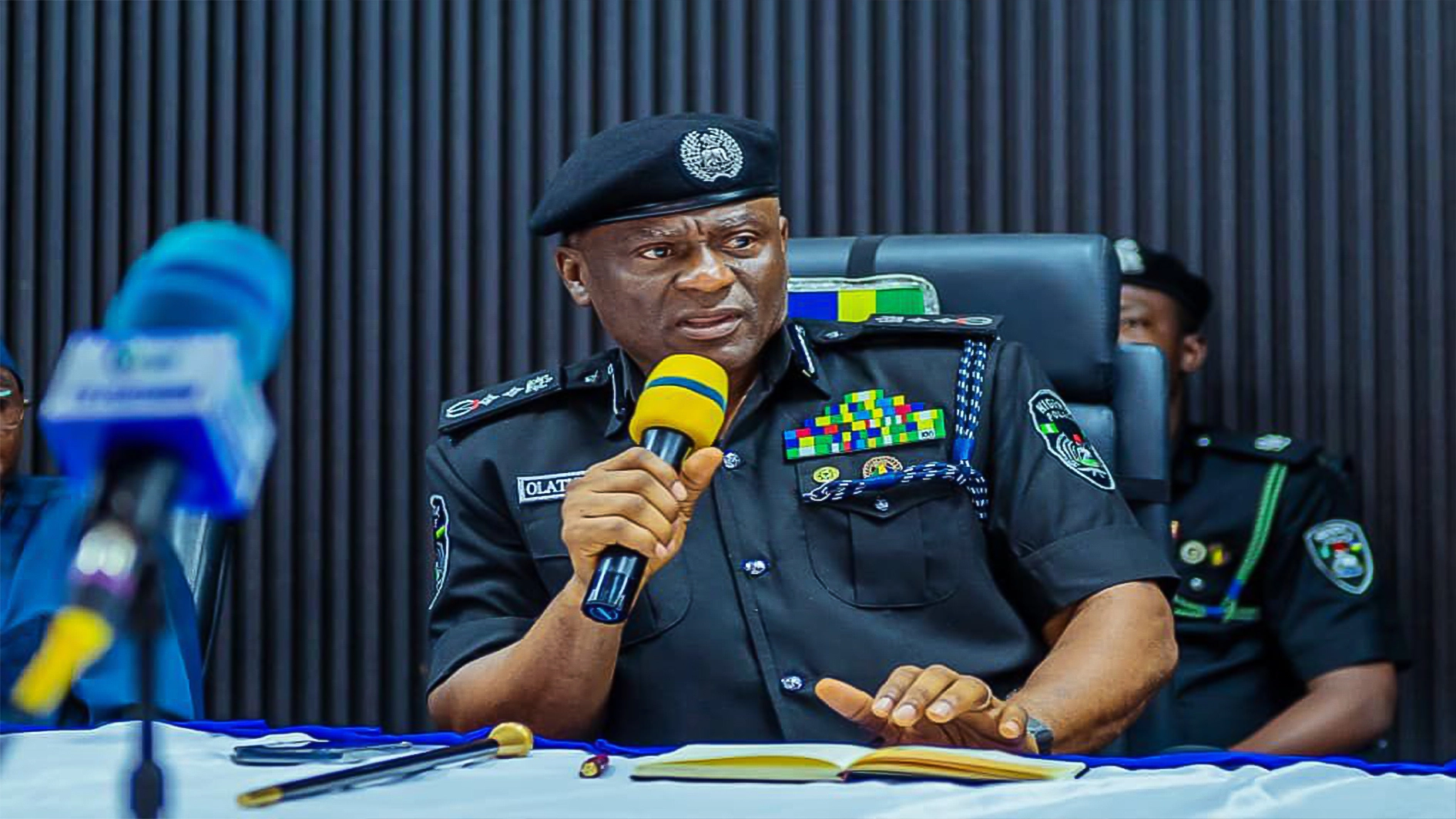
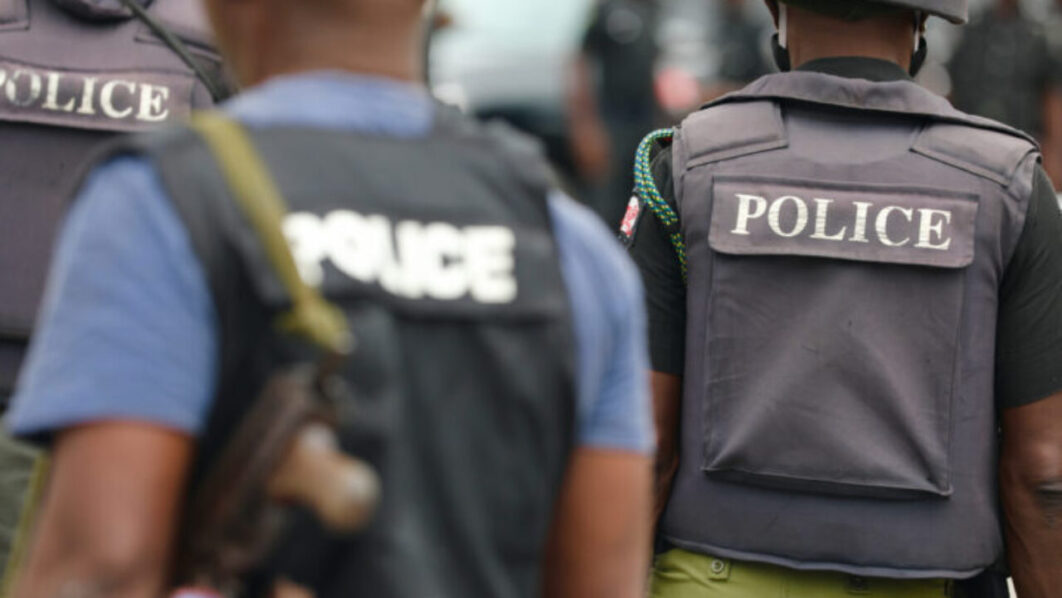
The Inspector-General of Police, Olatunji Rilwan Disu, has ordered an investigation into allegations linking two senior police officers to the disappearance and alleged killing of social media activist and lecturer, Abubakar Idris, popularly known as Dadiyata.

The officers named in the allegations are CSP Hussaini Gimba and CSP Hassan Gimba.

The directive followed petitions submitted on Friday by a Kano-based activist and human rights lawyer, Abba Hikima.

According to the petitions, Muhammad Musa Kamarawa, a former Senior Special Assistant to former Zamfara State Governor Bello Matawalle, accused the officers of making threats against him. Kamarawa also alleged that the officers claimed they killed Dadiyata and other persons in his presence at Operations Yaki in Kaduna.

The petitions urged the police authorities to carry out a thorough and transparent investigation into the claims.

One of the petitions stated that if the accusations were untrue, the investigation would clear the officers involved.

However, the petition added that if the allegations were established to be true, justice should prevail “irrespective of rank, office or influence.”

The petitions also expressed concern over the prolonged uncertainty surrounding Dadiyata’s whereabouts. They called for the establishment of an independent panel to investigate the matter.

The IGP acknowledged receipt of the petitions through his Principal Staff Officer, CF Lateef Adio Ahmed.

In a response, the police leadership confirmed that the case had been transferred to the Deputy Commissioner of Police in charge of the Monitoring Unit for immediate investigation.

The letter also assured the petitioners that the Nigeria Police Force remained committed to justice and accountability.

Dadiyata was abducted from his residence in Barnawa area of Kaduna State in August 2019.

Since then, his whereabouts have remained unknown. The case has continued to attract national attention and repeated calls for accountability.

‘They Killed Dadiyata In My Presence’, Ex-Matawalle Aide Makes Explosive Allegation Against Police Officers

By Sabiu Abdullahi

Musa Muhammad Kamarawa, a former Senior Special Assistant to ex-Zamfara State Governor and current Minister of State for Defence, Bello Matawalle, has alleged that missing activist Abubakar Idris, popularly known as Dadiyata, was killed while in police custody.

Kamarawa made the allegation while accusing two senior police officers of intimidation, unlawful detention and abuse of office during an investigation conducted against him in 2021.

According to him, the officers threatened to kill him if he disclosed his relationship with Matawalle during interrogation.

He identified the officers as CSP Hussaini Gimba and CSP Hassan Gimba and called on the Inspector-General of Police to investigate them over alleged violations of his rights.

Kamarawa claimed the officers used Dadiyata’s alleged killing as a threat against him while he was in custody at Operations Yaki in Kaduna.

“In the course of investigation, I was coerced by them that I shouldn’t make any attempt to disclose my relationship with former Governor of Zamfara State, Dr Bello Matawalle, current Minister of State for Defence,” Kamarawa said.

“That was the main reason in all the video clips they recorded on me under duress, I never disclosed our relationship with him because they threatened to kill me as they killed Dadiyata and Saminu S/Fada Gusau amongst others in my presence at Operations Yaki Kaduna.”

He also accused the officers of conducting a biased investigation against him and searching his residence without a valid warrant.

“The alleged police officers, CSP Hussaini Gimba and CSP Hassan Gimba, have investigated me partially, looted my money, property and illegally searched my house without a valid search warrant,” he alleged.

Dadiyata, a lecturer and social media critic, was abducted from his residence in Barnawa area of Kaduna State in August 2019. Since then, his whereabouts have remained unknown.

The disappearance of the activist attracted national attention and sparked repeated demands from civil society groups and members of the public for answers about his fate.

Earlier this year, former Kaduna State Governor Nasir El-Rufai alleged during an interview on Arise News that former Kano State Governor and ex-APC National Chairman, Abdullahi Umar Ganduje, had issues with Dadiyata over his criticisms of the Kano government.

“He (Dadiyata) is a critic of the Kano government, it was Ganduje that was his problem, go and check his timeline, I don’t even know him,” El-Rufai said.

He also claimed that a police officer allegedly confessed that operatives were sent from Kano to abduct the activist.

“Three days after Dadiyata’s abduction, a policeman posted from Kano to Ekiti confessed to someone that they were sent from Kano and abducted Dadiyata, and felt bad about it,” he said.

Nigeria Pushes Foundational Learning Reforms at Global Education Summit in India

By Uzair Adam

Nigeria has reaffirmed its commitment to improving foundational learning as part of ongoing reforms aimed at strengthening literacy and numeracy among schoolchildren.

The Executive Secretary of the Nigerian Educational Research and Development Council (NERDC), Professor Salisu Shehu, said this at the ongoing South-South Learning Symposium taking place from May 4 to 8 in New Delhi.

Speaking at the event, Shehu said Nigeria had, in the last three years, embarked on critical education reforms beginning from the foundational level to improve learning outcomes across the country.

He explained that the reforms are being implemented under the National Education Sector Reform Initiative (NESRI), a broad-based programme anchored on key pillars such as technical and vocational education expansion, STEMM development, reintegration of out-of-school children and Almajiri, girl-child education, data and digitisation, and quality assurance.

According to him, reforms in foundational learning are guided by two major national policy frameworks — the National Policy on Skills Development and the National Reading Framework — both aimed at strengthening early literacy and numeracy skills.

He noted that the initiatives were introduced to address persistent learning gaps in the country.

Professor Shehu said the policies are designed to “accelerate foundational skills of learners and reverse the situation in which about 70 per cent of children in Nigeria cannot read with meaning or solve simple mathematics problems.”

He added that achieving the targets of the policy frameworks requires a well-articulated curriculum reform programme, stressing that Nigeria has undertaken a holistic review of its curriculum to align with national development goals.

He said one of the key features of the reform is the introduction of foundational skills from the pre-primary level, with structured and sequenced learning content to ensure that learners acquire basic competencies before completing primary three.

Professor Shehu further explained that the reforms promote practical learning approaches, including learning by doing from the early stages, as well as aligning numeracy content with everyday experiences of learners.

On implementation, he said the use of structured pedagogy is being adopted to support learners’ development, while assessment systems are being reformed to cover both knowledge and practical application.

He, however, acknowledged challenges in implementing the reforms, particularly the shortage of adequately trained teachers and limited access to quality instructional materials aligned with the curriculum.

“To address these challenges, we are initiating a project with the British Council focused on providing quality instructional materials, building the capacity of teachers and ensuring a smooth transition from mother tongue to English as the medium of instruction at grade one,” he said.

He further emphasised the need for sustained collaboration with development partners to ensure long-term success of the reforms.

The symposium has brought together education stakeholders from across developing countries to share knowledge and strategies for improving learning outcomes.

Nigeria Customs Strengthens Anti-Money Laundering Drive Through Sensitisation Programme

By Sabiu Abdullahi

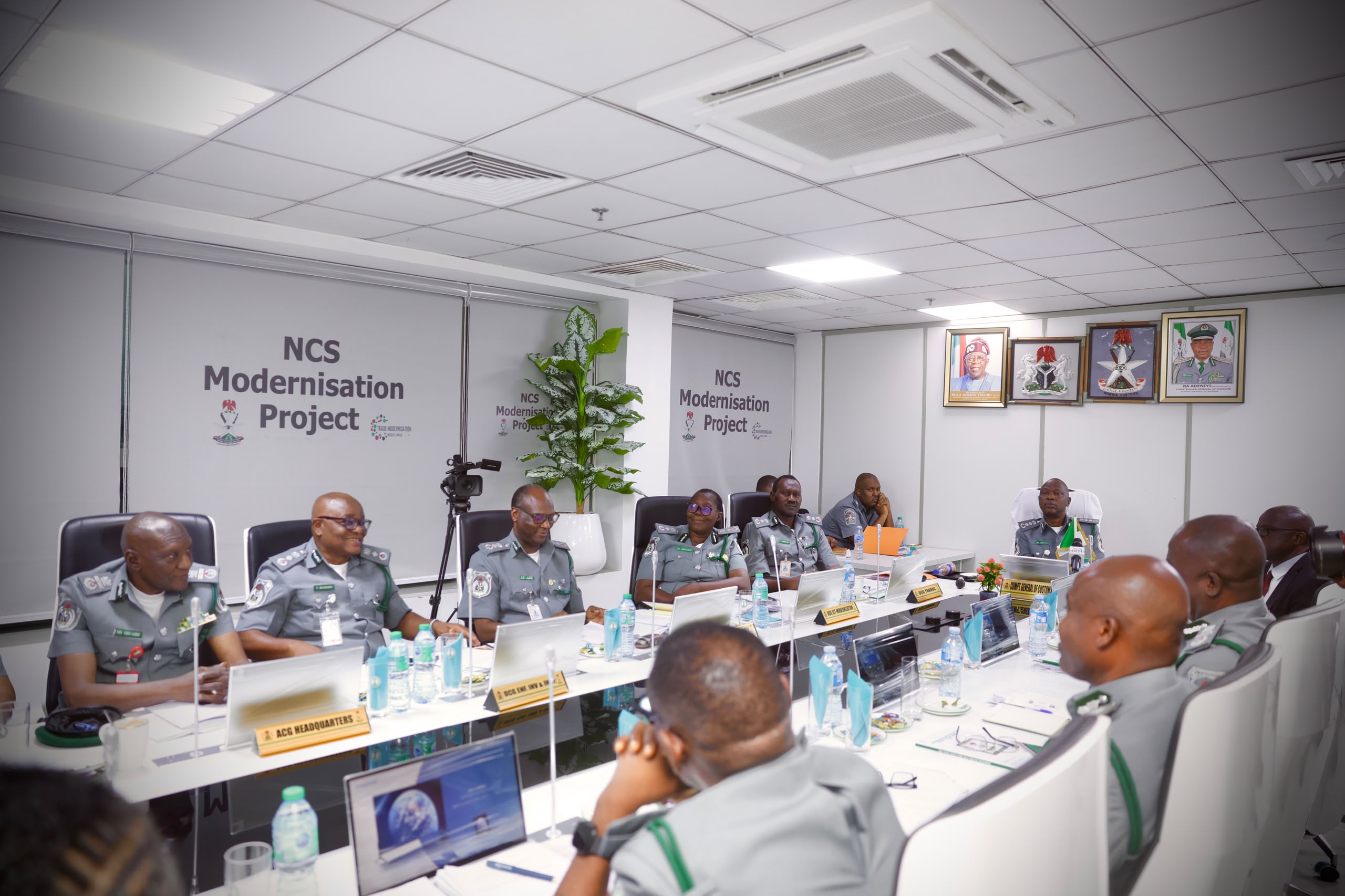
The Nigeria Customs Service (NCS) has stepped up efforts to curb illicit financial activities and terrorism financing through a sensitisation programme on Anti-Money Laundering and Combating the Financing of Terrorism (AML/CFT). The event took place at the Service Headquarters in Maitama, Abuja.

The programme was held on Monday, 4 May 2026. It formed part of the agency’s first-quarter operational review and training exercise for officers attached to the AML/CFT Unit. The session focused on building capacity, promoting ethical conduct and improving cooperation with relevant agencies.

During the programme, the Assistant Comptroller-General in charge of Headquarters, Muhammad Shuaibu, said the initiative shows the rising importance of AML/CFT operations within the Service and across Nigeria’s financial and security system. He explained that the Unit’s work goes beyond ports and border points. He added that its performance in the past year has made it a key player in protecting the country’s financial system.

Shuaibu also pointed to recent progress in Nigeria’s financial sector. He said bank cards issued in Nigeria now function globally and allow users to carry out transactions abroad with automatic currency conversion.

“This is a major milestone. Nigerians can now travel and use their cards anywhere in the world, with transactions reflecting the local currency. This is a significant achievement for the nation,” he said.

He advised officers to view postings to the AML/CFT Unit as an opportunity for career development. He also mentioned ongoing collaboration with the World Customs Organization to ensure compliance with international standards.

In his remarks, the Acting Provost Marshal, Deputy Comptroller of Customs, Saulawa Sunusi, called for discipline and professionalism among officers.

“Officers must remain disciplined, professional, and committed to ethical conduct. Integrity remains the foundation of everything we do,” he said.

Sunusi urged personnel to improve their skills through regular training. He asked them to show leadership through good conduct and maintain fairness and punctuality in their duties. He also stressed the need for teamwork and proper conflict resolution within the Service.

Participants were advised to stay alert, maintain high morale and perform their duties without bias. They were warned against sharing sensitive information without authorisation and asked to follow official communication procedures strictly.

The programme also featured a lecture by Deputy Comptroller of Customs, Faisal Abubakar, who spoke on service correspondence and its role in official communication.

In a separate address, the National Coordinator of AML/CFT, Assistant Comptroller of Customs, Mas’ud Salihu, said financial crimes are becoming more complex. He noted that many illegal activities are now taking place in digital and virtual spaces.

Salihu explained that efforts are ongoing to strengthen enforcement, identify operational gaps and improve communication between field officers and management. He said sensitisation remains vital in tackling financial crimes and encouraged officers to stay proactive in detecting new threats.

He commended participants for their active involvement and thanked the Service leadership for its continued support in strengthening the AML/CFT framework.

Alleged Coup Plot: Cleric Says N10m Transfers Were for Prayers as Court Reviews Evidence


By Uzair Adam

An Islamic cleric, Bukar Kashim Goni, accused of complicity in an alleged plot to overthrow the administration of Bola Tinubu, has told investigators that over N10 million paid into his bank account was meant for prayers.

Sheikh Goni is among six defendants standing trial before the Federal High Court in Abuja over the alleged coup attempt.

Others listed in the charge marked FHC/ABJ/CR/206/2026, filed by the Office of the Attorney-General of the Federation, include retired Major General Mohammed Ibrahim Gana; retired Naval Captain Erasmus Ochegobia Victor; serving Police Inspector Ahmed Ibrahim; and two civilians, Zekeri Umoru and Abdulkadir Sani.

At Tuesday’s resumed hearing, Justice Joyce Abdulmalik admitted and viewed video evidence showing the cleric’s interaction with security operatives.

During questioning, investigators confronted Goni with financial records linking him to multiple transfers allegedly from the principal suspect, Colonel Mohammed Ma’aji.

He denied any involvement in a plot against the president, maintaining that the funds were for “prayers and charitable purposes.”

Goni explained that he relocated to Karu, Abuja, after fleeing insurgency in Maiduguri, adding that his relationship with Ma’aji was purely religious.

According to him, the officer sought spiritual support over delayed promotions and personal challenges.

However, investigators challenged his claims, pointing to transactions dating back to March 2023—before the alleged promotion issues—as well as a N10 million transfer in October 2024.

They also queried conversations referencing “access” and “work tools,” suggesting a broader operation.

Despite this, the cleric maintained he had no knowledge of any illegal plan and denied involvement in political or military activities.

In a separate video played in court, Umoru, a staff member of Julius Berger Nigeria attached to the Presidential Villa’s maintenance department, said he was “misled” into associating with Ma’aji and denied knowingly participating in any coup plot.

He, however, admitted receiving cash payments, including a “Ghana Must Go” bag said to contain N8.8 million, which he claimed were tied to business dealings.

Earlier evidence presented by the prosecution showed some defendants allegedly engaged in coded communications, meetings and reconnaissance around the Presidential Villa, though they denied any concrete attempt to overthrow the government.

The Federal Government alleged that the defendants, in September 2025, conspired to wage war against the state to overawe President Tinubu—an offence under Section 37(2) of the Criminal Code.

Prosecutors further claimed the defendants had prior knowledge of a planned treasonable act involving Ma’aji but failed to inform authorities, and instead assisted by withholding information and not taking steps to prevent the act.

Additional charges include terrorism-related offences under the Terrorism (Prevention and Prohibition) Act, 2022, with allegations that the defendants conspired to commit acts of terrorism.

The defendants, who pleaded not guilty upon arraignment on April 22, remain in the custody of the Department of State Services pending the determination of the case.

Former Bayelsa State governor, Timipre Sylva, was also named in the charge and is reportedly at large after leaving the country before the alleged plot was uncovered.

The charges against the defendants include treason, terrorism, failure to disclose security intelligence, and money laundering linked to terrorist activities.

Court Orders SERAP To Pay DSS Officials N100m For Defamation

By Sabiu Abdullahi


A High Court of the Federal Capital Territory (FCT) sitting in Maitama has directed the Socio-Economic Rights and Accountability Project (SERAP) to pay N100 million in damages to two officials of the Department of State Services (DSS) over a defamatory post on X.

Justice Yusuf Halilu delivered the ruling on Tuesday in a case marked FCT/HC/CV/4547/24. He held that the claimants, Sarah John and Gabriel Ogundele, proved that SERAP published defamatory content about them on its official X account.

The dispute stems from a September 2024 post in which SERAP alleged that DSS operatives were “unlawfully occupying” its Abuja office and requested to see its directors. The claim surfaced less than a day after the organisation asked President Bola Tinubu to instruct the Nigerian National Petroleum Company (NNPC) Limited to reverse an increase in petrol prices.

SERAP also called on the president to direct the DSS to end the “harassment, intimidation, and attack” on Nigerians’ rights.

The DSS confirmed that its personnel visited the organisation’s office but explained that the visit formed part of a routine investigation. It rejected the allegations and described them as “malicious”, while affirming its professionalism.

In a suit filed on October 17, 2024, the DSS argued that SERAP’s claims harmed its image and that of the two officials. The claimants maintained that the publication portrayed them as acting unlawfully and damaged their standing as security operatives. They sought N5.5 billion in compensation and demanded a public apology across multiple platforms.

In his judgment, Halilu stressed that SERAP, “a prominent reputable non governmental Organisation who pushes for Transparency, accountability, and protection of economic and social rights should also take cognisance of other peoples rights”.

He noted that the organisation must exercise caution in its public statements.

“It is most necessary for care and due diligence to be taken by SERAP before tweeting or releasing any particular information with respect to the action of agency of government for public consumption,” Halilu held.

“In the exercise of their right, SERAP must equally beware of other people’s rights. The right to be able to tweet and then put information out there must correspondingly take into account the fact that other agencies, i.e. even government, have a right to be given fair hearing as it relates to any such information.

“It is not in doubt that the said publication, which has gone viral, clearly affected the claimants mentally and psychologically.”

The court also found that the officers were suspended during the period of investigation.

“…The defendants who had all the time to have retracted the said write-up failed to do so,” the judge held.

“Claimants clearly are entitled to be assuaged in damages from the antecedents of what had played out, having established that the publication by the defendant is unjustifiably labellous.

“The law will not stand still whilst the rest of the world goes on, and that will be bad for good. The law is an equal disperser of justice, and leaves none without a remedy for his right. It is a basic and elementary principle of common law, that wherever there is a wrong, legal or injurious, that is, there ought to be a remedy to redress the wrong.

“It is my assessment that N100 million is a paltry sum that this court hereby awards against the defendants in favour of the claimants as damages.”

The court further ordered SERAP to issue a public apology through its website, X account, two national newspapers, and two television stations for the publication.

Justice Halilu also awarded a 10 percent annual interest on the judgment sum until full payment, along with N1 million as the cost of the suit.

Reps Urge Nigerian Govt To Review Bilateral Agreements With South Africa Over Xenophobic Attacks

By Sabiu Abdullahi

The House of Representatives has called on the federal government to reconsider Nigeria’s bilateral ties with South Africa following renewed xenophobic violence against Nigerians.

The resolution came during plenary on Tuesday after lawmakers adopted a motion of urgent public importance presented by Donald Ojogo, who represents Ilaje/Ese-Odo federal constituency in Ondo state.

Lawmakers expressed concern over rising hostility toward foreigners in South Africa, which has reportedly led to the deaths of at least two Nigerians in recent weeks.

While presenting the motion, Ojogo described the situation as an “alarming rate” of violence. He said Nigerians are being “selectively targeted” in the attacks.

He identified the victims as Ekpenyong Andrew and Amaramiro Emmanuel. According to him, the two incidents occurred separately. He explained that Andrew was arrested on April 19 in Pretoria after an alleged confrontation with police. His body was later found in a morgue. He added that Emmanuel died from injuries after an assault by members of the South African National Defence Force on April 20.

“Both incidents were shocking as they involved South African security personnel,” the lawmaker said.

Ojogo also described the attacks as “a demonstration of ingratitude”, in view of Nigeria’s role in the struggle against apartheid in South Africa.

“The trajectory in South Africa is a recipe for anger and reprisals in Nigeria, and there is a need to prevent such,” he said.

Deputy Speaker Benjamin Kalu, who presided over the session, also condemned the attacks. He said Nigeria holds a “very significant position” in Africa and has supported “many nations to be stronger than they are today”.

“An attack on any Nigerian anywhere is an attack on Nigerians everywhere. It ought not to be so,” he said.

“Nigerians did not allow the apartheid masters to suppress South Africans. South Africans who are liberated should not put other Africans in their territory in bondage. These are facts.”

Following a voice vote, the motion received the support of the house.

The lawmakers urged the federal government to “review all bilateral agreements with South Africa, trade and aviation treaties, targeted economic measures, including temporary suspension of issuance of business permits to new South African companies and a review of tax incentives enjoyed by existing South African firms in Nigeria”. They said the measures should remain until South Africa takes clear steps to end the attacks, prosecute offenders, and compensate victims.

The house also directed its committees on foreign affairs and diaspora matters to work with the Nigerian High Commission in Pretoria to set up a 24-hour emergency response desk and a legal aid fund for Nigerians facing distress.

In addition, the committees were asked to collaborate with the federal government on a detailed evacuation plan for Nigerians in volatile areas. The plan is expected to include financial and logistical support for those willing to return home.

Obi, Kwankwaso and the Politics of Movement: Strategy, Survival, or a Leap into the Unknown?

By Usman Muhammad Salihu

In Nigerian politics, defections are no longer surprising. What is surprising now is how quickly they happen and how easily political actors move from one platform to another.

The recent defection of Peter Obi and Rabiu Musa Kwankwaso from the African Democratic Congress (ADC) to the Nigeria Democratic Congress (NDC) is not just another political adjustment. It is a bold move. But bold does not always mean safe.

At first glance, the decision appears strategic. Internal crises within the ADC, legal uncertainties, and the pressure of electoral timelines make stability a priority. From that angle, shifting to a new platform may seem like a necessary step, an attempt to secure political ground ahead of a highly competitive 2027.

There is also strength in the alliance itself. The coming together of Obi and Kwankwaso brings national attention, regional balance, and an existing base of supporters. On paper, that is not just movement; it is potential consolidation.

But politics is not played on paper. It is played among the people. And this is where the real challenge begins.

The Nigeria Democratic Congress is still largely unfamiliar to many Nigerians. Beyond political circles and elite discussions, its presence at the grassroots remains limited. For a significant number of voters, especially at the lower levels, NDC is not yet a known political identity.

And in Nigerian elections, familiarity matters. Voters do not just choose candidates. They choose what they recognise. They choose what they trust. They choose what they understand. That is the gap this move must overcome.

Beyond visibility, there are emerging concerns about the platform’s stability. Reports suggest that the Nigerian Democratic Congress may be grappling with internal legal disputes. If proven true, this introduces an even more delicate risk. Moving from one troubled platform to another does not resolve instability; it simply transfers it. And in politics, uncertainty is a cost few can afford at this level.

Because this is no longer just about transferring political influence, it is about building voter awareness from the ground up within a limited time frame. That is not a small task. It is one thing to move with loyalists. It is another thing to move with the electorate. And history has shown that the two do not always align.

There is also a deeper concern. Frequent political movement, no matter how strategic, raises questions of consistency. When platforms change too often, voters begin to look beyond the movement itself and ask a more difficult question: What exactly is constant? Is it ideology? Is it vision? Or is it simply positioning?

These questions matter because today’s voter is less passive than before. There is growing awareness, scrutiny, and an expectation for clarity. So while this move may be necessary from a political standpoint, it is also risky from a public perception angle.

Because speed in politics can be a double-edged sword. Move too slowly, and you lose relevance. Move too quickly, and you lose trust. And right now, this move feels fast. Perhaps calculated. Perhaps unavoidable. But still fast.

So, is this a strategy or a survival tactic? It is arguably both. Strategy, because the timing aligns with political realities. Survival, because unstable platforms leave little room for hesitation.

From another angle, this move is not just a strategy or a matter of survival; it is a gamble. A calculated one, no doubt, but a gamble, nonetheless. It rests on the assumption that political influence can be transferred faster than voter trust can be built. And in a system where recognition often shapes voting decisions, that assumption may prove too optimistic.

But beyond both lies a more uncomfortable possibility: That this could be a leap into a platform that has yet to fully exist in the minds of the people. Because, in the end, political strength is not measured by alliances alone, but by acceptance. And acceptance cannot be transferred overnight.

So, while the move may look bold in Abuja, its real test will come far away from strategy rooms, in markets, in villages, and at the polling units. Where names are remembered, where symbols are recognised, and where unfamiliar platforms are often rejected.

And if that gap is not closed in time, what appears today as a strategy may tomorrow be seen as a miscalculation. Because in Nigerian politics, you can move ahead of the system, but you cannot move ahead of the people. And when that gap exists, even the most calculated move can quickly turn into a costly gamble.

Ultimately, this move will be judged by one metric: conversion rate. How many Obidients and Kwankwasiyya become NDC members, not just in spirit but on the ballot? If the answer is “most,” then history will call it strategy. If the answer is “some,” then it was survival. If the answer is “few,” then it was a miscalculation dressed as ambition. The voters are watching, and their silence right now is louder than any endorsement. For Obi and Kwankwaso, the real campaign did not start in Abuja. It starts the day a trader in Aba and a farmer in Gaya can point to the NDC logo and say, “That is us.”

Usman Muhammad Salihu was among the pioneer fellows of PRNigeria and writes from Jos.

muhammadu5363@gmail.com.

Kwankwaso Urges Nigerians to Back NDC For Democratic Reforms

By Uzair Adam

A former Kano State governor, Rabiu Musa Kwankwaso, has called on Nigerians to support the Nigeria Democratic Congress (NDC), describing it as a platform committed to promoting good governance and strengthening democracy.

Kwankwaso made the appeal on Monday through his X (formerly Twitter) account, where he emphasised the importance of a credible political movement capable of delivering democratic dividends and improving the welfare of citizens.

He stated that the NDC is determined to create an environment where Nigerians can thrive and achieve their full potential.

He explained that his position is driven by a strong belief in democratic principles, noting that citizens deserve a system that prioritises their needs and aspirations.

According to him, the call is part of a broader effort to build a political structure that truly serves the people.

Kwankwaso further urged his supporters and other well-meaning Nigerians to align with the NDC, stressing that the movement represents a renewed effort to entrench accountability, expand opportunities, and reinforce democratic institutions across the country.