Nigeria

Governor Yusuf to Inaugurate Garo as Kano Deputy Governor Tuesday


Uzair Adam

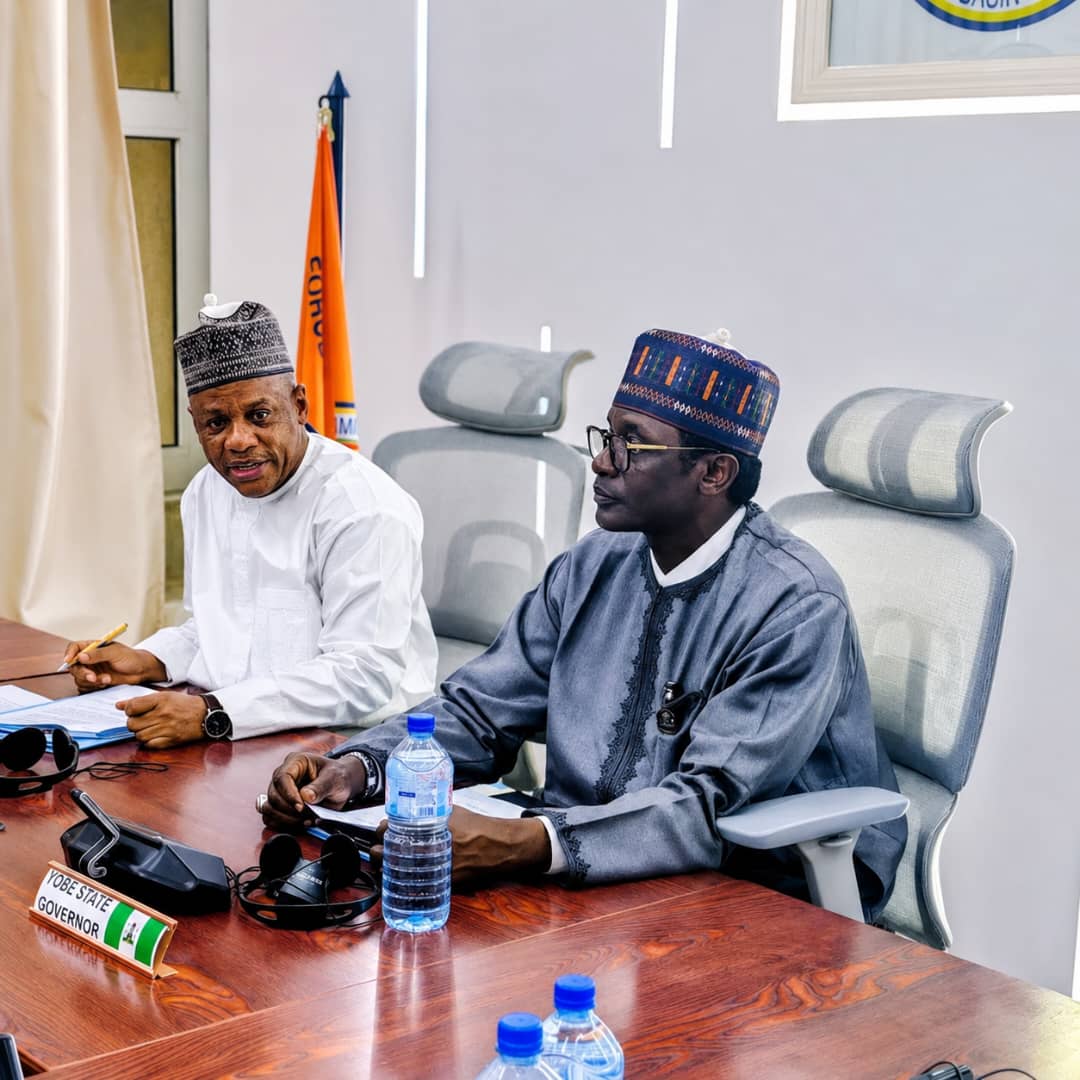
Kano State Governor, Alhaji Abba Kabir Yusuf, is set to inaugurate the state’s Deputy Governor, Murtala Sule Garo, on Tuesday.

The swearing-in ceremony will hold at the Coronation Hall, Government House, Kano, by 11:00 a.m.

A statement issued by the governor’s media aide, Ibrahim Adam, indicated that stakeholders, party loyalists, and members of the public are expected to attend the event.

The Daily Reality recalls that Garo was cleared by the Kano State House of Assembly last Monday following a successful screening conducted by a 12-member committee.

Xenophobia: Nigeria Launches Emergency Returns For Its Citizens in South Africa

By Muhammad Abubakar

The Nigerian government has launched an emergency voluntary repatriation program for its citizens in South Africa following a violent wave of xenophobic attacks and anti-migrant demonstrations.

Foreign Affairs Minister Bianca Odumegwu-Ojukwu confirmed on Monday that at least 130 Nigerians have already registered to leave, with that number expected to climb as tensions persist. The decision follows the reported killings of two Nigerians in separate incidents involving local security personnel, alongside viral footage showing the harassment of African migrants in several South African cities.

“The safety of our nationals is non-negotiable,” the Minister stated, noting that the government has summoned South Africa’s acting High Commissioner to express “profound concern” over the deteriorating situation.

The Nigerian High Commission and Consulate are currently coordinating logistics to facilitate the return of those who feel unsafe. This surge in violence has also prompted other West African nations, including Ghana, to issue emergency safety advisories to their citizens.

While both governments have historically worked to maintain strong bilateral ties, Nigerian officials warned that the continued failure to protect foreign nationals could severely strain the relationship between the continent’s two largest economies.

Time to Unlock Northern Nigeria’s Growth Potential

By Ahmed Usman

In the years following independence, Northern Nigeria stood at the forefront of the country’s economic progress. The region’s agricultural output, symbolised by the famous groundnut pyramids of Kano and by thriving cotton production across the savannah belt, powered employment, export earnings, and real-sector development. For a time, Northern Nigeria was not only a major driver of Nigeria’s economy but also one of the most economically vibrant regions on the African continent. Today, however, the region finds itself at a critical crossroads.

Over the past two decades, Northern Nigeria has faced a combination of security, economic, and structural challenges that have slowed its development trajectory. The rise of insurgency in the North-East, banditry and cattle rustling in parts of the North-West, and persistent farmers–herders conflicts have disrupted livelihoods, weakened agricultural production, and discouraged investment. These crises have inflicted enormous human and economic costs not only on the region but also on the Nigerian economy as a whole.

Yet security challenges alone do not explain the region’s economic difficulties. The deeper problem lies in the failure to convert the region’s extraordinary demographic and natural advantages into sustained economic growth.

Northern Nigeria possesses some of the most significant development assets in the country. The region accounts for more than 60 per cent of Nigeria’s population and contains over 80 per cent of the country’s arable land. It also receives abundant sunlight, suitable for solar power generation, and hosts numerous dams capable of supporting large-scale irrigation and energy production.

Despite these advantages, the region continues to record some of Nigeria’s most troubling development indicators. Poverty levels remain among the highest in the country. Youth unemployment is widespread. The region also accounts for about 20 million out-of-school children, one of the highest figures worldwide. Internally generated revenue in many northern states remains low, limiting the fiscal capacity needed to finance development.

This paradox of abundant resources alongside persistent poverty highlights the urgency of a new development strategy to transform its demographic advantages into a true demographic dividend.

At the heart of the solution lies the revival of the real sector. For too long, Nigeria’s growth model has leaned heavily on the service sector and oil revenues, sectors that generate limited employment relative to the country’s rapidly expanding workforce. Each year, millions of young Nigerians enter the labour market, yet the economy struggles to create sufficient productive jobs. Sustainable and inclusive growth will require renewed investment in sectors capable of generating large-scale employment. Agriculture, agro-processing, manufacturing, and renewable energy stand out as areas where Northern Nigeria holds a natural comparative advantage.

Agriculture in particular offers a powerful pathway for economic transformation. With vast fertile land and favourable climatic conditions, the region has the potential to become Nigeria’s primary agricultural hub once again. Expanding irrigation farming, adopting modern agricultural technologies, improving access to inputs, and strengthening agricultural value chains could dramatically increase productivity while generating millions of rural jobs. But agriculture alone will not be enough. The next stage of development must focus on building strong agro-industrial linkages. Processing agricultural products locally rather than exporting raw commodities can significantly increase value addition, stimulate rural industries, and expand export opportunities.

Infrastructure will be critical to unlocking these opportunities. Reliable electricity, modern road networks, efficient storage systems, and improved logistics are essential for connecting farmers, manufacturers, and entrepreneurs to national and global markets. The region’s extensive dam infrastructure already provides enormous potential for irrigation agriculture and renewable energy if properly utilised.

Equally important is the need to invest in human capital. Northern Nigeria’s youthful population represents one of the region’s greatest assets, but only if young people are equipped with the education, skills, and opportunities needed to participate in a modern economy. Expanding access to quality education, strengthening vocational training, and promoting the development of technical skills must become central pillars of the region’s development strategy.

Yet economic progress ultimately depends on the strength of institutions. Transparent governance, accountable public institutions, and a regulatory environment that encourages private investment are essential for sustainable development. Reducing bureaucratic barriers, strengthening property rights, and improving the ease of doing business will be critical for attracting both domestic and foreign investment.

History shows that development trajectories can change when policy direction aligns with economic potential. Northern Nigeria once played a central role in powering Nigeria’s economic progress. There is no reason it cannot do so again.

The challenges facing the region are significant, but they are not insurmountable. With strategic investments, stronger institutions, and a renewed focus on the real sector, Northern Nigeria can unlock the immense potential of its land, its resources, and most importantly, its people. The region’s future should not be determined by the weight of its challenges but by the boldness of its choices. If those choices are made wisely, Northern Nigeria could once again emerge as one of the most powerful engines of economic growth in the country and perhaps on the continent.

The Daily Reality Editor Loses Father


By Sabiu Abdullahi

One of the editors of The Daily Reality, Dr Muhammad Sulaiman Abdullahi, has announced the death of his father, Malam Sulaiman Abdullahi, who passed away on Monday, May 4, 2026.

According to the family, the funeral prayer for the deceased is scheduled to be held at Kandahar Mosque in the Rijiyar Lemo area at about 11 a.m. on the same day.

The news of his passing has thrown family members, friends, and associates into mourning, as many continue to express grief and offer prayers for the repose of his soul.

Prayers are being offered for Almighty Allah to forgive his shortcomings, grant him mercy, and admit him into Aljannatul Firdausi.

The Need for Government Regulation of Social Media

By Moyamya Abraham

The rapid growth and widespread adoption of social media have transformed the way we communicate, access information, and interact with others. However, this transformation has also brought about significant challenges, including the spread of fake news, hate speech, and harmful content. In Nigeria, social media has become a tool for promoting tribalism, sectarianism, and divisive rhetoric, underscoring the urgent need for government regulation.

Government regulation of social media is essential to protect citizens from the harmful effects of online content. The spread of fake news, for instance, can have devastating consequences, including inciting violence, spreading misinformation, and undermining trust in institutions. Regulation would enable the government to establish standards for online content, ensuring that social media platforms take responsibility for the material they host.

Moreover, regulation would help curb the proliferation of hate speech and harmful content on social media. Hate speech can fuel sectarian tensions, promote xenophobia, and incite violence against vulnerable groups. By regulating social media, the government can establish clear guidelines for acceptable online behavior, protecting citizens from harm and promoting a culture of respect and tolerance.

Furthermore, regulation would enable the government to address the issue of online harassment and cyberbullying. Social media platforms have become breeding grounds for online abuse, with many Nigerians facing harassment, intimidation, and threats. Regulation would require social media platforms to implement effective mechanisms for reporting and addressing online harassment, ensuring that citizens feel safe and protected online.

Additionally, government regulation would promote accountability and transparency in social media operations. Social media platforms have become powerful influencers of public opinion, shaping discourse and influencing electoral outcomes. Regulation would require social media platforms to disclose their algorithms, advertising practices, and content moderation policies, ensuring that citizens are aware of the information they consume.

The Nigerian government has a responsibility to protect its citizens from harm, and regulating social media is a crucial step towards achieving this goal. Regulation would not only safeguard citizens but also promote a healthy and responsible online environment. By establishing clear guidelines and standards for online content, the government can ensure that social media platforms operate in a manner that respects human rights, promotes national unity, and supports democratic values.

Effective regulation would also require social media platforms to invest in content moderation, employing humans and artificial intelligence to identify and remove harmful content. This would create jobs and stimulate economic growth, contributing to Nigeria’s development.

In conclusion, the need for government regulation of social media in Nigeria is pressing. Regulation would protect citizens from harm, promote accountability and transparency, and ensure that social media platforms operate responsibly. The Nigerian government must take proactive steps to regulate social media, establishing clear guidelines and standards for online content and behavior. By doing so, Nigeria can create a safer, more responsible, and more inclusive online environment.


Moyamya Abraham, Department of Mass Communication, University of Maiduguri.

Reality Debate: Skills or Degrees?

By Martha Adamu

The question of whether skills or degrees hold more importance has been a topic of heated discussion among Nigerians, particularly on social media platforms, for quite some time now. While some argue that possessing a degree is the key to success, others insist that acquiring skills is the way forward. However, the real question is, why must we choose between the two? This dichotomy has sparked intense debate, with each side presenting compelling arguments. On one hand, degrees provide a solid foundation in a specific field, demonstrating one’s commitment and understanding of theoretical concepts.

Degrees open doors to various career opportunities and are often a prerequisite for many professions. Moreover, degrees equip individuals with critical thinking, problem-solving, and research skills, essential for navigating complex work environments. However, critics argue that degrees alone are no longer sufficient in today’s fast-paced, ever-evolving work environment. They point to the numerous graduates struggling to find employment, despite holding impressive academic credentials. This has led many to question the relevance of degrees in the modern job market.

On the other hand, skills enable individuals to apply theoretical knowledge practically. They make one more employable, increasing their chances of securing better job opportunities. In today’s economy, skills such as coding, digital marketing, and data analysis have become highly sought after. Many successful entrepreneurs and professionals attribute their success to acquiring valuable skills, rather than relying solely on their degrees. Moreover, skills provide adaptability and flexibility, allowing individuals to pivot into different industries and roles.

Rather than pitting degrees against skills, why not combine the two? Students should strive to acquire relevant skills while pursuing their degrees. This synergy will make them more attractive to potential employers and better equipped to tackle real-world challenges. Universities and institutions can play a vital role by incorporating practical training and internship programs into their curricula. This hands-on experience will enable students to apply theoretical knowledge in real-world settings, bridging the gap between academics and industry requirements.

The acquisition of skills and knowledge should not stop after graduation. Professionals must continually update their skills to remain relevant in their respective fields. This mindset of lifelong learning will foster adaptability and resilience. Furthermore, vocational training and technical education should be encouraged and valued equally with traditional degree programs. This will provide individuals with specialized skills, enhancing their employability and contributing to the country’s economic growth.

To address the skills gap, the government and private sector must collaborate to provide training programs, scholarships, and apprenticeships. This support will empower individuals to acquire in-demand skills, boosting the nation’s economic competitiveness. Moreover, policymakers should reevaluate the education system to focus on producing well-rounded individuals with both theoretical knowledge and practical skills. By doing so, we can create a workforce capable of driving innovation and growth.

The education system should prioritize practical skills, theoretical knowledge, and lifelong learning. Educators and industry leaders must work together to develop curricula that reflect industry needs. This collaboration will ensure graduates are equipped with the skills required to succeed in the modern job market. Moreover, students should be encouraged to explore various fields and interests, developing a range of skills that make them adaptable and versatile.

In conclusion, the debate should not be about skills or degrees, but rather how to effectively combine both to produce competent, adaptable, and innovative professionals. As we navigate the rapidly changing landscape of work, it is crucial that we prioritize practical skills, theoretical knowledge, and lifelong learning. By doing so, we can create a workforce that drives economic growth, innovation, and prosperity for Nigeria.

Ultimately, the future of work depends on our ability to adapt and evolve. By combining degrees and skills, we can empower individuals to succeed in an ever-changing world. It is time to shift the focus from the debate to finding solutions. Students, educators, policymakers, and industry leaders must work together to create a workforce that combines the best of both worlds – degrees and skills. Only then can we unlock the full potential of Nigeria’s human capital.

Martha Adamu, Department of Mass Communication, University of Maiduguri.

The Need to Revive Our Reading Culture

By Aisha Kaumi Alkali

In the past, visiting libraries was a norm for students, who would spend hours poring over books, conducting research, and completing assignments. However, times have changed, and it appears we are losing our reading culture. This decline is alarming, and it’s essential we recognize the importance of reading in our personal and collective growth. Reading has been the foundation of knowledge acquisition, and its benefits extend beyond the individual to societal development.

Reading is fundamental to improving vocabulary, expanding knowledge, and broadening perspectives. Through books, we gain insight into diverse cultures, historical events, and the experiences of others. This understanding fosters empathy, tolerance, and informed decision-making. Moreover, reading enhances cognitive skills, memory, and critical thinking. It encourages analytical reasoning, problem-solving, and creativity. In an increasingly complex world, these skills are invaluable, enabling individuals to navigate challenges effectively.

Unfortunately, the rise of social media and digital entertainment has contributed significantly to the decline in reading. We spend hours scrolling through feeds, watching videos, and engaging in online discussions, often at the expense of meaningful reading. This trend is particularly concerning among young people, who are more likely to be influenced by digital media. A study revealed that many students struggle with comprehension and vocabulary due to limited reading habits. This deficiency can have long-term consequences, affecting academic performance and future opportunities.

To revive our reading culture, we must limit our social media usage and prioritize book reading. Setting aside dedicated time for reading each day can make a significant difference. This habit helps develop focus, concentration, and retention. Moreover, reading reduces stress and improves mental well-being. By incorporating reading into our daily routine, we can reap numerous benefits that enhance our quality of life.

Parents and educators play a vital role in promoting reading habits among children. Encouraging book clubs, reading competitions, and library visits can spark a lifelong love for reading. Schools should integrate reading into their curricula, ensuring students have access to diverse texts. This exposure broadens their understanding of the world and fosters critical thinking.

Moreover, reading about our history and cultural heritage is essential. It helps us understand our roots, appreciate our diversity, and learn from past experiences. Through literature, we gain insight into the struggles and triumphs of our ancestors, enabling us to appreciate our collective identity.

Simply put, reviving our reading culture is crucial for intellectual growth, personal development, and societal progress. We must recognize the value of reading and make conscious efforts to incorporate it into our daily lives. By embracing reading, we can empower ourselves, our communities, and future generations.

The benefits of reading extend beyond individual growth to societal development. A well-read population is more informed, empathetic, and engaged. Reading fosters tolerance, reduces prejudice, and promotes understanding. In today’s increasingly polarized world, reading can bridge gaps and facilitate dialogue.

To achieve a reading culture, we must establish book clubs and reading groups, encourage library visits and research, set aside dedicated reading time, limit social media usage, promote reading competitions and awards, integrate reading into educational curricula, and support authors and publishers.

In summary, reviving our reading culture requires collective effort and commitment. We must prioritize knowledge acquisition, critical thinking, and intellectual growth. By doing so, we can create a society that values wisdom, creativity, and understanding, ensuring a brighter future for generations to come.

Aisha Kaumi Alkali, Department of Mass Communication, University of Maiduguri.

Gawuna, Binani Attend Dickson’s Closed-door Meeting Alongside Obi, Kwankwaso


By Anwar Usman

Key political figures on Sunday, attended a  closed-door meeting between former Anambra State Governor, Peter Obi, Rabiu Kwankwaso, and the National Leader of the Nigeria Democratic Congress, Seriake Dickson, in Abuja.

The 2023 governorship candidate of the All Progressives Congress (APC) in Kano State,  Nasiru Gawuna alongside former Adamawa State governorship candidate, Aishatu Binani; ex-lawmaker representing Zamfara Central Senatorial District, Kabir Marafa; and the Senator representing Anambra Central, Victor Umeh were all seen at the meeting.

The meeting, held at Dickson’s residence in Abuja, is believed to be part of ongoing political realignments among opposition figures ahead of the 2027 general elections.

The two former governors  had earlier arrived at Dickson’s residence with a crowd of supporters under the Obi-Kwankwaso Movement, who chanted “O-K is okay” as the two leaders were ushered into the premises.

The development comes barely 24 hours after the Secretary of the Board of Trustees of the New Nigeria People’s Party, Buba Galadima, disclosed that two prominent politicians would unveil a new political platform on Monday, further fuelling speculation over an emerging opposition coalition.

World Press Freedom Day 2026: Ink, Blood and the Burden of Truth

By Lamara Garba

There is something sacred about ink when it refuses to lie.

There is something stubborn about truth when it insists on being heard, even in the presence of guns, prisons, and power.

And there is something profoundly human about the journalist, who stands between silence and society, choosing again and again to speak.

Perhaps we often forget how this day itself came to be. It was the United Nations, at its 1993 General Assembly, that proclaimed every 3rd of May as World Press Freedom Day, a date set aside not for ceremony alone, but for reflection, resistance, and renewal of commitment to the ideals of a free press.

This year’s theme, “Shaping a Future at Peace,” is not a slogan to be admired from a distance. It is a challenge. It is a responsibility. It is a warning. It reminds the world that journalism, free expression, and access to information are not just democratic ornaments but powerful instruments for peace, security, sustainable development, and economic recovery. At a time when global press freedom is increasingly under pressure, the theme speaks directly to a fragile world struggling to hold itself together.

Peace is not built in silence.

Peace is built in truth.

On this year’s World Press Freedom Day, the words of the European Union arrive not as distant diplomacy but as a moral echo of a world in distress: democracy cannot exist without a free press. That is not poetry. That is not theory. That is survival.

A nation without a free press is not a nation at all. It is a carefully managed illusion.

The European Union reminds us, with the clarity of law and the urgency of conscience, that independent media is not a luxury. It is not decoration. It is the spine of democracy. Freedom of expression is not a polite suggestion; it is a fundamental human right. And when that right is bruised, beaten, or buried, the entire body of society limps.

Yet, across continents and conflict zones, the journalist has become both witness and victim.

In the rubble and fire of Gaza, no fewer than over 100 journalists have been killed since the escalation of war, making it one of the deadliest places on earth for the press in modern history. These were not soldiers. They carried no weapons. Their only armour was a camera, a notebook, and courage. Still, they fell.

In the long and grinding war in Ukraine, more than 15 journalists have lost their lives, caught in the crossfire of a conflict that has redrawn maps and erased lives. Each death is a page torn from the book of truth, each silence a victory for darkness.

And beyond the bombs and bullets, in quieter but no less dangerous ways, journalists across the world face abuse, harassment, detention, and exile. Hundreds, well over 300 annually, are subjected to intimidation, a chilling reminder that repression does not always wear the uniform of war. Sometimes it wears a suit, signs a law, or hides behind a keyboard.

The UNESCO has repeatedly warned that the world is witnessing an alarming rise in attacks on journalists, especially women, who endure not only professional risks but targeted gender-based violence and online abuse designed to silence them.

Silence, after all, is the ultimate goal.

And yet, silence is what the journalist refuses.

In Nigeria, the story is painfully familiar.

We recall the troubling case of Agba Jalingo, a journalist who was arrested and detained for months over his reporting on alleged corruption. His ordeal was not just about one man. It was about a system uneasy with scrutiny. It was about the price of asking questions in a space where answers are often guarded like state secrets.

But even within this difficult landscape, voices of reform continue to rise.

The President of the Nigeria Union of Journalists, Alhassan Yahaya Abdullahi, has re-echoed the urgent need for a truly free press in Nigeria, insisting that democracy in the country will remain fragile without journalists who can operate without fear. He has also drawn attention to a quieter crisis within the profession itself: the poor working conditions faced by many Nigerian journalists.

From irregular salaries to the absence of adequate insurance and welfare packages, the reality for many practitioners is harsh and discouraging. Abdullahi’s call is clear and necessary that the dignity of the journalist must be restored, that media owners and stakeholders must rise to their responsibility, and that no society can expect courage from a press that is neglected and unprotected.

Because a hungry journalist is vulnerable.

And a vulnerable journalist is easily silenced.

The European Union’s statement goes further, pointing to a dangerous trend: the rise of Strategic Lawsuits Against Public Participation, legal weapons used not to seek justice, but to intimidate journalists into silence. Add to that the growing flood of disinformation, propaganda disguised as news, and the deliberate erosion of trust in credible media, and one begins to see the battlefield has expanded.

Truth itself is under siege.

And in this siege, the journalist stands as both witness and shield.

There is a philosophical burden here, one that goes beyond headlines and deadlines. The journalist is not merely a recorder of events but a custodian of memory. When societies forget, it is often because someone was prevented from writing. When injustice thrives, it is often because someone was stopped from reporting.

So, to attack a journalist is not just to harm an individual. It is to wound history. It is to distort reality. It is to gamble with the future.

The European Union, in reaffirming its commitment to defending free and independent journalism, aligns itself with institutions like the Council of Europe and the OSCE, recognizing that this fight is not regional but universal.

Because truth does not belong to Europe, or Africa, or Asia.

Truth belongs to humanity.

And here lies the deeper meaning of this year’s theme: a future at peace is not negotiated in secrecy, nor manufactured through propaganda. It is shaped in the open, through credible information, fearless reporting, and a society willing to confront its own realities.

Without a free press, there is no informed citizenry.

Without informed citizens, there is no accountability.

And without accountability, peace itself becomes an illusion.

So today, we do not merely celebrate the press.

We remember its martyrs.

We honour those who wrote until their last breath.

We stand with those who continue to report under threat.

And we ask ourselves, quietly but urgently: what kind of world do we want to live in?

One where truth is negotiated, edited, and suppressed?

Or one where it is pursued, protected, and proclaimed?

The answer lies not just in the newsroom, but in the conscience of every society.

For as long as a single journalist dares to write freely, hope remains alive.

And as long as hope remains alive, democracy still has a fighting chance.

Lamara Garba, a veteran journalist, is Director of Public Affairs at Bayero University, Kano.

Tinubu Shifts Departure Date For France, Kenya, Rwanda Trip To Sunday

By Sabiu Abdullahi

President Bola Tinubu has postponed his planned departure for an official visit to France, Kenya, and Rwanda.

Bayo Onanuga, the special adviser to the president on information and strategy, had earlier announced on Friday that Tinubu would leave Abuja on Saturday. He said the president would first head to France before travelling to Nairobi, Kenya, to attend the Africa-France summit.

However, Onanuga later issued another update on Saturday through his X handle. He stated that the president would now begin the trip on Sunday instead of the earlier scheduled date. He did not state any reason for the adjustment.

In the earlier statement, Onanuga explained that the Africa-France summit would be co-chaired by French President Emmanuel Macron and Kenyan President William Ruto. He said discussions at the meeting would cover energy transition, green industrialisation, digital transformation, restructuring of the global financing architecture, and climate action.

He added that Tinubu is expected to take part in the summit, which is billed for May 11 and May 12. The participation, he said, forms part of efforts to deepen strategic ties between Nigeria, other African nations, and France.

The summit carries the theme, “Africa forward: Africa-France partnerships for innovation and growth”. It will gather leaders from Africa and France to discuss issues such as economic transformation, climate resilience, infrastructure, youth development, technology, and peacebuilding.

Onanuga also disclosed that after the Kenya meeting, the president will travel to Kigali, Rwanda. There, he will attend the Africa CEO forum scheduled for May 14 and May 15.

The forum, with the theme “Scale or Fail”, will bring together business leaders, investors, and policymakers. They are expected to examine ways to boost economic growth through regional cooperation and cross-border investment.