Nigeria

JAMB Introduces New Admission Rule, Makes Mathematics Non-Compulsory for Many Courses


By Anas Abbas

The Joint Admissions and Matriculation Board has announced a major adjustment to university admission requirements, revealing that Mathematics will no longer be compulsory for admission into several courses in Nigerian tertiary institutions.

This was disclosed by JAMB’s Director of Public Affairs and Protocol, Fabian Benjamin, during an appearance on the Nigerian Television Authority programme, “Good Morning Nigeria.”

According to him, the new policy means candidates seeking admission into certain courses will no longer be required to have Mathematics as part of their entry requirements, except for disciplines where the subject remains essential.

Benjamin explained that Mathematics would still be compulsory for courses that are science-based, engineering-related and other programmes that require strong numerical knowledge.

The JAMB spokesperson noted that the adjustment is part of ongoing efforts aimed at making admission processes more flexible and aligned with the requirements of different academic disciplines.

The policy is expected to affect candidates seeking admission into universities across the country, particularly those applying for arts, humanities and some social science courses.

Further details on the specific courses affected by the new requirement are expected to be released by JAMB.

EFCC Probes Alleged N500bn Fraud, Arrests Energy Commission DG

By Anwar Usman 

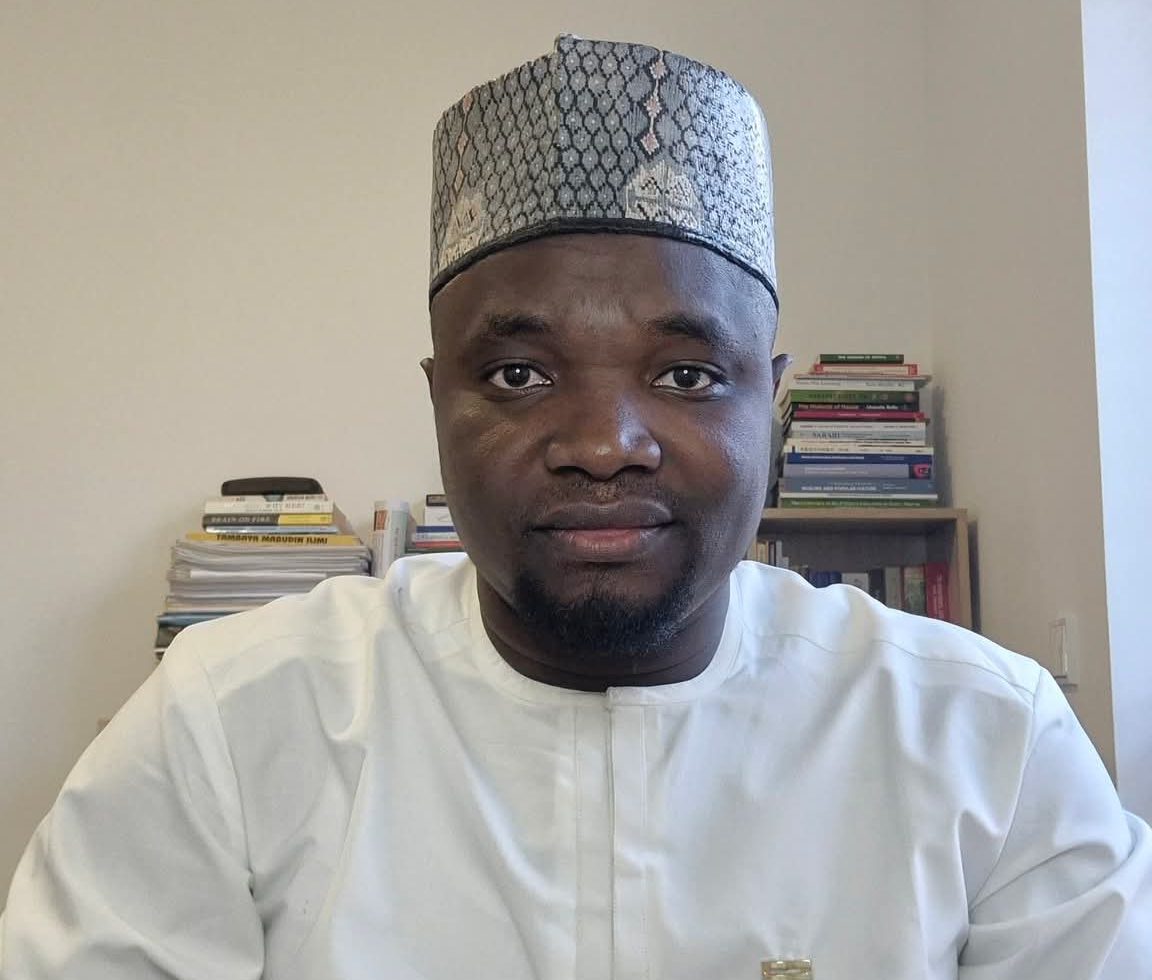
Operatives of the Economic and Financial Crimes Commission have arrested Mustapha Abdullahi, the DG of the Energy Commission of Nigeria, on allegations of money laundering and related offences.

A source within the anti-graft agency, who spoke on condition of anonymity because he was not authorised to speak on the matter, disclosed on Wednesday that the DG was arrested in Abuja and is currently in the commission’s custody.

According to the source, the alleged fraud involves funds estimated at N500bn.

“We have arrested the Director-General of the Energy Commission of Nigeria, Dr Mustapha Abdullahi, for money laundering offences. He was arrested and is currently in our custody. The money is to the tune of N500bn,” the official said.

The Daily Reality gathered that efforts to get confirmation from the EFCC spokesperson, Dele Oyewale, were unsuccessful as he could not be reached as of the time of filing this report.

On October 24, 2023, President Bola Tinubu appointed Abdullahi as Director-General of the Energy Commission of Nigeria.

North-Eastern University and the Emergence of Gombe as a Higher Education Hub

By Muhd El-Bonga Ibraheem

Founded in 2022 as the first private university in Gombe State, North-Eastern University has rapidly emerged as one of the most ambitious and forward-looking institutions in Northern Nigeria. The university was established to bridge several educational gaps, and since its inception, it has continued to grow from strength to strength across nearly all facets of academic and institutional development. 

In barely a few years, the university has distinguished itself through academic excellence, infrastructural expansion, research, technological innovation, and professional accreditation, positioning Gombe State as an emerging hub for higher education and specialised professional training.

Most notably among its many milestones, the university recently recorded a landmark achievement with the successful securing of full accreditation for its Architecture programme by the Architects Registration Council of Nigeria (ARCON). This accreditation confirms that the programme meets the national professional standards for architectural education in Nigeria and enables graduates to proceed toward professional registration as architects. More significantly, North-Eastern University, Gombe, following my recent interaction with its Deputy Vice Chancellor—my brother, Prof. Sani Isyaka—is currently the only university in the entire North East region with full ARCON accreditation, and one of only three universities in northern Nigeria to possess this distinction. This milestone places both the institution and Gombe State at the forefront of architectural education and built-environment training in the region.

Additionally, although still in its fledgling stage, the university has demonstrated an admirable pace of growth and institutional development. For instance, it was the first among the newly licensed private universities to commence academic activities in the 2022/2023 academic session and quickly became the first institution to fully implement the National Universities Commission’s Core Curriculum and Minimum Academic Standards (CCMAS). This magnificent feat subsequently earned the university a Gold Medal for successfully completing all CCMAS development stages within its first year of operation, alongside a distinction rating in the NUC’s Virtual Institute for Capacity Building in Higher Education trainings.

Today, thanks to persistent efforts, the university runs 27 undergraduate programmes across four faculties, 16 departments, 7 directorates, 1 academy, and 2 centres, all approved by the National Universities Commission (NUC). Over the years, the young university has witnessed an exponential rise in enrolment, with its diverse student population across many strata of society growing rapidly to about 2,000 undergraduates, making it one of the fastest-growing private universities in the North East sub-region. To accommodate these growing numbers, the university recently passed a resource verification exercise by the NUC for the creation of new, highly sought-after undergraduate programs in Artificial Intelligence and Information Systems, as well as a Doctor of Pharmacy (Pharm D).

What particularly sets the institution apart is its investment in research and specialised facilities. Recently, the university established the Centre for African Medicinal Plants Research, equipped with advanced laboratories dedicated to natural products research, microbiology, synthesis, and pharmaceutical formulation. It also houses specialised scientific facilities rarely found in many universities across the country.

Given the pervasive rise in technology integration, especially in the post-COVID-19 era, the institution has equally prioritised technology-driven learning and global academic engagement. Through its CISCO Academy and the adoption of the Octopus Learning Management System, the university has embraced blended learning supported by several online learning platforms. It has also established research and academic collaborations with globally recognised institutions, including the University of Surrey, Universiti Teknologi Malaysia, and several others across Africa and beyond.

As a mark of excellence, following several tours whenever I visit the school, the university equally boasts of fully furnished lecture halls, auditoria, solar-powered electricity, science laboratories, Mass Communication studios, an Architecture studio, Moot Court facilities, modern hostels, ICT centres, and the state-of-the-art Justice Abubakar Jauro Law Library. Nonetheless, ongoing campus expansion projects, beautification initiatives, and student-friendly facilities further reinforce its commitment to creating a modern academic environment.

In many respects, the rise of North-Eastern University symbolises the growing educational and intellectual aspirations of the North East sub-region. Through strategic investment in quality education, research, infrastructure, and professional standards, the university is increasingly building a reputation as one of Nigeria’s emerging centres of academic excellence. 

With the massive development the university has experienced in virtually all dimensions over the past few years, amid sustained momentum of outstanding achievements, the university aims to achieve the founder’s long-term vision of becoming one of the best universities in Nigeria within the next 10 to 15 years.

El-Bonga can be reached via miabba40@gmail.com

Woman in Kano Sets Husband, Co-Wife, Children Ablaze

By Sabiu Abdullahi

A 28-year-old woman, Firdausi Musa, and her two children suffered severe burns after her co-wife, Maryam Muhammad, allegedly poured petrol on them and set them on fire in the Hotoro area of Kano metropolis.

The incident happened late on Monday night in the Mai Allo area of Hotoro quarters. Residents were thrown into shock following the attack, while the suspect is currently in police custody at the Mariri Police Division.

The victims include Firdausi Musa, her two children—Khadija Ya’u, 7, and Ismail Ya’u, 3—and their father, Malam Saminu. All are receiving medical attention at different health facilities in Kano. The children are being treated at the National Orthopaedic Hospital, Dala, while their mother is receiving care at the Murtala Muhammad Specialist Hospital. Their father also sustained burns while attempting to rescue them.

A younger brother to Firdausi, Buhari Musa Sa’ad, told newsmen that the family received a distress call around 3am informing them of the attack.

He said, “She is around 28 years old. The children who got burned are the ones she brought with her from her previous marriage. They are stepchildren to the husband, who works as a tricycle rider.”

A relative of the victim, Rukayya, said the co-wife had earlier issued threats before the incident occurred. She also said Firdausi directly named the attacker while receiving treatment.

“We were lying down here when she was brought in, and she told us herself that it was her co-wife who poured petrol on her and lit a match,” she said.

Rukayya further explained that Firdausi had earlier left the house due to repeated threats but later returned after intervention from her husband.

The Kano State Police Command had not issued an official statement on the incident at the time of filing this report.

Kano Anti Phone-Snatching Task Force Officer Bitterly Cries Out Over Unpaid Salaries, Allowances

By Sabiu Abdullahi

One of the officers attached to the Kano State anti-illicit drugs and phone-snatching task force has raised concerns over the alleged non-payment of salaries and allowances for several years.

The officer, who spoke emotionally in a video circulating online, lamented the condition faced by members of the outfit after completing their training.

According to the officer, many personnel have continued to work despite not receiving salaries or allowances from the government for years.

The officer also accused the government of neglecting members of the task force after their recruitment and training.

The operatives are known for supporting efforts against illicit drug activities and phone snatching in parts of Kano State.

As of the time of filing this report, the Kano State Government had not issued an official response to the allegations.

Speaker Abbas Seeks Stronger Nigeria-Saudi Ties, Proposes Scholarship Programme Through Parliament

By Abdullahi Mukhtar Algasgaini

The Speaker of the House of Representatives, Rt. Hon. Abbas Tajudeen, Ph.D., GCON, has called for stronger diplomatic ties between Nigeria and the Kingdom of Saudi Arabia, particularly through educational exchange programmes aimed directly at grassroots communities.

Speaking on Tuesday in Abuja while hosting the new Saudi Ambassador to Nigeria, Yousef bin Mohammed Al-Balawi, the Speaker recalled that diplomatic relations between both nations date back to 1961, describing the connection as “extremely, very historic.”

Speaker Abbas specifically requested that scholarship opportunities be channelled to Nigerians through their representatives in the National Assembly, noting that lawmakers maintain direct contact with constituents at the grassroots level.

“I also want to commend your country for supporting a lot of Nigerians on education in particular,” the Speaker said. “So many of our accomplished clerics and scholars in Nigeria can attribute their foundation and success educationally to the scholarships that Saudi Arabia has been giving to our students over the past 40 years.”

He drew a parallel with a recent collaboration with the Algerian Government, which has pioneered a model of engaging the Nigerian Parliament directly, rather than limiting cooperation to the Executive arm alone.

The Speaker recalled that during a visit to Algeria about six months ago, both nations agreed that scholarship slots offered to Nigeria would be shared between the Executive and Legislative branches.

“We are happy to inform you that through that particular understanding, over 200 scholarship slots are under the process of being given to the Nigerian Parliament to also support their (members’) people at the grassroots,” Abbas stated.

He expressed hope that in the coming months, a similar arrangement could be established with Saudi Arabia, ensuring that educational benefits reach Nigerians across all levels of society through their elected representatives.

Three Jigawa Pilgrims Lose Money, Valuables To Theft During Hajj In Saudi Arabia

By Sabiu Abdullahi

Three pilgrims from Jigawa State taking part in the 2026 Hajj in Saudi Arabia have reportedly fallen victim to theft in separate incidents involving cash and personal belongings.

One of the affected pilgrims, an elderly Fulani man identified as Baba Katanga from Katanga village in Kiyawa Local Government Area, said he lost 400 US dollars after boarding a taxi from Masjidil Haram to Mahabbat Al Akhawin Hotel in Makkah.

The pilgrim alleged that the taxi driver stole the money while he was checking his Nusuk card during the journey.

“I was surprised when I later checked and discovered that my 400 dollars had disappeared. I became confused because that was the money I intended to use throughout my stay,” he said.

In another incident, a Fulani pilgrim from Jahun Local Government Area reportedly lost all his dollar notes to a suspected taxi driver. His identity was not made public.

A female pilgrim popularly called Hajiya also reportedly lost a handbag that contained two mobile phones and cash meant for her upkeep during the pilgrimage.

The incident happened at Miqat in Madinah, where pilgrims usually prepare for Umrah by performing ablution, wearing Ihram and making Niyyah before travelling to Makkah.

Sources said the woman left the bag unattended briefly before she discovered that it had disappeared.

The incidents have reportedly generated sympathy among other pilgrims from Jigawa State, with some of them contributing money to assist the victims while awaiting possible intervention from relevant authorities.

The Director-General of the Jigawa State Pilgrims Welfare Board, Alhaji Ahmad Umar Labbo, expressed concern over the incidents and assured the affected pilgrims of support from the board.

He said the board had earlier warned pilgrims before their departure from Nigeria to remain alert and protect their money and valuables from criminals who target crowded places.

Labbo also advised pilgrims not to hand over their belongings to strangers or leave valuables unattended, especially around holy sites and transport locations.

He further prayed for the safety and protection of all pilgrims throughout the Hajj exercise.

2027: Atiku Warns Opposition Parties Against Zoning Presidency to South


By Abdullahi Mukhtar Algasgaini

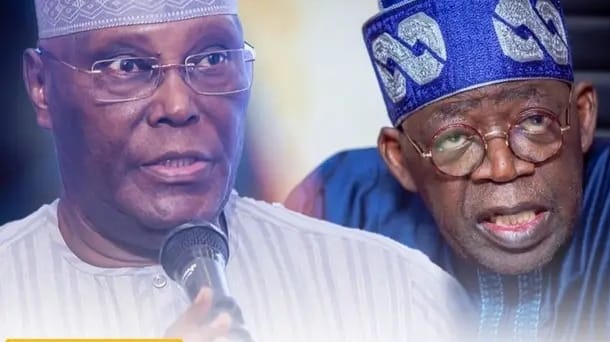
Former Vice President Atiku Abubakar has cautioned opposition parties against zoning their 2027 presidential ticket to the South, warning that such a decision could undermine their chances of unseating President Bola Ahmed Tinubu.

In a statement issued by his spokesperson, Olusola Sanni, Atiku described the push for a southern candidate as “self-defeating and intellectually dishonest.” He argued that political strategy and “hard electoral arithmetic” should guide the opposition, not “emotional talking points.”

“The first and most obvious question is this: how does a Southern opposition candidate realistically unseat a sitting Southern president?” the statement queried, noting that no incumbent president has ever lost to an opponent from the same region.

Atiku’s camp further pointed out that by 2027, the South would have spent approximately 18 years in power since the return of democracy in 1999, compared to about 10 years for the North. This, they argued, makes the zoning argument difficult to justify “under the guise of equity.”

The former vice president also accused some politicians of hypocrisy, recalling that they supported Goodluck Jonathan’s presidency in 2011 following the death of Umaru Musa Yar’Adua, yet now defend zoning as a sacred principle.

However, Atiku maintained that the Southeast region deserves “a sustainable and credible pathway to national leadership,” not “symbolic tokenism.”

Troops Kill 3 Terrorists, Seize 175 Livestock, Arrest 6 Drug Suspects in Katsina


By Abdullahi Mukhtar Algasgaini

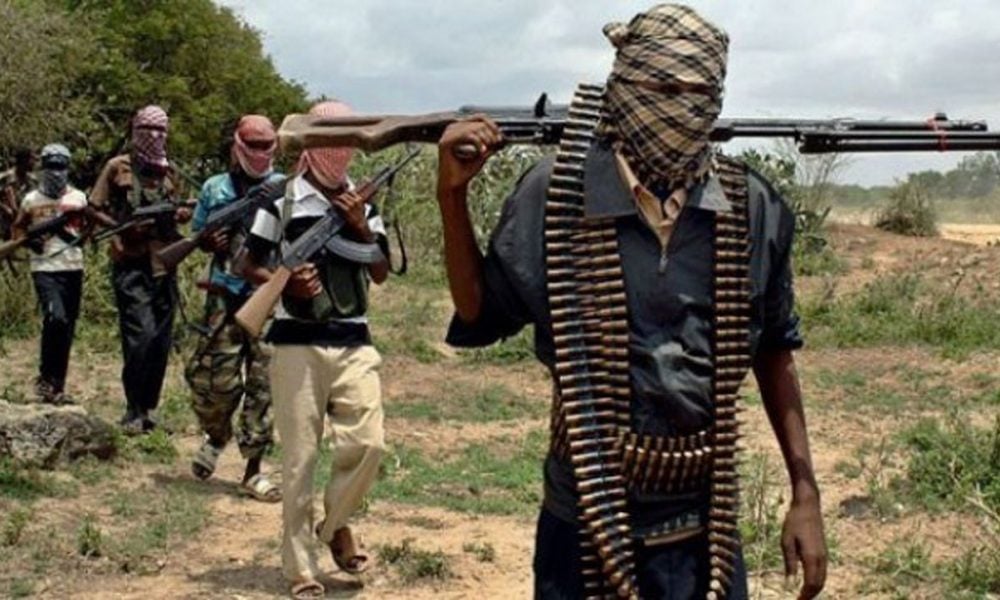
Military forces operating under Operation FANSAN YAMMA have recorded multiple successes across five local government areas in Katsina State, neutralizing three terrorists, recovering stolen livestock, and dismantling a drug ring, authorities said on Sunday.

According to a statement by Lieutenant Colonel Aliyu Danja, Media Information Officer for the Joint Task Force (North West), troops of the 171 Battalion laid an ambush along the Matazu–Dutsin-Ma axis on Saturday, May 9, 2026, following intelligence that terrorists were fleeing recent military operations in Dikawa.

During the ensuing firefight, troops killed three terrorists and recovered two AK-47 rifles with loaded magazines, one motorcycle, three cutlasses, and assorted charms.

In a separate clearance operation across Matazu, Musawa, and Kankia LGAs, troops supported by the Katsina State Community Watch Corps cleared terrorist enclaves in Torcachi, Giginya, and Tashar Ganji villages. The terrorists abandoned their camps under sustained pressure, and troops recovered 175 rustled livestock. The animals are now in military custody awaiting handover to local authorities in Matazu LGA.

Additionally, troops from Forward Operating Base Malumfashi, working with operatives of the National Drug Law Enforcement Agency (NDLEA), raided Kauyan Dawo in Malumfashi LGA, arresting six suspected drug peddlers: Sani Rabiu (25), Umar Nasiru (22), Abulkubus Aminu (35), Abdullahi Halilu (27), Abubakar Rabiu (22), and Abubakar Dahiru (33).

Seized narcotics included 82.5 grams of suspected Cannabis Sativa, 15.7 grams of Exol-5, and 1.8 grams of D5. The suspects and drugs have been transferred to the NDLEA Malumfashi Area Command for prosecution.

The Theatre Command called on the public to continue providing timely and credible information to security agencies.

WIW 2026: Securing Health for Future Generations

By Ibrahim Happiness

‎Every year from April 24 to 30, the world marks World Immunisation Week, a global campaign coordinated by the World Health Organisation (WHO) to highlight one of the most effective public health tools ever developed: vaccines. In 2026, the campaign comes with renewed urgency as countries work to close immunity gaps, restore routine vaccination disrupted in recent years, and protect millions of children and adults from preventable diseases.

‎‎This year’s theme, “For every generation, vaccines work,” underscores a simple but powerful reality: immunisation is not only for infants. Vaccines protect people throughout life, from newborn babies receiving their first doses, to adolescents, pregnant women, healthcare workers, and older adults needing booster or age-specific protection. It is a reminder that vaccines have served families for generations and remain central to a healthier future.

‎Globally, vaccines have transformed human survival. WHO estimates that immunisation has saved more than 150 million lives over the last 50 years, with most of those lives saved being those of infants. Vaccination has reduced deaths from diseases such as measles, polio, tetanus, diphtheria and whooping cough, while preventing lifelong disabilities and severe complications that once devastated communities. Public health experts note that vaccines are among the most cost-effective investments any nation can make because they prevent illness before it starts, reduce pressure on hospitals, and strengthen productivity.

‎Yet despite this progress, millions of children worldwide still miss out on essential vaccines each year. The reasons vary by country: poverty, insecurity, displacement, weak health systems, long travel times to clinics, shortages of trained health workers, and the spread of misinformation. When vaccination rates decline, diseases quickly return. Recent outbreaks of measles and other vaccine-preventable illnesses in several parts of the world have shown how fragile progress can be.

‎In Nigeria, World Immunisation Week is particularly significant. Africa’s most populous country has made progress in expanding routine immunisation through the National Primary Health Care Development Agency (NPHCDA), state governments, donor partners, and frontline health workers. Vaccines for children are provided free through public health facilities, and campaigns against polio, measles, yellow fever and meningitis have helped protect millions.

‎However, challenges remain substantial. Many rural and hard-to-reach communities still struggle with access to health centres. Insecurity in parts of the country continues to disrupt outreach services. Urban slums also face low coverage due to population movement and poor health infrastructure. In some communities, false claims about vaccine safety continue to create hesitation among parents.

‎Nigeria’s Coordinating Minister of Health and Social Welfare, Muhammad Ali Pate, has repeatedly stressed in 2026 that strengthening primary healthcare and expanding routine immunisation are key pillars of the federal government’s health reform agenda. He has called for stronger state-level accountability, improved cold-chain systems, and deeper community engagement to ensure that no child is left behind. According to the minister, immunisation is not merely a health intervention but an investment in national development, because healthy children are more likely to learn, grow, and contribute productively to society.

‎The Executive Director of the National Primary Health Care Development Agency, Muyi Aina, has also emphasised the importance of reaching zero-dose children, those who have never received a single routine vaccine. He noted that Nigeria’s progress will depend on better data systems, mobile outreach teams, local partnerships, and trust-building with communities.

‎International partners have echoed similar concerns. UNICEF and World Health Organisation officials in Nigeria have warned that preventable diseases can spread rapidly when immunisation services are missed, especially among vulnerable children. They continue to urge governments and families to prioritise vaccination and routine health checks.

‎‎World Immunisation Week, therefore, is more than a symbolic observance. It is a timely reminder that progress in health must be protected. Vaccines only work when they reach people. A child in a remote village deserves the same protection as a child in a city hospital. A mother deserves accurate information, not fear-driven rumours. Health workers deserve the support and tools needed to save lives.

‎For Nigeria, the path forward is clear: sustained political commitment, increased domestic funding, stronger local healthcare systems, and public trust. Communities, religious leaders, schools, media organisations and civil society all have a role to play in promoting accurate information and encouraging uptake.

‎As the world marks World Immunisation Week 2026, the message remains straightforward and timeless: vaccines work, they save lives, and they must reach every generation.

Ibrahim Happiness is a 300-level Strategic Communication student at the University of Abuja and an intern with IMPR. She can be reached at: happinessibrahim11@gmail.com.