Nigeria

Is it really Kano First or Politics First? 

By Dr Aminu Tukur Adam

The recent political drama in Kano State, which began as a rumour before metamorphosing into a full-blown political battle, is interesting: how loyalty is being reinterpreted, how personal interest is being transformed into the people’s mandate, and how politics gradually takes over governance. 

It’s now becoming crystal clear to everyone that the Kano State government is not only static but also backtracking. At a critical point of state emergency and national concern, our dear state is being placed on hold. 

To begin with, APC was initially viewed as a disaster by Engr. Rabiu Musa Kwankwaso, Kano State governor and all their supporters; many of the supporters sacrificed their lives to rescue the state from the APC, a party that was hated for its immense corruption, extortion and oppression. 

As big as Kano State is, with its about 20 million population and an over 1 trillion naira budget, it will surprise you to know that the state’s executive council members are currently redundant; the council held only one executive session in the span of 90 days! The previous buzzworthy council is now scheduled for the end of recess. 

That probably explains why the only visible function of this government, road construction, is also neglected; no one is there to approve new projects or supervise the ongoing ones. 

The most unfortunate event was the visit of the Turkish ambassador to Nigeria to the Kano State government house, with the aim of consolidating multimillion-dollar projects, but astonishingly, only the Chief of Staff and two commissioners received a figure like this! For anyone familiar with the Turkish Cooperation and Coordination Agency (TIKA), it must have been a nightmare. 

TIKA isn’t like the usual agencies you see; it’s an international technical assistance agency. This same agency renovated the Kano capital school without a penny from the state government. 

We’re also talking about the Turkish Trading Firm, Direkçi, which has invested over $22 million in Nigerian states, with Kano as a major beneficiary.

The visit was intended to create an opportunity to secure scholarships for Kano state indigenes, to bring the Turkish humanitarian foundation IDDEF to boost humanitarian services in the state, and to commence visa services at the Turkish consulate in the state.

Yet, when that esteemed Ambassador walked into the Government House, he was neither received by the Governor, nor his deputy, nor the SSG.

While the governor plays an absentee landlordism, some villages in the state were burning and many lives were also lost; the recent unfortunate incident in the Katai and Fauda communities in Wudil local government generated widespread reactions, a police officer lost his life and villages were set ablaze; however, no formal press release, no condemnation and no any form of assurance from the state government. 

Astoundingly, when the governor was too busy to hold a council meeting, overwhelmed to meet the Turkish ambassador to Nigeria and also overloaded with responsibilities to comment on the Wudil incident, we saw his face in the convoy of Yilwatda, the APC national chairman, courting the governor of Bauchi state, Bala Muhammad, into APC. 

To add more salt to the injury, when the governor was returning to Kano, the local government chairmen and some of the governor’s aides orchestrated a drama, where a rented crowd were paid to welcome the governor from his political excursion. You may be surprised as to why the welcoming? Was he not just coming back from Abuja? Was the journey not a political journey for the APC’s convention? Is there any significance to this journey in the life of the innocent Kano people? 

This is the Kano first agenda they’re selling. It’s not about you or the state; it’s simply an idea to sell Bola Tinubu and his party.

Indeed, Pantami — The North Must Tell Its Own Story

By Abubakar Musa Idris

During a recent Ramadhan Tafseer session in Abuja, former minister Isa Ali Pantami made a remark that ought to trouble every Nigerian who cares about media fairness. The North, he argued, needs a strong media presence capable of projecting its narratives to the world. This was not a regional call. It was a practical response to a structural imbalance that leaves Northern perspectives underrepresented both within Nigeria and beyond.

Two concepts explain what Pantami identified. The first is agenda-setting: when news platforms decide what to cover, they are effectively deciding for millions what matters. The second is the battle for narrative control: the competition to shape public conversation. He who wins this battle helps set the agenda. He who has no platform is spoken for by others. This battle plays out globally, where international outlets shape how the world sees Nigeria, and nationally, where the concentration of media houses influences which stories receive prominence.

Consider Nigeria’s media geography. Most major privately owned networks are headquartered in Lagos. This is not a conspiracy; it is a commercial reality. Lagos is the natural home of advertising revenue and media infrastructure. Consequently, perspectives from that region receive sustained national attention not out of malice, but simply because journalists live there. When newsrooms are concentrated in one area, other regions struggle for airtime. The North is reported on rather than reporting. This absence of strong Northern media with national reach is not favourable to accurate national discourse.

The international dimension is equally urgent. Global wire services—Reuters, AP, BBC, CNN, Al Jazeera function as gatekeepers of the world’s agenda. Their choices shape the understanding of billions. Research confirms that coverage of developing nations is almost entirely limited to stories of war and disaster. If a region cannot feed its perspectives into these channels, its stories will be told by others, whether incompletely or inaccurately, sometimes with hostile intent.

Consider what happened on February 19, 2026, when suspected Lakurawa terrorists attacked Kebbi State, killing thirty-four Muslims fasting for Ramadan. The next day, gunmen massacred thirty-eight more in Zamfara. Earlier that week, gunmen in Plateau abducted an imam and seven mosque committee members. Where was the sustained national coverage? Where were the front-page stories? Coverage existed, but it was minimal relative to the horror.

Not because these deaths mattered less. They received less attention because the institutions with the power to amplify them are far from affected communities, and because the North lacks platforms to project these tragedies into national consciousness.

Now contrast this with another narrative that dominated global discourse throughout 2025. Between January and October, a story alleging Christian genocide in Nigeria gained significant traction. Investigators traced this coordinated campaign to networks affiliated with IPOB. The narrative reached 2.83 billion impressions on X alone. It influenced the United States to designate Nigeria a Country of Particular Concern. It shaped discourse around the Sokoto airstrike. It is now cited in discussions about sanctions against Northern figures and proposals to label Fulani groups as terrorist organisations. 

One side had an army of storytellers. The other had none. Agenda-setting power shifted accordingly in Abuja and Washington. The absence of strong Northern media is not favourable in such a landscape.

The proposed sanctions and scrutiny of the Fulani illustrate where this leads. As analyst Yushau Shuaib observed, criminal elements exist across every line. But the Fulani are a diverse population numbering in the millions. Collective blame is profiling. 

Yet profiling becomes easier when only some perspectives dominate discourse. The Fulani have no platform to tell their own story, their history, their contributions, their humanity. They risk being defined solely by what others say. This is about ensuring all Nigerians can represent themselves accurately when the world is watching.

Pantami also pointed inward, critiquing Northern media that prioritize entertainment over substantive reporting. Insecurity, education, industrial revitalisation, issues that shape daily life receive far less attention than partisan conflicts. The stakes are higher for regions with limited platforms. When local media fails to set a serious agenda, it becomes distraction. 

But the problem is also reaching. Numerous Northern stations exist, but many broadcast locally in Hausa, limiting national influence. Reliance on NTA alone is insufficient. The absence of strong, English-language, professionally run Northern media with national ambition is simply not favourable.

Pantami also called for a world-class station broadcasting in English, French, and other global languages. Its purpose: to speak to Nigeria and the world. To feed alternative narratives into national and global ecosystems and claim power to help set the agenda. He pointed to Al Jazeera.

 Before Al Jazeera, the Arab world was narrated by Western outlets. After, Arab perspectives could not be ignored. The channel succeeded not as propaganda, it faced criticism from all sides but because it invested in professional journalism and built credibility. A Nigerian equivalent could do the same.

Consequences extend beyond the North. When any community cannot tell its story, the nation’s image is shaped by whoever has the loudest platforms. International sanctions and diplomatic decisions are increasingly influenced by narrative control. So too are national decisions: budget allocations, security responses. If Northern realities are not part of the national conversation, they will not be part of the national response. Without professional media projecting Nigerian perspectives, the country will be defined by whichever voices dominate existing platforms. This is not favourable to national cohesion.

Pantami spoke during a religious gathering, but his message was strategic. He identified a vulnerability and proposed a solution. The question is whether Northern elites will redirect resources toward building the media infrastructure the region desperately needs. The North must tell its own story. Not because its story matters more, but because every community deserves to represent itself. Nigeria needs multiple voices engaging with the nation and world.

Today, many platforms shaping perceptions of Northern Nigeria are headquartered elsewhere. This is not an accusation. It is media geography. And geography can be changed. The North can build. It can invest. It can tell its own story. Not through propaganda, but through professionalism. Not by silencing others, but by adding its voice.

Abubakar Idris wrote via abkidris99@gmail.com.

President Bola Tinubu Commissions New Customs FOU ‘A’ Complex In Ogun

By Sabiu Abdullahi

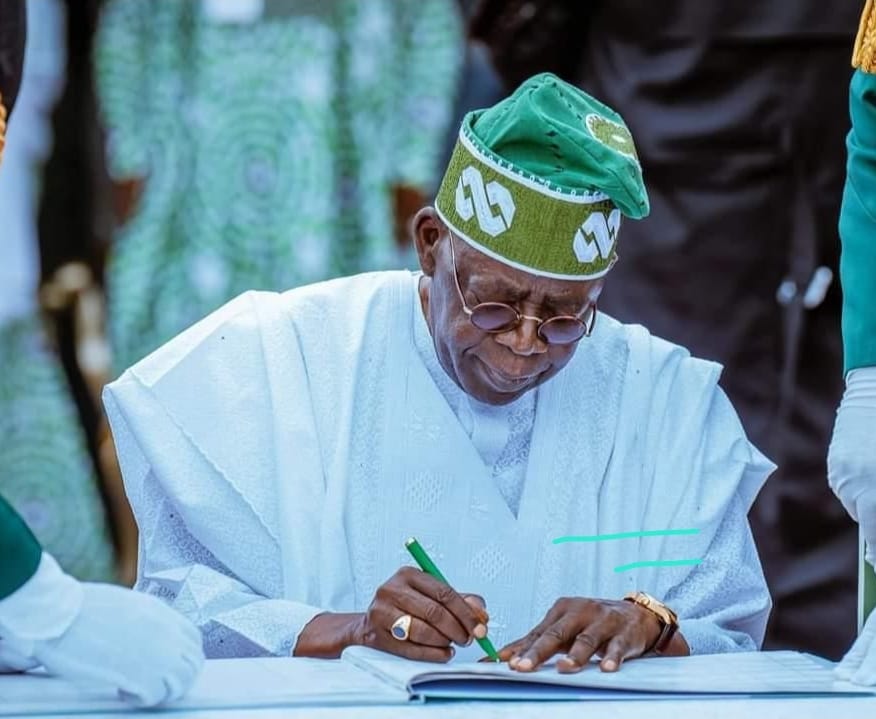
President Bola Ahmed Tinubu has inaugurated a newly built Federal Operations Unit (FOU), Zone ‘A’ office complex of the Nigeria Customs Service in Iperu, Ogun State. The project marks a significant step in the agency’s expansion and reform programme.

The commissioning took place on Saturday, April 4, 2026. During the event, the Comptroller-General of Customs, Adewale Adeniyi, said the project reflects efforts to strengthen the Service’s core responsibilities while improving staff welfare and working conditions.

He explained that the new facility became necessary due to growing operational pressure and inadequate space at the existing base in Ikeja, Lagos.

“We’ve just commissioned the Federal Operations Unit; they will be moving here as soon as possible. It’s already been furnished. The accessories that would ensure proper functioning of the facilities have also been installed. Provision of a modern armoury and then, of course, you know that this is the warehouse directly opposite this facility. This warehouse will also support the warehouse at the nearby aviation village”, he explained.

Adeniyi praised Ogun State Governor, Dapo Abiodun, for supporting the relocation effort. He also acknowledged former Comptroller-General, Col. Hameed Ali (Rtd), for initiating the project. He said the former CGC laid the groundwork for its completion.

On the financial aspect, Adeniyi disclosed that the project was initially valued at ₦73 billion. He noted that current economic conditions may lead to a revision of the cost.

The Customs boss also revealed that operations have started at the nearby cargo airport, which was inaugurated on the same day. He said officers are already involved in cargo handling and terminal activities.

“We’re already at the airport, and we also had our officers who performed tallying when Mr President was asked to witness the offloading of the first cargo at the airport. So, we’re already there, the facilities have been provided for us.”

The project site is designed to host about 142 structures. These include a training college, multipurpose halls, and a sports complex. The development reflects the Service’s long-term plan for growth and modernisation.

CGC Adeniyi Backs Team Nigeria Ambassadors For Glasgow 2026, Reaffirms Commitment To Sports Development

By Sabiu Abdullahi

The Comptroller-General of Customs, Wale Adeniyi, has pledged support for Team Nigeria’s build-up to the 2026 Commonwealth Games after his appointment as one of the country’s official ambassadors by the National Sports Commission.

The announcement, which was made on April 1, 2026, forms part of efforts to mobilise nationwide backing for the Games. The initiative brings together key figures from the sports sector, including administrators, former athletes, and other stakeholders. Adeniyi’s inclusion highlights the increasing role of public institutions in sports development and places the Nigeria Customs Service among contributors to Nigeria’s international sporting ambitions.

Members of the ambassadorial team include experienced sports administrators such as Mallam Saleh Ahmadu, Dr Amos Adamu, Chief Patrick Ekeji, Alhassan Yakmut, and Gbenga Elegbeleye. All have held leadership roles at the National Sports Commission. Their experience is expected to guide planning and preparation for the Games.

The team also features notable former athletes. Among them are Olympic medalist Daniel Igali and Commonwealth champion Blessing Oborodudu. Other stakeholders and representatives from the private sector were also named. The composition of the group reflects an attempt to combine technical knowledge with athlete experience to strengthen preparations.

Reacting to the development, the Comptroller-General praised the initiative and described sports as an important tool for unity, youth involvement, and global recognition. He stressed the need for cooperation among stakeholders to ensure effective preparation for the competition.

“The success of Team Nigeria will depend not only on the athletes but on the strength of the support system around them. This ambassadorial initiative is a step in the right direction towards building that collective responsibility,” he stated.

The 2026 Commonwealth Games will take place in Glasgow, Scotland, from July 23 to August 2, 2026. Athletes from across the Commonwealth are expected to compete in several events, including athletics, swimming, boxing, cycling, and gymnastics. The programme will also include para-sports.

Kano Police Seek Family Of 16-Year-Old Boy Found Wandering In Doguwa

By Sabiu Abdullahi

The Kano State Police Command has announced the discovery of a 16-year-old boy identified as Alex Ansol, who was found wandering in Dadin Kowa Village in Doguwa Local Government Area of the state.

In a statement issued by the command, the police said the teenager was located after a report was received concerning his situation.

According to the account provided by the boy, he arrived in Nigeria from Spain on March 30, 2026, alongside four relatives through the Nnamdi Azikiwe International Airport in Abuja. He explained that they were on their way to Kano to visit his father, Ansol Fan, when he became separated from them along the Jos to Saminaka road.

Police described Alex as a thin, dark-complexioned boy who speaks English and has no tribal marks. He reportedly gave his address as Barsa Rub, Opposite 46 Stadium, Spain.

The command stated that efforts are ongoing to trace his relatives and reunite him with his family.

Authorities have urged members of the public with useful information to reach out to the Office of the Police Public Relations Officer, Kano State Command, or contact the Divisional Police Officer of Doguwa Division via 07038363421.

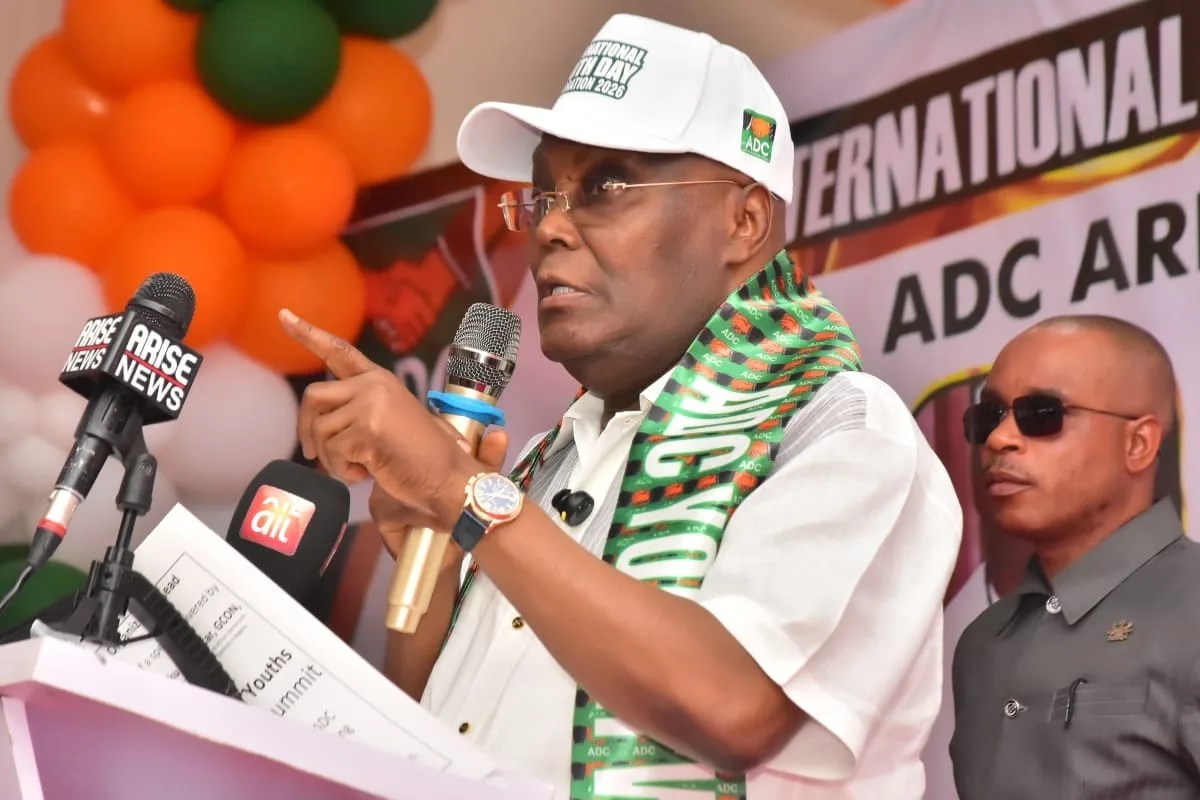
ADC Forms Envoy Network To Engage Foreign Governments, Counter INEC, Presidency’s ‘One-Sided’ Narratives

By Sabiu Abdullahi

The African Democratic Congress (ADC) has announced the appointment of envoys in 12 major cities across the world. The party said the move is part of efforts to draw international attention to what it described as a “growing pattern of undemocratic practices and attacks on opposition members” in Nigeria.

The development comes shortly after the Independent National Electoral Commission (INEC) withdrew recognition from both the faction led by David Mark and another group headed by Nafiu Bala.

In a statement issued by Mohammed Haruna, INEC’s commissioner for information and voter education, the commission explained that it would not relate with either faction. It based its decision on a March 12 judgment of the Court of Appeal. INEC also stated that it would stay away from any meetings or activities organised by the groups until a pending case before the Federal High Court is resolved.

The decision has generated strong reactions. The Mark-led faction of the ADC called for the removal of INEC chairman, Joash Amupitan. The group argued that the commission’s position reflects bias and weakens public confidence in the electoral body.

On Saturday, the party’s national publicity secretary, Bolaji Abdullahi, disclosed that the ADC has created a “special representatives network (SRN) in key foreign capitals” to deepen its international engagement and promote accountability in governance.

He alleged that since July 2025, there have been attempts “to destabilise opposition parties, undermine legitimate party leadership structures, and restrict democratic political participation”.

According to Abdullahi, the SRN will serve as a formal channel between the ADC and global stakeholders. He said selected individuals will act as envoys in strategic cities. Their role will include engaging foreign governments, legislative institutions, international media organisations, and Nigerians in the diaspora.

He added that the representatives will keep their host countries informed about political developments in Nigeria. These include issues related to governance, human rights, election credibility, and what he described as pressure on opposition figures. They will also present the party’s policy ideas and reform agenda.

Abdullahi noted that the initiative is designed to reinforce the party’s image as “a responsible democratic actor” and present it as a credible alternative for leadership.

The ADC listed Washington DC, London, Brussels, Berlin, Ottawa, Paris, Pretoria, Addis Ababa, Nairobi, Accra, Geneva, and New York as the cities where the envoys will operate.

The party also revealed plans to launch a documentation system across the country. Abdullahi said this mechanism will record incidents that affect political participation.

“State party structures will gather information on incidents including threats, harassment, violent attacks, arbitrary arrests, and disruptions of political activities,” he said.

Three KiIIed as Gunmen Launch Fresh Night Attack on Jos South

By Anwar Usman

Another tragedy struck again in Plateau State as unknown gunmen invaded Nyango Gyel in Jos South Local Government Area, killing three people in a late-night attack.

The unknown gunmen arrived at the community around 10:40 pm on Friday, shooting sporadically before fleeing into the darkness, eyewitnesses and community sources said.

The incident was confirmed by the secretary of the Berom Youth Moulders Association (BYM), Rwang Tengwong,  describing it as “one too many.”

He strongly condemned the attack, saying it represents yet another senseless assault on innocent citizens going about their normal business.

“This cycle of attacks on our rural communities must stop. We call on security agencies to act swiftly and bring the perpetrators to justice,” Tengwong stated.

He urged heightened vigilance among residents of rural communities in Jos South, Riyom, and Barkin Ladi Local Government Areas.

Recakked that, Plateau State Governor Caleb Mutfwang had earlier vowed that such attacks would not continue unchecked, instructing security agencies to find out those behind the recent bloodshed.

Missing UNIJOS Final-Year Student Found Dead

By Sabiu Abdullahi

Adeyemo Oluwafemi Temitope, a final-year student of quantity surveying at the University of Jos (UNIJOS) in Plateau State, has been confirmed dead after earlier being declared missing.

The confirmation was made by his close friend, Meshak Gimba, a 400-level psychology student, who shared the update on X on Friday.

“Adeyemo Oluwafemi Temitope has now been confirmed dead. He has been found, but not alive,” Gimba wrote.

According to a report by TheCable newspaper, Temitope’s body was discovered three days after reports emerged that he was attacked by unidentified persons in Jos, the state capital.

“We initially thought he went missing, and that was why I posted and circulated his picture on Facebook and included my number in case anyone finds him,” Gimba said.

“But we got a call earlier today to come to the hospital, where we saw his corpse.”

He explained that the remains had been taken to the University Teaching Hospital mortuary on Wednesday by local security operatives. The operatives reportedly said the student was attacked by unknown individuals.

“The officials at the hospital said the security operatives told them he was coming from the market that morning when unknown persons attacked and killed him at Bauchi junction, close to the hostel,” Gimba added.

The university’s vice-chancellor, Tanko Ishaya, has pledged to reach out to the deceased’s family to ensure proper identification and necessary arrangements.

Agama Solomon, the institution’s chief security officer, also confirmed the development.

“On Wednesday, he was declared missing. This morning, we were told that his corpse is at the university teaching hospita,” Solomon told TheCable.

“So, myself, the vice-chancellor, dean of student affairs, and other staff went to the hospital to find out whether truly that was his corpse.

“And we discovered that indeed, it was his corpse. His close friend identified him, saying he is the one,” he added.

Solomon said the university authorities had contacted the family and were awaiting their arrival to begin burial preparations.

The incident comes amid rising security concerns in the area. About 28 people were recently killed and several others injured in Angwan Rukuba, a community near the university in Jos North LGA.

In response to the tension, the university directed students to vacate hostels immediately on Wednesday. The management also suspended ongoing examinations, with plans to reschedule them after the Easter celebration due to the deteriorating security situation.

ADC Defies INEC, Fixes Dates For Congresses, National Convention

By Sabiu Abdullahi

The African Democratic Congress (ADC) has said it will proceed with its planned congresses and national convention, despite the Independent National Electoral Commission (INEC) withdrawing recognition of its leadership.

In a statement issued on Friday by the party’s spokesperson, Bolaji Abdullahi, the ADC outlined a timetable for the exercise, which is scheduled to run from April 7 to April 14, 2026.

According to the party, activities will begin with the screening of aspirants and conclude with a national convention at the end of the exercise.

“This is to notify all party members that, despite INEC’s illegal actions, the African Democratic Congress will continue with its congresses as scheduled, having duly notified INEC by our letters dated 27th February 2026 and 28th March 2026.

“Screening of Aspirants—7th April 2026; Appeals on Screening Exercise—8th April 2026; Polling Unit, Ward, and Local Government Congresses – 9th April 2026; Appeals on the Congresses-10th April 2026; State Congresses-11th April 2026; Appeals on the State Congresses-12th April 2026 and Convention-14th2026; April 2026,” the notice reads.

The development follows INEC’s recent decision to delist the party’s leadership under former Senate President, David Mark.

The ADC has criticised the move and called for the resignation of the commission’s chairman, Professor Joash Ojo Amupitan.

In response, Amupitan explained that INEC acted due to an ongoing court case. He warned that if the party goes ahead with the exercise in violation of judicial directives, any electoral victory recorded by the ADC could be nullified.

SHOCKING: Gunmen Kidnap Over 150 People in Zamfara

By Sabiu Abdullahi

Residents of Bukkuyum in Zamfara State have reported that gunmen kidnapped over 150 people during a nighttime raid.

According to locals, several villages were attacked, forcing hundreds to flee their homes.

Hon. Sulaiman Abubakar Gumi, a federal lawmaker representing Gumi and Bukkuyum, confirmed the incident to the BBC. He stated that residents of Kurfa Ɗanya and Kurfan Magaji spent the night in fear, and that all inhabitants have now left their villages, seeking refuge in Bukkuyum town.

Hon. Gumi added that the Bukkuyum, Gumi, and Anka areas have long suffered from armed attacks and kidnappings for ransom.

He called on the federal government to prioritize security in Zamfara State.
“We see that the government is now focused on Borno due to the threat of Boko Haram’s resurgence, but we urge it to remember that Zamfara is also facing serious security challenges,” he said.