Christians

Person of the year? Definitely more than that

By Abdulrazak Iliyasu Sansani

I begin this piece with what may strike the readers as a puzzling title. Perhaps it is. But I write this is in respect of the festive period and a matter closely associated with it. It is that time of the year where organisations, newspapers, magazines, groups, and even individuals sit to award, eulogise their heroes and heroines, or write about their persons of the year. A tradition that commenced in 1927 in the United States, Time magazine. 

According to a Wikipedia entry, ‘The tradition of selecting a “Man of the Year” began in 1927, with Time editors contemplating the newsmakers of the year. The idea was also an attempt to remedy the editorial embarrassment earlier that year of not having aviator Charles Lindbergh on its cover following his historic trans-Atlantic flight. By the end of the year, it was decided that a cover story featuring Lindbergh as the Man of the Year would serve both purposes.

Since then, this has continued with different labels, such as Man of the Year, Woman of the year, until the current and apt denomination: Person of the Year. I write today in the euphoria of the moment. But not so engrossed with it, as I had never subscribed nor joined those who partake in awarding their persons of the year, which has become prominent on social media recently by this time of the year. I relish seeing people excel in life. Although, I had never felt the urge to engage in the voguish celebration by an avalanche of people who issue this award chiefly on social media. 

But experts say to every rule; there is an exception. Although, I am not joining the trendy giving of awards or rather announcement of one’s person of the year. I have to acknowledge one of the most disciplined, rational, affable, and respectful Nigerians I have ever met. At this distressing hour of our history as a nation, I believe it is only fitting that patriotic people who have exhibited unique understanding in a multi-ethnic, multi-religious, sharply divided country like ours are honoured, encouraged, or at least merely mentioned as a mark of appreciation for their selfless contributions to our nation. Through the prism they behold our country, this country stands any chance of overcoming its insurmountable challenges. I am in awe of whoever has proven beyond any iota of doubt to be of a commendable grasp of the intricacies of our diverse society. Hence, I am writing this to recognise a man who has served this country meritoriously and honourably retired. 

While I applaud all these, it is in the basics that hold our communities today that this distinguished Nigerian has been more actively involved and has magnetised me to him. The simplest things build our society. They hold the fibre of our communities closely knit. Even though this is lost on many, I comprehend the importance of nation-building, starting from the communities. 

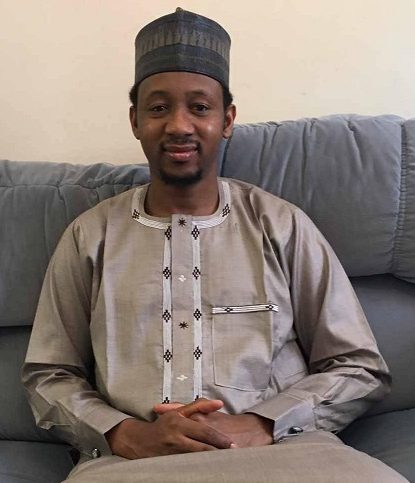
Nigeria as a whole has been sitting on a powder keg. This makes it extremely easy for disgruntled elements or even criminals to make capital out of it. So, whoever stops those from exploiting this deserves every reverence they can get. However, my person of the year, a man of impeccable character, has mastered the art of living in peace with others in a diverse country like Nigeria, especially the state he comes from: I am glad to hail from the same state as him. Yes, he comes from my state. He is Baba Augustine, commonly called Baban Ella in our neighbourhood, while we both refer to each other as Kawu, Baban Ella being a Jenjo man. 

I will, for this reason, address him as we usually call each other. Kawu lives in our Sabon Gari neighbourhood in Jalingo. More people don’t profess the same faith with him in our street. Muslims mainly own houses. Kawu is a Christian. It is now a time Muslims and Christians find themselves jostling to relocate to neighbourhoods predominantly occupied by those who worship God the way they do in fulfilment of the polarised realities of our country majorly resided by adherents of the two faiths. But as I was reliably informed, Kawu has resisted countless times the pleas to transpose by those who have accepted the new order of doing things. They believe it is safer to live in places inhabited only by members of their faiths. However, there is only a semblance of security in some instances, even in these types of neighbourhoods. 

The nitty-gritty of the matter is not that he has flagrantly refused to move into another place. But he has continued to relate with people from all social strata with unmatchable grace, sincerity, dignity, and esteem. Moreover, the way he attends to society’s problems is refreshing, laudable, and gratifying. Wedding ceremonies, naming ceremonies, burial ceremonies, community meetings; name them, he is there and participates fully with the families of those involved in any of these regardless of their faith.

While I don’t necessarily fancy awards, I get excited seeing worthy awardees being awarded or even merely celebrating people who have distinguished themselves by living exemplary lives irrespective of their pockets, which draws many awards to personalities rather than refined manners that help nation-building. 

Nigerians must celebrate worthy people like Kawu. But, Nigerians should not only stop at that. They should go further to borrow a leaf from them and apply it in the arduous task of nation-building, which must begin with one being a better person before influencing the next person, the family, the next-door neighbour, friends, colleagues, and the country as a whole. 

Abdulrazak Iliyasu Sansani wrote from Turaki B, Jalingo, Taraba State. He can be reached via abdulrazaksansani93@gmail.com.

No Maulud procession in Plateau this year—Troops

By Muhammad Sabiu


The troops saddled with the responsibility of maintaining peace and order due to the fragile peace in Plateau State have declared that there would be no Maulud procession across the state this year.

The Troops, also codenamed as Operation Safe Heaven, have in a statement signed by their spokesperson, Major Ishaku Takwa, said they had been directed “to ensure that no group organises any form of procession during the period of the Maulud.”

According to the statement, “Operation Safe Haven has noted the arrangement by some Muslim Youths on the Plateau to hold a procession to commemorate the birth of Prophet Muhammad SAW (PBUH) on Tuesday, 19 October 2021.

“Information received also indicated that the procession is organised without the knowledge of Jamaatul Nasir Islam (JNI), security agencies and the Plateau state government.

Nevertheless, the troops indicated that “While felicitating with the entire Muslim ummah on the birth of Prophet Muhammad SAW (PBUH) and recognising the right to such processions under different circumstances, it is, however, expedient to state that the fragile peace on the Plateau does not present a conducive atmosphere for any form of procession at the moment.

“Further to this, Operation Safe Haven, therefore, wishes to draw the attention of the youths and members of the public on the ban of any kind of protest and procession in force in the state.

“The Military task force encourages Muslim faithfuls to observe the Maulud without any form of procession.

“The Commander, Operation Safe Haven, Major General Ibrahim Ali has directed troops to ensure that no group organises any form of procession during the period of the Maulud.”

Recall that there were in recent months a series of ethno-religious violent attacks and reprisals that led to the death of many and many others sustained injuries.

Reminiscence of 7th September Jos Crisis

By Mohammad DonHussy

Tuesday was exactly 20 years since the breakdown of peace among communities and the beginning of the so-called ethno-religious conflict in Jos. Since then, thousands of innocent lives have been mercilessly killed, properties worth billions of naira destroyed, and hatred has been deeply entrenched, more than ever before, in the minds of the younger generation; vengeance has become a mantra on their lips. Thus, 7th September was a dreadful day that shouldn’t have repeated itself. But, unfortunately, it became the beginning of an era of chaos, conflicts and incessant killings.

Two things led to these horrible events. Firstly, religious leaders from both sides of the aisle did much to spawn the conflict either by abstaining from condemnation and reprimanding their audiences or fanning the flame with hate preachings. Secondly, and more morally reprehensible, politicians agreeably encourage the clash by not stepping up to quell the prerequisites that lead to the unrest. As a result, the conflicts have become a potent political weapon exploited by the elite to either consolidate power or amass luxury. Thus, the masses became pawns who reap the harmful consequences of the seed they never sow.

The crises have been heaped around many myths—that the conflict is an ethno-religious conflict is not only a hoax but an absurd claim that seeks to cast an illusion on the minds of the masses. Again, that Hausa-Fulanis have any grand plan to take over the helm of affairs in Plateau State is false. And, conversely, that the Christians are collectively responsible for the destruction of Jos Main Market, which plunged the Hausa’s into economic hardship, is equally false.

Few cabal members engineer these unfounded narratives to swerve the attention of the masses from demanding accountability from their incompetent leaders and have paved the way for kleptomaniacs and opportunists to reach up and embezzle our funds. To understand this better, reflect on what Samuel Ortom, the governor of Benue State, said, and I quote, “As Jesus died on the cross for Christians, I am prepared to die for Benue people.” The same person has now refused to pay civil servants their salaries and remain negligent on development and infrastructure. Scenarios similar to this are countless. By the way, Shari’a was once exploited by northern governors to mislead gullible Muslims. So it is more about vested political interests and amassing of wealth than faith or ethnicity.

Luckily, the panacea to this menace is within reach of the masses; all they need is the necessary introspection to grasp the problem for what it is: class warfare. And it’s also to resist the temptation of acquiescing in the vile tactics of divide and rule. If one scrutinises the conflicts, the masses, not elites, are constantly the victims of the mayhem. What sort of a people will be so adamant about inflicting such untold suffering to each other?

Does the killing of fellow humans strengthen anyone’s determination or make anyone’s life better? Why then the insanity and the insensitivity towards each other while those vultures are relentlessly sucking the masses and plundering the state’s treasury? The masses must understand that they share a common enemy, whether Christians or Muslims and that their enemies are within their respective faith or ethnic group. Regardless of any differences, the elite are hellbent on enriching themselves; neither their children nor closed ones participate directly in any conflict for whatever reason.

It is time for the masses to reflect on their actions, grasp reality and tolerate one other. The series of events that unfolded from the onset of the first crisis to today have caused indescribable suffering to the people of Plateau. It has slowed development and clogged prosperity. However, peace has no alternative, and tolerance is the only rational covenant.

Mohammad DonHussy writes from Jos. He can be reached via donhussy95@gmail.com.

There was no attack on luxurious buses in Jos—Plateau gov’t

By Muhammad Sabiu

The Plateau State government has debunked reports making rounds that two luxurious buses had been set ablaze in Jos.

The report indicated that 2 luxurious buses conveying about 156 Igbo passengers had been set on fire.

This is coming a few days after violence erupted, which saw about thirty people killed.

The violence led to the imposition of a 24-hour curfew in the Plateau State capital, Jos.

Debunking the purported story, Mr Lalong, in a statement signed by his Director of Press and Public Affairs, Dr Makut Simon Macham, said it“is purely the handiwork of crises merchants mischief-makers who want to create panic and instigate violence and fear among the people.

He added: “For the avoidance of doubt, the security situation in Plateau State is very much under control as security personnel have been deployed to all parts of Jos to enforce the 24-hour curfew still in force, as well as to ensure compliance with the dusk to dawn curfew in Jos South and Bassa LGAs.”

Prophetic treaty as blueprint for peace in Nigeria and beyond

By Abdullahi Adamu Faggo

There is nothing which, indisputably, guarantees peace and harmonious existence than justice. Justice alone can end banditry, kidnappings, communal clashes and ethno-religious crises, amongst others. A lack of it espouses the notion of reprisals, retaliation, and jungle justice within the affected areas. It allows marauding hoodlums, bandits and thugs to unleash an onslaught on equanimous, meek and defenceless communities. 

Islam promotes justice, provides practical solutions to lingering and inexorable brawls in different communities. Therefore, I expect that any perspicacious and sagacious leader/follower will accept that justice is the only mechanism that protects the inalienable right of everyone, guards against the plundering of properties by brigands and prevents the inviolable souls from being attacked. 

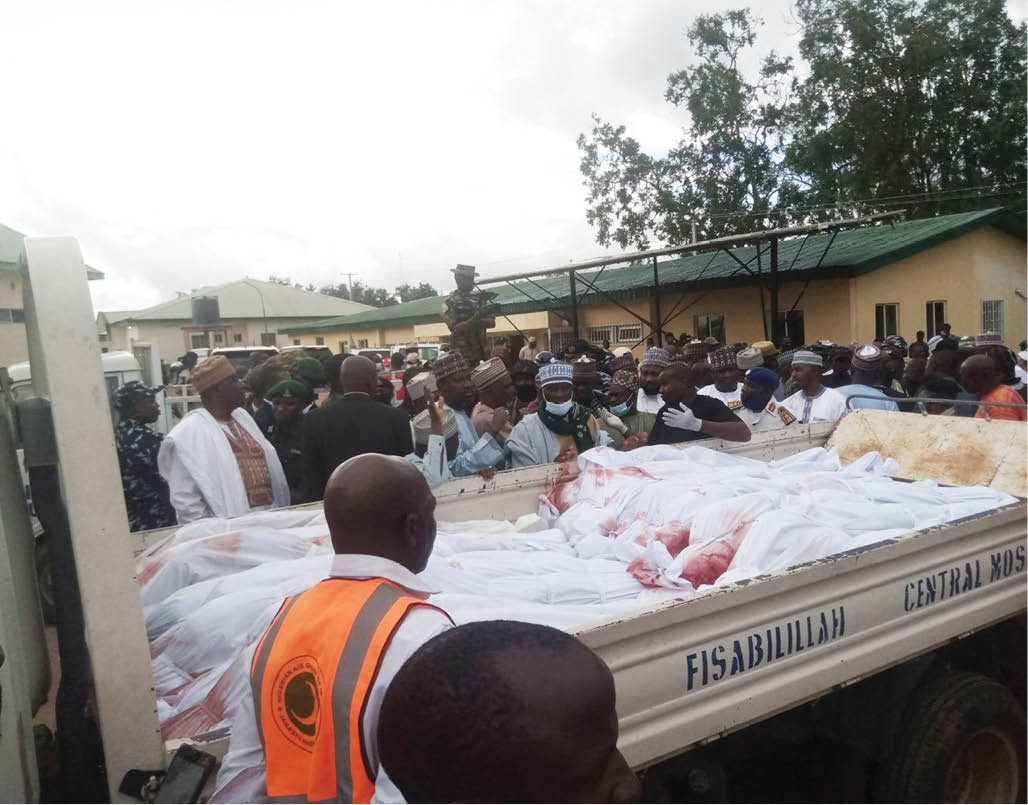
Further, most incessant attacks on various communities continue to linger because the culprits, accomplices, and syndicates usually go scot-free. For example, the recent attack on innocent Muslim commuters in Rukuba, Jos, where suspected disgruntled Christian militias killed about 28 of them in cold blood, unchallenged. The incident has portrayed the level of lawlessness and injustice in our society. Likewise, atrocities committed by some Muslim/Christian herders on both Christian and Muslim communities are also part of the examples of dominant and pervasive injustice by our leaders for deliberately refusing to bring the malefactors to book for justice to prevail.

In contrast, the system of justice, which was both advocated by Jesus and Muhammad (may Allah be pleased with them both), ensures proper retribution for the wronged, the subjugated, the oppressed and defenceless citizens. Exultantly, this system was the one that Prophet Muhammad (SAW) used to end the sustained hostility and animosity between Al-Aws and Al-Kazraz, who happened to be the archenemies of one another.

Thus, when Prophet (SAW) migrated to Madina, he signed a treaty between them (Aws and Kazraj), Muhajirun (immigrants) and even non-Muslim allies. This had provided lasting solutions that brought about peace and harmony between them. Below is part of the treaty they gave credence to in the presence of SAW, as contained in Ar-Rahiq Al-Maktoum:

1. They should resist and stand against injustice or seek to appropriate something unfairly, encroaches upon or causes mischief among believers;
2. They all should stand against one who does so even if he were one of their offspring;
3. If one kills a believer intentionally and there is evidence for that, he will be retaliated in like, unless the family of the slain person pardons him;
4. All believers are to take a stand against him;
5. A believer is not allowed to advocate or give shelter to an initiator of evil or troublemaker. 

If our society today will adhere to these teachings, extrajudicial killings will indubitably come to a standstill.

Abdullahi Adamu Faggo is an academic staff at the Bauchi State University, Gadau. He can be reached via abdullahiadamufaggo@gmail.com.

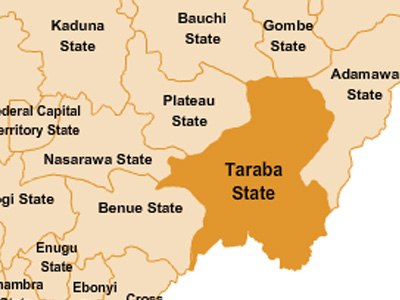
Taraba at 30: Unflinching march to greatness

On a day like this, three decades ago, Taraba State was created from the defunct Gongola State. Unarguably, one of the most promising states at the time of creation.  Being the third-largest state in Nigeria in terms of landmass, most of it being overly fertile. There is hardly a crop that grows in Nigeria that does not grow well in Taraba. In fact, many thrive best here.

While I cannot call myself an Agriculturist, I certainly know one or two things about farming being someone who is very proud of this profession and has had experiences that will forever remain green in my mind because of Agriculture. I am extremely passionate about Agriculture. I know the potentials that we have in Taraba. Unfortunately, states with far fewer potentials than Taraba have harnessed theirs and not Taraba for one reason or the other. 

Taraba state has tourist potentials that are unmatched in this country. It is aptly described as “Nature’s gift to the Nation”. As a result, we have some of the most beautiful places anyone can contemplate or dream of visiting in Nigeria. Travelling from: Sardauna to Zing, Ibi to Karim Lamido, Ussa to Yorro, Kurmi to Gassol. In fact, across the length and breadth of Taraba, all one sees is one of the most breathtaking scenery you can find in Nigeria.

The lush green countryside, amazing mountains, wonderful waterfalls, and sonorous birds give sounds that you may not be wrong to call music. Since my elementary music teacher taught me that music is the arrangement of sounds that are pleasant to the ears. On a serious note,  you have to fall in love with nature once in Taraba State; of course, I have done that. One has to. Taraba is that special: you can’t escape it.

Sadly, this has not translated to much development. I weep whenever I visit towns, villages, and hamlets in Taraba. I weep not only for the abundant natural resources being exploited but that should and would have been utilised for the benefit of all and the growing distrust and polarised nature of my dear state. Here are people who have refused to unite to defeat their common enemies: poverty, violence, unemployment, underdevelopment, drug abuse, kidnapping, etc. This shouldn’t be our reality.

Whoever fans the embers of disunity is not a good human being, to begin with, let alone being a good and responsible Taraban whether one is: a traditionalist, a Muslim, or a Christian. For God’s sake, we have all suffered for our failure to rise above prejudice, hate and do the needful for our dear state. We disappointedly all continue to play blame-games, while everything is ruined before our very eyes. Tarabans have to think and rethink whatever approach we have been using over the years have left a lot to be desired.

The truth is that we are all in this together. I know this for a fact because I get to mingle with Tarabans from all walks of life. My friend Jerry in Jalingo is no less a victim than my friend Ado in Yelwa, Sardauna local government. The old man I met in Dakka, Bali, local government struggling even at old age to feed his family is not different from the ones I meet in my hometown or any place I visit in Taraba.

The public primary schools in Jalingo, the state capital, don’t look much different from the ones in Borno Kurukuru, in Bali local government; the ones in Pantisawa In Yorro LGA and the ones in Kufai, Gassol local government, or anywhere in Taraba state. The difference is that some of our teachers do extraordinary things to nurture children that can become responsible citizens against all odds. So today, I pay tribute to our teachers and all those who defy all odds to develop our state. Thank you so much for your sacrifice and service to our dear State. 

The plain truth is that we are all victims in one or the other. Whether we agree or not, whatever faith we profess or the party we support. A selected few benefit in any state that constituted authorities have failed to live up to their responsibilities, and most of the time, even those that benefit the pleasure are ephemeral. 

We still have the opportunity to stem the tide and chart a new course for the only State we have and one that some of us love unconditionally. To change things for the better. But, we cannot do it alone. We must do it together: Christians, Muslims, and traditionalists. Until we unite, leaders or rulers will continue to exploit us and set us against one another. It is high time we commenced the building of a Taraba where merit matters and all Tarabans matter. A Taraba where things work and all that work hard within the ambit of the law can prosper without hindrance. A Taraba where the glass ceiling will be completely shattered. 

Happy 30th anniversary to my dear State, Taraba. You will be great despite all the apparent obstacles to stop that from coming to fruition no matter what happens. We will keep on trying until we get it right.

We today live in a state far more divided than ever. But I find solace that we still have good men and women from all parts of the state and of all religious beliefs who are sincerely ready to see a complete revamping of our dear State. These Tarabans give me hope. For just like me, most of them do not have a bean and have no political goals to pursue rather a whole state, and indeed, nation to build. 

I see hope boldly written on the face of my friend Jerry, a barber whose dream is to one day be a big employer of labour despite his financial constraints today. I  find strength in the words of my friend Abdulhamid who supports his family with the little that he has while working relentlessly with little dependence on the government.  

I know God willing things can and will change when Caleb, an ex-drug addict who has turned over a new leaf, advocates for peace and works towards our unity. Likewise, I believe we can change for the better when Zakiru freely works to better society and seeks success against all odds. Yes, Zakiru with even some hilarious jokes to it. 

I have no reason to believe things will continue the manner they are today, forever because of the realities of the moment. I know we can change. Although, the time is entirely dependent on how ready we are for that to happen as Tarabans. 

Today, I urge us all to mull over our challenges as a state. I plead with you all to reflect sincerely and see how we can all join hands to build the state that should be the envy of every state in the country because of our resources, which I know, once we get it right, Taraba will be the perfect example of how to move Nigeria forward being a state that can correctly be described as a mini Nigeria, with all that is inherent therein Nigeria. We must not fail our dear state as Tarabans; we have to stop failing this beautiful State now. 

Happy 30th anniversary Taraba State. God bless Taraba State, and God bless the Federal Republic of Nigeria.


Abdulrazak Iliyasu Sansani wrote from Turaki B, Jalingo, Taraba State.

30 people reportedly killed in fresh Plateau violence

By Muhammad Sabiu

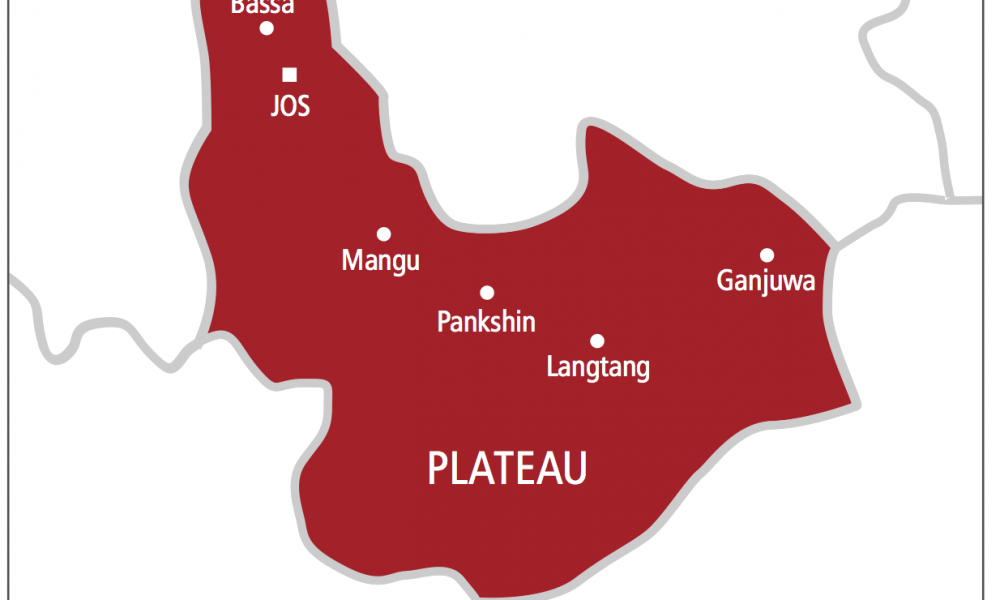
Fresh violence has reportedly erupted in Yelwan Zangam community, Jos North Local Government Area of Plateau State.

A report by the Daily Trust and other sources has indicated that about thirty people have been killed.

Meanwhile, security personnel have been deployed in the affected area.

Recall that a few days ago, suspected Igwere youths butchered about 30 Muslim travellers who were on a religious visit from Bauchi to Ondo State.

As of the time of filing this report, no comment from the Police or any official of the Plateau State government has reached The Daily Reality.

Details shortly…

Justice for murdered innocent travellers in Jos

Nigerians woke up on Saturday last week with the bad news of the gruesome murder of innocent travellers returning from the annual national Zikr in Bauchi. They were intercepted along Rukuba, Gada-Biyu axis of Jos-North local government by suspected Irigwe ethnic militias who killed them and burned their buses. Every peace-loving Nigerian should condemn the atrocity.

The killing of these innocent travellers came at a time when Plateau State, the epicentre of ethno-religious crises, had started enjoying relative peace courtesy of Governor Simon Bako Lalong’s commitment to bring lasting peace. The militias who carefully selected their victims have a hidden or ulterior motive. Some of their reasons are to set the State on fire and fuel retaliation across the country. The victims came from other states of the country and were only on transit. What did they do?

Even before the unfortunate killings, there have been reported cases of innocent travellers being killed on some roads, which are considered no-go-areas for certain faith. If this crude way of life displayed by the mobs can be adopted in other states, one imagines the dire consequences it will bring to the peace, unity and development of the country.

I learnt that the Nigerian army apprehended some suspects. This is a good development. However, the problem is not whether the perpetrators of the heinous crime are arrested or not. The question remains, are the culprits going to face justice according to the laws of the land? So long as the government continues to temper justice with mercy on those who commit grave offences against humanity, we should rule out any possible end to the unnecessary carnage.

Ibrahim Mustapha, Pambegua, Kaduna State. He can be contacted via imustapha650@gmail.com.

Fulani attacks, Hausa-Muslims die

By Ishaq Habeeb 

The issue that allegedly triggered the recent violence in Jos was that a fortnight ago, men believed to be Fulani militia attacked the Irigwe community and killed 40 people, burnt down an unspecified number of houses and as is their style, vanished into thin air shortly after.

A fortnight later, the aggrieved Irigwe youth decided to block a road, stopped cars, cherry-picked Muslim passengers and slain them in cold blood in reprisal to the ‘Fulani attack’ on their community. 

Now one of the secondary dangers of this barbaric culture of reprisal that’s since become a norm, in Jos, southern Kaduna and other places, is that often, innocent Hausa Muslim travellers and remote village dwellers, where few Fulanis also reside (not the actual Fulani militia), end up as victims of such Fulani militia attacks on random villages at various times for whatever bad blood they must have against such places and also of the eventual reprisals by residents of the attacked communities.

The major reason for this silly idiosyncrasy isn’t far-fetched. For the ignorant, vicious, islamophobic residents of those villages, Fulanis and Hausa are mutually inclusive, since to them, the two appear culturally and religiously homogeneous. Hence, they must share the same agenda; the common denominator here is Islam. But, other than that, I don’t see how Hausa could strike any, as Fulani, physiologically and traditionally.

The shocker to this age-long madness of confusion has now added the Yoruba Muslims to the equation, seeing that as news has it, some of the slain motorists in the Irigwe community were Ondo Yoruba Muslims who were only in Jos for a quick visit.

The sick irony in all of this is that some Fulani pastoralists are only Muslim by birth and name. That aside, the only real religion they have is ‘Fulani’ itself and the real god they really worship and can kill and die for, any day, anytime, anywhere and whoever, is their cow (“nagge“). Their cattle is what they live for and the primary essence of their existence; mess with that and win yourself a lifelong enemy.

Now one easy way to put my theory to the test is to wait until any Hausa community dares to kill or rustle Fulani cattle the way some members of those attacked communities do sometimes – whether as revenge for having their farmlands devoured by the herd or simply for evil intent as is mainly cited. Then, you would see how the Fulani militia will unleash their wrath on such Hausa community in like fashion; the Islam identity you think we share becomes immaterial.

Thank God the Hausa people are not as half as vengeful as the Fulani and those other tribes could be. Otherwise, considering the numerical strength of the Hausa people, then Nigeria as we know it would have long been history by now.

May Nigerians have a sense,
May the Nigerian government grow a conscience,
May peace take over Africa and the world.

Ishaq Habeeb can be contacted via simplyishaqhabeeb@gmail.com.

Would Jos ever be peaceful again?

By Misbahu el-Hamza

What is the major setback for peace efforts in Jos? Is it negligence from the governments? Or the ineffective or unsustainable strategies of the security forces on the ground? Could it be that God has forsaken the city for the crime of spilling innocent blood for decades? What have we done wrong, and how can we make amends?

I think the worst thing that ever happened to Jos from September 2001 to date is the systematic and deliberate disappearance of the once cherished plural community settings into a more homogeneous cultural make-up. Even though this is a product of various influences over the historical line, the major one, inarguably, is the episodes of collective violence for two-decade now in the city.

If you’ve ever been there, the communities in the city of “Home of Peace and Tourism” are now separated based on ethno-religious identity. When a particular group began to dominate another in a place, the minority will sell or evacuate and abandon their houses to move further away to avoid being surprised during crises. Everyone now has their schools. There are few to no Muslim students in the famous schools of St. Murumba College Jos and Demonstration School Jos. There are no longer Christian students in GSS Gangare Jos (save those who come to register and sit for WAEC). Some government secondary schools, which used to house students from different cultural and religious backgrounds, are now left to no use or serve their neighbouring communities. The state authorities have (in)directly invigorated this problem: it has for long forsaken the structures;  allegedly, a Christian staff is only sent to a Muslim community as ‘punishment’ and vice versa.

The most frightening thing about this systematic separation of communities is anyone who deliberately, or by mistake, finds themselves in a neighbourhood other than theirs in times of unrest might likely not make it alive. This is happening in almost all the communities in Jos. I, for instance, escaped death in 2010 when I took a passenger from Terminus Market in the heart of Jos to Satellite Market in Rukuba Road. There wasn’t any crisis going on at the time; it was the ‘usual’ ambush on anyone who enters the ‘other’ territory. Okada/Achaba men like me and travellers who do not know the city well are the usual victims of such ambushes.

Ours isn’t like the Kaduna-Abuja highway disappearance where, if you don’t hear from your relative again, you will be praying and expecting a call from his abductees. No, in Jos, as a Muslim or Christian, you spray mats and begin to welcome people as you mourn the lost person in absentia. It’s this terrible.

The actors in all this? Mostly the youth. The youths who we always sing to be the “leaders” of tomorrow. The tomorrow that’s yet to come in Nigeria. Could one be right to ask how Jos could ever find peace if this is the path it has chosen for itself?

Despite all this sad reality, we all meet up in the marketplaces (basically the ones at the borderlines, which are easy to escape should the devil blow the horn) during the day. We enter the same busses to and from Bukuru. We meet and interact in the banks. Surprisingly, our boys and girls meet up during the weekends to party. In some instances, boys take girls home for further profligacy after partying. Somehow, we all agree to live like this. We only disagree with sleeping with our eyes closed as neighbours, devoid of any quarrel.

Posing the question of whether we truly need one another in Jos, earlier this morning, a school principal, Abubakar Nasiru, made the following point on his Facebook page:

“The mai ruwa, mai nama, mai gwanjo, etc., are hawking in areas like Gada Biyu, the Jentas, Rukuba Road, Apata, Busabuji, rendering their services to those communities every day – non-Hausa, non-Muslim communities. [On the other hand] The mai doya, mai atile, mai masara, mai tumatur, etc., carry out their petty businesses in places like Bauchi Road, Dilimi, Gangare. Rikkos, Nassarawa, and Anguwar Rogo – Muslim communities.” These people spend the whole day in those communities and cannot hesitate, if guaranteed safety, to spend their nights there.

In 2006 when I was in SS3, my community leaders recruited able youths, including myself, as Ƴan Sintiri (watchmen), to serve under the Banga (a mispronunciation of “Vanguard”) group, which has its history from the ‘70s and ‘80s. Our task then was to defend our four borders against any intruder during the night and to prevent the harassment of non-community members during the day. So we worked in batches to substitute other groups. This significantly helped, and in no time, other communities adopted the strategy. This gave birth to today’s form VGN in most districts of Jos. (VGN has been a registered semi-official citizen policing organisation with Nigeria’s Corporate Affairs Commission since 1999, though.)

But does the VGN give us the peace and courage to live under the same roof or as neighbours? Certainly no. The separation of communities based on ethno-religious identity will continue to hinder any peacebuilding effort in the tin city.

We cannot have peace until we tolerate each other. We cannot tolerate one another until we accept to live as neighbours. We need to respect our identities and use our diversity as strength just as we used to be 3 – 4 decades ago, to sleep with our eyes closed without an iota of fear that my neighbour will set my house on fire.

For years now, we’ve been deceiving ourselves with so-called programmes for peace, only to gather, quench our thirst for partying and separate back into the borderlines. This, too, must stop.

Plateau state government must be sincere in its dealings. It must engage honest stakeholders from all communities to drive its mission of restoring peace on the Plateau. Schools must be treated equally, so much as every perpetrator must face the consequences of their actions without consideration whatsoever. There must be sincere and rigorous campaigns to rebuild Jos to its past glories; Jos people must co-exist as neighbours irrespective of ethnicity or religion. Otherwise, Plateau is, in general, no doubt a failed state!

Misbahu el-Hamza is a freelance journalist based in Kano and can be reached via misbahulhamza@gmail.com.