Africa

Man sets own mother’s house ablaze over food

By Muhammad Sabiu

A Nairobi man in Kenya identified as Joseph Njuguna, who allegedly set his own mother’s home on fire over her refusal to finish cooking food on time, has been dragged to court.

Reports indicate that the burnt house is worth about N4.7 million.

Njuguna was said to have arrived home and asked the mother where his food was. However, to his utter dismay, she didn’t finish cooking.

After she tried to console him to wait for some time in his room for the food to be ready, he insisted he “would do something about it” as he later came back and had a brief argument with her.

Shortly after, while she was still cooking, she realised that the house had been engulfed in smoke.

Panicked by the smoke, she tried to flee the home, but after reaching the door, she found that it had been locked as she had to scream for help.

She finally got rescued by neighbours, as the suspect was said to have gone into hiding.

People in the area later launched a manhunt on him, and he was later found. After he was found, they started beating him to the extent that his mother had to come to his rescue.

Injured by the beating, the mother took him to a nearby hospital to receive some treatment.

Police got informed, and they intervened, stating that “Joseph Njuguna unlawfully and willfully torched his mother’s house on November 6 within Nairobi’s Dagoreti area.”

Njuguna pleaded not guilty, but he has bagged a bond of Ksh500,000.

Former colleagues, students from Bayero University, Kano congratulate Abdulrazak Gurnah for wining the 2021 Nobel prize in Literature

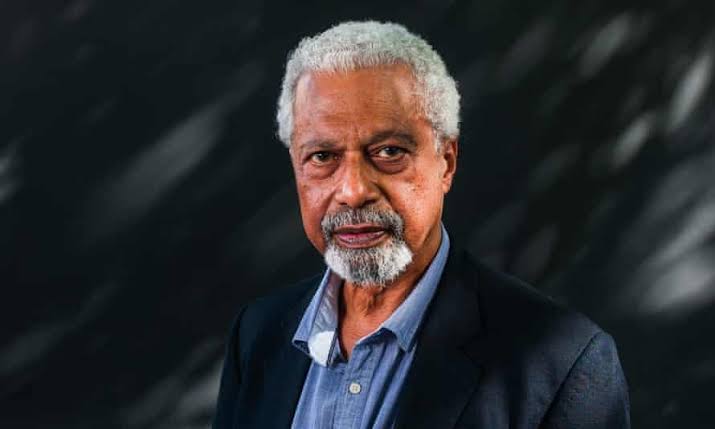
Colleagues and former students of Abdulrazak Gurnah, from the Department of English and Literary Studies, Bayero University, Kano, congratulate him, as he emerged this year’s winner of the prestigious Nobel prize in Literature.

According to one of his former students, Ibrahim Garba, “we already foresaw than in him, since the 1980s when he taught us in the department, here in Bayero University, Kano, Nigeria. He deserves it. Gurnah has always been enthusiastic about Literature and today he attained the highest and most popular status. Congratulation sir”, he said. He added that “Bayero University, Kano would be equally happy and part of this achievement, as a place where Gurnah worked and served diligently.

According to the Guardian Newspaper, UK, the “Tanzanian novelist is named laureate for ‘uncompromising and compassionate penetration of the effects of colonialism’

The Nobel prize in literature has been awarded to the novelist Abdulrazak Gurnah, for his “uncompromising and compassionate penetration of the effects of colonialism and the fate of the refugee in the gulf between cultures and continents”.

Gurnah, who grew up on one of the islands of Zanzibar and arrived in England as a refugee in the 1960s, has published 10 novels as well as a number of short stories. Anders Olsson, chair of the Nobel committee, said that the Tanzanian writer’s novels, from his debut Memory of Departure, about a failed uprising, to his most recent, the “magnificent”, Afterlives, “recoil from stereotypical descriptions and open our gaze to a culturally diversified East Africa unfamiliar to many in other parts of the world”.

No black African writer has won the prize since Wole Soyinka in 1986. Gurnah is the first Tanzanian writer to win.

Gurnah’s fourth novel, Paradise, was shortlisted for the Booker Prize in 1994. Olsson said that it “has obvious reference to Joseph Conrad in its portrayal of the innocent young hero Yusuf’s journey to the heart of darkness”, but is also a coming of age tale, and a sad love story.

As a writer, Gurnah “has consistently and with great compassion penetrated the effects of colonialism in East Africa, and its effects on the lives of uprooted and migrating individuals”, Olsson told gathered journalists in Stockholm.

Gurnah was in the kitchen when he was informed of his win, said Olsson, and the committee had “a long and very positive” conversation with him.

Gurnah’s most recent novel Afterlives tells of Ilyas, who was stolen from his parents by German colonial troops as a boy and returns to his village after years fighting in a war against his own people. It was described in the Guardian as “a compelling novel, one that gathers close all those who were meant to be forgotten, and refuses their erasure”.

“In Gurnah’s literary universe, everything is shifting – memories, names, identities. This is probably because his project cannot reach completion in any definitive sense,” said Olsson. “An unending exploration driven by intellectual passion is present in all his books, and equally prominent now, in Afterlives, as when he began writing as a 21-year-old refugee.”

Afterlives by Abdulrazak Gurnah review – living through colonialism

Worth 10m Swedish krona (£840,000), the Nobel prize for literature goes to the writer deemed to be, in the words of Alfred Nobel’s will, “the person who shall have produced in the field of literature the most outstanding work in an ideal direction”. Winners have ranged from Bob Dylan, cited for “having created new poetic expressions within the great American song tradition”, to Kazuo Ishiguro “who, in novels of great emotional force, has uncovered the abyss beneath our illusory sense of connection with the world”.According to Ellen Mattson, who sits on the Swedish Academy and the Nobel committee: “Literary merit. That’s the only thing that counts.”

The Nobel winner is chosen by the 18 members of the Swedish Academy – an august and mysterious organisation that has made efforts to become more transparent after it was hit by a sexual abuse and financial misconduct scandal in 2017. Last year’s prize went to the American poet Louise Glück – an uncontroversial choice after the uproar provoked by the Austrian writer Peter Handke’s win in 2019. Handke had denied the Srebrenica genocide and attended the funeral of war criminal Slobodan Milošević.

The Nobel prize for literature has been awarded 118 times. Just 16 of the awards have gone to women, seven of those in the 21st century. In 2019, the Swedish academy promised the award would become less “male-oriented” and “Eurocentric”, but proceeded to give its next two prizes to two Europeans, Handke and Polish writer Olga Tokarczuk.”

Dr Pantami, silence is not golden

By Ibrahiym A. El-Caleel

Saner climes aren’t saner climes for nothing. They seem to have broader perspectives on life. They acknowledge success wherever it is and not getting unnecessarily fixated on just one thing. 

In Nigeria and several African countries, academic qualifications and honorary titles are seen as the only testimonial to weigh your level of intellect, level of exposure, degree of societal awareness and overall social image. So, if you want to be seen as a “rare gem” and the next human being to have sense since Plato, then you must accumulate as many academic qualifications as possible and have titles. 

Several people laughed at my comment elsewhere on Africans and their love for titles. I reminded us that the official name of the former Gambian President was, His Excellency Sheikh Professor Alhaji Dr Yahya Abdul-Aziz Awal Jemus Junkung Jammeh Naasiru Deen Babili Mansa. You may please count the number of titles there. If you are a meticulous fellow like the academics, you would want to follow each of these titles to see how Yahya Jammeh got them. In most of the titles, you’ll see that they are either honorary or just self-assigned. 

The truth is, you don’t need all those titles before you can become an effective President. At the same time, across saner climes, America’s President was simply “Barack Obama”; UK’s Prime Minister was simply “Theresa May”; Turkish Prime Minister was simply “Recep Erdogan”. Yet all these countries were doing far better than the country whose president accumulated more titles than his name. 

Do not get me wrong. If you have titles, please feel free to assemble them before your name at birth. It is said that titles are adornments. If you have terms, flaunt them to everyone’s eyes! If you don’t have them, work hard to get them and then exhibit them. But do not get so obsessed with titles and attach them to your name; then, when it is time for verification, it will seem as if people are just envious of you or hate you. People want to verify things that aren’t so clear to them. It is in the spirit of filtering contents before they go into history. The unborn generation deserves to read truthful content. We owe them that. 

With all this Dr Pantami’s issue going on, I continuously kept visiting his official Facebook page to see what he might have to say. But, unfortunately, there was nothing there to read on the issue. 

As an academic, professorial chair is the pinnacle of your career. How would someone attain such great success and not be overwhelmed with joy to the extent of announcing it to us, his lovers and admirers? Isn’t such a promotion what we should celebrate with our loved one? Don’t we deserve to be let aware from the horse’s mouth? Do we deserve to be let in the hands of “envious academics” and polemicists who churn out narratives and counter-narratives as the clock ticks? 

I think lovers and fans deserve better treatment. With the level of energy dissipated, silence is not golden. The silence is graduating to the approval of the professorial appointment or promotion or whatnot. 

On the one hand, if the professorial appointment is genuine and legit, Dr Isa Pantami will only clarify the inconsistencies on his number of peer-reviewed papers and the number of years spent in active service. Whatever it is that the Federal University of Technology, Owerri (FUTO) used as a legit fulcrum to promote him, that is just what he will explain, and the world will have to live with it. 

On the other hand, if the promotion is just the sensationalism of overzealous fans, then Dr Isa Pantami only needs to clarify so to ask the public to disregard it. Because his silence would imply an integrity defect which is bad for his image first as a reputable Islamic scholar and second, as a distinguished compatriot of the Federal Republic of Nigeria. 


Ibrahiym A. El-Caleel writes from Zaria and can be reached via caleel2009@gmail.com.

Tokyo 2020 Olympics: 5 lessons from the Men’s Football Tournament

By Aliyu Yakubu Yusuf


The curtains have fallen following yet another gripping edition of Olympic football games. Brazil has successfully defended the crown they won at home four years previously. The vanquished Spanish team fought back valiantly in the second half after going behind in the first. But with the game teetering towards a dreaded penalty shootout, Brazil’s substitute, Malcolm, delivered the decisive knockout blow that put paid to Spain’s quest for the gold medal. Here are the five things I learned from the tournament:

  • Brazil are worthy winners

Ever since the first ball was kicked about two weeks or so ago, it was apparent that barring any surprises that are characteristics of football games, the team that’s going all the way is either Brazil or anyone that overcomes them. Unlike most of the other big guns, Brazil takes this tournament seriously. After a disappointing ending at the Copa America, Brazil was keen to win this tournament to restore some sort of pride as the undisputed biggest footballing superpower. Brazil was, at times, irresistible in the group stages. Their triumphs over Germany and Saudi Arabia, which were sandwiched by a scoreless draw with plucky Ivory Coast, saw them play some scintillating football, with Everton striker Richarlison scoring five goals. Although the goals somewhat dried up in the knockout stages, the Selecao were never really troubled by any of their opponents en route to clinching the trophy.

  • The evergreen Daniel Alves still has it

It would be a crying shame to talk about Brazil without talking about the mercurial Dani Alves. Alves is the best right-back I have ever seen. And that’s a massive compliment because even Brazil alone had had the likes of Cafu and Maicon. The sight of Alves terrorising hapless opponents alongside Lionel Messi at Barcelona was a joy to behold for most football aficionados. So I wasn’t surprised at all when Brazil named him as one of their three overaged players. After all, this is a man who can do whatever it takes—fair or not—to win. Little wonder he’s the most decorated footballer in the whole history of football. This trophy is just another feather to his impressive cap. Even at the ripe age of 38, Alves is still one of the best players in his position. Brazil’s captain fantastic still has it.

  • Traditional heavyweights failed at the first hurdle

While Brazil sailed through the tournament, other traditional big countries badly underperformed. Argentina, Germany and France all failed to get past the group stages. For Argentina, it was just business as usual. For a country that won this very tournament consecutively at both 2004 and 2008 editions, it was a colossal failure not to have qualified for the knockouts for the second Olympics tournament running. The fact that they couldn’t qualify from a pool that contains Spain, Egypt and Australia tells you all you need to know about how bad this team had been. Like Argentina, France and Germany also failed to give a good account of themselves. Ever since a diabolical first half that saw them went 3-0 down in the first game against Brazil—and eventually lost the game 4-0—Germany never recovered. Although they defeated Saudi Arabia 3-2 in the next match, they huffed and puffed in their final group game but failed to see off the sturdy Ivory Coast. And that was their tournament done. As for France, the little said about them, the better.

  • The host country has so much to cheer about

Japan performed quite admirably in this tournament. Despite being drawn in a scary-looking group including France, Mexico, and South Africa, Japan qualified with maximum points. They scraped past New Zealand via penalty shootout in the quarter-finals before succumbing to Spain and Marco Asensio in the second half of the extra time in the semis. Although they went out in a cruel fashion, Japan can take courage from their outstanding performance. Despite being the host country, no one expected them to be the fourth-best team before the kick-off. However, in Takefuso Kubo, who is already at Real Madrid, Japan has a gem for whom they can dare to dream.

  • African countries flatter to deceive… again

For African countries, it was a case of one step forward, two steps backwards. Apart from South Africa that conspired to lose all their group games, Africa’s other two representatives began the tournament on positive notes. Egypt’s defeat is somewhat understandable as they went out to the eventual winners Brazil by the narrowest of margins. That’s after qualifying from a pool featuring both Spain and Argentina. The ouster of Ivory Coast, however, is pretty much frustrating for any fan of African football. After qualifying from the group that contains both Brazil and Germany, they were within a hair’s breadth of knocking out Spain before they inexplicably bottled it. They scored what looked like a winning goal in the 91st minute of the quarter-finals only to manage somehow to give up an equaliser in the 93rd minute before shipping three further goals in the extra time. That was some way of going out of a tournament. For Africa, Nigeria’s 1996 and Cameroon’s 2000 victories are but fading memories.

Aliyu Yakubu Yusuf is a lecturer at the Department of English and Literary Studies, Bayero University, Kano. He can be reached via aliyuyy@gmail.com.

South African Looting: A replica of black man’s mentality

South African problem is the exact replica of black man’s disease. It is the reason why black Africa will never develop. Look at North Africa; Morocco, Tunisia, Egypt and Algeria, they have infrastructure, mostly at par with Europe, some are even better than most European countries. They are not blacks. The Arabs, even with their deadly problems, are far ahead of blacks in terms of development. There is no black African success story as far as nation building is concerned. Some people mention Rwanda as a success story. I don’t know their standard of success. To me a country with no rail system, which has only seven 7 tiny airports, running an agrarian economy and presided by dictator, is not a success story. South Africa was built by the Whites. Zimbabwe had a wonderful headway until Mugabe chased away the whites and handed over the economy to blacks. But look at UAE, Qatar, Kuwait, Bahrain, Oman, Saudi Arabia and Jordan. They are developed peaceful societies with law and order per excellence.

The 79 years Jacob Zuma of South Africa was sentenced to prison to spend 15 months for refusing a constitutional court order to give evidence, at an inquiry investigating a high-level corruption during his nine years in office. Zuma is facing trial for corruption, fraud, racketeering and money laundering. What followed was total disgrace to Africa and black race. South African blacks and Zuma’s Zulu tribe went into violent protest in major cities of Natal, Durban, Johannesburg and other major provinces. They broke shops and looted the contents and set buildings ablaze. In the melee that followed, at least 79 people died with figures still counting.

Who, but African blacks, will go into riots to protest imprisonment of a corrupt leader on account of ethnicity only! The South Africans are not rioting because Zuma is innocent. They just don’t want him to be jailed no matter his crimes. Zuma defied court order. In any civilized society, defying court is tantamount to sleeping in prison. But see South Africa, arguably the most developed country in Africa, having the best infrastructure, best schools, functioning economy and a member of G-20, disgracing Africa, Africans and all blacks.

Looters make off with goods from a store on the outskirts of Johannesburg, Monday Sept. 2, 2019. Police had earlier fired rubber bullets as they struggled to stop looters who targeted businesses as unrest broke out in several spots in and around the city. (AP Photo)

What kind of country do South Africans want if a leader can wreck the treasury and be above the law? Even with our myriads of problems I don’t see Nigerians behaving this way. Obasanjo was a former leader imprisoned for offences he did not commit but no one razed any shop or burnt down cities. Leaders will always have supporters but when they commit crimes, we should not give them ethnic refuge and fight their own battles. We should allow them to stew in the pot they arranged for themselves. That is the only way they will do the right thing in offices. As long as we allow them to commit crimes and run to ethnic and religious cleavages for protection, we will never develop as a country.

Alhaji Aliyu Nuhu

Is a social analyst based in Abuja