Africa

Rwanda reflects on 30 years since genocide

By Uzair Adam Imam

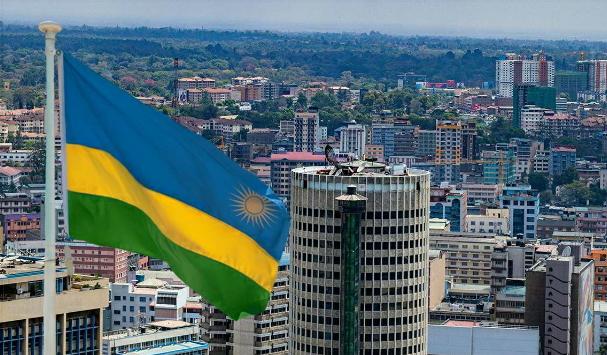
Rwanda paused on Sunday to honor the memory of genocide victims, marking three decades since a brutal campaign orchestrated by Hutu extremists tore through the nation, leaving deep wounds as communities turned against each other in one of the darkest chapters of the 20th century.

The relentless violence, spanning 100 days until the Rwandan Patriotic Front (RPF) rebel militia seized control of Kigali in July 1994, resulted in the deaths of 800,000 individuals, primarily Tutsis but also moderate Hutus.

Despite the immense tragedy, Rwanda has made strides toward stability under the firm leadership of President Paul Kagame, who helmed the RPF.

Nevertheless, the legacy of the atrocities persists, casting a shadow over Africa’s Great Lakes region.Following tradition, ceremonies held on April 7—the day when Hutu militias unleashed terror in 1994—commenced with Kagame lighting a remembrance flame at the Kigali Genocide Memorial, a solemn site believed to hold the remains of over 250,000 victims.

Accompanied by somber melodies played by an army band, Kagame laid wreaths at the mass graves, joined by foreign dignitaries, including several African heads of state and former US President Bill Clinton, who had acknowledged the genocide as a grave failure during his tenure.

The failure of the international community to intervene remains a point of regret, with French President Emmanuel Macron expected to express remorse for France’s and its allies’ inaction, acknowledging they could have halted the bloodshed but lacked the resolve to do so.

Kagame is scheduled to deliver an address at a 10,000-seat arena in the capital, where Rwandans will later gather for a candlelight vigil in remembrance of those lost to the slaughter.

The commemoration marks the beginning of a week-long period of national mourning, during which Rwanda will come to a standstill, with flags flown at half-mast. Public music, sports events, and non-remembrance-related television broadcasts are suspended.The United Nations and the African Union will also hold remembrance ceremonies to honor the victims.

Reflecting on the events, Karel Kovanda, a former Czech diplomat and the first UN ambassador to publicly denounce the 1994 massacres as genocide, emphasized the importance of ensuring that the genocide is never forgotten, asserting that the page cannot be turned on such atrocities.

The genocide, triggered by the assassination of Hutu President Juvenal Habyarimana on April 6, 1994, led to widespread atrocities fueled by virulent anti-Tutsi propaganda disseminated through various media outlets.

Countless individuals were brutally murdered, and tens of thousands of women were subjected to sexual violence.Rwanda has taken steps to address the legacy of the genocide, including establishing community tribunals for victims to confront their perpetrators. However, challenges persist, with hundreds of genocide suspects still at large, some reportedly seeking refuge in neighboring countries.

Despite the passage of time, Rwanda continues to grapple with the wounds inflicted by the genocide, endeavoring to ensure that the horrors of the past are never forgotten while striving to build a future rooted in peace and reconciliation.

Marriage: The two-headed coin and the gold mine of opportunities

By Khalilah Bint Aliyu

Never have I found it this difficult to write down my thoughts on a particular subject. The institution of marriage is highly coveted by women, especially African women. Societal pressure, feelings of vulnerability, the biological clock, and to some extent, a bit of a misunderstanding about whether it is compulsory or not.

Marriage, even though highly encouraged, is not compulsory for either gender, as long as a person can stay clear of immorality and remain firm in their tenets of faith. Allowing culture to override what the scripture states puts overwhelming pressure on many unmarried women, especially Muslim women.

I have watched bright minds become shadows of themselves for no apparent reason, yet they have to wake up daily to taunts and endless questions about when they intend to marry. A woman’s success gets downplayed. Some brave women might be willing to shrug off these tons of negative energy directed at them and pursue excellence, but they will meet an unwavering blockade from an angry parent or guardian.

Addressing this issue has to come in two aspects. We are going to address the parents or guardians and then the crux of the matter, the lady herself.

African parents, especially our mothers, derive pleasure from getting all their female children married. Should there be any delay, they get worried and intentionally or unintentionally transfer the negative energy in the form of pressure onto the unmarried ladies. It is destiny: some will marry early, others late, and some not at all. It is a gift and uncertain in nature. Aspiring for our womenfolk to marry in their early or mid-twenties is not a crime in itself, but making it a must and putting untold pressure on them can lead to poor spousal choices, deteriorating mental health, severe insecurity, and in some cases, amoral behaviors.

I want to use this analogy. A gardener sowed some orange seeds to sell the sprouts. He tended to them, and they grew healthy and strong, but no buyer showed interest. He kept watering and caring for the plants, much to the amazement of passersby. He was advised to let them be, but he paid no heed, and the seedlings grew into healthy orange trees that provided both shade and juicy fruits, subsequently attracting the attention of the right people who offered to buy the entire garden.

Women, unlike the plants here, are not for sale but are nurtured to prepare them to do the same and even more for the next generation. The more learned and well-mannered your wards are, the better equipped they will be as wives, mothers, and custodians of generations to come. Marriage will come at its destined time, and the terms “early” and “late” are manmade, designed to cause anxiety.

Keep your female children on the path of growth without any hindrance, support them, and alleviate the stress that society may throw at them, as this will make them flourish and live a life of purpose, leaving behind long-lasting positive footprints or a legacy, as it is popularly called.

For the ladies, you are strong, resilient, empathetic, and gifted with multitasking abilities. Jannah is not only for the married but also for the servants of Allah who stand firmly on the path of righteousness.

Define your life goals and, as long as they do not go against the ethics of your religion, pursue them purposefully. Don’t settle for less. I know how discouraging it can be to be told you are not enough just because you are not married. The delay that you are distressed about is a gold mine of opportunity. The fewer the number of stakeholders, the easier it is to make a decision.

As an unmarried woman, all you need to make a choice is a nod from your parents and guardians. This is not true for married women; you have husbands, in-laws, and children to think about before making decisions.

I had an opportunity to attend a two-week intensive training, an opportunity I had coveted for a while. Luckily, I got the slot. I received a nod from my husband, but I searched and could not find a trusted nanny to care for my infant for the duration of the training. I had no other option but to let go of the opportunity and wait for another one, praying that every force of nature would be favorable to me.

The above narrative is very common among women juggling both career and family. Chimamanda Ngozi Adichie, in one of her interviews, spoke about how having a little princess slowed the pace of her writing career. She said, “Becoming a mother is a glorious gift, but it comes at a cost. I could probably have written two novels had I not had my child.”

I implore you all to eat well, exercise, read widely, be kind, attend seminars, symposia, volunteer your services, and watch for a deluge of opportunities, including marriage proposals. Who doesn’t want a beautiful flower?

Khalilah Aliyu Yahaya writes from Kaduna and can be reached via Khalilah20@gmail.com.

If I were Pascal Lissouba: The tragedy of African emancipation

By Saifullahi Attahir

Pascal Lissouba was a former President of the Republic of Congo Brazzaville, a country located very close to its counterpart, DRC Congo, with the capital Kinshasa. The story of these two close neighbours was another irony of our continent; both capitals are only separated by a river, which you can easily spot each other by mere sight. They share much in common but bitterly sabotage each other due to mere nonsensical issues of tribe and language. To the benefit of their former masters, this division created an opportunity to be ruled and controlled by their former colonists.

He was born around the 1940s to a middle-income family in a village before the country’s independence. He studied in a government-run school and was an intelligent student, culminating in gaining a scholarship to study Agriculture at France’s elite academy Ecole in Paris. He had a stint in Paris working as a scientist before returning home and starting a job as a senior civil servant in the Ministry of Agriculture under President Massamba Debat.

His expertise was noticed, and he soon climbed the social ladder and became the minister of Agriculture in less than a decade. He held other positions in the Debat government. He was later promoted to prime minister until their government was overthrown by an army General called Denis Sassou Nguesse. His former boss was assassinated while he was forced to resign.

Amidst this impasse, Oil (petroleum crude oil) was the central player in all this and the future unrest that would follow in this tiny country. It was discovered a little while around the 1960s, after the country gained independence, and most of the exploration, production, and transactions were handled between the government and the giant French conglomerate Elf OIL COMPANY. The deal was marred with corruption and shadowy manoeuvres, and the oil money was mostly stacked in the Paris banks. The little that got to the Congolese is also largely slashed by the politicians and the ruling class, and only little or none of the ordinary citizens of Congo benefit from this newly found wealth.

Another problem was that the discovery of this oil led to the development of Dutch disease, where the government abandoned other key infrastructural income sectors like agriculture. The common populace, too, abandoned their homes and rushed for the golden egg, only to meet with frustration. This oil also created another problem of division and hatred among the different tribes of the country; everyone was trying to dominate his brother for the booty, and no one thought for the country.

During this period, Pascal Lissouba retired from Politics and worked as an academician and genetic lecturer at the University, initially in Paris and later in his country, Congo. 

Despite the world crude oil prices in the 1970s rising due to the historic Arab Embargo, Congo Brazzaville began accumulating debts by being involved in elephant projects and depending so much on the Pseudo Economic consultant’s advice. The economic situation in the country starts to change for the worse; salary arrears accumulate for several months, inflation rises high, and hunger begins to appear. The president of that time became unpopular, creating a chance for the emergence of Pascal Lissouba as the new President of the Republic of Congo Brazzaville after an election in 1992.

It was reported that Pascal became President with the support of France and the Elf oil company with the agreement of continuing business as usual, allowing the monopoly exploration of Congo Crude oil by the Elf company only. After he settled down as the president, Pascal began to see the absolute mess his country was already in, with billions of dollars in debt and the continued siphoning of the little they got through corrupt middlemen. He discovered that almost 2/3 of their earning went into debt servicing with nothing to show of what was done with the loan received in the first instance.

He, too, begins to face public resentment due to over six months of salary arrears his government owes to workers. Face with no alternative, he rushed to Paris, met President Mitterrand for help, and was surprisingly denied. He ran to the Elf company for aid and was negotiated under terms that included conceding several millions of crude oil barrels in advance. This Mr Pascal turns down too.

Cleverly and courageously, He went to an American oil company called The Occidental and secured a deal that assured his country to collect a loan of $150 million in exchange for an oil exploration license to the company. Desperate to satisfy his people and to quench their thirst, plus an election around the corner, he quickly rushed home and, to the applause of his people, indeed won the mid-term election.

The problem between his government and the Elf Company for including the Occidental in oil exploration begins to develop. President Mitterrand also backed the grudge, and soon, Paris began to lose ties with its former friend and started supporting a new one called Suisse Nguesse. 

Nguesse, desperate for power, couldn’t allow him to wait for election time but began to finance militias to ouster President Lissouba. The country was thrown into civil war between 1995 and 1997 until President Lissouba was overpowered off course with the help of foreign powers and military intelligence. President Pascal Lissouba fled the country and was exiled to London.

This essay was written to highlight the complex situation of most African countries, especially those that depend on Natural resources such as crude oil as the sole source of exchange earnings. The story is not much different in countries like Angola, Gabon, Central African Republic, and Nigeria. It’s always the same tactics; only the players change, but the game is the same old tricks.

If I were Pascal Lissouba, and God granted me wisdom, courage and fearlessness, I would have begun a mass national orientation campaign before I assumed office to explain to the country the dire need for every citizen to sacrifice for the period ahead so that the whole country would head toward a common goal of emancipation of their natural resource.

I would have renegotiated the oil contract terms with the Elf Company, inviting other key players in the world, especially the global South block, for military and infrastructural aid.

I would have engaged in a constant national campaign to ensure the whole population is well informed to acquire their support for the hard road ahead.

But I begin to doubt the realisation of this dream due to the complex behaviour of our very own people. We Africans are creatures that mostly lack endurance of hardship; we usually prefer short-term gratification of our desires, and most of us can not sacrifice long enough, no matter the value of what is ahead. 

We are creatures that easily fall into division; we quickly delve into ethnic, religious, tribal and regional self-interest conflict. We love chaos; we love greediness that surpasses the imagination of any self-conscious human thinking. We can kill because of money; we can sacrifice our brethren because of money, and we can amass so much through the crook method that even our grandchildren cannot spend.

From my perspective, this is not a problem of leadership alone or the problem of a single or few individuals; this is a pandemic disease; it’s almost within the blood of most of us unless those few are chosen. This problem was within every stratum of our society, and I can’t believe the mere excuse of leadership alone as the only cause.

This problem is complex and multifaceted; our people fuelled it, we love the shortcut, everybody loves to arrive quickly, we love overnight riches, and we want enjoyment. Still, we lack a plan and disciplinary execution. Even at the individual level, that is how we are, and that makes our homes and families, so it’s not surprising that we have a nation or continent that laments.

Our people organise the coups; the sabotage is supported by our people. This problem is not peculiar to only politicians; it’s present among college students, academicians, families, workers, and businessmen.

I began to sympathise with people like Pascal Lissouba because most of the men who have tried to oppose the status quo are usually prematurely retired from leadership, and some even, unfortunately, got killed.

Where is Gaddafi, where is Murtala, where is Sankara, where is Abacha, where is Saddam, where is Lumumba, where is Mandela?

Saifullahi Attahir wrote via saifullahiattahir93@gmail.com.

The military juntas in Africa

By Bilyaminu Abdulmumin

In the year 2021, when the gale of coup d’etat appeared to be fast resurfacing, it triggered revered columnist Mahmud Jega to title one of the columns “Fast Forward to the Past” to take us back to the period of the coup harvest, when the coup occurred as a competition in Africa. 

Within the 2021 year, three coups were carried out in Mali, Sudan, and Guinea Conakry. Conakry’s ousting of President Alpha Condé garnered a lot of media sensation. One reason that made it so was how the president was captured in the viral video in a state of disbelief, dressed casually, and the coup orchestrated by the commander of his supposed forces, a hitherto submissive commander, Mamady Doumbouya.

In the following year, 2022, there were two coups in Burkina Faso within eight months. The first one took place in January, with Lieutenant-Colonel Paul-Henri Sandaogo Damiba taking over as interim; after eight months, Damiba was, in turn, ousted by another military (installing Captain Ibrahim Traoré as transitional president).

It was even 2023 that has taken us ever faster than in the past. The news of coup d’etat or rumours about it broke almost daily. First, it was Niger, where the military guarding President Bozoum ousted him as simply as going to the park.  Similar to Conakry’s, the Niger coup drew a lot of attention, and the Nigeriens threw their weight behind the junta. Both the public and the junta kept the anti-French kite flying, paving the way for the shift in allegiance to socialist Russia- an alternative superpower block to which all the aggrieved countries with West meddling turn. In addition, the row that ensued between the Junta and ECOWAS has also added twists to the matter. 

Months after Niger, the Gabon military struck to oust Ali Bongo, which brought to an end the Bango dynasty of 53 years. Drama ensued when Ali Bango, who was declared winner of the Gabonese presidential election barely an hour before, appeared on recorded video, appealing for help from the international community: “I, Ali Bongo, president of Gabon, aim to send a message to all my friends all over the world to tell them to make noise, people here have arrested me, my family and son are somewhere right now I don’t know what is happening… I’m calling on you to make noise, to make noise really, I am thanking you” This reminds me of Colonel Muhammed Gaddafi in 2011, when the NATO-enforced rebels came ever closer, toppling him as they approached Tripoli, the capital of Libya, then the self-described “king of the kings” buckled down crying for help.

 The Niger and Gabon coup shook the African continent. It appeared the coup was sweeping the whole continent, and the writing was all over the horizon as the next coup seemed to be a matter of when, not if. This development has triggered several sit-tight leaders to do something. Both President Paul Kagame of Rwanda and Paul Biya Cameroon reshuffled military positions. President Umaro Sissoco Embaló of Guinea Bissau dissolved the country’s legislature and appointed a new prime minister weeks later. Hausa says Mai kaza aljihu baya jimirin ass (he who has a skeleton in his closet gets frightened at the slightest provocation)

One thing that has been a tradition for the coup plotters is to elongate their stay or convert to democracy and orchestrate their indefinite stay, for instance, the failed Sani Abacha attempt or the successful attempt by Yahya Jammeh of Gambia, Yoweri Museveni of Uganda, Mathiew Kerekou of Benin or the late Chad president Idriss Deby. 

Some of these sit-tight African leaders even taken their stay to another level: dynasty form, where children or family members take turns to preside over their respective countries like Mahamat Deby Idris taking after his father Idriss Deby, Joseph Kabila from his father Laurent-Désiré Kabila, Museveni’s son is currently heating up, the Robert Mugabe wanted to impose his wife. No one embodied this sentiment like The Nguema family of Equatorial Guinea. They didn’t surpass 53 years of the Bango family alone but showed no sign of relinquishing the power.

You see, it is not that there were not good reasons on the ground for the junta to intervene. For instance, the corruption was said to be unprecedented when Muhammadu Buhari intervened, the economic hardship was also on the equal scale when Ibrahim Babangida intervened, insecurities currently bedevil the Sahelian countries of Mali, Burkina Faso, the excuse for the toppling of the government in those countries. In addition, it is not that the Junta didn’t have good intentions to make things better for their respective countries, but somehow along the line after taking power, the situation became ‘Jiya iya yau’, (the more things change, the more they remain the same) sometimes even worse. Africa, where does the problem lie?

Growth vs. Profitability: Lessons for Startups

By Salisu Uba, PhD FCIPS

I have read some devastating news over the last couple of weeks in relation to the ecosystem in Africa, some promising startups are shutting down operations. I am sure the recent events will affect any potential investments in our startups.

I want to address some concerns around two contrasting paths that often emerge: the allure of rapid growth without immediate profitability versus the steadier route of slower growth with assured profits. Let’s explore these models and the lessons they hold for startups in attracting investment.

High Growth, No Profit: the temptation of business sprinting towards expansion, capturing attention with its rapid growth but yet to turn a profit (wework case study). These ventures entice investors seeking significant returns. They prioritize scaling up, seizing market shares, and envisioning a lucrative future, often emphasizing customer acquisition over immediate profitability.

Slow Growth, Steady Profits: the assurance one perhaps, on the other side, is progressing at a more measured pace prioritising sustainable growth and consistent profitability. While not racing ahead in growth, they maintain stability, focusing on operational efficiency, nurturing loyal customers, and ensuring profitability from the outset.

Investment Magnet: the high growth appeals to investors as it favours the high-growth model due to its potential for explosive returns. African startups are promising and bustling markets, venture capitalists are scouting for opportunities everywhere, and the allure of substantial growth can overshadow concerns about immediate profits, maybe! However, sustainable profitability forms the backbone of long-term success, offering stability even in market downturns (don’t aim for what’s not realistic).

Learning from Both Models: from experience, the winning formula for our startup founders is to glean invaluable lessons from both models. By embracing the innovation of high-growth ventures and adopting prudent financial practices from profitable businesses, a potent combination can emerge. Striving for growth with an eye on achieving profitability can attract investors while ensuring long-term viability.

Striking the balance between growth and profitability is to find the equilibrium between high growth and profitability. It involves building a robust foundation for scalability while ensuring financial viability in the long run. This hybrid approach could be the linchpin to captivate venture capitalists eyeing the burgeoning African startup landscape, offering excitement and stability in equal measure.

Perhaps as we always aim to make a positive impact and make economic progress, investment is key to a successful venture. Therefore in the quest for investment opportunities, startup founders and entrepreneurs should combine the dynamism of high growth with the solidity of profitability.

Salisu is a fellow of the Chartered Institute of Procurement and Supply (CIPS) and a member of the CIPS Education Committee in the UK. He is the founder and CEO of NarQuest Limited – a supply chain technology company based in Glasgow, UK. 

Climate change will affect everywhere: Are we at more risk?

By Saifullahi Attahir

Our grandparents used to remember with nostalgia how, in the past  50 years, they usually had a high-yield harvest yearly-round in the farms and surprisingly with total abstinence from using fertilisers and other modern additives. The bushes are full of trees of all sorts, vegetative forests with various colourful and nutritious leaves, guavas, mangoes, paw-paw, and dates, to name a  few. A farmer was almost always sure to have a sufficient harvest for the family with little manure from his domestic animal dungeons. They always harvest enough to feed themselves and their families, even more for the neighbourhoods.

Surprisingly, today, with all the powerful tools for mechanical farming, with all the ‘Almighty’ fertiliser, with all the agricultural institutions, with all the army of PhDs in academia, we harvest less and less. For the past two decades, our weather has constantly fluctuated with no certainty of what to crop this year or next. For instance, a  farmer would cut rice this year on clay land and experience drought, so precisely the following year, when he decided to switch to grains ( millet or sorghum), which would perfectly suit the dry land, unexpectedly, there would be a massive flood.

I live in Jigawa State and had first-hand experience with this scenario. Our farmers constantly switch between sesame (‘ridi’), groundnut, millet, and even rice. Places once dry land for sorghum and groundnut are now perfectly turned into rice farming lands. If you are doubting, come to areas around Sara town in Gwaram Local Govt, Jigawa state.

Jigawa state was initially named ‘Jigawa’  because of the large number of dry land primarily available for farming crops requiring less water. How are these vast areas becoming a mix-up, and even some submerged below water? How did we arrive arrived at this juncture? Why do we experience more floods and erosion disasters yearly?

Some of those answers are written on the wall as an effect of climate change caused by man-made activities that we failed to take any heed or measures. Some of those effects result from our ignorance to look into our environments and how we take care of our stomachs. These effects result from continuously perpetuating natural resources to satisfy our insatiable human greed.

Over the past decade, scientists and the media have been constantly alerting the populace on the danger that global temperature changes pose to the living conditions we are currently enjoying. Some of those warnings were already in effect in many parts of the globe. Research has shown how the continuous depletion of the ozone layer by emission from fossil fuel by our engines and industries poses a  great danger to the protection we once enjoyed from the Sun. The direct ultraviolet radiation from the heating Sun is no longer protected by the ozone layer, making it descend directly into our atmosphere. This led to the increased rise of the earth’s temperature to a fraction of a degree. The earth’s temperature has reached almost 2°c ( degree centigrade), with future expectations to reach 3°c.

The rise in earth’s temperature led to the constant melting of polar ice in the global North around Greenland. If you don’t know, these ices served as a pillar to the seas, habitation of billions of aquatic life, and a source of living for humans. If that ice melts, it will continue to kill those animals, shifting the ecological balance to the negative. Not only that, but mass migration of those living around the Poles would lead to overcrowding in other parts of the world, probably Europe or Africa.

Most of the current danger of global warming was caused by the developed Nations in the global North, especially Europe, which for over 200 years possessed engines that constantly polluted the air with carbon. Those countries include the US, UK, Germany, Russia, and China. Ironically, the underdeveloped countries in the global South are at the receiving end of the punishment, where floods, famine, earthquakes, storms, desertification, erosions, and drought constantly threaten them. The global South countries at constant risk of global warming are Pakistan, India, Indonesia, South America, and West and Sub-Saharan Africa.

One of the effects of global warming that people hardly pay attention to are as follows ;

1) Whenever any part of the world experiences a flood, famine, or earthquake, that part automatically becomes uninhabitable, and most of its inhabitants tend to migrate to safer places and greener pastures, especially cities. This would lead to overcrowding of urban areas, the creation of more slums, an increased crime rate, fewer job opportunities, and a reduction in the available land for farming and farmers themselves. These are the natural causes of food insecurity we see daily, the natural causes of the xenophobic attacks we hear daily, and the natural causes of the immigration problem we experience daily.

2) Overgrazing of the land without proper ways of replenishing and the constant encroachment of those specific forests and environments reserved for nomadic livestock in Northern Nigeria have forced the Nomadic Fulani to travel far to Southern Nigeria in search of pasture. This would automatically cause some altercation regarding rights, privacy, and intrusion, which causes the constant farmer-herders conflict escalating and metamorphosing into something else.

3) Many of those Fulani were now barren of their millennia-old source of livelihood (livestock) or were forced to abandon the practice because of the scarcity of grazing fields through encroachment by expanding Government or Private projects ( roads, railways, colleges, companies, hydroelectric dams). Worse, they could not attend schools or learn modern skills and mostly lived deep in the forest, so Government social amenities were scarce or absent. What do you expect from this scenario: aged old frustration accumulating over the years of negligence, ignorance, poverty, despair and envy? So those kinds of young idle minds can become a devil’s workshop if care is not taken. It’s easy to convince them through propaganda to carry weapons, which we now see as a form of banditry, armed robbery, kidnappings, and terrorism.

4) We have been witnessing the constant conversion of places once ecological habitats reserved for forestation and farming various food crops that our lives depend upon. These places are now becoming Universities, companies, barracks, airports, hotels, and rail tracks. These activities lead to less land for farming despite the exponential growth in the world population, hence the less harvest. This is the cause of hunger. Hunger leads to conflict, wars, illness, and debasement of human capital development.

The effect was not only caused by the developed Nations. We, too, have our share of the problem. I’m sure everyone raised in a rural area is aware of the constant deforestation by our people to gather burning sticks, and the worrying part is we cut the trees without planting others in their place. According to research, we need to plant ten trees instead of each one we cut down. But the sad story is that we are not even practising 1 for 1 (i.e. cut down one tree and plant one tree).

Sub-Saharan Africa is constantly threatened by desert encroachment, which would only be averted by planting more trees, especially along our roads and desert belt. People living around Jigawa State are aware of the continuous desertification yearly by metres in previously non-desert environments. This has a human and economic cost.

 Over the past five decades, the world has continually witnessed the gradual extinction and disappearance of many species of plants and animals from the earth’s surface whose research shows they enormously contribute to the stability and maintenance of ecological equilibrium. For instance,  vultures were once abundant over the skies, contributing to the degradation of carcasses that pollute the air, but today, rarely can you spot the vultures.

Hyenas, tigers, elephants, kangaroos, giraffes, swans, and thousands of other sauna and floras in aquatic and terrestrial forms were nowhere to be found. Some of those missing animal species have migrated to other parts of the globe with favourable weather. At the same time, many were wiped out through perpetual game hunting industrial and chemical poisoning. Did we know the catastrophic effect of the disappearance of these species from our planets?

It’s unsurprising that one day, humans too may start migrating to more favourable weather conditions if adverse climatic effects ravage them.

Some of the popularly known places affected daily by climate change include Jakarta, one of the world’s most densely populated cities in Indonesia, with floods destroying homes and lives every year. Hurricane Katrina in the US was a storm and mighty wind that destroyed houses, bridges, and humans. Makoko Slum in Lagos, Nigeria, is a densely populated area above water, inhabited mainly by immigrants searching for job opportunities from the deserted rural part of the country. Auyo in Hadejia Jigawa State, an area stretching many local Governments yearly affected by floods and erosion, causing devastating destruction and loss of human lives. Greenland is part of the globe at the far north pole around Antarctica. Those places are mostly covered with ice, but today, this ice melting rapidly, causing migration of the people around those parts.

The climate change effect is putting the world into a dilemma, with rising sea levels on the one hand and extreme drought and desertification on the other.

Some archaeological exploration has shown that today’s mostly desert Middle Eastern world flourished with vegetation and abundant water, lives, and different aquatic and terrestrial species. It’s only time that would tell whether we are retracing back to that same period conditions.

SOLUTION

Finally, the developed nations should continue diversifying their energy source through electric vehicles, solar stations, biodegradable energy, and hydroelectric power sources to abandon the toxic fossil fuels that pollute the atmosphere with excess greenhouse emission gases ( methane and carbon monoxide).

Also, the global South, including Asian, African, and Middle Eastern countries, should embrace conserving our God-given resources by planting more trees, regulating deforestation, and creating robust public awareness of the importance of Ecological Conservation.

Saifullahi Attahir wrote via saifullahiattahir93@gmail.com.

Nigeria in global malnutrition crisis’ web: A sad commentary

By Lawal Dahiru Mamman 

Malnutrition, generally, is when humans or any other living organisms get little or insufficient food nutrients, resulting in health problems. Nigeria is one of the 12 world countries recently declared as the epicentre of the global nutrition crisis. 

The other 11, mostly African countries, include Burkina Faso, Chad, Ethiopia, Kenya, Mali, Niger, Somalia, South Sudan, Sudan, Afghanistan, and Yemen.

COVID-19, war in Ukraine and conflicts in some of these countries are factors that have exacerbated the situation. Barely seven years ago, the number of under-nourished people in sub-Saharan Africa rose from 181 million in 2010 to almost 222 million in 2016. This figure increased to 264.2 million according to a study titled, “Malnutrition: An underlying health condition faced in sub-Saharan Africa: Challenges and recommendations,” published in a medical journal, Annals of Medicine and Surgery, in October 2022.

Recently, Anne Patterson, the Director, United States Agency for International Development (USAID) Mission, at the Trade Fair for Ready-to-Use Therapeutic Foods and Other Life-Saving Nutrition Commodities in Abuja, disclosed that Nigeria is ranked as the country with the second-highest malnutrition rate in the world.

This is according to the recent Food Consumption and Micronutrients Survey, she said.

In reality, Africa, with its abundant water body, aquatic life and favourable climate (which supports the growth of various food crops, including fruits and vegetables), has all that is necessary to produce the macro and micronutrients required to nourish the body for optimal growth and health.

For Nigeria, in particular, which has agriculture written all over its national symbol (as the green on our National Flag signifies agriculture, and the black shield on the coat of arms symbolises fertile soil), the country should not be mal- or undernourished, even ranking second globally.

There are also about 200 species of fish, thanks to the large water body nature has blessed our country with. This, along with other aquatic lives, can be harnessed for healthy foods. There are livestock of various types, giving quality nutrients, too.

A lot is invested by the government in building more resilient health systems medical technologies, training of medical practitioners, and treating illnesses. It is time the same energy and resources are invested in nutrition.

For example, during this year’s World Malaria Day, Nigeria still routinely spent an estimated sum of N2.04 trillion on malaria annually.

Breaking this figure further, the Chairman of the Pharmaceutical Society of Nigeria (PSN) said, “The estimated cost for an individual to treat uncomplicated malaria in Nigeria ranges from approximately N700 to N3000, depending on the type of treatment, and the healthcare facility visited.

“While treating complicated malaria could be significantly higher, ranging from N20,000 to N60,000, or more”. 

On the cost to the Nigerian government, the consultant pharmacist said: “This cost includes expenditures on healthcare facilities, medication, and personnel.”

Tackling the menace of investing heavily in treating illnesses and sicknesses affecting citizens would be to invest in its prevention. And that entails boosting the masses’ nutritional health by ensuring the availability of good and nutritious meals. 

This will help in fortifying the immune system of Nigerians and combating all forms of malnutrition troubling citizens, especially Nigerian children from less privileged backgrounds. 

Being a nation that also engages in massive agricultural cultivation of food and tearing of assorted livestock, the last thing citizens should have as a companion is hunger. Therefore, the federal government and other concerned authorities should worry about the global survey that ranked us as one of the world nations battling with the malnutrition crisis. It is a sad commentary.

Lawal Dahiru Mamman writes from Abuja and can be reached via dahirulawal90@gmail.com.

Spoken on the Moon: English as the leading international language

By Musa Touray

Africans who dwell on the torturous past of slavery and colonialism find it hard to recognise the essence of a language that has long transcended its original shores. Deepening one’s intellectual quest through the continually universalised medium of communication is, to them, an acknowledgement of superiority some users have attached to the language.

This popular warped perception has dampened our commitment to the pursuit of the English language in a world where minimal mastery of it is a marketable accomplishment. Striving to learn and apply the basics of the language is not only weighed down by dissuasive forces of mediocrity but the process is often mischaracterised as a showy obsession with ‘big English.’ It’s time we broke free from this notion and joined the rest of the world to maximise our understanding of a globally sought-after commodity.

English is an epilanguage in most, if not all, spheres of life—scholarship, extraterrestrial research, scientific studies, diplomacy etc. An epilanguage is used as a means of expression for some purpose, such as those highlighted above. Major scientific discoveries and breakthrough publications have been made in English, even by scholars who use it as a second language and do not have the littlest anthropological affiliation with its native speakers.

“(Proficiency in) English is not a measure of intelligence” has become a central assertion in a section of non-native users’ undervaluation campaign against the language. Unless there exists nuanced definitions of the word beyond me, expressing oneself in any language, not just in English, is itself intelligence.

A hostile follower on X, formerly Twitter, challenged a renowned public affairs analyst to use English and buy fuel if his love affair with words was beneficial. “You may not want to hear this, sir,” replied the analyst, “but I make a living by writing proficient English.” This response clarified for a man who fell under the category of those in oblivion about the language’s incomparable marketability in the contemporary world. “I am paid for producing grammatically-decent content,” he added. 

Using a language also means we should not hold the laws that govern it in contempt. As they obtain for man, rules ensure correct usage and fight off linguistic anarchy. This is one aspect most of us have ignored in making a living through the English language. For example, newspapers, a traditional platform for learning English, have become guilty of unforgivable solecisms.

The convenience of social media has given birth to a handful of commentators and self-styled journalists who exhibit a flagrantly terrible command of the language they choose to communicate. The urgent need to learn the basics of their preferred language is overshadowed by a desire to generate reactions and clout. With hundreds of thousands of followers, some pass off bruised grammar to an uncritical readership.

School-going enthusiasts of current affairs are bound to accept as grammatically flawless whatever they read in newspapers or press releases. This is supposed to be the case if the articles are subject to rigorous editorial scrutiny to establish facts and ensure that grammar rules are respected.

The growing popularity of English in non-anglophone domains is telling. While we continue to dismiss it as the colonisers’ tongue, others have recognised it as an indispensable language that serves transactional and communicative needs in ways and styles no other language does.

Musa Touray wrote from Sandu Kuwonku, The Gambia. He can be reached via musatouray970@gmail.com.

Umaru Musa Yar’Adua: Nigeria missed a chance to become the “Giant of Africa”

By Saifullahi Attahir

“It’s still morning in Nigeria, democracy is just eight years old, our Nation has changed for the better, but there is much left to do……for Nigeria of today,  the Sun is still rising” – Yar’adua during campaign 2007.

I deliberately chose the above phrase as a   subtitle of my essay due to the sorrow  I felt whenever I remembered the chances our dear country missed by losing the above rare political figure through the cold hand of death. Although I’m a Muslim who believes in destiny, I still can’t help but recount the countless opportunities and milestones we were about to scale during a very golden hour in the political history of Nigeria.

Before 2007, little was known about this gentleman apart from his home state, Katsina. Although many Northern Governors were busy lobbying in Abuja for President Obasanjo to anoint them as PDP presidential flag bearers, Umaru Yar’adua was far in the remote state of Katsina. Unconcerned with the political atmosphere in Abuja, he was busy building a legacy of service known in his family’s blood.

In a  dramatic twist of fate, President Obasanjo handed over the PDP ticket to Umaru Yar’adua after inviting him to Abuja. This singular act of courage and benevolence by Obasanjo, which deserved accolades, was done after scrutiny of all the Northern Governors at that time, with historians quoting Obasanjo as saying, ‘Yar’adua was one of the few spotless politicians with a good track record of efficient administration’.  This can be a powerful message to powermongers, especially in today’s politics,  that God can give it (power)  to whom He likes without lobbying or cutting corners.

Umaru Yar’adua was born in 1951 to Late Musa Yar’adua, a former Lagos Minister during the Tafawa Balewa administration. His father was also a Chieftain (Matawalle)  in Katsina Royal court. Their household was a signatory of service, honesty and discipline that produced many notable figures, including his senior brother, Late General Shehu Musa Yar’adua.

Yar’adua attended the prestigious  Ahmadu Bello University (ABU)  Zaria,  where he obtained a degree and master’s in chemistry education between 1972 and 1978. He had a stint as a lecturer at CAST in Zaria and Katsina Polytechnic. Umaru Yar’adua was a teacher by heart who took teaching as his favourite hobby and job despite his affluent family background. This can testify to this man’s ultimate humility and love of service for his Nation.

It was not only teaching that Yar’adua knew, as part of their family tradition, but he was also later a Director of several companies that were founded by either his brother or Late father, including;  Habib Bank Limited, Lodigiani Nig Limited, Hamada Limited, Sambo farms. This is to show that Yar’adua has a taste in the private sector as a prudent manager of resources with vast practical knowledge of the economy.

During his tenure as Governor of Katsina state, he was the first in Nigeria to declare his assets to the public. He also saw to the massive construction of public schools, equipping and rehabilitating hospitals, good road networks, and prudent management of Katsina treasury. These are not just created lies but historical facts. One example that can testify to this is how Yar’adua picked and groomed one of the finest intellectual and hardworking administrators Nigeria has ever had, Tanimu Yakubu Kurfi. This economic guru has worked closely with Yar’adua as an aide and later as commissioner of finance. The hard work of this fellow led to Obasanjo appointing him as Chairman of the Federal Mortgage Commission. Indeed, Tanimu Yakubu would be an article I would separately write one day by God’s grace.

The choice of Yar’adua as the presidential candidate was not without foes; even among the Cabinet Ministers of Obasanjo, some people looked at themselves as the most competent for that job, so this automatically created harsh criticism between them and Yar’adua even before the government took off.  The example of what transpired between Mallam Nasir El-Rufa’i and Yar’adua was an unfortunate event. Although I see El-Rufa’i as an exemplary leader and my political mentor, his bitterness and open hatred toward Yar’adua were less expected of him. At least, it should have ended after his death, but to the surprise of many, his untimely death has become a source of pride and rejoicing for others.

Among the first surprises Yar’adua to the world after his election was his confession that the election that brought him to power was faulty, but he asserted his commitment to bring change in electoral reforms. He quickly again declared his assets. The choice of Cabinet members in the Yar’adua government was a testimony to his commitment to Nigeria. Most of his political appointees are people of unquestionable character,  integrity and experienced technocrats.

Dr Shamsudeen Usman, a Kano-born Economic guru, was the Minister of National Planning. Dr Mansur Mukthar, another Kano technocrat, was the Minister of Finance.  Sanusi Lamido Sanusi, a radical Economist, was the head of CBN. Colonel Abdurrahman Dambazau, another Kano-strong man, was the chief of Army staff. Ojo Maduekwe, an intelligent diplomat, was the Foreign Minister. Dora Akunyili, an iron Lady, was the head of NAFDAC. Tanimu Yakubu, a rare gem, was the Chief Economic Adviser. Segun Adeniyi, a veteran writer and mentor, was the Presidential spokesperson. Abba Sayyadi Ruma, a confidant of Yar’adua, was the Minister of Agriculture. Dr. Aliyu Modibbo is in charge of FCT. Mrs.  Fareeda Waziri as EFCC boss. Attahiru Jega, as the unforgettable INEC chairman. Even Mallam Nasir Elrufa’i was initially part of the government as head of Energy sector reform. These are some of the few members of Umaru’s administration to give an idea about what he intended for this country.

Immediately after its inauguration,  Yar’adua set the agenda for this country as ‘VISION 2020’ to set Nigeria as one of the world’s top 20 countries with a strong economy by 2020.

These were not empty promises or the usual character of some politicians, but a tangible and committed road map he has charted for Nigeria with the strong political will to deliver. Yar’adua developed the famous ‘7 POINT AGENDA’, a simplistic approach to good governance and a roadmap for a brighter Nigeria. This is unlike the multiple, complex, ambiguous, and confused slogans we have witnessed since his demise by the subsequent regimes.

7 POINT AGENDA is a set of policies Yar’adua envisioned concentrating on during his tenure as President. They are as follows: 1)Power and Energy.  2)Food security. 3) Wealth creation 4) Transportation. 5) Land reforms. 6) Security. 7) Human capital development/Education.

Despite the short period of his government, which was also interspersed by crises and frequent health concerns, within three years between May 2007 and May 2010,  Yar’adua was able to leave an indelible positive mark as one of the best leaders this country ever produced. Most Nigerians believe that had Umaru left in 2015, our story would have been a different one, full of hope.

1)Yar’adua was able to solve the crisis of the Niger Delta; this automatically brought security to the region and also boosted the crude oil production of Nigeria.

2)Yar’adua maintained the rule of law, especially in electoral matters, by bringing many reforms in INEC. Hence, many elections were won and given to the opposition parties, exemplified in Ekiti and others.

3) Inflation was dramatically brought down during his regime when many commodities became cheaper and subsidised, including petrol, fertiliser, food, etc.

4) Yar’adua gave Sanusi Lamido Sanusi the green light to carry out the radical reforms in the banking sector that led to rescuing our economy from recession and corrupt elites.

5) Yar’adua initiated and completed the draining of the river Niger to boost the hydroelectric power supply to Nigeria, especially in the blackout  Northern part.

Despite the above achievements, the Yar’adua government faced many challenges during his time. The Boko Haram crisis escalated after the killing of Muhd Yusuf (its leader). Also, Nigeria entered a diplomatic crisis with the US after arresting Farouq Mutallab in an airport, allegedly trying to detonate a Bomb. His government also faces many corruption cases perpetrated by some Cabinet and political associates.

Yar’adua was a doer, a silent achiever, a respected diplomat, and a prudent manager. He was married to his brave and confidant wife, Turai Yar’adua, in 1975. Three of his nine children were married to 3 Governors then ( Isah Yuguda, Sa’idu Dakin-gari, and Ibrahim Shema). His wife said Yar’adua’s favourite foods were ‘Kosai da biredi’ ( bread and bean cake, a popular simple Hausa food). He sometimes wore a wristwatch until it started rusting due to his simplistic life.

His life was cut short on 5- 2010 due to  Pericarditis, a complication from an underlying Chronic Kidney disease he has had for a long time.

Humility, honesty, discipline, listening ear, prudence, simplistic life, and hard work attracted Yar’adua to Obasanjo by anointing him as the  Presidential aspirant. They are the same characteristics that help him to deliver some of the promises he has made; they are also the same qualities that endear him to millions of Nigerians  13 years after his death.

Saifullahi Attahir wrote via saifullahiattahir93@gmail.com.

Gabon’s political turmoil continues: President Bongo grapples with coup fallout 

By Muhammadu Sabiu 

In the aftermath of the recent coup attempt in Gabon, President Alain Bernard Bongo finds himself at the centre of a political storm that has shaken the nation. 

Born in neighbouring Congo-Brazzaville in February 1959, Bongo’s journey from a one-time funk singer to the head of a longstanding political dynasty has been one of both fascination and controversy. 

Stepping into his father’s shoes to continue a family legacy that spanned over 50 years, President Bongo has been a figure of polarising opinion. 

Some see him as a spoilt playboy prince who views ruling the oil-rich country as his birthright. However, others regard him as a reformer who has made efforts to diversify Gabon’s economy. 

He was initially voted into power democratically by the masses, a testament to his perceived commitment to change. 

Despite his tenure, President Bongo’s legitimacy has consistently been under scrutiny from political opponents. Allegations of fraud marred his 2016 election victory, casting a shadow on his presidency.

Calls for his resignation gained traction following a period of ill health in 2018, which culminated in a failed coup attempt. This event highlighted the fragility of his leadership and exposed divisions within the country. 

As the nation grapples with the aftermath of the recent coup, questions about President Bongo’s ability to maintain control and foster stability continue to surface. 

The unfolding events have once again ignited debates about his governance style and the true nature of his rule.

With opposition forces emboldened and citizens expressing varying degrees of dissatisfaction, Gabon stands at a crossroads where its future hangs in the balance under the leadership of President Bongo.