
Still on the trending “Skills vs. Degree” discussions
By lbrahiym A. El-Caleel
As I mentioned elsewhere, Nigeria’s educational system is not actually that bad. We need to understand that Nigeria has many good systems in place; the only problem is that these systems are either abused or not functioning efficiently. For instance, in our banking sector today, credit and debit alerts are nearly instantaneous. If I send you money now, you will be credited immediately and receive an SMS alert. This is made possible by the investments Nigerian banks have made in technological infrastructure, such as the Nigeria Inter-Bank Settlement System (NIBSS).
Many people, including myself, were shocked by the revelation that in Germany, there is a one-day lag in effecting transfers. This means that if I send you money today, you will only receive it in your account tomorrow. This was the system we had in Nigeria about 15 to 20 years ago. Germany is still stuck there despite being a G8 nation. At least, this is what we read from Dr. Muhsin Ibrahim in 2021. Germany is lagging behind Nigeria in banking efficiency. Who could have foreseen that? I am making this point so that we understand that Nigeria is not lacking systems. Many things in this country have established systems.
Now, let’s discuss our university system. Nigeria understands the need to bridge the gap between industry expectations and what is being taught to graduates in classrooms. Nigeria recognizes that graduates need to develop skills beyond classroom teaching. These are the relevant skills that will assist them in their careers when they graduate. Therefore, as far back as 1973, Nigeria established the Students’ Industrial Work Experience Scheme (SIWES), commonly called “Industrial Attachment/Training” or simply IT. This program is nationally facilitated by the Industrial Training Fund (ITF) directorate, with headquarters in Jos, Plateau State.
The objective of SIWES was to address the problem of tertiary institution graduates’ lack of appropriate skills for employment in Nigerian industries. When was this problem first addressed? In 1973. A very long time ago—51 years ago! So, who said Nigeria’s educational system isn’t aware of the graduate skill gap? This is something it established 51 years ago and is still running.
Now, what is supposed to happen during SIWES?
At this stage, let me quote directly from the ITF’s Policy Document No. 1 of 1973, which established SIWES. SIWES is to:
- Provide an avenue for students in Institutions of higher learning to acquire industrial skills and experience in their respective courses of study.
- Prepare students for the Industrial Work situation they are likely to experience after graduation.
- Expose students to work methods and techniques of handling equipment and machinery that may not be available in their Institutions.
- Make the transition from school to the world of work easier; and enhance students’ networks for later job placements.
- Provide students with an opportunity to apply their knowledge to real work situations, thereby bridging the gap between theory and practice; and
- Enlist and strengthen Employers’ involvement in the entire educational process; thereby preparing the students for employment in Industry and Commerce.
These are the objectives of SIWES. Do they sound familiar with all the yearnings we hear about “skills, skills, skills”? Now, does a Nigerian degree expose a student to skills acquisition or not? Well, it does! SIWES is a full semester in the Nigerian degree curriculum.
Students in SIWES have a logbook where they are expected to record their activities in the organization every single day of the entire 6-month program. Nigeria pays lecturers to travel across the country to supervise these students, ensuring they are doing what the curriculum expects. Furthermore, these students write a “project” at the end of SIWES to explain what they’ve learned. The country pays them ₦15,000 (at our time) just for participating in this program.
Therefore, we only need to call the attention of students to make the best out of their SIWES. Students from the Faculty of Education should take their “Teaching Practice” seriously. They should go to a standard school where they can develop professional teaching skills, not just select a secondary school in their neighborhood because they don’t want anyone to “disturb” them. After learning about lesson note and lesson plan, Teaching Practice will give them an opportunity to do it practically as it is done in the teaching industry.
The law graduate should take his Nigerian Law School seriously. He should get a reputable law firm during his externship programme and appear in court to maximally learn what he needs to know. This takes him from simply memorizing acts, to practically using them in the law industry. The same goes for the medical graduate and his housemanship, as well as the pharmacy graduate and his internship. Come on, these things are part of our educational system. Graduates are simply not making the best use of these opportunities, and that’s why it’s easy for any pundit on Facebook to tell them degree certificates are no longer what should be sought after. Skills are the go-to area.
A degree is a comprehensive package of both academics and skills. In your pursuit of a bachelor’s degree, you will gain skills that will give you competitive advantage in your postgraduate life—whether you choose to go purely academic, or go to industry practice.
The degree will train you to think for yourself and determine what you should do with your life, rather than simply following the crowd. You will be able to critically evaluate yourself to understand what suits you better- going academic, or going the industry way, or even starting up a business.
Degree develops your mental agility to do all these things. This is why if you’re running a degree programme, I will tell you to take it seriously.
And very importantly, pray for Allah’s blessings in this. You will see wonders.
Ibrahiym A. El-Caleel writes from Zaria and can be reached via caleel2009@gmail.com.

EFCC raids nightclubs, arrests groom-to-be, others
By Uzair Adam Imam
The Economic and Financial Crimes Commission (EFCC) has raided two popular nightclubs in Akure, Ondo State, arresting over 50 customers, including a groom-to-be, during a Bachelor’s Eve celebration.
The operation, which took place in the early hours of Saturday, also resulted in the seizure of vehicles, laptops, phones, and other items.
The raid occurred at two major nightclubs in the Alagbaka area of Akure, where the EFCC operatives stormed the lounges and event centers, shooting sporadically into the air.
Eyewitnesses reported that the operatives entered the nightclubs, tear-gassing people, beating them up, and arresting them without regard to their identity, even injuring two soldiers in the process.
The groom-to-be was among those arrested, along with his friends, while celebrating his Bachelor’s Eve.
The EFCC operatives allegedly removed CCTV cameras from the scenes and confiscated scores of vehicles, laptops, sophisticated phones, and other items.
The arrested individuals were allegedly profiled as internet fraudsters.
The incident has raised concerns about the EFCC’s methods and the treatment of suspects.

NAFDAC arrests 3 suspects for manufacturing fake drugs in Kano
By Uzair Adam Imam
The National Agency for Food and Drug Administration and Control (NAFDAC) has arraigned three suspects and a company, Giddyson Healthcare Limited, before a federal high court in Kano for manufacturing, distributing, and selling fake children’s medicines.
The suspects, Amao Gideon, Alumona Okwiludili, and Hillary Chigozie, pleaded not guilty to the five-count charge.
The medicines in question, which include Asian Ampicillin and Artil-Go, were found to contain zero active ingredients, putting patients at risk of treatment failure and possible death.
NAFDAC Director-General Mojisola Adeyeye noted that the products were not registered and had fake numbers and manufacturer’s addresses on the labels.
The illegal factory, located in Tafa town, Niger state, has been sealed by NAFDAC.
The suspects were arrested following intelligence gathering and a discrete investigation.
The court has fixed June 14 for the bail application and June 20 for the hearing.
This development shows the ongoing efforts of NAFDAC to combat the manufacture and sale of counterfeit drugs in Nigeria, and the need for increased vigilance to protect public health.

Sani Abacha: Lessons in leadership and attaining other life goals
By Saifullahi Attahir
After I read many books and essays about the life of the Late General Sani Abacha, including the famous Soldiers of Fortune by the brilliant historian Max Siollun, I was able to draw out some key lessons I wanted to share with my readers, hoping it would serve as a guide toward their leadership, professional, and other life aspirations.
A famous Hausa saying goes, ‘In ka ji wane ba banza ba’, meaning (every popular, great, or successful person has a hidden story behind it).
Sani Abacha was born in Kano in 1943 to a Kanuri businessman. He attended Kano Provincial College (later called Rumfa College) before proceeding to Nigeria Army training in Kaduna. He was commissioned into the Army and could participate in various trainings and engagements within and outside the country.
Abacha was destined to be among the few soldiers to become Nigeria’s Head of State during his career. Little was known about this young man before the 1983 coup that brought General Muhammadu Buhari to power. It was stated that only three times during a span of over three decades did Abacha ever appear to make any official public statements. He was a master of silence and maintaining a low profile.
For an ambitious and very calculated person like Abacha to achieve his dream within the cycle of influence in the elite Nigerian army, it must call for some behaviours and attitudes that he possessed either inherently or learned that he was fortunate to use, and quite predictably, these were the strongest weapons he used during his time.
I am not advocating military rule or any form of ruthless use of force to lead people. In contrast, my article is about what characters can learn from great individuals regardless of where they hail from or their human mistakes. I hope this will be a guide to our youth who aspire to lead a responsible and impactful life.
Below are the lessons I wanted us to learn:
1) Concealing intention
Abacha may have read Robert Greene’s 48 Laws of Power or mastered the art even before the book was written. Whether Abacha had already harboured the intention to rule Nigeria was another subject of debate, but his ability to remain unpredictable to the extent that even his boss, General Ibrahim Bahamas Babangida (IBB) stated that he never for once thought Abacha had any intention to become Head of State. This concealment of intention shielded him from the attraction of his colleagues with similar ambitions. Also, he was able to escape the trap of Boss/protégé conflict.
Had Abacha publicly started showing any intention of replacing his boss, their relationship might have gone sour. This key lesson of never outshining your master and never publicly sharing your dreams and goals with anyone except the needful ones is a very important strategy for achieving your goals in life. Keep your enemies busy and maintain an air of unpredictability.
2) Patience
The importance of this assertive attitude can never be overemphasised. The art of patience, deliberation, and taking things without a rush is one of the best attributes for lasting success and achieving life goals.
When you are patient, life-changing opportunities will eventually come your way. Both Abacha and Bukar S. Dimka were contemporary ambitious young soldiers, but Dimka rushed his ambition by conniving with others and making his intention known. He eagerly executed an ill-prepared coup against Murtala. The tragedy ended up destroying both Dimka and his collaborators.
On the other hand, Abacha was more patient and allowed his ambition to buy time until 20 years later when he became an indomitable force to reckon with. He eventually became the Head of State.
3) Know when to decide
It’s not advisable to remain patient and inactive all your life. You are supposed to know when to act when to strike and when to attack. Whenever the long-awaited opportunity presents itself, you must seize it and act decisively quickly. At that point, you are not likely to procrastinate even for a while. When the country plunged into crisis, and the Interim National Government (ING) under Shonekan could not control the situation, Abacha saw this as both necessary and an opportunity to exercise his power. The rest is history.
These art and qualities require training and mastery by every person from any walks of life.
May Allah forgive his shortcomings and let his gentle soul rest in peace, ameen.
Saifullahi Attahir, a Medical Student of Federal University Dutse, wrote via saifullahiattahir93@gmail.com.

Minister defends directives asking permanent secretaries to bow to Tinubu
By Sabiu Abdullahi
The Minister of the Federal Capital Territory (FCT), Nyesom Wike, has defended his decision to ask Permanent Secretaries of the FCT administration to publicly bow before President Bola Tinubu.
Wike had come under criticism for his action, which many Nigerians described as “sycophancy taken too far”.
However, the minister explained that the gesture was meant to show appreciation to the president for approving the appointment of the permanent secretaries.
“Two days ago, when the president came, we tried to thank him for what he did in making sure that those who had already lost hope in their career progression got to the peak of their career,” Wike said.
He added that the president’s approval had given hope to the permanent secretaries, who had previously lost hope in their career progression.
“Mr. President granted that, and then I called out the permanent secretaries who are the beneficiaries to come out and take a bow and thank Mr. President,” Wike explained.
The minister condemned those criticizing him, saying they lacked anything good to say.
“It is an honour to be called out to take a bow, but some human beings can never see anything good.
Instead, they are criticising, saying, ‘How will you call people who are permanent secretaries and ask them to take a bow?” Wike added, “Instead of you to commend Mr. President for doing well, for giving hope to those that didn’t have hope before.”
The minister’s defense comes after widespread condemnation of his action, with many Nigerians describing it as an act of sycophancy.
When a home becomes a prison
By Abdurrazak Muktar Makarfi
A home that lacks peace is a prison. This statement resonates deeply with the human experience, highlighting the fundamental need for tranquillity and harmony within one’s living space. Ideally, the home is a sanctuary where individuals can retreat from the chaos of the outside world to find solace and comfort. When this essential peace is disrupted, the very essence of the home is transformed into a confining and oppressive space akin to a prison.
In a home bereft of peace, the walls that should offer protection and security become barriers, trapping the inhabitants in a cycle of stress and unease. The once-welcoming rooms turn into cells devoid of warmth and joy. Instead of being a refuge, every corner of the house becomes a reminder of the discord and strife that permeates the environment. This transformation is not merely symbolic; it has tangible effects on the well-being and mental health of those who dwell within.
Consider the psychological toll of living in such an environment. Constant exposure to conflict and tension can lead to chronic stress, anxiety, and even depression. Starved of peace, the mind becomes a battleground where thoughts of escape and a longing for freedom from turmoil dominate. This relentless pressure can erode relationships, fray tempers, and diminish the overall quality of life. In its truest sense, the home is lost, replaced by a space that suffocates rather than nurtures.
Moreover, the absence of peace disrupts the natural rhythm of daily life. Simple pleasures, like sharing a meal or enjoying a quiet evening, are overshadowed by underlying tensions. Conversations are strained, and the genuine connection between family members is fractured. The home fails to serve its purpose as a haven of intimacy and love and instead becomes a site of emotional incarceration.
In contrast, a home imbued with peace is a fortress of strength, providing its residents with the stability and support needed to face external challenges. It fosters a sense of belonging and security, where each individual feels valued and understood. In such an environment, love and respect flourish, creating a positive feedback loop that reinforces the home’s role as a sanctuary.
To transform a house that feels like a prison back into a peaceful home requires conscious effort and commitment from all inhabitants. Open communication, mutual respect, and a willingness to resolve conflicts amicably are essential. Cultivating a calm home is not merely about the absence of conflict but the presence of understanding, empathy, and shared purpose.
In conclusion, a home without peace is a prison, trapping its inhabitants in a relentless cycle of discord and discomfort. The importance of a peaceful home cannot be overstated; it is the bedrock of personal well-being and harmonious relationships. By prioritising peace and fostering a nurturing environment, a home can fulfil its role as a sanctuary, offering respite from the outside world and enriching the lives of those within.
Abdurrazak Muktar Makarfi wrote via prof4true@gmail.com.

All Eyes on Rafah
By Najeeb Maigatari
The recent Zionist Israeli regime’s serial attacks on defenceless Palestinians in Rafah, a city in the Southern Gaza Strip, is an issue of serious concern that should never be swept under the carpet. The gory pictures making the rounds on social media platforms are horrifyingly disturbing, to say the least.
What was once a shelter for homeless Palestinians- courtesy of the Israeli regime’s act of terror on the former- is now turned into a slaughterhouse. According to the Director of the United Nations Relief and Works Agency for Palestine Refugees in the Near East (UNRWA), all the 36 shelters established for Palestinian refugees in Rafah are now empty. People have either been killed or fled.
Since the beginning of this heinous act, the hashtag #AllEyesOnRafah has been trending and has been shared by millions of people across social media platforms to highlight the imperative of putting an end to the continued suffering of the Palestinian people.
The attack on Rafah is a continuation of a decades-long act of usurper terrorism and settler-colonialism aimed at pushing for the heinous agenda of Zionist Imperialist expansionism right at the heart of Palestinian land, a holy place for Muslims, Christians and Orthodox Jews alike. Since July of the previous year, the illegitimate state of Israel has ruthlessly intensified its attacks on the defenceless Palestinians, this time in particular targeting hospitals, schools, worship centres, and refugee camps.
The United Nations Office on Palestinian Affairs has put the death toll from this heinous crime to around 34,000 people. However, according to a report from the Gazan Ministry of Health (MOH), no fewer than 36,756 have been killed since the beginning of the operation. Nevertheless, the figures underscore the true extent of the ongoing Israeli genocide in various Palestinian territories.
According to another report from UNICEF, children account for over 40% of the mass casualties. This is to say for every 100 people killed, over 40 of them are children. Indeed, Palestine is a grave for women and children. Nowadays, few children live to witness their first birthdays, courtesy of the murderous Israeli regime.
It is worth noting that the deafening silence of the international community on this issue of magnanimous human rights violations is a shame on us all. Under our watch, the Illegitimate state of Israel is waging an all-out war against innocent Palestinians – on their own land – in a bid to expand their settler-colonialist agenda.
We all have a responsibility toward the oppressed people of Palestine. Now that the Israeli regime has shown that it has no regard for international laws, as it continued its terrorist operations in complete disregard for all known such laws and provisions, here are some ways we can help the people of Palestine:
We can engage in demonstrations/rallies/sit-ins in our workplaces, worship centres, schools, streets, etc., to show our solidarity with the oppressed people of Palestine. This should also send a clear message to the Israeli regime and its allies that the teeming world of humanity is watching them and will no longer sit idly as innocent Palestinians are massacred in cold blood.
In addition, we can demand and mount pressure on our governments to cut all diplomatic ties and stop all economic dealings with the murderous, illegitimate Israeli regime; and to officially recognize the regime as the terrorist state that they truly are! Our countries should borrow a leaf from such countries as Spain, Norway and Ireland, who have recently followed the footsteps of other dozen countries that cut off all ties with Israel and officially recognize the Palestinian state.
We can also demand that the International Community impose sanctions against Israeli officials for their unspeakable war crimes against innocent Palestinian civilians. In the same vein, an economic blockade should be enforced on the very organizations that fund the activities of the terrorist Israeli Defense Forces (IDF).
Furthermore, we can boycott all products produced by Israel and the companies that support or fund their act of terrorism. This will cause a huge economic blow to the murderous regime and will hamper their ability to locally produce or buy arms which they use to kill innocent and defenceless Palestinian civilians.
At the individual level, we can contribute to the Palestinian struggle for freedom and the right to self-determination by sending relief aid either directly (through reliable #GoFundMe projects) or through their representatives in various countries. We can also help raise awareness by joining campaigns on social and print media regarding the flight of the Palestinian people.
What is happening in Palestine is arguably the worst humanitarian crisis of our time. Our silence is giving way to more Israeli genocide. We are enablers of this very crime against humanity until we wake up and do the needful. As the South African anti-apartheid movement leader Nelson Mandela rightly puts it during his Presidential inaugural speech in 1994: “We know too well that our Freedom is incomplete without the freedom of the Palestinian people”.
Najeeb Maigatari wrote via maigatari313@gmail.com.

kwankwaso takes EFCC to court, seeks to block arrest over alleged fraud
By Uzair Adam Imam
Former Kano State Governor, Senator Rabiu Kwankwaso, has taken legal action against the Economic and Financial Crimes Commission (EFCC) to prevent his arrest. The suit, filed at the Kano High Court, has been assigned to Justice Yusuf Ubale.
According to sources, the lawsuit aims to restrain the EFCC from detaining Kwankwaso, who is currently under investigation for an alleged involvement in a N2.5 billion campaign fund fraud associated with the New Nigeria Peoples Party (NNPP). The anti-graft agency had previously interrogated him regarding the matter.
Kwankwaso’s move comes as a preemptive measure to avoid arrest and potential detention by the EFCC. The case is ongoing, and further details are expected to emerge in the coming days.
In a related development, the EFCC has been actively pursuing cases of fraud and corruption, with recent arrests and prosecutions of suspected internet fraudsters and electricity agency officials.
This legal battle between Kwankwaso and the EFCC is a significant development in the ongoing fight against corruption in Nigeria, and it remains to be seen how the court will rule in this case.

Harrowing tales of people who deny God
By Uzair Adam Imam
In a stark reminder of the omnipotent power of God, a collection of tales compiled by Ghanaian system engineer, Kuame Oliver, have revealed the devastating consequences faced by individuals who arrogantly mocked the Almighty.
These accounts, shared by The Daily Reality, serve as a warning to those who would dare challenge God’s authority.
The list of tragic figures includes renowned physicist Stephen Hawking, legendary musician John Lennon, former Brazilian President Tancredo Neves, and iconic actress Marilyn Monroe.
Other include: Cazuza, a bi-sexual Brazilian composer, singer, and poet, earned the title “The Poet Who Defied God” for his brazen stance against the Almighty. Bon Scott, the lead singer of AC/DC, became known as “The Rockstar Who Challenged God” for his defiant lyrics and lifestyle. Christine Hewitt, a Jamaican journalist and entertainer, was dubbed “The Journalist Who Mocked God” for her outspoken disdain towards religion.
The list went on to include: a group of friends in Campinas, Brazil, tragically learned the consequences of defiance, earning the somber title “The Fatal Car Ride: A Tale of Defiance”.
Lastly, the people of Brazil, who mocked God during the Rio Carnival Parade, suffered a devastating flood, a calamity that became known as “The Devastating Flood: A Consequence of Mock
Each story recounts how these individuals openly disparaged God, only to meet with calamitous ends shortly thereafter.
While skeptics may dismiss these incidents as mere coincidences, Oliver’s compilation serves as a testament to the enduring power of faith and the importance of humility in the face of the divine.
These tales urge us to recognize God’s sovereignty and seek His guidance, lest we suffer a similar fate.
As the debate surrounding these accounts intensifies, one message resonates clearly: acknowledge and honor God, and live a life filled with purpose, blessings, and divine protection.
Court adjourns hearing on Kano emirship tussle
By Uzair Adam Imam
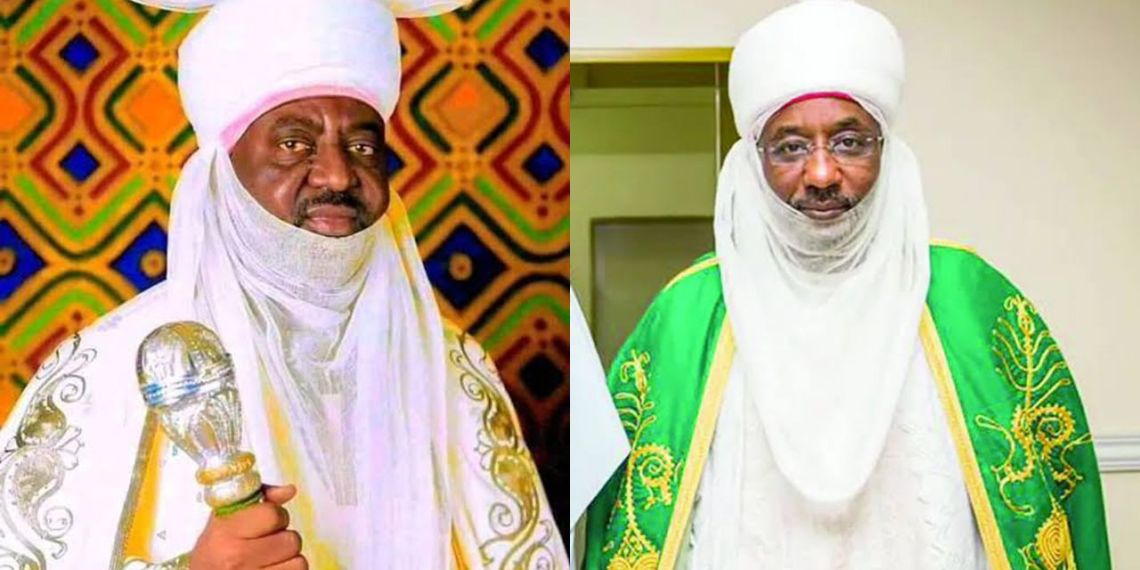
The Federal High Court sitting in Kano has adjourned the hearing regarding the removal of Kano Emir Aminu Ado Bayero to June 13, 2024.
The lawsuit, filed by Aminu Babba Dan’agundi, a title holder and senior counsellor in the Kano emirate, challenges the repeal of the 2019 Emirate Council Law by the Kano State House of Assembly.
Presided over by Justice Abdullahi M. Liman, the court has set the case for ruling on June 13, 2024. Aminu Babba Dan’agundi, represented by Barrister M. S. Waziri, argues that the repeal of the 2019 law unlawfully stripped both the Emirate Council and the plaintiff of their powers.
Counsel to the 1st and 4th respondents, Mahmoud Abubakar Magaji SAN, urged the court to decline jurisdiction to entertain the matter, citing that the law has gone through legislative processes and the order was made after the action was done.
Ibrahim Isah Wangida, counsel to the 2nd and 3rd respondents, aligned himself with Magaji’s submission, stating that the applicant’s rights were not breached as the 2024 law was repealed and accented to before the applicant filed the action.
Sunday Ekwe, counsel to the 5th and 6th respondents, stated that they did not file any issue on jurisdiction, as the duty of the police is to maintain peace and wait to carry out the court’s order.
The court requested written submissions from both sides and will review them before rendering a decision on June 13.The respondents in the suit include the Kano State Government, Kano State House of Assembly, Speaker of Kano State House of Assembly, Attorney General of Kano State, Kano Commissioner of Police, Inspector General of Police, NSCDC, and DSS.
This legal battle is part of a larger crisis revolving around the emirship in Kano, following the dethronement of Aminu Ado Bayero and the reinstatement of Muhammadu Sanusi II by the Kano State government, creating tensions in the ancient city.
Currently, both emirs are holding court from separate palaces, with Sanusi operating from the main emir’s palace and Bayero presiding from the Nasarawa GRA mini palace.