Opinion

Kaddara and the Burden of Misplaced Jealousy: When Suspicion Becomes Oppression

By Lawan Bukar Maigana

In recent times, Kannywood, the Hausa film industry, has continued to evolve with productions that spark both entertainment and reflection. Kaddara stands out as one such seasonal series that is profoundly produced and emotionally engaging. Although I have only watched two episodes so far, the quality and depth are already evident.

What makes the series particularly compelling is its bold attempt to explore complex human behaviour within marriage. It presents not just a story, but a mirror through which society can examine itself. The character of Haidar, played by Adam A. Zango, introduces a troubling but important conversation.

If a woman, by fate or circumstance, finds herself married to someone like Haidar, her life may gradually become defined by suspicion. No matter how responsible, careful, or committed she is, she may still live under constant scrutiny. This raises a sincere question. Do such men still exist in our society today?

One cannot help but ask why a man would choose to marry a woman he does not trust. Marriage, by its very nature, is built on trust, understanding, and mutual respect. When suspicion becomes the foundation, the relationship is already standing on fragile ground.

Another striking element of Khaidar’s character is his decision to prevent his wife, Maimuna (played by Nafisa Abdullahi), from working. This is not just a personal preference. It directly dismisses the years of effort, sacrifice, and resources invested in her education. It reduces her potential to nothing more than a perceived threat.

His justification is rooted in fear. He claims that allowing her to work would expose her to the gaze of other men, including her employer. This line of thinking raises an important concern. Is this truly protection, or is it insecurity disguised as control?

This leads to a deeper question about the purpose of knowledge. Is education only valuable when it results in employment? Is impact measured solely by financial contribution or professional visibility? These are questions that go beyond the storyline and touch on societal values.

The truth is that knowledge is never wasted. Even outside formal employment, an educated person contributes meaningfully to family, community, and society. However, denying someone the opportunity to apply that knowledge based on unfounded fears is neither fair nor balanced.

Haidar further justifies his actions by referencing a hadith about the concept of dayyuth. According to his interpretation, a man who lacks protective jealousy over his wife risks severe spiritual consequences. This is where the conversation becomes even more critical.

The concept of protective jealousy in Islam is often misunderstood. It is meant to preserve dignity and moral boundaries, not to justify oppression or excessive control. When taken out of context, it can easily be weaponised against those it is supposed to protect.

Scholars have long clarified that a dayyuth is a person who knowingly accepts clear immorality without concern. It does not refer to a man who simply allows his wife to live, grow, and function within ethical boundaries. There is a clear difference between awareness of wrongdoing and baseless suspicion.

What Kaddara presents, whether intentionally or not, is a reflection of how religious teachings can be misapplied. It highlights a reality where some individuals use fragments of knowledge to justify actions that contradict the broader principles of justice and balance.

If Maimuna were a sister, the advice would be simple yet firm. Marriage should not strip away dignity, purpose, or peace of mind. There must be room for dialogue, understanding, and growth. Where suspicion replaces trust, there must be honest reflection and, if necessary, intervention.

In the end, Kaddara is more than a series. It is a conversation starter. It challenges viewers to question not just the characters on screen, but the norms and beliefs that exist within society. And perhaps that is its greatest strength.

Beyond Political Party Affiliation 

By Mohammed Usman (Noble-pen)

Let’s talk beyond political party affiliation. Let’s tell ourselves the brutal truth.

Believing that all these people under the shade of one political party, ADC, and many more to move into it, are after the interest of the poor, the masses, instead of themselves, is the gravest mistake one will ever make. 

All these people have their own vested and individual interests, which spurred them to cross-carpet into the party, which seems to them promising, full of potential, and offering vistas for achieving those interests. And you know what? The poor, the masses, are the last thing they think of. Let alone the country’s future. 

Let me give you a practical, relatable elaboration on this by picking the few and the major points among them. Maybe, that way, you will understand what I am trying to say here.

1. Atiku Abubakar 

This person has been investing heavily and persistently in his ambition to become the country’s president. He never reneged since he started. He had been spending billions of naira on it. Therefore, do you sensibly think working for the poor, the masses, will be his top priority when he attains the power he has been so adamantly vying for, instead of looking for a return on his financial and material investment for years before? Don’t forget, he is a business-oriented person. And you should know what I mean. 

2. Nasir El-Rufai 

This person was once one of the cocks of the work of the current brutal government under the auspices of the APC. They entrenched it with their sweat and blood. And he never felt sorry for the poor suffering under the coarse, clueless policies of the government until the government, headed by Tinibu, betrayed him and denied him the opportunity he was dying for: a ministerial post and a place at the driving force of the government. That marked the genesis of his enmity towards the government and turned him into one of its most blunt and fierce foes. Hence, his decision to move to SDP, which refused him, then to ADC. His mission is purely to take vengeance on the government which made him an outcast rather than to save the poor masses from the bondage and shackles of poverty and insecurity, which they have been grappling with for donkey’s years.

3. Rabiu Musa Kwankwaso 

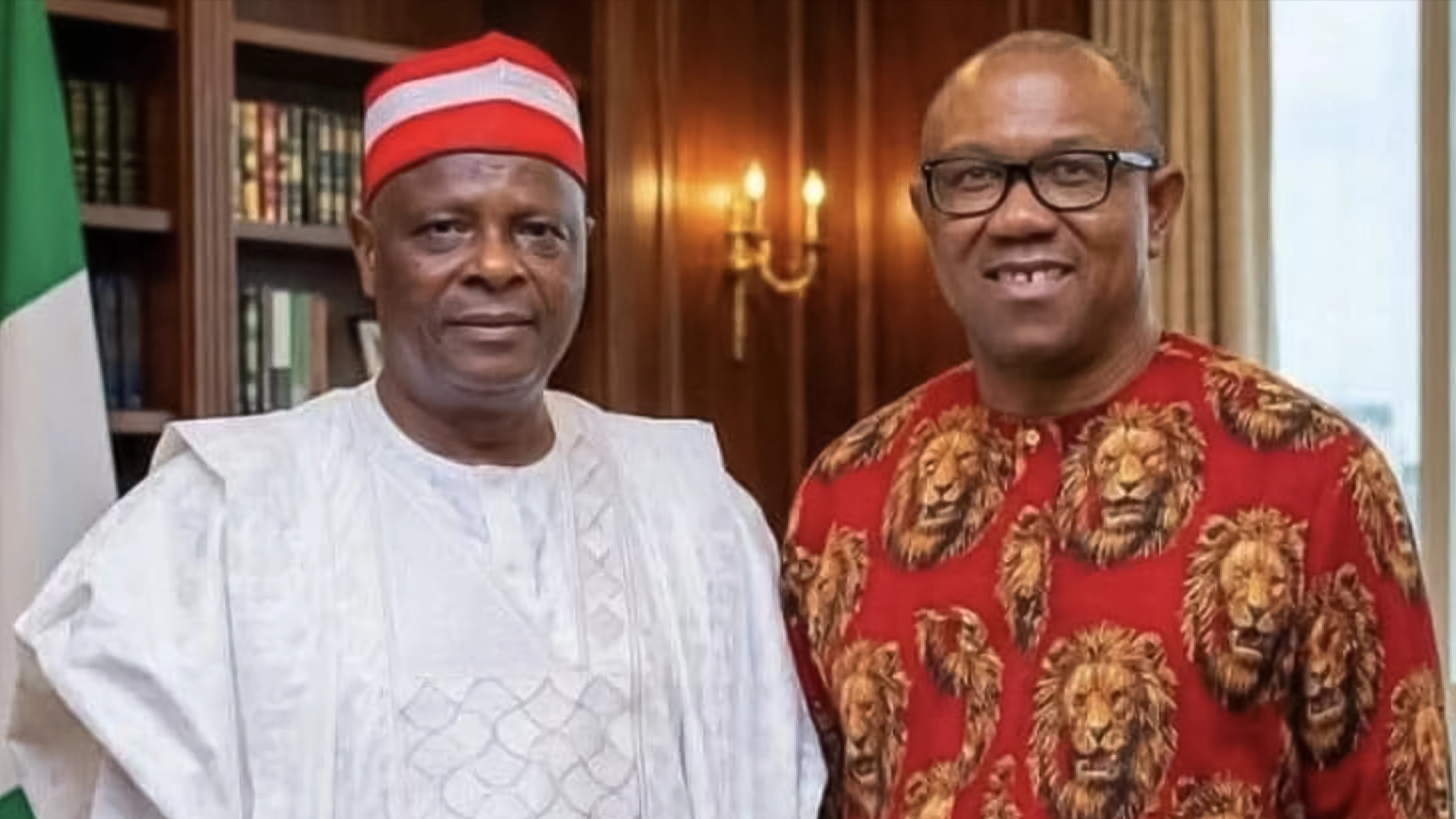
Just like El-Rufai, Kwankwaso is being driven by the force of spite and vendetta over the betrayal he suffered at the hands of his once political apprentice accomplice, Abba Gida Gida. His mission is driven solely by the quest to uproot the government of Abba Gida Gida, rather than by the welfare of the people of Kano State. However, he is a politician with very, very good antecedents. No one can deny that. But he is not into ADC for the masses. No. 

4. Nasiru Gawuna 

This was once an accomplice to the current merciless APC government, who fought a political battle—over his inspiration for the Kano state gubernatorial office—with Kwankwaso and his boy, Abba Gida Gida, but lost to them. He was once their worst enemy. But today, he and the Abba’s boss kwankwaso have leagued up as sweet friends in another political party (ADC) each with different and individual vested interest: kwankwaso to dislodge the assumed betraying government of Abba Gida Gida as well as to occupy an influencial office in the presidency; while Gawuna, to use it as an opportunity to become the kano state governor which he failed to in his previous opposition party APC. 

4. Peter Obi 

This person has the worst political andecedent, being the former governor of Anambra State and has—allegedly— a strong affiliation to IPOB, being the terrorist and outlawed political group in Nigeria, which had been perennially insurgent and rebellious to successive Nigerian governments with their impossible mission of dividing the country and taking their own share, which they aimed to call BIAFRA. So Peter Obi might clearly have this scheme hidden in his mind to, when he tapped the supreme power —presidency—become instrumental for the IPOB to finally make it possible to see the last light —they have been dying and killing people for—at the end of the tunnel, and reach their daydreamed-promised land. Polarising the country is the plot of his horizon. 

Likewise, if you pay very close attention to the other people who will be cross-carpeting into the party, ADC. You will notice that they were once fundamental figures in the previous governments who failed the masses and never took concrete, robust action to save their lives and property. Let alone improving their welfare and standard of living. Tell me, when did they change to be trusted with our mandates and entrusted with our lives once again, simply because they moved into another political party? The same applied to the others who are beneficiaries of the current APC government and are now quitting it for the shining party of the day, ADC.

Let me wrap up by telling you the secret of these Nigerian politicians. 

The fact is, they are always the same set of people.  They only switch color and identity by jumping from one political party to another— using the very public funds they looted while occupying the public offices they were once either elected or appointed into — with romanticized manifestations to sway the minds of the poor masses and pave a wider way for themselves to achieving their vested and selfish interest; increasingly impoverish the already poor masses, steal their future and the future of their children and grandchildren; while enriching themselves, their children and grandchildren, making their lives and future always the brighter.

And mind you, they switch political parties based on their analysis of which political party the poor masses lean their attention and hope towards. This means that it’s always the previous, unchanging enemies the masses mistake for their beloved ones and the beacon of hope, revolution, and transformation. 

Therefore, until the poor citizens of Nigeria understand these Nigerian politicians’ Machiavellian formula and devise a way to dismantle it—instead of continuing with their primitive thinking that their problems lie with one political party and that the solutions are in another—they shall continue to live in bondage, suffering, humiliation and destitution.

Mohammed Usman (Noble-pen) is the Author Of “Butterfly’s Wings.”

In Protest of Regional Politics

By Saifullahi Attahir

The desperation to fail President Bola Ahmed Tinubu by some politicians and their consistent attempt to recruit others into believing their rhetoric will always be an anticipated issue in the realm of politics, but whenever myopic outlooks like sectarianism, blame games, and regionalism are used, that’s what irritates my conscience into responding at the expense of whatever others may label me. What I believe is to stand for what I think is right, even if I have to stand alone.

The level of those campaigns was to the extent that you can’t say anything good about the Tinubu government without being portrayed as anti-North or even a heretic. This is preposterous!

Politics should not be built on emotions, and governance should not be like inheritance, where no matter who it is, if they’re not your kinsmen, all is not well. This is not the original personality of a typical Northerner. 

I’m not a party card-carrying member but an ordinary student, so I have the liberty to express my views based on my limited understanding. I would like to address the issue of labelling every project undertaken by President Tinubu as nepotistic, especially when it is situated in the South-West. 

Let me give an example with the recent trip President Tinubu led to the United Kingdom, where he secured a deal to revamp the Tin Can and Apapa ports in Lagos. Sealing a deal to revamp Tin Can and Apapa ports should be viewed with such an open mind as a national investment. Lagos would remain the economic bloodline of this country for the time being, hence supporting its economic growth. 

Among the notable achievements of even the most pro-Arewa leaders, like the late Gen. Murtala Ramat Muhammad, during his short stint, was the decongestion of the Lagos Apapa port led by the famous brig. Benjamin Adekunle (The Scorpion).  

I’m not promoting the idea of continuing channelling of funds to develop Lagos at the expense of other regions, but it would be absurd when overnight we heard the FG seal a deal to start importing goods through Niger-Maradi or the Lake Chad basin or create artificial ports in the North linking us to the transatlantic trade (it’s possible, but not overnight like in Libya or the UAE).

The North should have focused more on ensuring that fighting illiteracy included at least a mandatory universal secondary school education with skills. The ‘right education’ would solve 60% of all this menace. 

An enlightened self would not be used as a tool to create and perpetuate insecurity in the form of banditry and suicide bombings. An ignited mind wouldn’t be fertile ground for sectarian conflicts. You can’t woo an educated person into choosing a leader whose focus is to distribute spaghetti.

We should accept the fact that the North is a landlocked region. We are surrounded by Niger, Cameroon, and Chad. We have our own priorities that, if well executed, can boost the regional economy. Comparing ourselves to Lagos wouldn’t help matters. Lagos was an island inhabited by whites centuries ago. It was the former national capital for almost thirty years and home to almost all the country’s major industries. 

As to the second part of the rhetoric, which was also the ultimate agenda, to wrest power from President Tinubu and hand it over to another ‘Arewa politician’. Governance returning to Arewa would never be our solution. This was tried in 2015 by removing Jonathan through every possible means, only to regret a similar decision less than 4 years later.

A bitter truth to swallow was that, since our return to democracy in 1999, leaders from the South-West have proved to contribute more to issues of national development. Former President Olusegun Obasanjo’s 8 years would always be remembered for bringing a near-normal political stability to the country, improved national security, an improved economy, the cancellation of national debt, improved foreign relationships, the introduction of several empowerment programmes, the introduction/subsidisation of telecommunications, and a decisive leadership unparalleled when compared to late President Buhari’s 8 years of bewilderment.

It’s not about Tinubu prioritising Lagos and intentionally killing Arewa. The seed of sustainable national development was sown long ago, when Awolowo’s Action Group was fighting for universal education and ideological politics in their region, while our NPC was busy seeking alliances to dominate the Parliament. It’s better to hold our governors more responsible instead of the federal government.

Between 2007 and 2015, the Southwest Governors (Aregbesola, Fashola, Mimiko, Adams Oshiomhole, etc.) used their opposition to create massive developmental programmes for their region, consolidate power around the leading opposition figure, Tinubu, and enhance their regional security, while we were busy trying to wrest power from Jonathan.

To the question of ‘Arewa-2027′, who should be the candidate? The inconsistent Baba Atiku, or politicians renowned for vengeance politics, or those lacking an accommodating mind for others to win national elections, or politicians without international exposure? Tinubu is not the ideal for Nigeria, but the aforementioned politicians are no match for his governance track record as governor and, 2 years into the presidency, as president.

The current insecurity menace is a testament to how one man is incapable of addressing it. Many among the top security brass are from the North: the NSA, the Federal and State Ministers of Defence. In a region with the highest illiteracy rate, things worse than this could happen. Spaghetti and religious affiliation can woo the masses to vote for a candidate.

We should focus better on finding the RIGHT MAN rather than on which part of the country he came from.

Saifullahi Attahir is the President of the National Association of Jigawa State Medical Students (NAJIMS) National Body. He wrote this piece from the Rasheed Shekoni Federal University Teaching Hospital, Dutse, via saifullahiattahir93@gmail.com.

Kano First? Then Deputy’s Choice Should Not Be Difficult

By Muhammad Sani Ilyasu

Over the past few days, Kano’s political atmosphere has been gripped by what should have been a routine decision — the selection of a Deputy Governor. Instead, it has dragged, stretched, and unsettled expectations. As the Hausa proverb reminds us, wankin hula yana neman kai. Sooner or later, the moment of decision arrives, and when it does, it reveals more than preference. It reveals judgment.

But truthfully, this is not a difficult decision.
Once the list of nominees from the old APC bloc surfaced, one name did not merely appear — it stood apart. Alhaji Rabiu Suleiman Bichi. Not because of sentiment, and certainly not because of noise, but because of something far more scarce in today’s politics: substance.

This is a man shaped by governance, not just politics. He has moved through the system at its highest levels — serving as Secretary to the State Government, managing policy at the governor’s office, and working across institutions where decisions are not announced for applause but executed for impact. That kind of experience does not shout. It shows. And in moments like this, it matters enormously.

Yet the weight of this decision extends well beyond qualifications. The governor did not simply make a political realignment — he justified it with a principle: putting Kano first. That declaration raised the stakes. It transformed every subsequent decision into a test of consistency. Because once Kano becomes the stated priority, convenience must give way to capacity, and politics must submit to judgment.

You cannot declare Kano first and then treat this appointment as negotiable. The office of Deputy Governor is not ceremonial. It is not a token for balancing interests or rewarding loyalty. It is a quiet but powerful engine of governance — where coordination happens, where pressure is absorbed, and where experience prevents the kind of costly mistakes that erode public trust. It is not a place for learning on the job. That is precisely why Rabiu Suleiman fits this moment.

Rabiu Sulaiman Bichi carries a rare combination that politics often separates: administrative competence and genuine political experience. As a founding figure of the Kwankwasiyya movement, a former PDP State Chairman, and later Director-General of the APC’s 2023 campaign in Kano, he has operated credibly across political lines without losing his footing. That is not inconsistency. It is relevance across eras — the mark of someone who understands how power works without being consumed by it.

More importantly, he brings reach. His network — spanning national and international circles — is not ornamental. It is functional. It is the kind of capital that attracts serious partnerships, aligns policy with opportunity, and positions Kano beyond its immediate boundaries. At a time when states compete not only internally but on a broader stage, that kind of exposure is not a luxury. It is a strategic asset.

And then there is the other side of the equation — the part many would rather avoid, but which cannot responsibly be ignored. Leadership is defined not only by what is built but by what is tolerated. To elevate a deputy whose public record is clouded by ongoing court cases involving serious allegations of corruption and financial misconduct is not merely a political risk. It is a statement — and a loud one.

Because once made, that choice will not remain local. It will travel. It will shape perception, invite institutional scrutiny, and define the governor’s seriousness in the eyes of allies, investors, and the wider Nigerian public. You cannot stand on reform and lean on controversy. That is not balance. It is contradiction. And Kano cannot afford contradiction at this level of governance.

This is not a moment for experimentation. It is a moment for clarity — a moment to demonstrate that governance here is still anchored on competence, credibility, and consequence. In Rabiu Suleiman Bichi, that clarity already exists. Which is why this decision, despite the delay, remains straightforward.

If Kano truly comes first, the answer is already known. Anything else is not a strategy. It is a misstep.

Muhammad Sani Ilyasu writes from Maryland, United States of America and can be reached via msaniiliyasu@gmail.com

Tribute to the Doyen of Accounting: A Man of Ethics and Impeccable Character

By Sunusi Abubakar, ACA

Had it not been for someone I deeply respect breaking the news of Professor K.I. Dandago’s passing to me might have left me harbouring resentment towards someone for a period of my life. I was utterly shocked by Prof’s death.

Professor K.I. Dandago, widely known in Nigeria and beyond, was a renowned academic whose character was exemplary among his peers.

Those who Prof K.I. Dandago taught will agree that one thing no one could take away from him was his ethics and sense of responsibility. The professor could stand in the rain or shine just to deliver a lecture. He could climb a 10-storey building merely to fulfil his duty. Despite being ill, Prof. often stood for nearly two hours to deliver a lecture to us when we were in level 400. He was always honest and sincere in his dealings.

My first encounter with Prof was in 2018 during a lecture on Ethical Issues in Accounting. I had the privilege of discussing with him the reason for my absence from a previous lecture. Even after I gave a genuine explanation, Prof insisted that I submit it formally so that he could verify its validity.

My second encounter was after a lecture at Northwest University (NWU)’s Main Campus. I asked him about the Big Four accounting firms in Nigeria. He shared extensive insights and even explained how he facilitated a business relationship between KPMG and a private university in Kano.

My relationship with Prof grew stronger and more personal during Level 400. During that time, I often visited his office for professional guidance. He graciously agreed to act as my professional referee when I began my journey with the Institute of Chartered Accountants of Nigeria. The professor was instrumental in my path to becoming a chartered accountant and entering professional practice. I vividly remember him contacting the Principal Partner at Namadi Umar & Co. (Chartered Accountants) to secure my acceptance as an Audit Trainee. 

The last time we communicated was about my job application to Ahmadu Bello University, Zaria. He assured me of his professional response and an academic recommendation. The last time I saw Prof was at a sensitisation lecture organised by the Faculty of SMS at NWU, Kano, where he served as a speaker and demonstrated his expertise in accounting and taxation, particularly regarding the new tax laws.

My relationship with Prof. was not merely that of a student and a lecturer, nor solely that of a mentor and a mentee; it was akin to that of a father and a son. The professor helped me in every possible way. I owe him a profound debt for living this life with honesty, accountability, and sincerity of purpose.

May He grant him Jannatul Firdaus and give us the fortitude to bear this irreplaceable loss.

Sunusi Abubakar, ACA, wrote from Birnin Kudu, Jigawa State.

Bala Wunti: Bauchi’s Unifying Force

By Usman Abdullahi Koli

At a time when many are engulfed with fear of impending internal rancour that is probably capable of causing disunity and despair among key players, a time of reorganisation of the political landscape at both the national and subnational levels, comes a unifying figure who brings solutions to the upheaval experienced, particularly in the recent electoral outing.

The political atmosphere, particularly in Bauchi State, is known for turbulence and vested interests. As the state faces numerous challenges that demand more urgent structural readjustment, this is pertinent, and it raises the question of who can deliver these set goals. That is why Bala Wunti matters.

Among the political players who roll up their sleeves in aspiration to win elections, one critical issue is the unity of purpose. Unity against the monster of poverty, insecurity, hunger, unemployment, and others that are clogging the wheel of our development.

There are individuals whose presence answers questions that institutions struggle with and whose conduct reassures even the most cynical that character still matters in public life. Dr Bala Maijama’a Wunti belongs to that rare category. His story is not merely one of rise, but of formation. It is a journey shaped by early trials, sharpened by discipline, and guided by a clarity of purpose that has endured across decades.

Born into circumstances that offered little advantage, early life required resilience and self-reliance. Throughout his life, it has been punctuated by uncertainty. Yet, instead of breeding bitterness, these experiences shaped restraint, empathy, and a steady internal discipline that would later guide his every choice. Where others might have faltered, he remained composed. Where others might have hardened, he stayed measured.

Profile, professional and industry roles

His pursuit of education must be seen in that light. It was not a smooth path through institutions, but a determined journey through obstacles. From his studies in Chemistry at Ahmadu Bello University to advanced training in management at Abubakar Tafawa Balewa University and beyond, each step reflected commitment, not convenience. What emerged was not simply an educated man, but a prepared mind, one that understands complexity, respects structure, and values clarity over noise. In a world that often rewards speed, he chose depth. In a system that often tolerates shortcuts, he insisted on process.

When he joined the Nigerian National Petroleum Company Limited in 1994, he entered one of the most demanding environments in the country. He did not arrive at prominence; he earned it. From his early role as the Production Programming Officer to his eventual position as Chief Upstream Investment Officer, his trajectory shows a rare pattern in public service: steady progress built on competence rather than visibility. He learned the system from within, understood its contradictions, and positioned himself not as a spectator but as a contributor to its reform. While others chased recognition, he built relevance. While others pursued titles, he mastered responsibility.

His contributions to the oil and gas sector are best measured through results. He was part of efforts that strengthened investment frameworks, restored operational discipline, and brought structure to systems long plagued by inconsistency. Initiatives such as Operation White did more than fix technical inefficiencies. They proved that accountability was possible, even in the most complex spaces. In a sector where decisions carry national consequences, his approach has always been cautious, forward-thinking, and committed to long-term value over short-term applause. That distinction separates those who merely manage systems from those who shape them.

Yet reducing his life to professional milestones would miss the larger picture. What distinguishes Bala Wunti is not only what he has done within institutions, but what he has done beyond them. The memory of hardship has stayed with him, not as a weight, but as a compass. It informs his giving, shapes his interactions, and explains the consistency of his interventions in others’ lives. His philanthropy is not occasional; it is part of who he is. Students have been supported, communities uplifted, and individuals in distress assisted through actions that are rarely announced but widely felt. The recent support for students across tertiary institutions is not a single act; it is part of a pattern that reflects a deep conviction: opportunity should not be determined by circumstance alone. Many give when it is convenient. He gives because it is necessary.

There is also a discipline in his personal conduct that deserves attention. He does not champion causes he does not believe in. He does not bend for advantage. In a political and professional culture where flexibility is often mistaken for wisdom, this restraint is rare and powerful. It gives his actions credibility and his decisions weight. His faith, central to his life, reinforces this clarity. It is visible not only in words, but also in choices that remain steady under pressure.

When he stepped out of public service on May 30, 2025, he did so quietly. There was no spectacle, no fanfare. The moment felt calm but confident, the kind of confidence that comes from knowing your work speaks for itself. Influence does not depend on the office, and in his case, it had already moved beyond it. What he carries into the next phase is not a title, but a reservoir of experience, credibility, and trust. These qualities are far more valuable than any position could ever be.

The emerging political conversation around Bauchi State must be seen through this lens. The state is no longer at a point where familiar patterns can be recycled without consequence. The challenges are deeper, expectations sharper, and the margin for error thinner. This is not a time for comfort; it is a time for deliberate choice. What is required is not just political skill, but administrative depth, economic understanding, and the ability to translate intention into results.

Bala Wunti presents a compelling case, not because he seeks attention, but because his life commands consideration. He understands systems at a level that allows him to engage governance beyond slogans. He has managed scale and complexity in ways that meet the demands of statecraft. He carries a social awareness rooted in lived experience rather than abstract empathy. Most importantly, he stands outside the entrenched rivalries that have defined political competition in the state. That distance is not detachment; it is clarity. It allows him to be seen not as a continuation of old conflicts, but as a bridge beyond them.

The argument for his consideration is therefore not emotional, even though his story moves the heart. It is rational, grounded, and difficult to dismiss. It rests on capacity, consistency, and a record that proves he can think, act, and deliver. In a context where trust is scarce, his credibility becomes stabilising. In a climate where division is costly, his neutrality is strategic. At a time that demands both firmness and thoughtfulness, his temperament aligns perfectly with the responsibility ahead.

This is not to suggest perfection. Leadership is not shown by ambition; it is revealed by preparation. In his case, the evidence is alive. From a childhood shaped by absence to a career defined by impact, his path is intentional, tested, refined, and sustained.

Bauchi faces a choice deeper than personalities. It is a choice between repetition and recalibration, between what is familiar and what is necessary. If the state is to move toward a future defined by stability, competence, and inclusive progress, it must recognise preparation when it sees it.

In Bala Wunti, experience, character, and capacity converge in a rare combination. He does not need to declare his worth. It is evident in the systems he has strengthened, the lives he has impacted, and the consistency he has maintained. The question, therefore, is not whether he has something to offer. The question is whether Bauchi is ready to choose what it truly needs.

If so, the answer is already in front of it.

Usman Abdullahi Koli wrote via mernoukoli@gmail.com. 

Kano Honours Legendary Hajiya Mariya Galadanchi: Celebrating Six Decades of Impactful Broadcasting

By Khalid Imam 

Arguably, in Kano and beyond, if one is searching for one of the most consistent and dominant pioneering female Hausa Muslim broadcasters—whose eloquent voice has shaped and continues to shape generations through a myriad of captivating radio and TV programs—there is no doubt that such a singular, towering presence belongs to the revered and tireless Hajiya Mariya Galadanchi. She is an iconic, multi-talented veteran journalist who is retired but not tired. Hajiya Galadanchi, who spent six decades as a powerful influence and household name synonymous with Radio Kano, a station popularly known as Gidan Bello Dandago, is a popular figure known for her uncommon courage and unshakable faith in God.

An all-round journalist whose foray spans both print and broadcast media, the legendary Hajiya Mariya Galadanchi, popularly known as an anchor of Filin Zaɓi Son Ka, among other programs, began her career as a health worker. Out of a deep passion for the media, she metamorphosed into one of the most dedicated and accomplished radio and television personalities. A skilled radio dramatist, she began her journey into journalism by writing life-transformative articles, mostly addressing issues related to women and children, over half a dozen decades now in the pages of Gaskiya Ta Fi Kwabo. Hajiya Galadanchi ventured into public service in 1964 as a health worker at Marmara Hospital and was later posted to several other hospitals within the old Kano City, where she served with remarkable zeal and dedication.

After joining Radio Kano at the age of 35, initially not as a full-time staff member, she handled women’s programs on Thursdays and children’s programs on Fridays as her first assignments. Thereafter, she went on to anchor and contribute to several notable programs, including Ruguntsumin Salla. Through Zaɓen Sada Zumunci, she mentored many female broadcasters, including Mariya Ummakati. Hajiya Mariya Galadanchi is undoubtedly one of the pioneering Hausa Muslim female broadcasters and can rightly be described as a glass-ceiling breaker, having opened the floodgates for the rise and dominance of women in radio and TV broadcasting in Kano today, many of whom now occupy enviable positions as directors within the public and private media ecosystem in Kano and beyond.

No doubt, her persistent voice is a testimony to a living era, one well-defined by knowledge, brilliance, advocacy, and deep love for culture and the uniqueness of Kano’s traditional ways of life. She mentors the womenfolk on the complexities of managing the home: living with a husband and his relatives, navigating life with co-wives, and raising a successful family. She constantly discusses topics such as pregnancy, childcare, and parenting, while teaching women, especially the young, the best of Hausa traditional cookery, including dishes served during festive seasons and ceremonies.

Acknowledged for her honesty, courage, faith, patience, loyalty, dedication, and respect for time, she was also famously known as one of the first women to ride a bicycle and drive a car in Kano City, being among the few female pioneers to be educated in Western schools in the old Kano City. Hajiya Mariya was born at Kankarofi Ward 97 years ago, in Kano Municipal LGA.

Among the dignitaries who graced the special celebration of the life and times of Hajiya Mariya Galadanchi were the Honourable Commissioner of Information, Ibrahim Abdullahi Waiya; Prof. Abdalla Uba Adamu, former Vice-Chancellor of the National Open University of Nigeria; Prof. Abdulrashid Garba, Vice-Chancellor of Khalifa Isyaku Rabi’u University, Kano (KHAIRUN); and Malam Ibrahim Khalil, among other seasoned and distinguished media practitioners too numerous to mention.

During the event professionally curated by an erudite academic, seasoned broadcaster and popular columnist, Malam Bala Muhammad as a Master of the Ceremony, there was a special appeal to the Kano State Government to name the road between Diso and the junction of Hasiya Bayero—or any other notable monument in Kano—after the veteran broadcaster, Hajiya Mariya. Again, Prof. Abdalla Uba Adamu also called on the organisers to establish a fellowship in her name to promote young female journalists in Kano.

Alhaji Dr Aminu Ladan Abubakar (Alan Waƙa), Sarkin Adabin Harshen Hausa; Mudassir Ƙassim; and Hajiya Fati Nijer thrilled the audience with scintillating songs. Hajiya Rabi Tanko Yakasai, a close associate of the celebrant, also spoke on Hajiya Mariya Galadanchi’s political activism through Jam’iyyar Matan Arewa, urging young females from the North to emulate her.

The Commissioner of Information, Ibrahim Abdullahi Waiya, described Hajiya Mariya Galadanchi as a shining example of a female journalist of great substance and announced the Kano State Government’s donation of ₦10 million as a take-off fund for the proposed Hajiya Mariya Galadanchi Young Female Journalist Fellowship Fund.

The Kano community celebration of Hajiya Mariya Galadanchi at 97, which was attended in large numbers by media practitioners, academics, the ulama, the celebrant’s family and friends, and people from all walks of life, could best be described as a huge success. Dozens of goodwill messages were received, especially from notable female broadcasters in Kano, who expressed deep appreciation for the pioneering mentorship role Hajiya Mariya Galadanchi has tirelessly played.

Some of the major highlights among the series of fascinating activities that made the event memorably captivating were the keynote speech presented by Hajiya A’isha Sule; two separate audio and audiovisual documentaries were presented to the patient audience on the life and times of Hajiya Mariya Galadanchi; and special tributes from both senior and young female broadcasters by Hajiya Hafsah Iliyasu and Hajiya Zainab Sherif, respectively. 

There was also a stimulating panel discussion featuring Maryam Babayaro, Dr Fatima Damagun, A’isha Bello Mahmud, A’isha Sule, and A’isha Usman, moderated by Hajiya Mariya Bakori from Katsina State. To allow feedback from the massive audience, there was a Q&A session, the presentation of awards, and a plaque to the celebrant, led by Malam Sheikh Ibrahim Khalil and Malam Abubakar Darma. The event ended with an exhibition of Hajiya Mariya Galadanchi’s memorabilia, which included her photos, sound bites, broadcast archives, and merit awards.

Khalid Imam is a Kano-based writer, educator and President of Kano Literary Space. He can be reached via email: khalidimam2002@gmail.com.

UK Church Revival Momentum Vis-à-vis Nigeria

By Ugochukwu Ugwuanyi

It’s a striking oxymoron that while churches in Nigeria are acquiring old warehouses and event centres, revamping them into worship centres, Church buildings in the United Kingdom are being converted to flats, offices, restaurants, and bars. Hallelujah, the tide is about to turn in resemblance to what obtains in Nigeria. Here’s a case in point: In January this year, the Port Harcourt branch of a prominent Pentecostal church reportedly acquired Atrium Event Centre in a multi-billion-naira deal. They went ahead and invested a billion naira in renovating the facility within three months.

This has quietly been happening in major Nigerian cities as churches buy up disused properties without care for the cost. They don’t just lease the sprawling spaces but purchase them outright. When told in July 2025 that “some areas marked as industrial estates in some large cities in the country have been taken over by churches,” President of the Pentecostal Fellowship of Nigeria, Bishop Wale Oke, responded by saying: “It is a mark of a great revival in our nation. God has opened the heavens upon us graciously and has poured the Holy Spirit upon us, poured His word upon us, and many are turning to the Lord, and the Church is growing.”

If this is the case, it means a similar revival is brewing in the United Kingdom, with citizens and denizens not realising it yet. Apparently, some persons with a burden for that clime must have been mourning for a spiritual awakening. They have now got the attention of the Ruler of the Universe, who has stirred a property tycoon and millionaire by the name of Samuel Leeds, to act in a way that will ripen the revival. Words of faith and prophecy will always require a corresponding action to come to pass. This catalytic action doesn’t necessarily have to come from the prophet or the supplicant who proclaims the faith.

In 2 Kings 7, the effrontery of the four men with leprosy in storming the camp of the Aramean soldiers was all God needed to actualise the prophecy by Elisha that spells an end to the harrowing famine in Samaria of those days. Such requisite action is now being reenacted in the United Kingdom with the resolve of Samuel Leeds to buy up church buildings that are on the verge of packing up — in order to retain them as places of Christian worship.

With thousands of churches closing across Britain in recent years, Leeds says protecting them now could help prepare for what he sees as an impending revival of Christianity in the UK. In his words, “I believe we are seeing the beginning of a revival in this country. We need to keep our churches open and ready for when that happens.” Disclosing that property agents frequently offer him churches to redevelop, the real estate mogul would rather that church buildings dedicated to Christ be preserved to serve that purpose. After making an offer for Darlaston Methodist Church in Wednesbury – worth an estimated £250,000, Leeds wrote on Facebook, “To those asking how they can donate to the cause, I don’t want any money. I want you to attend Church on Sunday and donate to your local Church.”

Despite this consciousness of the need for congregations, netizens have continued to dwell on that point. Some mockingly challenge Leeds to go beyond buying up church buildings to attracting people who would worship there afterwards. For some others, a more appropriate use of the chapels and cathedrals would be to convert them into public pools and community centres. You can imagine the duplicity of commenters who lost their voices when the Church buildings were being turned into flats and business premises, to now recommend: “Make them sanctuary places for the homeless and ex-military, then let charities feed them.” For all their tantrums, the naysayers fail to see what Leeds is seeing – a revival that would cause Britons to enthusiastically return to Church without needing any persuasion to worship the Almighty in the Sanctuary.

Apart from making places of worship available, there are other tell-tale signs that affirm this inevitability. Recent polling by YouGov indicates an increase in belief in God among young adults, with faith among 18 to 24-year-olds rising significantly in recent years [Editor’s Note: While initial reports indicated a surge in faith among young adults, YouGov has since withdrawn the specific survey data due to methodology errors.]. The data firm NielsenIQ BookData reported last week that the number of Britons buying Bibles jumped by 19 per cent last year, taking the total to its highest level since 1998. This was corroborated by Christian publisher SPCK Group, which disclosed that Bible sales reached £6.3million in Britain last year – more than doubling since 2019. There is also the Make Great Britain Christian Again Conference coming up later in the year, which organisers say will be “Two full days of worship, preaching, teaching, music and prayer to revive the nation!”

Meanwhile, there is concern that this spiritual awakening in the UK may eclipse Nigeria’s season in the sun as the world’s Pentecostalism headquarters. Since the days of the late Archbishop Benson Idahosa, Nigerian clerics have taken the Gospel of Christ to various parts of the world, complete with healings and other signs and wonders. There is no Christian cleric of international acclaim who has not featured in programmes in this country or collaborated with leading Nigerian pastors in doing the Lord’s work. It is a testament to Nigeria’s global prominence in Christendom that the Head Church and the founders of local evangelical missions are designated as the Global Headquarters and Global Lead Pastor. Some others attach “Worldwide,” “… of All Nations,” “Global or International” to their brand name, not entirely for vainglory but out of mandate. If still not convinced, be mindful that Nigeria is home to the world’s most widely distributed daily devotional, published in over 7,000 languages and circulating billions of copies across 242 countries and territories.

But just like the sun radiates the brightness of day wherever it faces, causing dusk on its flipside, revival is usually asynchronous (Acts 2, Psalm 102:13, Ecclesiastes 9:11, Acts 1:8). The faithful in Nigeria must therefore make hay while the sun shines – if you don’t mind the cliche. There remain a lot more grounds to cover. Nigerian Fathers of Faith, with massive global reach and influence, must introspect to see whether God’s reason for shining His light from Nigeria has been realised, or whether He is shifting attention elsewhere as a result of our people’s dereliction or compromise. It will be a Woe if we as a nation do not recognise or miss our time of visitation (Luke 19:44).

Nigerian Christians must not be complacent on the basis of the 1986 prophecy by Pa S. G. Elton that: “Nigeria and Nigerians will be known all over the world for corruption. Your name, Nigeria, will stink for corruption, but after a while, a new phase will come, a phase of righteousness. Many shall take hold of him, that is a Nigerian saying; we will go with you, for we have heard that God is with you.” This prophecy may have run its course or remained perpetually hanging because the country hasn’t produced a Samuel Leeds who would take the corresponding action that would bring it to pass! For what it’s worth, the UK is deserving of the impending Glory as a country that, for over 1,500 years, was built on Christian values. These have shaped the British laws, morals, calendar, institutions, charities, and national character — from Magna Carta to modern human rights practices.

In the final analysis, the threat to Nigeria’s epicentre status in the Move of God should concern every Nigerian. As Bishop Oke told The Punch newspaper in the interview referenced above: “The spiritual controls everything; If our people are spiritually sound and healthy, they will impact this nation very positively. Nigeria would have been a hell but for the presence of Christians who are praying, living righteously, and living godly. And I tell people that all we need to do for Nigeria to collapse is for the saints of God to stop praying. If the Christians in this nation stop praying, the nation will collapse.” Need I say more?

VIS Ugochukwu is a Sage, Narrative Architect and Brand Strategist who can be reached @sylvesugwuanyi on X.

Governor Badaru and Governor Namadi and the Dutse International Airport: A Misuse of N11.5 Billion of Jigawa State’s Public Funds

–A costly decision demanding accountability, public scrutiny, trust, leadership priorities, and responsibility

By Nura Jibo MRICS, MNIQS, PQS, RQS, UN-DCP

If Muhammad Badaru’s eight-year stewardship as Jigawa State’s governor could not provoke his conscience to reflect on the abandonment of the N11.5 billion Dutse International Airport, from which Jigawa State’s public money was taken and used by Governor Sule Lamido, nothing will! 

If Governor Umar Namadi’s one-year display of overt leadership anger, just to play to the gallery while inspecting projects at Dutse General Hospital and Rasheed Shekoni, is any indication of god-fearing, at this point, he should be seeking Allah’s repentance and forgiveness for neglecting the Dutse International Airport that Governor Sule Lamido spent N11.5 billion to construct.

The issue is: It is not just about campaigning and winning public office. It is not about aspiring to be a governor, senator, minister, or president while relegating public responsibility. Indeed, it is about taking a substantial amount of Jigawa State’s money to build an airport that its ordinary citizens (Talakawa) have never benefited from. It is about earning public trust, accountability, responsibility, and excellence by safeguarding public funds and ensuring that the people of Jigawa State receive value for their money.

Anything short of this, one would inevitably appear before Allah SWT and answer for all misdeeds, inactions, and karmic retribution.

It is very painful to witness a project one participated in constructing being abandoned by Governors Badaru and Namadi after an enormous sum of N11.5 billion was spent on it. And the governors who do this are sleeping with both eyes closed! They forget that a day of reckoning is coming when they must appear before their Creator and answer the most difficult questions of their lives. 

The engineers from Jigawa State’s Due Process involved in this airport project are also unhappy with the abandonment of the Dutse International Airport.

The person who hired this writer as a supervising consultant for Dutse International Airport in 2013, Mallam Rabi’u Shuaibu Kazaure, then director of building at Jigawa State’s Due Process and Project Monitoring Bureau, has passed away. He was a man of integrity, sincerity, and honesty who diligently discharged his duties. May Allah bless him with Jannah and continue to reward his efforts in the airport project. 

Therefore, the deliberate killing and systemic lack of foresight and vision by the two governors regarding the Dutse Airport is not only negligent but also significantly affects the weak, crushing the innocent’s opportunity cost and marginal propensity to invest their billions in agribusiness and other Jigawa State science and technology developments.

Indeed, airport construction and management are not for everyone! It is not merely a governor’s affair! It is not a long-standing academic practice in which a governor would recruit or “shop” lecturers from universities and give them “lucrative” positions in Jigawa State, expecting them to perform miracles, while their true expertise lies in marking students’ scripts for years. They know nothing about industry knowledge beyond their rules of engagement as academics and their involvement in academic staff unionism, which they spent decades pursuing with little success! 

Managing Jigawa State’s departments and agencies is certainly beyond a mere academic exercise. It requires industry knowledge, not academic learning. It does not require mastery of the English language, where certain DGs in Governor Namadi’s cabinet, for example, could deceive the governor with all sorts of English grammar or polemics in the name of “fetching” Jigawa State government investors from abroad.

This could be elaborated more succinctly in a subsequent discussion on the mismanagement of Jigawa State’s funds by Governor Namadi and his DGs on foreign trips under the pretext of seeking investors for Jigawa State. If time permits, photos and videos could be released to substantiate this point!

Now back to the wasteful venture of the Dutse International Airport.

Governor Sule Lamido’s efforts must be acknowledged and appreciated for the construction of the Dutse International Airport. He single-handedly started this project in February 2013 and completed it in 18 months! This is certainly commendable for a governor who is primarily an administrator and a lifelong politician rather than a technical expert.

However, even Governor Lamido’s vision and mission for the airport could be faulted for his limited understanding of how airports are managed globally, particularly when the client (owner) lacks the resources to manage it. This writer has repeatedly communicated with Governor Lamido about the importance of handing over the entire airport to a reputable airline to operate it on behalf of the Jigawa State government. This is akin to an agreement reached with Captain Edward Boyo, the CEO of Overland Airways, who scheduled a three-day flight connecting Abuja, Dutse, and Bauchi. Unfortunately, the memorandum of understanding agreed upon with Overland was not honoured by Governor Badaru and his entire cabinet. Neither was it honoured by Governor Namadi, courtesy of political disputes arising from party differences, which ultimately led to the waste of Jigawa State’s people’s money and resources in perpetuity.

Very recently, in a conversation with top political office-holders in the state, they recounted their ordeals over their inability to make the airport functional and useful.

An investigation revealed that a South African company interested in the Dutse International Airport came and went without arriving at a common standpoint. Ethiopian Airlines was also revealed to have an interest in turning it into a cargo airport, but Governor Badaru and Governor Namadi’s lack of interest has hindered this line of business.

It is, therefore, foolhardy to talk about or dream of good governance when these two governors came and found a functional airport and, provocatively, made it dysfunctional for political reasons and personal interests best known to them, which are diametrically opposed to public interests. With this kind of behaviour alone, Allah SWT will, insha’ Allah, never allow them to go scot-free, given their lack of responsibility and public trust in sustaining the airport for well over 10 years now! The airport could have at least covered its full construction cost by now! 

For instance, the Murtala Mohammed International Airport in Ikeja, Lagos, is a federal asset managed by the Federal Airports Authority of Nigeria (FAAN) and the Nigerian Customs Service (NCS). Its Customs revenue alone as of 2025 was reported at N202.9 billion! The airport’s FAAN revenue in 2024 was the highest in Nigeria, accounting for an average of 67% of its total revenue of N256 billion.

Malam Aminu Kano International Airport in Kano generated N20.2 billion in revenue, accounting for 5.3% of FAAN’s total revenue in 2024!

Therefore, the Dutse International Airport could have generated at least N50 billion in 10 years (2015-2025) if it had not been left idle or used solely for Hajj ceremonial shuttling by Governor Badaru and Governor Namadi.

Though the revenue from the Ikeja and Kano airports goes to the federal government of Nigeria, by comparison, Lagos State and Kano benefit from increased economic activity due to the presence of NAHCO and SAHCO, as well as from personal income taxes paid by workers and businesses operating in the airports’ vicinity.

This is what the people of Jigawa lost due to Governor Badaru and Namadi’s neglect of the Dutse International Airport for well over 10 years! 

Indeed, on a daily basis, Ikeja airport’s customs could generate an average of N555 million in import/customs duties if its reported 2024/2025 revenue of N256 billion is anything to go by. 

Governors Badaru and Namadi’s avoidance of this airport responsibility since 2015, by portraying it as a ceremonial airport for commuting Hajj pilgrims, is not only detrimental but also exposes the political leaders’ lack of foresight and mismanagement of public funds. 

The indecision regarding the Dutse International Airport by Governor Badaru and Governor Namadi contravenes FAAN’s three measurable KPIs, which include on-time operations, revenue growth, and passenger satisfaction.

Solutions 

Globally, airports are assessed against standards and quality. Dutse International Airport was built to standard. Its runway is 3 kilometres long, and the airport’s width is 60 metres. It is, by all standards, suitable for large aircraft such as the Boeing 747 to land on its runway, with an average concrete and asphalt thickness of seven meters! This does not fall short of the global requirements for the longest runways at the world’s biggest and top 10 airports, with an average length of three to five kilometres.

The financial and economic losses at Dutse International Airport are significant due to the Jigawa state government’s lack of leadership priorities, as evidenced by the management of international airports in Rwanda, Addis Ababa, Qatar, Gatwick, and Heathrow, among others. Taking time, for example, by Governor Namadi to go to the Qatari Embassy in Abuja with a very junior high school colleague to meet with the Qatari Ambassador or inviting him to see the airport, is not the way to woo partners or encourage Qatar Airways to partner with Dutse International Airport. The ambassador’s duty is certainly diplomatic, not technical; he is not in any way going to help the Jigawa state government, technically speaking, make its airport useful. The Qatari people are law-abiding individuals known worldwide for their uprightness and accountability. They mostly engage in charitable and educational programs for deprived communities, as witnessed in Gaza, Palestine, Syria, and in Dutse and Hadejia, Nigeria.

To make Dutse International Airport useful, one must look beyond the banal and quibbling issues of political sentiments and personal interests.

The airport could have been taken in partnership with Qatar Airways if the proper partnership channels had been communicated to Qatar Airways’ commercial department in Doha. It could have been salvaged if, for example, direct contact had been established with Rwandan Airlines rather than Ethiopian Airlines. It could have doubled its construction cost in revenue if the two governors had done their homework very well through Jigawa State’s international partnerships and linkages. This department could have liaised with Gatwick or London Heathrow Airports, for example, in the United Kingdom, or even with Frankfurt Airport in Germany, to take over the management of Dutse International Airport and enter an agreement, inter alia and ab initio, at a 50-50 business fee. 

Lufthansa, for example, offers extensive partnerships and connections linking East and North Africa. There is no harm whatsoever in giving the Dutse International Airport management to Frankfurt’s Lufthansa as an up-taker, or to Madrid Barajas Airport (MAD), which is currently interested in African partnerships by shuttling its flights to connect to various African geographical locations such as Chad, Niger Republic, Rwanda, Ghana, Cameroon, Kenya, Uganda, Senegal, and Mali, to mention but a few. 

Royal Air Maroc could also have been a strong partner to the Jigawa State government and to Dutse International Airport, beyond the Overland domestic partnership that was caught up in Badaru’s and Namadi’s political acrobatics. Indeed, Dutse International Airport, within this 10-12-year period of neglect by the two governors, could have been used to provide serious dollars to the Jigawa State government from abroad and a couple of billions of naira on domestic flight arrangements and agreements, because it would have certainly offered the highest frequency of flight influx and a “buffer” zone from Europe to the west and Sahelian Africa, allowing easy accessibility to passengers and cargo into major African airports like Cape Town, Casablanca, and Addis Ababa etc.

Unfortunately, the current governor is busy shuttling between China and India to invite investors to invest in Jigawa State, with minimal progress that is often overamplified by his new media aides.

Therefore, what is wrong, useless, and should be avoided is what an academic once described as hot-air jargon, popularly known as Dogon Turanci. The Jigawa State government should take the management of its international airport seriously by inviting up-takers to handle the airport for a couple of years, with its staff and technical personnel. No Nigerian or Jigawa indigene should be employed to work at the check-in and check-out counters or security points to avoid passengers begging for money (dollars), which is typical of Nigerian-trained and employed airport staff and has caused significant damage to Nigeria’s integrity and national image. 

Nura Jibo writes for the West African Research Association (WARA) and the African Studies Centre at Boston University, United States.

Rebuttals to this piece are welcome and healthy. They can be submitted to jibonura@yahoo.com.

Reflective Commentary on Operation Epic Fury and the Politics of Civilisational Self-Understanding

By Ibraheem A. Waziri

The biweekly discussion session of the Students’ Interactive Forum held on 5 April 2026, themed “Operation Epic Fury: Who Is on the Right Side of History?”, offered more than a debate on contemporary geopolitics. It functioned as an intellectual space where participants interrogated their assumptions, re-evaluated normative positions, and confronted the uneasy realities of global power politics. What emerged was not consensus but clarity: that international conflicts rarely lend themselves to moral binaries, and that national interests often override universal ethical claims.

A noteworthy methodological intervention by the moderator meaningfully shaped the discussion. Participants were encouraged not only to argue from religious, ideological, or moral standpoints—whether as Nigerian Muslims, Christians, or otherwise—but also to situate their arguments within a Nigeria-like stake in the conflict. This requirement subtly but firmly shifted the debate from abstract moralism to applied political reasoning. It compelled participants to ask not merely who is right, but what such “rightness” means for Nigeria’s interests, positioning, and future orientation in the international system.

The ensuing exchange of arguments revealed the fluidity of political judgment in the face of competing narratives. Participants occupied and abandoned positions ranging from pro–America/Israel to pro-Iran, often acknowledging moments of intellectual dissonance and reconciliation. This oscillation underscored a critical feature of political deliberation: that informed engagement often complicates certainty rather than resolves it.

Perhaps the most incisive theoretical contribution came from Rahmah—obviously an International Studies major—who observed that the international system is fundamentally anarchic—a dog-eat-dog arena in which states pursue advantage with limited regard for truth, justice, or morality. Her point resonates strongly with classical realist thought, particularly the notion that power, not principle, remains the primary currency of international relations. In this view, ethical discourse, while not entirely absent, is frequently instrumentalised to justify actions taken in pursuit of strategic self-interest.

Building on this realist insight, the suggestion was made that a deeper appreciation of the conflict requires an examination of the foundational narratives that animate each principal actor. States do not merely pursue interests in a vacuum; they do so through historically constructed identities that shape their sense of purpose and legitimacy.

The United States, for instance, has long styled itself as a Western, Protestant, Anglo-Saxon polity, imbued with a sense of exceptionalism and a perceived moral mandate to shape the global order. Israel grounds its national identity in an ancient religious text and a strong sense of tribal and historical continuity, blending theology, memory, and statehood into a singular narrative. Iran draws heavily on its Shiʿi Islamic heritage, articulating resistance, martyrdom, and moral defiance as central elements of its political identity. Saudi Arabia, in turn, locates its legitimacy primarily in its Sunni Islamic identity and custodianship of sacred Islamic sites.

These narratives are not ornamental; they are constitutive. They inform how states interpret threats, define allies, justify violence, and imagine victory. Even actors not directly involved in a given conflict—such as China, Russia, or Nigeria—operate through their own philosophical attributions, unity bases, and civilisational self-understandings. Engagement or non-engagement is rarely neutral; it is filtered through deeply embedded conceptions of history, destiny, and national purpose.

This analytical turn raises a profound question for Nigeria: What are we? Who are we? Where do we come from, and where do we want to go? Unlike many states with relatively coherent foundational narratives, Nigeria’s identity remains contested, layered, and unfinished. Is Nigeria a mere geographical expression, an administrative inheritance of colonialism, or an emerging civilisational project still in the process of self-definition?

The importance of this question cannot be overstated. A nation’s capacity to navigate international conflicts meaningfully depends not only on its economic strength or security apparatus but also on its clarity of purpose. Without a shared understanding of what Nigeria represents and aspires to become, foreign policy risks becoming reactive, incoherent, or opportunistic.

Ultimately, life—whether for nations or individuals—transcends the pursuit of economic abundance or physical security. These are enabling conditions, not ends in themselves. The more enduring question concerns what is done with stability and prosperity once attained: the values enacted, the institutions built, and the meaning ascribed to power. In this sense, the discussion on Operation Epic Fury served as a mirror, reflecting not only global tensions but also Nigeria’s unfinished conversation with itself.