By Sabiu Abdullahi
United States Secretary of Defense Pete Hegseth has said the war involving the US, Israel and Iran has so far cost $37.5 billion, according to the latest official estimate released by the Pentagon.
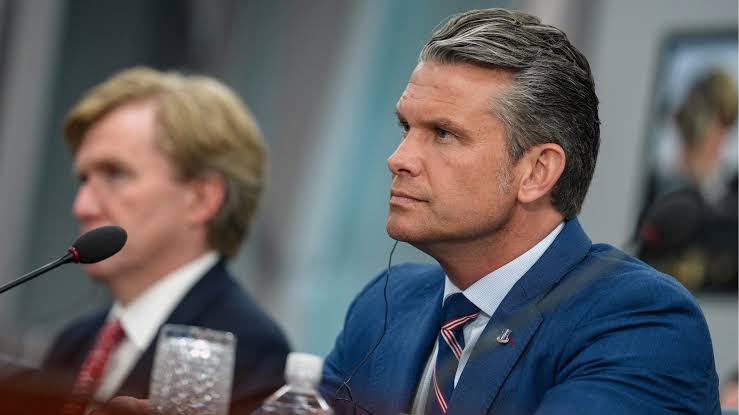
Hegseth disclosed the figure on Tuesday during a hearing before the Senate Appropriations Committee. He appeared alongside Chairman of the Joint Chiefs of Staff, General Dan Caine, to defend a proposed $1.5 trillion US defence budget. The request includes nearly $70 billion for military operations linked to the conflict with Iran.
“The estimate we have as of today is $37.5bn,” Hegseth said in response to a question from Democratic Senator Dick Durbin.
He explained that the estimate covers some operational and maintenance expenses through the end of September. However, he did not provide a detailed breakdown of the spending.
The latest estimate is about $8 billion higher than the $29 billion figure the administration of President Donald Trump announced in May.
Other estimates place the economic impact much higher. Moody’s Analytics, for example, has estimated that the war could cost the US economy as much as $150 billion after accounting for higher domestic energy prices and other indirect effects.
The hearing took place as hostilities between the US and Iran continued after a memorandum of understanding that had paused attacks since June 17 collapsed last week.
On Monday, Trump said Iran would “pay” after two US soldiers were killed over the weekend. In recent days, he has also threatened further military action, including strikes on Iranian energy facilities, bridges and a deeply buried nuclear-linked site known as Pickaxe Mountain.
The Pentagon said the conflict has also increased pressure on US weapons supplies.
Hegseth told lawmakers that additional funding would help “to expand production lines and accelerate delivery of high-demand munitions. We’re talking about solid rocket motors, JDAMs [Joint Direct Attack Munition], hypersonics, and counter-drone capabilities”.
He also warned that military readiness could suffer if Congress failed to approve the requested funding.
“Training in the future would have to be curtailed if we do not get our budget needs met and met urgently, and yes, some of that has to do with the current budget cycle and how things come together,” he said.
Democratic Senator Patty Murray criticised the broad spending proposal, which also includes funding for National Guard deployments in Washington, DC, military operations against suspected drug smugglers in the Caribbean and border security missions.
“So I’ll be blunt,” she said. “The truth is, your request does not make a lot of sense.”