By Sabiu Abdullahi
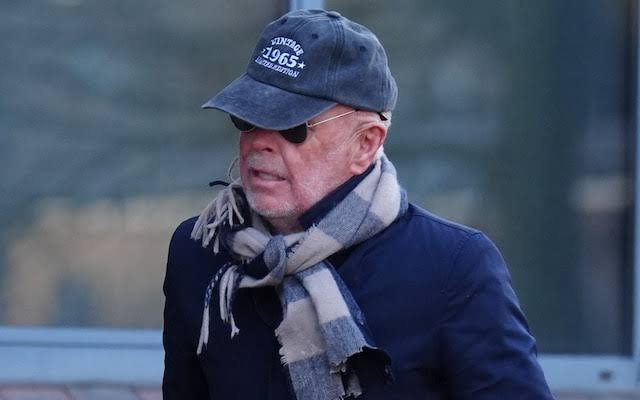
A 66-year-old former councillor in Sunderland, United Kingdom, Glenn Gibbins, has been convicted by a court over a Facebook post in which he called for Nigerians living in the city to be melted down and used to fill potholes.
Gibbins, a former Reform UK councillor, was found guilty of making grossly offensive comments following a three-hour trial at South Tyneside Magistrates’ Court, according to UK-based media outlet Chronicle Live.
District Judge Zoe Passfield subsequently handed him a 12-month community order, which requires him to complete 150 hours of unpaid work.
The case centred on a Facebook post Gibbins published in March 2024. The former councillor acknowledged that his statement was offensive but maintained that it did not amount to grossly offensive conduct.
In the post, he wrote, “Can’t believe the amount of Nigerians in town… should melt them all down and fill in the potholes!!”
The controversial statement attracted attention after the campaign group Hope Not Hate examined Gibbins’ social media activity following his announcement as a Reform UK candidate for Sunderland City Council. Authorities were reportedly notified of the post after his election in May.
During the trial, prosecuting counsel Emma Dowling argued that the statement was deeply offensive and portrayed Nigerians as less than human.
“The comment about melting them down conjures up despicable images.”
She further argued that the remark implied Nigerians were “somewhat less than human, stripping people in that group of humanity”.
A Nigerian community leader in Sunderland, Godwin Ejeh, also testified about the incident. He said he organised a demonstration outside the City Hall on the day Gibbins was expected to be sworn in as a councillor, with the hope that he would apologise to the Nigerian community.
However, Gibbins had already been suspended by Reform UK after the Facebook post became public and did not attend the ceremony.
Ejeh, who contested the May council elections under the Liberal Democrats, rejected suggestions that he was exploiting the controversy for political advantage.
“We are talking about humanity here; it’s way beyond politics,” he told the court.
In his defence, Gibbins maintained that the statement was intended as humour rather than a genuine threat against Nigerians.
“I thought it was a tongue-in-cheek joke. It was an unreal scenario. No one took it literally.”
He told the court that he operated a business at the Bridges shopping centre, where he had previously interacted with some Nigerians who approached him about purchasing his printing equipment.
According to his testimony, their conversation involved friendly exchanges, which he described as good-natured banter.
He said that later that evening, after “a couple of cans of beer”, he came across a Facebook post about Nigerians. After failing to share the original post, he decided to write his own message and publish it on his public profile.
When Dowling asked about his intention, Gibbins said, “It was tongue-in-cheek, a bit naughty, but I thought it was fun.”
He also recalled his earlier encounter with the Nigerians at his business premises, saying, “They had done my head in, in a funny way, not a bad way.”
When asked to explain the humour behind his Facebook statement, he responded, “It’s an unreal scenario; you cannot melt people down. Anyone who takes that literally… you cannot do that. I wouldn’t dream of joking about killing people.”
Gibbins further told the court that he had little interest in politics before Reform UK approached him in March to contest for a council seat. He said he viewed the position as an opportunity to earn some money “to tide me over” during the quieter summer months of his business.
He added that he enjoyed assisting residents during his short time in office before his suspension.
However, Dowling maintained that the prosecution had established that the post was deliberately offensive and intended to humiliate Nigerians living in Sunderland.
She told the court that it was shared “for no reason whatsoever other than to offend and humiliate people from Nigeria who live in Sunderland”.
Defence counsel Adam King described the Facebook post as “unfunny” and “an unpleasant joke/non-joke”.
He also referenced jokes made by professional comedians, including Jo Brand’s remarks about throwing acid on Nigel Farage and Jimmy Carr’s jokes about gypsies and the Holocaust. He argued that those comedians had not faced prosecution over their comments.
Despite the defence’s arguments, the court ruled that Gibbins’ remarks crossed the legal threshold of gross offensiveness as understood by reasonable members of the public.
Reacting to the conviction, Christopher Atkinson of the Crown Prosecution Service in the North East warned against the use of social media to spread racially offensive comments.
“Racially charged and grossly offensive comments like this cross the line between free speech and criminal behaviour. They can be particularly upsetting and dehumanising for those in affected communities.
“I would remind anyone using social media that grossly offensive commentary of the type used by Glenn Gibbins is a criminal offence, and those posting similar material could face prosecution as a result of their actions.”
UK Court Convicts Councillor Over Offensive Remarks Against Nigerians

ByAdmin
11 November 2026