UK

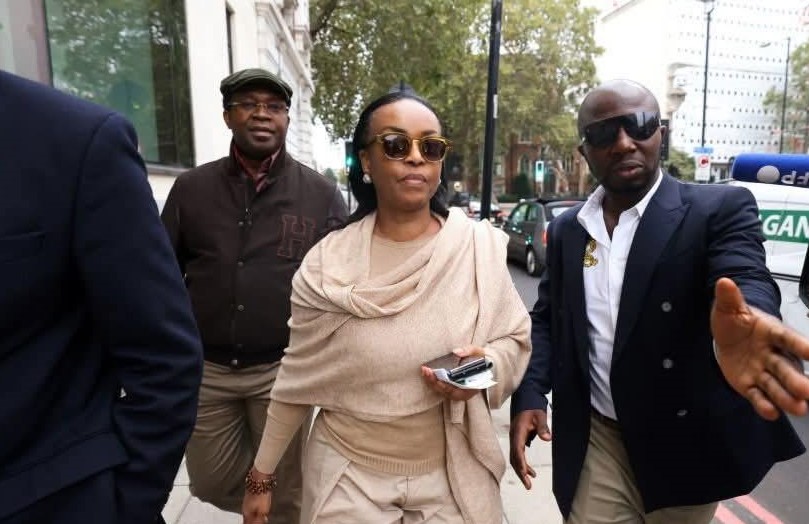
UK Court Clears Diezani Alison-Madueke of All Bribery Charges

By Sabiu Abdullahi

A court in the United Kingdom has found former Nigerian Minister of Petroleum Resources, Diezani Alison-Madueke, not guilty of all bribery charges brought against her after a trial that attracted significant international attention.

The verdict was delivered on Wednesday at Southwark Crown Court in London after jurors reportedly spent more than 46 hours considering the case.

Mrs Alison-Madueke, who headed Nigeria’s petroleum ministry between 2010 and 2015 under former President Goodluck Jonathan, had faced six charges. The allegations included five counts of accepting bribes and one count of conspiracy to commit bribery.

British prosecutors had accused the former minister of receiving expensive benefits from individuals in the oil and gas industry. According to the prosecution, the benefits were allegedly provided in return for favourable treatment and influence over the award of contracts in Nigeria’s petroleum sector.

During the proceedings, prosecutors claimed that Mrs Alison-Madueke enjoyed what they described as “a life of luxury” in London. They alleged that businessmen linked to Nigeria’s oil sector financed luxury purchases, property renovations and other expenses on her behalf.

The former minister consistently rejected the accusations. She told the court that she neither accepted bribes nor had direct authority over the award of government contracts.

During one of the hearings, she stated: “I can state categorically that at no point did I ask for, take or receive a bribe of any sort… and did not abuse my office.”

Mrs Alison-Madueke also explained that a logistics company was established in London to coordinate official engagements because of what she described as shortcomings in the financial arrangements of the Nigerian National Petroleum Corporation (NNPC) at the time. She further maintained that official expenses incurred on her behalf were reimbursed by the corporation.

The acquittal marks the end of a case that began after British authorities launched corruption investigations into her activities more than a decade ago. The former minister was formally charged in 2023.

Mrs Alison-Madueke, 65, was among the most prominent figures in Nigeria’s oil industry during her time in office. She also served as president of the Organisation of the Petroleum Exporting Countries (OPEC) between 2014 and 2015.

Although she has now been cleared of the charges in the UK, she still faces several corruption-related cases in Nigeria. Nigerian courts have previously ordered the forfeiture of assets worth billions of naira linked to her.

The London trial also involved oil industry executive Olatimbo Ayinde, who was accused of bribery-related offences connected to the former minister.

The ruling represents a significant development in one of the most closely watched international corruption cases involving a former Nigerian public official.

UK To Ban Social Media Access For Children Under 16

By Sabiu Abdullahi

The United Kingdom government has announced plans to prohibit children under the age of 16 from accessing major social media platforms, citing concerns about online safety and the impact of digital content on young people.

Prime Minister Keir Starmer unveiled the proposal on Monday. He argued that social media platforms are harming children’s wellbeing and exposing them to inappropriate material.

According to Starmer, the government “will ban access to social media for all children under the age of 16”. He also warned that these platforms are “exposing them to content that is dangerous” and “designed to be addictive”.

The proposed restriction will cover platforms such as Snapchat, TikTok, YouTube, Instagram, Facebook and X. Messaging services, including WhatsApp, will not be affected.

Starmer said he expects the legislation to be approved by the end of December, with implementation scheduled for the spring of next year.

The British leader also disclosed that the government intends to take “world-leading action on gaming services and live streaming platforms”. Officials are considering additional measures, including overnight restrictions and limits on endless scrolling features for users under 18. More details are expected in July.

The proposal follows a government consultation that allowed British teenagers to test social media restrictions and app time limits. Authorities said the initiative drew about 116,000 responses, making it one of the largest consultations ever conducted by the government.

The plan was influenced by Australia’s decision to ban social media use for people under 16. Australia became the first country to adopt such a policy in December.

Not everyone supports the move. A YouTube spokesperson cautioned that a blanket ban could push children toward “less safe services”.

Starmer also addressed concerns about gaming and live-streaming platforms that allow contact between children and strangers.

“Is there a situation in the offline world where you would just let your child pair up with a stranger? An adult that you don’t know about? No. So we’re taking action on that,” he said.

The UK announcement comes shortly after the government directed major technology firms, including Apple and Google, to introduce safety tools that prevent children from creating, sending or receiving nude images on mobile devices.

Authorities warned that legislation would be introduced if the companies fail to implement the required protections within three months.

The Labour government stated that technology firms have a “moral responsibility” to “protect children from coercion, abuse and sextortion”.

Meanwhile, several countries have introduced or proposed similar measures. Canada recently proposed legislation that would prevent children under 16 from opening social media accounts, while Indonesia began enforcing a comparable restriction in March. A number of European governments have also indicated interest in adopting similar policies.

According to figures cited by the UK government from the Internet Watch Foundation, 91 percent of online child sexual abuse reports recorded in 2024 involved self-generated content created by children.

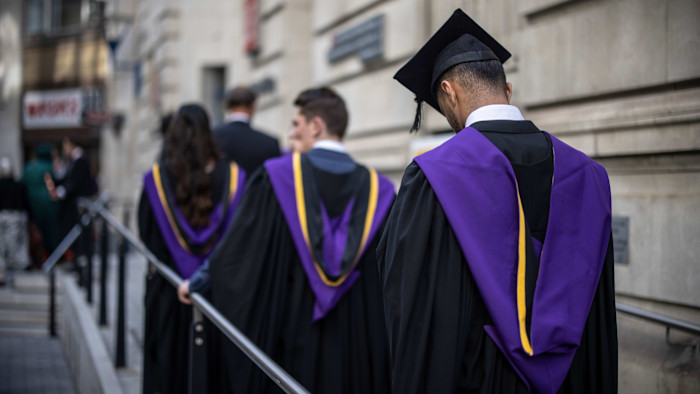
UK Tightens Immigration Rules, Threatens Universities With Ban on Foreign Student Recruitment


By Sabiu Abdullahi

The United Kingdom has introduced new immigration regulations that may stop universities from recruiting foreign students if they fail to meet stricter compliance standards.

The Home Office announced the policy on Thursday. The new measures focus on reducing rising asylum claims linked to study, work, and tourist visas. Officials said foreign students make up the largest share of such claims.

Under the new framework, any university where more than five percent of student visa applications are refused risks losing its licence to recruit international students. The earlier threshold stood at 10 percent.

The Home Office said it monitors both visa refusal rates and the institutions linked to affected applicants.

Universities also face sanctions if a large number of students withdraw or fail to complete their programmes.

The updated policy requires foreign students to record at least a 95 percent enrolment rate and a 90 percent completion rate. These figures previously stood at 90 percent and 85 percent.

The Home Office explained its concern over poor compliance in the sector. It stated:

“High drop-out rates can indicate students have entered the illegal working economy rather than studied whilst high visa rejection rates or low enrolment figures suggest some institutions have not done enough due diligence on applicants,” the Home Office said.

The changes come about three months after the UK introduced an “emergency brake” on study visas for applicants from Afghanistan, Cameroon, Myanmar, and Sudan. The restriction followed a rise in asylum claims that officials described as an “unsustainable threat”.

According to the Home Office, asylum claims from students have dropped by 30 percent over the past year due to stricter enforcement.

The ministry also said it had contacted 306,000 students whose visas are due to expire. It warned that it will reject unfounded asylum claims quickly and that individuals without the right to remain must leave the country or face removal.

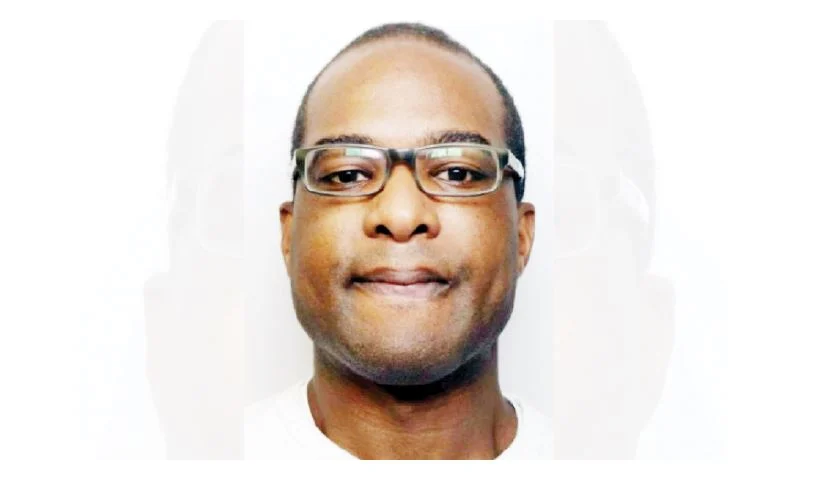
Nigerian Man Bags 17-Year Jail Term For Raping 19-Year-Old Woman In UK

By Sabiu Abdullahi

A 24-year-old Nigerian national, Gift Oladele, has been handed a 17-year prison sentence in the United Kingdom after a court found him guilty of raping a 19-year-old woman in Wrexham.

The incident occurred in the early hours of September 7 last year. Oladele, who previously lived in the Manchester area and had no fixed address at the time, carried out the attack after encountering the victim in Wrexham city centre.

North Wales Police said the young woman had been returning home after spending time with friends when she met Oladele. He approached her and her friend, introduced himself, and insisted on walking her home, claiming he was going the same way.

As they moved along Mold Road, Oladele diverted her onto a secluded footpath where he attacked her.

Following the incident, he threatened the victim and warned her against reporting the matter. The case was, however, reported to the police, leading to his arrest within hours. Authorities later charged him and kept him in custody pending trial.

During proceedings at Mold Crown Court in March, Oladele denied the allegations and claimed the encounter was consensual. The jury dismissed his claim and convicted him of rape and sexual assault.

At Caernarfon Crown Court on April 30, the judge imposed a total sentence of 25 years. This includes 17 years in prison and an additional eight years on extended licence.

The court also issued an indefinite Sexual Harm Prevention Order and a lifetime restraining order to safeguard the victim.

Reacting to the judgment, Wrexham Chief Inspector Caroline Mullen-Hurst described Oladele as a “dangerous predator” who subjected the victim to a “disturbing and terrifying attack.”

“He demonstrated no remorse for his crimes after forcing her to relive the traumatic experience through a trial.

“I would like to praise the dignity and courage she has shown throughout the investigation, and for her bravery in reporting this incident to us.

“Thankfully, today’s sentence has removed Oladele from the streets, preventing any further harm to anyone else. I hope it reassures the public that North Wales Police is committed to eradicating all incidents of violence against women and girls and is working tirelessly to bring perpetrators of sexual abuse to justice.

“I would urge any victim of sexual assault to get in touch with us. You will be listened to, your report will be taken seriously and fully investigated. We are here to support you,” she added.

Police Extradite Murder, Drug Suspect To UK

By Sabiu Abdullahi

The Nigeria Police Force has transferred a wanted suspect, Matthew Chukwuemeka Adebiyi, to the United Kingdom over alleged links to murder and drug trafficking offences.

Authorities disclosed that the extradition followed a request from the United Kingdom in September 2024. The request asked Nigerian authorities to locate, arrest, and hand over the suspect. The process was handled through the INTERPOL National Central Bureau in Abuja.

Force Public Relations Officer, Anthony Placide, explained in a statement on Thursday that Adebiyi had been declared wanted in connection with the killing of Joshua Boadu on June 18, 2018. He said the suspect allegedly fled to Nigeria after the incident to avoid arrest.

Placide also stated that the suspect faced accusations of supplying crack cocaine, described as a Class-A controlled drug, within the UK between October 2017 and March 2018.

He said, “The suspect was arrested on 23rd January 2025 by operatives of the INTERPOL NCB Abuja, following which extradition proceedings were initiated at the Federal High Court, Lagos Judicial Division, in Suit No. FHC/L/CS/416/2025.”

The police noted that the Federal High Court in Lagos approved the extradition request on February 16, 2026, in line with existing legal provisions.

The statement added, “Pursuant to the court order and the execution of a surrender warrant by the relevant Nigerian authorities, the fugitive was formally handed over to United Kingdom law enforcement officials on 14th April 2026 at the Murtala Muhammed International Airport for diligent prosecution.”

Inspector-General of Police, Olatunji Rilwan Disu, reiterated the commitment of the Nigeria Police Force to cooperation with international partners. He stressed that the country would not provide refuge for individuals evading justice.

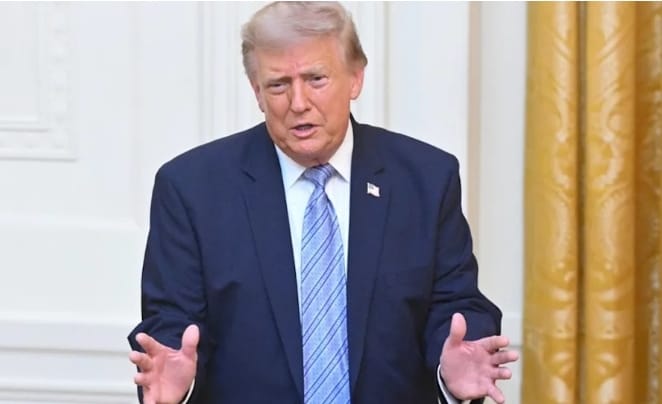
Trump Lambasts UK, European Allies, Says US Won’t Help Them Secure Oil

By Sabiu Abdullahi

United States President Donald Trump has criticised key American allies, including the United Kingdom and France, over their refusal to support recent military operations against Iran.

In a series of posts shared on his Truth Social platform on Tuesday, Trump accused the European countries of failing to cooperate during what he described as the “decapitation” of Iran’s leadership. He singled out the UK for maintaining a neutral stance and France for denying airspace access to U.S. military aircraft heading to Israel.

The remarks come amid a worsening global energy situation. Several countries are facing jet fuel shortages as the Strait of Hormuz, a major route for global oil shipments, becomes difficult to access due to the ongoing conflict.

Trump addressed the United Kingdom directly and ruled out further American support. He advised the British government to rely less on U.S. protection and act independently.

“I have a suggestion for you: Number 1, buy from the U.S., we have plenty, and Number 2, build up some delayed courage, go to the Strait, and just TAKE IT,” Trump posted.

He also warned that Washington would withdraw its security support from allies who did not back the operation, stating, “The U.S.A. won’t be there to help you anymore, just like you weren’t there for us.”

The U.S. President also criticised France over its decision to block American transport planes carrying military supplies to Israel. He referred to Iran’s late leadership as the “Butcher of Iran” and insisted that the mission against them succeeded.

“France has been VERY UNHELPFUL… The U.S.A. will REMEMBER!!!” he said, suggesting a possible strain in relations between both countries.

Trump described the military phase as largely complete. He stated that “the hard part is done” and that Iran has been “decimated.” However, international observers have presented a more concerning outlook on the situation.

They reported “A dramatic spike in global jet fuel prices and a near-total halt of tankers through the Persian Gulf.” Reports from the United Nations indicate that about 2,000 civilians in Iran have died, while millions have been displaced.

Observers also pointed to “A complete breakdown in the “Special Relationship” between the U.S. and the UK, as London continues to distance itself from the unilateral military action.”

Trump’s remarks reflect a stronger push for his “America First” policy. His call for allies to “Go get your own oil” signals a shift away from the long-standing U.S. role in securing global energy routes in the Middle East.

Political analysts say the comments could deepen divisions between the United States and its allies. The United Nations and the European Union have already described the strikes on Iranian civilian infrastructure as violations of international law.

Badenoch Criticises UK Government Over Abstention On Slavery Reparations Vote

By Sabiu Abdullahi

Leader of the UK Conservative Party, Kemi Badenoch, has faulted the British government for refusing to take a clear stance during a United Nations vote on reparations linked to the transatlantic slave trade.

The criticism followed a resolution adopted by the United Nations General Assembly, where the United Kingdom chose to abstain instead of voting against the motion.

Reacting to the outcome, Badenoch wrote, “Russia, China and Iran vote with others to demand trillions in reparations from UK taxpayers…and the Labour government abstain!”

She also questioned the position of the government led by Prime Minister Keir Starmer. She said, “Britain led the fight to end slavery. Why didn’t Starmer’s representative vote against this? Ignorance…or cowardice?”

Badenoch maintained that the country should not be held financially responsible for historical crimes. She stated, “We shouldn’t be paying for a crime we helped eradicate and still fight today.”

The resolution, backed by 123 countries, describes the transatlantic slave trade as one of the gravest crimes against humanity. It calls for reparations and urges nations to begin structured discussions aimed at addressing the long-term effects of slavery.

Several African nations supported the motion. These include Nigeria, Egypt, Algeria, Libya, Liberia, Kenya and Congo. Other countries such as India, Belarus and Azerbaijan also voted in favour.

However, the United States, Argentina and Israel opposed the resolution. Fifty-two countries stayed neutral. These include major European nations such as France, Germany, Belgium, Hungary and Cyprus.

During the debate, a US representative raised concerns about the proposal. The official said, “While we recognise the wrongs of the past, we are unclear on who the beneficiaries of reparatory justice would be, and therefore cannot support the resolution at this time.”

The motion, titled “Declaration of the Trafficking of Enslaved Africans and Racialised Chattel Enslavement of Africans as the Gravest Crime Against Humanity,” forms part of a broader initiative under the African Union’s reparations programme for 2026 to 2036.

The development marks a major step in global efforts to address the legacy of slavery. It also exposes divisions among world leaders, as debates over reparations continue to generate strong reactions.

Examining the Sanity of Saner Climes

By Amir Abdulazeez

Several decades into the global modern era, Africans, Asians and Latin Americans continue to be held hostage by their colonially indoctrinated inferior mindsets engineered by the blackmail and mythology of Western moral supremacy. This error is not in observing Western virtues, many of which are real. The error is in the uncritical veneration that renders their vices invisible and their judgements unchallengeable. It is evident from the events of the last three decades alone that the so-called saner climes of Europe and North America are the primary architects of global chaos and instability of nations, all in the name of injecting sanity into ‘less sane’ societies.

The ongoing US-Israel war on Iran, launched in the midst of Ramadan, is a typical doctrine of the saner climes, exhibited in its most naked form. Iran’s Foreign Minister had said three days before the war was declared that a nuclear agreement was ‘within reach’ after a third round of indirect talks in Geneva. 

The IAEA itself confirmed there was no evidence of a structured Iranian nuclear weapons programme at the time of the attack. Yet, the surprise assault assassinated Supreme Leader Ali Khamenei, killed his family members and damaged schools, hospitals and even UNESCO-recognised cultural heritage sites. This is a typical catalogue of barbaric war crimes for which the West has condemned others across generations. 

The Donald Trump administration, whose seemingly rude, dishonest and arrogant officials, has offered a menu of rationalisations and a handful of conflicting justifications for the war. However, when Amnesty International confirmed that the United States was responsible for a strike that killed at least 160 primary school girls, the US officials chose arrogance through denials instead of remorse. 

In fact, the Head of the Federal Communications Commission simultaneously intimidated his own press, threatening the withdrawal of broadcast licenses of American news outlets whose war coverage he deemed unfavourable. Another trademark saner-climes mythology, muzzled in a way only a few non-saner climes can imagine. 

Meanwhile, in all these, it is the ‘lunatic’ Iran that is supposed to apologise and do nothing while it is attacked. The Iranian Regime, branded as autocratic on the premise that it compels women to cover their hair in public, is being lectured by leaders of societies whose women go out naked in the name of civilisation and whose governments topple, kill and abduct Heads of state of other countries for recklessly greedy reasons. 

Now imagine if the erratically behaving Donald Trump were the leader of any African Country, the West would have since declared him incoherent and unstable to deal with or labelled his citizens stupid for voting for him. Worse still, imagine if the Epstein scandal happened in Asia or Latin America. All these contradictions reveal with crystal clarity that Western principles are instruments of convenience. 

To understand the foundations of all these, let us revisit some history. Britain’s Industrial Revolution was fertilised by the profits of the transatlantic slave trade and the systematic plunder of India, a country whose share of global GDP fell from about 25% at the onset of colonial rule to barely 4% at independence. 

France financed much of its republican grandeur on the forced labour of West Africa and the Caribbean. Belgium’s King Leopold II transformed the Congo into a private abattoir, severing the hands of Africans who failed to meet rubber quotas, leaving behind a traumatised country that still bleeds today. 

To speak of the sanity of those climes without acknowledging that they were partly built from organised insanity inflicted elsewhere is to ignore the background to what we are witnessing today.

In the last fifty years alone, the so-called saner climes have unleashed a level of violence and destabilisation that would shame any regime they have ever deemed fit to condemn. The United States, the self-acclaimed sentinel of the free world, has engineered irrational regime changes in Chile (1973), Iran (1953 and subsequently), Guatemala (1954), Nicaragua, Panama, Libya, Iraq, Afghanistan and Syria, among others. The 1973 CIA-backed coup against a democratically elected socialist president of Chile, Salvador Allende, installed Augusto Pinochet, under whose reign thousands were tortured, disappeared, or executed. Henry Kissinger, the American architect of that atrocity, received the Nobel Peace Prize from his fellow saner clime comrades. 

The French Government, through its notorious Françafrique policy, maintained a neocolonial empire across West and Central Africa long after the 1960s, propping up murderous dictators and conducting military interventions to protect economic interests, with a consistency that made a mockery of every democratic principle France professed to uphold.

The invasion of Iraq in 2003 by Western Governments is perhaps the most consequential act of manufactured catastrophe of the modern era. The war resulted in the deaths of an estimated 200,000 to one million Iraqi civilians, the obliteration of the country’s infrastructure, the rise of ISIS from the ashes of a disbanded Iraqi army and the triggering of a refugee crisis that continues to destabilise the Middle East. No one was held accountable. George W. Bush and Tony Blair are living happy lives in their saner countries. The International Criminal Court, which has indicted multiple African heads of state on much lesser crimes with considerable alacrity, found no jurisdiction to examine any of them. Meanwhile, the people of Iraq, Syria and Libya who were dismantled in the name of liberation still live in the ruins and pains of what the saner climes call democracy.

While the West was busy bombing the Middle East, Africa, the so-called backward continent, was largely attending to its own affairs of conflict resolution with a remarkable degree of maturity. The African Union mediated crises in Burundi, the Gambia and Lesotho without firing a single bullet. ECOWAS brokered peace agreements in Sierra Leone and Liberia and deployed peacekeeping forces with genuine multilateral mandates, without the casual trigger-happiness of Western powers. 

Western attitude towards violence is shamelessly selective. When Russia invaded Ukraine in 2022, the Saner Clime’s response was swift, comprehensive and morally unambiguous: sanctions, weapons, diplomatic isolation and a media chorus of civilizational solidarity. This response was appropriate anyway. But the problem is its stark contrast with the Western posture toward other invasions. When Saudi Arabia launched its war on Yemen in 2015, the United States and the United Kingdom did not merely decline to intervene; they allegedly supplied the bombs, refuelled the warplanes and provided intelligence for strikes that killed thousands of Yemeni civilians and engineered one of the worst humanitarian crises on earth. 

Many argue that the actions of Western governments do not accurately reflect what their citizens stand for. This is debatable, especially when one examines certain incidents. During the Obama presidency, Edward Snowden revealed that the US National Security Agency was conducting mass, warrantless surveillance of American citizens and foreign governments, including the personal telephone of former German Chancellor Angela Merkel, in flagrant violation of constitutional protections and international diplomatic norms. The response was not accountability but exile for Snowden and a classification of his revelations as treason. 

The United States has the largest prison population on earth, both in absolute numbers and per capita, administered under a system in which Black Americans are incarcerated at five times the rate of their white counterparts, in conditions that the United Nations has described as cruel. Since 1968, gun violence has claimed more American lives than all of America’s foreign wars combined. One might be inclined to believe that these controversies are ones ordinary Western citizens may not approve of.

Climate change is another damning indictment of Western moral authority in the twenty-first century. The Industrial activities enriching Europe and North America still depend on burning carbon at a scale the planet has never experienced. The United States, historically the world’s largest cumulative emitter of greenhouse gases, withdrew from the Paris Climate Agreement under Donald Trump. 

Australia, another clime reputed to be considerably saner than most, has built its prosperity on coal exports and resisted meaningful emissions reduction. Some Pacific Island nations face sea submersions within this century as a consequence of decisions made in saner capitals. When these nations’ leaders speak at the United Nations with tears in their voices, the saner climes offer symbolic but empty sympathy before later returning to preserving their industrial prerogatives. 

The Western Media’s tactical twisting of narratives regarding other climes is another issue. For example, CNN may not run primetime documentaries on the Swiss banking system’s complicity in laundering the proceeds of African kleptocracy, but will rather concentrate on the primary kleptocrats. The BBC does not lead with investigations into the role of British arms dealers in sustaining African conflicts. The New York Times does not dedicate its front page to the tax avoidance schemes through which Western corporations drain billions of dollars annually from African economies (more than the continent receives in foreign aid).

In addition to all this, there is something more worrisome. The bulk of support received by these saner climes comes from their victims in the third world. In Nigeria, for instance, the blind sympathy for religious affiliations drives people to support the brazen oppression and cruel injustices perpetrated by the West. Our solidarity should be among ourselves, not with those who see and treat us as worthless humans and more like animals because of their superior moral hypocrisy. 

Additionally, our bootlicking governments, which are considered close to valueless in the International arena or even insane just like us, must stop intimidating their own citizens who decide to speak up against Western double standards. Let’s remember, the phrase “saner climes” is a moral verdict and a devastating condemnation of everywhere else except Europe and North America. Africans and all peoples of the marginalised world are owed the intellectual inheritance of critical discernment.

The world does not need more or fewer saner climes; it needs a more honest accounting of what sanity actually requires. It requires consistency: the same rules applied to the powerful and the powerless alike. It requires humility: the acknowledgement that no civilisation holds a monopoly on wisdom. 

And it requires accountability: not the selective justice of indicting the weak and glorifying the mighty, but the universal application of standards that do not bend before a Security Council veto or the impulse of a self-serving superpower. Until that accounting arrives, the presumption of Western moral authority deserves not deference, but fearless interrogation; the kind that the so-called saner climes have always claimed to celebrate and so rarely been prepared to receive.

British Journalist Survives Suspected Israeli Airstrike In Lebanon

By Sabiu Abdullahi

A British journalist narrowly escaped death after a missile exploded just metres from his position while he was reporting in southern Lebanon on Thursday, March 19, 2026.

Steve Sweeney, the Lebanon Bureau Chief for RT, was covering the destruction of civilian infrastructure near the Al-Qasmiya Bridge when the strike occurred. Dramatic footage showed Sweeney diving for cover as the missile hit the ground behind him, sending thick black smoke into the air.

Both Sweeney and his cameraman, Ali Rida, suffered shrapnel injuries and were taken to a local hospital for emergency treatment.

After surgery to remove shrapnel from his arm, Sweeney accused the Israeli Defense Forces (IDF) of trying to “silence” journalists reporting on what he described as a widespread campaign of ethnic cleansing.

“Today I$rael tried to kill me in a targeted airstrike in southern Lebanon as I was reporting on was the targeting of bridges and the forced displacement of 1 million people, an ethnic cleansing operation on a larger scale than the Nakba,” Sweeney stated on his X handle.

He rejected claims that the strike was accidental, emphasizing that his team was wearing marked “PRESS” vests and had permission from the Lebanese Army to film.

“I have absolutely no doubt that this was deliberate. Despite claims there were no warnings ahead of the strike and no notifications sent to the Lebanese Army who allowed us to film,” Sweeney said.

The journalist also criticized international backers of Israel, accusing Western powers of enabling the violence.

“It is the western powers who provide political and military support for Israel, arming it to the teeth to carry out genocide in Gaza and ethnic cleansing here in Lebanon,” he said. “They are not simply complicit, but active participants and should be held accountable.”

Russia’s Foreign Ministry condemned the attack. Spokesperson Maria Zakharova stated that the strike “cannot be called accidental,” noting that over 200 journalists have been killed in Gaza since the regional conflict began.

While the IDF claimed the bridge was a “Hezbollah crossing” and that warnings had been posted online, Sweeney said no direct notification reached either the journalists or the Lebanese Army units securing the area.

Despite the near-fatal attack, Sweeney vowed to continue reporting from the region.

“If Israel thinks today’s strike will silence us and keep us out of the field, they are very, very mistaken,” he concluded.

Tinubu Pledges Stronger Nigeria-UK Ties During Historic Windsor Castle Visit

By Sabiu Abdullahi

President Bola Ahmed Tinubu has reaffirmed the enduring friendship between Nigeria and the United Kingdom, emphasizing that the relationship will continue to grow. He made the remarks during a state banquet held in his honour at Windsor Castle.

Addressing the royal audience, President Tinubu said:
“It is a profound honour to stand before you today, representing the people of Nigeria as we reaffirm the enduring bonds of friendship, history, and shared purpose that have united our two nations for several centuries.”

He expressed deep appreciation to King Charles III and Queen Camilla for their hospitality, noting the warmth extended to him, his wife Oluremi, and the Nigerian delegation. Highlighting the historic nature of his visit, Tinubu remarked that he is the first Nigerian leader to speak at Windsor Castle, which has stood as a symbol of continuity for nearly a millennium.

“Nigeria and the United Kingdom have shared more than just history; our two nations share a vision of progress and resilience. Today, we continue that journey, committed to building a future rooted in partnership, mutual respect, and common values,” he said.

President Tinubu reflected on Britain’s contributions to democratic governance, citing the Magna Carta of 1215 and the works of thinkers like Thomas Hobbes, John Locke, and Edmund Burke. He also acknowledged the influence of British literary figures, including William Shakespeare and Charles Dickens, whose works have shaped the English language spoken worldwide.

“In Nigeria, elements of these traditions continue to inform the institutional foundations of our own republic,” he added, noting that Nigerian courts, parliamentary structures, and civil services draw inspiration from British models adapted to local contexts.

The President also highlighted the role of Nigerians living in the UK. “The Nigerian community in the United Kingdom has become one of the most dynamic diaspora communities worldwide. Nigerians contribute enormously to the vitality of this nation. Within the National Health Service, Nigerian doctors and nurses play an indispensable role in delivering healthcare,” he said. He further cited contributions in sports, mentioning rugby star Maro Itoje, footballers Bukayo Saka and Eberechi Eze, and champion boxer Anthony Joshua.

Tinubu emphasized the strategic importance of the Commonwealth of Nations, underlining Nigeria’s commitment to the growth of the global community. He also addressed regional security challenges: “Our West African region faces complex terrorism challenges with roots in the Sahel. Nigeria carries an enormous responsibility to help safeguard regional stability. In confronting these threats, partnership with the United Kingdom remains essential.”

Despite the challenges, the President expressed optimism about Nigeria’s future: “We are a nation of diverse and vibrant people, of young people dreaming big, of entrepreneurs with a global outlook, and of a hopeful people determined to realise their full potential.”

He paid tribute to the United Kingdom for providing refuge during Nigeria’s military dictatorship, recalling his personal experience: “Like many Nigerians involved in the pro-democracy struggle, I found safety here, and I recall that my residence was placed under Metropolitan Police surveillance for protection following threats from agents of the junta.”

Concluding his speech, President Tinubu proposed a toast:
“To the special bond between Nigeria and the United Kingdom, and to the bright future that we shall build together. God bless His Majesty The King. God bless Nigeria. God bless the United Kingdom. Thank you very much.”