Opinion

Examining the Sanity of Saner Climes

By Amir Abdulazeez

Several decades into the global modern era, Africans, Asians and Latin Americans continue to be held hostage by their colonially indoctrinated inferior mindsets engineered by the blackmail and mythology of Western moral supremacy. This error is not in observing Western virtues, many of which are real. The error is in the uncritical veneration that renders their vices invisible and their judgements unchallengeable. It is evident from the events of the last three decades alone that the so-called saner climes of Europe and North America are the primary architects of global chaos and instability of nations, all in the name of injecting sanity into ‘less sane’ societies.

The ongoing US-Israel war on Iran, launched in the midst of Ramadan, is a typical doctrine of the saner climes, exhibited in its most naked form. Iran’s Foreign Minister had said three days before the war was declared that a nuclear agreement was ‘within reach’ after a third round of indirect talks in Geneva. 

The IAEA itself confirmed there was no evidence of a structured Iranian nuclear weapons programme at the time of the attack. Yet, the surprise assault assassinated Supreme Leader Ali Khamenei, killed his family members and damaged schools, hospitals and even UNESCO-recognised cultural heritage sites. This is a typical catalogue of barbaric war crimes for which the West has condemned others across generations. 

The Donald Trump administration, whose seemingly rude, dishonest and arrogant officials, has offered a menu of rationalisations and a handful of conflicting justifications for the war. However, when Amnesty International confirmed that the United States was responsible for a strike that killed at least 160 primary school girls, the US officials chose arrogance through denials instead of remorse. 

In fact, the Head of the Federal Communications Commission simultaneously intimidated his own press, threatening the withdrawal of broadcast licenses of American news outlets whose war coverage he deemed unfavourable. Another trademark saner-climes mythology, muzzled in a way only a few non-saner climes can imagine. 

Meanwhile, in all these, it is the ‘lunatic’ Iran that is supposed to apologise and do nothing while it is attacked. The Iranian Regime, branded as autocratic on the premise that it compels women to cover their hair in public, is being lectured by leaders of societies whose women go out naked in the name of civilisation and whose governments topple, kill and abduct Heads of state of other countries for recklessly greedy reasons. 

Now imagine if the erratically behaving Donald Trump were the leader of any African Country, the West would have since declared him incoherent and unstable to deal with or labelled his citizens stupid for voting for him. Worse still, imagine if the Epstein scandal happened in Asia or Latin America. All these contradictions reveal with crystal clarity that Western principles are instruments of convenience. 

To understand the foundations of all these, let us revisit some history. Britain’s Industrial Revolution was fertilised by the profits of the transatlantic slave trade and the systematic plunder of India, a country whose share of global GDP fell from about 25% at the onset of colonial rule to barely 4% at independence. 

France financed much of its republican grandeur on the forced labour of West Africa and the Caribbean. Belgium’s King Leopold II transformed the Congo into a private abattoir, severing the hands of Africans who failed to meet rubber quotas, leaving behind a traumatised country that still bleeds today. 

To speak of the sanity of those climes without acknowledging that they were partly built from organised insanity inflicted elsewhere is to ignore the background to what we are witnessing today.

In the last fifty years alone, the so-called saner climes have unleashed a level of violence and destabilisation that would shame any regime they have ever deemed fit to condemn. The United States, the self-acclaimed sentinel of the free world, has engineered irrational regime changes in Chile (1973), Iran (1953 and subsequently), Guatemala (1954), Nicaragua, Panama, Libya, Iraq, Afghanistan and Syria, among others. The 1973 CIA-backed coup against a democratically elected socialist president of Chile, Salvador Allende, installed Augusto Pinochet, under whose reign thousands were tortured, disappeared, or executed. Henry Kissinger, the American architect of that atrocity, received the Nobel Peace Prize from his fellow saner clime comrades. 

The French Government, through its notorious Françafrique policy, maintained a neocolonial empire across West and Central Africa long after the 1960s, propping up murderous dictators and conducting military interventions to protect economic interests, with a consistency that made a mockery of every democratic principle France professed to uphold.

The invasion of Iraq in 2003 by Western Governments is perhaps the most consequential act of manufactured catastrophe of the modern era. The war resulted in the deaths of an estimated 200,000 to one million Iraqi civilians, the obliteration of the country’s infrastructure, the rise of ISIS from the ashes of a disbanded Iraqi army and the triggering of a refugee crisis that continues to destabilise the Middle East. No one was held accountable. George W. Bush and Tony Blair are living happy lives in their saner countries. The International Criminal Court, which has indicted multiple African heads of state on much lesser crimes with considerable alacrity, found no jurisdiction to examine any of them. Meanwhile, the people of Iraq, Syria and Libya who were dismantled in the name of liberation still live in the ruins and pains of what the saner climes call democracy.

While the West was busy bombing the Middle East, Africa, the so-called backward continent, was largely attending to its own affairs of conflict resolution with a remarkable degree of maturity. The African Union mediated crises in Burundi, the Gambia and Lesotho without firing a single bullet. ECOWAS brokered peace agreements in Sierra Leone and Liberia and deployed peacekeeping forces with genuine multilateral mandates, without the casual trigger-happiness of Western powers. 

Western attitude towards violence is shamelessly selective. When Russia invaded Ukraine in 2022, the Saner Clime’s response was swift, comprehensive and morally unambiguous: sanctions, weapons, diplomatic isolation and a media chorus of civilizational solidarity. This response was appropriate anyway. But the problem is its stark contrast with the Western posture toward other invasions. When Saudi Arabia launched its war on Yemen in 2015, the United States and the United Kingdom did not merely decline to intervene; they allegedly supplied the bombs, refuelled the warplanes and provided intelligence for strikes that killed thousands of Yemeni civilians and engineered one of the worst humanitarian crises on earth. 

Many argue that the actions of Western governments do not accurately reflect what their citizens stand for. This is debatable, especially when one examines certain incidents. During the Obama presidency, Edward Snowden revealed that the US National Security Agency was conducting mass, warrantless surveillance of American citizens and foreign governments, including the personal telephone of former German Chancellor Angela Merkel, in flagrant violation of constitutional protections and international diplomatic norms. The response was not accountability but exile for Snowden and a classification of his revelations as treason. 

The United States has the largest prison population on earth, both in absolute numbers and per capita, administered under a system in which Black Americans are incarcerated at five times the rate of their white counterparts, in conditions that the United Nations has described as cruel. Since 1968, gun violence has claimed more American lives than all of America’s foreign wars combined. One might be inclined to believe that these controversies are ones ordinary Western citizens may not approve of.

Climate change is another damning indictment of Western moral authority in the twenty-first century. The Industrial activities enriching Europe and North America still depend on burning carbon at a scale the planet has never experienced. The United States, historically the world’s largest cumulative emitter of greenhouse gases, withdrew from the Paris Climate Agreement under Donald Trump. 

Australia, another clime reputed to be considerably saner than most, has built its prosperity on coal exports and resisted meaningful emissions reduction. Some Pacific Island nations face sea submersions within this century as a consequence of decisions made in saner capitals. When these nations’ leaders speak at the United Nations with tears in their voices, the saner climes offer symbolic but empty sympathy before later returning to preserving their industrial prerogatives. 

The Western Media’s tactical twisting of narratives regarding other climes is another issue. For example, CNN may not run primetime documentaries on the Swiss banking system’s complicity in laundering the proceeds of African kleptocracy, but will rather concentrate on the primary kleptocrats. The BBC does not lead with investigations into the role of British arms dealers in sustaining African conflicts. The New York Times does not dedicate its front page to the tax avoidance schemes through which Western corporations drain billions of dollars annually from African economies (more than the continent receives in foreign aid).

In addition to all this, there is something more worrisome. The bulk of support received by these saner climes comes from their victims in the third world. In Nigeria, for instance, the blind sympathy for religious affiliations drives people to support the brazen oppression and cruel injustices perpetrated by the West. Our solidarity should be among ourselves, not with those who see and treat us as worthless humans and more like animals because of their superior moral hypocrisy. 

Additionally, our bootlicking governments, which are considered close to valueless in the International arena or even insane just like us, must stop intimidating their own citizens who decide to speak up against Western double standards. Let’s remember, the phrase “saner climes” is a moral verdict and a devastating condemnation of everywhere else except Europe and North America. Africans and all peoples of the marginalised world are owed the intellectual inheritance of critical discernment.

The world does not need more or fewer saner climes; it needs a more honest accounting of what sanity actually requires. It requires consistency: the same rules applied to the powerful and the powerless alike. It requires humility: the acknowledgement that no civilisation holds a monopoly on wisdom. 

And it requires accountability: not the selective justice of indicting the weak and glorifying the mighty, but the universal application of standards that do not bend before a Security Council veto or the impulse of a self-serving superpower. Until that accounting arrives, the presumption of Western moral authority deserves not deference, but fearless interrogation; the kind that the so-called saner climes have always claimed to celebrate and so rarely been prepared to receive.

Pantami, Power and the Burden of Moral Clarity

By Abdulhamid Abdullahi Aliyu

A Hausa proverb warns that you cannot run at full speed while scratching an itch. The saying captures, with striking simplicity, the dilemma now surrounding Sheikh Isa Ali Pantami as conversations about his political ambitions gain momentum.

Public life demands clarity of role and consistency of purpose. When an individual seeks to occupy two morally and structurally conflicting spaces simultaneously, momentum is lost, and credibility is strained. This is the core tension in Pantami’s current trajectory: the attempt to remain a preacher with clerical authority while simultaneously stepping into partisan politics.

The problem is not ambition itself. It is role conflict. Clerical authority depends on moral certainty and spiritual distance from power, while politics thrives on negotiation, compromise, and moral ambiguity. Attempting to inhabit both worlds simultaneously risks weakening the integrity of each.

This tension becomes even more consequential in a plural society like Nigeria, where religion carries deep emotional authority and political power must remain anchored in constitutional legitimacy. Once religious influence is injected into partisan competition, power risks acquiring a sacred character. Political disagreement can then be reframed, subtly or overtly, as moral failure or spiritual deviation rather than a contest of ideas and interests.

Some have argued, including respected commentators like Jaafar Jaafar, that religious clerics should avoid politics altogether because political space is inherently compromised by bargaining, corruption and ethical trade-offs. Others counter with a seemingly reasonable question: if the aim is to sanitise politics, why not allow upright clerics like Pantami to participate?

That question, however, misunderstands the core concern. The issue is not whether a cleric is personally virtuous. It is about the separation of religion and the state. Democracy relies on pluralism, persuasion and accountability. When religious authority enters partisan politics, votes may be influenced not by policy debate, but by guilt, fear, or claims of divine sanction. That is a dangerous precedent in any diverse society.

The concern deepens when the individual seeking political office has, in the past, described politics itself as immoral or ungodly. Such a record invites legitimate questions of coherence. Has politics suddenly become virtuous, or has it merely become useful? Citizens are entitled to ask not out of prejudice, but out of democratic caution.

More troubling still are historical associations with ideological currents that have openly viewed democratic participation not as a means of strengthening institutions, but as a strategy to hollow them out from within — the well-known shiga daga ciki a gyara argument. In societies that have suffered from extremism and institutional fragility, such histories cannot be brushed aside or dismissed as irrelevant.

None of this is about excluding religion from public life. Faith has always shaped values, ethics and social responsibility in Nigeria. But there is a difference between moral inspiration and political authority. When religion becomes a substitute for constitutional legitimacy, the democratic project itself is weakened.

Politics, by its nature, is a flawed human enterprise. It requires compromise, negotiation and accountability to citizens, not to spiritual hierarchies. Clerical authority, on the other hand, rests on moral clarity and trust. Mixing the two without a clear break risks eroding both.

If Professor Pantami intends to pursue politics, the burden before him is not merely electoral. It is moral and institutional. He must offer clarity, openly reckon with past positions, and demonstrate consistency over time. Nigerians are not asking for perfection. They are asking for coherence.

In the end, democracy survives not on sacred claims, but on transparent choices, accountable leadership and the acceptance that political authority derives from citizens, not sanctity. That distinction must remain clear — for the sake of both faith and the republic.

Abdulhamid Abdullahi Aliyu is a journalist and syndicate writer based in Abuja.

The Evil in Peddling Pastor Ibiyeomie’s $2m Wristwatch Sans Subtext

By Ugochukwu Ugwuanyi

The agenda-setting theory of mass communication seems to have gone the way of good old traditional journalism, as its distortions and corruption are writ large in this present age.  Content creators and curators in the digital space have been busy setting the agenda without regard for the module’s original intent. In pursuit of virality, they limit shorts and reels to the salacious and outlandish, deliberately precluding elements that would contextualise and add meaning for audiences. The need to empower audiences with inspiring information is secondary. This is one evil I’ve seen under the sun!

The (mal)practice is not in keeping with the gatekeeping theory either, since they are not acting in the interest of the social fabric but opportunistically farming for views and engagements or even chasing clout. If taken to task, they will readily say, “Bad (scandalous/controversial) news always sells.” Admittedly, bloggers have been quite successful in attracting attention and sparking conversations online with abridged and abrupt content. However, the jury is still out on whether these citizen journalists’ brand of agenda setting is guided by their prejudices, the attention span of audiences, mischief, or sheer misinformation. In a milieu where users run with the caption/headline, one can imagine the impact of half-information on them, nay, what it robs them of.

A fortnight ago, the Nigerian blogosphere buzzed with reports that Pastor David Ibiyeomie bragged about being gifted a $2 million wristwatch, stressing that Nigerians on social media would faint if they saw his collection of exotic wristwatches. The sensational spin of the story on social media makes the unsuspecting assume that the man of God climbed the pulpit just to promote grifting prowess. But that couldn’t have been the preacher’s mission. What trended online was an aside or anecdote used to drive home his point. But bloggers opted to set the agenda with a clickable straw rather than the didactic core. Now that they must have got the online traction they craved, let’s bring to the surface the vital aspect of the sermon that was buried. This is because the unsung aspect of the preacher’s message can be of great benefit to whoever subscribes to it. 

After disclosing the following: “someone gave me a watch worth $2 million. I have not even worn half of my watches. The one they show on social media is just small, I have many watches. If they see all my watches, they’d just faint,” the Port Harcourt-based pastor asserted that “I’m getting watches because I’m solving problems.” This last line is the crux that would do viewers a world of good if they caught the revelation. It is a given that the one who diligently solves problems will stand before kings and shall not stand before mean men.

That was the story of Joseph. The ability to solve problems took him straight from prison to the palace. By the time he solved Pharaoh’s problem, the falsely accused felon became the prime minister of the world’s superpower at the time, despite being an immigrant. If solving problems can be this rewarding, then it shouldn’t be surprising that a problem solver like Ibiyeomie is receiving mouthwatering gifts. No one should faint upon seeing his wristwatches or come with the vanity-upon-vanity moral posturing! If you look around, you’d find that many of his peers have been stupendously rewarded by those who consult them for spiritual guidance and prayers. There are instances where people struggle to give to these men of God.

Yet, these cherished pastors are only vessels through which the actual problem solver expresses Himself. I’m talking about the Holy Spirit, who inhabits whoever believes in the resurrected Christ and confesses Jesus as their Lord and personal saviour. He is the one about whom John 16:13 says, “He will guide them into all truth, speak only what He hears from the Father, and declare things to come.” With this spiritual insight, you would be able to solve quandaries and mysteries. It is this same Spirit who enabled the mighty works of Jesus’ earthly ministry. He is all the believer needs. Nothing is too big or small for Him to provide direction.

There was a community where livestock breeding was the locals’ prime preoccupation. A stray sheep was found and taken to the king’s palace. In time, two men came forward to claim ownership of the animal. Each of them was quite assertive and unyielding in demanding that they be handed the sheep as the rightful owner. None of the palace courtiers could rightly divide the dispute. Thankfully, the king is a born-again Christian, so he opted to pray for wisdom over the situation. He gave both parties a date to hear his verdict. The night prior, the king prayed intensely, and the Lord ministered John 10:4-5 in his heart. He immediately knew that his prayer had been answered and was no longer troubled.

By the next morning, the claimant came with some members of the community. The sheep was tethered with a long rope right before everyone who gathered to witness how the contention would be resolved. The king challenged each of the contenders to do all they could to attract the sheep’s attention. The one it responds to and follows will be allowed to return home with the animal. To make the test even harder, the sheep was distracted with fodder. The first tried all the communication cues he could devise to no avail. The sheep continued feeding, barely looking up to acknowledge the stranger. When the stipulated time elapsed, the second claimant was given the floor. Soon enough, the sheep abandoned the fodder and followed him, leaving everyone convinced about the actual owner! 

That’s one way God inspires His people to solve problems. But you must know the Word. With Scripture containing solutions to every problem and need, God wells up in your heart a bespoke Word for each situation. When diligently implemented, everyone will be awed by the efficacy. As you do this for yourself, you’ll soon be able to apply the tried and tested formula to what troubles others – thereby becoming a problem solver. It takes the Word with a heart yielded to God for this to happen. Train your spiritual antenna to clearly hear God. You’ve got to do this every so often. But when you start hearing, be sure that what you hear aligns with the Word of God! 

Indeed, the sons of God are prized and given bounties because they solve problems. Romans 8:19, “For the earnest expectation of the creation eagerly waits for the revealing of the sons of God.” Although the grace is available, not many anointed ones have primed themselves to the level where they can call forth answers from Heaven. The child of God can have the unction of Moses, whom God taught His ways, so that he could manifest His acts by solving the problems of the children of Israel. 

However, the avaricious who are easily lured by lucre must be wary not to go the way of Gehazi (1 Kings 5:19-27). The Master’s charge in Matthew 10:8 is “Give as freely as you have received”. If you operate that way, God can, as in Pastor Ibiyeomi’s case, inspire you with the solution to someone’s problem and prod the same person to bless you with choicest gifts money can buy. I’m referring to cheerful givers who would insist that God sent them to be a blessing to you, even when psyched that the gifts they are bearing must be meant for God.

VIS Ugochukwu is a Sage, Storyteller and Brand Strategist who engages with readers via Twitter (now X) @sylvesugwuanyi

Christiana and Shamwil: The Love that Death Could not Kill

By Shamwil (Justice)

It all began in Sabon Gari Market, Kano, inside our small but busy pharmaceutical shop, Kuka Medicals. That afternoon was bright and dusty, filled with the usual noise of traders calling out prices and customers bargaining for goods. 

I was behind the counter, arranging boxes of medicines, when she walked in, Christiana. I never imagined that moment would change the rest of my life. She was dressed simply, yet there was something about her that captured attention instantly. Her presence was calm, graceful, and confident. 

When our manager called me to write her sales invoice, I didn’t think much of it. But as I wrote her name on the receipt and looked up, our eyes met for the first time. A strange spark passed between us, silent yet powerful, one that words could never describe.

“What’s your name?” she asked softly. “Shamwil”, I answered. Her voice was clear and warm, the kind that stays in your mind long after you’ve heard it. I told her, and she repeated it slowly, as if she wanted to remember it forever. Then I asked for hers, and she said, “Christiana.” The name itself felt like poetry when she said it.

We spoke briefly about medicines, antibiotics, syrups, and how counterfeit drugs were becoming a problem in the market. I was amazed by how much she knew. She talked with the precision of a trained pharmacist, mentioning drug names, compositions, and even the companies that produced them. Our manager watched her with admiration, nodding in respect. That day, I realised she was not only beautiful but also incredibly brilliant.

When she finished shopping, she smiled, waved at me, and left. That simple wave stayed with me for days. Her scent lingered in the air, soft, pure, and unforgettable. That night, I found myself thinking about her voice and the calm expression in her eyes. I didn’t realise then, but a new chapter of my life had just begun.

Weeks passed before I heard from her again. One evening, my phone rang with an unknown number. I picked it up, and there it was, that same gentle voice. “You didn’t expect me to call, did you?” she said, laughing softly. That first call lasted for hours. From that day on, Christiana became a part of my daily life. We talked every day, laughed together, and shared stories that slowly tied our hearts closer. What began as a friendship soon turned into real, deep, and pure love.

Christiana was unlike anyone I had ever known. She had a beauty that didn’t depend on makeup and a confidence that didn’t need pride. Her skin was smooth and glowing, her height perfect, her movements graceful like flowing water. Her voice was calm and musical, and her pointed nose gave her face an angelic glow. Everything about her was elegant and natural. She was the kind of woman who didn’t need to try to be special; she simply was.

Our love grew stronger with each passing day. We called each other every morning and night, exchanged sweet messages, and dreamed about the future. Sometimes she visited me at the shop, bringing food or simply sitting beside me while we talked about life. Time always flew whenever she was around. She made everything around me feel peaceful and alive.

But love, as beautiful as it was, came with its battles. When her parents found out about us, their reaction was harsh and painful. To them, I was not good enough. I was a poor Hausa Muslim boy, and she was their only daughter, an Igbo Christian from a wealthy family. They couldn’t accept our love. They called her names, scolded her, and forbade her from seeing me again. Yet Christiana refused to give up. She told them love has no tribe, no religion, and no boundary. Her father stopped speaking to her for months, but she remained strong, fearless, and loyal.

Christiana’s love was the purest I’d ever known. She cared for me when I was sick, worried whenever I didn’t answer her calls, and even risked sneaking out at night just to see me for a few minutes. We would stroll quietly under the streetlights of Sabon Gari, talking about our dreams, the home we’d build, the children we’d raise, and the life we’d live together. I believed we had forever. I believed nothing could come between us. But life has a way of breaking even the strongest hearts. 

I never thought Christiana could die for my love. The news came like thunder in a clear sky. Death took her suddenly, without warning, without mercy. The moment I heard it, I felt something inside me collapse. The world went silent. My hands went cold. I couldn’t breathe. The love of my life was gone, just like that.

Even now, I can still hear her laughter in my mind, smell her perfume in the air, and see her smile in my dreams. Sometimes, I wake up in the middle of the night thinking she’s still alive, that she’ll call, that she’ll visit, that I’ll see her walk through the shop door again. But every morning reminds me that she is gone, forever.

Christiana didn’t just leave me; she took a part of me with her. She left behind love, memories, and silence, the kind of silence that breaks a man from the inside. Love can be the sweetest thing on earth, but it can also be the most painful. Christiana was both my blessing and my heartbreak. She was the light that entered my life, and the darkness that refused to leave when she passed away! 

I will never stop speaking and penning about you, Christiana. History will be so kind to you!  

Shamwil (Justice) wrote via ibrahimshamawilu@gmail.com.

Judaism and Zionism: Untangling Faith from Politics in a Time of Middle Eastern Turmoil

By Dr. Umar Musa Kallah

As missiles continue to criss-cross the skies over Iran and Israel, and as the devastating consequences of the February 28, 2026, coordinated United States–Israeli strikes reverberate across the region ,  claiming the life of Iran’s Supreme Leader and exacting a heavy toll on civilians on every side, it is imperative that we, as Nigerians who hold faith dear, approach these events with clarity rather than confusion. The images of suffering from Tehran, Tel Aviv and beyond remind us that war spares no one. As a Muslim who abhors violence in all its forms and yearns only for peace to reign across the globe, for the sake of everyone, regardless of creed. I write not to inflame passions, but to illuminate.

Let us begin with precision. Judaism is an ancient monotheistic religion, spanning more than three millennia. It is anchored in the Torah, the prophetic tradition and an enduring covenant between the Divine and the Jewish people. At its core, Judaism is a spiritual and ethical path, one that calls believers to prayer, justice, charity and moral conduct. It is faith, pure and profound.

Zionism, by contrast, is a modern political ideology that emerged in the late 19th century amid the harsh realities of European antisemitism and pogroms. Conceived largely by secular thinkers such as Theodor Herzl, it sought to establish a national homeland for Jews in historic Palestine as a safeguard against persecution. While some religious Jews later embraced a variant known as Religious Zionism, the movement itself remains fundamentally political, an expression of national self-determination rather than religious doctrine. Importantly, Zionism does not equate to Judaism, just as nationalism does not equate to any faith. And crucially, Zionism is not an ideology directed against Muslims; it is a political project whose ramifications, displacement, conflict and geopolitical realignments,  have touched the entire human family, inflaming tensions that now threaten wider instability, economic disruption and the loss of innocent lives far beyond the Middle East.

History bears witness to a different reality before these political currents reshaped the landscape. For more than fourteen centuries, Jewish communities thrived as protected minorities “People of the Book” , under Muslim rule in lands from Baghdad to Cordoba, from Fez to Tehran. They contributed as scholars, physicians, merchants and counsellors. Iran today still hosts one of the largest Jewish populations outside Israel, with citizens enjoying legal recognition, synagogues and parliamentary representation. Similar communities once flourished across the Muslim world. Their peaceful coexistence endured until the political realities surrounding the establishment of the State of Israel, coupled with ensuing wars and nationalisms, altered longstanding neighbourly relations. Zionism transformed the narrative; it did not define the faith.

Even now, Jewish voices are not uniform. Many observant and secular Jews  from organisations such as Jewish Voice for Peace to progressive rabbis and ordinary families have openly opposed escalation, calling for restraint and compassion toward Iranian and Palestinian civilians alike. Iranian Jews themselves have largely distanced themselves from the conflict, prioritising their safety and loyalty to their homeland. Faith and political allegiance, once again, prove distinct.

To my Christian brothers and sisters across Nigeria, whose devotion often finds heartfelt expression in solidarity with “Israel,” I offer this reflection with utmost respect and sincerity. The modern State of Israel is a sovereign nation whose population is approximately 74 per cent Jewish, 18 per cent Muslim and merely 2 per cent Christian. Its policies and security concerns are those of a state, not a church. Judaism, as the elder sibling in the Abrahamic family, gave the world the Hebrew Scriptures that Christians revere as the Old Testament. Yet Judaism does not perceive Christianity as Christians perceive it: practising Jews do not accept Jesus as the Messiah or the Son of God, nor do they regard the New Testament as scripture. They await their own promised redeemer. This theological distinction is not a source of animosity but a simple fact of differing paths within the same monotheistic heritage.
Understanding this does not diminish Christian love for the Holy Land or the Jewish people; rather, it prevents the conflation of ancient faith with contemporary politics. Supporting the legitimate security needs of any nation is one matter; assuming the State of Israel embodies Christian doctrine is quite another. Zionism is the political vehicle of Jewish national aspirations in the modern era, related to Judaism by heritage, yet separate in essence and execution. Clarity here fosters wiser solidarity, rooted in truth rather than assumption.

In this hour of missiles and mourning, as a Muslim who prays daily for the cessation of all bloodshed, I beseech every Nigerian  Muslim, Christian and beyond  to rise above partisan slogans. Let us distinguish religion from politics, faith from ideology. Let us condemn violence wherever it appears, whether in state actions or retaliatory strikes, and advocate instead for dialogue, de-escalation and the protection of all minorities, including Iran’s Jewish citizens. True peace will serve every soul on this earth : Jew, Muslim, Christian and those of other persuasions alike.

May the Almighty, in His infinite mercy, grant wisdom to leaders, solace to the bereaved and swift healing to a wounded region. May bombs fall silent, so that mothers from every shore may once again embrace their children in safety. For in the end, the greatest victory belongs not to any flag or doctrine, but to humanity itself, united under the banner of peace.

That is the fervent prayer of one Nigerian Muslim who believes, without reservation, that only understanding and compassion can light the path forward.

Dr Umar Musa Kallah, a writer and community advocate, can be reached via yakubunasirukhalid@gmail.com.

Nasir El-Rufai and the Politics of Fear in Nigeria’s Power Struggle

Nigeria’s political arena has never been short of strong personalities, but few figures have remained as consistently relevant as Nasir El-Rufai. Love him or dislike him, it is difficult to ignore the fact that he has been one of the most consequential actors in Nigeria’s political journey since the return to civil rule in 1999. His recent confrontation with security authorities and the attempt to detain him without clear evidence speak less about law enforcement and more about the anxiety within the ruling establishment.

To understand the current political tension, one must first understand El-Rufai’s place in the system. From his early role in the administration of Olusegun Obasanjo to his strategic alignment in the political transitions that produced Umaru Musa Yar’Adua, Goodluck Jonathan, and later Muhammadu Buhari, El-Rufai has repeatedly demonstrated a rare understanding of how power works in Nigeria. Few politicians can claim to have operated so close to multiple presidencies across different political eras.

His experience is not accidental. As a former Minister of the Federal Capital Territory and later governor of Kaduna State, El-Rufai built a reputation for being both strategic and outspoken. That combination has earned him loyal supporters and fierce critics. Yet even his opponents concede that he understands the inner workings of Nigerian politics better than most of his contemporaries.

What makes the present situation intriguing is the reaction of the current government under President Bola Tinubu. Political watchers note that the administration appears unusually sensitive to El-Rufai’s moves and statements. The attempted arrest at the Nnamdi Azikiwe International Airport in Abuja, which was resisted by supporters who had gathered to welcome him, has only deepened public suspicion that political motivations may be at play.

In any democratic society, the rule of law demands that allegations be backed by evidence. Detaining a prominent political figure without a clear justification risks sending the wrong message to the public. It creates the impression that state institutions are being deployed as political tools rather than impartial guardians of justice. Such actions can weaken public confidence in democracy at a time when many Nigerians are already questioning the direction of the country’s governance.

Beyond the immediate controversy, El-Rufai’s political relevance lies in his networks and influence. In Northern Nigeria, he maintains relationships with traditional leaders, religious authorities, and political elites. His connections with groups such as the Arewa Consultative Forum and his standing among many northern political actors make him a figure whose voice carries weight in national conversations.

This is also why his reported involvement in strengthening the African Democratic Congress has attracted attention. In a political environment where alliances and coalitions often determine electoral outcomes, any figure capable of mobilising political forces across regions automatically becomes a strategic concern for those in power.

El-Rufai himself has long argued that political dominance in Nigeria can be challenged through direct engagement with voters. During a public lecture in Lagos years ago, he pointed out that millions of registered voters often stay away from the polls. His argument was simple. If a politician can mobilise even a fraction of those disengaged citizens, entrenched political structures can be defeated. That message resonates strongly in today’s political climate.

The lesson from his remarks is that Nigerian democracy still holds untapped potential. Electoral participation remains one of the most powerful tools available to citizens. When politicians connect directly with voters rather than relying solely on elite political arrangements, the balance of power can shift dramatically.

The current political drama surrounding El-Rufai, therefore, reflects a deeper struggle within Nigeria’s political system. It is not merely about one individual. It is about the anxiety that emerges whenever established power structures sense the rise of alternative political forces.

Whether one agrees with his politics or not, attempting to silence a figure like El-Rufai through intimidation or questionable legal action does not strengthen democracy. If anything, it elevates his profile and reinforces the perception that he represents a genuine challenge to the status quo.

Nigeria’s democracy should be strong enough to accommodate dissent, criticism, and competition. The country has endured decades of political turbulence and should have learned by now that suppressing political voices rarely solves problems. Open contestation, debate, and accountability are the true pillars of democratic progress.

As the political landscape gradually shifts toward the next electoral cycle, figures like Nasir El-Rufai will continue to shape conversations about leadership, power, and the future of governance in Nigeria. The real question is not whether he will remain relevant. The real question is how Nigeria’s political system will respond to voices that challenge the existing order.

If democracy means anything, it must allow strong political actors to participate freely without fear of intimidation. The strength of a nation’s democracy is measured not by how it treats its friends, but by how it treats its critics.

Interesting time ahead.

Muhammad Umar Shehu wrote from Gombe and can be reached via umarmuhammadshehu2@gmail.com.

Islam and Conservation of Natural Resources (II)

By Abubakar Idris 

As promised in an earlier piece with the same title, published by The Daily Reality [Islam and Conservation of Natural Resources (I)], this sequel centres on certain Islamic concepts that promote environmental stewardship and the sustainable use of natural resources. To refresh our minds, the previous article established that Islam recognises humanity as stewards (khulafa, singular khalifa) of the Earth. And as argued, the stewardship is a position that comes with responsibility and accountability (Qur’an 10:14, 33:72, 6:165). 

Going into specifics, this article discusses frameworks that guide the protection, management, and wise use of forests, water bodies, and their derivatives. While modern environmental discourse often searches for new approaches – such for example as; the faulted Holistic Management by Allan Savory, and the now seemingly-promising Assisted Natural Regeneration (ANR) – the principles of Hima (protected areas), Waqf (endowment), and Israf (prohibition of wastefulness) have long been established within Islam as practical measures of conservation for what now counts more than fourteen hundred years. This paper explains.

Say it in Arabic and it’s a new term all together; say its English equivalent and everybody [I can say] knows exactly what it stands for. Hima. A designated protected area in which resource exploitation is restricted or prohibited to ensure sustainability is one of the earliest environmental conservation practices in Islamic civilisation. National Parks or Game Reserves probably came to mind. That, partly, is what it is. 

The Prophet Muhammad (PBUH) himself implemented this system, declaring certain lands off-limits for private use to preserve their ecological balance. For example, the Prophet, in his wisdom, restricted access to certain grazing lands for public welfare (Abu Dawud, Hadith 3061). Ibn Taymiyyah (1984) emphasised that Hima reflects the principle of hifz al-mawarid (resource preservation) to ensure that communities use natural resources responsibly. This was not an arbitrary decision; it was an application of the trust (Amana) that mankind was given over the Earth (Qur’an 33:72). 

In some parts of Northern Nigeria, where I know better, similar traditional conservation practices still exist, even if not under the name Hima. After all, this system is not much different from modern-day protected areas or wildlife reserves. Yankari. Sumo. Gashaka-Gumti. Maladumba.

There is an argument that the Prophet preached the conservation of nature because he lived on the desert Arabian Peninsula. Interestingly, however, elements of Hima can be found in Nigeria’s traditional conservation practices, such as the Osun-Osogbo Sacred Grove, where land and water bodies are protected through customary religious and cultural laws (Adeogun, 2017). Such parallels are only set to reinforce the compatibility of Islamic conservation ethics with indigenous African traditions. And, if you like scientific practices as we know them today. 

Hima may be the leader, but not the only player. There is the concept of Waqf – charitable endowment – which is another major player with a vital role in conservation. Depending on how one chooses to see it, waqf allows individuals or institutions to dedicate land, water sources, or other resources for communal benefit in perpetuity. Historically, Waqf-funded public wells, orchards, and grazing lands have supported sustainable agriculture in Muslim societies (Kahf, 1995). Usman and the Ruman Well. Khalid and his oh-my-God shield. The list is long… 

In Nigeria, the practice of Waqf has been used in various forms, including the Sultan of Sokoto’s endowment initiatives for agricultural development (Abdullahi, 2018). No doubt, a revival of Waqf-based conservation efforts could support modern environmental sustainability programs. Instead of waiting for external interventions from what the Nigerian writer Chimamanda described as a “white kind foreigner”, communities can take responsibility for their environment by dedicating land as protected areas, ensuring it remains useful for generations to come.

Meanwhile, Islam strictly forbids wastefulness under the principle of Israf. The Qur’an warns: “Eat and drink, but do not waste. Indeed, He (Allah) does not love those who waste” (Qur’an 7:31). This principle extends beyond food consumption to all natural resources. The Prophet (PBUH) reinforced this in his teachings, stating: “Do not waste water, even if you are by a flowing river” (Sunan Ibn Majah, Hadith 425).

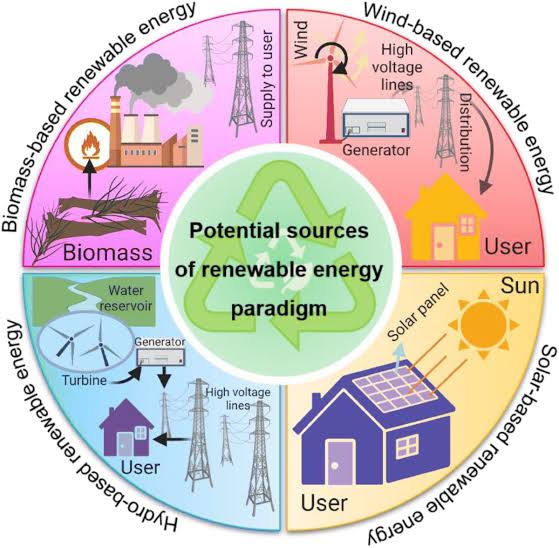
Modern environmental crises – deforestation, pollution, and climate change – can be linked to excessive resource exploitation and wastefulness. Meanwhile, Islam’s stance on Israf stresses, again and again, the need for moderation, a lesson that remains relevant in contemporary sustainability discourse. In fact, Islam not only encourages conservation – it actively condemns wastefulness. 

As if that were not enough, Islamic economic frameworks such as ‘Ushr and Zakat also contribute to conservation. ‘Ushr, a 10% tithe on agricultural produce, serves as an incentive for sustainable farming, discouraging over-extraction of soil nutrients (Kahf, 1995). Similarly, Zakat – an obligatory charity levied on wealth – can be directed toward environmental protection projects, such as afforestation and water conservation initiatives (Ibn Rushd, 2005).

If properly implemented today, these principles could provide an Islamic framework for addressing environmental challenges. In terms of sustainability, societies can address both environmental and economic challenges by aligning with the Qur’anic injunction: “And do not cause corruption upon the Earth after its reformation” (Qur’an 7:56).

Deducible from the argument presented in this short note, it does not require much argument to establish that Islam not only supports environmental conservation but also provides a structured approach to it. With comprehensive environmental ethics that integrate faith with practical conservation strategies through concepts such as Hima, Waqf, Israf, ‘Ushr, and Zakat, one staggering fact holds: protecting our environment and natural resources is a divine responsibility and not just a Western-imposed modern practice of sustainability. Like the figurative Hausas have it: “Tun kafin ayi daran aka yi kwandi”. 

Therefore, with climate change and environmental degradation intensifying, the question is whether we will take these lessons seriously or continue to ignore them as environmental crises escalate. Either way, the Qur’an is unequivocal: “Indeed, Allah does not change the condition of a people until they change what is in themselves” (Qur’an 13:11).

* Years attached to the cited sources are for the English translations consulted.

Abubakar Idris [Misau], a Forestry and Wildlife graduate from University of Maiduguri, writes from Akure, Ondo State. He can be reached through: abubakaridrismisau@gmail.com | +2349030178211.

Jürgen Habermas | A Tribute

By Prof. Abdalla Uba Adamu 

On Saturday, March 14, 2026, Dr Muhsin Ibrahim shared a newspaper report with me announcing the passing of Jürgen Habermas. The German philosopher died at the age of ninety-six in Starnberg, an affluent town in Upper Bavaria. Muhsin was well aware of how deeply I had drawn on Habermas’s theory of the structural transformation of the public sphere in my research on Muslim Hausa media cultures. 

His passing marks the end of an era in critical social theory. Habermas’s work on communication, rationality, and society made him one of the most influential philosophers of the late twentieth and early twenty-first centuries, as well as a major intellectual figure in postwar Germany.

Many Africanists did not initially read Habermas directly. Rather, they encountered his ideas through mediated theoretical engagements in the writings of scholars such as Brian Larkin. I myself first became aware of the public–private sphere debate as part of the broader Frankfurt School theoretical repertoire in Larkin’s studies of media culture in northern Nigeria. His work contributed significantly to later “post-public sphere” discussions by demonstrating how Habermasian insights could be adapted to different social, cultural, and technological environments.

Of Habermas’s many publications, the one that proved most decisive for me was The Structural Transformation of the Public Sphere: An Inquiry into a Category of Bourgeois Society. Originally published in German in 1962 and translated into English by Thomas Burger (with the assistance of Frederick Lawrence) in 1989, it is an extraordinarily dense text. One often needs the guidance of someone already conversant with its arguments to appreciate its analytical elegance. 

I was fortunate to own a copy—purchased for me in the pre-digital era by Gillian Belben, then Director of the British Council in Kano. I read it several times before fully grasping how powerfully it provided a framework for understanding public reactions to Hausa films and the emergence of censorship debates.

Habermas’s study retraces the historical emergence of the bourgeois public sphere as a communicative domain distinct from the state, in which private individuals could assemble to discuss matters of common concern. By analysing the transformations of this sphere, he recovered a concept of enduring importance for social and political theory. In simplified terms, the argument draws attention to differentiated social spaces—those of the home and those of the wider public—and to the ways in which each structures particular forms of discussion and social interaction.

I relied heavily on this analytical distinction when I presented my first international seminar at the Institut für Afrikanistik, University of Cologne, on November 15, 2004. Titled “Enter the Dragon: Shari’a, Popular Culture and Film Censorship in Northern Nigeria,” the seminar explored how Hausa films often rendered visible aspects of domestic life traditionally regarded as private, thereby provoking moral anxieties and regulatory responses. By destabilising the boundary between the two spheres, Hausa cinema helped produce new forms of mediated public debate. A dramatic illustration of this dynamic emerged in the widely discussed Hiyana scandal of 2007, in which a private act became publicly circulated, with far-reaching cultural consequences.

The communicative arena that Habermas conceptualised as the bourgeois public sphere appears today in a historically transformed guise within the networked environments of social media. In Muslim societies such as those of northern Nigeria, digital platforms have intensified the long-standing negotiation between domestic moral order and public cultural expression. 

Conversations once confined to living rooms, mosque courtyards, or informal viewing gatherings now unfold in algorithmically structured yet widely accessible communicative spaces. These interactions do not reproduce Habermas’s ideal of rational-critical debate in any straightforward manner. Rather, they reveal plural, affective, and technologically mediated publics in which questions of religious legitimacy, gendered visibility, and cultural authority are continually contested. Social media, therefore, represent not the revival of the bourgeois public sphere but a new phase in its structural transformation — what might tentatively be described as a “third space.”

The world of critical social theory will undoubtedly feel the loss of Jürgen Habermas. Yet his conceptualisation of the public–private divide will continue to shape scholarly reflections on media, communication, and cultural change for years to come.

Readers interested in further discussions of the public–private debate in Islamic contexts may consult:

Kadivar, Mohsen. 2003. An Introduction to the Public and Private Debate in Islam. Social Research 70 (3): 659–680.

Mentorship in danger

By Professor Abdalla Uba Adamu

The phrase can be read in two ways: the dangers within mentorship, and the danger that mentorship itself may be disappearing.

As one grows older and accumulates experience, visibility, and a measure of goodwill, public culture often expects a form of “payback.” One of the most valued ways to do this is by mentoring younger colleagues—especially those approaching exit points in their careers. Nowhere is this expectation more pronounced than in academic circles. Yet over the years, I have watched the mentorship process deteriorate from both mentors’ and mentees’ perspectives.

When I began my career, mentees were frequently exploited. They carried out the basic research for their mentors—data gathering, analysis, and preliminary drafting—while the senior scholar ultimately received the credit in subsequent publications. When some mentees later attempted to assert ownership of their intellectual labour by publishing from the same datasets, mentors simply stopped working with them. By then, however, the senior academics had already crossed the Rubicon: they had secured their place in the system and had little incentive to look back.

Being exploited intellectually is not a small matter. In academia, one’s ideas, labour, and reputation are the core of one’s identity. When these are appropriated or manipulated, it feels like a violation — not just of professional ethics, but of dignity. Watching others suffer the same fate, and then seeing the perpetrators continue to flourish without consequence, naturally intensifies the sense of injustice.

A later generation of mentors adopted a more tactical strategy. Mentees were still required to do most of the “dirty work,” often writing up results for papers or book chapters, after which mentors insisted on being listed as joint authors. I objected to this practice on several occasions, arguing that a mentor is institutionally remunerated to support the mentee’s development, not to appropriate the mentee’s intellectual rewards. Yet some mentees willingly entered into such parasitic arrangements, convinced that the mentor’s visibility would enhance their own prospects. Meanwhile, mentors leveraged the mentees’ labour to boost citation counts and online academic metrics—the modern equivalent of academic swagger.

Mentees themselves have not been entirely blameless. Whether within formal institutional settings or in the more fluid spaces of public culture, mentorship ideally enables individuals to reach their potential. Increasingly, however, the relationship is being instrumentalised for economic gain or opportunistic advantage. Recent distressing experiences involving well-known academics [on Facebook and a young man named Ismail Sani] illustrate how goodwill and a willingness to assist can be exploited by outright scams. Such incidents inevitably make potential mentors more cautious, and sometimes less willing, to extend help in the future.

What we are witnessing, therefore, is a shift in expectations from intellectual mentorship to personal patronage. In many of our social environments, the two easily get conflated. Respect for elders, the culture of assistance, and the visibility that comes with academic success can combine to create the assumption that a mentor is also a benefactor. When repeated often enough, the requests begin to feel less like genuine emergencies and more like a pattern of dependence. That can make even a generous person start to withdraw.

Another troubling dimension is the subtle guilt-tripping employed by some would-be mentees. I have received numerous requests to serve as a referee for individuals I scarcely know. We may have met briefly at an event, or they may simply have encountered something I wrote. To them, I appear as a convenient “low-hanging fruit.” Basic courtesy would require prior contact—at the very least, a reminder of the context in which we met. I usually decline such requests. After all, referees are expected to have genuine knowledge of a candidate’s work and character. How can one write an honest assessment based on nothing more than fleeting acquaintance or social-media followership?

Social media has radically transformed access to public figures, rendering them perpetually available. Once a mentoring relationship is established, some mentees interpret access as entitlement. The boundary between guidance and material obligation becomes blurred. Social media makes this worse because it creates intimacy without context — people feel they “know” you, and therefore feel justified in making personal demands. Over time, the mentor begins to anticipate the next request, and the original intellectual purpose of the relationship is quietly eroded.

In the physical, offline world, proximity often enables one to gauge the sincerity of requests for guidance or assistance. The anonymity and immediacy of online interaction, however, have produced what might be called a form of “closed distance”: a space stripped of emotional grammar and contextual obligation. In such a space, panhandling can easily be reframed as a moral claim upon those perceived as accessible or influential.

The cumulative effect is worrying. Mentorship, as a meaningful intellectual and moral relationship, may itself be in danger.

What have your own experiences been?

Sani Danja: From performance to promotion 

In governance, performance should naturally translate into greater responsibilities. Since his appointment as Special Adviser on Youth and Sports, Hon. Sani Musa Danja has demonstrated capacity, commitment, and a people-oriented approach that has delivered visible impacts on youth development and sports advancement in Kano State.

Within his first month in office, over 3,000 youths were empowered through food-related initiatives such as Nija Food. This early intervention reflected responsiveness to the economic realities facing young people and set the tone for a tenure driven by action rather than mere rhetoric.

One of Hon. Danja’s most commendable achievements is his grassroots engagement across all 44 Local Government Areas of Kano State. Through open consultations with the youths, he listened to concerns on welfare, unemployment, insecurity, and inclusion. This initiative brought governance closer to the people and helped rebuild trust between the government and youth.

To strengthen coordination and sustainability, he worked closely with Senior Special Assistants on Youth across the 44 LGAs, fostering cohesive leadership and unified strategies for youth development across the state.

Understanding the strong link between unemployment and insecurity, Hon. Danja adopted a preventive empowerment approach. Over 300 youths previously involved in thuggery and phone snatching were redirected into productive ventures, including popcorn-gurguru production, fast-food services, shawarma preparation, and baking. This intervention not only provided livelihoods but also contributed to crime reduction and social reintegration.

His tenure also saw institutional support for voluntary youth and security organisations, including the Nigerian Boy Scouts and other community-based groups such as the Civilian JTF Kano. Through the provision of working materials and encouragement, discipline, and volunteerism, community service among young people was strengthened.

In addition, a statewide Youth Symposium Day was organised to promote dialogue, leadership, and civic engagement, involving participants from all 44 LGAs. Hon. Danja also paid visits to youth training and skills acquisition centres across the state, encouraging trainees and reassuring them that government support remains within reach (kusa da gwamnati).

Beyond programs, compassion has remained a defining feature of his leadership. Financial assistance was extended to youths facing serious health challenges, including those with spinal cord-related disabilities, demonstrating an inclusive and humane approach to governance.

In sports development, Hon. Danja contributed to the revival of neglected sports such as volleyball, encouraging youth participation and talent development. Administratively, he reorganised and strengthened his office to ensure efficiency, transparency, and effective service delivery.

Currently, his office is coordinating a large-scale youth empowerment initiative under YEIDEP, targeting over 1.2 million youth participants in skills acquisition and entrepreneurship, reflecting executive-level vision and readiness.

Given his performance, statewide reach, and ability to connect with young people, Hon. Sani Musa Danja is well-positioned to deliver even greater impact.

A passionate appeal is therefore made to His Excellency, Engr. Abba Kabir Yusuf, to consider appointing Hon. Sani Musa Danja as the Commissioner for Youth and Sports and nominate him to the Kano State Executive Council. Such a decision would ensure continuity, consolidate gains, and further strengthen Kano State’s youth and sports development agenda.

Shamsuddeen Muazu (AbuMuhd) wrote from Kano State. He can be reached via abumuhdpress@gmail.com.