Opinion

Nigeria Jubilee Fellows Programme: Why you should apply

By Ishaka Mohammed

After many fruitless applications, job seekers in Nigeria get frustrated. As some delve into crime, others retire to idleness, leaving everything to fate. Neither of these options is advisable. Nevertheless, there’s no need to stop trying. The following instances might suffice.

In Nigeria, being called a SAN comes with prestige. The bearer of the title is an experienced legal practitioner, considered professionally (and to a large extent, economically) successful. It means Senior Advocate of Nigeria (SAN), yes? But, no, there’s a different angle to it.

Many young Nigerians can bear an unfortunate version of the acronym SAN. They don’t have to study law, not to talk of being called to the Bar.

To cut it short, a guy and two ladies meet (for the first time). In response to the question of what he does for a living, he replies, “I’m a SAN.” The ladies are amazed due to his age, so they try to congratulate him, but his conception of the acronym fills the scene with abundances of laughs. He gently says, “I am a Senior Applicant of Nigeria (SAN).” The guy has applied for many jobs, but he has yet to secure employment. After listening to his story, the ladies offer him a job.

That’s in a Nollywood movie, though. Now, let’s discuss reality. A friend and former colleague is currently an officer in the Nigerian military. At a point in his life, he handed copies of his credentials to a cybercafé attendant and asked him to keep applying for jobs that matched the credentials; he would pay after every application. That was after being tired of visiting the café all the time.

Road Safety, Prison Service (now Correctional), Navy, name it — my friend had sat tests or gone for physical screenings, but none had worked in his favour. He was literally tired, so exhausted that when he was called for a physical screening after his last application, he had concluded to ignore it. If not for the timely intervention of his family, he wouldn’t have gone for the screening. He made it afterwards and the rest is history.

The above instances clarify that you have no reason to give up. You don’t have to wait for the required “connection”. Keep trying. Thomas Edison once said, “Our greatest weakness lies in giving up. The most certain way to succeed is always to try just one more time.” That one more time might be the last effort required. That one more time shouldn’t be about today or tomorrow; it shouldn’t be about the number of attempts; it should simply be about whether or not you have attained your desired goal.

As a Nigerian, you can irrevocably say that many things have gone wrong in your country. The rate of unemployment is high and scary. Thanks to members of the political elite, who are busy hijacking what is meant for the citizenry.

Attempting to minimise unemployment in the country, successive governments have come up with beneficial programmes targeting the youth. However, the politicisation of selection processes and inconsistent remunerations have sabotaged the otherwise commendable initiatives. For instance, many of the past N-Power volunteers are still owed stipends after one year of exiting the programme. And even while in the scheme, a significant number of these youth often received overdue allowances. What about the Special Public Works Programme for 774,000 unskilled labourers? The three-month programme ended in March 2021, but many of the beneficiaries have yet to be paid. It’s worth stressing that each beneficiary is entitled to just N60,000 (spread across three months).

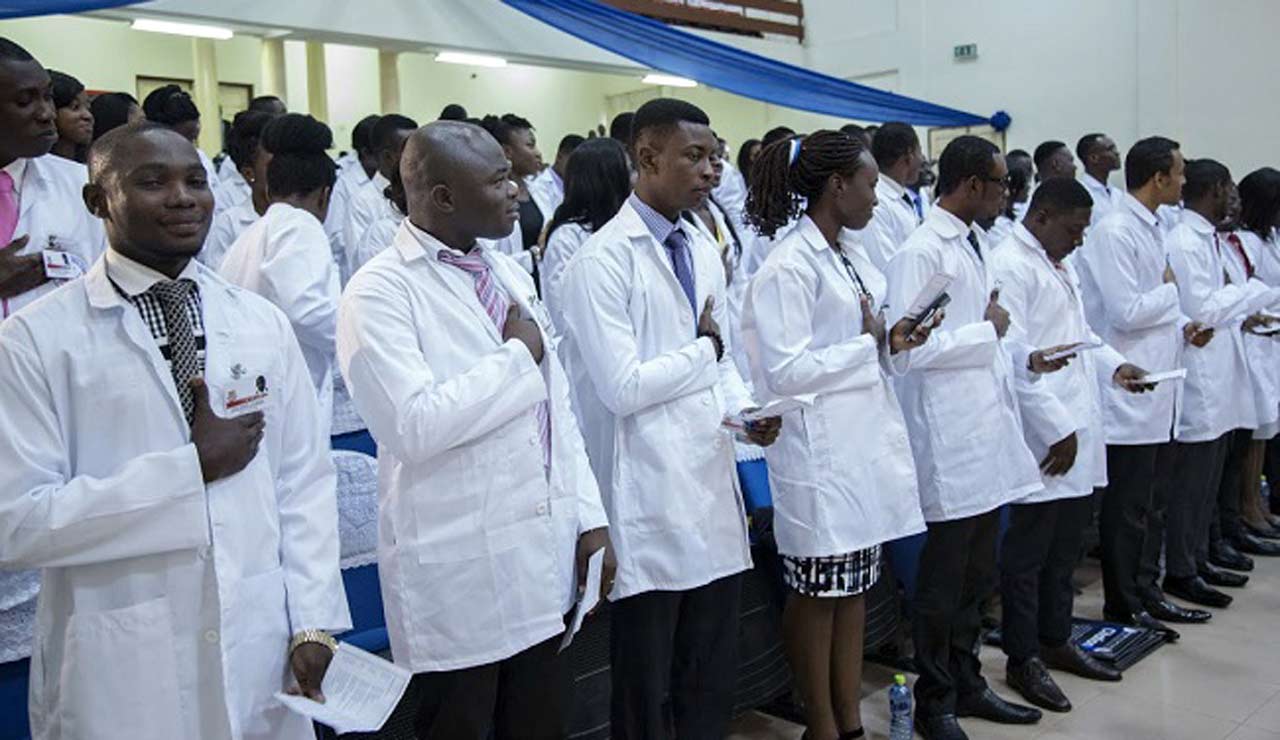
Despite the ugly situations in Nigeria, try this one. In collaboration with the United Nations Development Programme (UNDP), the Federal Government of Nigeria is enrolling 20,000 recent graduates in full-time paid employment for twelve months. In addition, the Nigeria Jubilee Fellows Programme is for young graduates.

I partook in a briefing session on Zoom with one of the programme’s team members, Erere Oghoghome, on Tuesday the 17th of August, 2021. According to her, the programme will engage 100,000 people across five years, and the first cohort will be inducted by October 2021. That means the call for applications will be out in the coming weeks. Every eligible and interested person is expected to have developed a craving for a particular skill.

Aside from being paid employees for the period of the programme, fellows stand the chance of being retained by their host organisations. Plus, they’ll join the alumni network upon completion of the programme, and the team will be the first choice for organisations seeking personnel to fill vacancies.

The basic requirements are: graduated not earlier than 2017, less than 30 years of age, unemployed, and possessing NYSC discharge or exemption certificate.
At this juncture, I implore anyone who meets the requirements to keep tabs on the UNDP in Nigeria for this rare opportunity. It might just be that one more step to their dream job.

Other than using the experience to land a job after the programme, one can deploy the skill, money, or both in self-employment. Remember, fellows will be paid as graduate employees, not given stipends.

Therefore, it’s vital that unemployed graduates apply for the programme. There’s no harm in trying.

Ishaka Mohammed writes from Kaduna. He can be contacted via ishakamohammed39@gmail.com.

On Kannywood and Sadiya Haruna

By Bashir Shu’aibu Jammaje

Some people or newspapers apply a form of persuasion that is often used in media to further some agenda, such as a personal, political, or business, by evoking an emotional or obligable response from the audience. That is, ‘propaganda’, in layman’s terms. 

Today, various amounts of modern media can be used to supply propaganda to its intended audience, such as radio, television, films posters, handouts, music, to name a few. It is perplexing to see a well-known media like BBC Hausa doing that. I became overwhelmed when I see their post on the case of Sadiya Haruna and the Kano State Hisbah Corps – and not ‘Board’. Kwankwaso removed them from being a board, some say, to intentionally make them less powerful. Why?

I have never seen Sadiya Haruna in a Kannywood film. I then got to the comment section of the BBC Hausa post and read Abba Almustapha’s words, asking them to give him an example of a single film she has ever appeared in. I gave him a call to confirm if she has ever performed in a Kannywood film. His answer was a definite no. 

I only know Sadiya as a popular online sex counsellor for men and women via her social media pages. And, she makes Wakokin Yabo, ‘songs of praise’ videos along with Hafeez Abdullahi.

Since the birth of Kannywood in the early 1990s, it is purportedly founded as a reaction to the imported foreign films, mainly from India and America, that the society, in general, sees as culturally and religiously unsuitable for them. The filmmakers are being accused of so many bad things that they try a lot to hide other nasty things that happen in our society – and we all know that. I’m not, in any way, standing up for them, just that it is high time some people brought their intense hatred towards Kannywood down. And besides, Islam is a social religion – its very purpose is to intervene in human affairs.

Finally, I think BBC Hausa and others should tell Kannywood they are sorry for coming up with a chance to paint them in a bad light.

Bashir Shu’aibu Jammaje writes from Jammaje Academy. He can be reached via bashjam90@gmail.com.

Yusuf Buhari Wedding: PMB’s ‘letter’ to Nigerians

By Aminu Nuru

Fellow Nigerians, 

It has become necessary for me to write this letter, having heard the grunts of some Nigerians on what they described as ‘glitz’ and ‘glamour’ wedding ceremonies and events of my son, Yusuf.

It is important to clarify why I choose to write on this topic while there are more pressing issues endangering the peace and stability of our dear nation. I decide to write to you because I consider this grunt to be directly aiming to attack my integrity and the reputation I built in my more than five decades of selfless service to the country.

Forgive me if I sound harsh in this letter; I am still shocked by the killings of innocent Muslim travellers in Jos. As it stands today, I could barely eat well. I hope you noticed how starved I look at the venue of the wedding Fatiha and later at the Presidential dinner in honour of the bride and groom. I could not even stand on my feet, just as everyone did to welcome the new couple.

Fellow Nigerians, you should understand by this time the personality traits of your President. I am a terrible introvert, a man of few words. This is a confession, and you may think it is a deficiency. Still, I am content with it, for silence teaches me how to be calm and concentrated in a time of turmoil, endure and be patient in critical situations, and reflect and find solutions in the face of problems. Besides, I believe that not every moment is worth or requires me to write or speak to my people. 

Please don’t misconstrue my silence as a trick to shield my leadership shortcomings. I may not be a perfect leader, but, deep down, I know I am patriotic, and my intentions are pure, and I always strive to give the best to my people. This is not seif-romanticism; a half an hour heart-to-heart interview with my dear wife would unveil to you how tirelessly I work for a better Nigeria, sometimes even at her detriment.

Back to the main matter, I write you this letter. I understand that many of you took to social media to criticise my only son, Yusuf Muhammadu Buhari. There are even false accusations by some pundits that public funds are used to sponsor wedding events.

Let me set the record straight: it is in your interest to know that no kobo from the public treasury was used to finance any wedding event. Therefore, these allegations are groundless, baseless and mischievous. I will be the last President to approve public funds for the wedding of my son.

I understand that my success in life, especially in the political gallery of Nigeria, has made so many people have deep-seated envy for me. But, if not for that, how can you accuse a tested and trusted leader, who has the mandate of his people twice, for embezzlement and misappropriation? Or am I not blessed enough – in wealth and friends – to give a befitting wedding to my only son? 

If your memory fails you, let me quickly remind you that I was a former Petroleum Minister, Governor of the North-Eastern region, Chairman of Petroleum Trust Fund (PTF) and  Head-of-State. In addition to this, I have inherited a large farm from my father, which I personally run to date. I think someone with this pedigree can legitimately afford all that we have seen in the events of Yusuf’s wedding.

I could understand that some of you were perplexed that we can afford to pay five hundred thousand naira (₦500 000) as dowry for our son, but do you bother to check the price of an average well-fed cow in the market today? We have not fewer than a hundred heads of cows on our farm in Daura. So a simple check will cure your deliberate ignorance.

Lately, I learned that you were also worried that iPhones were shared with family and friends at the wedding dinner held at the Presidential Villa in honour of the bride and groom. I think I will blame myself for your worries here. My failure to write about myself extensively, which will give you a glimpse of the circle of wealthy friends I keep, results in your fears. Let me be blunt with you here, my friends immensely donated to the wedding. Just imagine what could be donated to a person of my calibre on the occasion of his only son’s wedding. The party of donations we saw at the burial ceremony of Obi Cubana’s mother was undoubtedly a child play.

Fellow Nigerians, as a democratic leader, I acknowledged and acted upon your grunts accordingly. Let me say this for the last and the repeated time: public treasury is a trust; I cannot temper with it to satisfy my personal or family needs. I have never used public office to enrich myself or anyone. It pains me to come across those false allegations that public funds are used to sponsor the wedding.

And for those that falsely accused me – the purveyors of falsehoods – I leave you with the lines from the poem of my late comrade – Jiya Mamman Vatsa – titled “Judgement Day Na Wa”.

Aminu Ahmed Nuru can be reached via aminuahmednuru@gmail.com.

Celebrity branding of political parties, politician ineffective, new study shows

By Daha Tijjani, PhD

Celebrity endorsement is a technique in advertising that possesses persuasive power to influence consumers’ decisions and target audiences. As a result, it remains a popular way for marketers to promote their brands, products, and services.

In political communication, it is one of the tools used to project the image of political parties and candidates in the minds of electorates and ultimately influence voters’ decisions.

However, numerous studies have found that several products have failed to attract customers’ attention despite being endorsed by celebrities.

Several researchers have investigated the effect of celebrity endorsement on products. However, few studies have looked at the impact of celebrity endorsement on political parties and their candidates. Also, little is known about the effects of celebrity endorsement and branding of political parties when it comes to developing economies.

Thus, knowing the effects of celebrity endorsement and branding of political parties and their candidates will give valuable insights to the party leadership on what strategy they should adopt when embracing a celebrity to help their brand.

As a result of this perceived lacuna, a group of researchers from universities in Nigeria, Ghana, Malaysia, and Germany examined the effects of celebrity endorsements of political parties using the Nigerian 2019 Presidential elections as a case study. The study report was published by Technium Social Science vol 22 (2021): A new decade for social change. 

The study investigated and discerned the factors motivating eligible voters in Nigeria to vote, using the predictors (Endorser Credibility, Political Brand Credibility, Political Brand Equity, and Voting Intention). The study also examined the mediating role of Political Brand Credibility (PBC) and Political Brand Equity (PBE) towards Voting Intention (VI).

The data for the study was collected in 2019 from 320 eligible respondents with Permanent Voters’ Cards (PVC) from the cluster of 6 geopolitical zones in Nigeria, including the Federal Capital Territory.

The study has found that the endorsement of celebrities alone does not necessarily influence electorates to vote for political candidates. Instead, the credibility of the party and its equity play a pivotal role in the voting intention of voters.

Despite being credible with attributes such as Attractiveness, Trustworthiness and Expertise, the study further revealed that the celebrity endorser is not a good predictor of positive voting intentions. Likewise, the findings revealed that a credible endorser would not have a positive and significant effect on a political party’s brand equity.

Taken collectively, the new empirical findings in this study would provide a new understanding of this new political marketing strategy in the Nigerian context. Furthermore, the insights gained from this study may assist the political parties to focus and invest more effort, resources, and energy in branding their parties with meaningful manifestos that would touch the lives of the electorates.

How to Cite: Abdurrahaman, D. T., Owusu, A., Bakare, A. S., Apejoye, A., Ibrahim, M. M., & Ahmad, T. H. (2021). Assessing the effects of Celebrity Endorsements of Political Parties: An empirical study of Nigerian 2019 Presidential Elections. Technium Social Sciences Journal, 22(1), 676–699.Retrieved from https://techniumscience.com/index.php/socialsciences/article/view/4266

Note: The corresponding author can be reached via dahatijjani@gamil.com or Twitter handle @dahatijjani.

Elitism and Elite-Phobia: A caution on a looming danger

By Idris Yana

As is usual with Nigerian cyberspace, the wedding of Yusuf Buhari and Zarah Bayero has sparked yet another trend of varied opinions. From pre-wedding pictures to the statehouse dinner – which hopefully marked the end of weeks of grandeur events – each gathering left behind a trail for criticism or praise. Given the number of these varied opinions the wedding has generated, I have attempted to deviate from commenting on its rights and wrongs.

As a keen observer of Nigeria’s evolution since the return to democracy in 1999 and a privileged citizen who witnessed the country’s pre-1999 socio-economy, one thing that is inevitably noticeable is the vast evolving gap that separates the haves and the have-nots. Election into political offices has become a lifeboat that rescues few people from the sinking ship that carries Nigerian masses. On the one hand, these politicians succeeded in blending in an elite circle that was hitherto formed by the military personnel (generally retired); civil servants, whose share of national cake from Heaven; contractors (and every Nigerian knows what this means); and few legitimate business moguls. But, on the other hand, the explosive downtrodden population continues to sink into the abyss of poverty.

The widening gap between these two classes has created a cause for concern. As the elite, in most cases, carelessly flaunt their expensive lifestyle to the envious eyes of the poverty-stricken majority, this has begun to breed resentment in the hearts of the majority of the latter. This resentment is gradually increasing whenever an event like Yusuf and Zarah’s wedding takes place.

Elitism in all cultures is real and inevitable. Since time immemorial, societies have always been divided along this line. What distinguishes Nigeria’s current situation is the circumstance and extent to which these class differences are expressed. In a country where the level of poverty, and its attendant consequences, is glaring, the reckless flamboyance must be done with caution. This is especially important when poverty-induced (in)security crises are on the rise.

The poor and forgotten should also not allow self-pity to make them wallow in destitution. In most cases, they are the ones who made these overnight elites by electing them to the privileged offices. They can change that by holding them accountable for their responsibilities. Another way is by defining what they want from these politicians. Electing people based on primordial sentiments or personal aggrandisement must stop. Most importantly, people must understand that they are the architects of their future.

Idris Yana writes from Exeter, United Kingdom. He can be reached via idrishyana@gmail.com or @Idrisyana (Twitter).

Connecting the unconnected: How CITAD is bridging digital divide in Northern Nigeria

By: Ali Sabo

Internet connectivity is becoming part and parcel of humans’ lives all over the globe. However, the story in the undeveloped countries, especially those living in the African continent, is different and not encouraging. Millions of people in Africa are finding it difficult to access this network, and even in places where these networks exist most of the time, it’s inefficient and costly. Moreover, the emergence of the covid-19 pandemic has exposed how fragile humans are and their dependence on the services internet provides to their daily lives.

Reports have indicated that only less than 50% of the Nigerian population is connected or has access to the internet. Of this 50%, many do not have the resources to own smartphones or computers that will allow accessing these services due to the high level of poverty ravaging the majority of the country’s population. To ensure more people are connected and have access to internet services in Nigeria, the government, through its communications agencies such as Nigerian Communications Commission (NCC) and National Information Technology Development Agencies (NITDA), have brought about many programs such as Universal Service Provision Fund (USPF) and provide free computers and internet services to some communities and academic institutions in the country.

Non-profit organizations such as the Centre for Information Technology and Development (CITAD), whose main focus is using Information and Communication Technology (ICT) to empower citizens, have initiated many programs that will liberate Nigerian people from this digital “darkness” and make the country one of the developed nations in terms of internet connectivity and other areas of human development as the internet gives people ample opportunities in their academic pursuit, businesses and in the health care sector, among others.

To ensure no one is left behind in the process, CITAD in 2016 launched the Digital Livelihood program, which centred on training women on digital technology and digital entrepreneurship in northern Nigeria, focusing on Abuja rural communities, Kano and Bauchi states. It, later on, included Jigawa State. The program has achieved tremendous success as the lives of hundreds of young girls and women have been changed and transformed. Many trained girls have now become digital entrepreneurs; graphic designing, web designers, online marketers etc. In an interview in one of the Nigerian Newspapers, one of the beneficiaries, Sadiya Danyaro, stated that the training “has drastically changed her life and made her become an employer rather than a job seeker. She also described the training as the turning point of discovering her passion and dream”. 

Before the commencement of the community network project by CITAD, supported by the Foreign, Commonwealth and Development Office (FCDO) through the Association for Progressive Communication in Nigeria, CITAD had set up seven (7) computers in the past centres in two states in Nigeria. The aim was to ease internet access to these underserved and neglected communities in terms of internet connectivity. The communities are Tungan Ashere, Dakwa Community, Pasepa, Gaube and Leleyi Gwari in rural Abuja communities, Jama’are and Itas-Gadau in Bauchi State.

At the peak of the Covid-19 pandemic, which highlighted the need and necessity of connecting everyone with an affordable and efficient internet connection, the community network project was launched by APC with support of FCDO in three continents; Africa, Asia and Latin America and championed by CITAD in Nigeria. Community networks are telecommunications infrastructure deployed and operated by local groups to meet their own communication needs and also a communications infrastructure, designed and erected to be managed for use by local communities. This communication needs can be voice, data, etc. and can be a point of convergence for community to come together to address their common community problems.

This initiative is aimed at enhancing the capacity of communities to design, deploy and manage community networks to meet their communication needs while at the same time engaging regulators and other relevant policymakers to enact policies and provide the support that could enhance the flourishing of community networks in the country. Due to resource constraints, CITAD piloted some sites in seven communities across three states: Jama’are and Itas in Bauchi State, Kafanchan in Kaduna State, and four sites in the rural communities of Federal Capital Territory, Abuja (Tungen Ashere, Dakwa Community, Pasepa and Leleyi Gwari).

Some of the activities carried out by CITAD under this project include training of the community champions in these communities on the need for setting up community network centres in these areas and on advocacy to engage their representatives more effectively; forming a community network advisory committee which consists of individuals from Civil society Organizations, ICT sector, Government and members of the communities; high-level engagements with government (NCC and NITDA), engagement with House of Representatives and championing discussions on designing policies on community network in Nigeria.   

So far, with persistent engagements and advocacies visits by CITAD, progress on setting up community networks in Nigeria has been made. Through the House Committee on ICT, the Nigerian government has drafted a bill that contains provisions on community networks; Itas and Jama’are local governments, both in Bauchi State, have donated a piece of land to CITAD to build community network centres in their communities. In addition, following meetings with CITAD, NCC has indicated that it will develop a policy to guide the development of community networks in the country.

Ali Sabo is the Campaigns and Communications Officer of CITAD and can be reached via his email address: aliyuncee@gmail.com or his Twitter handle @a_sabo12.

Kano Hisba is right in its “selective raids”

By Mubarak Ibrahim Lawan

It is commonsensically understandable when Kano Hizba could not stage a daring raid on Fatima Ganduje’s wedding or that of powerful people. Their excuse is acceptable to good Muslims and every reasonable person. However, some dimwitted Islamophobic detractors of Islam, who hate or fear Muslims, Islamic politics or culture, will always scorn the Hizba.

From Malam Ibrahim Shekarau’s governance in Kano to date, Hizba has always been the first target of those Islamophobia-suffering people. When they were strong, Hizba succeeded in reducing prostitution, alcohol drinking, excesses of Kannywood actors and actresses and helped maintain order in Kano. It also provided means of livelihood to thousands then, just as KAROTA delivers now. And, since the second coming of Engr. Rabiu Musa Kwankwaso, the powers given to the Hizba during Malam Shekarau was drastically reduced. Politics is all to blame; we all know.

So why do those detractors of Islam choose to ignore this simple fact? Why do they ignore the capitalistic, autocratic Nigerian factor of “the rich/powerful is always right”? Why do they criticise when Hizba works, as when they burn crates of beer, and when the board fails? In that case, what do these detractors want? Similarly, why do we judge people and institutions by some few wrongs or some unavoidably uncontrollable wrongs and limitations? If Allah forgives the Hizba for being forced to overlook, then why can’t you?

It was narrated from Ibn ‘Abbas that the Prophet (ﷺ) said: “Allah has forgiven my nation for mistakes and forgetfulness, and WHAT THEY ARE FORCED TO DO.”

Similarly, “Allah burdens no soul beyond its capacity”. To its credit is what it earns, and against it is what it commits. “Our Lord, do not condemn us if we forget or make a mistake. Our Lord, do not burden us as You have burdened those before us. Our Lord, do not impose on us more than we have the strength to bear; and pardon us, and forgive us, and have mercy on us. You are our Master, so help us against the disbelieving people.”

Lastly, they arrested a prostitute, Sadiya Haruna, because they can arrest transgressors like her and alhamdulillah they did. Whoever has complaints should please take a lawyer for Sadiya. Finally, I pray may these Muslim detractors of Islam come to their senses before it is too late.

Mubarak Ibrahim Lawan writes from Kano.

Bichi Wedding Gathering: lessons to the discerning minds

By Adamu Bello Mai-Bodi

The wedding Fatiha of Yusuf Buhari and the daughter of Sarkin Bichi was held with pomp and pageantry. All roads led to Bichi on Friday, 18 August 2021. As many as 80 aircraft brought guests to kano to witness the first son’s tying the knot to a Bayero descendent princess. To the amazement of many, the guests were dignitaries and politicians of different persuasions from across the country, who, albeit their differences, gathered to bless the occasion while they wine, dine, and exchange banters with each other. 

The sportsmanship they exhibited was awe-inspiring and outlandish for Nigerian politicians. It may be unintentional, but it should be an eye-opener to Nigerians at the bottom of the ladder. It sent a strong message to the youths, especially bootlickers, sycophants and the so-called media warriors who are ever ready to insult, blackmail, curse, condemn, disrespect and assassinate the characters of their bosses’ supposed political enemies at the expense of their self-esteem. There is no point in attacking and counterattacking one another in defence of these pretenders who only follow their aggrandisements without definite ideology whatsoever.

On Friday, the cliche about “no permanent friend or enemy in politics” was in full gear at Bichi Emir’s palace. Buhari, Atiku and Jonathan were present. Many former and serving Ministers, Governors, Senators Representatives and many other shot callers bundled themselves in Bichi palace with no regard to PDP, APC, South, North or East etc. Everyone was eventually their brothers’ keepers. Most notable was the unexpected comradeship between the former Aviation Minister Femi Fani Kayode and Malam Isah Pantami, the current Minister of Communication and Digital Economy. Given the hostility shown by the former towards the latter, many people were shocked.

If these old guys can forget their bitter differences and mingle to celebrate and or commiserate with one another depending on the situation, I think the downtrodden, especially youth are in a better position to embrace the culture of tolerance and to desist from being the tool for political attacks between these dissemblers who would be at each other’s throats only when their whims and caprices differ and would befriend themselves when their path crosses.

Hopefully, many discerning minds would heed this event and free themselves from unnecessary hatred, criticism, and resentment. Let love, mutual respect and fair play lead the way in all endeavours regardless of affiliations, be it political, regional or religious. “Experience,” they say, “is the best teacher”. May we be guided.


Adamu Bello Mai-Bodi writes from Gidado Bombiyo residence, K/kaji Azare.

Pantami and bigoted traducers

By Adnan Mukhtar Tudunwada

In an ironic twist one of the most charismatic Ministers in Buhari’s administration, Dr Isa Ali Pantami has been receiving massive accolades for his outstanding performances from sincere citizens, as well as blind criticisms from blackmailing traducers for ulterior motives.

A few months ago, the traducers mounted aggressive media campaigns against him over a claim of alleged support of ideologies of insurgents over a decade ago. Even though, the Minister had defended himself and explained further that he was one of the Islamic scholars that have consistently attacked the ideologies of Boko Haram.

Meanwhile, videos and audios of Boko Haram leaders threatening the life of Dr Pantami emerged but that too could not persuade the critics from their reckless insinuations and criticism. In fact, some of the videos included those where Pantami challenged slain Boko Haram founder, Mohammed Yusuf, in a hot debate and another was the threat by terrorist leader, Abubakar Shekau to eliminate the Minister.

It is, therefore, not surprising that when Pantami is about to clock his second year in office, the sponsored critics thought they could distract him and teeming Nigerians by reinventing another campaign of calumny.

Though their intention is mischief, they could not stop the Minister from reeling out concrete achievements of his Ministry and its agencies in the last two years when they collectively generated a total of N1.05 trillion.

Dr Pantami disclosed the huge revenue during the 12th batch of virtual commissioning of eight projects by his Ministry and agencies.

He said that “The Ministry and its parastatals have generated over N1 trillion for the Federal Government in less than two years, this translates to an average of about N44 billion every month, or over N1.4 billion every day.

“The IT Projects Clearance Programme also saved over N5billion for the Federal Government.”

“I also urge them to redouble their efforts in ensuring that we keep up the good work of developing Nigeria’s digital economy,” he said.

The Minister also revealed that a total of 1,667 ICT projects have been completed while 455 others are ongoing across the country. In line with the general approach for locating projects, they are situated in all the six geopolitical zones of the country and the Federal Capital Territory.

Some of the projects he commissioned virtually included Emergency Communications Centre (ECC), Makurdi, Benue State (North Central); Virtual Examination Centre, College of Education, Argungu, Kebbi State (North West); E-Accessibility Centre, Alderstown Schools for the Deaf, Warri, Delta State (South-South).

Others are the E-Health/Data Sharing Project, Leko Abdulrahman Hospital, Daura, Katsina state (North West); Digital Economy Centre & E-Learning Facilities, Ogba Grammar School, Lagos state (South West); Digital Economy Centre & E-Learning Facilities, St Paul Secondary School, Eke, Enugu state (South East); Digital Economy Centre & E-Learning Facilities, Federal Character Commission, Abuja (North Central); and E-Accessibility Centre, Bauchi state; Orphans and Vulnerable Children School, Bauchi state (North East) among others.

These were apart from others that were commissioned last year.

My advice to Pantami on the antics of his traducers and blackmailers is to just ignore them.

As an IT guru and scholar of repute, he should realise that their antics expose their dispositions as sectional and religious irredentists and their hatred for his faith and the section of the country he comes from. Just recently some of them have the gut to mock the great prophet of Islam in their attempt to ridicule, Dr Pantami.

Though the bigoted and eccentric traducers seem to be faceless, they are not unknown going by digital footprints and the patrons of their platforms of blackmail and propaganda.

If their media platforms were used to scandalise former Presidents Obasanjo, Yar’adua, Jonathan and even Buhari, why should Pantami feel offended? They are better ignored.

It is obvious that they are over-pampered ethnic jingoists and over-tolerated fake activists who are overtly ignored because of their questionable integrity and dubious pedigrees.

Once again, I appeal to Sheikh Pantami to ignore them and focus on his national assignment which has enormous presidential endorsements and the support of Nigerian citizens who are beneficiaries of the digital economy.

Adnan Mukhtar is a Staff Writer with Politics Digest and writes from Kofar Famfo, Kano City.

Justice for murdered innocent travellers in Jos

Nigerians woke up on Saturday last week with the bad news of the gruesome murder of innocent travellers returning from the annual national Zikr in Bauchi. They were intercepted along Rukuba, Gada-Biyu axis of Jos-North local government by suspected Irigwe ethnic militias who killed them and burned their buses. Every peace-loving Nigerian should condemn the atrocity.

The killing of these innocent travellers came at a time when Plateau State, the epicentre of ethno-religious crises, had started enjoying relative peace courtesy of Governor Simon Bako Lalong’s commitment to bring lasting peace. The militias who carefully selected their victims have a hidden or ulterior motive. Some of their reasons are to set the State on fire and fuel retaliation across the country. The victims came from other states of the country and were only on transit. What did they do?

Even before the unfortunate killings, there have been reported cases of innocent travellers being killed on some roads, which are considered no-go-areas for certain faith. If this crude way of life displayed by the mobs can be adopted in other states, one imagines the dire consequences it will bring to the peace, unity and development of the country.

I learnt that the Nigerian army apprehended some suspects. This is a good development. However, the problem is not whether the perpetrators of the heinous crime are arrested or not. The question remains, are the culprits going to face justice according to the laws of the land? So long as the government continues to temper justice with mercy on those who commit grave offences against humanity, we should rule out any possible end to the unnecessary carnage.

Ibrahim Mustapha, Pambegua, Kaduna State. He can be contacted via imustapha650@gmail.com.