Opinion

In Search of Solutions for Northern Nigeria

By Ahmadu Shehu, PhD.

The current situation in northern Nigeria is very discouraging, even depressing. But it is not hopeless. Daunting as the current challenges seem, they are far from insurmountable. Before sounding over-optimistic, let me admit that things can head south and that the danger ahead is by no means to be underestimated. The problems bedevilling this country have been dissected, analysed, revised and reviewed regularly. They are well-known to the extent that a curious baby could make a list of them; insecurity, poverty, joblessness, poor education, healthcare, lack of power, water, and all other social amenities. That is how obvious our problems are.

Unfortunately, although various solutions to the above problems have been proposed over time, few improvements are being recorded. On the contrary, things have become worse by the day. What this means is that either the proposed solutions are wrong, inadequate or that these solutions are not well-implemented. Regardless, we shall acknowledge that these problems have been with us throughout our recent history; they have been acerbating all through the decades of our independence, and that they are not going away on their own. Though, it is not as if nothing is being done to ameliorate this sorry situation; it is just not enough.

For instance, as people of faith and conscience, we have been encouraged to pray hard, submit to the true spiritual powers that create and sustain the universe. Luckily, Nigeria is reportedly the most religious country globally, and our attitude to religiosity attests to this claim. As a nation of faith, we have benefitted from our dedication to prayers and spirituality in many ways. However, the deteriorating state of our affairs shows that something is definitely wrong with this approach. We can see that as hard and as much as we pray, these problems are not going away – they have refused to disappear after the night vigils. The home truth is that they will not disappear because they are man-made and, therefore, require human solutions. Consequently, we have to undo them by matching our spirituality with the necessary practical actions.

As concerned and enlightened citizens, we have cried out as loudly as possible, written treatises, provided all the analyses in this world. Still, that is undoubtedly not going to do much in salvaging this precarious situation. This decay is beyond words. As individuals, each of us has a responsibility to this country. Therefore, some pundits claim that we shall quickly solve these problems if we do our parts as individuals. Well, yes and no. Resorting to self-help is itself a measure of failure in a cooperative society. We can only do so much as individuals, but not enough to correct the ills of this society. That is why human society is politically structured since time immemorial. We have never heard of a country, an entity – not even a family system – without a workable structure. As Femi Falana says, “there is indeed no republic of non-governmental organisations”. 

As citizens and subjects of a political structure, we have always pushed all the blame to the region’s political leadership. Indeed, the responsibility of a people is absolutely on the political leaders who have all the instruments of power, administrative and constitutional resources, privileges and responsibilities. But, this too is very much debatable. One undeniable truth is that while political leaders are responsible for the development of a society, the quality of followership has a significant stake in the success of public policy and programs.  Is leadership not the product of followership? Or is it the other way round? This is the case with chicken and egg. Your guess is as good as mine.

As a government, various laws, policies and programs have been formulated, enacted, assented, proposed, implemented, or use any vocabulary that suits your purpose. The bottom line is that we are sinking deeper, moving in reverse order, and things are getting worse. Governments at all levels adopt often conflicting policies and programs on various challenges facing the region. For instance, on insecurity, the Zamfara state government embraces negotiations and amnesty for criminals, while Katsina state adopts the often faulty stick and carrot approach. On the contrary, the Kaduna state government insists on non-negotiation with criminals, without any alternatives for the victims. The governments apply the same conflicting methods to other critical issues such as education, employment, poverty eradication, healthcare, etc. If results are to judge actions, we can loudly, albeit sadly, say that successive governments at all levels have failed in basically everything.

The evidence of the failure of these approaches lies in the fact that there is no sector – one aspect of life – that is better than it was years ago. But at the same time, this evidence is the same reason we should do more because our problems are bigger and more today than yesterday. It means, therefore, that the people of this region must continue brainstorming and inventing new, dynamic solutions in tandem with the current challenges facing it. Northern Nigeria is full of potentials and opportunities to get out of this mess and attain its developmental goals.

The best way to do this, in my opinion, is by focusing on the human capital of the region. The problems mainly result from neglecting the wealth of human resources, both in quality and quantity, by undermining critical social development issues, especially education and skills acquisition. Yes, this region might be rich in natural resources, such as gold, ore, iron, and other geological elements. Still, the truth of the matter is that no society has ever mined itself to greatness. In recent years, the federal government has been fond of oil exploration in the north to counter the southern narrative of “oil-producing states”. But, the essential truth is that the so-called oil-producing states are as underdeveloped as any other state of the federation, except that they alone have the environmental degradation of that magnitude. This tells us that our society cannot drill itself to development.

Likewise, we may argue that agriculture has sustained us for millennia, but the population explosion, waning natural resources, desert encroachment and other global factors mean that the current scale of subsistence farming does not feed us, let alone sustaining our economy. Thus, we cannot farm ourselves out of these troubles.  

I believe we can think and invent ourselves out of these problems. The surest way to development is education – education that develops the minds of the citizens to think, organise and prosper. Fundamentally, this is what only education (in its real sense[1]) can do. Many countries and societies have done this in recent decades. Nations are not born or produced by the roads, farms, bridges, mines, oil fields or industrial estates. They are born by the minds of citizens. The growth of societies is not measured and cannot be attained or sustained by the physical attributes, items and objects on the ground but by the enlightened minds of their citizens. Thus, learning from both our history and the history of nations worldwide, the north can and will be developed, but only through quality education and nothing else. If we can get this right, we will be able to think ourselves out of these problems.

Dr Ahmadu Shehu is an Assistant Professor at the American University of Nigeria, Yola. He writes from Yola, the capital of Adamawa state.


[1] My definition of education and the model that I believe can do this is explained in my article entitled Towards a Community-Based Model of Basic Education in Nigeria published in Chido Onuma’s Remaking Nigeria: Sixty years, sixty voices.

Gombe: Please, save Komi community healthcare, other infrastructures

By Muhammad Rabiu Jibrin (Mr. J)

Before his election victory in 2019, Governor Muhammadu Inuwa Yahaya and his team garnered at hand the nitty-gritty of the development needs and priorities of the masses across the state. This necessitated the conduction of a needs assessment study to evaluate the availability, functionality of basic infrastructure and services across the 114 wards of the state. The assessment outcome made the state government consider health, education, security, agriculture, and rural development as its core priority sectors. However, despite its strides that yielded remarkable developmental projects, some stones remain unturned at Komi village of Funakaye North constituency of Gombe State. Hence, the community people cry for the government’s intervention. 

The  Komi maternity health care has been in a state of despair. This will lead to an increase in the maternal mortality rate if it has not been addressed. The refurbishment of the maternity will surely ease the health-related hardship that stroke the community. Moreover, it will help towards the actualisation of goal three (3) of the Sustainable Development Goals (SDGs) that aspires to “ensure health and well-being for all”, seeing to the possibility of bringing to end tuberculosis, epidemics of AIDS, malaria and other infectious diseases etcetera by 2030.

Education remains the pillar upon which every roof of socioeconomic mobility of any nation rests. It is an exit from abject poverty. Any country that wants to prosper in it, it must invest. This includes the provision of a suitable atmosphere for learning, qualified teachers and infrastructural materials. 

With the current situation of the “Komi Primary School”, the “Quality Education” as the goal four (4) of the SDGs is not attainable. Learning is no longer possible. The zincs are no longer there, and the floor turned to carpet grass. As such, the government’s failure to rehabilitate the dilapidated building could be seen as a denial of education to the pupils, which is a form of “social Injustice” as Ibrahim Sulaiman once said: “A nation is unjust and tyrannical if it closes the door of academic and moral development to some children because their parents are poor and of no consequence. Denial of education to a child is perhaps the gravest and far-reaching of social injustices.”

The well water and earth dam were the only two sources that the Komi community rely on for survival. They only taste the taste of pure water (if it is) during the rainy season. Over decades, lack of drinking water has been a significant catastrophe bedevilling the area. As law-abiding subsistent farmers, they virtually sell off their farm produce during the dry season to buy water. A 25-litre jerrican costs them N70 to N100.

People from afar migrated to the area due to its fertile land for farming, but lack of drinking water forced them to leave. The wells dry up annually in early February, and they all shift to the earth dams for a month and some weeks before it goes off. The earth dams no longer hold water due to colluvium. In trying to solve their problems, they put all hands on deck and dug an earth dam using hoes, shelves, diggers, among others, at few steps out of the southern part of the village.

This has been the life circle of the Komi community. The pathetic thing is that they no longer look for boreholes and so on to see how neglected they have been. Instead, they clamour only for the government to desilt their earth dams to use them before the rainy season.  When should these people be rescued? When would their earth dams hold water throughout the dry season?

 Muhammad Rabiu Jibrin (Mr J) writes from Gombe. He can be reached via muhammadrabiujibrin@gmail.com.

Taliban Takeover: What you should know

By Muhammad Mahmud 

My fellow Muslim brothers and sisters, I think you will not support the US government’s atrocities meted on the Afghans over the years. However, I know that some of you see nothing wrong with anything western and nothing good with anything the West abhors. Therefore, let me address certain misconceptions and, at the same time, point out what some of YOU seem not to take into consideration. 

Of course, people rely on the West to define who a terrorist is. There is no doubt about that. Before the West labelled the Taliban, a terrorist who, in the whole world, regarded them as one? The western media dictates who is to blame and who is to be sympathised with. The Palestinian struggle with the Zionists’ forces of occupation is a prominent example. The Muslim Brotherhood is also labelled a terrorist group even as they chose to follow the democratic way to pursue Islamic sharia. The same happened to Algeria’s Islamic Salvation Front. 

But let’s use some reasons others deploy regarding the Taliban as a terrorist organisation to prove why people rely on the west to define who a terrorist is. Your argument is often that “many of us see them as terrorists because they are deliberately and indiscriminately killing Muslims and other innocent civilian population.” Now the question is, which of these atrocities hadn’t the US army meted to the “Muslims and other innocent civilian population”? So why do you think that the Taliban fighters are terrorists while you regard the US army as liberators? 

On the other hand, why would America’s violation of the practice of Prophet Muhammad’s rule of engagements not bother you people but the Taliban’s violation bother you to the extent of opposing them and (impliedly) supporting America? You are supposed to oppose both sides if that is the case. I think you are probably, struggling with some misconceptions here, and you are not alone. 

1- That Taliban, having declared that they are following the footpath of the Prophet, shouldn’t deviate from his teachings. This is entirely true. But are we only to oppose Muslims who violated Islamic teachings on the sanctity of lives, or is that also applicable to everyone?

2- Having violated the Prophet’s teachings on the rules of engagements by killing the innocents, the Taliban are to be opposed against the Americans who did not claim to be Muslims. Because the Taliban are portraying Islam in a bad image, this is a big misconception. 

First, it should be clearly noted that even if a Muslim group violated Islamic teachings on the rules of engagements, that does not entirely disrobe them of their status as Muslims. On the contrary, we condemn that act and disassociate ourselves and our religion from that very act and continue to consider them as Muslims. A few examples will suffice here. 

During the time of the Prophet Muhammad (SAW), Khalid Bn Walid (RA) violated the rules of engagements in one of the wars. It was so grave to the extent that when the report reached the Prophet, he openly condemned and disassociated himself from that act and even supplicated that “O Allah, I disassociate myself from what Khalid did.” But the Prophet did not declare him a terrorist or even ostracised him. 

In another incident, some Muslims killed someone during a war after declaring that he was now a Muslim. When the report reached the Prophet, he became outraged and rebuked them. However, he did not declare them as opponents for violating the rules of engagements; instead, he criticised that very act and chastised them for doing that. 

There were many reports of violations of Islamic rules of engagements even during the wars fought by the Ummah’s most pious generations, yet that is put into context, and a larger picture is considered.

During the Jihad of Dan Fodio, Sheikh Muhammad Bello narrated how some people violated the rules of engagements and how Sheikh Dan Fodio chastised them and disassociated himself from that act. Yet, they continued to be part of his army.

Therefore, from the Islamic perspective, we can condemn and accuse the Taliban of violating Islamic rules of engagement, but that doesn’t mean that we should support non-Muslim armies who perpetrated the same or worst atrocities on fellow Muslims. There is a stark difference between the two factions Islamically.

It is almost a consensus among the Muslim scholars that whenever non-Muslim armies invade any Muslim country, it is a wajib [compulsory] for all to fight and chase them out. 

Now a non-Muslim army invaded a Muslim country, some people jubilated, and the Muslim troops chased them out, we jubilated. Then those who jubilated the invasion started accusing us of supporting “terrorism”, how do you think we would respond?

Malam Muhammad writes from Kano. He can be reached via meinagge@gmail.com.

River Jama’are needs ecological fund attention

By Mallam Musbahu Magayaki

It is no longer news that flooding has washed away about 1,567 farmlands on Tuesday 10 August 2021 in Jama’are Local Government Area of Bauchi State. According to reports by Daily Trust, there were seven villages affected by the menace.

However, Jama’are River, also known as the Bunga River in its upper reaches, starts in the highlands near Jos, Plateau State, Nigerian, and flows northeast through Bauchi and Yobe States before joining the Hadejia River to form the Yobe River. Therefore, if and when over flooding occurs, the resultant effect would undoubtedly lead to the loss of countless lives of peoples’ and destroy their farmlands because of its wide range.

Furthermore, mitigating flooding hazard is one of the responsibilities of ecological fund management by funding the projects to alleviate and manage social-ecological knots. And by extension, the management concerned can liaise with the state government witnessing devastating and uncontrollable flooding risk.

Remember that almost 80 per cent of Jama’are dwellers are farmers where they find it too difficult to get their farming crops for sale in the market when flooding occurs. People from various regions of this country are struggling in Jama’are to buy farming materials. As a result of continuous flooding each rainy season, there are attendant of loss of farming produce.

The government is negligent in mitigating the flooding menace. As the federal government fully knows all the areas submerged by flooding in the rainy season, the government should do the needful before the season.

Advisably, the government should set up committees for monitoring flooding affected areas by observing the type of works that the site needs.

In a nutshell, ecological fund management and state government should, in a matter of urgency, collaborate with World banks flood protection projects to seek their assistance because the projects are capital intensive.


Mallam Musbahu Magayaki writes from Sabon Fegi, Azare, Bauchi State. He can be reached via usbahumuhammad258@gmail.com.

Tokyo 2020 Olympics: the challenges and the way forward for Nigeria

By Abdulrazak Iliyasu Sansani

Every four years, the whole world assemble in the biggest celebration of sports in the World, the Olympics. Right from the strenuous preparations, several months of intense training, which number up to 47 months and some weeks for a legion of athletes. The Olympics offer pure, undiluted enchantment that has the entire world spellbound. Nothing eclipses it in terms of an array of amusements at display that thrills the spectators. 

This is just the minor aspect of it. It has far-reaching essence for all the nations that participate in it. It is not only the festival of sporting excellence at the highest level but also it brings much more to the table: pride that comes with winning the bragging rights, the ecstasy of athletes succeeding, and the joyous moments which leads to the pure jubilant mood in any nation that gets to reach the podium. 

It appears no nation goes to the Olympics to make up numbers. So it seems in principle, but in reality, the reverse is the case. Any country that flunks inadequately preparing for the most significant sporting events has sufficiently orchestrated to fail deliberately. There aren’t two ways about it. 

Nigeria, my beloved country, has been going to the Olympics for years. However, with all due respect to the athletes, we have yet to attain our potentials. We ought to have done much better as a nation endowed with seas of talents in every hamlet. With this established, I will dwell on our recent Olympics performance where we finished as 74th on the medals table with a solitary silver and a single bronze. That is two medals for a country of over two hundred million citizens that sent 55 athletes where ten were expelled even before it commenced. It is woeful, abysmal, and beyond the pale. Nigeria deserves much better. 

Some may make excuses for Nigeria’s dismal performance because of our vast population, while some may use that as the reason we have done better. But here are some facts for us to use and judge fairly. First, Nigeria’s name is missing on the gold medals table because we didn’t win gold, which is understandable. But on the entire medals table, I have seen some making excuses because of our vast population or otherwise for winning or not winning medals: we did even worse on the per capita table of medals won in the 2020 Tokyo Olympics. 

San Marino, a country with a tiny population of 33,931 citizens, is far less than my local government of Gassol. In short, roughly the population size of my Ward, Wuro Jam: average a medal per 11,310 of her citizens because of the three trophies won. Bermuda, a British overseas territory is second with one medal won. This means a medal for every 63,918 of her population. It must be noted Bermuda isn’t even an independent nation, though it has its Olympics delegation. With a population barely the size of my local government, Grenada won a single medal in the Summer Olympics: 393,244 on average, a medal per 196,622 of her citizens. With 20 medals and a population of 4,82 233, New Zealand averages a medal per 241,111 of her citizens. This completes the top 5. 

With 71 medals won and a population of 144,1096,512, Russian Federation has a medal for every 2, 029,532. This makes it the number 41 on the table. The United States was the overall winner of the Olympics with 113 medals, and a population of 331,002,652 has a medal per 2,929,227 of her big population. Brazil, with 21 medals and a population of 212,559,417, has a medal for every 10,121,877. Astonishingly, even China, the most populous country globally, with a population of 1,439,323,776, has a medal per 16,355,952 of her citizens because of her 88 medals won in Tokyo.

Indonesia, with a population of 273,523,615, sits 91 on the table with five medals. This makes it a medal for every 54,704,723 of its citizens, which is also ahead of Nigeria. Nigeria with two medals is only above India on the log: Nigeria’s 206,139,589 estimated population has a medal per 103,069,794 of her citizens. This makes Nigeria 92nd on the list. With seven medals and a population of 1,380,004,385, India has a medal per 197,143,483 of its citizens. This is a sample of how the per capita table looks.

However you look at it, Nigeria ought to have done better and must do better. There is no room for excuses. We must decisively work towards a greater future for our dear country. To argue otherwise would be suicidal or rather a fatal blow to the aspirations of an ebullient, cerebral, and talented nation that should be aiming for the pinnacle half of the overall table. Once we are successful in doing that: Nigeria’s claim of being the giant of Africa will be valid, especially in sports. 

Talking about the giant of Africa, I believe it isn’t in sports. But if you have a good look at the medals table, most of the most prominent economists and most developed nations are at the upper part of the table. So it is saddening to see the ‘Giants of Africa’ languishing far behind in the world and not among the top 5 in Africa. Kenya had one of her worst performances in recent years for even the best in Africa, with ten medals won in the just-concluded Olympics. 

Hence, we can’t use them as a model of success. Indeed, it is not enough to be the best in Africa or 19th in the world if your performance is nothing to write home about. I followed Facebook posts where many Kenyans bitterly complained about their nation’s dire performance despite being the best in Africa. Yet, I felt that it is how an ambitious and visionary country should behave. Not the revelling of mediocrity for political sake or any other reason.

Do not get me wrong. I don’t mean our athletes shouldn’t be rewarded. On the contrary, all our Olympians should be rightfully taken care of. For donning our national jerseys and deriving joy in representing our country: they deserve some accolades. But that should not deter us from being accountable for our nation’s performance. It is the right thing to do for any country that craves excellence has to do the proper thing. You don’t become the best by wishful thinking. Concrete efforts have to match with ambitions for us to reach our targets effectively. 

From now on, Nigeria needs to plan to succeed deliberately. The fire brigade approach in Nigeria’s preparations for the Olympics must be discarded immediately. It has not yielded any positive results. It will never do. Nigeria’s desire to perform well at the Olympics should go with meticulous plans on the ground. 

We must commence from the basis. Nigeria’s policy of education has to create room for sports right from Primary school. Physical and Health Education must not only be on paper. Today, it exists in most schools, even in urban areas on the paper. There is no corresponding example in reality. If we cannot get it right here, there is little chance of getting it right at bigger stages. The government at all levels must provide ample funds for the execution of a lot of projects. 

In the recently concluded Olympics, Nigeria competed in 10 sports: Athletics, Badminton, Canoeing, Swimming, Basketball, Gymnastics, Table Tennis, Taekwondo, Wrestling, and Rowing. There are sports that Nigerians are pretty good at. There are sports that we admire as Nigerians. There are sports that we have prospects for but have completely ignored. We must identify all these and put these sports to where they belong. 

Once this is done, the next thing is to provide funds for building sports complexes, stadia, or any sports grounds based on our sporting priorities which must be rooted in sporting preeminence. Then, with that completed, we should hire coaches, or rather trainers. And be sure there are sufficiently catered for, given all the assistance for advanced training in tackling the tough and highest level of sports: all these must be adequately funded for effective execution of these plans. 

Funds are scarce these days, with the Covid-19 pandemic, terrorism, kidnapping, inter-tribal crisis, dwindling oil revenue, and other factors in Nigeria. This shouldn’t be the reason not to seek ways to sponsor such a laudable plan, though. We could do so by using all options, plans, or partnerships to get the desired result. All Nigerian sports enthusiasts, policymakers must make spirited efforts and corporations to deliver the intended result. 

Alternatively, to save cost, we could use the existing sports infrastructure to conduct inter-house sports competitions, inter-local government sports contests, interstate sports competition, youth sporting events, National Sports festival and other sporting events that will produce promising athletes that will become great Olympians, who will, in the end, stand proudly on the podium, medals strapped on their neck, the green, white green flag flying high on the sky. The bottom line is that government must encourage more participation in sports in a conducive atmosphere. All these are doable, with a state-backed programme to salvage our dear country and set her on course for its glorious days. She manifested potentials shown with the right policies, the political will to do it, and implementation achievable.

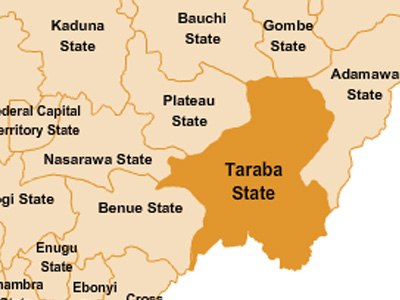
Abdulrazak Iliyasu Sansani writes from Turaki B, Jalingo, Taraba State. He can be contacted via abdulrazaksansani93@gmail.com.

Tribute to stammerers in academia

By Abdelghaffar Amoka, PhD.

Have you ever wondered why I blink rapidly while talking to you sometimes? Welcome to my world, the world of stammerers. I realised I was a stammerer while growing up, and I tried to devise ways to handle it. It is there, but I think mine is not very chronic. I tried to adopt some steps to cope with it. For example, while in primary and secondary schools, I avoided asking questions in class. Though, considered a good student, I avoided getting involved in school debate competitions, etc. Until recently, I do not ask questions in large meetings and gatherings; I instead keep quiet. Sometimes, I wondered how my voice sounds to the hearing of the people. I was afraid of listening to my voice for fear of losing my words while talking, I tried to talk fast, and I got used to it.

I was in a lecture theatre teaching Physics sometime in 2007 or so and trying to explain a concept. Then I observed something strange after talking for a while, and I stopped. Everyone was looking at me. I was like, what is the problem? Then, one of the students said, “Sir! You can rap.” And, the students and I started laughing. I honestly didn’t realise I was talking that fast, and I was glad the student was bold enough to point that out.

I didn’t realise the challenges of stammering till sometime in 1986 (I was in Primary 6) when I had an issue with my classmate, who was also a family friend. We were called to narrate what happened, and I was so angry that I lost my words. The words got stuck and refused to come, so I could not tell my own side of the story. I opened my mouth several times, and the words refused to come. I find myself smiling each time I thought of that incident. I still find it unbelievable.

Stammerers in childhood are very concerned with other people’s opinions about them. In some cases, they fight to free themselves from bullying. They have difficulty in letting go of their speech. That introduces emotion into their character. Emotional responses to situations and events exist in most humans, but they are triggered more easily in stammerers. They have a great deal of misinformation about what constitutes acceptable speaking behaviour. It is seen as okay for someone else to speak forcefully and dynamically. Still, when the stammerer speaks with any aliveness in their voice, they are perceived as coming off too strong and too overpowering.

I have this colleague who always judges me before listening to me. He is always like: “Abdel, your problem is that you are too emotional”. To him, it is always my fault even though he was not there and emotions were not involved. Even at this, the passionate ones fight the frustrations and still want to be heard at all costs. 

Stammerers see life as a performance. This is related to their need to please others. They are afraid to make mistakes because of how they might be judged. That made it difficult for them to take up responsibility. Just like me, they run away from it. Even with all the emotions surrounding stammering, I hate to pick up a fight. Not for fear of getting beaten but as a child, I don’t want to get into a fight because I do not want to get into my dad’s trouble. As an adult, I don’t want to get into a row being a bodybuilder. I am not sure of what the built arm could do! So I express the way I feel, air my opinion, and it ends there.

Academia is a place that brings about all classes of people, and among them are stammerers. It is one unique society that brings together great minds. The beauty of academia is that there is always an idea to discuss with the great minds around you. While I was at NTNU, Trondheim as a research fellow, the research group members (Elkraft) come out to eat together during (lunch) break. The Professors, Research Fellows, and the PhD students of the research group eat together at the same table.

I initially don’t join them because I was not used to having lunch by 11 am, their lunch break. They expressed their displeasure not seeing me at the table, and I had to join their 11 am lunch. I use to make pancakes that I take out for lunch. I found eating together fun. That is the only time they discuss topics outside academic and research. And there is always something new to take away after lunch. That is the power of associating with great minds.

This quote is commonly attributed to Eleanor Roosevelt: “Great minds discuss ideas, average minds discuss events, and small minds discuss people. While the academia in Nigeria is blessed with some great minds, small minds also found their way to that society meant for great minds. Rather than discussing ideas, they make their colleagues their subjects of discussion.

For example, I know I am a stammerer, and I know I am naturally emotional. I know I talk forcefully with an accompanied facial expression. It is OK if you don’t like it. As a matter of fact, you don’t have to like it. But we should talk about it as colleagues if you don’t like it rather than making it a subject of discussion elsewhere. We also have cases of lecturers blackmailing their colleagues to younger colleagues and students. They find reasons to demonise them. Why getting involved in character assassination when you can easily reach out to the colleague to engage him. Your perception and what you heard about him maybe a misconception.

Dear colleagues in academia, you are working with people of various backgrounds and characteristics to pursue truth. We don’t have to like each other. We don’t have to be friends. But we must respect each other and work together to achieve the mission and vision of the university. That is the ultimate goal. Let’s engage ourselves with an open mind; society looks up to us to shape the world. Try to know a bit about your colleagues. Stammerers have difficulty in letting go, not just in their words but across the board. They have difficulty in letting go of what they feel and in what they are willing to risk. There are other people around you with other specific characteristics. You need to understand them.

To colleagues and friends with unique characteristics like stammerers, don’t give in to bullying and blackmailing at the workplace and everywhere. Believe in yourself and your capabilities. Side talks in a place like academia are disappointing, but never let it bother you. Please take it as a part of life. Don’t join words with small minds. Be the great mind that you are supposed to be.

Dr Abdelghaffar Amoka is a lecturer from the Department of Physics, Ahmadu Bello University, Zaria, Nigeria.

Jamilu Gwamna: A philanthropist like no other

By Tajuddeen Ahmad Tijjani

Let me give due credit to a deserving personality. In contemporary Africa, it’s rare to find a man like Dr Jamilu Gwamna, who works behind the curtain to upgrade the living condition of other people. 

Jamilu Gwamna is a household name in Gombe State for obvious reasons. However, personalities are remembered for two reasons, either good or bad. For this particular person, the former is the case, not just for anything, but his vision and sacrifices on his people.

One of the gratifying achievements one can ever be proud of is investing in the life of others, knowing fully well that a bright future awaits his community and his state. You bring honour and dignity to them. Indeed, you’re an invaluable asset to the people by investing your wealth in the youths, who are the nation’s backbone.

Someone that uses his wealth to develop the minds and inculcate the spirit of youths deserves to be praised and encouraged by all and sundry. This extraordinary gentleman uses everything at his disposal to develop, direct and move Nigerian youth forward. Jamilu’s fashion for educating youth irrespective of their religion and tribe was borne out of the idea to prepare experienced young minds, retrain them, and upscale their skills to become the desired human capital for the greater good of their country.

Jamilu Gwamna is a kind-hearted, altruist and chummy gentleman that everyone wants to associate with. His gesture cannot be easily forgotten, especially in the eyes and minds of the less privileged. Indeed, he has given hope where it’s needed most. He belongs to the minority class who believes this temporary world isn’t where to lay your hands and stay, a believer of the rewards of the hereafter and leaving a legacy that benefits yet unborn generation.

This amiable patriotic Nigerian has paid his dues as a true son of Gombe soil; he deserves a standing ovation by his philanthropist work. Every human being is at liberty to spend his wealth on himself and immediate relatives, but, Jamilu chooses to give free scholarships to children in every nooks and crannies of his state, and the most beautiful aspect of it is that he doesn’t discriminate, both Muslim and Christian are beneficiaries of his gesture. The majority of sons and daughters of Gombe State are happy and delighted with his tireless effort. Contributing his quoter to the development of the people.

He shows his compassion towards uplifting the people to attend their full potentials; if not for a kind hearted gentleman who has the wherewithal to send young folks abroad, with his own money to study in different fields? He belongs to a school of thought that believes the best you can do to the youth is invest positively in their lives to stand on their feats.

I was highly impressed by his careful selection and intelligence in handling people, a sound understanding of ideas and facts. But, it’s only a tenacious, dogged somebody who has the ability of positive thinking for future generations, with the expectation of nothing in return.

Sir! You gave shoulder to cry for those that needed it. Not only that, being in contact with those people while making sure they lack nothing that would stabilise their psyche is the highest form of generosity. 

History will certainly be kind to you, as you endeared yourself to the people and won their respect. Indeed, you will be remembered for many years as someone who builds the future for yet unborn generation and one of the most honourable philanthropists who has made a difference in standing up for positive virtues.

Never in the history of Gombe had anyone done the kind of work that this extraordinary gentleman is doing. Therefore, may God, who knows the wishes and aspirations of his servants, fulfil all your heart desires, both in this world and hereafter, amin.


Tajuddeen Ahmad Tijjani writes from Galadima Mahmoud Street, Kasuwar Kaji, Azare, Bauchi State. He can be reached via sen.taju@gmail.com.

Fulani attacks, Hausa-Muslims die

By Ishaq Habeeb 

The issue that allegedly triggered the recent violence in Jos was that a fortnight ago, men believed to be Fulani militia attacked the Irigwe community and killed 40 people, burnt down an unspecified number of houses and as is their style, vanished into thin air shortly after.

A fortnight later, the aggrieved Irigwe youth decided to block a road, stopped cars, cherry-picked Muslim passengers and slain them in cold blood in reprisal to the ‘Fulani attack’ on their community. 

Now one of the secondary dangers of this barbaric culture of reprisal that’s since become a norm, in Jos, southern Kaduna and other places, is that often, innocent Hausa Muslim travellers and remote village dwellers, where few Fulanis also reside (not the actual Fulani militia), end up as victims of such Fulani militia attacks on random villages at various times for whatever bad blood they must have against such places and also of the eventual reprisals by residents of the attacked communities.

The major reason for this silly idiosyncrasy isn’t far-fetched. For the ignorant, vicious, islamophobic residents of those villages, Fulanis and Hausa are mutually inclusive, since to them, the two appear culturally and religiously homogeneous. Hence, they must share the same agenda; the common denominator here is Islam. But, other than that, I don’t see how Hausa could strike any, as Fulani, physiologically and traditionally.

The shocker to this age-long madness of confusion has now added the Yoruba Muslims to the equation, seeing that as news has it, some of the slain motorists in the Irigwe community were Ondo Yoruba Muslims who were only in Jos for a quick visit.

The sick irony in all of this is that some Fulani pastoralists are only Muslim by birth and name. That aside, the only real religion they have is ‘Fulani’ itself and the real god they really worship and can kill and die for, any day, anytime, anywhere and whoever, is their cow (“nagge“). Their cattle is what they live for and the primary essence of their existence; mess with that and win yourself a lifelong enemy.

Now one easy way to put my theory to the test is to wait until any Hausa community dares to kill or rustle Fulani cattle the way some members of those attacked communities do sometimes – whether as revenge for having their farmlands devoured by the herd or simply for evil intent as is mainly cited. Then, you would see how the Fulani militia will unleash their wrath on such Hausa community in like fashion; the Islam identity you think we share becomes immaterial.

Thank God the Hausa people are not as half as vengeful as the Fulani and those other tribes could be. Otherwise, considering the numerical strength of the Hausa people, then Nigeria as we know it would have long been history by now.

May Nigerians have a sense,
May the Nigerian government grow a conscience,
May peace take over Africa and the world.

Ishaq Habeeb can be contacted via simplyishaqhabeeb@gmail.com.

Would Jos ever be peaceful again?

By Misbahu el-Hamza

What is the major setback for peace efforts in Jos? Is it negligence from the governments? Or the ineffective or unsustainable strategies of the security forces on the ground? Could it be that God has forsaken the city for the crime of spilling innocent blood for decades? What have we done wrong, and how can we make amends?

I think the worst thing that ever happened to Jos from September 2001 to date is the systematic and deliberate disappearance of the once cherished plural community settings into a more homogeneous cultural make-up. Even though this is a product of various influences over the historical line, the major one, inarguably, is the episodes of collective violence for two-decade now in the city.

If you’ve ever been there, the communities in the city of “Home of Peace and Tourism” are now separated based on ethno-religious identity. When a particular group began to dominate another in a place, the minority will sell or evacuate and abandon their houses to move further away to avoid being surprised during crises. Everyone now has their schools. There are few to no Muslim students in the famous schools of St. Murumba College Jos and Demonstration School Jos. There are no longer Christian students in GSS Gangare Jos (save those who come to register and sit for WAEC). Some government secondary schools, which used to house students from different cultural and religious backgrounds, are now left to no use or serve their neighbouring communities. The state authorities have (in)directly invigorated this problem: it has for long forsaken the structures;  allegedly, a Christian staff is only sent to a Muslim community as ‘punishment’ and vice versa.

The most frightening thing about this systematic separation of communities is anyone who deliberately, or by mistake, finds themselves in a neighbourhood other than theirs in times of unrest might likely not make it alive. This is happening in almost all the communities in Jos. I, for instance, escaped death in 2010 when I took a passenger from Terminus Market in the heart of Jos to Satellite Market in Rukuba Road. There wasn’t any crisis going on at the time; it was the ‘usual’ ambush on anyone who enters the ‘other’ territory. Okada/Achaba men like me and travellers who do not know the city well are the usual victims of such ambushes.

Ours isn’t like the Kaduna-Abuja highway disappearance where, if you don’t hear from your relative again, you will be praying and expecting a call from his abductees. No, in Jos, as a Muslim or Christian, you spray mats and begin to welcome people as you mourn the lost person in absentia. It’s this terrible.

The actors in all this? Mostly the youth. The youths who we always sing to be the “leaders” of tomorrow. The tomorrow that’s yet to come in Nigeria. Could one be right to ask how Jos could ever find peace if this is the path it has chosen for itself?

Despite all this sad reality, we all meet up in the marketplaces (basically the ones at the borderlines, which are easy to escape should the devil blow the horn) during the day. We enter the same busses to and from Bukuru. We meet and interact in the banks. Surprisingly, our boys and girls meet up during the weekends to party. In some instances, boys take girls home for further profligacy after partying. Somehow, we all agree to live like this. We only disagree with sleeping with our eyes closed as neighbours, devoid of any quarrel.

Posing the question of whether we truly need one another in Jos, earlier this morning, a school principal, Abubakar Nasiru, made the following point on his Facebook page:

“The mai ruwa, mai nama, mai gwanjo, etc., are hawking in areas like Gada Biyu, the Jentas, Rukuba Road, Apata, Busabuji, rendering their services to those communities every day – non-Hausa, non-Muslim communities. [On the other hand] The mai doya, mai atile, mai masara, mai tumatur, etc., carry out their petty businesses in places like Bauchi Road, Dilimi, Gangare. Rikkos, Nassarawa, and Anguwar Rogo – Muslim communities.” These people spend the whole day in those communities and cannot hesitate, if guaranteed safety, to spend their nights there.

In 2006 when I was in SS3, my community leaders recruited able youths, including myself, as Ƴan Sintiri (watchmen), to serve under the Banga (a mispronunciation of “Vanguard”) group, which has its history from the ‘70s and ‘80s. Our task then was to defend our four borders against any intruder during the night and to prevent the harassment of non-community members during the day. So we worked in batches to substitute other groups. This significantly helped, and in no time, other communities adopted the strategy. This gave birth to today’s form VGN in most districts of Jos. (VGN has been a registered semi-official citizen policing organisation with Nigeria’s Corporate Affairs Commission since 1999, though.)

But does the VGN give us the peace and courage to live under the same roof or as neighbours? Certainly no. The separation of communities based on ethno-religious identity will continue to hinder any peacebuilding effort in the tin city.

We cannot have peace until we tolerate each other. We cannot tolerate one another until we accept to live as neighbours. We need to respect our identities and use our diversity as strength just as we used to be 3 – 4 decades ago, to sleep with our eyes closed without an iota of fear that my neighbour will set my house on fire.

For years now, we’ve been deceiving ourselves with so-called programmes for peace, only to gather, quench our thirst for partying and separate back into the borderlines. This, too, must stop.

Plateau state government must be sincere in its dealings. It must engage honest stakeholders from all communities to drive its mission of restoring peace on the Plateau. Schools must be treated equally, so much as every perpetrator must face the consequences of their actions without consideration whatsoever. There must be sincere and rigorous campaigns to rebuild Jos to its past glories; Jos people must co-exist as neighbours irrespective of ethnicity or religion. Otherwise, Plateau is, in general, no doubt a failed state!

Misbahu el-Hamza is a freelance journalist based in Kano and can be reached via misbahulhamza@gmail.com.

The cow is not Fulani

By Ahmadu Shehu, PhD.

There is this misleading argument that the government should not support cattle breeding and animal husbandry and that public funds cannot, and must not be invested in any way, to develop the livestock sector in Nigeria. The protagonists of this opinion argue that livestock production is a private business, and as such government should not invest “taxpayer money” to develop the sector. They hold that other citizens provide everything to run their businesses, often citing examples with shop owners, mechanics, transporters, etc. Therefore, in their minds, livestock producers – and millions of Nigerians engaged in the sector – should not receive any form of incentives from the government – financial or material – to enhance their businesses. Well, I know that for most dispassionate and well-meaning Nigerians, the faults in this line of argument are crystal clear. However, as illogical, naïve and vividly absurd as this argument sounds, there’re still Nigerians who believe in and are continuously promoting it, hence the focus of this article.

The whole argument advanced in this line of thought is often faulty, funny, and absurd. For instance, the people fighting against this would be found complaining severely of the government’s failure to provide enabling environments, such as electricity, convenient shelters, and other critical facilities necessary for their trades and businesses. But, the same people deliberately refuse to accept that it is equally the responsibility of the same government to provide enabling environment for all sectors of the economy – including livestock – to thrive. That is the extent to which the Nigerian public discourse is polarised.

Such people feign ignorance of the fact that government spends billions of naira to subsidise and support crop production, which is in the same category as animal husbandry. For decades, the federal government has been sinking billions in fertiliser and agrochemical subsidies and providing single digit loans to farmers and stakeholders in the crop production sector. It is common knowledge that these sub-sectors complement each other and that they are not mutually exclusive. The serial failures of successive governments’ agricultural policies may not be unconnected with the dislocations caused by this partial approach, as the livestock sub-sector heavily influences the Nigerian agricultural sector. Interestingly, however, the self-acclaimed defenders of the free market do not agitate against the government involvement in a “private business” of farming, as if all the farms in Nigeria belong to the government.

Moreover, our darling oil and gas industry is, unfortunately, one of the cruellest beneficiaries of government interventions and subsidies. For many decades, Nigeria has provided a conduit for oil marketers to make billions out of public funds in the name of oil subsidy, without recourse to the economic (dis)advantage it portends. Similarly, the industrial sector engulfs billions under the Bank of Industry and CBN interventions, where producers, factories and businessmen and women are supported to do business. Similarly, the aviation industry consumes billions from the government every year and uses airports and facilities provided 100% from the public purse. Moreover, all Nigerian ports and rails on which business people feed fat are provided and maintained by the taxpayer money. We can go on and on. 

I assume that people adamant on this argument are not actually against the government’s intervention in any economic sector. Their actual grievances are the particular target sector and the perceived beneficiaries of such investments in Nigeria. It is motivated by the social ills of hatred, provincialism, ethnic, religious and regional chauvinism that define the Nigerian social space and the highest form of ignorance. If the hatred is for the cattle, the livestock sector is not all about cattle. Similarly, if the envy and malice are towards the Fulani – the perceived cattle owners – the cows are actually not Fulani. This line of thought is also evidently illogical, uninformed and oblivious of what an economy is all about. That is because it fails to recognise that a sector of an economy cannot exclusively benefit only a section of the population. It may be true that cattle are the central concentration of the Nigerian livestock and that they are identified mainly with the Fulani, but the truth of the matter is that the Fulani are not the most significant economic beneficiary of cattle. They are, in fact, at the bottom of the list. I will explain.     

The Fulani might be the initial owners of the cattle (assuming they are not just employee-herders), but they are not the dealers at the cattle market. While they had spent years growing cattle, day-in-day-out, a dealer trades off the cattle and earns a decent living. Another dealer buys and transports it to other parts of the country, such as the southeast, and makes a profit upon selling it to local cattle dealers, who also earn their living by selling to consumers. The Fulani do not own the trucks that transport these cattle; neither are they the drivers, or other employees working in the transportation sector, all of whom are beneficiaries of the cattle value chain.

The Fulani are not the local butchers whose livelihood depends on the cattle produced by the Fulani that they love to hate. While cattle are the source of the multibillion-naira leather industry in Nigeria, a Fulani has no business being a tanner, skin dealer or exporter. The Fulani produce cattle, but they do not sell bones, blood and other minerals derived from cattle. They are not the owners of the local companies in Port Harcourt, Warri, Enugu or Lagos that use the beef, dungs, skin and other raw materials extracted from cattle. In the dairy sector, the Fulani may produce milk and even sell it out, but they are not the owners of the dairy companies littered all around this country.

Yes, the Fulani love the cow, but they do not own the businesses within the cattle economy. They are unaware and genuinely do not care who makes what out of the cattle they spend many years growing. But for bigotry and subjectivity, these facts are not difficult to grasp. The whole scenario should not be too difficult to understand. Still, let me borrow the language of the cynics to boldly say that given the raw material and mineral resources inherent in cattle, and the role of the Fulani in cattle production, several sectors of the Nigerian economy as well as the billionaires controlling those sectors depend on the Fulani to thrive.

Furthermore, the Fulani provide a whole chain of employment, from the herders to the traders, transporters, butchers, restaurants, and other giant industries. Yet, they are erroneously assumed to be the only beneficiary of this endless economic chain. I do not know a single ethnic group in Nigeria that could match this contribution, and at the same time, bear the brunt of negligence, alienation and even aversion from the society they serve and the economy they support.   

When people argue against investing taxpayers’ money into this sector, I wonder what tax they are precisely talking about. If this is a result of ignorance, let me highlight the tax chain obtained within the livestock value chain. Apart from the taxes paid during herding, cattle are taxed at all markets by the governments; the cattle transporters pay taxes; butchers, tanneries, factories, etc., that deal in the value chain pay heavy taxes to the governments. There are very few sub-sectors that generate this kind of taxation within the Nigerian economy. Therefore, to argue that the livestock sector cannot be funded by “taxpayers’” money is to betray logic.

The preceding discussion shows that even though the Fulani are in love with the ancient traditional human occupation of herding, they do not do so because they are the biggest economic beneficiary of the trade. If anything, the Fulani subsidise the beef and dairy markets, create and sustain millions of jobs, and maintain an extensive value chain, which is crucial to the Nigerian economy. Therefore, if you hate the Fulani, please know that the cow is not Fulani. 

Dr Ahmadu Shehu is a nomad cum herdsman and an Assistant Professor at the American University of Nigeria, Yola. He is passionate about the Nigerian project.