News

Sokoto Advancement Forum Postpones Youth Drug Abuse Summit Due to Last-Minute Venue Denial

By Dahiru Kasimu Adamu 

The Sokoto Advancement Forum has postponed its scheduled summit on youth drug abuse in Sokoto State following a last-minute denial of its venue.

The brainstorming session, aimed at examining the growing challenge of drug abuse among Sokoto youth, was slated for today, May 2, 2026, at the Sokoto Guest Inn. This was according to an earlier press release signed by Associate Professor Sajo Muhammad Sanyinna, Chairman of the Forum’s Media and Publicity Team.

However, the event was abruptly called off after the management of the Guest Inn informed organisers late Friday evening that the programme could not be held.

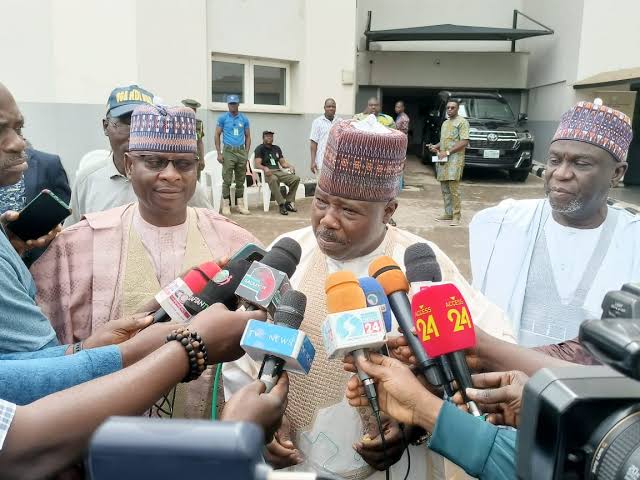
Addressing journalists at the venue, Professor Riskuwa, speaking for the Forum, thanked invited guests and members of the press for honouring the invitation and apologised for the inconvenience.

“Sokoto Advancement Forum thanks our invited guests for honouring our invitation to this brainstorming session on curbing drug abuse. Due to unforeseen circumstances, we have had to postpone this activity to a later date,” Prof. Riskuwa said. 

He added: “Details of the reasons behind this postponement will be issued to newsmen. Once again, we sincerely apologise for the inconvenience. In sha Allah, we will keep you informed of the new date and venue for the brainstorming session, as well as of all our future activities. We pray Almighty Allah continues to bless our state and guide us to the right path.”

An apology letter signed by the Forum’s Secretary-General confirmed the development. It stated that the management of Sokoto Guest Inn contacted the Forum late on Friday, May 1, 2026, directing that the programme not be held. The hotel refunded the fees paid for the venue and, according to the letter, “stated clearly that the powers that be have insisted against the conduct of the brainstorming session.”

“It is pertinent to mention that all necessary arrangements were made for the conduct of the programme, but late evening of Friday, 1 May 2026, the attention of the Forum was drawn by management of Sokoto Guest Inn that the programme should not hold,” the letter read.

The Forum emphasised its non-partisan stance and reaffirmed its commitment to the development of Sokoto State.

“It is worth mentioning that Sokoto Advancement Forum remains undaunted in its commitment to contribute its quota to the development of Sokoto State in all areas of human endeavour. The Forum has remained non-partisan and will continuously seek the support of Government and all patriotic citizens in pursuit of its objectives,” the statement added.

Efforts to get a response from Sokoto Guest Inn on the reasons or individuals behind the venue denial were unsuccessful at press time.

However, some members of the Forum, who spoke off the record and requested anonymity, blamed political actors they believe view the Forum as a threat. They cited previous difficulties in securing venues in their earlier programs, noting that the current event was earlier scheduled to be held at Umaru Ali Shinkafi Polytechnic before “some issues arose” that forced a change.

“Even this event was earlier scheduled to be held at Umaru Ali Shinkafi Polytechnic, but some issues arose, and we were denied,” one member said.

The Sokoto Advancement Forum comprises high-profile figures, intellectuals from institutions within and outside Sokoto, and Islamic clerics. The Forum, which describes itself as non-partisan, was said to have organised the summit in response to rising criminal activity and in light of the 2027 political atmosphere, to engage stakeholders in tackling the menace of drug abuse in the state.

Before the postponement, the venue was already filled with distinguished attendees. Islamic scholars, including Professor Mansur Ibrahim Sokoto, MNI, as well as intellectuals from institutions within and outside Sokoto, high-profile dignitaries, members of the press from local, national, and international media organisations, and prominent social media influencers, had all arrived to cover the event.

Tinubu Shifts Departure Date For France, Kenya, Rwanda Trip To Sunday

By Sabiu Abdullahi

President Bola Tinubu has postponed his planned departure for an official visit to France, Kenya, and Rwanda.

Bayo Onanuga, the special adviser to the president on information and strategy, had earlier announced on Friday that Tinubu would leave Abuja on Saturday. He said the president would first head to France before travelling to Nairobi, Kenya, to attend the Africa-France summit.

However, Onanuga later issued another update on Saturday through his X handle. He stated that the president would now begin the trip on Sunday instead of the earlier scheduled date. He did not state any reason for the adjustment.

In the earlier statement, Onanuga explained that the Africa-France summit would be co-chaired by French President Emmanuel Macron and Kenyan President William Ruto. He said discussions at the meeting would cover energy transition, green industrialisation, digital transformation, restructuring of the global financing architecture, and climate action.

He added that Tinubu is expected to take part in the summit, which is billed for May 11 and May 12. The participation, he said, forms part of efforts to deepen strategic ties between Nigeria, other African nations, and France.

The summit carries the theme, “Africa forward: Africa-France partnerships for innovation and growth”. It will gather leaders from Africa and France to discuss issues such as economic transformation, climate resilience, infrastructure, youth development, technology, and peacebuilding.

Onanuga also disclosed that after the Kenya meeting, the president will travel to Kigali, Rwanda. There, he will attend the Africa CEO forum scheduled for May 14 and May 15.

The forum, with the theme “Scale or Fail”, will bring together business leaders, investors, and policymakers. They are expected to examine ways to boost economic growth through regional cooperation and cross-border investment.

Pantami Distances Self From Controversial Facebook Post, Suspends Admin

By Sabiu Abdullahi

Former Minister of Communications and Digital Economy, Professor Isa Ali Pantami, has disowned a controversial message shared on his Facebook page. He said the post, which described critics and non-supporters as hypocrites, did not have his approval.

In a statement issued on the same platform, Pantami explained that the content was published by one of the page administrators without his consent.

He said, “My attention has been drawn to a post on this page by one of the admins, containing a strongly worded message suggesting that anyone who does not support Prof. Pantami is a hypocrite, and that any cleric who does not support him is equally a hypocrite. I would like to state clearly that this message was not authorised by me, nor does it represent our approach to leading the affairs of our state. Furthermore, the admin in question has been placed under suspension until further notice.”

The former minister stressed that political engagement should allow room for differing opinions. He noted that respect for all individuals must be upheld, regardless of their views or affiliations.

Pantami also stated the importance of criticism in leadership and public discourse. He stated, “First, it is important to note that in politics, everyone is valued and respected, regardless of sectarian differences. Moreover, as an administrator, academic, former Minister, and, most importantly, a religious cleric myself, I understand the value of criticism. It is a vital ingredient that shapes discourse, upholds standards, and sustains development.”

He further reiterated his commitment to inclusive leadership, especially in a diverse society. According to him, “I would also like to state that, as a politician aspiring to lead a heterogeneous, multi-ethnic, and multi-religious society, I am for everyone. Islam equally enjoins every leader to be just to all, irrespective of differences, and I hold firmly to these values.”

Pantami added that his team reflects a mix of backgrounds and beliefs. He said, “It is also noteworthy to reiterate that my team comprises individuals of impeccable character from diverse ethno-religious backgrounds. It includes people of different faiths, both Christians and Muslims, as we understand that our diversity across many dimensions makes us stronger and greater as a people.”

He ended the statement with a brief note of appreciation to his supporters and followers.

Empowering Nigerian Youth for Climate Action

By Esther Remilekun Abidoye

Climate change is no longer a distant concern; its effects are increasingly visible in every part of Nigeria. Rising temperatures, erratic rainfall, desertification, floods, and droughts are disrupting lives, threatening livelihoods, and weakening the nation’s environment, economy, and public health.

While every segment of society feels these impacts, young people are among the most affected. This is because many depend directly on natural resources and environmental stability for their daily survival and future prospects. Yet, Nigerian youth also hold the greatest potential to lead the fight against climate change due to their energy, numbers, creativity, and adaptability.

Mobilizing Youth for Climate Action

Governments, NGOs, and research institutions can play a vital role in empowering young Nigerians to take action. One effective way is through awareness campaigns. Youth are the most connected demographic in today’s digital world, with social media providing an accessible platform to share information, educate communities, and advocate for change. By equipping young people with knowledge and communication tools, they can become powerful voices spreading climate awareness across Nigeria.

Sustainable Agriculture and Green Jobs

Another promising avenue is sustainable agriculture. Training and equipping youth with eco-friendly farming techniques can help reduce environmental degradation while generating income. With proper funding, access to modern tools, and technical support, young farmers can adopt climate-smart practices that boost food security, create jobs, and protect the ecosystem. Both urban and rural youth stand to benefit from such programs, making them central to Nigeria’s environmental and economic resilience.

Tree Planting and Environmental Stewardship

Youth involvement in tree-planting initiatives can also promote environmental protection and wealth creation. Communities could designate land for economic tree planting, allotting small plots to individuals or groups of young people. Over time, these trees would not only enrich biodiversity and combat desertification but also provide financial returns when mature. Greening Nigeria’s cities and towns through such schemes can transform urban landscapes, generate employment, and foster a culture of environmental stewardship.

Technology and Renewable Energy Innovation

Nigeria’s tech-savvy youth can further drive progress through innovation in renewable energy. Training young people to design, fabricate, and maintain solar or wind-powered systems can create new green industries. This approach not only addresses energy challenges—especially with frequent power outages and the removal of fuel subsidies—but also encourages local manufacturing and entrepreneurship. Despite challenges like fluctuating fossil fuel prices and material shortages, the growing awareness and acceptance of renewable energy across Nigeria point to an opportunity for youth-led innovation.

In conclusion, engaging youth in climate action is not just a strategy; it is a necessity. By investing in awareness, sustainable farming, tree planting, and renewable energy initiatives, Nigeria can harness the power of its young population to tackle climate change head-on. Empowered youth bring creativity, energy, and determination, ensuring that environmental protection becomes a shared mission for a sustainable future. Through these collective efforts, Nigerian youth can truly become the driving force behind a greener, more resilient nation.

Esther Remilekun Abidoye, Department of Mass Communication, University of Maiduguri.

CGC Adeniyi Moves To Strengthen Nigeria-UAE Trade, Customs Ties

By Sabiu Abdullahi


The Comptroller-General of Customs, Bashir Adewale Adeniyi, has held talks with officials of the United Arab Emirates (UAE) Embassy in Abuja to boost trade relations and deepen customs cooperation between both countries.

The meeting took place on April 29, 2026. Both sides restated their commitment to improving bilateral trade and enhancing collaboration between the Nigeria Customs Service and its UAE counterpart.

During the engagement, the UAE Ambassador to Nigeria, His Excellency Salem Saeed, congratulated Adeniyi on his emergence as Chairman of the World Customs Organization (WCO). He described the development as a major achievement for Nigeria and the African continent.

The ambassador commended the leadership of the Customs boss and his team. He said their efforts have strengthened ties between both nations, especially in the area of non-oil trade.

“We have achieved a substantial increase in non-oil trade from the year 2023 to 2025. Despite the challenges over the years, this remains one of the best relationships we have had,” the Ambassador said.

He revealed that a Memorandum of Understanding has already been forwarded. He explained that the agreement is meant to improve cooperation in trade facilitation and customs administration.

The envoy also described Adeniyi as one of the most valued guests received by the embassy. He added that the Customs management team has played a key role in sustaining Nigeria’s trade growth.

In his response, Adeniyi appreciated the reception and expressed confidence in the future of the partnership. He said the meeting would open a new phase in the relationship between Nigeria and the UAE.

“We are happy to work with the UAE to show the true nature of trade. We also want to make trade easier, especially for SMEs, and use your embassy to bring Customs administrations together,” Adeniyi stated.

The Customs boss noted that trade between both countries has improved in the past two years. He assured that the Nigeria Customs Service will continue to engage stakeholders to improve efficiency and support legitimate trade.

He also called for closer cooperation to address activities that harm Nigeria’s image abroad. He said such collaboration would strengthen security, build trust, and support economic growth.

BREAKING: Bauchi Governor Bala Mohammed Dumps PDP, Joins APM

By Sabiu Abdullahi

Bauchi State Governor, Bala Abdulkadir Mohammed, has officially left the Peoples Democratic Party (PDP) and joined the Allied Peoples Movement (APM) after weeks of consultations.

He made the announcement on Saturday at the Government House. His decision comes after prolonged uncertainty about his political direction. The uncertainty followed the internal crisis within the PDP.

The governor had earlier described the party as “headless”. He also showed readiness to consider other political platforms. Observers believe his exit could weaken the PDP and affect its grassroots strength.

Speaking on the recent Supreme Court ruling on the PDP leadership dispute, Mohammed said the judgement stopped any group from taking total control of the party. He explained that neither his faction, led by Kabiru Tanimu Turaki (SAN), nor the group loyal to the Minister of the Federal Capital Territory, Nyesom Wike, achieved full victory.

“We have succeeded in ensuring that no single individual hijacks the party,” he said.

In an interview with BBC Hausa Service, the governor stated, “As democrats who respect the rule of law, we accept the judgement. But it is not a victory for anyone.”

He added that the party’s Board of Trustees would manage its affairs for now. He said this arrangement would remain until a caretaker committee is formed in line with the party’s constitution.

Mohammed also accused Wike of acting against the interests of the PDP. He alleged that the FCT minister and his allies maintain links with the ruling All Progressives Congress (APC).

The governor said his defection aims to provide a stable political platform for his supporters ahead of the 2027 general elections.

“Our hearts remain with the PDP, but politically we must move forward,” he said.

He also confirmed plans to contest the Bauchi South Senatorial seat in 2027. He noted that his move to the APM followed consultations with other political parties.

Trump Says US Hostilities in Iran Have Ended, Floats Possible Action in Cuba


By Sabiu Abdullahi

President Donald Trump has notified the United States Congress that military hostilities against Iran have come to an end, while also raising the possibility of military action against Cuba.

In a letter sent on Friday, the president said the campaign, which started on February 28, had reached its conclusion after a ceasefire that began on April 7, 2026, remained intact. The development coincides with the 60-day limit set by the War Powers Act for unauthorised military engagements.

“The hostilities that began on February 28, 2026, have terminated,” Trump wrote. He added that the US military would keep a strong presence in the region to counter what he described as an ongoing threat from Iran.

Despite the formal tone of the letter, Trump struck a different note during an event in West Palm Beach, Florida. Speaking to supporters, he suggested that US naval forces deployed in the Persian Gulf could be redirected toward Cuba.

“We’ll do it on the way back from Iran,” Trump told the audience, referring to the USS Abraham Lincoln aircraft carrier as monitored in CNN. “We’ll have that come in, stop about 100 yards offshore, and they’ll say, ‘thank you very much, we give up.'”

The remarks have drawn concern from international observers. Many see them as a sign that the administration may still be open to pursuing regime change, especially after the February 28 strikes that reportedly killed senior Iranian officials, including the country’s Supreme Leader.

At the same event, Trump praised the US Navy’s operations in the Strait of Hormuz. He spoke about the seizure of an Iranian cargo vessel and likened the operation to a lucrative venture.

“We took over the cargo, took over the oil. It’s a very profitable business,” he said, after explaining how forces used tugboats and boarded the ship.

Since April 13, the United States has maintained a maritime blockade around Iranian ports. Washington says foreign vessels can pass through, as long as they do not make payments to Iranian authorities. Analysts say the measure has severely affected Iran’s shipping activities.

Although active fighting has stopped, efforts to reach a lasting agreement have not succeeded. Talks held in Islamabad, Pakistan, ended without progress. Trump expressed dissatisfaction with Iran’s latest proposal.

“Frankly, maybe we’re better off not making a deal at all,” he said, indicating that the US could continue its pressure tactics, including the naval blockade.

The operation, known as Operation Epic Fury, has caused widespread damage across the Middle East. Reports indicate that thousands of people have been affected since the initial strikes in February.

Even with the official end of hostilities, tensions remain high. US authorities continue to monitor the situation closely, especially regarding Iranian-aligned groups in the region.

China Removes Import Tariffs For Most African Countries, Excludes Eswatini


By Sabiu Abdullahi

China has lifted import tariffs on goods from 53 African countries. The new policy grants duty-free access to almost all nations on the continent, except Eswatini.

The measure took effect on Friday. It applies to African countries that maintain diplomatic relations with Beijing. Eswatini remains the only country left out because it has formal ties with Taiwan, which China considers part of its territory.

China had earlier removed tariffs on products from 33 least-developed African countries in December 2024. The latest move adds 20 more countries to the arrangement. According to Global Times, these nations will enjoy preferential duty-free access until 30 April 2028.

The Chinese Ministry of Commerce said the decision would boost the competitiveness of African exports in its market. Products expected to benefit include cocoa from Côte d’Ivoire and Ghana, citrus and wine from South Africa, as well as coffee and avocados from Kenya.

Officials also said the policy could support the growth of processing industries across Africa and attract more investment into the sector.

Lin Jian, a spokesperson for China’s foreign ministry, described the move as an “expression of China’s willingness to voluntarily expand openness and assume more international responsibilities”.

“It aims to share opportunities with Africa and achieve common development,” he said.

China remains Africa’s largest trading partner. In 2025, it imported goods worth more than £90 billion from the continent. This represents an increase of 5.4 per cent compared to the previous year. Total trade between both sides reached £255 billion.

The chairperson of the African Union Commission, Mahmoud Ali Youssouf, welcomed the development. He said the policy was “very timely” as African economies face global economic challenges and rising protectionist measures.

“I would like to express, on behalf of the African Union Commission, our sincere gratitude for this very brotherly gesture that all Africans appreciate,” he said.

The tariff removal forms part of China’s broader economic plan under its 15th Five-Year Plan covering 2026 to 2030. The plan focuses on expanding market access and strengthening trade and investment ties.

Lauren Johnston, a research fellow at the AustChina Institute, said the expanded access could increase agricultural exports. She noted it may also “help elevate rural incomes, improve rural productivity, and ultimately reduce hunger and poverty”.

However, some experts believe tariff cuts alone may not solve Africa’s trade challenges. Jervin Naidoo, a political analyst at Oxford Economics Africa, said that “many African economies still face structural constraints such as limited industrial capacity, weak logistics, and reliance on raw commodity exports, which tariff reductions alone cannot address”.

Trump Orders Withdrawal Of US Troops From Germany Amid Rift Over Iran War

By Sabiu Abdullahi

The United States has announced plans to withdraw about 5,000 troops from Germany, a key Nato ally, as tensions deepen between Washington and European leaders over the ongoing war with Iran.

The Pentagon confirmed the decision on Friday. The move follows a dispute between former President Donald Trump and German Chancellor Friedrich Merz. The disagreement centres on comments made by the German leader about the conflict.

A senior Pentagon official, who spoke on condition of anonymity, criticised Germany’s recent statements. The official said they had been “inappropriate and unhelpful”.

“The president is rightly reacting to these counterproductive remarks,” the official said.

Germany remains the largest base for US military operations in Europe. More than 35,000 American troops are currently stationed in the country. The location serves as a major hub for training and logistics.

Earlier in the week, Mr Trump warned that he could reduce troop levels after exchanging words with Mr Merz. The German chancellor had said Iran was embarrassing the United States during negotiations aimed at ending the war.

“An entire nation is being humiliated by the Iranian leadership, especially by these so-called Revolutionary Guards. And so I hope that this ends as quickly as possible,” he said.

“The Iranians are obviously very skilled at negotiating, or rather, very skillful at not negotiating, letting the Americans travel to Islamabad and then leave again without any result.”

Mr Merz also questioned Washington’s approach to the war. He said he could not identify a clear exit strategy. His remarks highlighted growing divisions between the US and its European allies. The disagreements also extend to issues such as Ukraine and trade policies.

In response, Mr Trump criticised the German leader in a post on Truth Social. He wrote:

“The Chancellor of Germany should spend more time on ending the war with Russia/Ukraine (Where ‌he has been totally ineffective!), and ⁠fixing his broken Country, especially Immigration and Energy, and ⁠less time on interfering with those that are getting rid of the Iran ‌Nuclear threat, thereby making the World, including Germany, a ‌safer place!”

The Pentagon said the troop withdrawal would take place over six to twelve months. Officials expect the move to return US troop levels in Europe to what they were before 2022, prior to Russia’s invasion of Ukraine.

As part of the plan, a brigade combat team will leave Germany. A long-range fires battalion that had been scheduled for deployment will no longer be sent.

The decision comes as the US increases pressure on its allies over the Iran conflict. Washington has urged Nato members to support efforts to reopen the Strait of Hormuz, which has been largely closed since late February. The disruption has affected global energy supplies.

In a related move, Mr Trump also announced plans to raise tariffs on vehicles imported from the European Union to 25 per cent starting next week. The policy is expected to have a significant impact on Germany’s auto industry.

Kaduna Gov Uba Sani Claims No President Has Backed the North Like Tinubu

By Sabiu Abdullahi

Kaduna State Governor, Senator Uba Sani, has said President Bola Ahmed Tinubu has honoured his commitments to Kaduna State and the wider northern region.

The governor spoke on Thursday when he received a presidential delegation touring the North-West. He credited the administration with improving security and boosting infrastructure across the state.

Sani said these efforts have strengthened public support for the president. He expressed confidence that such support would translate into votes in the 2027 general elections.

He also claimed that the impact of the projects has weakened opposition parties in Kaduna, which he described as existing only in name.

“He has done a lot for us and I could remember when he visited Birnin Gwari, on the 12th of December, 2022, we went there with some of our friends here. It was a journey of about less than two hours. But it took us five hours.

“So there were two major problems we faced. Number one problem is security, because at that time, in 2022, you could travel from Kaduna to Birnin Gwari without military escort. But today, you can go there without police escort.

“Also, look at infrastructure. Today, he has fulfilled his promises. That is the reason why the good people of Kaduna will forever be grateful to President Tinubu.

“When you go to Birnin Gwari, you will see hundreds of vehicles passing to Lagos. It has improved the economic prosperity of our people who are farmers. It has improved the business of our people who are small business owners particularly those that are into farming, trading.

“All of them are making a lot of money because of what the president has done for us. Again, we are talking about the north.

“So for me, no president has supported northern Nigeria as much as President Tinubu would have done in less than three years now. And that is also why I cannot see any zone, not even the southwest, coming down to vote for him.”

The governor dismissed suggestions that Tinubu could lose the 2027 election. He said such opinions are largely driven by social media narratives.

Sani further argued that the president played an active role during Nigeria’s pro-democracy struggle, at a time he said some critics remained silent.

“Some of us were approached by then Head of State, Abdulsalam Abubakar, for a meeting, and he made it clear to all of us there will be only three recognised parties.

“But we didn’t threaten to burn down the country like the current opposition are doing. We went to the street; through the court that decision was rescinded.”

However, some northern leaders have disagreed with the governor’s position. They argue that the region has not received fair treatment under the current administration. They pointed to what they described as an imbalance in the distribution of projects between the North and the South.

At a citizens’ engagement forum organised by the Sir Ahmadu Bello Memorial Foundation in Kaduna in June 2025, Chairman of the Arewa Consultative Forum Board of Trustees, Alhaji Bashir M. Dalhatu, criticised the administration’s approach to governance.

Dalhatu said, “Two years into President Tinubu’s four-year tenure, the feeling among the people of the North is, to put it mildly, completely mixed.

“To our surprise, those who did not support him, did not vote for him, and hardly wished him well have emerged from nowhere and are now attempting to drive a wedge between him and the North.”

The Northern Elders Forum also expressed dissatisfaction with the region’s earlier support for Tinubu. In an interview published by The Guardian in April 2025, the forum’s spokesman, Abdul-Azeez Suleiman, said the North would take a different approach ahead of future elections.

Suleiman said, “The North made a mistake in voting Bola Tinubu to the presidency in 2023, and it is unlikely that they will repeat the same error in the future.”

“They have learned from their past misstep and will strive to select a candidate who can unite the country and govern in the best interests of all Nigerians.

“Moving forward, the North will be more cautious in selecting a candidate for the presidency. They will prioritize someone who is seen as more inclusive, less controversial, and more aligned with the interests of all regions of the country.

“The mistake of supporting Tinubu in 2023 has taught them the importance of unity and consensus in selecting a candidate for the highest office in the land.” he added.