Kannywood

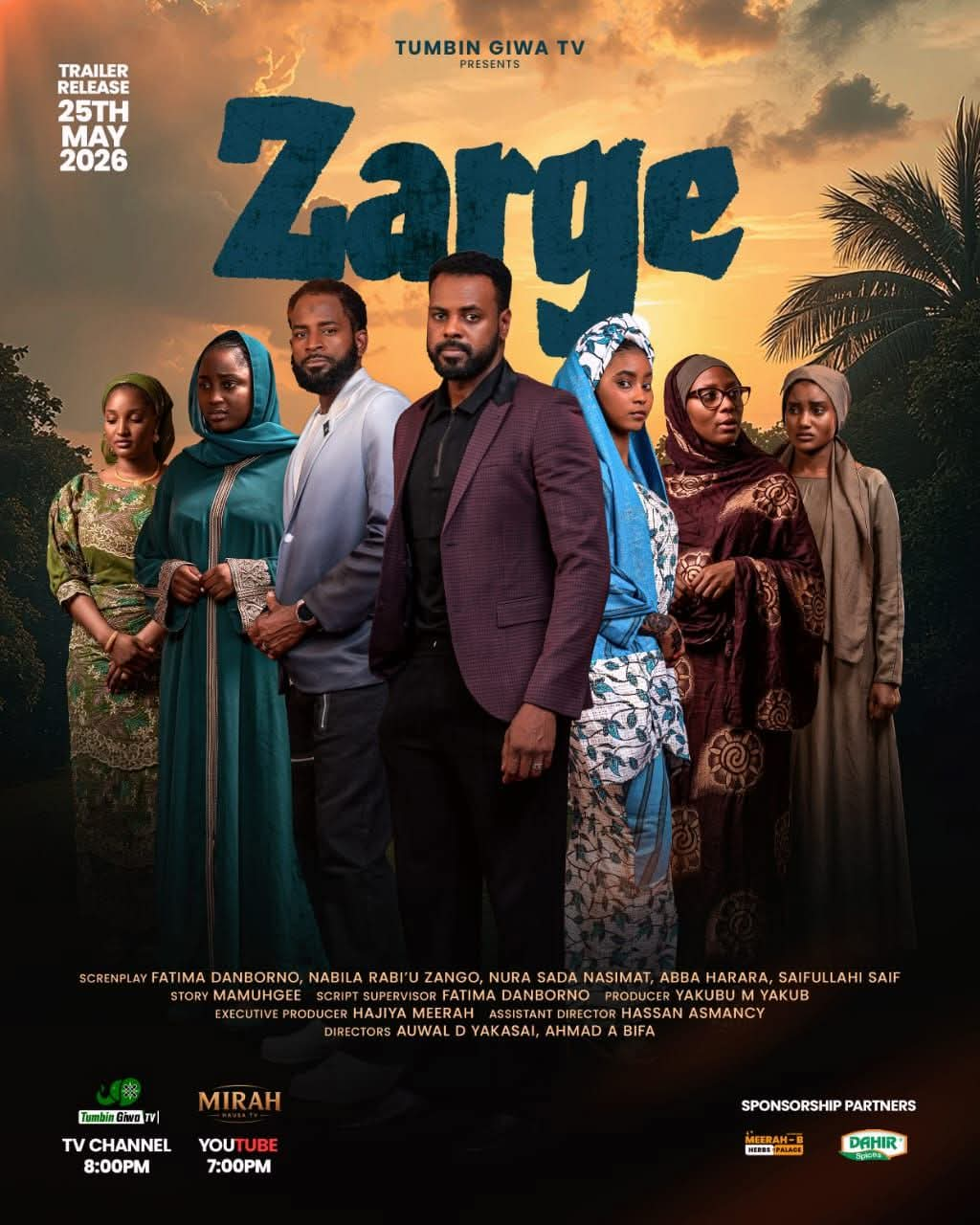
‎Kannywood Movies Review – ‘Zarge’

Directors: Ahmad A. Bifa & Auwal D. Yakasai 

‎Producer: Yakubu M. Yakub

‎Language: Hausa

‎Company: Tumbin Giwa TV

‎Premiere: 8/6/2026

‎Cast: Adam Garba, Isah Adam (Feroz Khan), Fatima Ibrahim, Maryam Booth, Maryam Yahaya, Ummusalama Inuwa, Radiya Jibril, Shatou Abdul, etc. Zarge is a Hausa word for ‘noose’, which refers to a loop of rope with a slipknot that tightens when pulled. Figuratively, the word denotes confusion or a difficult situation. The series Zarge lives up to its title, being a harrowing drama of compounding crises. 

The story revolves around Fatima (Fatima Ibrahim), a young village girl whose fate takes her away from her own family, only for her to become the saviour of another.

The series opens with Hajiya (Ummusalama Inuwa) plotting to abduct her pregnant in-law, Nafisa (Radiya Jibril), and have her unborn child killed. Meanwhile, Fatima and her friends return to their village after finishing boarding school, but their bus breaks down. As they wait for the driver to fix the vehicle, Fatima slips away and takes a forest shortcut, hoping to reach home sooner. 

Deep in the forest, Fatima finds Nafisa held captive by Hajiya’s henchmen. Nafisa attempts to escape, but her abductors chase her down. As she flees, she runs into Fatima, who has been hiding and watching. The ensuing struggle triggers Nafisa’s labour. Fatima helps her deliver the baby, and Nafisa, with her final breath, entrusts the newborn to her.

After an arduous journey, Fatima finally takes the infant home, only to face her parents’ disappointment. Assuming that Fatima has had the baby out of wedlock, they refuse to accept the situation. She therefore leaves home for the city, where she finds work as a housemaid. Ironically, she ends up in the very home of Nafisa’s in-laws, the people who wanted the baby dead. The drama continues…

Zarge is a gripping series that holds the audience in suspense, anticipating danger in almost every scene. Each episode ends with a perfect noose that you fear might tighten, especially as Fatima works in Hajiya’s house. What if she comes across Nafisa’s picture and reveals that the baby is her son? What if Hajiya discovers the truth and kills him?

However, Fatima appears to be a godsend to Nafisa’s family. Not only is she raising the surviving newborn, but she is also unknowingly saving his father, Umar (Adam Garba), without knowing who he is or his connection to the child. For instance, when Hajiya and her children plot to poison Umar, Fatima saves him by secretly replacing his poisoned food with another meal. 

The screenplay is tightly structured, with well-written character motivations that drive the plot. This makes the conflicts feel connected and engaging. The screenwriters and directors deserve commendation for bringing these elements together cohesively.

The series is also technically solid. The cinematography beautifully captures the natural forest landscapes, authentic village settings, and atmospheric night scenes. The sound design is carefully balanced, with Nazifi Asnanic’s evocative soundtrack heightening the emotional intensity.

The actors all deliver wonderful performances. Ummusalama Inuwa is effective as Hajiya, and the debutante Fatima Ibrahim is perfectly cast as the young village girl. She portrays her character’s innocence and inquisitiveness so convincingly that it is hard to imagine anyone else in the role. However, while Maryam Booth and Maryam Yahaya don’t get much scope, Adam Garba, Isah Adam (Feroz Khan), and Shatou Abdul deserve special mention.

In conclusion, Zarge is definitely one of the best series of the year. Its intriguing drama makes for an enjoyable watch. I highly recommend it.

Rating: 4/5

Reviewed by Habibu Maaruf Abdu.
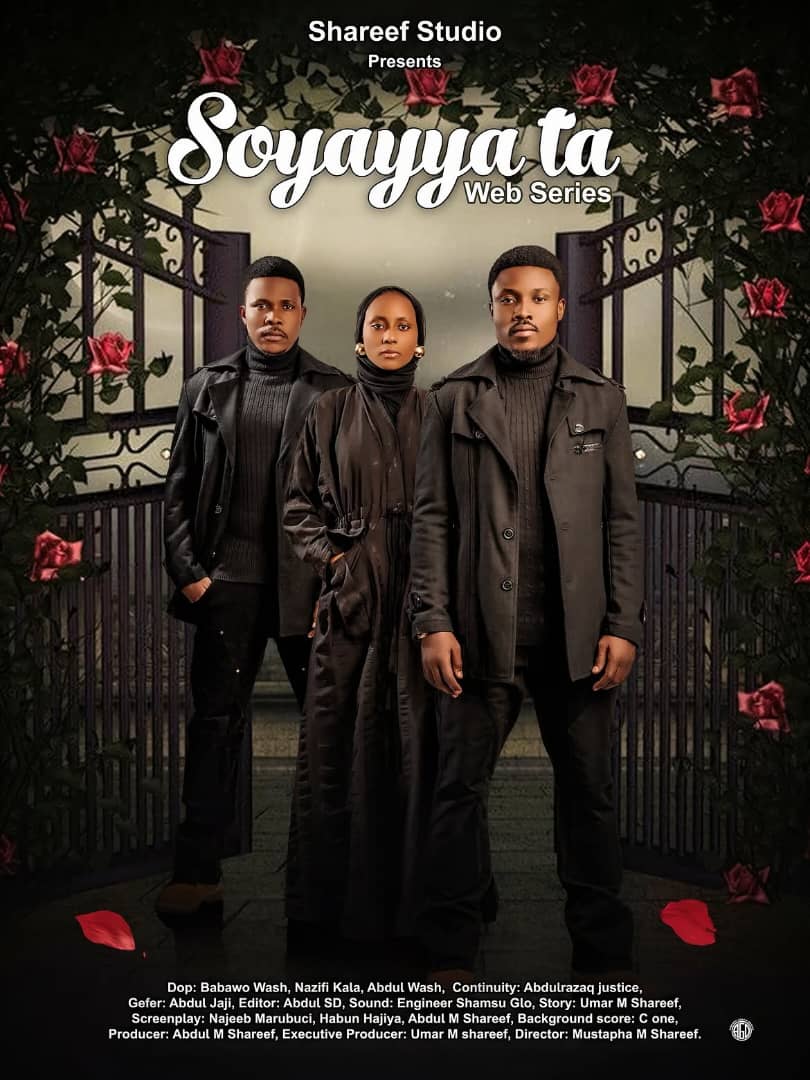
‎Kannywood Movies Review – ‘Soyayyata’

Director: Mustapha M. Shareef

‎Producer: Abdul M. Shareef

‎Language: Hausa

‎Company: Shareef Studio

‎Premiere: 16-04-2026

‎Cast: Abdul M. Shareef, Umar M. Shareef, Maryam Booth, Asmeey Wakili, Tijjani Faraga, Zainab Barka, Madina Abdul, etc.

‎The Shareef brothers, Abdul and Umar M. Shareef, seem to have a strong fondness for playing romantic heroes. This likely inspired them to produce an emotional love story in which they take on their favourite leading roles. The production, entitled ‘Soyayyata’ (Translated as ‘My Love’), also appears to be their first series under the ‘Shareef Studio’ banner.

‎Soyayyata (though they mistakenly wrote the name as “Soyayya ta”) is a romantic drama exploring unrequited love, mistaken assumptions, and the complexities of family ties. The series primarily follows a love triangle involving Abbas (Abdul M. Shareef), Zuhra (Maryam Booth), and Haneef (Umar M. Shareef).

‎Abbas and Zuhra are cousins raised together within a shared family compound. Since childhood, his mother had betrothed Zuhra to him, as is customary in Hausa tradition. Abbas grows up to love Zuhra, but she sees him as nothing more than a brother. Meanwhile, she meets Haneef at a wedding, where he falls in love with her at first sight – an affection she fortunately reciprocates even more deeply.

‎Noticing something unusual in Zuhra’s behaviour, Abbas’s younger sister, Suhaima (Madina Abdul), persuades their parents to formally approach Zuhra’s family about the intended marriage. However, while Zuhra’s father, who is Abbas’s uncle, approves, her mother rejects the proposal. Abbas also learns the painful truth that Zuhra does not love him romantically, igniting emotional turbulence and family conflict.

‎Meanwhile, Haneef’s mother opposes his choice of Zuhra because of her humble background but later concedes because of his persistence. However, his father falls ill and dies suddenly on the day of his wedding to Zuhra, setting off a chain of dramatic twists that reshape the course of the story.

‎Despite its compact premise, the series sustains engagement through the gradual introduction of new narrative layers and characters. For instance, Ilham (Asmeey Wakili), introduced in a pivotal role towards the end of Season 1, breathes new life into the story. Despite its rather slow pace, the series keeps audiences engaged with steadily mounting tension.

‎Soyayyata is indeed worth watching for its relatable theme, which resonates strongly with young audiences. It dramatises the familiar scenario of a childhood-betrothed ‘cousin’ losing out to a ‘newcomer’. Young women with early betrothal experiences will identify with Zuhra’s predicament, while those nursing a secret crush will empathise with Abbas, who suffers in silence, enduring the pain of unrequited affection.

‎Additionally, beyond its central love story, Soyayyata explores themes of class discrimination, parental materialism in marriage arrangements, and the far-reaching consequences of such decisions. It also highlights how a lack of open communication can make arranged marriages fragile enough to break even the strongest familial bonds.

‎The series, however, scores little in terms of production quality. Continuity lapses are evident, and the editing lacks finesse. Also, while the interconnection across episodes is reasonably sustained, Episode 4 largely recycles scenes from Episodes 1 and 3. Nevertheless, these shortcomings are pardonable, given the competent direction and commendable performances that make the series ultimately captivating.

‎Finally, if you are struggling to keep pace with the endless YouTube series being released every day, Soyayyata is one you shouldn’t overlook. It is well worth your time.

‎Rating: 3/5

Triple R Celebrates Maulidin Nabiyyi (SAW)

By Khalid Imam

On Tuesday, 2nd September 2026, Triple R Kannywood Renewed Hope, led by Alhaji Dauda Adamu Abdullahi Kahutu Rarara, organised a grand Maulidin Nabiyi (SAW) at the Aminu Dantata Trade Fair Complex, Kano.

The event was chaired by Alhaji Aminu Alfandaj, Head of the LOC, and commenced with a recitation of the Glorious Qur’an, followed by a welcome address by Tijjani Asase, the PRO of Triple R Kannywood Renewed Hope.

The gathering featured inspiring religious lectures, devotional songs and poetic praises celebrating the noble life, virtues and exemplary character of the Prophet Muhammad (SAW).

The atmosphere was set by a fascinating and thrilling succession of cantatas, devotional songs and poetic praises celebrating the extraordinary and stellar personality of the Noble Prophet Muhammad (SAW). The performances, delivered by some of the finest Islamic song-artists, beautifully captured their profound love, reverence and admiration for the Messenger of Allah (SAW).

Malam Nafi’u Adam Sha’iri set the floor ablaze at exactly 11:58 a.m., opening what became a deeply moving and spiritually uplifting session of devotional songs. He was followed by Sayyada Faiza Amatullah, Sayyadi Sojan Ma’aiki, Sayyadi Malam Kabiru Kiya Ambato, Malam Mustapha Zakariya and Malam Ahmad Gwangwazo, among many others.

The likes of popular composers of Soul-Stirring Cantata in Praise of the Prophet (SAW), led by Sheikh Hafiz Abdalla and Malam Bashir Ɗandago, added their melodious voices with heartfelt verses and evocative performances; the artists celebrated the noble character, unparalleled virtues, mercy, compassion and exemplary life of the Prophet Muhammad (SAW). Their renditions created a unique atmosphere of spiritual reflection and renewed love for the Messenger of Allah (SAW).

At exactly 12:27 p.m., Malam Bazallahi Sheikh Nasiru Kabara was invited to speak on Mu’amalatu Maʿaiki wa Ṣaḥabatihi—the uncommon relationship and interactions of the Noble Prophet Muhammad (SAW) with his reverential Companions. 

He described the bond between the Noble Prophet (SAW) and his Companions as one founded upon profound love, mutual respect, sacrifice, and unwavering devotion. Their relationship was not merely that of a leader and his followers; it was a remarkable bond built on faith, loyalty, compassion, trust and a shared commitment to the cause of Islam.

He also stressed that the Companions loved the Prophet (SAW) deeply, honoured his guidance, stood by him through hardship and were prepared to make tremendous sacrifices for the sake of Allah and His Messenger, citing the Battle of Uhud as one of the true tests of sacrifice that the Prophet and the Sahaba went through together. In turn, the Prophet (SAW) treated them with exceptional kindness, dignity, compassion and understanding, nurturing them into a community bound together by faith and brotherhood.

He further highlighted that the Prophet’s interactions with them therefore provided a timeless model of leadership characterised by compassion, dignified fellowship, and loyalty founded on faith. The relationship between the Prophet (SAW) and his Companions remains an enduring example of how love, respect, sacrifice and devotion can transform individuals into a united and purposeful community.

As the special Maulidin Nabiyyi session drew to a delightful close in the evening hours, several scholars took to the podium to deliver educational admonishments to members of Triple R Kannywood Renewed Hope and dozens of enthusiastic guests in attendance, urging them to emulate the noble character of the Prophet Muhammad, peace be upon him, and to use their influence in Kannywood to promote unity, discipline, and moral values in society, while prayers and commendations marked the end of the spiritually uplifting gathering.

The Everyday Lessons Kannywood Owes Society

By Ibrahim Aliyu Gurin 

The Kannywood film industry is more than an entertainment industry. It has become one of the most powerful cultural influences in Northern Nigeria. The stories it tells shape how people think, speak, and sometimes even behave. Characters become role models, and the habits they display often find their way into everyday life.

That is why this is a respectful appeal to directors, producers, and scriptwriters: as you entertain millions, also seize the opportunity to promote simple habits that make our society safer, healthier, and more compassionate.

One of the simplest ways to save lives is also one of the most overlooked. Wearing a seat belt should not depend on the distance being travelled. Whether someone is driving to the market, taking children to school, or travelling across states, everyone in the vehicle, including those in the back seat, should buckle up before the journey begins.

Unfortunately, films often show characters jumping into cars and driving away without fastening their seat belts. This unintentionally sends the message that seat belts are optional. Imagine the opposite: respected characters calmly fastening their seat belts before starting the engine, reminding passengers to do the same. Such scenes require only a few seconds but can influence millions of viewers.

Also, modern driving is increasingly threatened by distracted driving. Many people believe it is harmless to answer a quick call, read a message, or reply to a text while driving. Others assume it is safe to use their phones while waiting at a traffic light.

In reality, distraction can be deadly. Safe driving means the phone stays out of the driver’s hands until the vehicle has been parked safely. Showing heroes who ignore incoming calls while driving or politely tell callers, “I’ll call you back when I’ve stopped,” promotes a powerful message without interrupting the story.

Additionally, food is central to many Kannywood stories. Family meals, celebrations, and traditional gatherings are common scenes. Yet one simple habit is often overlooked: washing hands properly before eating or preparing food.

Handwashing properly remains one of the most effective ways to prevent many infectious diseases. A brief scene showing a family washing their hands before sharing a meal can quietly reinforce a healthy practice that protects entire households.

Mental health is another area where Kannywood can make a real difference. Too often, emotional struggles are portrayed only as spiritual attacks. Faith is important, but so are counselling, medical care, and family support. Showing them together would reflect real life and encourage more understanding.

Furthermore, people living with disabilities deserve to be represented with dignity and authenticity. Too often, disability is used merely as comic relief, a symbol of helplessness, or a tool to evoke pity.

Real life tells a different story. Across Nigeria, people with disabilities are teachers, entrepreneurs, professionals, artists, students, parents, and community leaders. They contribute meaningfully to society and deserve to see themselves represented fairly on screen.

Inclusive storytelling means giving characters with disabilities meaningful roles, realistic ambitions, and complete personalities—not defining them solely by their disabilities.

Social change does not always begin with government policies or public campaigns. Sometimes it begins with everyday habits becoming normal. This is why I hope Kannywood filmmakers become more intentional about the habits they put on screen. The greatest impact may not come from dramatic speeches or moral lectures, but from ordinary characters consistently doing the right thing.

After all, audiences often imitate what they repeatedly see. Sometimes, the lessons we never intended to teach become the ones the world remembers the most.

Ibrahim Aliyu Gurin is a graduate of mass communication from Bayero University, Kano, and can be reached at ibrahimaliyu5023@gmail.com.

Kannywood vs Nollywood: A Tale of Two Industries

By Prince Daniel Aboki

Every Nigerian has the constitutional right to support any political party or candidate of their choice. That right is guaranteed by the Constitution and should always be respected.

However, an industry cannot thrive when, every election cycle, a few individuals position themselves as speaking on behalf of everyone, mobilising groups to endorse politicians and, in the process, reducing the industry’s engagement with government to the pursuit of personal benefits.

When this becomes the dominant culture, the industry risks not being taken seriously. Government and development partners are beginning to see the industry not as a strategic economic sector but as a collection of individuals seeking patronage every four years. More often than not, the distribution of cash gifts, vehicles, and other favours also creates avoidable divisions within the industry, as practitioners become aligned with competing political interests. Instead of fostering unity around the collective growth of Kannywood, election seasons too often leave the industry fragmented long after the campaigns have ended.

Politicians understand the influence that Kannywood celebrities command, particularly in Kano and across Northern Nigeria. They know these personalities can shape public opinion, mobilise supporters, and amplify campaign messages during elections. That influence is valuable, but it should be used as a bargaining tool to secure lasting benefits for the entire industry—not for personal aggrandisement. Our collective influence should translate into meaningful negotiations for better policies, sustainable funding, stronger institutions, improved infrastructure, and greater opportunities for everyone in Kannywood, rather than short-term personal gains for a few individuals.

Kannywood is far bigger than election campaigns. It is one of Northern Nigeria’s greatest cultural and economic assets. It has the capacity to create thousands of jobs, preserve and promote our culture, strengthen social values, attract tourism, earn foreign exchange, stimulate investment, and project Northern Nigeria to the world.

What makes this even more compelling is that Kannywood has already demonstrated its commercial strength. Some of its producers operate some of the biggest and most successful YouTube channels in Nigeria, attracting millions of views and building significant audiences worldwide. That success should not remain the achievement of a few individuals. It should be consolidated into an industry-wide strategy that creates opportunities for younger filmmakers, actors, writers, directors, editors, cinematographers, musicians, and other creative professionals.

This is the conversation we should be having with those in office and those seeking public office.

Rather than seeking cash gifts, vehicles, or personal favours, we should be demanding policies that strengthen the entire industry: film villages, production funds, affordable financing, stronger copyright protection, modern cinema infrastructure, professional training, international partnerships, tax incentives, and support for participation in global film markets and festivals. That is how enduring creative industries are built.

Over the years, Nollywood has increasingly engaged government and development partners on issues that strengthen the industry’s ecosystem. The conversation has largely centred on policy, investment, institutional support, skills development, financing, and international collaboration. Individual practitioners may support political candidates—as they are entitled to—but the industry’s long-term development has remained a central focus.

This does not mean Nollywood is a perfect congregation. There have also been individuals within Nollywood who have pursued personal interests above the collective interest of the industry. However, when the two industries are compared, Nollywood has, on balance, positioned itself more effectively as a strategic partner in industry development, policy engagement, and institutional growth. Kannywood can do the same.

We must stop approaching politicians with a cap in hand every election season. An industry with this much talent, influence, and economic potential should not present itself as a sector waiting for handouts. It should present itself as a partner in development—one capable of creating jobs, generating revenue, attracting investment, promoting tourism, preserving culture, and contributing meaningfully to the economy of Northern Nigeria.

Politicians will respect Kannywood when Kannywood first respects its own value. This is not a criticism of anyone’s constitutional right to participate in politics or support a candidate. Rather, it is a call for Kannywood to recognise its collective economic power and organise itself as an industry worthy of sustained investment, strategic partnerships, and long-term development.

The question should no longer be, “Who is giving us what?” The question should be, “What policies, investments, and partnerships will transform Kannywood into one of Africa’s most competitive creative industries?”

The future of Kannywood will not be determined by what a handful of individuals receive during an election season. It will be determined by what the entire industry builds together for generations to come.

The choice before us is simple: we can continue chasing political patronage every four years, or we can build an industry that creates wealth, creates jobs, attracts investment, shapes culture, and becomes impossible for governments and the rest of the world to ignore.

Prince Daniel is “A Concerned Citizen” and a filmmaker. He can be reached via blackvillemedia@gmail.com.

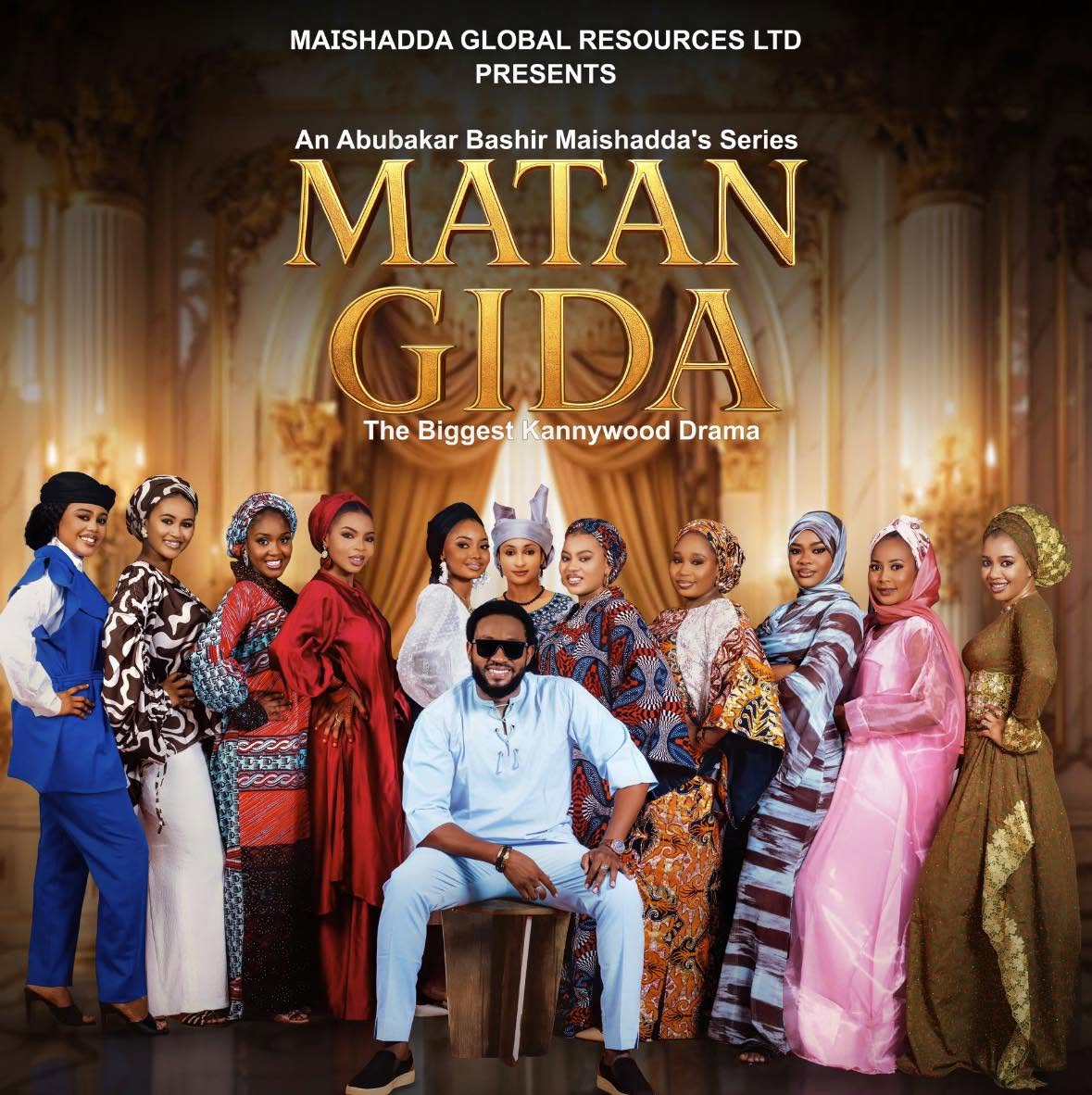
Matan Gida: The Hausa Series That Refuses to Play Safe

By Mubarak Umar

There are television series you watch for entertainment, and there are those that remind you what storytelling is truly capable of.

Matan Gida, created by Abubakar Bashir Maishadda, is one of those rare productions.

For years, Hausa television has largely remained within the familiar territory of domestic disputes, predictable romances, and neatly resolved family conflicts. Audiences have become accustomed to stories that rarely challenge expectations. Matan Gida breaks away from that tradition with remarkable confidence.

The series is driven by a screenplay that feels fearless. I can sense that when Ibrahim Birniwa opened his PC to draft Matan Gidan, he wasn’t writing to satisfy convention; he was writing to provoke thought. The script explores uncomfortable realities, moral ambiguities, power dynamics, and the hidden complexities in our everyday lives, subjects that many filmmakers have hesitated to approach. Every episode feels intentional, with dialogue that carries weight and scenes that linger long after the credits roll.

The entire cast truly deserves equal praise. The ensemble is balanced, with each actor bringing a distinct personality and energy to the screen. There is no sense of characters competing for attention; instead, every performance contributes meaningfully to the larger narrative. It is this diversity of characterisation that gives Matan Gida its emotional richness and realism.

Abubakar Maishadda deserves credit for trusting a script that challenges Kannywood’s conventional cinema. Because producing a series like Matan Gida is a creative statement. It proves that audiences are ready for mature, thought-provoking stories.

And now comes the real test.

With Season Two premiering today, expectations are high. The first season didn’t just tell a complex story—it raised the standard in Kannywood. Audiences will be expecting deeper conflicts, higher emotional stakes, more character arcs, and answers to the questions deliberately left hanging. More importantly, viewers will expect the series to preserve the boldness that made the first season stand out rather than retreat into familiar territory.

If Ibrahim Birniwa’s pen remains as fearless as it was in Season One, and if the series continues on the pedestal that challenges both the industry and its audience, Matan Gida has every chance of becoming one of the defining works of modern Hausa television.

Kannywood at a Crossroads: Moral Anxiety, Tradition, and Society in Northern Nigeria

By Ibrahim Aliyu

Over the past few decades, Kannywood has grown into one of the most influential cultural industries in Northern Nigeria. Rooted in the Hausa language, Islamic values, and local traditions, it has shaped entertainment, storytelling, and public discourse across millions of homes. For many families, Kannywood was never merely cinema; it became a reflection of identity, morality, family structure, and social values.

Yet despite its cultural importance, Kannywood continues to attract criticism from various sections of society. Some believe the industry has drifted from the moral and religious principles it once claimed to uphold. Others argue that society itself has become increasingly harsh, suspicious, and contradictory in its judgments of public morality.

Perhaps the deeper issue is not merely “bad behaviour” in the industry, but the growing tension among public morality, private intentions, and shifting social perceptions.

In Islam, unnecessary physical intimacy between non-Mahram men and women is generally discouraged, and Hausa society has historically taken such boundaries seriously and with respect. However, there was also a period in Northern Nigeria when families could sit together and watch classic Kannywood comedy scenes featuring actors such as Ibro and Tsigai without automatically interpreting every interaction through a sexual lens.

Parents watched alongside their children. Grandparents watched with their grandchildren. Communities laughed together. At the time, many viewers saw those scenes primarily as comedy, storytelling, and harmless entertainment within a familiar cultural context.

This raises an important question: What changed?

Part of the answer may lie in how modern society increasingly interprets many human interactions through suspicion and moral anxiety. The rapid expansion of social media, unrestricted internet access, celebrity culture, and exposure to explicit online content have reshaped how people perceive entertainment, gender interactions, and morality itself.

As a result, public discussions about morality sometimes become less about intentions, discipline, and character, and more about appearances and public performance. In such an environment, accusations of immorality can spread quickly, even when the cultural context or the intention is more complex.

Hausa society contains longstanding cultural traditions that show how social interaction has historically been understood within context and boundaries. Practices such as “wasan kanin miji” and “wasan kaka da jika” reflect playful social interactions that coexisted with strong family values and respect for marriage institutions. These interactions were not automatically deemed immoral because society recognised the importance of trust, intention, and communal understanding.

This does not mean boundaries should disappear, nor does it suggest that moral principles are unimportant. Rather, it highlights the need for balance, sincerity, and self-awareness when discussing morality in public life.

The danger arises when society becomes more concerned with appearing morally superior than with cultivating genuine ethical discipline. Excessive suspicion, constant public outrage, and the tendency to sexualise ordinary human behaviour can deepen social tension rather than achieve genuine moral reform.

In this sense, Kannywood is more than a film industry. It has become a mirror reflecting the wider struggles within Northern society — the struggle between tradition and modernity, religious values and entertainment culture, public expectations and private realities.

The debate surrounding Kannywood is therefore not only about actors, actresses, or films. It is also about how society defines morality, how communities respond to cultural change, and whether public conversations about ethics are guided by wisdom, balance, and sincerity rather than by fear, projection, or moral performance.

As Northern Nigeria continues to evolve socially and culturally, perhaps the challenge is not to destroy cultural institutions out of anxiety, but to engage them thoughtfully, critically, and honestly — while preserving the values that truly strengthen society.

Ibrahim Aliyu wrote via khalilnuradeen@gmail.com.

Kaddara and the Burden of Misplaced Jealousy: When Suspicion Becomes Oppression

By Lawan Bukar Maigana

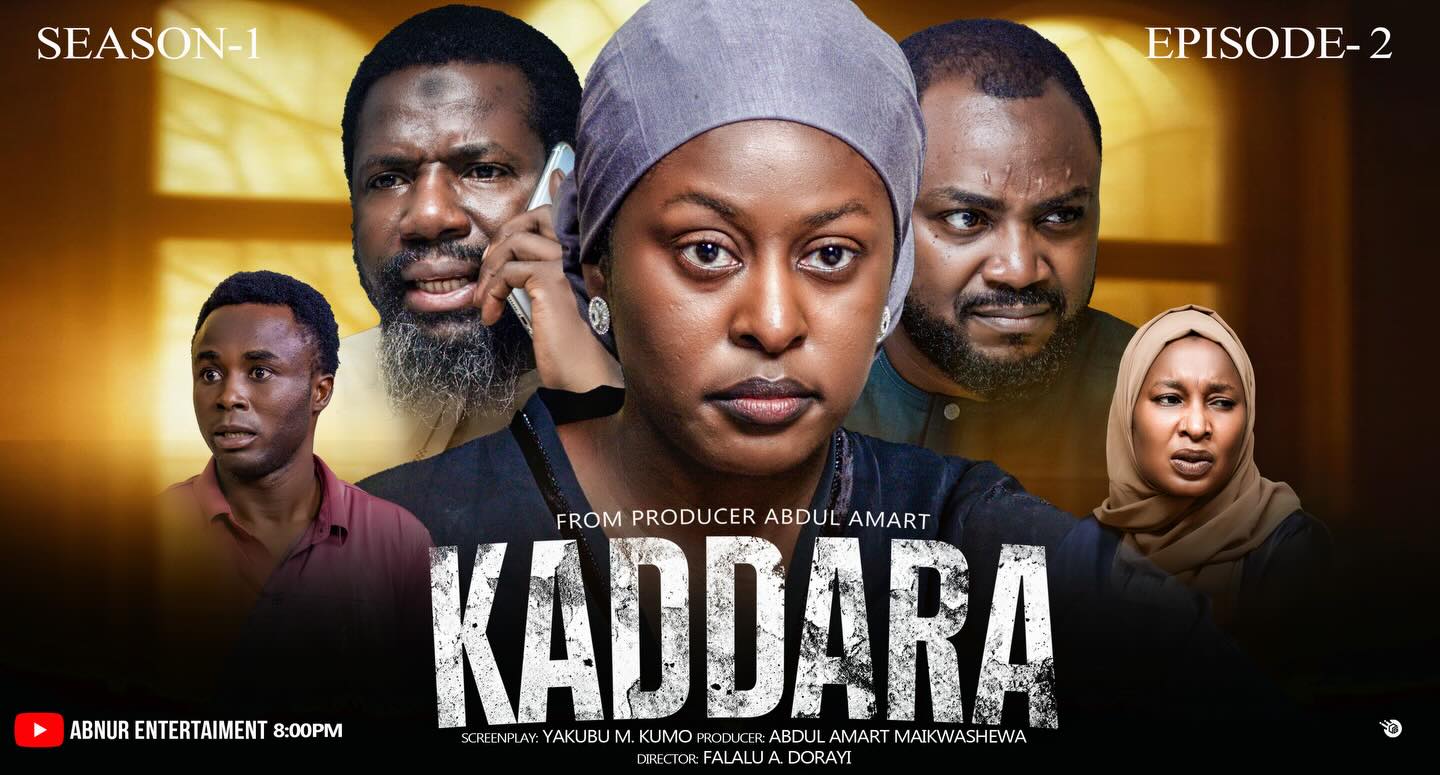
In recent times, Kannywood, the Hausa film industry, has continued to evolve with productions that spark both entertainment and reflection. Kaddara stands out as one such seasonal series that is profoundly produced and emotionally engaging. Although I have only watched two episodes so far, the quality and depth are already evident.

What makes the series particularly compelling is its bold attempt to explore complex human behaviour within marriage. It presents not just a story, but a mirror through which society can examine itself. The character of Haidar, played by Adam A. Zango, introduces a troubling but important conversation.

If a woman, by fate or circumstance, finds herself married to someone like Haidar, her life may gradually become defined by suspicion. No matter how responsible, careful, or committed she is, she may still live under constant scrutiny. This raises a sincere question. Do such men still exist in our society today?

One cannot help but ask why a man would choose to marry a woman he does not trust. Marriage, by its very nature, is built on trust, understanding, and mutual respect. When suspicion becomes the foundation, the relationship is already standing on fragile ground.

Another striking element of Khaidar’s character is his decision to prevent his wife, Maimuna (played by Nafisa Abdullahi), from working. This is not just a personal preference. It directly dismisses the years of effort, sacrifice, and resources invested in her education. It reduces her potential to nothing more than a perceived threat.

His justification is rooted in fear. He claims that allowing her to work would expose her to the gaze of other men, including her employer. This line of thinking raises an important concern. Is this truly protection, or is it insecurity disguised as control?

This leads to a deeper question about the purpose of knowledge. Is education only valuable when it results in employment? Is impact measured solely by financial contribution or professional visibility? These are questions that go beyond the storyline and touch on societal values.

The truth is that knowledge is never wasted. Even outside formal employment, an educated person contributes meaningfully to family, community, and society. However, denying someone the opportunity to apply that knowledge based on unfounded fears is neither fair nor balanced.

Haidar further justifies his actions by referencing a hadith about the concept of dayyuth. According to his interpretation, a man who lacks protective jealousy over his wife risks severe spiritual consequences. This is where the conversation becomes even more critical.

The concept of protective jealousy in Islam is often misunderstood. It is meant to preserve dignity and moral boundaries, not to justify oppression or excessive control. When taken out of context, it can easily be weaponised against those it is supposed to protect.

Scholars have long clarified that a dayyuth is a person who knowingly accepts clear immorality without concern. It does not refer to a man who simply allows his wife to live, grow, and function within ethical boundaries. There is a clear difference between awareness of wrongdoing and baseless suspicion.

What Kaddara presents, whether intentionally or not, is a reflection of how religious teachings can be misapplied. It highlights a reality where some individuals use fragments of knowledge to justify actions that contradict the broader principles of justice and balance.

If Maimuna were a sister, the advice would be simple yet firm. Marriage should not strip away dignity, purpose, or peace of mind. There must be room for dialogue, understanding, and growth. Where suspicion replaces trust, there must be honest reflection and, if necessary, intervention.

In the end, Kaddara is more than a series. It is a conversation starter. It challenges viewers to question not just the characters on screen, but the norms and beliefs that exist within society. And perhaps that is its greatest strength.

“Kaddara” the Series – A Preview

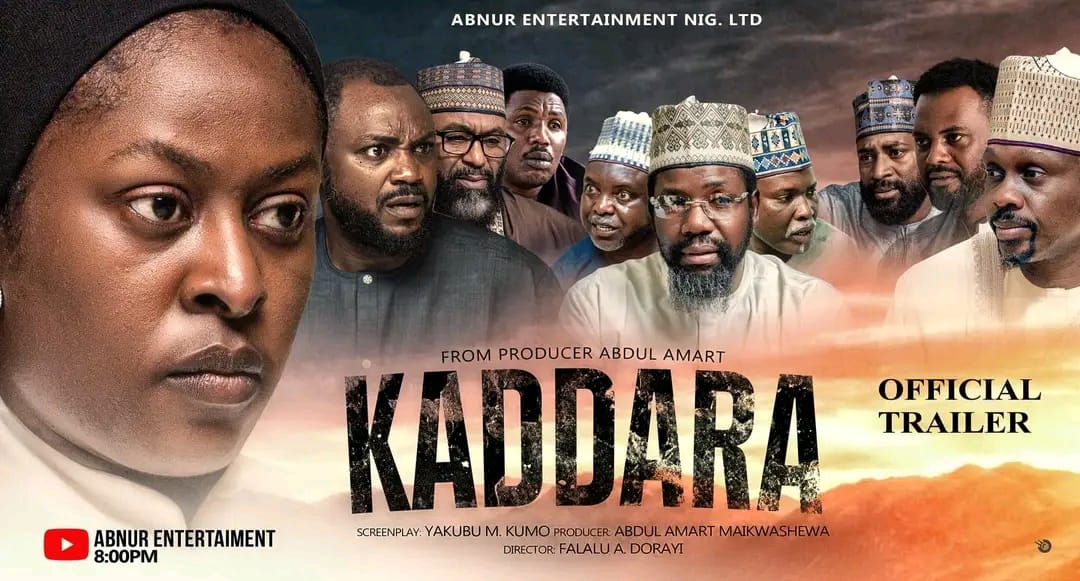
For the first time in a while, I have come across a Kannywood series trailer so compelling that it instantly made me crave its release. Such is the effect of the newly released trailer for the upcoming series Kaddara, unveiled yesterday.

It is worth recalling that the series was announced a few months ago by Abnur Entertainment. It has since generated considerable buzz due to the reputation of the producers and its stellar cast, including the veteran Nafisa Abdullahi, who is making a comeback after a prolonged hiatus from the Kannywood film industry.

The compelling has further amplified the anticipation. The editing is deliberate, showing only fragments of conflict without revealing the full shape of the narrative. In other words, the trailer teases just enough to excite without giving away the complexity of the plot.

This restraint is commendable, as it avoids the common pitfall of overexposure that plagues many Kannywood teasers.

Equally significant is the assembly of the cast. Alongside Nafisa Abdullahi are Ibrahim Maishunku and Zahradden Sani, whose reduced visibility in recent years has made their presence here particularly noteworthy. They are complemented by the constant faces of Ali Nuhu, Adam Zango, and Falalu Dorayi, among others. Naturally, this is a cast designed to deliver.

However, trailers are just promises, not guarantees. Kannywood has, on several occasions, produced compelling previews that ultimately led to uneven final products. The real test for Kaddara will therefore lie in its narrative discipline.

Kaddara is scheduled for release on Sunday, April 12, 2026. We wait to see whether it can sustain tension, avoid melodramatic excess, and translate its visual appeal into a coherent and engaging story.

Habibu Maaruf Abdu 

habibumaaruf11@gmail.com

Umar Ascon: A friend, A Brother, A Dreamer Gone Too Soon

By Shamwil Ibrahim (Justice)

The news of Umar Ascon’s death arrived with a weight that words can barely carry. For many who knew him, it felt unreal, like a story told in error, a rumour that would soon be corrected. But it was true. Umar Ascon was gone. For those of us who shared a classroom with him, the loss feels even more personal.

I first met Umar Ascon in 2015 at Kano State Polytechnic. We were both admitted to study English and Applied Linguistics. Like many students starting a new academic journey, we were strangers brought together by the same course and the same campus. Yet it did not take long for Umar to become someone impossible to overlook.

He was one of the funniest people in our class and, arguably, in the entire department. Wherever Umar was, laughter followed. His humour was natural and effortless. He had a way of turning ordinary conversations into moments of joy. In lecture halls, corridors, or casual gatherings around campus, Umar had the rare ability to make people forget their worries, even if only for a moment.

Although he was older than me, Umar never allowed age to create distance between us. He treated everyone with openness and warmth. Over time, what began as a simple acquaintance developed into friendship. Across Kano State Polytechnic, Umar was already known by many students. Whenever he walked across campus, people would often point him out and whisper a familiar word: celebrity.

The reason was simple. Even during his years as a student, Umar Ascon was already appearing in Kannywood films. He was gradually building his presence in the Hausa film industry while still pursuing his education. For many students, seeing someone from their own classroom on television screens was both surprising and inspiring.

Yet what made Umar remarkable was not just his growing recognition in the film industry. It was his humility.

Despite the attention he received, Umar remained approachable and friendly. He never carried himself with arrogance. Instead, he used his position to encourage and uplift others.

For me, Umar did something that would shape my life. He introduced me to the Kannywood film industry. Through him, I found my own path into filmmaking, a voyage that continues to define my creative life today. Opportunities like that often come through people who believe in you before the world does. Umar was that person.

Even in recent times, Umar continued to think about the future of the industry he loved. The last conversation I had with him was about a film project he was planning. Umar spoke passionately about creating a production that could reach global standards, a film capable of standing proudly alongside international productions on platforms such as Netflix. He believed strongly that the Hausa film industry had the talent and stories needed to reach the world.

His dream was not only to entertain audiences but to elevate the industry. That dream now remains unfinished.

When the news of his death reached me, disbelief overwhelmed me. I felt compelled to confirm it myself. I called his phone. His wife answered. My voice shook as I asked, almost hoping the answer would dismiss the rumour. “Where is Umar?”

There was silence for a moment. Then, through tears, she spoke words that will remain with me forever. “Umar is no more.” She explained that he had passed away following complications related to liver illness. In that moment, reality settled with painful clarity.

Inna lillahi wa inna ilaihi raji’un.

Umar Ascon’s death represents a profound loss not only to his family and friends but also to the Kannywood film community. He was talented, vibrant, and deeply passionate about his craft. His presence brought laughter to classrooms, energy to film sets, and encouragement to those around him.

Some people leave behind fame. Others leave behind fortune. Umar left behind something far more enduring: memories, laughter, and inspiration.

For those who knew him, the echoes of his humour and kindness will remain long after this moment of grief passes.

May Allah forgive his shortcomings, grant him Aljannatul Firdaus, and give strength to all those mourning his loss.

Umar Ascon may be gone, but the stories, laughter, and dreams he shared will continue to live on. History will be so kind to you, Umar Ascon (Chairman).

Shamwil Ibrahim (Justice) wrote via ibrahimshamawilu@gmail.com.