
By Lawan Bukar Maigana
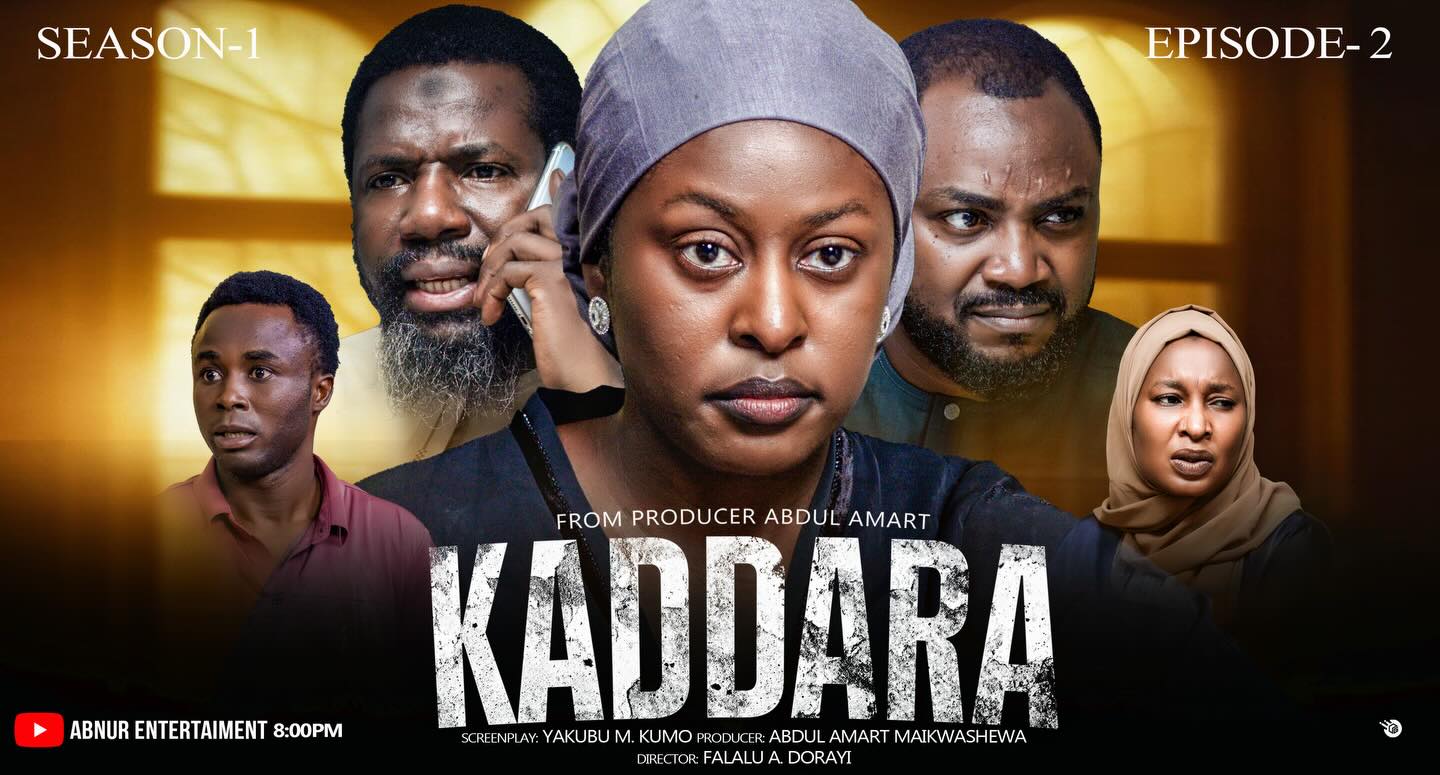
In recent times, Kannywood, the Hausa film industry, has continued to evolve with productions that spark both entertainment and reflection. Kaddara stands out as one such seasonal series that is profoundly produced and emotionally engaging. Although I have only watched two episodes so far, the quality and depth are already evident.
What makes the series particularly compelling is its bold attempt to explore complex human behaviour within marriage. It presents not just a story, but a mirror through which society can examine itself. The character of Haidar, played by Adam A. Zango, introduces a troubling but important conversation.
If a woman, by fate or circumstance, finds herself married to someone like Haidar, her life may gradually become defined by suspicion. No matter how responsible, careful, or committed she is, she may still live under constant scrutiny. This raises a sincere question. Do such men still exist in our society today?
One cannot help but ask why a man would choose to marry a woman he does not trust. Marriage, by its very nature, is built on trust, understanding, and mutual respect. When suspicion becomes the foundation, the relationship is already standing on fragile ground.
Another striking element of Khaidar’s character is his decision to prevent his wife, Maimuna (played by Nafisa Abdullahi), from working. This is not just a personal preference. It directly dismisses the years of effort, sacrifice, and resources invested in her education. It reduces her potential to nothing more than a perceived threat.
His justification is rooted in fear. He claims that allowing her to work would expose her to the gaze of other men, including her employer. This line of thinking raises an important concern. Is this truly protection, or is it insecurity disguised as control?
This leads to a deeper question about the purpose of knowledge. Is education only valuable when it results in employment? Is impact measured solely by financial contribution or professional visibility? These are questions that go beyond the storyline and touch on societal values.
The truth is that knowledge is never wasted. Even outside formal employment, an educated person contributes meaningfully to family, community, and society. However, denying someone the opportunity to apply that knowledge based on unfounded fears is neither fair nor balanced.
Haidar further justifies his actions by referencing a hadith about the concept of dayyuth. According to his interpretation, a man who lacks protective jealousy over his wife risks severe spiritual consequences. This is where the conversation becomes even more critical.
The concept of protective jealousy in Islam is often misunderstood. It is meant to preserve dignity and moral boundaries, not to justify oppression or excessive control. When taken out of context, it can easily be weaponised against those it is supposed to protect.
Scholars have long clarified that a dayyuth is a person who knowingly accepts clear immorality without concern. It does not refer to a man who simply allows his wife to live, grow, and function within ethical boundaries. There is a clear difference between awareness of wrongdoing and baseless suspicion.
What Kaddara presents, whether intentionally or not, is a reflection of how religious teachings can be misapplied. It highlights a reality where some individuals use fragments of knowledge to justify actions that contradict the broader principles of justice and balance.
If Maimuna were a sister, the advice would be simple yet firm. Marriage should not strip away dignity, purpose, or peace of mind. There must be room for dialogue, understanding, and growth. Where suspicion replaces trust, there must be honest reflection and, if necessary, intervention.
In the end, Kaddara is more than a series. It is a conversation starter. It challenges viewers to question not just the characters on screen, but the norms and beliefs that exist within society. And perhaps that is its greatest strength.