Youth

Fighting illicit drugs: YADAF is doing the right thing

By Lawi Auwal Yusuf

Drug addiction suffers a death blow occasioned by the outstanding performance put up by the Youth Against Drug Abuse Foundation (YADAF). It is sure that this name now rings a bell in the Nigerian anti-drug crusade by breaking new ground and marking a turning point without historical precedent. Moreover, it has distinguished itself as the leading figure among its peer NGOs.

This voluntary organization was first set up in Lagos in 2017 and in Kano in 2019. It is propelled by its leading force Hajiya Fatima Bature Jikan-Danuwa, its founder and CEO. This great heroine dedicated her life, wealth and everything in her arsenal to realize her dearest wish of extirpating drug abuse. This real gem has an old hand in this national service and carried off multiple awards coupled with eulogies from different quarters.

YADAF is always motivated by its firm conviction that our youth means everything to us. They are the firmament upon which the development of society rest and its future custodians. This makes the team have a penchant for empowering the young to become enterprising, industrious and productive. They derive pleasure from this community service and are always in high spirits to improve the youngsters’ lives. They are so ecstatic to see them living a good everyday life.

It depresses us to see our lads doing drugs, which consequently deals a blow to our society. We are dead scared to see them engaged in this outrageous behaviour which is so detrimental to their health, badly denting their future and lest becoming a nonentity. In 2021, National Drugs Law Enforcement Agency (NDLEA) reported that 40% of Nigerian youths between 18-35 were heavy drug users. This is an awful statistic.

Thus, YADAF felt duty-bound to swing into action and band together with the relevant stakeholders to face the problem squarely. It fights tooth and nail to contain this social upheaval. The problem’s exacerbation never dampens its enthusiasm, nor does the challenges dash its hopes. On the contrary, it remains impulsively committed to its cause. Indeed, its devotion to this job is commendable.

The management presents mass awareness campaigns through TV and radio programmes, public lectures, dissemination of helpful information across different social media platforms, leaflets etc., aimed to dissuade adolescents from engaging in this criminogenic behaviour or ditching it entirely. Furthermore, they expose the evils of this act and extol the virtues of abstaining from it altogether.

Lack of sound education and professional training is a leading cause of this devilish act. Although skills are increasingly becoming more valuable in the labour market, their absence necessitates the young to either remain redundant or wander the street to make ends meet.

This explains why YADAF introduced its Back To School Programme to sponsor drug-addicted juveniles, dropouts and the rehabilitated back to school. Under the scheme, hundreds of such teenagers, including those considered vulnerable to drug abuse, have been registered in both primary and secondary schools. For instance, 347 children benefited from this programme last week, while preparations are underway for the next set.

Furthermore, providing full employment with prospects helps the young develop a worthy stake in the social order. Also, it makes them preoccupied with a legitimate way of earning a decent living, hopeful of a secured future. This motivates them to work harder, become righteous and avoid anything distracting the realization of their dreams.

This speaks to the establishment of the YADAF Skills Acquisition Center to make youths dexterous artisans become self-reliant. It is a costly mistake to leave the young to their own devices or keep them at a distance. Therefore, this centre is furnished with state–of–the–art facilities to help them learn useful skills to realize their potential.

Moreover, we encourage the young to participate in sports activities which enhance community cohesion and a sense of belonging. We promote a sports culture that keeps them away from doing drugs and leads to fitness. The effectiveness of sports is so absolute in promoting peace, unity and curbing crime.

Our strategic approach is to improve the sporting career, enticing more demand for sports industry athletes. This will facilitate the development of our local players to become competitive champions globally.

As the evils of drug abuse are obvious, all hope is not lost for our most resilient youths. On the contrary, the coming of YADAF makes us feel so good that we are on the right track to securing their long-lost potential.

Lawi Auwal Yusuf Maikanawa is a fellow of YADAF, Kano State Chapter.

World Teachers Day: English hinders learning progress in northern Nigeria – Engr. Ringim

By Uzair Adam Imam

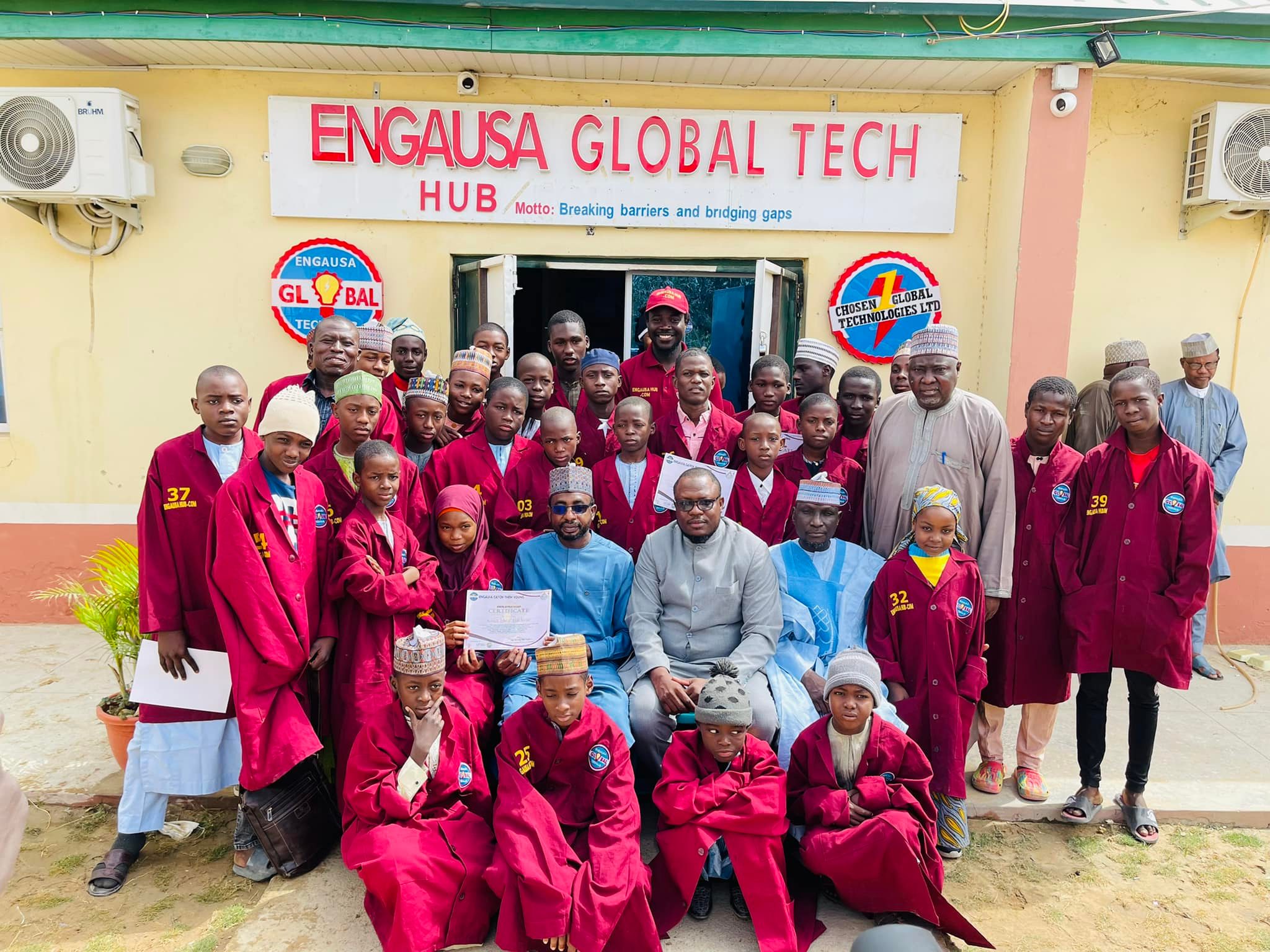
Over two thousand people, including university lecturers and students, graduated from the Engausa Global Technology Hub.

The graduates were trained in various skills ranging from science and technology.

The founder and chairman of the technology hub, Engr. Mustapha Habu Ringim, disclosed this in an interview with journalists on Wednesday to mark this year’s United Nations World Teachers Day.

Engausa was founded in 2019 and registered in 2022 and recorded numerous successes in teaching people various scientific and technological skills to depend on themselves and become employers of labour.

Engineer Habu said English and other languages inhibit learning progress, especially in northern Nigeria.

He stated, “It doesn’t mean that we are not developed when we teach in our mother tongue. Knowledge can be taught using any language.

“Later, one can learn any other language he feels interested in, like English, Arabic or French.

“But it is not wrong to learn in your mother tongue, as many people perceive. For this reason, we, among others, admit even almajiri, who have no background in western education and are school dropouts, into Engausa Global Technology Hub and teach them in Hausa.

“Today, many such dropouts and almajiri have become teachers in Engausa. They even teach university graduates, MSc and PhD holders as well.”

We give emphasis on the practical aspect

Unlike in tertiary schools and other institutions of learning, the Engausa Global Technology Hub gives emphasis on practical aspects than theories.

This, however, enables the students to fully understand the subject matter rather than mastering theories and definitions of concepts.

Ringim added, “More than 90 per cent of what we do in Engausa is practical. The theoretical aspects do not exceed 10 per cent.”

Unemployment worsens insecurity in Nigeria

Ringim also argued that the rising insecurity in Nigeria is not unconnected with the high unemployment rate in the country.

Insecurity has been one of the ongoing challenges facing Nigeria, especially in the northern part, over the years.

He stated, “We need to know that teaching our youths some skills is one of the panaceas to the lingering security challenge in Nigeria. Therefore, society needs to welcome inventions of this sort.

Engausa is gaining global recognition and support from Federal Government and academics like Prof. Abdallah Uba Adamu, Prof. Hafizu Miko Yakasai, and Engr. Isa Musa Gumel, Prof. Idris Muhammad Bugaje, Dr Binta Usman, Dr Hauwa Muhammad Bagaje, among others.

Arewa digital literacy centre, Engausa, commences classes next week

By Muhammadu Sabiu

A Northern Nigerian digital skills learning centre, Engausa Global Tech Hub, will admit students and commence its September classes next week Monday.

This is contained in a short announcement posted on its official Facebook page Sunday.

“New Engausa Global Tech Hub classes will begin on Monday 12th November 2022 Insha Allah,” the post reads.

The classes, largely delivered in the Hausa language, focus on teaching skills like video editing, blogging, graphics design, web design and Android dev., social media literacy, and digital marketing.

Others are installations (CCTV, solar panels, electric fencing, and Intercom) and smartphone repair skills.

The training costs twenty-five thousand naira (N25,000) and lasts for a period of five weeks.

In order to register, interested applicants are advised to click www.EngausaHub.com or call any their phone numbers.

Nigeria’s future in hands of youths – Obasanjo

By Uzair Adam Imam 

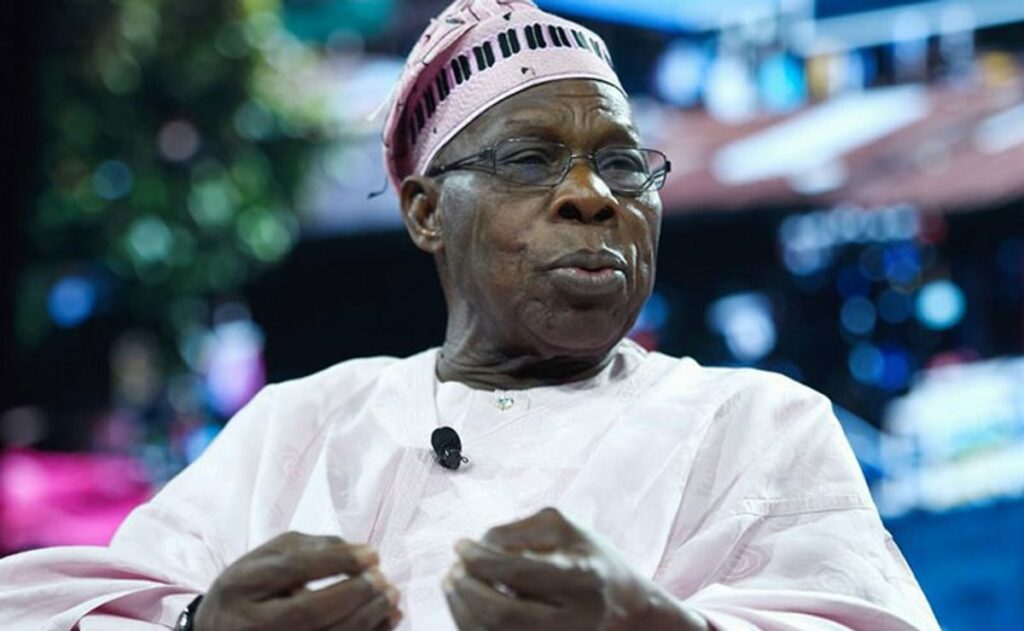
Former Nigerian President, Olusegun Obasanjo, said the country’s future is in the hands of youths.

The ex-president, who put all hopes in youths, stated that the solution to the country’s challenges was in their hands.

Obasanjo charged the youths to do the needful and change Nigeria into a better country in a chat with a famous singer, Charly Boy.

He said in parts, “I am the father of frustrated youths in Nigeria. That we are poor and frustrated is not the fault of God. 

“It is the choice of our leaders, and if we are going to change that situation, the youths have to change leadership. Pure and simple. There is nobody who will do it other than the youths.”

Many people in Nigeria share this belief that the solution to the country’s challenges is in the hands of the youths.

However, still few people, on the other hand, argue that the youths are not even ready to shoulder this responsibility.

On International Youth Day

By Tajuddeen Ahmad Tijjani

International days and weeks are occasions to educate the public on issues of concern, mobilize political will and resources to address global problems, and celebrate and reinforce the achievements of humanity. The existence of international days predates the establishment of the United Nations, but the UN has embraced them as a powerful advocacy tool. 

August 12 of every year marks International Youth Day. This year 2022, is to amplify the message that action is needed across all generations to achieve sustainable development Goals, especially for youth, without leaving anyone behind. It’s expected that youth should champion participation in developmental programs across all facets of human development.

As Nigeria approaches the 2023 elections, it’s a clarion call to all our youth not to allow politicians to use their brains to promote violence. Instead, they should champion the cause for a better country that we will all be proud of. Get involved and define your priorities through meaningful debate. Bargain for better welfare, and promote peace, growth and stability.  

Nigeria’s youth make up a substantial portion of the population, and if they can fully realize their potential, Nigeria and the rest of the globe will thrive. Undoubtedly, the youth are behind in every aspect of human life. Therefore, they must have ‘a fair shake’ in the Nigerian context. They should take up the challenges and use their God-given talents to advance the nation.

Perhaps, you can ask yourself, why are the youth left behind, even though they are the majority? There is no enabling environment to showcase their potential, but should we continue like this? No, we have to wake up in the sense that we should pursue education. Indeed, with education, we can fight poverty, know our rights, stand firm and fight for the future of the living and the unborn generations.

Reports show that half of the people on our planet are 30 or younger, which is expected to reach 57% by the end of 2030. However, this indicates that youth can take control of their future and provide solutions to the problems bedevilling society. For instance, Nigeria is battling insecurity from all corners of its existence. Boko Haram in the Northeast; banditry; kidnapping in the Northwest and some parts of the North Central; IPOB in the South-east; etc. Unfortunately, the youth are the ones who not only encourage but partake in a vicious cycle of violence.

Perhaps we need reorientation to be reasonable ambassadors of society. Let’s teach the habit of productivity through education and change the world to make it a better place to live. Research and development can make us innovative with new ideas and creative in health care reform, Engineering etc. 

Therefore, at this juncture, I make a humble appeal for our youth to rise and take their rightful position. I’m optimistic that when the youth unite and pursue positive goals, it’s achievable to change the narratives to develop the country.

Tajuddeen Ahmad Tijjani writes from Galadima Mahmoud Street, Kasuwar-Kaji Azare, Bauchi State.

Should the Northern youth “Japa” too?

By Hassan Ahmad

The term “Japa” is slang used by Nigerians to refer to the continuous exodus of young Nigerians to the developed countries in search of greener pastures with the intent of not returning home. Japa is widely accepted in southern Nigeria, with many youths leaving Nigeria in the last decade. The justification for this mass departure is not farfetched. They include unemployment, insecurities, incessant strike actions by university teachers enabled by the government and other social problems cumulatively, among others. But on the other hand, the direct opposites of these push factors are the pull factors that also encourage it.  

The southern region of Nigeria housed the larger percentage of industries available in this country, with a better literacy rate and a better standard of living. 

However, in the North, the story is by far worse. Topping the list is insecurities from the Boko Haram ravaged northeast to the bandits’ taking over of northwestern villages and the ethno-religious conflicts in the north-central states. Don’t forget farmer-herders’ conflicts, too. 

Aside from insecurity, the poverty rate in the North is alarming – constituting 86 per cent as of 2021. In addition, illiteracy is prevalent, and there is high existence of unemployment as well as under-employment.  

From the above, we’ll understand that northern youths have more reasons to Japa and never look back, but that has not been the case. This can be understood to play out this way for obvious reasons: deep kinship relationship, lack of understanding of the evolving nature of the 21st century, fear of the unknown, ill contentment and others. 

The underlying issue is that it’ll no longer take long before the northern youths follow the footsteps of their southern counterparts and get fed up with Nigeria, and look beyond the seas and deserts to better their lives. Oh!  It has started already. Thousands of youths are already risking their lives through the Sahara desert with the hope of reaching Europe or the Middle East. Many others who were chanced to have acquired scholarships overseas ended up staying in those countries to pursue a living. This creates two scenarios.

While the educated northern youths get out of the country legally through scholarships and fellowship, the less educated and uneducated look for their ways illegally and, in most cases, lose their lives or ending as sex slaves. We lose our best brains to the developed world while losing our uneducated ones who can alternatively be a source of labour to the graves.  This means that the youths who are supposed to carry the northern and Nigerian dream (if there is any) are giving up already.

Where is the Northern Governors Forum? Have they provided a roadmap for the development of the North, how to tackle insecurity, unemployment, poverty or even improve education? 

Or the Forum is meant for negotiating power between the ruling elites? So why must it be far away Lagos that’ll have the foresight to partner with Kebbi in producing Lake-rice? Why not Kaduna, Kano or Nasarawa?  

Why is the same Forum quiet while their young people are out of school for an avoidable strike?  North is the most hit by the ASUU strike because 90% or more of her students depend on public universities for their education. Is this too hard for the governors to understand? Have they ever intervened? 

Northern leaders should rise to their responsibilities before it’s too late. The outside world is open to all but cannot afford to embrace us all. So it is either they make the North a home for the younger ones, or we look for another home. There is no sense in sticking to the parents that humiliate you all your life. 

As things are, if there is an opportunity, let’s Japa too, legally. 

Hassan Ahmad Usman writes from Lafia, Nasarawa State, Nigeria. He can be reached via basree177@gmail.com.

How philanthropists support the crusade against drug abuse in Kano

By Usman Ibrahim

For a long time, Kano State has battled the enormous increase in drug abuse and trafficking of illicit drugs. Most commonly, many people directly or indirectly abuse drugs. In the past, only male youths aged 18 years and above were the major players in the business. But these days, it is more heart-aching that underage boys and girls, including married women, are into drug abuse, and it is increasing by the day and assuming top spots on the statistics.

People often see drug abusers as jobless who consume the drugs to forget their problems of unemployment and poverty. The precarious situation makes them steal from their families, friends, and even their communities.

Drug addicts are particularly vulnerable to politicians who utilize them to cause havoc during elections and protect them from the wrath of the law after their arrest. When they don’t get the opportunity to become the “boys” of the politicians, they resort to their communities and continue to cement their legacies as the greatest criminals of their time.

In addition, they sometimes make it uncomfortable for people in their communities to commute to some streets. Unfortunately, though, others see drug abuse as something one chooses to do due to peer group influence. Unfortunately, even teens living in stable and affluent homes are also into this drug addiction – many rich teens are into drug abuse despite all the care their parents have shown them.

Badawa in Kano State is one of the communities notorious for drug abuse. It is an intensely multi-ethnic setting harbouring diverse ethnicities but deeply troubled by illicit drug sales and consumption for over a decade. In an interview with a teenager into selling these intoxicants, he admitted that he couldn’t stop selling illegal drugs because he earns a lot from it, and many people from distant places come and buy from him at expensive rates. I also asked him whether he was aware of the anti-drugs agency or the vigilante groups who would arrest him, and he said he was aware. Still, he cannot stop because it is the only way to source his income.

But a philanthropist defies all odds to change existing narratives in the community. Seeing the height of the problem has made the anonymous Good Samaritan solve the menace. With his own money, he purchased three cars, walkie-talkies and uniforms to help arrest hard drug dealers and employed some men in the community’s vigilante group to assist in the fight.

According to Badar, one of the vigilante members, “At least we have arrested more than ten drug dealers in which some of them are in prison”. However, he also states that their work involves too much risk because some drug dealers walk along with knives, sharp horns and machetes, among other dangerous local weapons. So they are always cautious in handling their operations. And they work hand in hand with NDLEA to give them more information about the community.

The National Drug Law Enforcement Agency’s (NDLEA) significant role is exterminating illicit drug trafficking and consumption in Nigeria. And also, it is for the sake of protecting the country from the dangers of hard drugs. Since the agency’s establishment in 1989, the war against hard drugs has been increasing yearly. The agency tries its best to tackle drug trafficking and importation of hard drugs such as cocaine, marijuana, cough syrups and other hard substances. However, the activities of philanthropists cannot be underscored because of the rapid increase in violence, especially during elections and among drug addicts in communities.

Therefore, combating drug abuse as well as securing the lives and properties of Nigerians needs collaborative efforts between security agencies, community leaders as well as philanthropists. If there is a time when these collaborations are desperately needed, it is now.

Usman Ibrahim is a level 200 student from the Department of Information and Media Studies, Bayero University, Kano. He can be reached via usmannibrahim66@gmail.com.

Youths tasked on eschewing hate speech, constructive use of new media 

By Muhammad Aminu 

Youths have been advised to eschew hate speech and use new media constructively for peacebuilding and sustaining peace and peaceful coexistence in their communities.

A communication expert and media scholar, Dr Ruqayya Yusuf Aliyu, gave the advice while engaging youths in a Critical Knowledge Production Dialogue Organised by the Center for Information Technology and Development (CITAD) on Wednesday.

Dr Ruqayya, who discussed the Roles of Youths in Peace Building From a Communication Perspective, said youths play active roles in conflict and peacebuilding situations due to their agility and activeness.

She reminded the youths that peace and peaceful coexistence are the bedrock for the development of any society.

“Youths can be used for good or bad, peace or violence; hence it’s imperative that they know the importance of their roles in peacebuilding in their communities.

“Although conflict is inevitable in any society, managing it matters most in escalating or de-escalating the situation, ” she added.

“You can be partisan, but avoid hate speech and use new media positively.

According to her, communication is relevant in peace building through mobilisation, advocacy, persuasion and behaviour change among the youths.

In another development, CITAD, in collaboration with eTrash2Cash, has trained 220 low-income women on plastic waste entrepreneurship in Bauchi.

Chief Executive Officer (CEO) of eTrash2Cash Abdullahi Salisu said the participants were trained to convert plastic waste into weaved bags, shoes, bangles, and flower vases, among others.

He said:” Items made from these wastes seem so original and authentic that one cannot tell if they are made from the “wastes” we improperly dispose of. Perhaps, one of the main reasons why so much keen interest is evident in the faces of the women beneficiaries.”

Some of the beneficiaries expressed their appreciation for the opportunity. 

Amina Bello and Hafsat Adamu said their newly acquired skills would enhance their living standard.

Hafsatu Adamu, while thanking the training organisers, said she benefitted greatly and had never known wastes could become useful in this way. “I’m proud to be a waste champion, and I will step down the training to my siblings, friends and immediate dependents,” she added.

According to Abdullahi Salisu, plans are underway to ensure that the trained women are continuously engaged and supported to keep cleaning the environment and support others to improve their lives and livelihoods.

Salisu said: “This social responsibility is continuous. It is non-stop. Other stakeholders have already expressed their interest to keep the impact going. We hope to keep engaging these beneficiaries through an innovation centre that will further help them in other areas of business development and entrepreneurship”.

Impostors, Rarara and the fake Youth Forum’s award 

By Ibrahim Sulaiman Jama’are

On Wednesday, 15th June 2022, two of my Facebook friends, Ahmad Muhammad Danyaro and Abdullahi Barau Azare, tagged me in a trending post that that one association called Jama’are Emirate Youth Forum (JEYF), awarded a popular Hausa political musician, Alh. Dauda Kahutu Rarara a “Certificate of Excellent” (don’t mind the grammar). The group added that “In recognize in your (that’s the awardee) tremendous effort and exceptional commitment towards development of humanity” (I beg for your pardon on the poor grammar).

Based on my search on Facebook, the story on this issue was first broken by Ibrahim  Sanyi-Sanyi (who I follow), whose post seemed to be earlier than that of the purported chairman of the forum, Rabiu A Umar (who happens to be my Facebook friend too).

My dismay was minified by the comments on the Facebook wall of Ibrahim Sanyi-Sanyi by his followers, many of whom (thank God) suspected the forum to be fake and, of course, created and formed for the purpose. 

Though there is naturally nothing wrong with conferring an award on any person who contributed toward the development of any community, the question remains: in what way did Rarara contribute to the development of Jama’are Emirate?. Many groups in Jama’are have a history of giving awards to personalities that excelled in different areas of endeavour and contributed to the Emirate’s development (which is normal and obtainable in many places). 

It is a source of concern that churning out such awards to personalities not known for delivering any community services is a spoof that will do a great disservice in future. 

The public should note that JEYF is not a registered association by any institution at the local government or state levels. Traditionally, such associations are registered with the desk officer of clubs and associations at the local government Social Welfare Office. Also, local clubs usually have patrons, typically elderly, who advise and guide members on what to do.  JEYF neither to has no one and no in the registry of the LG.   

I would naturally not write this if the awardee was, say, Aminu Bagwai, another famous Hausa singer. For quite a long time, he has been a friend and, of course, a frequent visitor to Jama’are and who had a dedicated song for Jama’are town, a headquarters of Jama’are Emirate.

On a serious note, from all indications, Rarara might have been a victim of ‘Yan-wanki’ impostors parading themselves as representatives of Jama’are Emirate Youths. The carelessness with which the certificate is written in quite mangled English indicates that this group does not represent us. It is an obvious fact that every casual observer can glean. 

Ibrahim Sulaiman Jama’are is a concerned citizen of Jama’are. He wrote from Abuja via ibrahimsulaiman193@gmail.com.

Why Adamawa Governors Must Emulate the Murtala Nyako Youth Empowerment Model

By Lukman Dahiru Abubakar 

Youths, they say, are the leaders of tomorrow. This is a saying we have heard since primary school days. Thanks to their productive and economically active age, youth should be frontrunners in nation-building. Adamawa State is blessed with educated and entrepreneurial people but tested with desperate and self-centred leaders who take advantage of these unsuspecting youths.

Please take a look at the administration of Gov. Murtala Nyako, CFR, GCON, from 2007 until his impeachment in 2014, spearheaded by incumbent governor Ahmadu Fintiri. Nyako ran the affairs of the state in an exemplary manner, leaving an indelible mark that won’t fade in the sands of time and making it almost impossible for his successors to fill his void. Nyako once described growing unemployment and unskilled youth as ‘enemy armies facing the nation’.

Gov. Nyako did not see the youths as commodities and tools for praise-singing on social media. He had a plan and a vision for them. His government established youth-centric empowerment programs for the benefit of all and sundry. Farming Skills Acquisition Centers were established all through the state. Vocational and technical training centres were instituted and equipped with German technology and managed by German expatriates. Monthly stipends were also given to the trainees for their upkeep.

Other youths were placed on the government payroll as special assistants. The Nyako Youth Empowerment Model was a visionary, focused, and purposeful one which paved the way for a promising future for the youths in the state.

Governor Umaru Jibrilla Bindow, riding on the change mantra in 2015, promised to revitalize and remediate these centres to ensure a continuum. Unfortunately, upon his ascension, he reneged on his promise, and because he doesn’t fulfil promises most of the time, he earned himself a nickname called digital. However, he had other plans for the youth and unveiled his youth empowerment package.

The Bindow Model includes the distribution of iPads for social media praise-singers and the disengagement of some staff from their places of work. This led to the birth of thuggery, criminality in the state, and even the Shila boys started around that time. The Shila Boys engage in street robbery and have been terrorizing the residents of Yola for years. He failed the litmus test and was kicked out of office in 2019.

Incumbent governor Ahmadu Umaru Fintiri assumed office in 2019. He looked the real deal at that time. However, he is in his third year now and doesn’t look like he has a cogent plan for the youths. Albeit last month it was reported that he purchased mobile phones for his social media warriors. This shows he did not learn from the blunders of his predecessor and is following in his footsteps, and until he adjusts, he’s likely falling into the same pit as ex-governor Umaru Jibrilla.

The youths must therefore rise and use the period of their youthfulness for something good and beneficial. Do not let politicians use you; use them instead.

Lukman Dahiru Abubakar wrote from Yola, Adamawa State, via ldahyu@gmail.com.