Northern Nigeria

Reimagining education in Kano State: A call for visionary leadership

By Huzaifa Dokaji

Imagine a bustling city nestled in the heart of West Africa that radiated intellectual brilliance and creativity long before the Europeans reached the region. This is Kano, a city whose intellectual achievements have shone brightly throughout history, never hidden from the world’s gaze. A state North African merchants describe as “a city like a thousand city”. Allow me to paint a vivid picture of Kano’s intellectual past, a portrait that will captivate your imagination and unveil the greatness that lies within.

Centuries before the arrival of colonial powers, Kano was a thriving centre of learning, attracting scholars from far and wide. It was a place where minds converged, knowledge was cherished, and intellectual pursuits flourished thanks to state and privately-sponsored academic spaces. In the corridors of Kano’s renowned educational institutions, such as the intimidating Madabo centre, scholars delved into the depths of philosophy, science, literature, and Islamic studies. They engaged in intellectual debates, exchanged ideas, and produced works that left an indelible mark on the intellectual landscape of their time and beyond. This legacy, however, is at peril more than ever.

In a state that once boasted of kings and emirs renowned for their generous support of scholars and students, state scholarships are now only disbursed on the eve of elections, serving as mere tools for vote canvassing. Our schools are among the worse in the world. Although once a space where literary production was at its fines, schools in Kano lack access to any useful library resources. Lecturers resort to illegally downloading books online or relying on pirated copies to fulfil their teaching duties.

It is genuinely dismaying that a junior lecturer in our universities must spend nearly half their monthly wage to order an essential textbook on Amazon, while students at even the poorest universities in America have access to such materials through interlibrary loans. Adding to this bleak scenario, for example, over three years, Stony Brook University in New York spent about half of our 2023 budget for education to renovate its Student Union building. As worrying as this is, I believe Kano State still possesses the potential to emerge as a shining example of educational brilliance once again. My intervention is limited to institutions of higher learning.

To transform the Kwankwasiyya vision for education into a reality, we must transcend the mere provision of basic educational infrastructure and sponsoring students to study abroad. We must embrace a bold approach that surpasses the efforts of our Nigerian and West African counterparts. We need visionary leadership and innovative infrastructure. We need leaders who understand that education is not merely about constructing classrooms and dashing out scholarships; it is about providing qualitative and enduring infrastructure and creating an environment that fosters intellectual growth, critical thinking, and cutting-edge research. We need leaders who recognise that the quality of education is directly proportional to the quality of infrastructure provided and the system created.

Imagine a Kano State where universities boast state-of-the-art research laboratories with cutting-edge technology. Envision lecture halls that facilitate interactive and engaging teaching methods, equipped with the latest audiovisual tools and comfortable seating arrangements. Picture libraries filled with a vast array of books, journals, and digital resources, providing students and faculty with access to a world of knowledge at their fingertips. Imagine campuses adorned with green spaces, inspiring architecture, and modern facilities that foster an atmosphere conducive to learning and intellectual exploration. Imagine a Kano where lecturers are paid a decent wage.

We must transcend those dilapidated buildings that even counties are ashamed of building abroad. There is a critical need to dream beyond the limitations of what other Nigerian governors have failed to achieve. We must look to the examples set by leaders in more progressive societies and strive for such excellence. Let us aim to provide our students and faculty with infrastructure that not only meets their basic needs but also inspires them to reach new heights of knowledge and innovation. This should be the Kwankwasiyya vision.

The interventions

a. Infrastructure

To realise this vision, it is crucial to prioritise the modernisation and expansion of our universities’ infrastructure. Outdated facilities, overcrowded classrooms, and limited resources hinder the educational experience and impede the pursuit of cutting-edge research. It is time to break free from the shackles of mediocrity and invest in infrastructure that reflects our commitment to academic excellence. We need well-equipped laboratories, not just buildings with nothing to offer our science students. By allocating a significant portion of the state budget to education and ensuring the judicious utilisation of funds, we can establish a sustainable funding model that facilitates the development of world-class infrastructure.

The above investment will benefit our universities and attract renowned scholars and researchers from around the world. They will see Kano as a place where they can pursue their academic endeavours in an environment that supports and nurtures their intellectual growth. By looking at what governors in more advanced regions are doing, we can identify innovative approaches to infrastructure development. These leaders understand that modernising educational institutions goes beyond constructing buildings; it involves creating spaces that foster collaboration, critical thinking, and creativity. They invest in research facilities, technological resources, and student support services that enrich the educational experience and provide students with the skills needed to thrive in the global economy.

b. Wages and Allowances

There is a pressing need for Governor Abba Kabir Yusuf to reconsider the current remuneration package for lecturers in our state-owned higher institutions. It is essential to rise above the confines of the narrow mindset that accepts the prevailing notion of meagre salaries for lecturers on the selfish idea that it is what all states and the federal government are paying. In this era, marked by heightened awareness and accountability, there is no plausible justification for not paying a reasonable wage when politicians have continued to show ingenuity in sourcing money to fund their expensive and outrageous lifestyles. Paying lecturers a meagre salary of $200 a month undermines their professional dedication and the essence of a vibrant and dynamic education system. Recognising the invaluable contributions of these esteemed educators, Governor Yusuf must transcend the limitations of prevalent practices and champion a new paradigm of valuing and rewarding academic expertise. By offering a respectable and competitive wage, he can demonstrate his unwavering commitment to nurturing an environment that attracts and retains top-notch scholars, who, in turn, inspire students to reach new intellectual heights.

c. Grants and fellowships

The absence of grants in Kano universities is not only a concern for the institutions themselves but also a reflection of the broader condition of education in our beloved state. No society can truly develop its education system and produce graduates who can address the nation’s needs without ensuring access to basic resources, such as grants, which fuel academic progress and knowledge dissemination. To rectify this pressing issue, there is an urgent need to prioritise establishing grant programs that cater to the needs of faculty members and students across all universities in Kano State. It is imperative to allocate funds in the state budget specifically dedicated to supporting and rewarding research, innovation, and academic excellence.

For several reasons, grants and fellowships are crucial in developing academic research, especially in developing countries. First, they provide financial support to researchers who may not have the resources to pursue their studies. Second, they facilitate collaborations between researchers worldwide, enabling the exchange of ideas and knowledge. Third, grants and fellowships often come with opportunities for training and mentorship, which can enhance the skills and expertise of researchers. Finally, supporting academic research, grants, and fellowships can lead to the developing of new technologies, products, and services that can have significant social and economic benefits for developing countries.

The government should collaborate with private organisations, philanthropists, and international institutions to establish a successful fellowship and grant program in Kano. By working together, the government can leverage existing resources to create a sustainable program that supports research and innovation in academic institutions.

Grants, both for lecturers and students, are crucial lifelines that enable universities to flourish and produce graduates equipped with the skills necessary to thrive in today’s rapidly evolving world. They will provide financial support for research projects, allow for acquiring state-of-the-art equipment and resources, and facilitate collaboration with industry partners. Without grants, universities face a significant impediment to progress and risk falling behind in the global academic landscape. Establishing fellowships and grants in Kano can help bridge the gap between local and international education systems by attracting talented scholars and researchers worldwide. This will give students and scholars access to diverse ideas and perspectives, enabling them to compete globally.

Grant investments will demonstrate Abba Kabir Yusuf’s commitment to developing Kano’s education system. It will make him, perhaps, the only governor to establish such in the entire Northern region. Such a move will enhance the quality of education and attract renowned researchers, industry partnerships, and prestigious grants to our universities. The ripple effect of such investment will position Kano State as a hub for innovation, drive economic growth, and nurture a generation of graduates ready to tackle local and global challenges.

Denying students access to grants limits their potential and hampers their ability to engage in hands-on, practical research experiences that enrich their educational journey. By investing in grants, we empower our students to contribute meaningfully to their respective fields upon graduation. Moreover, these programs will create a culture of research and innovation in academic institutions, leading to increased productivity and competitiveness.

In conclusion, by embracing visionary leadership, investing in infrastructure, and establishing grant programs, Kano State can transcend the limitations of the past and emerge as a leader in educational excellence. Let us not settle for mediocrity but strive for greatness in our pursuit of knowledge and innovation. The future of Kano’s education system lies in our collective commitment to providing world-class infrastructure and nurturing a generation of scholars capable of making significant contributions to society. Together, we can transform Kano into an educational powerhouse that inspires and empowers future generations.

Huzaifa Dokaji is a PhD student and teaching assistant at the Department of History, State University of New York at Sony Brook. He can be reached via huzaifa.dokaji@stonybrook.edu.
Hausa: Hantsi leƙa gidan kowa

By Muhammad Muhammad Salisu

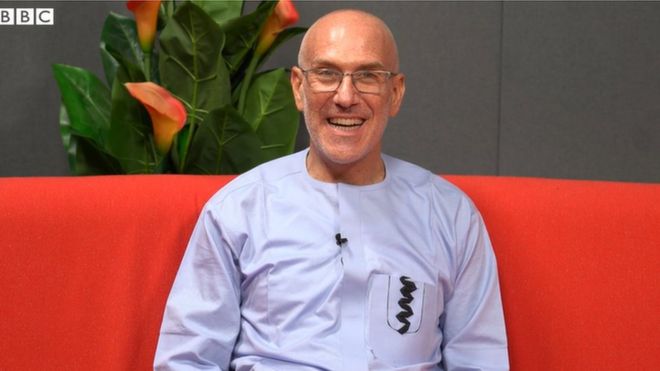
Meet Professor Rudolf Gaudio (he has adopted a Hausa name, Sani), a professor of anthropology at the State University of New York, who started learning Hausa in the US in 1986. He had never visited any African country, not to mention any Hausaland, when he started speaking Hausa. His first contact with the Hausa people was in 1991 in Sudan before coming to Nigeria. He started learning Hausa alongside Swahili.

This reminds me of an Igbo girl at Nigerian Law School, Yenagoa campus. She was awestruck when she saw me speaking Hausa with another Igbo girl. She retorted, “So you can speak that ‘thing’?” From her tune, I could see that she thought it an abomination for the person I was speaking to speak the ‘Aboki language’. The person I was talking to speaks the Hausa language fluently, though was born and raised in Bauchi.

Another incident was when I took a tricycle in Yenagoa. The driver told me the fare, which I bargained for. He told me, “Ka cika son banza.” I was surprised at how an Igbo man (he later told me he was Igbo) could speak Hausa, though with a heavy accent.

One day, I was at a restaurant alone at the Yenagoa campus. Another co-student was sitting by himself and three other female students from the northern part of Nigeria were at another corner gossiping. They, along the line, turned their gossip on the other lad. They were making jest of him, believing he couldn’t speak Hausa. When it was time for him to leave, he bade farewell to them in Hausa, saying, “Na gode [probably for making jest of him], sai an jima.” (Meaning, “Thank you, goodbye.”)

Muhammad Muhammad Salisu wrote via muhdibnmuhd@gmail.com.

Restoring Muhammadu Sanusi II

By Dr. Aliyu U. Tilde

History repeats itself, they say. However, that recurrence was less frequent in the history of rulers of Northern Nigeria. While historians can remember two, we may be at a point of witnessing the third.  

Sometime in December 1652, Muhammadu Kakuna, the 33rd Sultan of Kano, was ousted under the influence of the powerful Maidaki Auwa, who installed her son, Soyaki. Kakuna retreated to Zaria and, within days, fought back his way to the throne just before the year ran out. That was the only time a ruler of Kano was restored.

In 1901, the British colonialists occupied Kontagora—tudu makwantar rikici—and deposed its 3rd Emir, Ibrahim Nagwamatse, for his notorious slave expeditions. They installed his son. For some reason, after just two years, the British returned Ibrahim from exile in 1903 and made him the Sarkin Sudan, and he reigned until he died in 1929.  

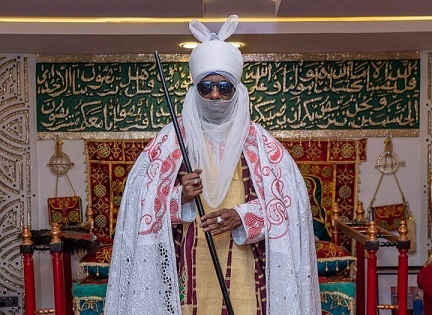
Muhammadu Sanusi II, the 14th Emir of Kano, may soon be the third. Like in the case of Kakuna, many saw his removal by Governor Abdullahi Umar Ganduje on the grounds of insubordination as a live specimen of highhandedness, intolerance, and vengeance. The Emir was arrested and banished to Loko, Nassarawa State, for confinement, an action which he successfully fought against before a federal high court in Abuja. On 30th November 2020, the court declared the internment and the Emirate Council Law under which it was undertaken unconstitutional. It restored the fundamental rights of the deposed Emir to human dignity and personal liberty.  

In contrast to Maidaki Auwa of 1652, Governor Ganduje went beyond the Emir and balkanised the Emirate. He divided it into five independent emirates to prevent the emergence of any strong Emir of Kano in the future. This act of downgrading the system, the first of its kind since Bagauda founded Kano 1,025 years ago, is understandably repugnant to the Kano ruling family and many of its subjects. If the malware, they argue, had only changed the driver file—in this case, the Emir—the system could tolerate that and continue with the same speed. But corrupting the entire system files and downgrading its performance to a status of a photocopier cannot be tolerated. A ‘system restore’ is necessary.  

Restoring the Kano Emirate system to its 9 March 2020 date is now on the fingers of the new administration in the State. It will undoubtedly be greeted with mixed feelings in the next few days, especially as it will portend restoring its unified disk configuration and the deleted driver file.  

History is about to witness that restoration if the feelers from Kano are accurate. How the ancient city would absorb the heat of the operation and bounce back as one of the most important emirates in the region is a matter of immediate concern to its citizens. As Nigerians, we can only hope that it does so without boiling.

Dr Aliyu is a former Bauchi State Commissioner of Education. He can be reached via Twitter @Dr_AliyuTilde.

Majma’al Bahrain: Arabs in Kano II – the sequel

By Prof. Abdalla Uba Adamu

My posting about MU Adamu’s 1968 paper on the influence of Arabs on Kano culture, economy and religious practices has ignited a few responses of personal nature from some readers interested in their own interconnected life stories. This is a follow-up and update.

I think it is wonderful that we begin to interrogate our past so that we can appreciate our present in order to make better plans for the future. We were all besotted with this implausible concept of ‘Hausa-Fulani’ that we tend to ignore other genetic tributaries that constitute the Hausa genetic pool, especially in Kano. Such Majma’al Bahrain is either unknown to many or ignored. Bringing it out means that the ethnic picture of the Hausa is more than the mingling of the Fulani genes with the Hausa – there were dashes of Arab in there thrown for good measure.

For the most part, the Arab voices had been silent. I think it is time for them to voice out their life histories in conversations with their elders. Not to further divide a monolithic Hausa society but demonstrate how the Hausa have been developing into distinct, absorptive people. Clearly, then Hausa is not a language but a people. Ask any individual in Kano with ‘Fulani’ or ‘Arab’ ancestorial roots, and they will tell you they are Hausa, ‘even though my grandmother is Fulani/Arab/Russian/Greek, etc.’

Let’s split hairs here. Having different languages but the same skin colour – whether you are black, white, brown, yellow or (if an alien) green, and submitting to the same central, national governing authority makes you ‘ethnic’. Having the same attributes but without recognition of national authority, only blood and kinship ties make you ‘tribal’. Separation across skin colour is a race, not an ethnic issue. Arabs are a separate race from Africans. So, what happens when the racial divide is crossed (bred)? Will a new ‘race’ emerge?

The Arabs’ contributions to the economy and culture of Kano are far more than any other ethnic group, including the Fulani. Consider the Yemeni alone and their massive contributions to the animal skin trade in northern Nigeria. Initially ‘imported’ as Italian trade agents from Yemen in the early 20th century, they have now become domesticated to the Hausa society. Yes, they are light-skinned, and quite a few speak Arabic; but the mid-generations have lost the Arabic language. As a ‘minority’ group, they intermarried with local African women and their offspring contributed to the sustainable development of culture and life in Hausa societies without the consciousness of being ‘the other’. What are then the cultural specificities that tie them to the Arab world? Can it be in dress, language, food, existential rites and rituals (birth, living, death)? How do theirs – if at all present – differ from those of the Hausa?

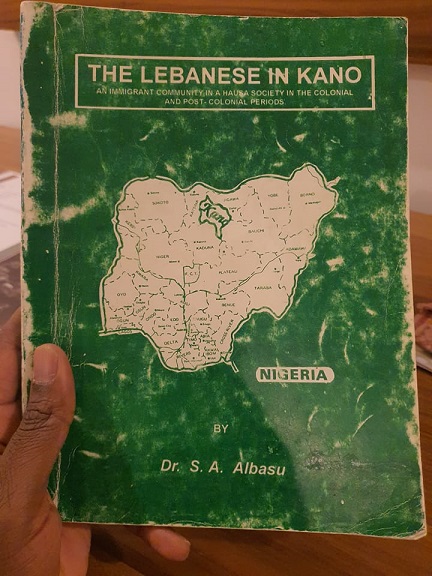
Then consider the Lebanese and their input into the goods and products found in various Kano markets – including their influence all over West Africa. They are less integrative with their African hosts but have been linguistically domesticated, and for all intents and purposes, many self-identify as Hausa and retain some living rituals (e.g., food habits). This is an area initially mapped out by Sabo Albasu’s monumental groundbreaking research, “The Lebanese in Kano” (which is based on his 1989 doctoral thesis), and unfortunately, not much else was done on such a scale by other people. I wish he could update and re-print it, as now, more than ever, is the time for it.

The Sudanese, more than the other Arabs, had integrated more effectively into northern Nigerian Hausa communities, perhaps due to the gradation in their skin colours – from extremely dark to extremely light – than either the Tripolitanians, Yemeni, Lebanese or Syrians/Jordanians, whose clearly light skins made them stand out in any group. Establishing themselves in the city of Kano at Sudawa (Sudanese settlement), they formed part of the identity of the Kano city populace.

The Sudanese influence was also more intellectual. While they were instrumental in trade, their main contribution was in education. For instance, when the School for Arabic Studies – undoubtedly the Oxford of Arabic Studies in Nigeria – was established in 1934, it was to Sudan that inspiration was sought, including the teachers. Even what later became Bayero University Kano was first headed by Abdullahi el-Tayyeb, a Sudanese. No talk of Sudan itself being a destination for studies at all levels by northern Nigerians. You don’t see such rush for education in Lebanon or Yemen.

While rummaging through the caverns of an old abandoned hard drive, I came across a booklet that Kantoma (Muhammad Uba Adamu) had asked me to extract from his “Confluences and Influences” as a standalone paper (presented in 1998) and later with additional material, as a booklet. We named it “The Presence of Arabs in Kano”. Lack of funding prevented its publication, but I was able to get it published as a paper in a book project. A link to the paper is given at the end of this posting.

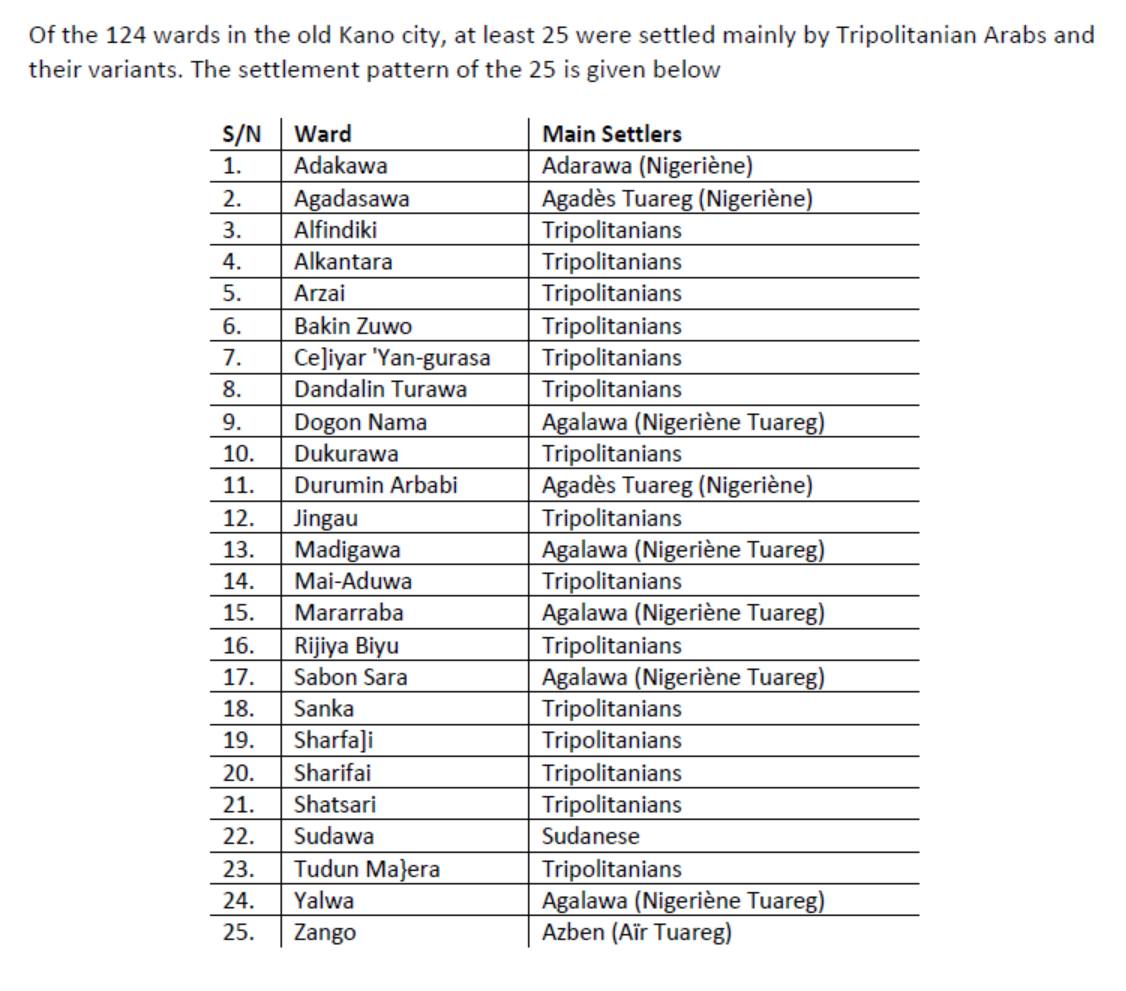
For those interested, I have included the table (from the paper attached) of the 25 Arab-dominated Kano inner city wards. I did this because not many would have the time to read 43 pages of the paper!

Adamu, Abdalla Uba. 2014. The presence of Arabs in Kano. In A.I. Tanko & S. B. Momole (Eds.). Kano: Environment, Society and Development (pp. 125-164). London & Abuja: Adonis & Abbey Publishers.

Or: https://shorturl.at/dgzW0

Late Haruna Kundila: The pre-colonial wealthiest person in Kano

By Jamilu Uba Adamu

Late Mallam Sa’adu Zungur (1915 – 1958) in his song Arewa Mulukiya ko Jamhuriya said;

“Ya Sarki Alhaji Bayero,

Ga Yan birni da Kanawiya.

Tun Bagauda na saran Kano, Suka fara fataucin dukiya.”

Kano State has been a trading and crucial commercial centre throughout its history.  History has shown that Kano has produced several wealthy individuals whose names will always be there in the annals of history.

The ability of Kano and its people (Kanawa) to create wealthy individuals did not start in this modern era. The likes of Madugu Indo Adakawa, Muhammadu Dan Agigi, Madugu Dangomba, Umaru Sharubutu, Mai Kano Agogo, Alhasasan Dantata, Adamu Jakada, Muhammad Nagoda and many others were among the wealthy individuals that Kano produced.

Late Alhaji Haruna Kundila (1810-1901) was known for his great wealth and fortune in the pre-colonial Kano during the reign of Emir Abdullahi Maje Karofi and his successor Emir Bello Ibrahim Dabo.

This popular Hausa saying attributed to him, “Ba na siyarwa ba ne; ya gagari Kundila”, means that there is nothing Kundila can’t afford to buy unless it is not for sale because of his massive wealth and purchasing power.

Haruna Kundila was born in 1810 at Makwarari Quarters in Kano city. 

The story about his source of wealth says that “one day when he came out from the house, he met Mallam Sidi (according to the story, Mallam Sidi is a pious, God-fearing Islamic teacher, and many people believe that he is a “Waliyyi” ). Mallam Sidi asked Kundila how he could help him get those that could evacuate his sewer pit. Kundila answered him positively.  When he checked and couldn’t find anyone to do the job, he decided to do it himself. When the Mallam returned and asked whether he had seen the people? He told him that the people had already come and done the work; Mallam Sidi asked him again, “How much were they supposed to be paid for the work? But suddenly, someone who witnessed how Kundila did the work alone intercedes and tells Mallam that Kundila did the work alone. When the Mallam heard that, he shook his head and said; To , Insha Allahu, duk inda warin masan nan ya buga gabas da yamma, kudu da arewa, sai ka yi suna, ka shahara an san ka “

History tells us that Haruna Kundila, who was a slave trader in those days, had trade relations with traders coming to Kano from foreign countries such as Mali, Sudan, Libya, Senegal, Damagaram, Agadas, Garwa, Duwala, Bamyo and Fallomi. 

In his heyday, no one in Kano has Kundila’s wealth. Kundila was rich and had estates by each city gate (Kofofi). It was said that he owned more than one thousand enslaved people. He was the wealthiest trader in nineteen century Kano. 

The name Kundila is because Haruna has a younger sister named Binta, who follows him at birth. After she grew up, one day, Haruna went home and found his sister in their mother’s room. He said to her, “Please, Binta, miko min kundina”. The sister started repeating the words “Ina kundina? Ina kundina? Since then, Kundila has followed him for the rest of his life. Until today, some government housing estates in Kano, such as Kundilar Zaria Road, bear the name.

It was said that when he died in 1901 (two years before the British conquest of Kano), Kano was shaken by the loss of one of the greatest wealthiest individuals in its history.

Jamilu Uba Adamu wrote from Kano via jamiluuba856@gmail.com.

When we thought we produced our best

By Muhammad Sulaiman Abdullahi, PhD

President Muhammadu Buhari has come and gone. It is believed that many Nigerians thought Buhari would be the best president of their lifetime. Even Baba Buhari himself assumed and pretended that he was the best. And he did his best; only that his best was not enough for Nigeria.

Baba accused all those before him, directly or indirectly, of mismanaging Nigeria. However, with all the accusations he heaped on others, Nigeria was technically and practically raped under his watch. It is even alleged that most of the suffering inflicted upon Nigeria and its innocent citizens was the handiwork of some of the closest associates of Buhari, including his family members. Some supporters claimed that his style was the best way to govern. They boasted that Buhari assigned competent hands to govern, and he never interfered. This assertion has many troubles, and I will mention only two.

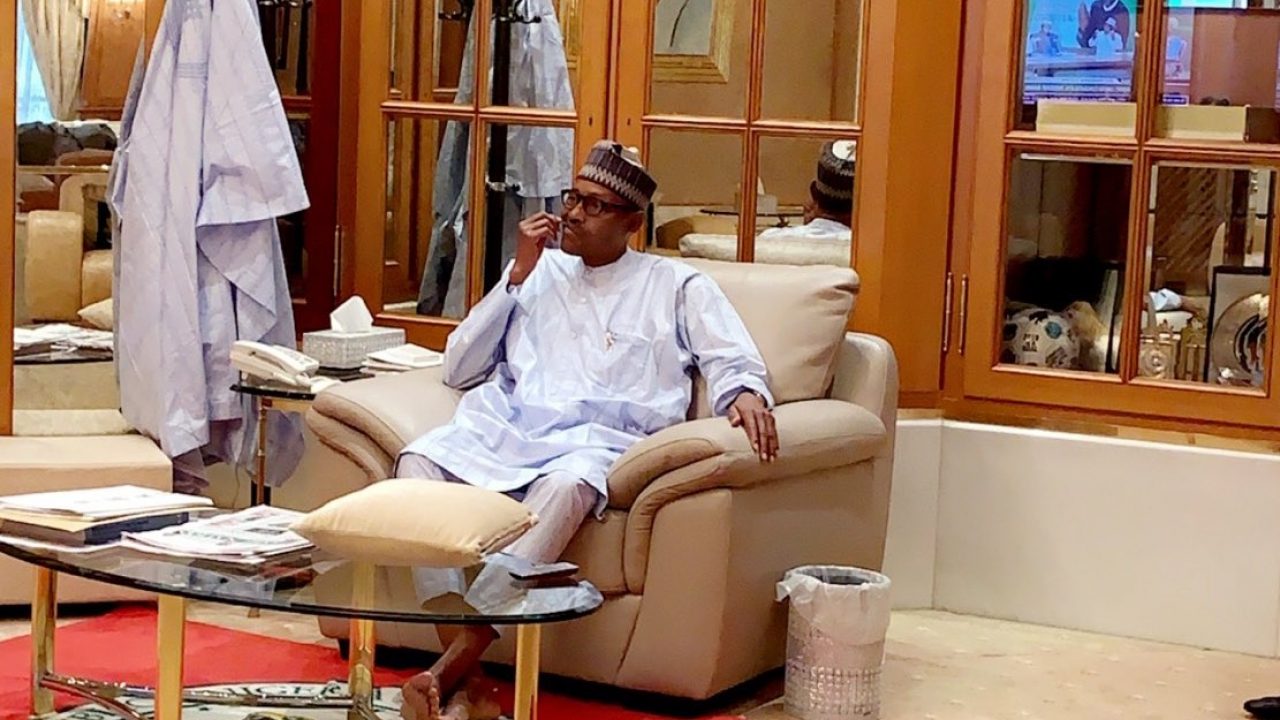
First, it is wrong for any leader to assume that his workers or those he assigns to do a specific job for him are perfect. They are not, and no one is. And even if assuming they are, he is responsible for watching, gauging, supporting and assessing them. Buhari didn’t do that. He was just there sitting, flossing and picking his teeth.

Second, some of those assigned some responsibilities and some ministries during the Buhari era were not competent. Look at what Adamu Adamu and Ngige and some of their close allies did to education. Look at what Hadi Sirika did to aviation. Look at what Godwin Emifele did at the Central Bank of Nigeria. These are just a few among many. One would wonder how did that happen under Buhari’s watch.

When Nigerians voted for Buhari in 2015, most believed Nigeria’s worries of 1960 downwards would just vanish. There is a widely circulated story of someone who sold his generator, considering that the electricity would be fixed and that the generator would be a nuisance to him and occupy space. Buhari disappointed him and all other Nigerians in the energy sector. The electricity tariff was hiked unprecedentedly, to the corrupt extent of not even giving notice. They hiked it at their will without recourse to anything or fear of anyone. This was Buhari’s era.

Furthermore, according to what many Nigerians believe, had Buhari not become a president, many fools and even non-foolish among Nigerians would have tagged him “The best president that never is”! He came and went, and his performance shows he isn’t the best.

However, no one will occupy that seat without doing good, willy-nilly. Buhari did some things, but I don’t think he did it consciously. His undoing and the power of the seat made it happen, as Baba didn’t seem to care then. I can’t mention a lot, but I know he tried not to influence the 2023 elections in favour of his party. That single action should be emulated by all those who come after him.

Also, some of our airports look majestic but at the expense of our roads. Some think that it happened due to his excessive love of foreign trips. He couldn’t bear the sinister looks of our airports as he happens to be a constant, consistent and regular customer there.

The health sector received almost total neglect during Baba’s era. He knew about it very well as he shunned all Nigerian hospitals because his government abandoned them. The former president enjoyed robust, healthy and developed foreign medical healthcare when Nigerians died in Malaysia and lack of genuine Capenol. He didn’t care, and neither did he ever talk about it.

Wallahi Nigerians suffered a lot under his leadership. Inflation has never been bad, like how it grew big during Baba. Another thing that Nigerians may live to regret is their high hopes for Buhari’s government, which became a curse on them. The ordinary people with whom Buhari sided and dined when he looked for the seat lost him completely. He later started accusing them of laziness.

His non-strategic accusations to all classes of people in Nigeria started in phases and kept on changing based on the position he found himself. 

The first phase was when he was aspiring to be the President. Then, he tactically sided with the masses and openly demonstrated with them on the streets. He yelled at the PDP government and accused them of various things, and his government multiplied all the suffering. The second phase was when he became the president, accused all the Nigerian politicians, and painted them bad in the eyes of all Nigerians and the world.

Lastly, in the final phase, when he consolidated his grip on the leadership, he turned and accused all Nigerians, especially the youth and the masses he sided with and voted for him. He accused them of being lazy and full of enjoyment as if he didn’t want to see anyone enjoying and smiling!

He governed as if he was doing Nigerians a favour while most of those who supported him were either dying of hunger, kidnapped or wholly disoriented.

Nigerians from the North and South graciously excused many of Buhari’s excesses, thinking he would do wonders. Today is only a few days of President Bola Tinubu’s government, but he has taken some decisive actions which Buhari’s eight years couldn’t do.

We didn’t have high hopes for Tinubu initially, but we foresee and pray that his government will be better and more beneficial to Nigerians than the I-don’t-care government of Baba Buhari.

Dr Muhammad can be reached via @muhammadunfagge (Twitter) or email: muhammadunfagge@yahoo.com.

Revisiting a Classic: M.U. Adamu’s notes on North African traders in Kano

By Prof. Abdalla Uba Adamu 

In 1968 I was a twelve-year-old whippersnapper and found solace in my father’s library (hate football and games anyway!). A journal, Kano Studies of the year, caught my attention because of the way my Dad held on to it. I fixed my sights on it, eventually opening it and trying to read it. Oh, I did, quite all right, but I did not understand half of what was written! However, I did not give up and continued perusing the journal. 

Eventually, during high school years, a couple of years down the road, I discovered what glued my late father, Muhammadu Uba Adamu, alias Kantoma, to that specific issue – his article. The article was titled “Some Notes on the Influence of North African Traders in Kano”. This time when I read it, it made sense. I found it fascinating, and I can genuinely say it planted the roots of historical interest in me. However, I was keener on race, culture and identity, and in particular, how new racial identities emerge as a result of what Kantoma himself later referred to as ‘confluence and influences.’

“Some Notes on the Influence of North African Traders in Kano”, as I was to discover later, was based on the methodology of what Victor Turner referred to as “the anthropology of experience”. Kantoma embedded himself in the Arab community (a bit easy to do, with an Agadesian grandmother) in the Alfindiki community in the heart of the city and close to his traditional family homestead at Daneji. It was through extremely loose focus group discussions that he was able to gather as much data as he could. And he was then a student of Political History at Ahmadu Bello University Kano (via Abdullahi Bayero College). 

Years later, I had the chance to befriend one of Kantoma’s teachers, John Lavers. He glowingly told me how excited he was with Kantoma’s initial paper and how he made a series of suggestions that eventually turned the paper into a classic. John Lavers was one of the founders and editors of Kano Studies. 

The paper was extensively revised by Kantoma as “Further notes on the influence of North African traders in Kano”. It was presented at the International Conference on Cultural Interaction and Integration Between North and Sub-Saharan Africa, Bayero University Kano, 4th–6th March 1998 – some thirty years after the original. Unfortunately, despite being the person who typed it up for him, I could not locate a copy (remember, we were using floppy drive storage in those ancient days!).

Some notes planted in me an interest in race, culture and identity and the interrogation of the specific gravity of racial identity in Africa. For instance, take a community of Tripolitanian Arabs who settled in Dandalin Turawa, Kano, right on the edge of the Kurmi market. Years later, they were no longer ‘Turawa’ but African – at least in colour and language, as most have also lost the Arabic language of their forebears. So, what exactly are they? Arabs? Hausa? Or do they create a crazy hyphenated identity – Hausa Arabs (like the ridiculous ‘Hausa Fulani’)?

So, I started my own anthropological trajectory by writing a proposal for a Stanford University (US) residency on Race, Culture and Identity. I wanted to map the six groups of Arab residents in Kano to determine how they self-identify – language or genes. These are Shuwa, Sudanese, Tripolitanians, Syrians, Lebanese, and the Yemeni. Again, Kantoma had much data on especially the Yemeni, in addition to his earlier Tripolitanian engagements.

For a few years, I worked with him to flesh out the project and even got some of the Yemeni elders interested in proper documentation of their community (as was done by S.U. Albasu in “The Lebanese in Kano”). I did not get the Stanford residency, and other things about the daily grind kept me away from the project, so I put it on hold! I can’t even locate the original proposal now. But who knows? Once I have a free year or so, I might rummage through some forgotten hard drives and see what lurks there and, if possible, get back into the race (pun intended!). 

Here, for your archival pleasure, is a gift from Kantoma pending a full-blown site that will have all his writings much later in the year (hopefully by Fall). Download from here:  https://bit.ly/3p2LeOx.

Education crisis looms in Bauchi 

By Mukhtar Jarmajo 

The state of education in Bauchi state is in disarray as over 1.4 million children remain out of school, according to recent reports. This crisis manifests itself in the acute shortage of qualified teachers, inadequate infrastructure, and poor funding for education. The Gabchyari community in Darazo local government is a classic example of the sorry state of our education system.

The only primary and junior secondary school in this area, which has approximately 350 students, has just three teachers, as reported by The Nation Newspaper last Monday. This is a gross inadequacy, as it means that each teacher will be responsible for teaching over 100 students. This will invariably lead to overcrowding, poor quality of learning, and the inability of individual students to receive adequate attention and care.

The continual neglect and unwillingness of the government to provide quality education for our children is evident in the rising number of out-of-school children in the state. This growing trend should be of concern to well-meaning citizens of the state, as it poses a threat to our future and that of the nation.

The consequences of the education crisis in Bauchi state are far-reaching and multifaceted. The inability of these children to access quality education could lead to a high rate of poverty, unemployment, and a general lack of development in the state. We cannot continue to ignore the plight of these children, as they represent the future of our society, and their education is a fundamental human right.

It is, therefore, imperative that the government takes urgent steps to address this crisis. The government must invest more in education by providing adequate funding, training and recruiting qualified teachers and building more schools in rural areas where the majority of these children live.

The education crisis in Bauchi state is a ticking time bomb that needs to be diffused as soon as possible. As stakeholders and well-meaning citizens, we must continue to put pressure on the government at all levels to take education seriously as an essential tool for development and nation-building. The time to act is now before it is too late.

Jarmajo can be reached via dattuwamanga@gmail.com.

Book Review: The Lebanese in Kano

By Dr Shamsuddeen Sani

I thought The Lebanese in Kano: An Immigrant Community in a Hausa Society in the Colonial and Post-Colonial Periods merely contained a handful of newspaper tales. I was mistaken! Within its pages lies a meticulously researched body of work, a testament to the cultural heritage of Kano that begs to be savoured and preserved for generations to come. It has profound glimpses into the very foundations of Kano’s societal evolution as it illuminates the paramount role played by the Lebanese community in the rich Kano’s historical traditions.

This book, published in 1995 and authored by S.A. Albasu, unfolds with an intricate chronology of eight captivating chapters. As the introduction sets the stage, the initial chapter gracefully delves into the existing body of literature on migration, skilfully intertwining it with the historical fabric of West Africa and Nigeria. Embracing a tangent in the second chapter, Albasu illuminates the emigration of the Lebanese into Kano, beginning in the mid-19th century.

However, a pivotal juncture in Lebanese history within Kano emerged in 1920, a defining moment marked by profound geographical and religious divisions among the Lebanese migrants. The historical catalysts propelling Lebanese emigration into Nigeria were meticulously examined within this segment.

It becomes apparent that prior to the 1920s, the Lebanese immigrants in Kano predominantly belonged to the Maronite Christian community. It is only after this period that a demographic shift occurs, welcoming the arrival of Muslim Lebanese, particularly those of the Shiite sectarian extraction hailing from southern Lebanon. The book exposes the reader to the sociocultural intricacies of the Lebanese community’s towns of origin and unravels the fabric of their society, dispelling prevailing myths.

The entire Lebanese migration into Kano is thoughtfully categorised into four distinct phases, each meticulously explored with great detail: 1890-1903, 1903-1912, 1912-1920, and the 1930s during the tumultuous period of the great depression. Each of these phases represents a significant milestone in the history of the Lebanese community within Kano, as well as its impact on the city’s socioeconomic development.

Subsequent chapters of this book delve into the physical establishment of the Lebanese community, intricately entwined with crucial historical policies such as colonial taxation, the indirect rule system, and segregation policies.

Chapters four, five, and six embark on an exciting journey, covering the consolidation of the Lebanese community within Kano’s vibrant business milieu. From the thriving cattle trade to the realms of Kolanut and groundnut businesses, the book unfurls the profound influence of factors like colonial intervention, the upheaval of the Second World War, Nigeria’s independence, and the burgeoning national consciousness. The book has revelations of ground-breaking nature, leaving you enlightened and astounded, and for me, every piece seamlessly falls into place now.

How Tinubu should compensate the North West

By Prof. Abdussamad Umar Jibia

It is no longer news that Alhaji Bola Ahmad Tinubu has taken over as the President and Commander-in-Chief of the armed forces of the Federal Republic of Nigeria. Nigerians are always happy when there is a change of leadership because we are a hopeful people. It doesn’t matter that we have been disappointed and had our hopes dashed many times over. Most of us believe that it shall be different this time around. Nigerians believe that the hardship that immediately greeted the inauguration of President Tinubu due to removal of oil subsidy is only temporary. This only shows how optimistic our hope can be.

Party stalwarts who have participated in campaign and are important enough to be remembered by Mr. President are even more hopeful. Offices shall soon be shared. Ministerial appointments, advisors and other aides of the President, Boards membership, headship of Government agencies are some of the ‘gifts’ given to individuals who have shown enough commitment to the project of selling Mr. President and his party to Nigerians.

Another way in which politicians compensate states that gave them a large number of votes is situating infrastructural and empowerment projects. 

To become the President of Nigeria, Asiwaju, a National candidate, polled  8,794,726 votes  to defeat Atiku Abubakar and 16 other candidates, some of whose influence does not transcend their states of origin. Out of this number of votes, more than thirty percent came from the North West. Thus, if political support is important to Tinubu, and of course it is, he has an obligation to thank the people of North West and to practically acknowledge that they are his people.

Now, how is Tinubu supposed to compensate the North West? To answer this question it is important to note that only an insignificant few of the more than two million voters mentioned above are politicians who are expecting contracts or appointment to public offices from President BAT. Thus, while those appointments and contracts may or may not affect commoners in the North West, there are things that affect their lives for which they need the attention of Government.

President Tinubu has taken over at a time when banditry has exhausted and impoverished an average villager in the North Western part of Nigeria. Banditry began as cattle rustling by people who believe that only they have the right to own cattle. It then metamorphosed into full scale armed robbery and occupation. As I m writing this, there are many communities under bandits’ control. Many of them decided to submit willingly out of frustration since their Government has failed to provide them protection.

For communities that have not submitted to the bandits’ authority, the attacks continue.

To rationalize banditry, a number of false narratives have been created and spread by bandits and their sympathizers. For example, it is common to hear people saying that banditry was brought about by the unfair treatment given to nomadic Fulani for decades. Thus, according to this narrative, what we are witnessing today is a backlash of this unfair treatment. Some years ago, I had a reason to write a rejoinder to a group of Islamic scholars who bought into this narrative and, instead of calling on the Government to deal ruthlessly with bandits, were asking for fair treatment of nomads.

I don’t know of any group of Nigerians that is not complaining of unfair treatment. In fact, Nigerians, especially the proletariat, have for long been unfairly treated by the elites and the system they control. Does that mean every Nigerian should acquire arms and become armed robber? Surely no. Injustice does not justify crime. This narrative is thus faulty in every ramification. It is unfortunate that some people in Government have been deceived into accepting it.

Another narrative is that banditry taking place in the North West and North Central geopolitical zones is a fight between Hausa farmers and Fulani cattle-rearers. This is even as we saw travelers who are not Hausas being intercepted and burnt alive. We also saw Fulani cattle rearers  who refused to join criminal gangs being attacked and killed in their homes. Yet, the immediate past central Government bought into this narrative and asked Governors of the affected states to negotiate with bandits. If nothing else, those negotiations exposed the identity of the criminals. They appeared before press cameras and confessed their crimes and gave conditions to Government. They continued with their crimes almost immediately after the 2016 and 2019 peace accords. 

Another false narrative is that banditry is being executed by foreigners from other West African countries. Yet, during the failed peace negotiations all the bandit leaders were Nigerian Fulani whose ancestry is well known. In fact, all the bandits known to be operating in the North are like that. Now that they have occupied many rural communities their identities are even more exposed. 

This is the number one problem of the North Westerner that Tinubu should confront even if it means stepping on some of the biggest toes in this country.  Fortunately he has come at the same time with Governors who are interested in fighting crimes. In particular, the new Governors of Katsina and Kano have shown early signs that they mean business as far as crime-fighting is concerned. Working with them closely would help President Tinubu. Zamfara that has been serving as the hideout of bandits has also a new Governor.

Professor Abdussamad Umar Jibia wrote from Bayero University, Kano. He can be contacted via aujibia@gmail.com.