Northern Nigeria

Zaria public library or a shattered bed of bats and rats? A call upon the government

By Maryam Shehu

I write with a heavy heart and bleeding eyes to the extent that my sights are closed, and I can’t catch a glimpse of the words that percolate through my pen.

Zaria is known as the heartbeat of its state, moving from its social amenities and the acuity of its residents and advocates. It won the best award for breeding leaders and world scientists with excellent records of surveillance and stateliness.

Its leaders have incentives for every eclipse and malady, but I am yet to have a vision of the sad situation of its library. Does that spell another prestige or a paralyzing facet of its artistry and reading culture? Only God knows how much a lack of a library plays in the eruption of the educational sector and traditions.

 ‘Mostly students within Zaria from the 1980s used the Public Library, but now it remains only the building’; this was what I saw as a description of a group named ZARIA PUBLIC LIBRARY FRIENDS on Facebook… A very disheartening description, indeed! Does that mean education ended in Zaria after those days, or is it only for those in the 1980s? Oops, I can’t uphold the irritation!

Everyone that often visits the place is a bystander to how barren and malodorous the place is, the books are outdated, and the shelves are scanty and scattered to the magnitude that one can not confidently point to a visitor or a person who has been reading about or watching notable libraries.

I write for the government or any other personnel responsible for the library to reminisce, if forgotten, about the virtues and diamonds behind refurbishing the library and its roles in developing a state/LG with few ravines of mine. These are:

First, it supports the educational sector: Education is the bedrock of every progressive state. It soothes every rough wall for governance. Whenever/ wherever a state owns a gear of education and capitalize its residents with the necessities, that administration is said to have grappled with every hole of unemployment, insurgency, and other suppressed deed that might lead to the tumult of any governance. It can contribute to nation-building and reconciliation. As said by Nelson Mandela, “Education is the most powerful weapon you can use to change the world”.

Second, it preserves the cultural heritage of the society: A rich cultural heritage defends how the residents maintain its distinctiveness and sets it as a mirror to look at by young ones. We have different skin colours, languages, and marks, and our clans mingle with others (good/bad), but the pictures we sow in their hearts and books are those that could reflect and defend their susceptibilities. The library is the only place where those scrapbooks and photographs could be carefully salvaged.

Third is the provision of useful textual materials: The availability of a standard and substantial library provides advantageous scripts and materials for self-development and implementation of a basic constitution… It helps especially those from underprivileged backgrounds.

Fourth, it also provides an avenue for recreation and relaxation. Libraries are one of the most significant factors that lead to the development of arts and crafts; they create seats for all crawling and professional clubs and carve stages. It composes words for artists and other microphones partners.

Furthermore, it also provides and enhances reading culture. As the slogan says, ‘Readers are leaders’; likewise, writers and other mellow people, we succeed by reading from the served letters of our antecedents. And many people strive to be voracious readers but the lack of money to buy books drag their necks back and turn their faces from the papers by furnishing the library; that surely could be a buzzer to the sleeping readers.

With the above few ravines of mine, I hope the government and other related personnel are persuaded and forecast how much renovation of the public library could make their governance suitable and memorable and how lack of it will keep draining the administration. We hope you listen to our dried throats and reconstruct our shattered floors.

Maryam Shehu wrote from Zaria via maryamshehu6354@gmail.com.
Demons called phone-snatchers

By Sulaiman Maijama’a

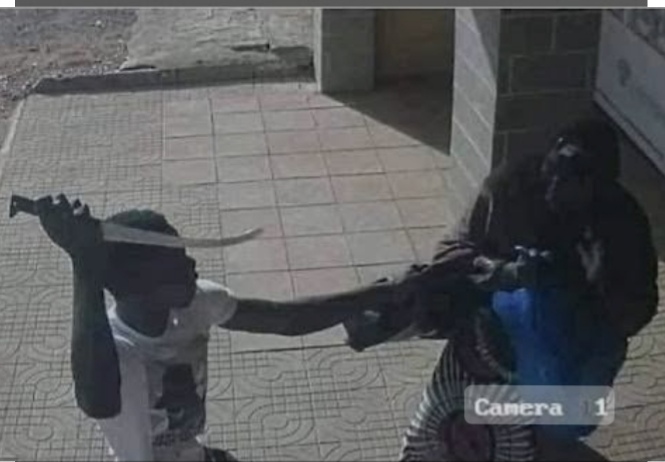
In recent times, the most vicious of all vices in our society is phone snatching. This dastardly act is perpetrated by gangs of youth of 15 to 25 years who carry weapons and terrorise people. Sometimes, these youth injure their victims or even stab them to death.

This evil act usually is plotted and carried out at night, but sometimes, in broad daylight, the youth disguise themselves as tricycle operators and unleash their cruelty against people. There is hardly a week that would pass on without a report of a victim of phone snatching.

This activity becomes a nightmare for people and poses a great threat to the freedom of movement of innocent citizens, making it difficult for them to go about their everyday business, especially at night, without the fear of being attacked by phone snatchers.

It is common knowledge that phone snatching continues to be pervasive in different states of the North. It assumes a higher degree in states like Kano, Bauchi, Plateau, and Gombe.

The nefarious activity can be directly or indirectly attributed to a lack of proper parental care and broken homes. The youth who lack good parental care or come from broken homes usually move with the wrong people, and their movements are not queried or followed up, thus having the freedom to do anything without being probed.

Peer pressure is another cause of youth involvement in social vices. The youth who spend more time with their friends easily get influenced due to their weak nature and tender age.

Youth have a high level of curiosity to learn, have fun and practice new things, thus making them deviate. And as the saying goes, “Show me your friends, and I will tell you who you are” The significance of friends and how they influence lives is so enormous that many youths were conscripted into phone snatching.

Parents’ negligence also makes the wards turn to their friends for love, emotions, care, and advice, who can lure them into deadly acts. An abandoned child can look up to their friends for love and affection. Some maids, house helpers, and family members who are always around children without parents can introduce these vices to them.

Not only that, but unemployment has also added intensity to immorality that graduates to this monster called phone snatching that threatens the social well-being of the people. 

According to the report by a Global consulting firm KPMG, titled “Global Economic Outlook”, Nigeria’s unemployment rate was projected to rise further to 40.6 per cent this year. This revelation is alarming and must be uppermost in the mind of every responsible citizen. “An idle mind”, as an adage says, “is a devil’s workshop”.

Drug abuse is another social determinant. Despite the pronouncements of the efforts by the National Drug Law Enforcement Agency to curb the menace, the percentage of drug abusers is on the rise, and they quickly and freely access the hard drugs of their choice. This allows the youth to be intoxicated before they carry out their devilish act of phone snatching.

It is pertinent that all stakeholders should rise against social vices. Youth that engage in these dangerous acts need help, advice and rehabilitation for the addicted ones.

Parents need to know their children’s friends, status, and other people the children associate with. This is majorly the role parents should play in their children’s lives. Mothers should, in particular, be close to their children. Close monitoring and time should be given to children by parents. Children should be taught the moral values that might help shape their cognitive abilities.

The media ought to be playing their roles of education and information by organising forums to enlighten people about the dangers associated with social vices. Similarly, they should be playing surveillance by warning early on of any potential danger.

Security operatives, government and all stakeholders must be active and alert to caution, rehabilitate or punish (where necessary) any person seen as a threat to others.

All hands must be on deck to combat the menace of phone snatching in our societies.

Maijama’a wrote from the Faculty of Communication, Bayero University, Kano. He can be contacted via sulaimanmaija@gmail.com.

Bauchi husband killer, netizens and the other side of the story 

By Lawan Bukar Maigana 

Maimunatu Suleiman, 21, stabbed her husband, Aliyu Mohammed Gidado, to death on July 5th, 2023, in their residence at Kofar Dumi in Bauchi State, Nigeria. 

Since then, I have read different narratives about the tragic incident. Some said she killed him because it was a forced marriage, while others said she murdered him because of his willingness to remarry. 

As a trained journalist and fact-checker, I needed to investigate the narratives’ source, save the public from being misled by merchants of misinformation and fake news, and feed the crowd with authentic information.  

Using Facebook, I identified his neighbour and demanded that he send me his phone number so we could talk about the incident, and he did. He told me that Aliyu and his wife married in January 2020 and have one child—a boy. 

“Their marriage was out of love. Everybody knows them, and most people in their area have admired them because of their love for each other which culminated in their marriage. 

“And they never had any serious issues until recently when Aliyu realised that Maimuna had been going out without his permission as her husband.

“Aliyu returned home three days ago and expressed sadness about her deviant conduct, which later resulted in a serious misunderstanding between them that nearly broke their marriage, but his father and older brother intervened”, the neighbour explained.

On the day the incident happened, Gidado’s father saw Maimunatu’s friend coming out of their house after they spent hours in her room holding her plasma TV, but he didn’t talk to them. 

It is a tradition in their house that the last person who comes in after 10:00 pm ensures everyone is around before closing the gate. 

Wednesday night after 10 pm, his older brother called his name and asked if he was around so he would lock the gate, but Aliyu didn’t answer. His brother asked thrice but to no avail. 

Worriedly, his brother approached his room and observed that he was gasping for breath. He quickly got back to his room and took a touch and entered the room and saw his brother soaked in blood while his wife, the prime suspect, was facing him. 

That was when he quickly called their father to see what happened and subsequently sought help from their neighbours to rush their brother to the hospital. Unluckily, Gidado died before they got to the hospital. 

Out of patience, concern, and resilience, they rushed his wife to the hospital, thinking she was stabbed. The doctors informed them that she was safe and had only sustained bruises on her stomach. 

After she regained consciousness, Gidado’s father asked what had happened, and she told them that thieves had jumped over the fence and killed her husband when she went to the toilet to pour her child’s urine. 

She even told them that the thieves ran with her plasma TV, unknown to her that the bereaved old man saw her friends going with her plasma TV hours before the unfortunate incident but didn’t argue with her. 

Curiously, the victim’s father told her that there was no way thieves would jump over the fence without being seen by a tea seller beside their gate, whose place is always busy with people. 

After discovering that she was suspicious, they called police on her. 

The cops took her to the station, where she confessed that she stabbed him twice in his chest because of a misunderstanding in the evening. 

It was also reliably confirmed that she has a three-month pregnancy for Gidado. 

Therefore, those who said the murderer was forcefully married to him are just lying to the public. Their marriage was out of enormous love. 

Similarly, an Abuja-based lady Maryam Sanda mercilessly stabbed her husband to death on November 2017. 

Many media outlets, largely online alongside social media influencers, had disseminated unverified chronicle stories about the tragic incident without confirmation from the parties involved. 

Sharing unfiltered and fabricated information is seemingly becoming a norm in Nigeria among media outlets and internet users to manipulate people’s perceptions of facts. 

It is necessary to call on spreaders of information and netizens to please desist from sharing unverified information and cultivate the habit of digging into stories before publishing them. 

Please pray for the repose of Gidado and his mother. She died in early January 2023. 

Lawan Bukar Maigana writes from Borno and can be reached via email:lawanbukarmaigana@gmail.com.

On the concept of Almajiri

By Aisha Yahya Ibrahim

Almajiri is a word deduced from the Arabic word “Almuhajir, “ meaning an immigrant. Almajiri is a localised Arabic word. It is from the root word called “Hijra”, which means migration from one place to another for the sake of ‘Allah’. This concept of migration implies that one could relocate from where he does find conducive for worshipping his creator (Allah) to where he could find a conducive environment for worshipping Allah.

At this height, Nigerians correlated this concept with relocating children from one place to another in search of knowledge of Islam generally or the Quran in particular. The reason could be traced to the followings:

1. We have observed the misconception and misapplication because the children are relocating to places without proper care and sponsorship. They’ve become a nuisance to society.

2. The reason for the migration is that it is not conducive due to oppression. Whether one is oppressed or violent against people seeking Islamic knowledge cannot be equated to such oppression or violence.

3. Children are moved from where the knowledge is available without care or sponsorship, e.g. moving children from Kano to Kaduna instead of remaining with their parents in Kano, where they can have proper care and support. This results in the children begging on the street for sustenance.

4. There are instances where the children are even moved from where the knowledge is available, and the environment is conducive to where the command is not open, e.g., children being moved from Kano to Abuja.

THE IMPLICATIONS ASSOCIATED WITH THE AL-MAJIRI SYSTEM NIGERIA.

The following are some of the apparent implications of the Almajiri system in Nigeria.

1. The children become vulnerable to health hazards regarding their food and clothes; in most cases, some of these children walk barefoot.

– The food they eat: In most cases, these foods are remnants, and the actual eaters are unknown how the food was cooked and kept.

– The clothes they wear: We often see these children wearing the same cloth for up to a week or more without washing them.

This can lead them to develop skin problems due to accumulated germs.

– Walking barefoot: Some of these children walk barefoot. As a result, it leads to them contracting fungal infections on the nails (Onychomycosis) or the skin of the feet (Tinea pedis), better known as athlete’s foot.

2. They tend to be influenced negatively in terms of behaviour, e.g. They become exposed to drugs, i.e., taking drugs.

There’s a high level of theft mainly carried out by these children, e.g. snatching people’s items on the road when they get the chance.

3. These children will grow into adulthood as lazy citizens who depend solely on what people give or forcefully take away from people for survival.

 In today’s society, mainly in Northern Nigeria, children living with their parents sometimes disguise themselves as Almajiris just to get free money and food from people. These children have become so lazy that they don’t want to work; they prefer to go out and beg.

It’s important to note that this is due to some parents not taking responsibility for their children. 

A CALL FOR ACTION

For a better society, it is high time the government at all levels came in and ensured that these children are taken off the street to ensure that these children don’t become a threat to society and its people.

WAY FORWARD

The government cannot do that alone to ensure that these children are taken off the streets.

A collaboration between Government at all levels, Non-governmental organisations, Islamic religious leaders and Traditional Rulers.

Religious leaders: Religious leaders here can ensure the actual concept of the word is correctly explained to their followers as well as the need for these children to be taken off the streets through enlightening the general public about the negative consequences and acts of sins that are incurred as a result of the misapplication and the need to bring lasting solutions to it, at this moment working together to ensure that the real thing is established and the actual aim achieved.

The religious leaders are responsible for enlightening the Quranic teachers of these Almajiris on the danger of allowing the children to flood the streets begging for food.

The religious leaders also have to mediate between the Quranic teachers and wealthy Muslims to educate the rich Muslims on the need for charitable work to feed these Almajiris. They are also responsible for alerting the government through the Ministry of Youth and Development on the need to aid these Almajiri institutions and their Quranic teachers because that’s part of the government’s social responsibility instead of letting them become a menace to society. 

Traditional Rulers: Traditional rulers here are the closest people to this institution. They can physically mediate between the Almajiri institution and the government. They can ensure no child is found roaming about through their local security outfit. They can quickly investigate where the children came from, who the parents are, and so on since we now have parents who no longer take responsibility for their children.

Non-governmental organisation: The non-governmental organisation here can assist through some charitable work. i.e. distribution of food and other relevant materials.

Government: The federal government’s role in combating this menace cannot be overemphasised. The government here can put laws in place to ensure that no child is roaming the street as an Almajiri. The government can help shelter these children, i.e., just as we have government orphanages, we can adopt the same method and other assistance through collaboration with religious leaders, Traditional rulers and non-governmental organisations.

Above all, agitation for eradicating the Almajiri institution won’t be right, but a reformation.

And I hope this gets to the appropriate authority!

Aisha Yahya Ibrahim  wrote via ibrahimaishat432@gmail.com.

University don questions Nigerian governors for donating millions to pilgrims

By Muhammadu Sabiu

A German-based Nigerian lecturer at the University of Cologne, Germany, Dr Muhsin Ibrahim, has taken to his social media handles to question some Nigerian governors for donating a huge amount of money to Nigerian pilgrims in Makkah, Saudi Arabia.

The Daily Reality understands that some of the governors who made the donations include Abba Kabir Yusuf of Kano State, Dikko Radda of Katsina State and Bala Abdulkadir Mohammed of Bauchi State.

According to reports, Governor Kabir gave 6,166 Kano pilgrims N65 million; Governor Radda gifted N278 million to Katsina pilgrims, while Governor Bala gave over 300 pilgrims 300 Saudi riyals each.

Questioning the governors’ actions, the lecturer asked what the essence of this is, looking at Nigerians’ critical situation.

His words, in Hausa, and translated into English: “For God’s sake, what is the essence of donating millions of naira to pilgrims by some governors?

“Giving out is good, but is this gift a “priority”, especially at this critical moment people are in? Hmm.”

Nigerians are in a critical situation characterised by the inflation of almost every consumable product nationwide.

Recall that an announcement of fuel subsidy removal by President Bola Tinubu during his inauguration triggered an increase in the prices of petrol by over 100%, leading to a significant increase in transportation fares and the prices of commodities.

Multiple casualties as violence erupts in Taraba

By Uzair Adam Imam

Taraba State on Saturday was thrown into pandemonium and fear as fresh communal violence erupted in Karim Lamido Local Government Area of the state.

It was reported that the clash also brought tears to the eyes of many families who lost their relatives in the violence.

A witness who preferred anonymity told journalists that over 50 people were murdered and several houses burnt to ashes.

But police said the number of casualties cannot yet be ascertained due to the inaccessibility of the terrain at the time of the findings.

Usman Abdullahi, the State’s Police Command Spokesperson, said the new crisis between the Wurkuns and the Karimjos started around 3 a.m. as “guerilla attacks.”

“In the last few days, there have been pockets of guerilla attacks in some communities in the area whereby the Karimjos attack the Wurkuns, and the Wurkuns also attack in return, or the Wurkuns attack the Karimjos, and they also attack in return,” he said.

According to the police spokesperson, a joint security team of military and police personnel are already in the area to restore order.

Miyetti Allah worried over missing National VP, Lamido

By Uzair Adam Imam

Engr. Munnir Atiku Lamido, the National Vice President of the Miyetti Allah Cattle Breeders Association of Nigeria (MACBAN), is declared missing by the association.

The National PRO, MACBAN, Alh. Muhammad Nura, disclosed this in a statement he made available to journalists on Friday.

According to the statement, Lamido left his house in Katsina State on Friday with the intention of traveling to Kaduna and has been missing since then.

Lamido’s car was discovered on Thursday between Jos and Kaduna road near Mararraban Jos town, parked with all his telephones inside but all efforts to trace him proved abortive so far.

The statement said, “We wish to bring to the notice of the general public and the security agencies that Engr. Munnir Atiku Lamido is missing. Engr. Munnir is the National Vice President of MACBAN.”

“He left his house in Katsina State on Friday 23th June, 2023 with the intention of traveling to kaduna. He has been missing since then.

“Anyone with useful information on Lamido’s whereabouts should kindly contact the nearest Police Station or reach out to its offices across the nation,” the statement read.

The task before the new CDS, General Christopher Musa

By Prof. Abdussamad Umar Jibia

Southern Kaduna (popularly known as Southern Zaria because of its history of being part of the Zaria emirate) is a place I feel connected to whenever it is mentioned. At the age of 12, when I went to a boarding secondary school, a large percentage of those who became my classmates were from that area. Although GSS Musawa was located in the heart of what is now Katsina state, one can say without any fear of contradiction that nearly half of its students were from Southern Kaduna. 

With this background, I can accurately claim to have grown up with people from Southern Kaduna, many of whom remain my friends. Religious and communal crises that set us against one another are unfortunate. With those many crises, it would be a lie to claim that there is no mutual suspicion between the people of that area, who are mainly Christians and the Northern part of Kaduna state made of mostly Muslims and the greater old Kaduna/North-central state to which I belong. 

Of course, like any other people, there are good and bad people in Southern Kaduna. To verify to which category a particular person belongs, you find out. Since the announcement of Major-General Christopher Musa as the new Chief of Defence Staff (CDS), I set out to investigate the kind of person he is. After contacting my sources, I was left thankful to President Bola Tinubu for choosing such a detribalised professional soldier to head our military, especially when professionalism is required to deal with the many security challenges across the country.

The choice of Christopher Musa is timely not just because he is a thoroughbred General but also because he is a victim of the banditry scourge that has bedevilled the Northwestern part of Nigeria. To be a Nigerian, one must first belong to one of the 774 local governments in one of the 36 states or FCT. Like the case with many other places in the North West, the state and local government area of General Musa have been attacked.

But, contrary to what the Southern press would want us to believe, although Southern Kaduna has its share of banditry, it is not the worst hit. Killing, kidnapping and other heinous crimes committed by bandits are daily occurrences in Zamfara, parts of Sokoto, Katsina, Kebbi and Niger, in addition to both Northern and Southern Kaduna state.

To succeed in his task, General Musa has to dispel the incorrect notion that bandits are coming from outside Nigeria. I believe the security reports are at his disposal, but there are things that we, the victims, expect from him that his predecessors failed to achieve.

Most of the operations hitherto carried out involve bandits at the bottom of the bandits’ hierarchy. The most dreadful bandits’ leaders are lurking safely in the North West. Only recently, one of them released the last batch of students of FGC Yauri whom he kidnapped and kept on Nigerian soil for more than two years, during which he extorted their parents through the nose. He is still living unscathed despite the billions of Naira the Government spends on security. 

He is not alone. In a widely condemned show of irresponsibility, another criminal who killed more than 100 villagers in Katsina state and was declared wanted by the Nigerian Police was given a traditional title in Zamfara state last year. He lives peacefully while the orphans and widows his crime generated are left on their own.

Another criminal who burned a passenger bus with 30 people in it days after opening fire on a village market that claimed 60 lives is also enjoying himself in Zamfara state. He is said to be moving around like a king in his locality.

Yet, another criminal who publicly claimed to have killed many Nigerian and Nigerian soldiers and abducted 40 Nigerian children days after he killed 53 farmers in Zamfara state is living there like a king. He also moves around unscathed. 

A bandits’ kingpin who ambushed Nigerian soldiers and killed many of them in 2020 is now enslaving villagers in Katsina state. Villagers under his jurisdiction work on his farm whenever he invites them to do so.

These are some of the most well-known bandits’ Generals with bases in the North West. The list is not exhaustive. That they were accessed by international and local media to which they gave video interviews leaves our security forces with no room to claim that the criminals are at large.

Of course, arresting/killing the above-mentioned bandits’ ring leaders and others in their category is not as easy as mentioned. In addition to sophisticated weapons and trained fighters, they have powerful sympathisers. We cannot rule out mischievous claims of genocide when the military goes all out to deal with them. Ordinary people like me expect that General Musa and Mr President should ignore any noise resulting from securing the North West and  North Central geopolitical regions of Nigeria.  May Allah help them, amin.

The question begging for an answer is whether General Musa and his team are willing to take up the challenge and uproot banditry by attacking its leadership, or they will just scratch the surface, make their money and go into partisan politics like we saw some of their colleagues did.

Prof Abdussamad Umar Jibia wrote from Kano, Nigeria. He can be reached via aujibia@gmail.com.

Sokoto Killing: Stop jungle justice – MURIC

By Muhammad Abdurrahman

On Sunday 25th day of June 2023, the good people of Sokoto woke up and learnt about the murder of one butcher called Usman Buda over an alleged blasphemous comment against our noble Prophet Muhammad (SAW).

Sources revealed that some of the victim’s closest business associates at the Sokoto abattoir made frantic efforts to rescue him, but they equally sustained injuries and have been admitted to the hospital sequel to the attack.

Sokoto State Chapter of the Muslim Rights Concern (MURIC), in a statement signed by its chairman Muhammad Mansur Aliyu Esq., has condemned the murder and urged the Muslim Ummah to stop taking the law into their hands each time there is an alleged blasphemy. It reads:

“We assert that Islam abhors jungle justice because it will lead to the taking of innocent lives and the destruction of the properties of innocent persons. Islam does not allow people to do what they like or take laws into their hands as they deem fit. It is only the courts (Shariah and common law courts) that have the power to execute offenders after proving them guilty through a fair trial. This position can be found in many Qur’anic verses such as Qur’an 4:65, 6:57, 12:40 and 43:10 etc.

“It is not in dispute that Islamic law provides a death sentence against anybody who insults, defames or brings disrepute to the Prophet of Islam, Muhammad (Peace and Blessing of Allah be Upon Him). However, Islamic law does not leave the killing open in the hands of private individuals as it happened in the case of Usman Buda.

“In fact, Islamic law stipulates that the offence of blasphemy, like other offences, should be established through evidence by witnesses before a court of law, and the Court shall pronounce such person guilty of blasphemy before the execution could be carried out by the authorities.

“Finally, while we condemn the murder of Usman Buda, we also, in the strongest terms, urge Muslims to stop jungle justice and allow the law to take its course whenever issues of such nature arise. May the peace and blessings of Allah continue to be upon the noble prophet Muhammad (SAW).”

Seeking world-class writing mentor


By Abdurrazak Muktar Makarfi

As a budding writer, I have always admired Mahmud Jega as a role model. His eloquent prose, thought-provoking ideas, and ability to captivate readers with his words have inspired me to strive for excellence in my own writing. Mahmud Jega’s works have inspired me, ignited my passion for the written word and pushed me to improve my craft.

However, as I embark on this journey of self-discovery through writing, I realise that one crucial element is missing from my writing growth. This senior, world-class mentor can provide guidance, impart wisdom, and help me refine my skills. While I have studied Mahmud Jega’s works and learned from his style, nothing compares to the personalised guidance and invaluable insights that can come from a seasoned writer who has already traversed my path.

A mentor would be a guiding light, someone who could help me navigate the intricacies of the writing world, offer constructive criticism and share their own experiences, triumphs, and setbacks. A mentor would challenge me to push my boundaries, encourage me to explore new genres and provide a wealth of knowledge that only years of writing experience can bring.

With the guidance of a mentor, I could learn to develop my unique voice, polish my storytelling techniques, and sharpen my ability to convey emotions and ideas through words. A mentor’s wisdom would enable me to navigate the challenges ahead, understand the nuances of the publishing industry, and provide me with the tools to elevate my writing to new heights.

I yearn to have a mentor who can nurture my talent, critique my work honestly and compassionately, and guide me towards becoming my best writer. I believe that with the guidance of a mentor, I can hone my skills, overcome obstacles, and ultimately make my mark in the world of literature.

Until I find that mentor, I will continue to immerse myself in Mahmud Jega’s works, studying his techniques and extracting lessons from his writings. I will strive to incorporate his brilliance into my style while exploring other literary voices and expanding my horizons. Though the path may be challenging without a personal mentor, I am determined to push forward, driven by the passion and dedication that writing instils within me.

One day, I hope to find a mentor who can provide the guidance and mentorship I seek—a senior, world-class writer who can help shape me into the best version of myself as a writer. Until then, I will persevere, inspired by the words of Mahmud Jega and the countless other literary giants who have paved the way for aspiring writers like myself.

Abdurrazak Muktar Makarfi wrote via prof4true1@gmail.com.