Nigeria

How Nigerian scholar in France develops biological concept to help cereals access atmospheric nitrogen

By Uzair Adam

A Nigerian researcher working in France has developed a new biological concept that could help cereal crops obtain nitrogen from the atmosphere without genetic modification, potentially reducing reliance on costly synthetic fertilizers.

Dr. Mubarak Mahmud, a researcher at French National Research Institute for Agriculture, Food and Environment (INRAE) and affiliated with Université Bourgogne Europe under its Agroecology research unit, disclosed this in an interview on Thursday.

Mahmud said the study focuses on improving nitrogen nutrition in cereal crops such as maize, wheat and rice by strengthening naturally occurring interactions between plants and soil organisms.

The Daily Reality reports that Nitrogen is widely considered the most limiting nutrient in cereal production globally. Although nitrogen gas constitutes nearly 78 percent of the earth’s atmosphere, major cereal crops cannot directly use it in its gaseous form.

As a result, farmers depend heavily on synthetic nitrogen fertilizers to maintain crop yields. However, the fertilizers are expensive and are associated with environmental challenges including greenhouse gas emissions, soil degradation and water pollution.

Mahmud explained that while leguminous crops such as beans can access atmospheric nitrogen through root nodules that host nitrogen-fixing bacteria, cereals lack this biological mechanism.

According to him, the research explores whether cereal crops can indirectly benefit from atmospheric nitrogen by strengthening existing soil symbiotic relationships.

The study centres on arbuscular mycorrhizal fungi, microscopic soil organisms that colonize plant roots and form underground networks capable of transporting nutrients to plants.

These fungi are already known to assist plants in absorbing nutrients such as phosphorus in exchange for sugars produced by the plant.

Mahmud said the research hypothesizes that nitrogen-fixing bacteria in the soil could be linked to these fungal networks, allowing biologically fixed nitrogen to move through the fungal pathway into the plant.

“In practical terms, nitrogen-fixing microbes convert atmospheric nitrogen into usable compounds, while the fungal network serves as a biological bridge between the soil and plant roots,” he explained.

“This allows the plant to receive nitrogen through the fungus’s existing nutrient exchange pathway.”

He emphasized that the approach does not involve genetic modification but instead builds on natural biological partnerships already present in agricultural soils.

Unlike conventional microbial biofertilizers that rely on bacteria operating freely in the soil, Mahmud said the concept aims to improve how biologically fixed nitrogen is directed toward the plant through the already efficient plant–fungus nutrient delivery system.

The research is still in its early stages and is currently being tested under controlled experimental conditions. Scientists involved in the study are examining how nitrogen moves within the system and how plants respond when synthetic fertilizer inputs are reduced.

Mahmud said if validated through greenhouse and field trials, the concept could improve nitrogen-use efficiency in cereal production, reduce dependence on synthetic fertilizers and lower production costs for farmers.

“This approach builds on biological partnerships that already exist in nature. The goal is to enhance how crops access nitrogen in a more efficient and sustainable way,” he stated.

He added that the research team is seeking collaboration with research institutions, soil microbiologists, agronomists and biotechnology partners interested in advancing sustainable nitrogen solutions for cereal farming systems.

Nigerian soldiers destroy IPOB stronghold in Anambra, sustain offensive

By Sabiu Abdullahi

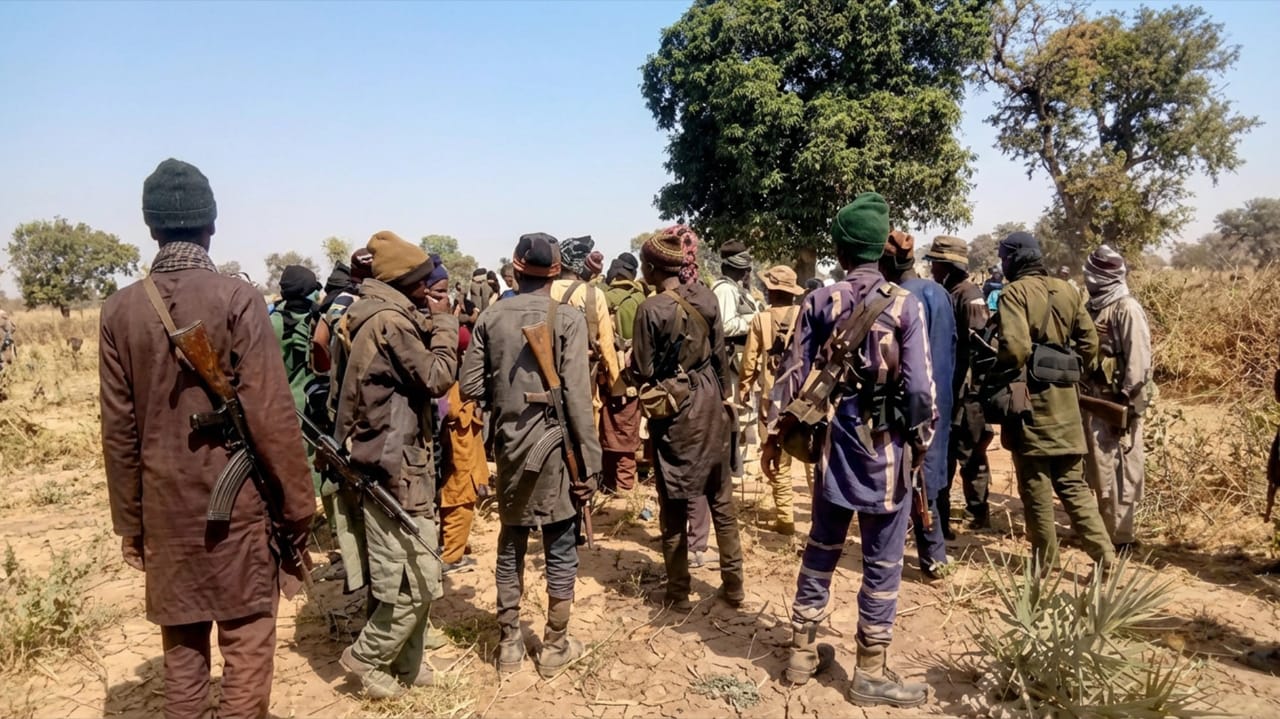
Nigerian troops under Operation Eastern Sanity have intensified their offensive against the proscribed Indigenous People of Biafra (IPOB) and its armed wing, the Eastern Security Network (ESN), in parts of the South-East.

The military said the ongoing operations are aimed at dismantling insurgent camps and restoring security in the region.

According to a statement, troops carried out a coordinated operation on March 3, 2026, at Camp Gbadoanya in Orsumoghu, Ihiala Local Government Area of Anambra State. The operation involved other security agencies and received close air support from the Nigerian Air Force.

The joint team moved into the area to flush out suspected IPOB and ESN fighters operating within the camp and nearby locations.

During the raid, security forces discovered several camps used by the insurgents. The camps were searched and later destroyed.

Items recovered from the location included pump-action guns, locally made Dane guns, rifle magazines, rifle components, belts of ammunition and cutting machines. Troops also found Biafran currencies, materials suspected to be used for making improvised explosive devices, as well as musical instruments believed to belong to a Biafran Army band.

Security forces also recovered a Biafran flag and a Biafran Army Headquarters flag. The troops destroyed the flags and raised the Nigerian flag at the camp.

The military said the operation continued the following day. On March 4, 2026, troops destroyed additional camps within the same area.

During the follow-up operation, soldiers located a site used for assembling improvised explosive devices. The facility was dismantled and destroyed after it was examined.

Recovered equipment from the site included welding machines, drilling machines and filling machines. Troops also seized several car batteries, one electrode welding handle, twelve locally fabricated guns and rifle components, along with other materials suspected to be used for producing explosive devices.

The military said operations against IPOB and ESN fighters will continue across the region as part of efforts to maintain security and stability.

MURIC escalates call for INEC Chairman Amupitan’s removal over ‘Christian genocide’ article

By Sabiu Abdullahi

The Muslim Rights Concern (MURIC) has formally taken its demand for the removal of Professor Joash Amupitan, Chairman of the Independent National Electoral Commission (INEC), to the National Assembly.

MURIC and allied Islamic organisations are seeking Amupitan’s ouster due to his authorship of an 80-page legal brief alleging Christian genocide in Nigeria.

In a statement on Wednesday, MURIC’s Executive Director, Professor Ishaq Akintola, said, three months after Islamic organisations first called for Amupitan’s removal, he remains in office.

Akintola accused the presidency of showing “little interest in addressing complaints from Islamic groups,” despite what he described as “indisputable evidence” that the INEC chairman made false allegations against Nigerian Muslims before an American audience.

He questioned the federal government’s commitment to fairness, suggesting it responds more readily to “frivolous demands” than to “evidence-based complaints from law-abiding Islamic organisations.”

MURIC voiced concern that Amupitan’s continued leadership could erode public confidence in INEC’s neutrality ahead of the 2027 general elections. The group warned that alleged anti-Muslim bias might become a contentious issue in future electoral disputes.

“Since the presidency appears uninterested in listening to the complaints of Muslims against Amupitan, we must take his case to the court of the people’s representatives, the National Assembly,” Akintola said.

He noted that the call for removal was not about the INEC chairman’s religion but about what MURIC described as a “fanatical and hateful” attitude toward Nigerian Muslims.

The organisation urged lawmakers in both chambers to investigate the matter, stressing that Muslims, as citizens and taxpayers, deserve a platform to be heard.

MURIC also reiterated that Amupitan was unsuitable to serve as an impartial electoral umpire in 2027.

According to Daily Trust, Amupitan contributed to the 2020 publication Nigeria’s Silent Slaughter: Genocide in Nigeria and the Implications for the International Community, released by the International Committee on Nigeria (ICON) and the International Organisation on Peace-building & Social Justice (PSJ).

His 80-page chapter, titled Legal Brief: Genocide in Nigeria, argued that the scale and pattern of killings and displacement of Christians met the threshold for genocide under international law. The brief also criticised the federal government for failing to protect affected communities and deliver justice for victims.

Information asymmetry, market failure, and the role of incentives in Nigeria

By Nasiru Ibrahim 

Limited information in the market leads to inefficiency and misallocation of resources. A low-quality product or service can command a higher price, while high-skilled labour may receive lower wages. A seller with a high-quality product or service may incur losses because buyers cannot easily verify quality and are unwilling to pay a premium, fearing they may be overpaying for a low-quality alternative.

For example, a faulty car may sell at a high price because buyers lack technical knowledge, rely on appearances, brand reputation, or sellers’ claims, and face high inspection costs. A firm that chooses to be honest may lose by earning a lower profit margin because dishonest competitors exaggerate quality, cut corners, or hide defects while charging similar prices.

A quack or less-skilled consultant with fewer credentials and a weak track record may secure contracts faster due to information gaps, strong social networks, aggressive self-marketing, and clients’ inability to assess true competence before hiring.

In many markets, buyers seek to identify quality products or services by looking for higher prices, good public relations, branding, and heavy advertising. Poor-quality products and inefficient firms can imitate these signals, so both high- and low-quality products are often sold at roughly the same price. Under rational expectations, sellers understand that buyers believe higher prices signal higher quality. Buyers, lacking better information, rely on price as a shortcut, and low-quality sellers exploit this belief, leading to market failure similar to Akerlof’s Market for Lemons.

Demand for Experts, Agents, and Intermediaries

Information asymmetry increases the demand for experts, agents, consultants, brokers, and intermediaries who can distinguish good quality from bad. These agents help consumers get better deals and higher-quality products or services.

While this creates jobs, it does not necessarily solve consumer exploitation. Agents may collude with sellers, prioritise commissions over client welfare, exploit client ignorance, or add extra layers of cost without improving quality.

For example, if tax policy were simple and clearly understood, few people would need tax consultants. Complex systems create jobs for consultants and financial literacy experts. While this raises incomes and GDP, it can also raise prices because the cost of intermediaries is embedded in goods and services, contributing to inflation.

Efficiency vs Employment Trade-Off

Reducing information asymmetry improves efficiency but can increase unemployment in the short run. Many jobs—brokers, consultants, agents, and middlemen—exist mainly because consumers lack information. When governments improve transparency through clear regulations, digital platforms, and public data, fewer intermediaries are needed. As a result, demand for these expert roles declines, leading to job losses.

This creates a policy trade-off: greater transparency improves efficiency but reduces employment in information-based intermediary jobs. To manage this, governments should invest in retraining and help displaced workers move into sectors where skills add real value rather than exploiting information gaps.

Moral Hazard—Buyers Can Also Cheat

Moral hazard occurs after a transaction, when one party changes behaviour because costs are partly borne by the other party. Buyers are not always passive; they may also cheat when incentives allow.

Examples include tenants damaging rented property because repair costs are borne by landlords, insured individuals exaggerating losses, clients hiding information or misusing professional advice, and borrowers diverting loans to unintended uses.

Buyer-side moral hazard worsens inefficiency. Sellers respond by raising prices, tightening contracts, reducing quality, or exiting the market. Honest buyers then face higher costs and fewer choices, while resources are allocated to monitoring and enforcement rather than to productive activity. Information asymmetry is therefore two-sided, and policies must address both adverse selection and moral hazard through better contracts, monitoring, and enforcement.

Guarantees, Warranties, and Mixed-Quality Equilibrium

Guarantees and warranties are often introduced to signal product quality. High-quality sellers are willing to offer guarantees because defects are less likely, which should push low-quality products out of the market.

However, guarantees also create buyer-side moral hazard. Buyers may reduce care, overuse, or deliberately damage products because repairs or replacements are covered. This increases warranty costs for all producers.

High-quality firms may respond by raising prices, limiting coverage, or reducing quality investment. Low-quality firms can mimic guarantees by pricing in expected abuse. As a result, good and bad products coexist in equilibrium, despite the presence of guarantees. Guarantees improve trust but do not fully resolve market failure. Moral hazard shifts costs rather than eliminating inefficiency.

Digital Platforms, Formalization, and Consumer Protection

E-commerce and digital marketing platforms reduce information asymmetry by increasing price transparency, reviews, ratings, comparisons, and direct access to sellers. These tools reduce reliance on intermediaries and help consumers verify quality.

In cities like Abuja, Port Harcourt, and Lagos, consumers can reduce exploitation by:

Asking for the previous selling price and comparing across sellers.

Signaling willingness to switch if the price is unfair.

Checking online prices, reviews, or multiple shops to reduce information asymmetry!

Government can also reduce information asymmetry by formalizing markets, which improves record-keeping, transparency, standardization, and contract enforcement. Clear, fair, and incentive-based tax systems encourage voluntary compliance, provide access to credit, legal protection, and government contracts.

The government may invest ₦100 million in upgrading informal markets in Kano, Lagos, and Port Harcourt and taxing ₦20 million annually per market allows the government to recover costs within five years while boosting GDP and creating jobs.

Without incentives, multiple overlapping taxes increase compliance costs and deepen informality. Corruption, waste, and misuse of funds reduce citizen trust. Transparent, fair, and accountable government policies promote efficiency, formalisation, and market growth, while distrust, overconfidence, and policy failures harm the economy.

Ibrahim is a graduate of Economics from Bayero University, Kano and can be reached via nasirfirji4@gmail.com.

Gridlock grounds planes: Tinubu orders immediate halt to cashless toll gates

By Abdullahi Mukhtar Algasgaini

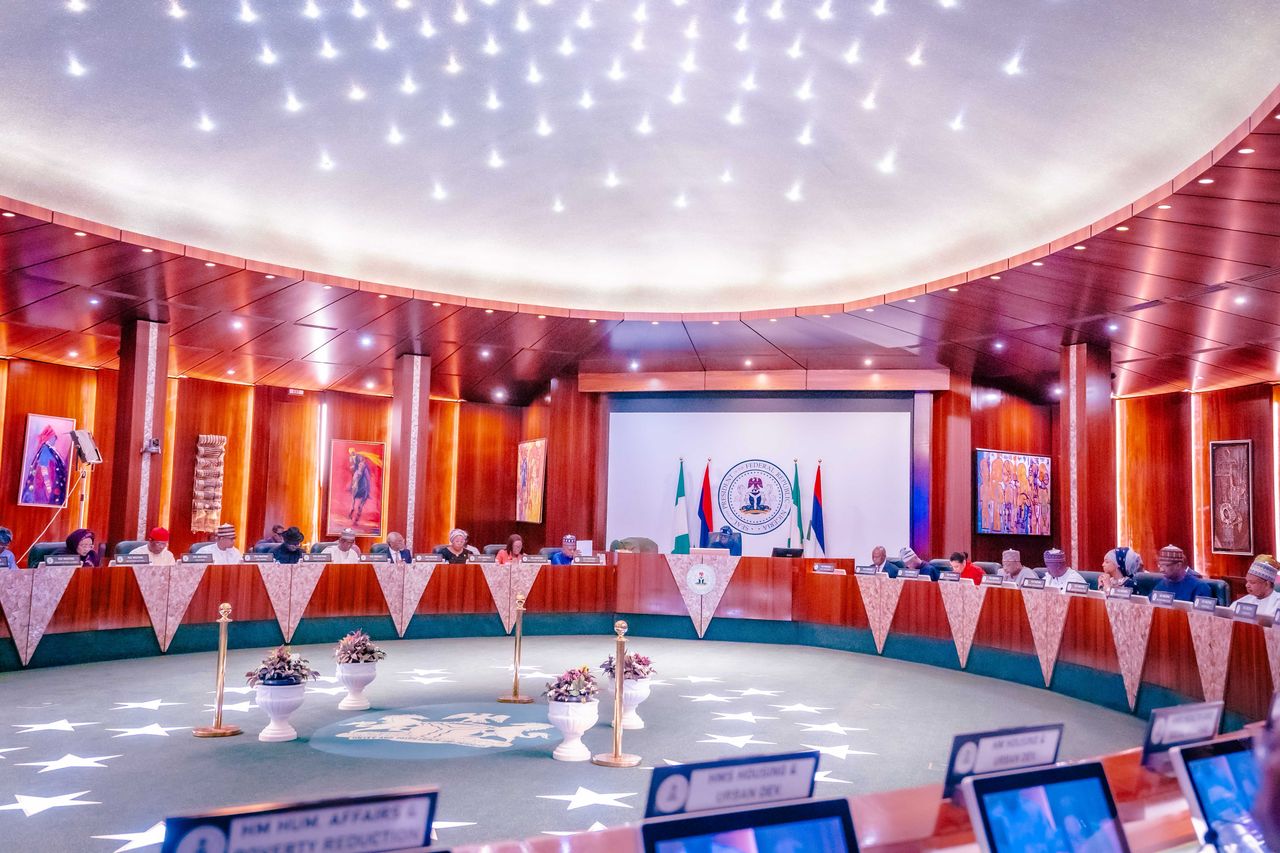
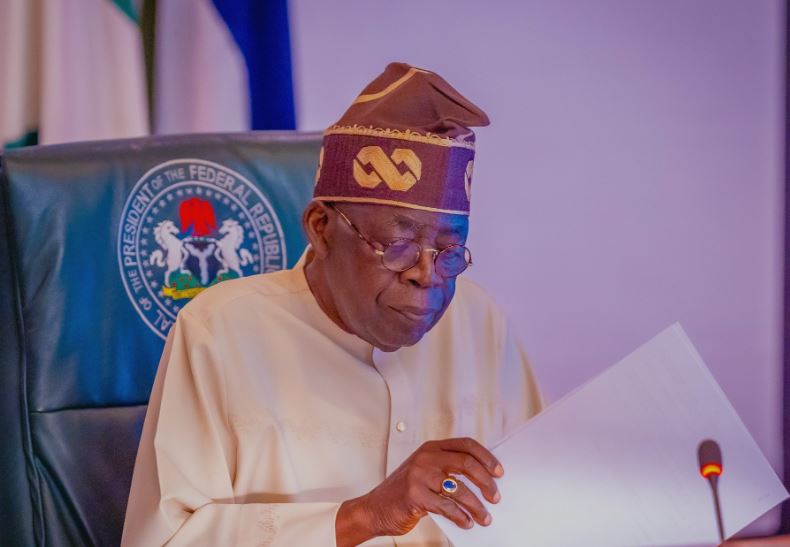
President Bola Tinubu has ordered an immediate suspension of the new cashless payment system at airport toll gates nationwide, citing widespread chaos that has caused numerous passengers to miss their flights.

The decision was announced on Wednesday by the Minister of Aviation and Aerospace Development, Festus Keyamo, following the Federal Executive Council meeting at the State House, Abuja.

Keyamo stated that the President intervened out of concern for the welfare of citizens, who have faced hours-long delays due to severe gridlock at the access roads to major airports.

“Mr. President was very concerned about the welfare of Nigerians and the fact that most Nigerians were losing their flights,” Keyamo told reporters. “So Mr. President, out of empathy, directed today that we suspend the present system because it creates a lot of gridlock, and Nigerians are suffering as a result of it.”

The cashless policy, implemented less than a week ago by the Federal Airports Authority of Nigeria (FAAN), was designed to eliminate corruption and optimize revenue collection after more than 50 years of cash transactions. It required motorists to use prepaid cards or electronic payments at toll gates.

However, the transition was plagued by bottlenecks, leading to massive traffic congestion—particularly at the Lagos and Abuja airport toll gates. Videos on social media showed queues stretching for kilometres, forcing travellers to depart for the airport hours earlier than usual.

While reaffirming the government’s commitment to a cashless system, Keyamo clarified that the President’s directive prioritises public convenience over the immediate elimination of cash.

“The major reason why Mr. President took this decision is to eliminate the present gridlock… not that the President is happy with the cash system,” the minister explained.

In the interim, a hybrid system will be implemented, allowing for both cash payments and the use of FAAN cards already purchased by motorists. The minister revealed that the government will now engage private sector participants to develop a more seamless electronic system that prevents future traffic disruptions.

“Mr. President said if we have to pay commission, we have to pay commission, but we’ll bring in private sector participants to help us devise a much more efficient payment system that will still eliminate cash at the gate,” Keyamo stated.

He added that the President has ordered a swift resolution and has directed the ministry to report back to him on the progress of a new, more efficient system.

No distress signal from Nigerians in Iran amid rising tensions—FG

By Uzair Adam

The Nigerians in Diaspora Commission (NiDCOM) has said it has not received any distress call from Nigerians residing in Iran despite the escalating hostilities involving Iran, the United States and Israel.

The clarification comes as the Federal Ministry of Foreign Affairs disclosed that it is closely monitoring developments in the Middle East.

NiDCOM’s Director of Media and Public Relations, Abdur-Rahman Balogun, speaking on Monday, explained that although Nigerians may be living in Iran, none has formally contacted the commission to request assistance.

“I’m not saying there are no Nigerians there, I’m only saying nobody has sent any distress call,” he said.

Balogun attributed the cancellation of flights to the region to the ongoing hostilities, noting that airlines would not operate in an active war zone.

He added that temporary ceasefires are sometimes arranged to allow stranded passengers to be evacuated, but such an arrangement has yet to take place.

On the possibility of an evacuation, he said the Federal Government would only activate a full-scale operation when specific conditions are met, including an official request for help from affected citizens.

“You cannot force them. People went there voluntarily. In Sudan and Ukraine, some initially said they were not leaving,” he explained.

He stressed that Nigerians who desire evacuation must clearly indicate their willingness to return home. “People must seek help and say, ‘Our lives are in danger, can you evacuate us?’” he said.

According to him, once a formal request is made and the situation permits safe movement, the government could initiate emergency steps such as chartering aircraft and setting up a rescue committee.

“All must be Nigerian and must be ready to come back home,” he stated.

Balogun reaffirmed that safeguarding Nigerians abroad remains a key responsibility of the Federal Government under its citizen diplomacy policy.

He assured that if any Nigerian’s life is threatened and a request for assistance is received, authorities would explore available options, including leasing aircraft if necessary.

However, he maintained that evacuation would be impracticable without a ceasefire and the reopening of airspace, stressing that international aviation protocols must also be respected.

“As far as I know, I’m not aware that anybody has sent a distress call,” he reiterated.

Nigerian military intercept 296 wraps of suspected Cannabis

By Sabiu Abdullahi

Troops of the 35 Artillery Brigade have intercepted 296 large wraps of substances believed to be Cannabis Sativa along the Abeokuta–Igboora Road in Ogun State.

The operation took place at about 4:30 a.m. on March 1, 2026, after the troops received credible intelligence about the planned movement of suspected illicit drugs along the route. Acting swiftly on the information, the soldiers moved to the area and stopped a motorcycle without a registration number.

During a search, the troops discovered 296 large wraps of substances suspected to be Cannabis Sativa, also known as Indian hemp. The items were hidden inside three large sacks. The suspect reportedly abandoned the motorcycle and escaped into a nearby bush under the cover of darkness.

The seized exhibits have been handed over to the National Drug Law Enforcement Agency (NDLEA), Ogun State Command, for further investigation and necessary action.

The 35 Artillery Brigade reiterated its determination to rid Ogun State of drug trafficking and other criminal activities. The Brigade warned individuals involved in illegal trade to embrace lawful means of livelihood or face the consequences of security operations.

It also reassured residents of Ogun State of the Nigerian Army’s continued commitment to safeguarding lives and property. The Brigade stated that troops will sustain a strong presence across the state to ensure that criminal elements do not operate freely.

The statement was signed by Major IderegHI Samuel Akari, Assistant Director, Army Public Relations, 35 Artillery Brigade, and dated March 2, 2026.

Why governors are leaders of their parties in the states

By Zayyad I. Muhammad

Nigeria’s Fourth Republic, which commenced in 1999, introduced a distinctive political culture that has since become entrenched in the nation’s democratic practice. Governors automatically emerge as leaders of their political parties in their respective states.

Although this arrangement is not expressly written into the 1999 Constitution or party constitutions as a rigid rule, it has evolved into an accepted political convention. In practical terms, once a governor belongs to a political party, he becomes the undisputed leader of that party in the state.

This “default” leadership status flows from the enormous constitutional powers, financial control, and political influence vested in state governors. Under the 1999 Constitution, governors are the chief executives of their states, control significant public resources, influence appointments, and play central roles in policy direction. These powers naturally position them as dominant actors within the political structure of their states. Political parties, being vehicles for acquiring and exercising power, inevitably gravitate toward the governor as their rallying point.

Critics often argue that this arrangement departs from earlier republican experiences. During Nigeria’s First, Second, and even Third Republics, governors and presidents were not automatically regarded as the formal leaders of their parties at the state or national levels. Party structures were often more independent, with clearer institutional separation between party leadership and executive office holders. However, Nigeria’s political system has evolved significantly since then. The current democratic framework places far greater burden, administrative authority, fiscal control, and political leverage in the hands of governors than was previously the case. It’s about the position!

The emergence of governors as de facto party leaders is not accidental but a result of political evolution shaped by key realities. The 1999 Constitution centralises executive authority in governors, making them the most powerful figures in their states. They also control critical political resources, finances, networks, appointments, and patronage, which are essential for party survival and electoral success. In a competitive electoral environment, incumbency provides structure, visibility, and mobilisation strength that few others can match.

Above all, political parties require unified command; without clear leadership at the state level, factionalism and instability can easily arise.

Imagine the chaos and unhealthy rivalry that could engulf a political party if a sitting governor chose to remain indifferent to party affairs. Competing factions would struggle for supremacy. Conflicting directives could weaken party cohesion. Such fragmentation could easily cost the party elections and governance effectiveness.

Furthermore, when it comes to interfacing between the executive arm at the federal level and party structures within the states, particularly in matters relating to appointments, political negotiations, federal-state collaboration, and reward systems, the governor’s role becomes indispensable. Governors serve as the bridge between national party leadership and grassroots political actors. In fact, Presidents often rely on Governors to win a state 

Just as the President functions as the leader of his party at the national level, governors serving as party leaders in their states create symmetry within the political order. This structure promotes stability, clarity of authority, strategic coordination, and internal discipline.

It is therefore not surprising that across Nigeria’s 21 registered political parties, this practice is widely accepted. Once a governor joins a party, he naturally assumes leadership of that party in the state, not necessarily by proclamation, but by political reality.

While debates may continue about whether this system strengthens internal party democracy or concentrates excessive influence in one individual, its practical utility in maintaining order, direction, and electoral viability cannot be ignored.

The emergence of governors as party leaders in their states reflects the reality on the ground, political necessity, and democratic evolution in Nigeria’s Fourth Republic.

Zayyad I. Muhammad writes from Abuja via zaymohd@yahoo.com.

Alumni demand release of Nasir Ahmad El-Rufai over alleged unlawful detention

By Muhammad Sulaiman

The Alumni of the Kashim Ibrahim Fellowship have called for the immediate release of former Kaduna State Governor, Nasir Ahmad El-Rufai, describing his continued detention as unlawful and a violation of his fundamental human rights.

In a press statement issued on Monday, the group expressed “deep concern” over what it termed the illegal detention of El-Rufai, arguing that it contravenes constitutional guarantees of personal liberty, dignity and due process under the 1999 Constitution of the Federal Republic of Nigeria.

The alumni further criticised the Department of State Services (DSS) for failing to produce the former governor before the Federal High Court on February 25, 2026, stating that this action infringes his right to a fair hearing within a reasonable time as provided under Section 36 of the Constitution.

According to the statement, the right to be brought promptly before a court is “not discretionary but an essential safeguard of personal liberty and justice.” The group urged all relevant authorities to ensure strict adherence to constitutional provisions and uphold the rule of law.

The fellowship alumni also highlighted El-Rufai’s record in public service, particularly his tenure as governor of Kaduna State, where they said he implemented institutional reforms and socio-economic development programmes with measurable impact. They noted that the establishment of the Kashim Ibrahim Fellowship was among his initiatives to encourage youth participation in governance and leadership.

Reaffirming their solidarity, the group called on well-meaning Nigerians to support their demand for justice and due process. They insisted that every citizen is entitled to protection from unlawful detention and urged authorities to grant El-Rufai full rights to defend himself without prejudice.

The statement concluded with a renewed demand for his immediate release, emphasising that adherence to democratic principles and the rule of law is critical to strengthening public trust in national institutions.

NELFUND extends student loan application portal after surge in demand

The Nigerian Education Loan Fund (NELFUND) has extended its Student Loan Application Portal to accommodate the growing nationwide interest generated by its ongoing awareness campaign.

The extension follows a reminder last week that the portal was scheduled to close on February 27, 2026. In response to feedback from students and stakeholders, NELFUND provided additional days to allow eligible applicants sufficient time to complete their submissions.

In a statement on Monday, signed by the Director of Strategic Communications, Oseyemi Oluwatuyi, NELFUND said:

“The Nigerian Education Loan Fund has approved an extension of its Student Loan Application Portal following a significant increase in awareness and nationwide demand generated by its ongoing sensitisation campaign.

“The Fund has approved some additional days to ensure all eligible students are given adequate opportunity to complete their applications, pending further management decisions and communications.”

The announcement targets students requiring extra time, prospective applicants informed through recent outreach, institutions that have just commenced their 2025/2026 academic session, and schools that have yet to submit verified student lists.

“Our sensitisation efforts across the six geopolitical zones have significantly increased awareness and participation. Therefore, in line with our mandate to expand access to tertiary education financing, we have approved an extension to ensure that all eligible students have a fair and equal opportunity to apply,” said NELFUND Managing Director and Chief Executive, Akintunde Sawyerr.

NELFUND advised institutions that have not yet started the 2025/2026 session to submit an official extension request with their approved academic calendar. Students are urged to complete their applications via the official portal before it closes permanently.

The Fund reaffirmed its commitment to transparency, accountability, and sustainable student financing solutions designed to remove financial barriers to higher education in Nigeria.

As of the portal’s previous closure date, NELFUND had received 1.69 million applications and disbursed N183.8 billion.

Established under the Nigeria Student Loan Scheme, enacted by President Bola Tinubu in April 2024, NELFUND provides interest-free loans to students in public tertiary institutions to cover tuition and living expenses. Applications opened in May 2024 to support students from low-income backgrounds. Beneficiaries repay the loans after graduation and securing employment.