Zubaida Umar and the Slow Rebuilding of Preparedness Culture
By Abdulhamid Abdullahi Aliyu
Nigeria has become dangerously familiar with the ritual of disaster. The warnings often come early, the forecasts are circulated, vulnerable communities are identified, and officials hold preparedness meetings. Yet when the floods finally arrive, or fire tears through crowded markets, or another preventable emergency pushes families into distress, the country still reacts with the same confusion, urgency and humanitarian panic, as though tragedy appeared without notice.
It is one of the ironies of public life in Nigeria that disasters are rarely taken seriously until they become spectacles. Before then, they exist as predictions, advisories, technical reports, stakeholder meetings and public warnings. Afterwards, they become breaking news, condolence visits, emergency relief, public anger and committee recommendations. Between those two moments lies the real weakness of the system: the stubborn national habit of knowing danger in advance but failing to prepare adequately for it.
This is the difficult terrain in which the National Emergency Management Agency, NEMA, operates. To many Nigerians, the agency is most visible in moments of distress, when flood victims need support, when displaced persons require relief, when fire victims are counting losses, or when communities suddenly discover the meaning of vulnerability. But the true measure of an emergency management institution is not only what it does after a tragedy has occurred. It is also what it can prevent, reduce, coordinate, and anticipate before the situation becomes a national emergency.
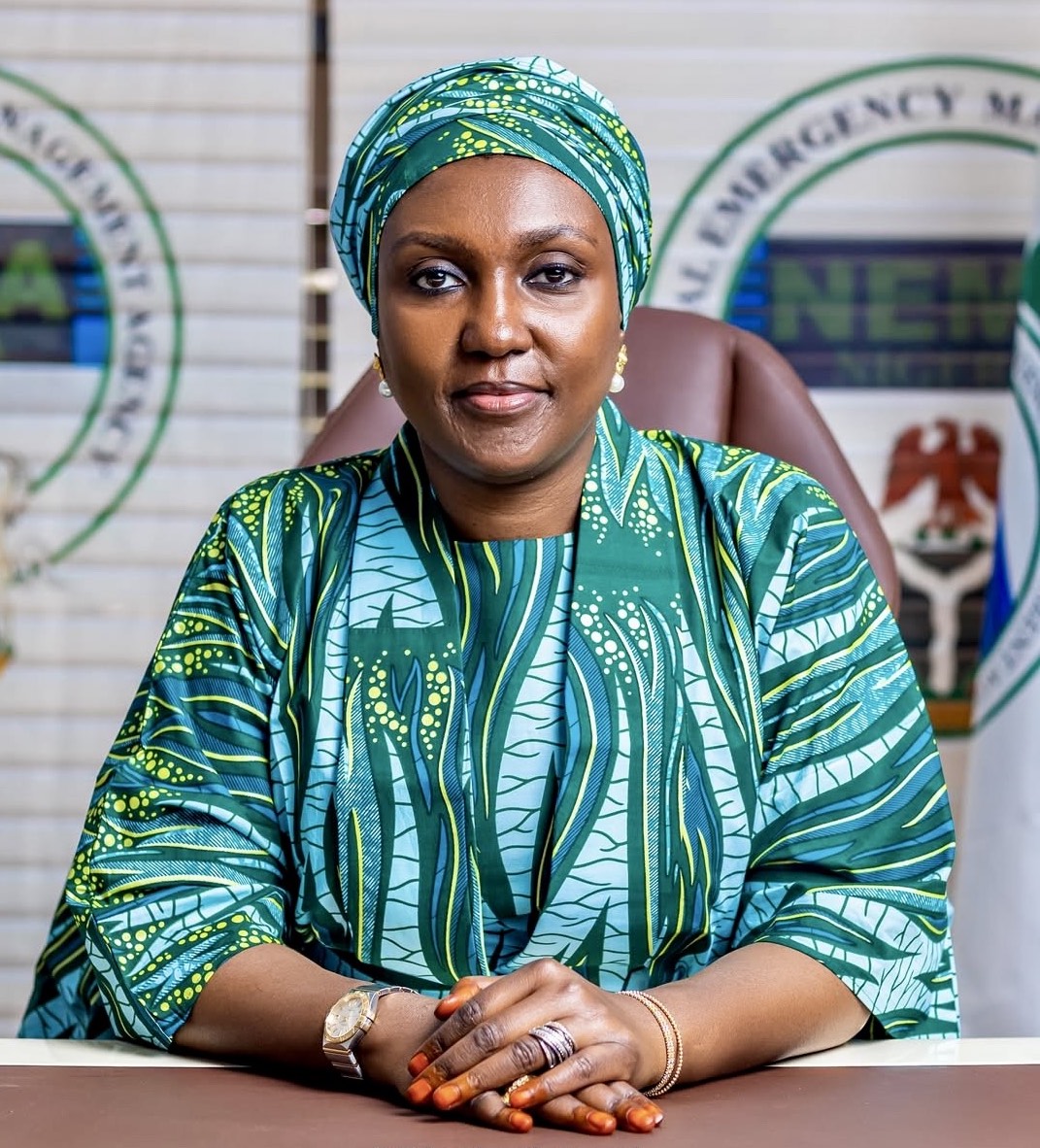
That is why the two-year stewardship of Mrs Zubaida Umar as Director General of NEMA deserves a more thoughtful reading than routine anniversary praise. When President Bola Ahmed Tinubu approved her appointment in March 2024, the expectation was not merely that another public officer would occupy another office. The assignment carried the heavier burden of strengthening operational discipline, improving coordination and repositioning the agency toward a more proactive model of emergency management. Two years later, the useful question is not whether disasters have disappeared. They have not. The real question is whether there are signs that the agency is beginning to think differently about its mandate.
Perhaps the most important development under Umar is not the kind that announces itself loudly. It is not found only in relief distribution photographs, ceremonial visits or official statements. It is evident in a gradual institutional shift from reaction to anticipation, from waiting for disaster to happen before mobilising to placing greater emphasis on preparedness, early warning communication, simulation exercises, inter-agency coordination, and community-level sensitisation.
This shift may appear modest to the casual observer, but in Nigeria’s emergency management culture, it is significant. The country’s problem has never been simply the absence of warnings. Flood forecasts are issued. Meteorological advisories are released. Hydrological risks are mapped. Vulnerable states and communities are repeatedly mentioned. Environmental experts warn against blocked drainage and settlements along waterways. Yet the same cycle continues because warnings, in themselves, do not save lives. They only become useful when they are understood, trusted and acted upon.
For years, Nigeria has struggled to convert prediction into preparedness. Communities remain in danger zones long after alerts have been issued. Drainages remain blocked despite annual warnings. Buildings continue to rise where water must naturally pass. Local structures often wait for Abuja. Citizens sometimes treat evacuation advice as government disturbance until water is already at the door. By then, emergency management becomes more expensive, more chaotic and more painful.
It is within this context that NEMA’s renewed attention to grassroots sensitisation becomes important. Across several states, the agency has intensified preparedness campaigns aimed at reducing the gap between forecast and response. One of the more telling examples was the flood preparedness campaign in Ebonyi State, where the engagement moved beyond formal speeches and stakeholder protocols into direct community interaction. Emergency officials went into vulnerable communities, spoke in local languages, distributed safety information, and discussed flood risks, evacuation culture, and prevention measures with residents.
That may look ordinary on paper, but it carries a deeper meaning. A warning trapped inside a technical report is not yet a warning. A forecast discussed only in Abuja has not fully served the woman whose house sits near a riverbank, the farmer whose farmland will be submerged, the school head who must protect pupils, or the local leader whose community may need to move before danger arrives. Disaster communication becomes meaningful only when it reaches ordinary people in the language of their daily reality.
This is one of the most important lessons Nigeria must learn. Preparedness is not achieved by issuing statements alone. It requires translation, persuasion, repetition and trust. It requires taking risk information from conference halls to communities, from policy language to household action, from official alerts to behavioural change. In that sense, public communication is not an accessory to emergency management; it is one of its strongest instruments.
The same logic applies to coordination. Disasters do not respect institutional boundaries. A flood is not only a NEMA issue. It is an environmental issue, an urban planning issue, a housing issue, a public health issue, a food security issue, a security issue and, quite often, a governance issue. When water overruns a community, it affects homes, roads, schools, markets, farmlands, hospitals and livelihoods at the same time. No single institution can carry that burden alone.
This is why the increasing emphasis on multi-sectoral coordination under the current leadership is notable. The agency’s engagements with ministries, departments and agencies, state emergency structures, security agencies, humanitarian partners and technical institutions suggest a clearer understanding that NEMA’s strength lies not in behaving like a lone responder, but in making the wider emergency management ecosystem function better. In a federal system where fragmentation often weakens public response, that coordinating role is not a small matter.
There is also a growing recognition that modern emergency management must be more technical than sentimental. It must be driven by data, monitoring, logistics planning, early warning systems, communication flow and rapid decision-making. This explains the growing relevance of structures such as the National Emergency Operation Centre, which serves as the command-and-coordination infrastructure required for monitoring and responding to serious disasters. Such systems may not excite the public in the way dramatic rescue scenes do, but they are central to the quiet work of preventing confusion before it becomes costly.
Simulation exercises also belong to this quieter but more serious side of emergency management. Nigeria has never been poor in policy documents; the problem has often been what happens when real pressure arrives. Preparedness drills help institutions identify their weaknesses before a disaster exposes them. In an emergency, questions that look simple in a meeting can become decisive on the field. Who leads the evacuation? Who communicates verified information? Who coordinates medical response? Who controls movement? Who protects children, women, older persons and persons with disabilities? Who documents needs and prevents duplication? The difference between order and confusion often lies in whether such questions were answered before the crisis.
The increased emphasis on rehearsals, simulations, and preparedness drills, therefore, suggests an agency seeking to move from theoretical to practical readiness. The process may be gradual, but the direction is important. A country that waits for every disaster to teach it the same lesson again has not taken preparedness seriously.
The wider humanitarian environment also makes this change unavoidable. Flooding remains one of Nigeria’s most devastating recurring threats, but it is not the only one. Urban fires, tanker explosions, building collapses, communal displacement, food insecurity, climate shocks and other emergencies have expanded the meaning of vulnerability across the country. A serious emergency management institution can no longer think narrowly or seasonally. It must understand how climate, poverty, infrastructure failure, insecurity, public behaviour and weak local governance combine to create disasters.
This broader thinking is beginning to reflect in NEMA’s engagement with issues such as food security, climate vulnerability and community resilience. That is an important evolution. In today’s Nigeria, food insecurity is not merely an agricultural concern. Floods destroy farms. Conflict displaces farming communities. Climate shocks weaken harvests. Poor roads and insecurity disrupt supply. Once these pressures converge, they become humanitarian problems. Emergency management in the 21st century is therefore not simply about distributing rice, mattresses and blankets after tragedy. It is about understanding risk before it matures into a crisis.
Still, any honest assessment must avoid the temptation of easy celebration. Nigeria’s emergency management architecture remains burdened by serious structural weaknesses. Many state emergency management agencies are still underfunded or poorly equipped. Local emergency management committees are inactive in many places. Urban planning violations continue with impunity. Floodplains are still occupied. Drainage systems remain poor across several cities. Citizens still ignore warnings. State and local authorities too often treat disaster preparedness as a seasonal ritual rather than a governance responsibility.
These are not problems one Director General can solve alone, and it would be unfair to pretend otherwise. But leadership matters because it sets institutional tone. It determines whether preparedness becomes a culture or remains a slogan. It influences whether an agency merely reacts to tragedy or begins to organise itself around prevention, anticipation and coordinated readiness. It shapes whether the system waits for sympathy after loss or pushes harder for discipline before loss.
It is not a transformation that should be overstated. Floods have not stopped. Fire outbreaks have not disappeared. Communities still suffer avoidable losses. Operational gaps still exist. But there are visible indications that the agency is increasingly speaking, and slowly institutionalising, the language of preparedness, coordination, public education and anticipatory action. In a country where public institutions often confuse activity with progress, even this shift in emphasis is worth noting.
Some achievements in public service are loud because they are visible. Others are valuable because they prevent losses that the public may never fully count. A community that evacuates early may never become headline news. A market that takes fire safety seriously may never trend online. A state that prepares before floodwater rises may not attract national attention. Yet these quiet outcomes are often the real victories of emergency management.
As Nigeria moves through another season of environmental uncertainty and humanitarian pressure, emergency management must no longer remain an afterthought, activated only after tragedy strikes. State governments must strengthen their emergency agencies. Local governments must revive community response structures. Traditional and religious leaders must help translate warnings into action. Citizens must stop treating risk alerts as routine government grammar. The media must give preparedness the same urgency it gives to disasters.
Two years into Zubaida Umar’s leadership, the agency appears to be attempting something important: the slow rebuilding of a preparedness culture in a country too accustomed to panic after warning signs have been ignored. It is an unfinished journey, certainly. But it is also a meaningful one.
Nigeria may never fully escape disasters. No country does. But stronger institutions can prevent familiar hazards from repeatedly becoming national tragedies. That, ultimately, is the real test of emergency management, and perhaps the quiet significance of the institutional shift now taking place at NEMA.
Abdulhamid Abdullahi Aliyu is a journalist and syndicated writer based in Abuja.