Nigeria

Nigeria leads African crude oil exports to U.S., ships $2.57bn in 8 months

By Sabiu Abdullahi

Nigeria emerged as Africa’s largest exporter of crude oil to the United States between January and August 2025, shipping 33.23 million barrels valued at $2.57 billion, according to the U.S. Mission in Nigeria.

The disclosure was made on Tuesday through a post on the Mission’s official X handle, @USinNigeria. The Mission stated that Nigeria’s shipments during the eight-month period represented more than half of total African crude oil exports to the American market.

The U.S. Mission said the figures highlight Nigeria’s strong position among African oil-producing countries supplying crude to the United States and reflect the depth of economic ties between both nations.

“#DidYouKnow that Nigeria was the leading African exporter of crude oil to the United States between January and August 2025, shipping 33.23 million barrels worth $2.57 billion? That’s more than half of all African crude oil exports to the United States during that period,” the Mission stated.

The Mission added that the ongoing trade relationship continues to deliver economic value to both countries. “Our strong trade ties create jobs and drive prosperity on both sides of the Atlantic,” the statement said.

Nigeria remains one of Africa’s largest oil producers and a key supplier to the global energy market, despite recent output challenges linked to oil theft, pipeline vandalism and operational constraints.

The strong trade performance comes against the backdrop of shifting diplomatic relations between Nigeria and the United States in 2025. During the latter part of the year, bilateral ties experienced tension linked to immigration, security and religious freedom concerns, before easing toward the end of the year.

On December 16, 2025, U.S. President Donald Trump issued a proclamation titled “Restricting and Limiting the Entry of Foreign Nationals to Protect the Security of the United States.”

The order, which takes effect on January 1, 2026, expanded an existing travel restriction list to 39 countries. Nigeria was among 15 countries subjected to partial entry limitations, including a halt to new F, M and J visa issuances.

FG declares Christmas, New Year holidays as police roll out nationwide security measures

By Sabiu Abdullahi

The Federal Government has announced public holidays for the 2025 Christmas and New Year celebrations, while security agencies across the country have intensified measures to ensure safety during the festive period.

The Minister of Interior, Dr Olubunmi Tunji-Ojo, on Monday declared Thursday, December 25, 2025; Friday, December 26, 2025; and Thursday, January 1, 2026, as public holidays to mark Christmas, Boxing Day and New Year. The announcement was made on behalf of the Federal Government.

In a statement, the minister conveyed Christmas and New Year goodwill messages to Christians in Nigeria and in the diaspora, as well as to all citizens marking the close of the year and the start of a new one. He described the season as a time for reflection and national unity.

The holiday declaration came amid heightened security arrangements ordered by the Inspector-General of Police, Kayode Egbetokun. The IGP directed the nationwide deployment of police personnel and assets to maintain public safety throughout the festive season.

According to a statement issued by the Force Public Relations Officer, Benjamin Hundeyin, all zonal Assistant Inspectors-General and state Commissioners of Police have been instructed to boost patrols, strengthen visibility policing, deepen intelligence-driven operations and expand community engagement.

“In line with the Force’s proactive security strategy for the festive season, the IGP has directed all Zonal AIGs and State Command CPs to intensify patrols, visibility policing, intelligence-led operations, and confidence-building engagements throughout the period.

“Specialised units, including the Police Mobile Force, Counter-Terrorism Unit, Explosive Ordnance Disposal Command, Intelligence Response Team, Special Tactical Squad, Special Intervention Squad, Highway Patrol, Marine Police, and the Airwing, have been placed on heightened operational readiness,” the statement read.

Hundeyin said security coverage includes places of worship, recreational centres, markets, motor parks, event venues, transport terminals, highways, critical national infrastructure and other crowded public locations.

He added, “Additional patrol teams and surveillance units have also been activated to cover inter-state routes and major expressways to prevent road-related crimes, traffic disorder, and accidents.

“The deployed officers have been charged to be firm but courteous in the discharge of their duties.”

The police spokesman further stated that commands across the country have been directed to sustain raids on identified blackspots, forests, criminal hideouts and flashpoints, while collaboration with other security agencies has been strengthened.

All federal job seekers must now pass drug tests, FG declares

By Abdullahi Mukhtar Algasgaini

The Federal Government has made drug tests compulsory for anyone applying for a job in the public service.

The move aims to tackle the growing problem of drug abuse and its effects on security and work performance.

The directive came in an official circular issued today by the Office of the Secretary to the Government of the Federation (OSGF).

It orders all Permanent Secretaries and heads of Ministries, Departments, Agencies (MDAs), and parastatals to include drug screening in their hiring process.

According to the circular, all MDAs must work with the National Drug Law Enforcement Agency (NDLEA) to carry out the tests and ensure they meet required standards.

The government said the policy is a response to the “alarming rate” of substance abuse, especially among young Nigerians.

It warned that the trend poses a serious threat to public health, the economy, workplace safety, and national security.

The statement was signed by Segun Imohiosen, Director of Information at the OSGF.

He stated that the administration is determined to safeguard the workforce from drug-related harms.

This new rule for federal jobs follows similar recent policies that introduced mandatory drug testing in universities and other sectors.

Kaduna governor enacts major ₦986 billion budget for 2026

By Abdullahi Mukhtar Algasgaini

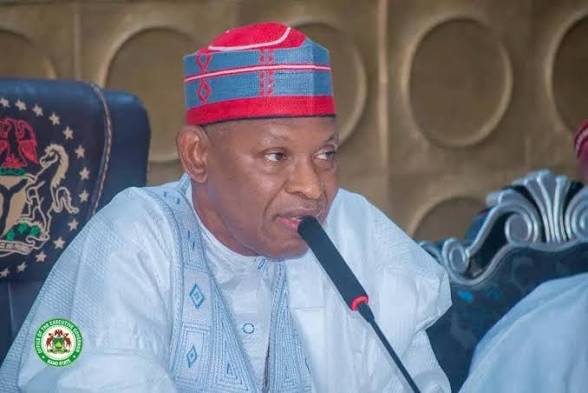
Governor Uba Sani has formally signed the 2026 appropriation bill of ₦985.9 billion into law, marking a significant commitment to infrastructure and grassroots development in Kaduna State.

The budget, titled “Consolidation of Transformation for Inclusive Development,” strongly prioritizes capital projects. A substantial ₦698.9 billion representing 70.9% of the total is allocated for capital expenditure aimed at infrastructure, economic expansion, and improved public services.

Recurrent expenditure, set at ₦287 billion (29.1% of the budget), will cover essential government operations and services.

A standout feature is the direct allocation of ₦100 million to each of the state’s wards for community driven projects, a move designed to ensure development reaches the grassroots level.

Governor Sani emphasized that the budget reflects his administration’s focus on inclusive growth and tangible improvements in the lives of Kaduna’s residents.

Nicki Minaj explains why she raised voice for Nigerian Christians

By Anas Abbas

Nicki Minaj has explained why she chose to publicly speak about the situation of Christians in Nigeria, saying her decision was driven by personal ties to the country and deep concern over reports of violence linked to religion.

The American rapper made the remarks during a public appearance where she was asked about her recent comments on Nigeria. She said the country is close to her heart, noting that she has long-standing relationships with Nigerians, including her pastor and many supporters.

Minaj said she was disturbed by accounts of kidnappings and attacks allegedly carried out against people because of their faith. According to her, such reports compelled her to use her global platform to draw attention to what she described as a moral issue that should not be ignored.

She also spoke more broadly about the importance of religious freedom, stressing that many people take for granted the ability to worship freely and safely. She urged the public to remember those who face fear and danger simply for practicing their religion.

Her comments followed her reaction to a statement by the U.S. President Donald Trump on the treatment of Christians in Nigeria. Minaj said her position was rooted in the belief that the right to worship should be protected everywhere.

The intervention has sparked mixed reactions, with some welcoming the international attention on Nigeria’s security challenges, while others argue that the issue is complex and should be handled with careful local context.

Alleged alterations in tax laws trigger probe demands

By Sabiu Abdullahi

The controversy surrounding the reported alteration of newly signed tax reform laws has continued to draw sharp reactions across the country, as civil society groups, political figures and regional organisations demand clarity and accountability.

The Socio-Economic Rights and Accountability Project and several northern groups have called for an investigation into alleged illegal changes made to the tax laws, which are scheduled to take effect on January 1, 2026. President Bola Tinubu recently signed the laws.

Concerns emerged after some lawmakers, led by Sokoto lawmaker Abdussamad Dasuki, claimed that the versions of the tax bills gazetted differed from the harmonised copies passed by the Senate and the House of Representatives.

In response to the allegations, the Speaker of the House of Representatives, Tajudeen Abbas, set up a seven-member committee chaired by the Chairman of the House Committee on Appropriations, Mukhtar Betara, to examine the claims.

Prominent political leaders, including former Vice President Atiku Abubakar and the Labour Party’s presidential candidate in the last election, Peter Obi, have urged the Federal Government to suspend implementation of the reforms until the matter is resolved.

The Presidency, however, dismissed the allegations and maintained that the reforms would proceed as planned.

In a statement issued on Sunday, SERAP urged President Tinubu to direct the Attorney General of the Federation and Minister of Justice, Lateef Fagbemi, SAN, to release certified true copies of the tax bills received from the National Assembly, the versions signed into law, and those eventually gazetted.

The organisation listed the affected legislations as the National Revenue Service (Establishment) Act; the Joint Revenue Board of Nigeria (Establishment) Act; the Nigeria Tax Administration Act; and the Nigeria Tax Act.

SERAP also asked the President to instruct the Attorney General to clarify whether the bills forwarded by the National Assembly were identical to the versions assented to and gazetted. It further called for the immediate constitution of an independent panel of inquiry to investigate claims of material differences between the bills passed by lawmakers and the laws published by the Federal Government.

In a Freedom of Information request dated December 20, 2025, and signed by SERAP’s Deputy Director, Kolawole Oluwadare, the organisation said the panel should determine how the alleged alterations occurred and identify those responsible.

According to SERAP, the panel should be chaired by a retired Justice of the Supreme Court or the Court of Appeal, with its findings made public. It added that those found culpable should face prosecution.

“The panel should have the mandate to establish the facts of what exactly occurred and identify those suspected to be responsible for the alleged alterations.

‘’The proposed panel should be headed by a retired Justice of the Supreme Court of Nigeria or the Court of Appeal. The findings of the panel should be made public. Anyone responsible for the alleged alterations must face prosecution, as appropriate.

”The organisation stated that publishing certified true copies of the bills and laws would allow Nigerians to compare them with the gazetted versions.

“Widely publishing a certified true copy of the version of the tax bills received from the National Assembly and a certified true copy of the tax laws signed by you would allow Nigerians to scrutinise the laws and compare them with the version of the tax laws ultimately gazetted,’’ it added.

SERAP warned that any unlawful changes would breach the 1999 Constitution (as amended), international human rights law, and the principles of separation of powers and the rule of law.

U.S. commits $200 million to over 900 Christian health facilities in Nigeria under $5.1 billion health pact

By Sabiu Abdullahi

The United States has unveiled a major financial commitment to Christian faith-based healthcare providers in Nigeria following the signing of a new five-year bilateral health cooperation agreement valued at $5.1 billion.

The development was announced in a statement released on Sunday by the US Mission in Nigeria through its official X handle. The agreement, formally known as a Memorandum of Understanding (MOU), was presented as part of broader efforts to advance Washington’s America First Global Health Strategy.

“The United States signed a five-year, $5.1B bilateral health cooperation Memorandum of Understanding (MOU) with the Federal Republic of Nigeria to advance the America First Global Health Strategy,” the statement said.

According to the US Mission, a central feature of the agreement is the provision of direct financial support to Christian faith-based health institutions operating across Nigeria.

“The MOU includes approximately $200M in dedicated support to more than 900 Christian faith-based healthcare facilities, expanding access to integrated HIV, TB, malaria, and maternal and child health services,” it said.

The Mission stressed that Christian healthcare providers play a significant role in Nigeria’s health system, especially in communities that remain difficult to access.

“Christian faith-based clinics represent about 10% of providers in Nigeria but serve more than 30% of Nigeria’s 230 million people, often in underserved areas,” it said.

The statement further explained that the funding intervention comes at a critical time, as Nigeria continues to struggle with serious public health concerns affecting women and children.

Ugandan university honours NERDC executive secretary, Prof. Salisu Shehu

By Uzair Adam

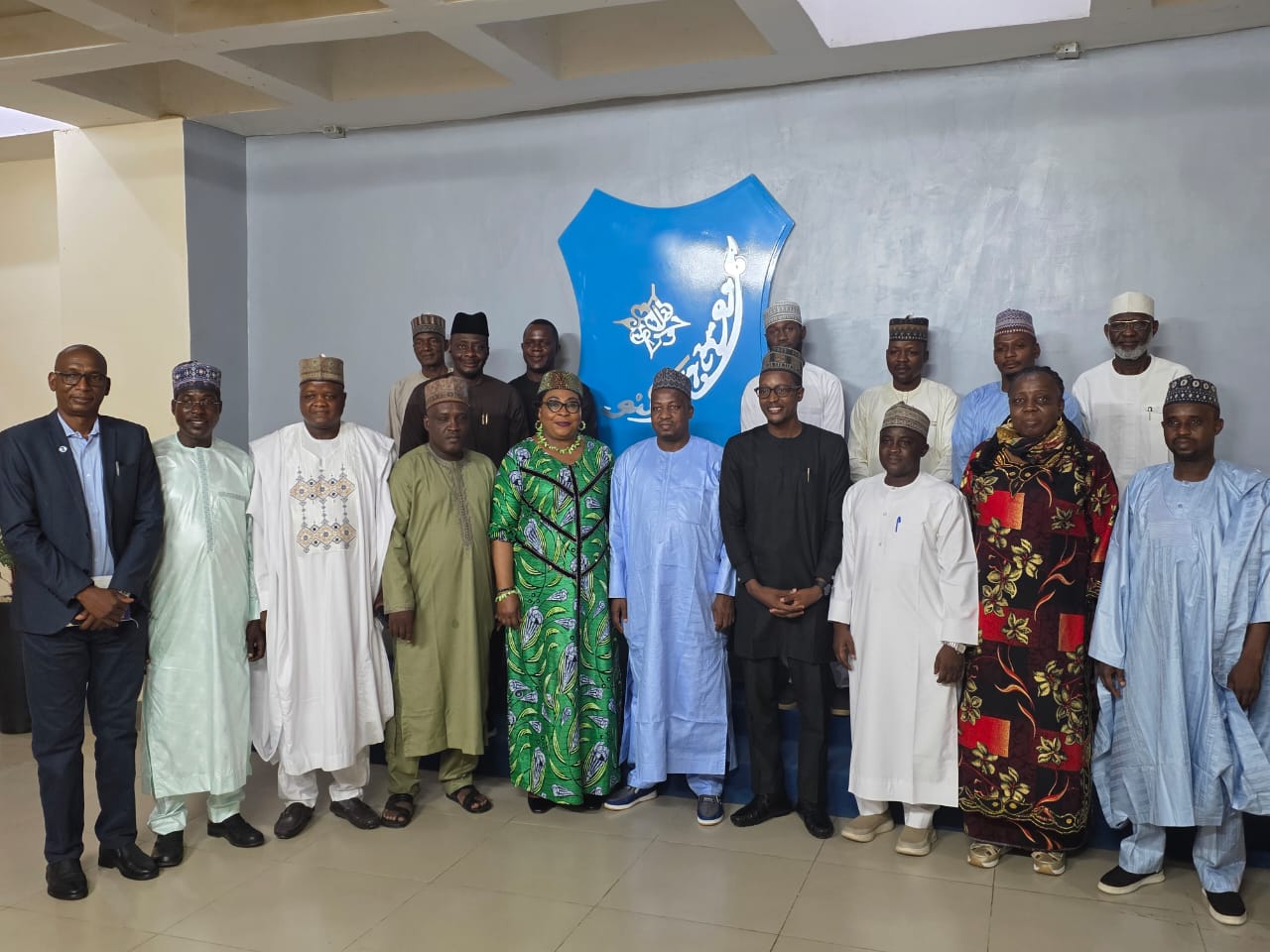
The Islamic University in Uganda (IUIU), Mbale Campus, has honoured the Executive Secretary of the Nigerian Educational Research and Development Council (NERDC), Professor Salisu Shehu, in recognition of his contributions to the advancement of education across the African continent.

The Daily Reality reports that the honour was conferred during the institution’s 34th Graduation Ceremony, held at its Mbale Campus, attended by university officials, graduating students, and invited guests.

At the event, the Rector of the university, Associate Professor Ismail Simbwa Gyagenda, presented Professor Shehu with a plaque inscribed: “Your continued support spices our corporate growth”.

Professor Gyagenda acknowledged his role in supporting the university’s academic development and institutional progress.

Professor Shehu, a seasoned educationist and academic administrator, currently heads NERDC, Nigeria’s statutory body charged with curriculum development, educational research, and the coordination of national education standards.

In this capacity, he has been involved in initiatives aimed at strengthening curriculum delivery and promoting collaboration among educational institutions within and outside Nigeria.

The recognition by the Ugandan university reflects Professor Shehu’s engagement with higher education institutions across Africa and underscores the growing importance of cross-border academic cooperation in addressing shared educational challenges on the continent.

Recalled Indomie Vegetable Flavour not available in Nigeria — NAFDAC

By Sabiu Abdullahi

The National Agency for Food and Drug Administration and Control has assured Nigerians that the Indomie Noodles Vegetable Flavour recently recalled in France is neither produced in Nigeria nor sold in the country.

The clarification followed widespread public concern after reports circulated online about the recall of the product by the French authority, Rappel Conso of France, over the presence of undeclared allergens, namely milk and eggs.

In a statement issued on Sunday and signed by the Director-General of NAFDAC, Prof. Mojisola Adeyeye, the agency confirmed that the affected product did not originate from Nigeria and is not registered for sale in the Nigerian market. It added that surveillance had been activated nationwide to ensure the product does not find its way into the country.

The statement read, “The management of the National Agency for Food and Drug Administration and Control (NAFDAC) is aware of the recall of Indomie Noodles Vegetable Flavour by the French authority (Rappel Conso of France) on account of the presence of undeclared allergens, specifically milk and eggs, which may pose significant health risks to consumers with allergies or intolerances.”

NAFDAC explained that the agency had taken precautionary steps as a regulatory body to prevent any possible entry of the recalled product into Nigeria.

“In light of this development, NAFDAC has undertaken some proactive measures as a responsive regulator by ensuring increased vigilance actions to guard against the possible entry of the recalled product into Nigeria,” the statement added.

The agency disclosed that its officers across the country had received directives to remain alert and seize the product if discovered anywhere within their jurisdictions.

“Surveillance has been directed across all zones and states, and zonal directors and state coordinators have been mandated to mop up the product if found within their jurisdictions,” it stated.

NAFDAC further stressed that the specific Indomie Noodles Vegetable Flavour involved in the recall is not authorised for sale in Nigeria.

“The public is hereby informed that the Indomie Noodles Vegetable Flavour in question is not registered with the National Agency for Food and Drug Administration and Control (NAFDAC) for sale in Nigeria,” the agency said.

It also pointed out that noodles remain on the Federal Government’s Import Prohibition List, a factor that limits the possibility of the affected product entering the Nigerian market.

Democracy vs. Military Rule: No contest

By Abdullahi Muhammad Yalwa

Sometimes, intellectual masturbation makes people say despicable things. That’s how they say foolish things without actually knowing. If not intellectual premature ejaculation, what else would possibly make an educated person compare democracy with military rule? You can’t compare the two at all. In fact, it’s an insult to real thinking to mix them up without a strong reason as to why and how.

Yes, Nigerians are frustrated with democracy because we’ve suffered under it. Presumably, every Gen Zer born from 1999 to date has suffered, or is suffering, from the discontents of democracy. Corruption, poverty, and bad leaders all strangulate our growth. As such, it’s easy for someone who never lived through military rule — or never thoroughly read about it — to think it was better. Nevertheless, it’s inexcusable to make that comparison in the 21st century. With all the history and information one click away. This is lazy thinking.

Nigeria’s story explains the tension between Democracy and Autocracy. Since independence in 1960, Nigerians have swung between dreams of democracy and military high-handedness. The First Republic, which started in 1963, collapsed into coups by 1966. Then came 30 years of mostly military rule, with a short democratic break from 1979 to 1983.

Within this duration, Gowon fought the Biafran war from 1967 to 1970, which resulted in millions of deaths and the fangs of deadly hunger almost flung Nigeria into an abyss. After Gowon, Buhari came in the 80s with his “War Against Indiscipline” rhetoric. Though some changes were recorded only minimally, his government, too, was a failed experiment. Then, Babangida followed his coup and ruled Nigeria through military rule for almost 10 years. His scandalous cancellation of the 1993 election brought General Abacha, who also killed activists in a cold-blooded manner, abducted critics, and censured opposition. Under Abacha, Nigeria became a global pariah, an outcast because of misrule, corruption, and human rights abuses. So, the soldiers promised order but delivered fear, theft, and failure. Beyond the Gun tirade, a lot of them proved to be nothing but unscrupulous, self-centred, and avaricious.

When democracy returned in 1999, it wasn’t perfect — but it was progress. From Obasanjo to Yar’Adua, Jonathan, Buhari, and now Tinubu, we’ve seen peaceful transitions. That alone is a miracle compared to the blood and chaos of coups, which are primarily scathing and scary.

Democracy works and is better than military rule because it gives people a voice. Under democracy, leaders are elected. The constitution limits their powers, and Citizens can question, join them, or change the government. Nigeria’s record is full of incidents in which the people removed the government despite its resistance. Elections since 1999 have been taking place, even though with low turnout and many flaws.

Furthermore, democracy still allows movements and protests like that of #EndSARS in 2020. As such, people can protest against abuse without the nation collapsing. That’s democracy in action.

Equally, in a democracy, the law stands above all. Rights like speech, movement, and association are still protected despite shortcomings. The media and civic groups expose scandals and corruption. Dan Bello is our standard example here. Leaders feel pressure because they can be voted out. They are still afraid of the people’s might. Similarly, growth comes from debate, not decree. Policies get tested and refined before execution. Sometimes they are reversed after execution because of pressure. All these are happening because of the grace of Democracy.

Now, compare that with military rule. Under soldiers, power is seized by guns, not ballots. A few officers give orders. No dialogue, no accountability, only decrees that replace laws. The constitution goes silent. Many of its parts got scraped and unscripted. Rights become suspended, or mere names on papers. Dissent under the military is punished with the barrels of guns. Abacha’s regime proved it — hidden trials, executions, silence. Thus, there is no right to protest, no matter the height of injustice.

Nevertheless, some people may say the military will bring discipline, build roads, and promote infrastructure. But all of that without justice is short-term. Order without fairness is not peace; it’s fear, which eventually erupts into chaos in disguise. 

We have tested the military. And the reflex is there in history for the discerning minds. Under the generals, Nigeria’s economy sank, institutions died, and corruption deepened. Stability built on fear never lasts. Once soldiers take power, they rarely leave it peacefully. Hence, there is no rotation of government. You only get stuck with whatever you’ve got.

Although Democracy has its flaws, issues like bad elections, corruption, and insecurity remain rampant in our country; nevertheless, it is by far a better option. At least, it gives us freedom to protest, options for dialogue, and hope in change. By contrast, military rule gives us nothing but fear, silence, and graves.

The worst democracy is still better than the best dictatorship. Democracy lets us correct our mistakes. Military rule buries them.

So, all these comparisons and happiness over the aborted coup against Tinubu is nothing but nostalgia from frustrated people who refused to learn better. Democracy is not Nigeria’s problem. Nigeria’s main issue is bad leadership. If only we’d vote for responsible leaders, they’d fix the system, without destroying it. They’d strengthen our votes. Protect our rights. Hold leaders accountable. All these would happen only when democracy grows. Thus, democracy grows, Nigeria grows.

No gun can build what the people can build together.

Abdullahi Muhammad Yalwa, a Law graduate based in Azare, Bauchi State, can be reached at abdullahimuhammadyalwa02@gmail.com.