Nigeria

The old playbook is broken: Emerging markets must navigate the new, polarised global economic disorder

By Ahmed Usman

The global economic order is no longer merely under strain; it is fragmenting in ways that are particularly costly for countries like Nigeria and much of the Global South. Across continents, economic anxiety is feeding political instability, geopolitics is reshaping markets, and institutions once designed to stabilise the world are struggling to remain relevant. What we are witnessing is not a temporary downturn or a cyclical adjustment, but a deeper structural breakdown, driven by forces once assumed to guarantee global stability. For many emerging and developing economies, this moment is not just about global disorder; it is about survival within it.

Global economic power is shifting rapidly. Liberal market-oriented democracies are facing unprecedented domestic turmoil, and the deep integration of trade and finance that defined recent decades is steadily unravelling. From supply-chain fragmentation to trade wars, sanctions, and tariff escalation, the global economy is retreating from openness toward fragmentation. The question is no longer whether the post–World War II economic order is weakening, but how it reached this point and what, if anything, can replace it.

Ironically, the very country long believed to anchor global stability is now fueling its destabilisation. Globalisation was supposed to spread prosperity, deepen interdependence, and reduce the likelihood of conflict. Instead, it has widened inequality within countries, eroded the middle class in developing economies, and concentrated gains among a narrow elite. These imbalances have stoked political backlash, empowered populist movements in developed economies, and turned trade into a political weapon rather than a shared economic good.

This shift became unmistakable during the Trump administration, when tariffs, once viewed as relics of a protectionist past, returned to the centre of global economic policy. The imposition of broad tariffs on China and other trading partners signalled a decisive break from the rules-based trade order. What began as “America First” protectionism quickly reshaped global behaviour, legitimising unilateral trade actions, encouraging retaliation, and accelerating the erosion of multilateral discipline. Trade policy, once anchored in cooperation, became openly confrontational, and the precedent has proven difficult to reverse.

Nowhere is this erosion more evident than in the weakening of trust in liberal democracies themselves. Economic dislocation has bred social resentment. In developing countries, repeated external shocks such as oil price shocks, global interest rate hikes, and pandemic disruptions have led to inflation, currency depreciation, and shrinking real incomes. Rising living costs, youth unemployment, and fiscal austerity have weakened trust in democratic institutions and fueled social unrest.

Domestic politics, in turn, have become more constrained, limiting the policy space needed to pursue long-term development strategies. Political polarisation has weakened governments’ ability to sustain coherent economic policies. As domestic politics grows more volatile, foreign economic policy becomes reactive and confrontational. Trade barriers rise, industrial policy replaces market openness, and economic nationalism becomes a political necessity rather than an exception in many Western countries.

At the same time, the global institutions meant to manage these tensions have failed to evolve. The International Monetary Fund, the World Bank, and the World Trade Organisation, the cornerstones of the post–World War II economic architecture, were designed for a world dominated by a small group of advanced economies. Today, they struggle to respond to capital-flow volatility, technological disruption, climate risk, and the growing power of emerging markets. Their rules remain largely intact, but their legitimacy and effectiveness are increasingly questioned. Their frameworks are still anchored in assumptions that often underestimate social costs in developing countries. Conditionality, delayed financing, and inadequate attention to inequality and structural transformation have weakened their credibility across the Global South. The World Trade Organisation, meanwhile, has struggled to prevent powerful economies from bending trade rules in their favour through subsidies, tariffs, and industrial policy practices that have become more entrenched since the normalisation of tariff-based trade conflict under Trump.

For a time, the rise of emerging markets such as India, Brazil, Nigeria, and Turkey seemed to promise a more balanced and stable multipolar world. These nations benefited from globalisation without fully aligning with any single power bloc, acting as bridges between North and South, East and West. But today, that space is narrowing. Intensifying rivalry between the United States and China has turned trade, technology, finance, development assistance, and even currency choices into tools of geopolitical competition, forcing emerging market economies to pick sides in a contest they did not create.

For countries like Nigeria, this strategic squeeze is especially critical. Dependence on imported technology, foreign capital, and external energy markets makes neutrality costly. Sanctions regimes, supply-chain fragmentation, tariff escalation, and financial market volatility now transmit geopolitical tensions directly into domestic inflation, exchange rates, and public finances. What appears as global disorder at the international level is experienced as household hardship at home.

What emerges from this landscape is a destructive feedback loop between economics, domestic politics, and geopolitics. Economic shocks fuel political instability; political instability drives inward-looking policies; those policies heighten geopolitical tensions; and geopolitical tensions, in turn, further destabilise the global economy. Each turn of the loop reinforces the next, making disorder self-perpetuating.

This is why familiar prescriptions no longer suffice. Calls for more trade liberalisation, fiscal discipline, or institutional reform are not wrong, but are no longer enough. The world has changed too profoundly. Technology is reshaping labour markets faster than institutions can respond. Climate change is imposing costs that markets alone cannot price. Capital moves instantly, while political accountability remains national. Old solutions were built for a slower, more predictable world.

Breaking out of this cycle requires abandoning the comforting illusion that existing global arrangements will eventually self-correct. Calls for more liberalisation, deeper financial integration, or stricter fiscal discipline ignore the lived realities of developing economies. The old playbook was written for a world of expanding trade, cheap capital, and geopolitical cooperation. That world no longer exists.

What is needed instead is a fundamentally new approach. For Nigeria and the Global South, this means redefining integration on terms that prioritise resilience over efficiency. It means reforming global financial institutions to provide faster, more flexible support during shocks. It means investing in domestic productive capacity, regional trade, and human capital rather than relying on volatile external demand. And it means recognising that economic policy must be politically sustainable to endure.

The global economy is spiralling into disorder, not because globalisation failed entirely, but because it evolved without fairness, adaptability, or legitimacy. For countries like Nigeria, the stakes could not be higher. Remaining trapped in the doom loop will deepen vulnerability. Escaping it demands new thinking, new institutions, and a development model rooted in resilience rather than dependency.

The future of the Global South will not be secured by waiting for the old order to return. It will be shaped by how boldly countries confront the reality that the old solutions can no longer solve today’s problems.

The world is not spiralling into disorder by accident. It is doing so because the systems governing it have failed to adapt. Recognising this is the first step. The harder task of building a new framework for global cooperation in an age of rivalry, inequality, and uncertainty is now unavoidable.

The choice ahead is unambiguous: continue circling the doom loop, or accept that the old economic order cannot save us and begin the difficult work of inventing something new.

Dear Donald Trump, we are not apes

By Muhsin Ibrahim

We could not sleep one night in 2008. Instead, we sat in front of the TV, watching and praying for ‘our’ favourite candidate to coast to power and be declared the winner of the election. We wanted to witness history, not of any relative winning any election in Nigeria, but of Barack Obama winning the United States presidential election.

Of course, we witnessed the history of the first non-white man becoming the president of the most powerful country in the world. We were delighted. We thought that, henceforth, black people would be more respected globally. Henceforth, our race would not be associated with backwardness. Henceforth, we would have more opportunities not only in the US but far beyond.

We also thought President Obama would do more for Africa (where his father came from) and for Muslims (his father’s ‘relatives’), especially in the Middle East. Again, his association with towering academics, such as Edward Said and Rashid Khalidi, gave us some extra hope. No, we got it all wrong. Obama was like the rest of them.

Obama’s role in destabilising Libya is still felt not only within the country but also far beyond, including in Nigeria. Obama authorised more drone strikes in the Middle East than any other US president. He did not bring peace anywhere, though he controversially won the Nobel Peace Prize.

Despite the above and more, I was disturbed to see President Donald Trump sharing the infamous Obamas’ “meme”, depicting them as apes. This was Trump’s new low. Its implications are also broad, extending beyond the Obamas. It, among other things, risks normalising racism, especially in the West, towards black people.

Trump is unlike any leader anyone has ever seen in the White House. Yet, we should not overlook this brazen attack on us; we must call him out for this naked racism towards black people. We are not apes. We are human beings like him, if not better. We deserve respect. He owes us an apology.

Police hand over $23,000 recovered from romance scam suspect Cayman Islands victim

By Sabiu Abdullahi

The Nigeria Police Force (NPF) has handed over the sum of $23,000 recovered from an alleged international romance fraud suspect to the British High Commission in Abuja for onward return to the victim in the Cayman Islands.

Police authorities said the money was retrieved from Achufusi Obioma, a Nigerian national who was under investigation for allegedly defrauding a resident of the Cayman Islands through an online romantic relationship scam.

In a statement issued on Friday, Force Public Relations Officer, Benjamin Hundeyin, disclosed that the complaint was first received by the INTERPOL National Central Bureau (NCB) Abuja from the Royal Cayman Islands Police Service.

He explained that the recovered funds were later transferred to the Royal Cayman Islands Police Service through Shaun McLeary, who represented the British High Commission in Abuja.

“The repatriation followed a request received from the Royal Cayman Islands Police Service seeking assistance of the INTERPOL NCB Abuja to investigate a Nigerian national, Achufusi Obioma Ikenna, who defrauded a resident of the Cayman Islands through an online romance scam,” the statement reads.

“Acting on the request, INTERPOL NCB Abuja conducted discreet, intelligence-led investigations which led to the arrest of the suspect and the recovery of the sum of $23,000.

“Following the completion of all necessary documentation and in collaboration with international partners, the recovered funds were formally handed over to the Royal Cayman Islands Police Service, through the British High Commission in Abuja, represented by Mr. Shaun McLeary, for secure delivery to the victim. Meanwhile the suspect will be arraigned at the conclusion of investigation.

“This successful repatriation underscores the Nigeria Police Force’s sustained commitment to intelligence-driven policing, effective international collaboration, and the disruption of transnational cybercrime networks.”

The Cayman Islands is a self-governing British Overseas Territory located in the western Caribbean.

EFCC arraigns ex–FUDMA VC over alleged ₦19.7m bribery in Katsina

By Muhammad Sulaiman

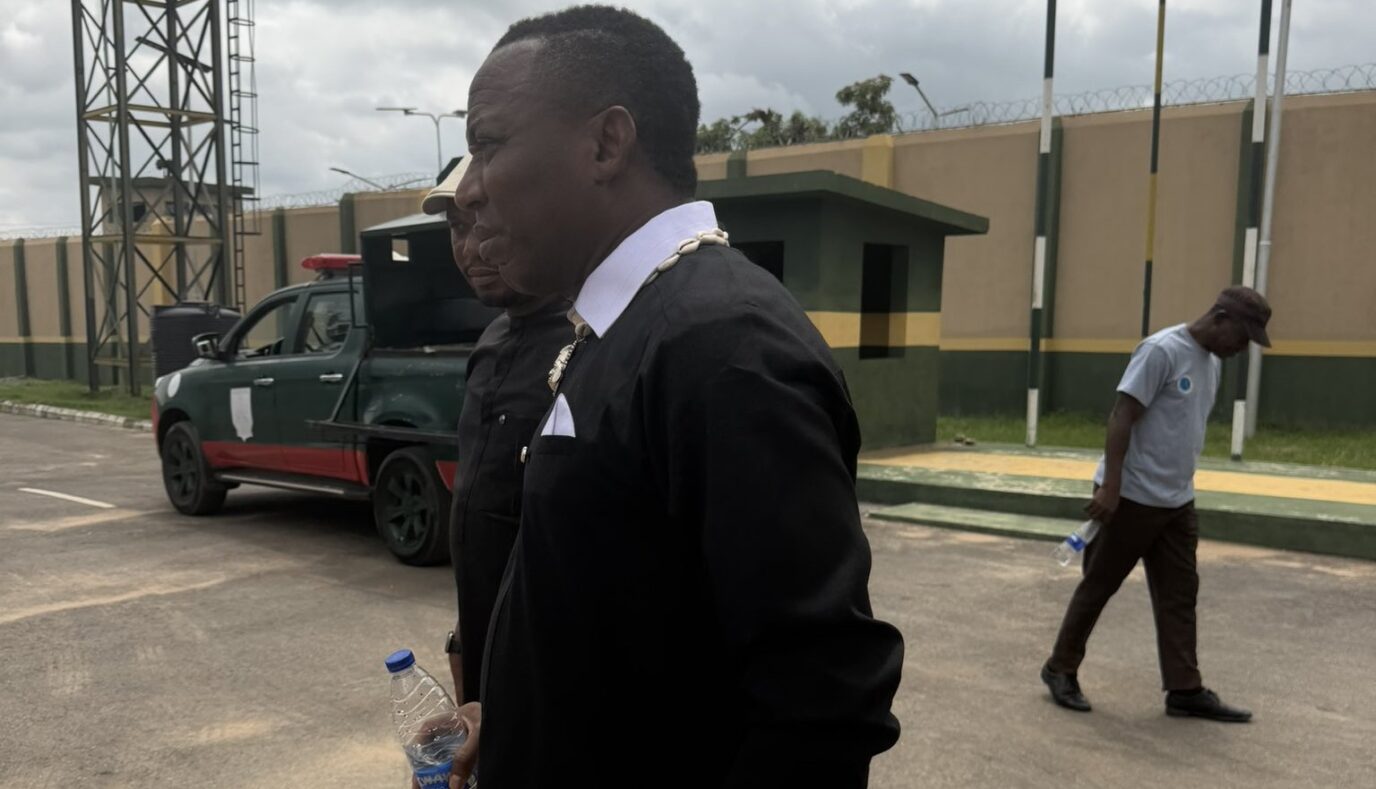
The Economic and Financial Crimes Commission (EFCC), Kano Zonal Directorate, on Thursday, February 5, 2026, arraigned a former Vice-Chancellor of the Federal University Dutsinma (FUDMA), Professor Armaya’u Hamisu Bichi, before the Katsina State High Court over an alleged N19.7 million bribery scheme.

Bichi was docked before Justice Musa Danladi Abubakar alongside two others—Lawal Tukur Mani and Aliyu Lawal Jari—on a five-count charge bordering on bribery.

According to the EFCC, Bichi, while serving as Vice-Chancellor, allegedly received kickbacks from contractors through the two co-defendants in exchange for the award of contracts at the university. One of the charges alleged that he obtained N5 million in July 2023 from a contractor as gratification for contracts involving the supply of medical equipment and laboratory furnishing, with the funds paid into a bank account belonging to one of the co-defendants.

All three defendants pleaded not guilty to the charges.

Following their pleas, prosecuting counsel, Salihu Sani, requested a trial date, while defence counsel moved applications for bail. Justice Abubakar granted each defendant bail in the sum of N5 million with one surety in like sum and adjourned the case to March 12, 2026, for the commencement of trial.

Former First Lady, Aisha Buhari, visits ex-VP Atiku in Saudi Arabia

By Abdullahi Mukhtar Algasgaini

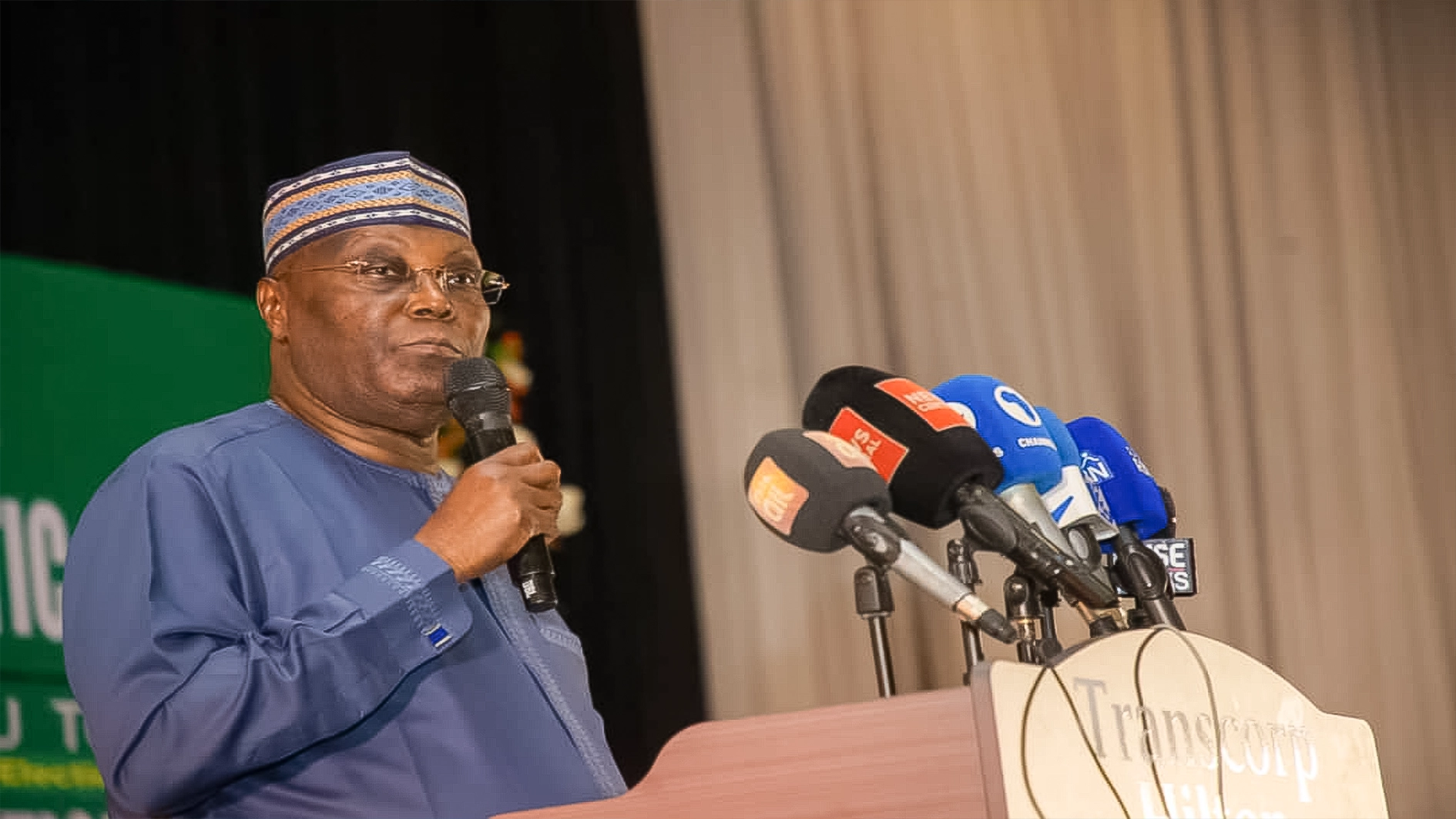
Former vice President Alhaji Atiku Abubakar, on Friday in Saudi Arabia, received a courtesy visit from Hajiya Aisha Buhari, the wife of the former Nigerian President, Muhammadu Buhari.

The former First Lady was accompanied by her daughter, Hanan, and other family members during the meeting.

According to a statement from Atiku Abubakar, both he and the Buhari family are currently in the Kingdom of Saudi Arabia to perform the lesser Hajj, known as Umrah.

Alhaji Atiku Abubakar noted that he was honoured to host the visit, which underscores the continued cordial relationship between two the families.

Zauren Mallam Aminu Kano as a Social Repair

By Abubakar Muhammad

Crime is a prominent feature of the city. The mitigation of crime and other social vices is a responsibility that falls not only on the government. The health of society is a responsibility that spans multiple dimensions, from authorities with direct power to families and residents of the community as a whole. The social health of the city is also the work of architects and planners. 

Physical planning is an important factor in influencing the social health of society and its inhabitants. Respected voices in urban planning note how a great urban environment, in terms of design and social services, can enhance people’s quality of life and foster a sense of community. In this piece, I set out to use Zauren Mallam Aminu Kano as a social repair tool and a planning theory for combating crime and other social ills in our society. 

We have recently heard the gruesome murder of an entire family in Kano, first in Tudun Yola and then in Ɗorayi, by the same alleged criminals. Cities are characterised by petty and violent crimes. The job of residents and governments is to implement policies that prevent crime to ensure the safety of inhabitants and the prosperity of the city. Sustainable urbanism involves governments at various levels, as well as city residents. 

I was particularly happy weeks ago when I learned that communities around Dala have mobilised to construct a police station around Kuka Bulukiya cemetery to combat persistent phone snatching that has cost countless lives of innocent passersby. The idea of constructing security outposts in crime hotspots has been a productive strategy for combating crime. It is not only about fighting crime; it also replaces crime with security and constant human presence and activity. It not only prevents crime and protects lives but also brings life and economic activity to beleaguered areas.

My friend once took me to an area of the ancient city to pay my condolences. It was a long time ago I cannot remember the name of the neighbourhood. Those who know Kano intimately can piece together snippets from my narration to figure out the area. I can vaguely say that the area was around Mandawari, Yar Mai-Shinkafi, Gyaranya, Baƙin Ruwa, or Gwauran Dutse. We walked through the alleys after the condolence and appeared at the Aminu Kano Way. 

The neighbourhood has a shelter christened Zauren Mallam Aminu Kano. It is an open pavilion in the heart of the neighbourhood. I was intrigued not only by the discovery but also by the place’s name and social function. This was the first time I had ever heard of the place, or any shelter named Zauren Mallam Aminu Kano in the city. I began to think about the connection between the place and the famed radical politician. 

I did not ask the naming history behind the shelter, but my imagination wagered that this must be the spot where Mallam Aminu Kano hung out with friends and conducted his public life. It must be the local context where he started his political career, a gathering place for the nightly schooling and political organising. My guess was supported by my assumption that the place is located within the ancient city, and not far from his initial dwelling at the Aisami/Sani Mainagge axis. I was intrigued by the place for its great potential to build a community.

The Zauren Mallam Aminu Kano is a mini square and public space for the community. It enables the residents to perform social and religious functions. Residents of the neighbourhood, particularly the elderly and retirees, use the pavilion to hang out. The community uses the open space to perform the funeral salat for the deceased. The main street around the space serves as a collector road, receiving people from nearby alleys and neighbourhoods. Thus, the open space becomes vibrant with life. Residents and visitors use the space to park their vehicles. Around the square, activities sprang up: informal people, vendors, and small entrepreneurs set up stalls offering services, various wares, delicacies like tsire and awara, and other household items that cater to the neighbourhood’s hospitality and social needs. The shelter becomes a living room of the community. My reading is that Zauren Mallam Aminu Kano is an open space that allows residents to do things that they cannot perform in the narrow alleys of their neighbourhood.

Part II

For this reason, Zauren Mallam Aminu Kano stays with me. I want to suggest an expanded version of this space be built in as many places as possible in the ancient city, its suburbs and major towns across the state. This is based on key spatial ideas for sociability and security of communities and neighbourhoods. 

Ancient cities like Kano had been built around their traditional institutions. The city spread out from the Emir’s Palace, surrounded by other civic buildings such as the court and the central mosque, which eventually formed the city centre. Spreading in a radial pattern, subsequent expansions and settlements of the city and major towns followed the same tradition. All roads lead to the city centre. And the civic centre, or city centre, is almost always located in the vicinity of the traditional ruler’s dwelling. Outside the city, the Maigari’s or Dagaci’s house sat at the centre of the settlements.

The best location for the Zauren Mallam Aminu Kano is to look for the ugliest and most dangerous part of the neighbourhood and tear it down to create a large enough open space to build the shelter. This place should be the heartbeat of the area by consolidating basic services in one building: a small local clinic, a school, a library, administrative offices for Mai-unguwa, Dagaci, and security agents, and a conference room for important community meetings and non-partisan civic engagements.

A strong civic component and social life are essential. The idea is to overwhelm crime, blight and unsightly facades. The building can serve as a venue for adult literacy classes, mass education and public orientation centres for social mobilisation and political awareness. As a multipurpose building, the place can host activities such as elections, immunisation campaigns, skills and personal development training for local youth. 

A mosque can be located close to the shelter. Around the mosque, the elderly sit, dine, and eat. It is where they enjoy calm, festive hours by day and night. Zauren Mallam Aminu Kano should be the agora and living room of the community. Clusters of civic buildings, residential and commercial uses can create sociability. This is not new; it is something that needs to be consciously improved upon existing traditions. Several Hausa villages have a santa or tsakar gari, which serves mixed purposes and brings people together. Since the shelter is located near the mosque, it should also serve as an open space for conducting funeral prayers. Commercial activities can be encouraged around the area to provide a more vibrant economic life. In Kano city, many neighbourhoods have ƴar kasuwa within walking distance, allowing residents to make purchases for their daily needs. 

The small clinic located in the centre should offer first-aid services and cater to the health needs of the most vulnerable. It should deliver basic drugs and inexpensive medications, medical advice and other services that might not require a trip to the hospital. Local people with training in medical fields can volunteer to operate the place. They can also request NYSC corps members to be posted there. Funding can come from donations from wealthy residents of the community. People who have retired from active service in various walks of life can participate. Skilled individuals can also ask to set up offices and contribute their services to the community. Community services can serve as a clear benchmark for future political leaders. People can see what potential representatives have contributed to their local communities before they enter politics – what they have done for the people before asking for their votes.  

It would not be a bad idea to allow car owners to park their vehicles in and around the shelter. Community-owned assets, such as donated vehicles for transporting the deceased, a power transformer, and water sources like a borehole, can be sited there. The underlying assumption is that communities would actively work to protect their assets and improve their neighborhood. Their commitment or otherwise to safeguarding their assets is clear proof of their collective responsibility, leadership, accountability and readiness for sustainable development. 

The idea is to use Zauren Mallam Aminu Kano to make the targeted area active and vibrant with human activity. The dwelling of the traditional ruler should be sited there to continue to facilitate administrative functions and liaison with various levels of governments for record-keeping, issuing birth certificates and documents, and other civic engagements. The closest idea to this is Ofishin Wakili, which can be upgraded where they already exist. If built with magnificent architecture, places like this can become historic sites that represent the community and its traditions.  

The building should house an office for joint security agencies, including the police and Hisbah. This is where disputes will first be reported. It will enhance coordination and timely reporting of suspicious activities to support early crime prevention. Emphasis is placed on civil matters and on preventing violent crimes. The activities and involvement of the security should be largely civil and minimal. The point is to increase safety through informal supervision. Security agents, the elderly, and small business operators are public figures who keep an eye on the neighbourhood. Retirees and the elderly also fill the void and silence when others are at work or school. They can alert parents – and the security agents – to what is happening in the neighbourhood. Sustainable urbanism can be achieved by densifying social life in hitherto dark corners without militarising the neighbourhood. The refurbishment of the neighbourhood is a valued alternative to blight, providing security through communal social space. Services and buildings can be distributed according to the community’s needs and resources. The purpose is to chase away the thugs from the heart of the community and bring light to the dark corners and crevices. In the process, services are brought closer to the people. Traditional institutions are involved more closely and meaningfully in public service for their immediate communities.

Stakeholders – government, traditional institutions, and community members – should work together to realise the Zauren Mallam Aminu Kano as a state-supported, neighbourhood-funded civic infrastructure across Kano State. Zauren Mallam Aminu Kano should be conceived as a community and family resources centre for the neighbourhood’s residents. It should be designed as a crime-prevention tool through visibility, social life, and shared spaces that strengthen grassroots governance and access to basic services.  It is also an embodiment of the spatial practice of good neighbourliness, the warmth, and the communal character of the Mutumin Kirki society. 

 Abubakar Muhammad is from Kano, Nigeria. 

Kwara governor meets president Tinubu over Kaiama attack

By Abdullahi Mukhtar Algasgaini

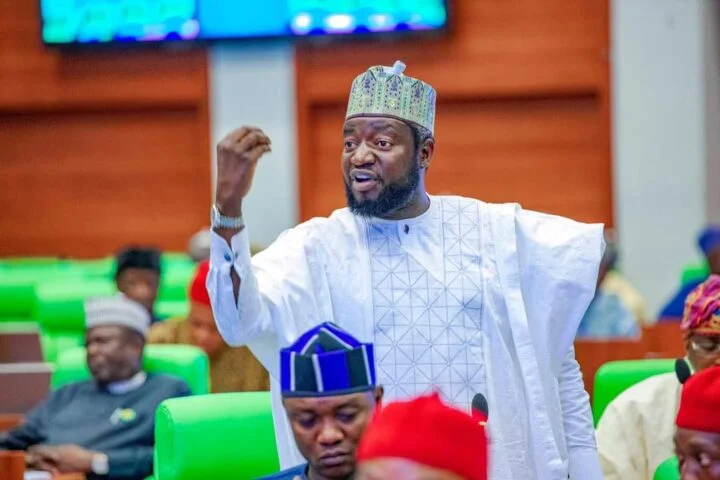
Kwara State Governor and Chairman of the Nigerian Governors’ Forum, AbdulRahman AbdulRazaq, met with President Bola Ahmed Tinubu at the Presidential Villa in Abuja on Thursday. The meeting followed a recent attack on the Woro community in Kaiama Local Government Area of the state.

According to a statement released by the Governor’s Senior Special Assistant on Media, Akeweje Olayinka Fafoluyi, Governor AbdulRazaq expressed gratitude to the President for establishing the “Operation Savannah Shield” security initiative and deploying military reinforcements to the area.

The Governor stated that this decisive action would help restore peace and security to the region.

Prior to the presidential meeting, Governor AbdulRazaq had visited Kaiama to assess the situation on the ground following the attack. He was accompanied on the visit by top security officials and some members of the State Executive Council.

Nigerian jailed for life over killing of ex-girlfriend in UK

By Sabiu Abdullahi

A court in the United Kingdom has sentenced a Nigerian national, Adedapo Adegbola, to life imprisonment for the murder of his former partner, Steph Irons, a 23-year-old university student, in Nottingham, England.

The 40-year-old was handed the sentence by Nottingham Crown Court after he admitted responsibility for Irons’ death, which occurred at her residence in Mapperley on October 21, 2025. Reports indicate that the two met at their workplace and had a brief romantic relationship that later ended.

During court proceedings, prosecutors said Adegbola developed an unhealthy fixation on the victim after the breakup. He allegedly purchased two knives online and later hired a taxi to her home. Investigators said he attacked Irons when she stepped outside to dispose of refuse. He then forced his way into the house and stabbed her multiple times.

Concern arose when Irons’ colleagues received disturbing messages sent from her phone. Police officers who responded to the situation later found her lifeless body in the living room. She was confirmed dead at the scene.

Following the attack, Adegbola fled the area. Authorities said he disposed of blood-stained clothing and other items along routes in Mapperley and Carlton. Nottinghamshire Police tracked his movements across several locations, including Mansfield, Worksop, Sheffield, and Hull, before he eventually turned himself in. Although he exercised his right to remain silent during interrogation, detectives pieced together his actions before and after the incident.

The presiding judge ordered life imprisonment and fixed a minimum term of 25 years before parole can be considered.

Detective Inspector Stuart Barson, who led the investigation, described Irons as a “kind and compassionate young woman” whose life ended in “terrifying circumstances.” He noted that the convict made no effort to obtain medical assistance for the victim after the assault, but instead chose to escape and discard evidence.

In a statement presented to the court, Irons’ mother said the loss of her daughter had shattered the family. Relatives portrayed the deceased student as loving and caring, with aspirations to earn a doctorate degree in clinical psychology.

Turkey condemns terrorist attack in Kwara, assures Nigeria of support

By Sabiu Abdullahi

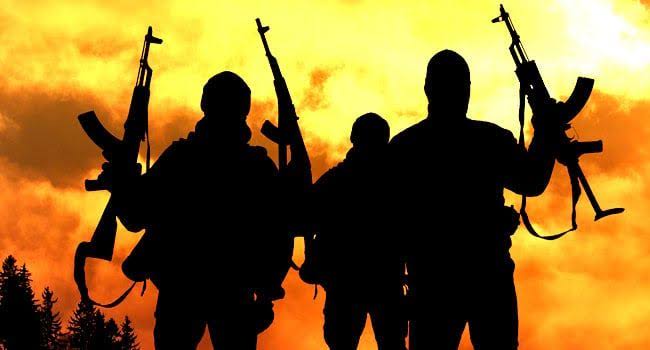
The Republic of Türkiye has denounced the deadly terrorist assault on Woro and Nuku communities in Kaiama Local Government Area of Kwara State, expressing grief over the casualties recorded in the incident.

In a statement released on Thursday through its Ministry of Foreign Affairs, the Turkish government said it was “deeply saddened by the loss of lives caused by the terrorist attack that took place in Nigeria’s Kwara State.”

“We strongly condemn this heinous attack and extend our condolences to the families of those who lost their lives and to the people of Nigeria. Türkiye will continue to support Nigeria in its fight against terrorism,” the statement read.

Meanwhile, Nigeria’s Defence Headquarters (DHQ) in Abuja said the attackers struck after residents rejected attempts to subject them to ideological indoctrination.

In a separate statement signed by the Director of Defence Information, Major General Samaila Uba, the military described the incident as a “cowardly terrorist attack.” It also conveyed sympathy to bereaved families and affected communities.

Reports indicated that more than 170 residents lost their lives during the Tuesday onslaught.

According to the DHQ, the assailants had earlier approached Woro village seeking approval to “conduct preaching and indoctrination sessions,” a request the villagers declined.

Troops were deployed to the area after security agencies received intelligence about the threat. Military patrols and surveillance operations continued for about two weeks.

“However, weeks after the troops withdrew, the cowardly terrorists returned to kill innocent citizens in protest and in a bid to terrorise inhabitants and others,” the statement said.

The Armed Forces of Nigeria commended residents of the affected communities for standing firm despite threats. It praised their refusal to abandon their beliefs and constitutional loyalty.

“The AFN mourns with the families of those who have lost loved ones in these and other similar brutal attacks on defenceless citizens defending community values and freedom across Nigeria,” the military said.

The DHQ urged Nigerians to remain resolute and resist extremist indoctrination. It warned that violent groups aim to impose “twisted beliefs through terror and intimidation.”

Citizens were also encouraged to cooperate with security agencies. The military stressed that unity and resilience remain vital in confronting terrorism.

It added that security forces, in collaboration with other agencies, have intensified efforts to identify and prosecute those behind the Kwara attack and related acts nationwide.

Amnesty International also reacted to the wave of violence. The organisation condemned what it called a troubling rise in killings and abductions across the country.

It described Tuesday, February 3, 2026, as a “Bloody Tuesday,” following coordinated assaults in several locations.

“Alarming escalation of attacks, abductions for ransom and frequent killings across Nigeria have left people feeling more unsafe, showing utter failure of the Nigerian authorities to protect lives and properties,” Amnesty International had said.

The group cited attacks in Woro and Nuku in Kwara State, Doma Tafoki in Katsina State and Abande in Benue State, where many residents were reportedly killed.

The incident has drawn both local and international concern, with renewed calls for stronger security measures to curb terrorism and protect vulnerable communities.

Kaduna church kidnap victims regain freedom after weeks in captivity

By Sabiu Abdullahi

Worshippers who were abducted from churches in Kurmin Wali community, along the Kufana axis of Kajuru Local Government Area in Kaduna State, have regained their freedom after spending weeks in captivity.

The incident occurred on January 18, 2026. Gunmen invaded the community during church service and took away many worshippers into a nearby forest.

Reports indicated that no fewer than 177 persons were kidnapped in the attack. The development triggered outrage and anxiety among residents and across the state.

Sources said the victims were released late Wednesday night. Heavy-duty vehicles were sighted moving in and out of a forest close to Maro town between 11 p.m. and 2 a.m., raising suspicion that the captives were being transported out of the area.

According to a report, community leaders disclosed that the abducted worshippers were brought out of the forest in the early hours of Friday. However, details surrounding their freedom remain uncertain. It is not clear who secured their release or if any ransom was paid.

The village head of Kurmin Wali, Ishaku Dan’azumi, confirmed the development. He said the victims, made up of children, women, and men, are now in government custody.

A security source also verified that the abducted persons had been freed.

The victims were subsequently moved to the Government House in Kaduna, where they are expected to undergo debriefing.

As of the time this report was filed, the Kaduna State Government had not released any official statement on the incident.