Nigeria

Borno police officer returns N2.6 million mistakenly transferred into his account

By Sabiu Abdullahi

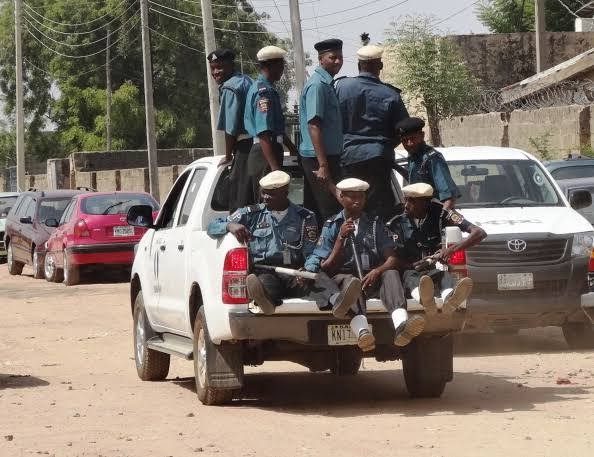
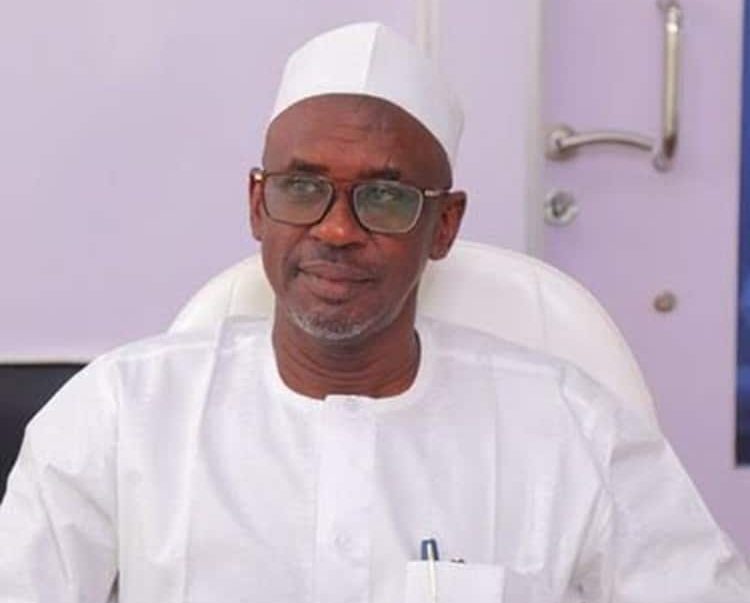
A police officer serving in the Borno State Police Command has returned N2.6 million that was accidentally credited to his bank account.

Mohammad Alhaji Muhammad was praised for his honesty and integrity after voluntarily returning the funds. Nahum Daso, the state police spokesperson, shared a post by Bello Jafar on Facebook commending the officer.

“I would like to formally express my appreciation for Mohammad Alhaji Muhammad, a loyal customer of United Bank for Africa (UBA) and a police officer of exceptional integrity,” Daso wrote.

Jafar also highlighted the significance of Mohammad’s action, stating: “His conduct reflects the true values expected of a police officer and serves as an example worthy of recognition and commendation. Acts like this strengthen public trust and highlight the importance of integrity in both professional and personal life.”

Daso told TheCable that the accidental transfer occurred around 6 p.m. on Thursday. “The officer saw the money and was surprised because he was not expecting that money. So he reached out to his account manager who asked him to go to the bank. When he got to the bank he was asked to fill a form for the reversal,” he said.

“The bank officials expressed surprise because what they usually experience in such cases is that the recipients will use the money for their own personal gain. What the officer did shows integrity.”

Mohammad’s action has been widely lauded as a rare display of honesty and responsibility, reinforcing public confidence in the police and in the values of ethical conduct.

Army chief deploys special forces to crisis-hit Plateau

By Abdullahi Mukhtar Algasgaini

The Chief of Army Staff, Lieutenant General Waidi Shaibu, has ordered the immediate deployment of a special forces battalion to Plateau State. This follows a recent surge in deadly bandit attacks across the region.

The elite unit, known as the Chief of Army Staff Intervention Battalion, has already arrived. Military commanders say their mission is to “aggressively and decisively” end the violence and will be a “game changer” in restoring security.

At a reception at the Headquarters of 3 Division in Jos, the troops were briefed by the theatre command. Major General Folusho Oyinlola, the General Officer Commanding, urged the soldiers to be “decisive and ruthless” in their offensive operations against the bandits. He was represented by Brigadier General Senlong Sule.

Oyinlola praised the Army Chief’s “proactive leadership” in providing the necessary weapons and logistics for the mission.

He also appealed to residents not to be alarmed by the sudden increase in troop movements and heavy military equipment. The General further called on the public to support the operation by providing timely and actionable intelligence on the whereabouts of criminal elements, to ensure lasting peace in the state.

How we arrested China-bound trader with 95 cocaine pellets at Kano airport—NDLEA

By Uzair Adam

Operatives of the National Drug Law Enforcement Agency have arrested a 62-year-old businessman, Nwabueze Nicholas Izueke, at the Mallam Aminu Kano International Airport, Kano, for attempting to smuggle cocaine to China.

Izueke, who is based in Lagos, was arrested on Saturday, January 31, 2026, during the outbound clearance of Ethiopian Airlines flight ET940 to China via Addis Ababa.

The NDLEA said the suspect was subjected to a body scan after exhibiting suspicious behaviour, which confirmed that he had ingested illicit drugs.

“In the course of excretion observation, he expelled 95 wraps of cocaine in seven separate excretions,” the agency disclosed, adding that the total weight of the drugs was 1.589 kilograms.

The suspect, who claimed to be involved in clothing and auto parts trading in Lagos, reportedly confessed that he engaged in the trafficking to raise funds to complete the construction of his country home in Iwollo, Enugu State.

Meanwhile, the agency recorded several other major seizures across the country. In the Federal Capital Territory, NDLEA operatives uncovered a makeshift warehouse in Kubwa where 627.7 kilograms of skunk, a strain of cannabis, was recovered.

The agency also arrested Ebube Okeke, Evans Ugwu, Mohammed Eze Arinze and Friday Michael for attempting to traffic methamphetamine concealed in MP3 speakers from Enugu to Abuja and Kaduna between February 6 and 7.

On February 6, officers intercepted 1.8 kilograms of methamphetamine hidden inside Hollandia yoghurt packs along the Lagos–Mubi route, leading to the arrest of a 32-year-old suspect, Yusuf Abubakar.

In Oyo State, Shuaibu Abdulrahman, 29, was arrested with 149.6 kilograms of skunk, while Adeniyi Adeola, also known as Prince, was apprehended in Ibadan with more than 128,000 tablets of tramadol and pentazocine.

Drug kingpin Jimoh Nurudeen, 40, was equally arrested in Ibadan alongside his accomplice, Ogundipe Yusuf, 27.

Items recovered from them included eight litres of precursor chemicals, cannabis, cash and vehicles allegedly used in the production of synthetic cannabis.

In Kwara State, NDLEA operatives recovered 395,400 capsules of tramadol concealed inside a fuel tanker travelling from Lagos to Maiduguri. Additional seizures were recorded in Imo and Ondo states, where 203 kilograms and 420 kilograms of skunk were intercepted respectively.

The Marine Command of the agency also intercepted 31 wraps of cocaine from a suspect arriving from Côte d’Ivoire in Badagry, Lagos.

Further operations in Lagos and Enugu led to the recovery of Canadian Loud and Colorado cannabis from Adekunle Oluwatosin Olajide, as well as assorted illicit drugs from Emeka Okeke.

My battle with malaria parasites last year and the tenuous nature of our health

By Sadam Abubakar

I wish I could blow life into words. I wish the words could be woven to assume a shape and posture palpable to human beings.

My recent experience in bed with sickness made me long for words to have the ability to breathe, talk, and describe by themselves certain events that occurred to us in our lives. Some events and situations in our lives are beyond our ability to describe. The words should talk themselves.

The event that sparks my scribbling hand is a disease condition that turned me almost lifeless. It started as something not uncommon but metamorphosed into a thing of mystery and convolutions.

At a particular time of one day, my legs began to appear as if they didn’t belong to me. There was a slight headache and some traces of loss of appetite. These symptoms are common among people with malaria, an endemic disease in our region, especially this time of year. The next thing was the thought of taking P-Alaxin, a particular brand of antimalarial drugs, and some supporting drugs.

Two days later, my disease condition appeared to be getting worse, even though it didn’t cripple me in bed. I rushed to a particular medical lab for diagnosis, and after a rapid test for malaria, it appeared that the malarial parasite was still in my blood, running through my veins. The P-Alaxin drug didn’t kill the parasite in my blood? Maybe I needed to take more for a couple of days. I continued with the medication with P-Alaxin the next day, but to my surprise, the malarial parasite was still in me—perhaps even more active, since the disease succeeded in stagnating me at home for the whole day.

Combining therapeutics to treat a particular disease is arguably one of the best strategies to eliminate a disease that appears intractable. Thus, I received an intramuscular injection of chloroquine, continued with the P-Alaxin, and some supporting drugs. That day was the beginning of more suffering from the disease. I sustained a severe headache, and my body temperature kept alternating between high and low. I also occasionally shivered, and fatigue became my friend. I kept telling myself that today I would beat the malarial parasite in me, considering the combinatorial therapy. Was I right?

After a brief respite from the pain, I felt I could go out to the Masjid to pray Asr. I whispered to myself, no matter what, go and pray—who knows if it would be your last Asr to offer. I crawled to the bathroom, performed my wudu, and headed to the Masjid. I was walking while holding my head, as I could still feel the hammering of the disease in my head. I thought I could surmount that pain, and I kept going. Halfway to the mosque, the pain intensified, and I succumbed to the idea that I could only proceed to the mosque.

I managed to return home. But then another episode of the disease set in. My neck started bending, and my head followed. At some point, I had to ask my wife to straighten my neck to mitigate my pain. Meanwhile, I could feel my teeth gnawing at themselves, and some were abrading. I continued shivering while my wife still tried to cover me with a blanket. The situation escalated. The guy running the best medical lab in our town came. One of the best community health practitioners in our town, who is also my good friend, was summoned. They did what they could and assured things would be alright.

It seemed like they were right, given the temporary relief I had, but then things escalated around Isha prayer time. My mum came and prayed to me profusely. Almost all my family members came and offered their prayers for a speedy recovery, but things appeared to stand still. No progress in my health whatsoever! Finally, they all admitted I should be rushed to Ahmadu Bello University Teaching Hospital (ABUTH).

I already succumbed and felt I was going to die. My beloved brother, Alhaji Garba, shouted that his car should be driven out of the garage and that they should rush me to ABUTH. We started the journey, but before driving out of Soba, it started raining heavily. Musbahu, who was not only my good friend and neighbour, was the driver. He wanted to turn on the long-distance light, but he couldn’t because of confusion. He phoned Alhaji Garba to say the car’s lighting system was faulty. Another car was sent with another driver, and we journeyed to Zaria.

The road from Soba to Zaria is in poor condition. So many potholes on the main road, and the shoulder is no longer in existence in most parts of the road. I was lying with my head on the lap of my wife, in extreme pain. With every bump into an unavoidable pothole on the road, the incessant pain in my head increased. I lost hope. I started whispering Kalimatus Shahada, hoping it would be my last word, since I already knew we couldn’t reach the hospital while I was still alive.

With the pain still sustained, we reached Zaria while it was still raining. Instead of going to ABUTH, some argued that with the urgency of my situation, we should head to a private hospital, and that the bureaucratic process of ABUTH before my treatment could worsen my situation. We headed to Pal Hospital. They quickly examined me while I was telling the doctor I knew I couldn’t make it. The doctor, from my history, suspected immediately that I was suffering from cerebral malaria. He argued that because I was out of Nigeria for a very long time, my immune system might not be robust against malarial parasites, and that worsened my situation.

Alhamdulillah. I am writing this because I survived. After the medication, I finally recovered. But this whole experience has reminded me again that it doesn’t matter our age; we can die anytime. Our health is pretty tenuous, and death is always around the corner. May we live our lives with God consciousness so that we go to paradise in the hereafter.

Sadam Abubakar wrote via sadamabubakarsoba@gmail.com.

ATM Gwarzo Organization appreciates support ahead of 2027 Kano North senatorial race

By Ibrahim Yunusa

The ATM Gwarzo Organization has expressed appreciation to well-wishers across the Kano North Senatorial Zone for the growing goodwill and support surrounding the 2027 senatorial contest involving His Excellency, Abdullahi Tijjani Gwarzo.

In a statement issued on Sunday, the organization said His Excellency is deeply humbled by the confidence and encouragement shown by stakeholders, elders, youths, and various community groups across the zone, describing the gestures as a call to greater responsibility and selfless service to the people.

The statement urged supporters to remain positive, calm, and united, noting that consultations are already being planned to engage widely with stakeholders across the senatorial district and Kano State at large.

According to the organization, His Excellency has committed all his affairs to Allah (SWT) and seeks divine guidance in his continued efforts to serve the people. The group added that further updates would be communicated in due course.

The statement was signed by Mansur Umar Man’ash, Special Adviser on Digital Media, for the ATM Gwarzo Organization, and dated February 8, 2026.

Top Islamic body, JNI, backs calls for INEC chief’s removal over alleged bias


By Abdullahi Mukhtar Algasgaini

The Jama’atu Nasril Islam (JNI), a prominent Islamic organization in Nigeria, has urgently called on President Bola Ahmed Tinubu to immediately dismiss the Chairman of the Independent National Electoral Commission (INEC), Professor Joash Amupitan.

The call was made by the JNI’s Secretary-General, Professor Khalid Abubakar Aliyu, during the group’s annual programme marking the commencement of the 2026 Ramadan fasting month. The event was attended by traditional rulers and clerics from across the nation, including the Shehu of Borno and the Emir of Dutse.

Speaking on behalf of the organization, Professor Aliyu stated that the demand was necessitated by allegations of Professor Amupitan’s role in demonstrating hostility towards Islam and Muslims. The JNI cited a text purportedly authored by Amupitan which claimed that Christians are facing genocide in Nigeria.

The JNI warned that such statements and actions are capable of provoking division and unrest within the country. Consequently, the body has urged the government to take swift action to safeguard national peace and unity.

This development places fresh scrutiny on the head of the nation’s electoral body and underscores ongoing tensions along religious lines in Nigeria’s public discourse.

The Pantami experiment: Morality in the politics of grime

By Ibrahiym A. El-Caleel

Given his profile as an Islamic scholar and public servant, Imam Dr Isa Pantami’s aspiration for the Gombe State governorship continues to attract attention from multiple quarters. What caught my attention yesterday were the closing lines of Jaafar Jaafar, the publisher and editor of Daily Nigerian, in a brief social media post on the candidature. Jaafar remarked:

“Nigerian politics is grimy. You cannot work in a sewer line and expect to come out clean. Mallam (Pantami) should prepare to mudsling, dip his paws in a cookie jar, dance to the tune of Rarara songs, shake hands with female foreign investors and diplomats, visit churches, steal some billions from security vote, divert public funds for political activities, hire thugs during rallies, lie during campaign, rig during election, take kickbacks after contract award, etc.”

Jaafar is clearly not endorsing these practices; he is only highlighting the grime and immorality that dominate Nigerian politics. Yet I disagree with the implicit suggestion that Mallam Pantami must get his hands dirty simply because he is now in frontline politics. No, he does not.

Pantami does not need to embrace corruption to win elections, nor must he compromise his morals to win or govern successfully after victory. These practices do not constitute the winning formula for elections even in Nigeria. Their dominance in our politics are symptoms that our political system has been hijacked by the morally bankrupt over the years.

Unfortunately, many Western philosophers and some Eastern philosophers have theorised a political thought that sidelines morality. They present it as if power must always be ruthless and corrupt. Niccolò Machiavelli, in his famous work The Prince, famously separated politics from conventional morality. He argued that the end justifies the means and that a ruler should be prepared to use deception, force, or cruelty to consolidate power. Better to be feared than loved, he asserted, if both cannot be achieved.

We see the same philosophy from the likes of Friedrich Nietzsche, Max Weber, Henry Kissinger and even the famous Robert Greene of our age. Their common premise is that politics is about power and domination; that stability and the balance of power matter more than moral ideals; that leaders may employ force, deception, and unethical means to maintain authority; and that some, like Nietzsche, even suggest that morality is a human invention of the weak.

The consequences are visible across the globe. Leaders who internalise these philosophies often govern through ruthlessness, corruption, and moral compromise. In so doing, they have soiled their hands in blood, sex scandals, human rights abuses, economic sabotage, and corruption. This is why, for example, several prominent world leaders have skeletons in Jeffrey Epstein’s wardrobe. They have abandoned morality in their pursuit of power. Today, they are prisoners of their actions.

In contrast, Islamic political philosophy teaches that a ruler must be powerful yet morally accountable, serving as a role model for society. Consider Umar ibn al-Khattab (Umar I), the rightly guided caliph, whose governance was a masterclass in combining justice, authority, and compassion. Umar I punished governors publicly, enforced the law even on the elites, maintained military discipline, and ensured state stability. Yet he was profoundly compassionate: during a famine, he refused to eat butter or meat until the people were fed, and he personally delivered food to the hungry. This was not a democracy; it was a caliphate, yet moral leadership reinforced his authority rather than undermined it.

Umar ibn Abdulaziz (Umar II), the Umayyad Caliph, provides another striking example. Before his ascension to power, the Khutbah (Friday sermons) were often laden with political propaganda, and some rulers ordered preachers to insult and curse Caliph Ali bn Abi Talib from the pulpit in political rivalry. They turned the khutbah into a tool for political rivalry rather than moral guidance. Umar II stopped this vile practice immediately he became the Caliph. He banned curses and political abuses from the revered pulpit of sermons and replaced them with Qur’anic verses. This was exemplary moral courage.

However, Umar II returned the stolen wealth of his predecessors and officials to the national treasury. He reformed corrupt systems gradually because he believes moral change is institutional, not emotional. He abolished oppressive taxes and unjust land confiscations, redistributed state wealth to reduce inequality, and institutionalised meritocracy. Under this meritocracy, he appointed governors and officials based on competence rather than family or tribal loyalty. He removed corrupt and incompetent officials even from his own Umayyad family. Therefore, he revived Islamic ethics in governance.

The last example I will cite here is the famous Abbasid Caliph Harun al-Rashid, who was cited by Chinua Achebe in his book, The Trouble with Nigeria. Harun al-Rashid is another classic example of a leader who combined political power with moral conscience. He was known to travel incognito at night among Baghdad’s citizens to hear complaints directly and make amends where needed. Despite his moral inclinations, the Abbasid dynasty reached its political and cultural peak under Harun al-Rashid. His reign kicked off what later became known as the “Islamic Golden Age”, which gave the world an intellectual gift, the Baytul Hikmah (House of Wisdom).

These examples make one point crystal clear: moral corruption is a choice, not a prerequisite for leadership. The more the world internalises Machiavellian philosophies, the more it empowers the ruthless and morally bankrupt. For Imam Dr Isa Pantami, his candidature is a litmus test. Should he compromise his ethical standards, he risks tarnishing decades of personal integrity. Yet he also has the opportunity to carve out a niche in Nigerian politics by leveraging his clean record, focus, and moral credibility. If he can win ethically and govern without succumbing to corrupt pressures, he could make history, embodying the same fusion of power and moral conscience exemplified by Umar ibn al-Khattab, Umar ibn Abdulaziz, and Harun al-Rashid.

I wish him success and look forward to observing whether he can translate his reputation into leadership that blends authority with moral responsibility, setting a new standard for governance in Nigeria. He is a specimen we should observe; let us see how morally upright people swim against the black tides of our politics. If he succeeds, more morally upright people need to enter politics and help us fix this broken country as early as possible, before it’s too late.

Ibrahiym A. El-Caleel wrote from Zaria, Kaduna State, via caleel2009@gmail.com.

Boko Haram’s letter to Kwara monarch promised ‘preaching and guidance’ weeks before massacre

By Sabiu Abdullahi

A handwritten letter allegedly sent by Boko Haram insurgents to the Sarkin Woro in Kaiama Local Government Area of Kwara State has surfaced, weeks after a deadly attack that left over 170 people dead.

The message, dated January 8, 2026 (19 Rajab 1447 AH), was written in Hausa and requested a meeting with the traditional ruler or his representative before the violence occurred.

According to a publication by a Nigerian online newspaper, SaharaReporters, the terrorists presented the proposed visit as peaceful religious engagement.

Part of the letter read: “After greetings and good wishes, this message is from Jama’atu Ahlis Sunna Lidda’awati wal Jihad to the Sarkin Waro. We are requesting a meeting with you personally, or alternatively with your representative.

“We wish to discuss matters with you and remind you, particularly concerning preaching and guidance among your people. This is not a threat or a declaration of war against you or your people,” they added.

Residents of Kaiama later accused authorities of ignoring repeated warnings before the massacre. Community members said they had reported suspicious movements of armed men in surrounding forests to traditional leaders, local officials, and the state government without response.

One resident said, “Before these attacks happened, our youths went to the traditional ruler many times to report that strange people were gathering inside the forest close to our villages.

“They did not only stop there. They also informed the local government council and the state government. Everybody knew, but nobody came to protect us.”

Another resident said the alerts were also sent directly to government authorities. “We reported to the state government and to the local government authorities that terrorists were around us. We begged them to deploy security operatives to clear the forests.

“They kept assuring us that something would be done, but nothing happened.”

Locals recalled that fear heightened around mid-2025 after unusual activities increased in nearby bushes. One source said, “There was a time the governor even promised that soldiers would be deployed to our area because of what we reported.

“He told some of our leaders that the Army would be sent to secure the community, but till today, no soldier came. We were abandoned.”

Survivors said the attackers later launched coordinated assaults on several villages. Casualties included men, women, and children, while homes were set ablaze. A resident stated, “What happened did not just start overnight.

“These people were around us for months. We warned the authorities. If they had listened, this massacre would not have happened.”

Another survivor described the scale of the raid. “They came in large numbers with guns. They were shouting and shooting. People were running in all directions.

“Our houses were burned. Many families were wiped out. We are still counting the dead.”

Kwara State Governor AbdulRahman AbdulRazaq, who visited the area with service chiefs and cabinet members, condemned the killings and sympathised with affected communities. He said, “Tonight, I arrived in Kaiama in company of service chiefs and cabinet members to commiserate with His Royal Highness Alhaji Omar Mu’azu (Bagidi Kiyaru IV), the Emir of Kaiama, and the entire community on the cowardly attack launched on our compatriots in Woro and Nuku yesterday. I also visited Woro to see things for myself.”

He stated that many victims were killed after rejecting extremist teachings imposed by the attackers. However, some residents faulted the government’s response and casualty figures. One of them said, “The government failed us.”

He continued. “We did our part by reporting early. If they had deployed army when we raised alarm, these terrorists would not have stayed here to plan and kill our people.”

Another resident added, “It is so sad; the governor came here after people died and they even lied that it was only 75 people that died. Anybody that believes those who were killed were not up to 100 should come here and count the corpses themselves. The government was just doing ‘eye-service’ by crying to the media. They knew these people would attack us and they did nothing.”

EFCC suspends prosecutor Samuel Chime over alleged bribery scandal

By Sabiu Abdullahi

The Economic and Financial Crimes Commission (EFCC) has suspended one of its senior prosecutors, Samuel Chime, over allegations of bribery linked to the sabotage of corruption cases.

The action followed the outcome of an internal investigative panel constituted by the EFCC Chairman, Ola Olukoyede, after multiple petitions were submitted by civil society organisations, non-governmental groups, and concerned individuals accusing Chime of misconduct and financial inducement.

Sources within the commission disclosed that the EFCC leadership expressed strong displeasure over the development, warning that such behaviour could damage the agency’s credibility.

One official said, “Chime was suspended after extensive internal probe revealed that he had compromised some cases due to financial inducements.” Another insider added that “the commission might end up dismissing him, but he has been begging the chairman, and pleading for clemency.”

Chime had served as lead prosecutor in several high-profile cases across different Federal High Courts, including matters involving former public officials and alleged fraud suspects in Abuja, Kano, and Port Harcourt.

Following his suspension, the EFCC has requested adjournments in the affected trials, informing courts that the prosecutor had “proceeded on a sick leave,” a move aimed at safeguarding the commission’s public image.

Further findings from petitions accused him of duplicating charges in separate courts to frustrate defendants, an act said to contradict established prosecutorial standards and EFCC policy.

Consequently, the commission has directed other prosecutors to review both pending and concluded cases previously handled by Chime as investigations continue.

The menace of Sara Suka and the effects of drug abuse : The way forward 

By Isyaka Laminu Badamasi

Recently, an Imam at Kurmin Dorawa in Karofin Madaki, Bauchi state, led a joint Maghrib and Isha’i prayer due to credible fears of a possible attack by suspected thugs in the area. This decision, though unusual, was taken as a precautionary measure in response to rising insecurity—either as retaliation for earlier clashes involving local youths or as part of the resurging menace of ‘Yan Sara Suka’.

Ordinarily, the combining of prayers occurs during the rainy season, while travelling, during festivities, or for other lawful reasons as permitted in Islam. That such a step was taken purely for security reasons speaks volumes about the level of fear and uncertainty now confronting residents.

These mobs, largely composed of young people between the ages of 15 and 25, move around armed with dangerous weapons. Contrary to popular belief, they are not street children, nor are they sponsored by politicians, cult groups, or gang leaders. Rather, they are products of deeper structural failures: poor parental care, societal decay, government neglect, weak application of criminal justice, and, most critically, the widespread abuse of drugs and other narcotic substances openly sold in our neighbourhoods.

In recent years, decisive actions by security agencies, vigilante groups, and community committees have significantly reduced Sara Suka’s activities, creating a relatively safer environment. Unfortunately, the problem has resurfaced with renewed intensity, spreading across almost all parts of the state, including both old and newly established settlements. As a result, some neighbourhoods have become partially or completely inaccessible due to the violent activities of these groups.

This piece does not seek to introduce a new narrative. Rather, it aims to draw attention to existing academic research that examines the role of drug abuse in expanding the frontiers of thuggery. These studies consistently highlight how narcotics fuel aggression, lower inhibition, and sustain cycles of violence among vulnerable youths. More importantly, the literature proposes evidence-based policy frameworks and intervention strategies for addressing the menace through inclusive, humane, and logical approaches.

Only by grounding our responses in research, strengthening social institutions, enforcing the law fairly, and confronting the drug economy within our communities can we hope to stem the resurgence of ‘Yan Sara Suka’ and restore lasting peace.

Academic literature proposes several multidimensional strategies to address the drug abuse crisis in Nigeria, focusing on prevention, management, and systemic reform. These papers advocate the integration of compulsory drug education into secondary and tertiary institution curricula to enlighten students on the physiological and social dangers of substance misuse.

The literature also suggests establishing associations and clubs to promote healthy lifestyles at the community and family levels. Additionally, several studies highlight the critical role of effective family communication and proactive parental monitoring in reducing children’s exposure to drugs, as well as leveraging traditional and religious institutions for grassroots mobilisation and public sensitisation.

While these measures are critical in addressing the menace of drug abuse, the National Drug Law Enforcement Agency (NDLEA), as the regulatory body charged with combating this serious social problem, must be more proactive. For decades, the agency has engaged in efforts to curb drug abuse, including supply and distribution control; however, the situation continues to deteriorate. This reality calls for serious policy adjustments to enable a multisectoral approach involving relevant ministries, Departments, and Agencies (MDAs), such as the NDLEA, the Pharmacists Council of Nigeria (PCN), NAFDAC, security organisations, and host communities, alongside the honest and consistent application of criminal justice.

Governors, on the other hand, should, as a matter of public interest, establish platforms that complement the efforts of the NDLEA through innovative initiatives aimed at eradicating drug abuse in our communities. This can only be achieved through strong political will and sincerity of purpose.

Isyaka Laminu Badamasi is of No 555 Ajiya Adamu Road, Bauchi, Bauchi State.