Nigeria

As a sideline to every soccer tournament

By Abubakar Muhammad

AFCON has just concluded. Senegal won the trophy, but many football enthusiasts know that the actual play of the game is only half of the big spectacle. There are many things going on backstage that take time to materialise. When you look at the countries, roll the camera, and see them doing well, you will see patterns lock into place. There might be visible investment and development of physical infrastructure, but there is also something more to it. 

As a sideline to every soccer tournament, one of the things I pay attention to is the grassroots, street-level infrastructure that feeds talent to the national team. In these tournaments, you would not only pay attention to the official game or what happens in the big arenas, but also to the images that come out from foreign visitors depicting themselves playing outside the formal venues. The soccer crowd, wherever they are, tend to find where to play.  To host a tournament, you really need a solid infrastructure for both formal and informal arenas. But more so, this tells us stories about the status of the game, leisure and where citizens play. 

As usual, it seems Nigeria is left behind when it comes to grassroots soccer infrastructure. Senegal, Algeria, Angola, etc, have a thriving street soccer infrastructure. This infrastructure is not formal, but it seems to enjoy greater consensus that cuts across the formal-informal divide between citizens and governments. 

In Latin America, there are spaces in favelas and barrios where local kids can play the game. The spaces may not be the same, may use different nomenclature, may straddle the line between the formal and the informal, but they retain the same purpose and spirit.

In Senegal, they are in the form of navétanes, a semi-formal regional tournament played in local spaces. These spaces are not owned by the government or private individuals, unlike, say, primary school premises or other government buildings. They are simply communal spaces where the navétanes games are played. These spaces are respected by everyone; no encroachment or erection of structures, public or privately owned. Kids start their careers in their neighbourhoods and progress to regional teams, then to the professional league, the national team, and onward to international careers. You find similar spaces in Brazil as developing ground for talents that would later go on to dazzle a global audience. 

In North Africa, they have a thriving culture of street football played in what we can call in Nigeria a 7-aside stadium. The difference is that these spaces in North Africa are free and open to everyone. They sit in open spaces in the middle of neighbourhoods. The key idea here is access and openness. The use of open space for soccer must not require any payment and must remove any other impediments that can exclude people. A truly public space is one that lets you in without charging a fee or asking for proof of innocence.

In Nigeria, empty lots and vacant spaces are constantly being developed. There is no respect for spaces where kids can play. The idea is that in places where formal sporting infrastructure is not in place, small-scale community members use these spaces for leisure and sporting activities. Kids will have a chance to play the game from a very young age until they dribble their way to the national team. The grassroots in many parts of the world are where players are developed and imbued with the spirit of the nation before they enter the academy for the refinement of their talents. 

African soccer, like its South American counterpart, is largely dependent on informal infrastructure, with local people coming together to build their own. People-as-infrastructure is a concept in which citizens enter into a series of temporary, makeshift arrangements with one another to provide services that authorities are unable to deliver.

By killing these spaces, Nigeria is killing her young talents. It makes it difficult for the local kids to develop an interest, let alone play the game and nurture their talents. Angola, not really a footballing nation, has a thriving street football culture. I noticed from the videos I watched that street lots exist, and they are everywhere. They don’t seem to be developed or encroached so rampant as we see in Nigeria. It seems these spaces are protected by consensus, just like they are protected in Brazilian favelas and Argentina’s barrios. 

Football is the game of the poor. Commercialise football, and you create a barrier where only the rich can afford to play. Commercial football delivers more money to the pockets of a few individuals without bringing much-needed collective glory to the national team. The English Premier League is the wealthiest league in the world, but the country has fallen far behind other footballing nations.  Germany has an academy system in place, but their overall sporting culture is anchored around a process that resembles socialist democratic football more than an individualistic, capitalist model that Nigeria tends to lean towards. 

One of the biggest problems that Nigeria’s football faces as an institution is the seeming, increasing reliance on the academy for its national talents. Academies are simply there for money. Another thing is the seeming sole reliance on foreign-based players. This is understandable for the refined talents abroad, but there seems to be a problem with that in Nigeria. 

There is nothing wrong with foreign-based players populating the national team. Countries tap into their talents abroad, sharpened by cutting-edge training models and infrastructure. One of the biggest problems with this, in the case of Nigeria, is that players know exactly why they’re called up to the national team. They understand why, and there is no confusion about the nature of the transaction. There is nothing that dilutes or softens the nature of the transaction. The country only sees them when it needs them. The country is not there when they need her, and so, in their bloom and glory, they may not give their all. They will not play with their blood and heart. 

Secondly, tapping into foreign players in Nigeria is not grounded in any philosophical sporting policy. For instance, what does it mean for a player to play for the national team? What does the national team mean to them? What is that one thing that all players can understand as a common language and shared values? Something like a unique national culture common among the youth? You can only find this in street football played across the country. Pick that ideology and craft it into the national sports policy. What we see instead is total indifference at best, if not outright obstacles thrown in the way of the nation’s youth by the government and private interest groups. 

By eliminating informal spaces, we have destroyed the conviviality and socio-spatial relations that emerge from street games. Street soccer gives the manager of the national team a foundation, something to start with. The street is where every player understands what it means to play for the national team. From the ground up, the Nigerian player can develop a sense of Nigerianness, just as French players are instilled with French values and what it means to play for the national team. But since we don’t have the formal structures and arrangements of the French, Germans, or English, where players are developed through various academies under the guidelines of the national football federations, the street is where our players should build their character. The Senegalese have taken the navétanes and use it as a national sports policy. It is an informal, grassroots football that develops independently of the government. The coach and players speak the same football language that came from the streets. 

By erecting structures on every available space in Nigeria, you tighten the rope for the children in local communities and make it hard for ordinary folks to make their way to the national team. So many talents would slip through the cracks before rising to the top and reaching their full potential. We are already importing a dangerous trend from abroad, where only kids from wealthy backgrounds can play the game and reach the professional level.

And since we don’t have meaningful ways in which citizens feel indebted to their governments and their countries beyond familial ties, the very few that already found their way to the highest level of the game know why they’re playing. They’re simply playing commercial football. They have already paid the price on the way to Europe without the aid of any national structure. When you call them up to the national team after this, they will not play with their heart and their blood. 

Abubakar Muhammad is from Kano, Nigeria. 

Governor Yusuf meets President Tinubu amid defection rumors

By Abdullahi Mukhtar Algasgaini

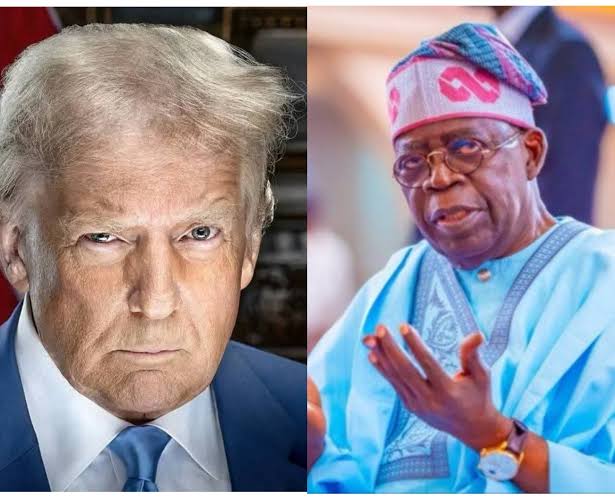
President Bola Tinubu is currently holding a closed-door meeting with Kano State Governor, Abba Kabir Yusuf, at the State House in Abuja.

Governor Yusuf arrived at the Presidential Villa shortly after 4:00 PM West Africa Time on Monday. He was received and escorted to the President’s office by the Chief of Staff, Femi Gbajabiamila.

The high-level meeting is taking place against a backdrop of sustained political speculation. There have been persistent reports suggesting Governor Yusuf may soon defect from the New Nigeria People’s Party (NNPP) to join the ruling All Progressives Congress (APC).

Neither party has officially commented on the agenda of the private discussion. The outcome is being closely watched by political observers, given Kano State’s significant influence in national politics.

Nigeria–UAE Relations: Between economic partnership and global controversies

By Zayyad I. Muhammad 

During President Bola Ahmed Tinubu’s official visit to the United Arab Emirates to participate in the 2026 edition of Abu Dhabi Sustainability Week (ADSW), Nigeria announced that it will co-host Investopia with the UAE in Lagos, Nigeria, in February. The initiative aims to attract global investors and accelerate sustainable investment inflows into Nigeria.

Nigeria has also concluded a Comprehensive Economic Partnership Agreement (CEPA) with the UAE to deepen cooperation across key sectors, including renewable energy, infrastructure, logistics, and digital trade. The agreement is expected to significantly strengthen trade relations and deliver tangible benefits for Nigerian businesses, professionals, and workers.

Overall, this expanding trade and economic relationship between Nigeria and the UAE represents a welcome development for both countries, with the potential to drive growth, job creation, and long-term economic collaboration.

However, on the international security front, the UAE is increasingly viewed through a more complex lens. Over the past decade, the country has pursued a more assertive foreign policy, particularly in parts of the Middle East and Africa.

The UAE has faced allegations and scrutiny from some governments, international organisations, media outlets, human rights groups, and analysts regarding its involvement in conflict-affected and politically fragile environments. These debates often centre on whether UAE actions have influenced or intensified existing crises, especially in several Muslim-majority countries.

In Sudan, various reports have alleged that the UAE was involved in the supply of weapons, including drones, to actors in the ongoing conflict. Some accounts claim that arms transfers were routed through neighbouring countries such as Chad, Libya, and Uganda, and that humanitarian operations served as logistical cover. Emirati authorities have denied these allegations, maintaining that the UAE supports humanitarian relief efforts and political solutions to the crisis.

In Yemen, the UAE was a key member of the Saudi-led coalition opposing the Iran-aligned Houthis. At the same time, analysts have pointed to UAE support for the Southern Transitional Council (STC), which seeks greater autonomy or independence for southern Yemen. Critics argue that this support contributed to political fragmentation, while others describe it as a pragmatic response to local security challenges and counter-terrorism objectives.

In Libya, the UAE has frequently been cited in international reports as a major external supporter of forces led by Khalifa Haftar and the Libyan National Army. Allegations include the provision of military assistance during operations against Tripoli-based authorities. UAE officials have consistently rejected claims of direct military involvement, emphasising their support for stability and counter-extremism.

In Somalia and the wider Horn of Africa, some observers have raised concerns about the UAE’s engagement with regional authorities and security actors, particularly in Puntland and Somaliland, suggesting that this involvement may have influenced internal political and security dynamics.

More recently, the Federal Government of Somalia announced the cancellation of all agreements with the UAE, including deals covering port operations, security cooperation, and defence. Somali authorities cited alleged violations of national sovereignty as the reason for the decision. The UAE, however, maintains that its activities in Somalia and the region are conducted within frameworks of cooperation, development assistance, and mutual security interests.

In 2022, the United States Treasury sanctioned six Nigerian individuals for allegedly raising funds in the UAE to support Boko Haram. This followed earlier actions by UAE authorities in 2021, when individuals were arrested and prosecuted for operating a fundraising network linked to the group. Despite these incidents, Nigeria–UAE relations remain largely focused on investment, trade, and broader economic cooperation.

Zayyad I. Muhammad writes from Abuja via zaymohd@yahoo.com.

GOC 8 division visits Tidibale, assures residents of improved security

By Abdullahi Mukhtar Algasgaini

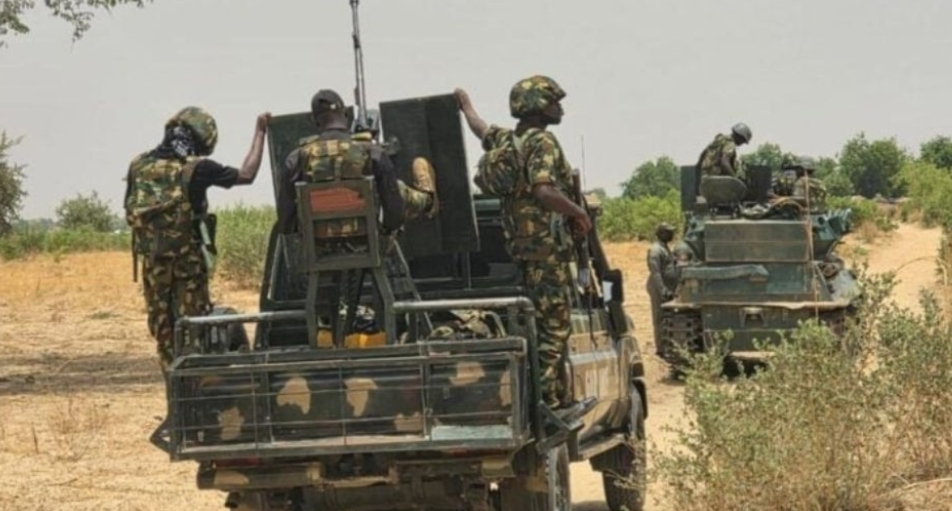
The General Officer Commanding (GOC) 8 Division of the Nigerian Army and Commander, Sector 2 Joint Task Force (North West), Operation FANSAN YAMMA, Major General Bemba Paul Koughna, has reassured residents of Tidibale community in Isa Local Government Area of Sokoto State of the Army’s commitment to strengthened security and lasting peace.

Major General Koughna gave the assurance during an assessment visit to the community as part of his first official engagements since assuming office.

The visit followed the recent return of residents who had earlier fled the area due to threats from bandits.

Addressing members of the community, the GOC said the visit was aimed at evaluating the security situation and ensuring that normalcy is fully restored.

He stressed that the Nigerian Army remains resolute in its responsibility to protect lives and property, adding that troops have been deployed and are now stationed in Tidibale to maintain a strong security presence.

According to him, the deployment would enable residents, particularly farmers, to go about their daily activities without fear. He assured the community that no part of Tidibale would be allowed to fall under the control of bandits, noting that troops are on constant alert and ready to respond swiftly to any security threat.

Major General Koughna also urged residents to cooperate with security agencies by remaining vigilant and promptly reporting suspicious movements or activities, emphasizing that effective security can only be achieved through collaboration between the military and the local population.

Speaking on behalf of the community, the Sarkin Arewa of Tidibale, Alhaji Ibrahim, expressed appreciation to the GOC for the visit, describing it as timely and reassuring.

He said the presence of the Army has renewed hope among residents and boosted their confidence to return to their homes and farmlands.

Earlier, the GOC received an operational briefing from the Commanding Officer, 26 Battalion, Lieutenant Colonel Nasiru Mustapha, at the Forward Operating Base (FOB) in Isa.

The briefing highlighted the prevailing security situation and ongoing military operations in the area.

The Nigerian Army reaffirmed its determination to continue working closely with host communities to ensure enduring peace and security across the North West region.

Nigeria, UAE ink major trade deal at Abu Dhabi summit

By Abdullahi Mukhtar Algasgaini

President Bola Ahmed Tinubu has returned to Nigeria following his participation in the 2026 Abu Dhabi Sustainability Week, where a significant economic agreement with the United Arab Emirates was finalized.

On the sidelines of the summit, Nigeria signed a Comprehensive Economic Partnership Agreement (CEPA) with the UAE.

The pact is designed to strengthen economic ties, increase trade and investment, and foster collaboration in sectors such as energy, infrastructure, agriculture, mining, and renewable energy, including technology transfer.

Addressing the summit, President Tinubu unveiled plans for a joint Nigeria-UAE “INVESTOPIA” event scheduled for Lagos in February.

The initiative is targeted at drawing global investors to the country.

The President also outlined Nigeria’s ambitious climate finance goal, stating the nation aims to secure up to $30 billion each year to support its energy transition and drive efforts to expand electricity access across the country.

Jigawa at a turning point under Governor Umar Namadi

By Ahmed Usman

Away from political noise and headline-grabbing theatrics, Jigawa State under Governor Umar Namadi is pursuing a disciplined development path; one that prioritises agriculture, human capital, and long-term economic foundations.

In Nigeria’s political culture, analysts have long relied on improvised metrics to judge elected officials: the first 100 days, the first year, or the widely appealed 18-month threshold, said to be the point when a new administration needs to settle, understand its responsibilities, and develop its own identity separate from the previous government. Yet in practice, Nigerian governments often have only two effective years to deliver results before politics and electioneering reclaim the agenda. 

The remaining two years are usually taken over by political campaigns, party struggles, and early preparations for the next election. By that measure, the administrations sworn in May 2023 have crossed the decisive midpoint, and any government unable to clearly articulate its policy direction, measurable outcomes, and long-term vision at this stage must confront uncomfortable questions about competence and priorities.

This moment offers a useful lens through which to reassess Jigawa State, a place often dismissed by outsiders as economically marginal or politically inconsequential. For decades, Jigawa was viewed through a narrow lens of poverty rankings and limited industrial activity. With agriculture providing livelihoods for nearly two-thirds of households and with relatively low levels of urbanisation, critics frequently argued that the state lacked the structural foundations to become economically competitive. Such narratives, however, ignore a fundamental truth about development: transformation often begins quietly, long before it becomes visible in national headlines. Under Governor Umar Namadi Danmodi, Jigawa is now presenting evidence of such a shift, deliberate, methodical, and quietly disruptive.

I do not write as a political pundit but as a citizen who cares deeply about his locality, a state too often stereotyped and misunderstood. Jigawa has long been caricatured as peripheral, yet today it provides an unlikely case study in how disciplined governance can chart a new economic course. What makes this transformation compelling is not bombast or political spectacle, but the understated way the administration communicates, through actions, policies, and investments rather than theatrics. The government speaks not in rhetoric but in results that are gradually reshaping the state’s economic and social landscape.

That message is clearest in the administration’s approach to agriculture. Recognising that Jigawa’s comparative advantage lies in its fertile land and large smallholder base, Danmodi has pushed aggressively to modernise the sector. Irrigation expansion, improved access to inputs, and strengthened value chains are already raising yields and market access. Given that Jigawa possesses nearly 150,000 hectares of land suitable for irrigated agriculture, this strategy is not only rational but transformative, positioning the state as a future food production hub in northern Nigeria. These efforts may not dominate front-page news, but they represent the kind of foundational work that changes economic destinies.

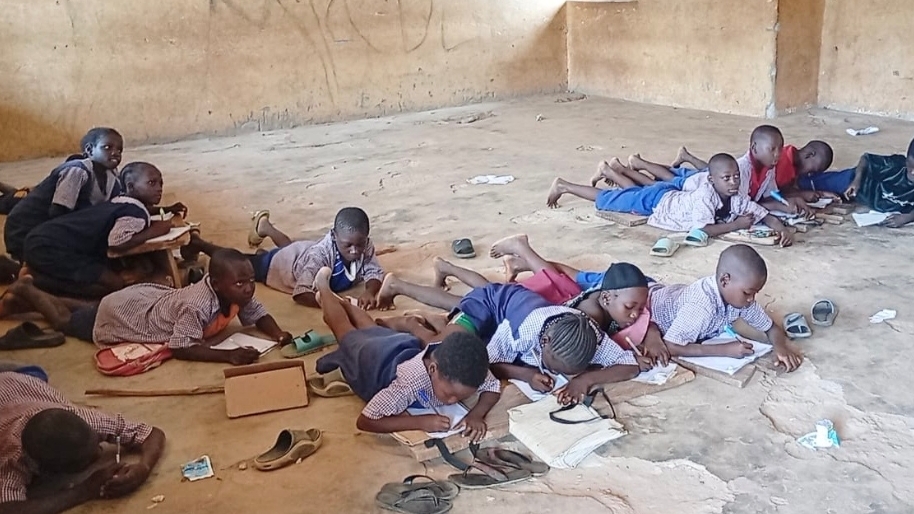
That same quiet logic underpins reforms in education, perhaps the most consequential area for a state where literacy remains below the national average. From classroom renovations and teacher training to curriculum enhancement, these interventions reflect a long-term commitment to human capital rather than a search for quick political points. In a region where poor educational outcomes fuel cycles of poverty, ignoring such structural issues would be far more costly than confronting them.

Equally important is the administration’s effort to build an economy that is less dependent on federal allocations. In a country where many states survive almost entirely on monthly revenue from Abuja, Jigawa’s pursuit of internally generated revenue, industrial growth, and investment-friendly reforms reflects an understanding that true development requires financial independence. The state’s infrastructure push, spanning rural electrification, road construction, and urban renewal, is designed to support this transition. Reliable electricity, particularly, is indispensable for revitalising small and medium enterprises, which account for the lion’s share of non-oil employment in Nigeria.

These economic initiatives intersect meaningfully with reforms in healthcare and social protection. For a state grappling with high maternal and infant mortality, investments in primary healthcare centres, vaccination programs, and emergency response systems signal a welcome shift toward preventive, not reactive, governance. Jigawa’s emerging life-cycle social protection model, supporting individuals from pregnancy through childhood, youth, and old age, offers an unusually holistic approach in a country where social safety nets are often fragmented or nonexistent. Together, these policies communicate a consistent message: development is possible only when people are healthy, educated, and economically empowered.

Taken as a whole, the administration’s work sends a subtle but powerful signal. It suggests a government not merely managing day-to-day affairs but intentionally laying the groundwork for what the state could become. This is the essence of Jigawa’s quiet revolution: a governance model that prioritises structure over spectacle and competence over performative politics. It is a reminder that some of the most meaningful transformations are neither loud nor dramatic; they are steady, disciplined, and anchored in long-term vision.

For years, sceptics argued that Jigawa lacked the capacity to catch up with more industrialised states. But development rarely follows a straight line. It accelerates when leadership aligns with strategy, when investments target the roots rather than symptoms of underdevelopment, and when political ambition is tempered with economic realism. 

Under Danmodi, Jigawa is beginning to suggest that its future will not be determined by its past reputation but by its present choices. These choices, rooted in economic transformation, human capital development, and institutional stability, show a state no longer content to survive but ready to shape its own future.

This is why the story of Jigawa today matters. It is a reminder that progress does not always announce itself with fanfare. Sometimes, it emerges quietly, through the steady accumulation of policies that, taken together, signal a shift too significant to ignore. Under the right leadership and with the right priorities, even a state long written off by pessimists can begin to rewrite its place in the Nigerian economy. And in Jigawa, that rewriting has unmistakably begun.

Ahmed Usman wrote via ahmedusmanbox@gmail.com.

Police apprehend man following wife’s death in Kebbi

By Anwar Usman

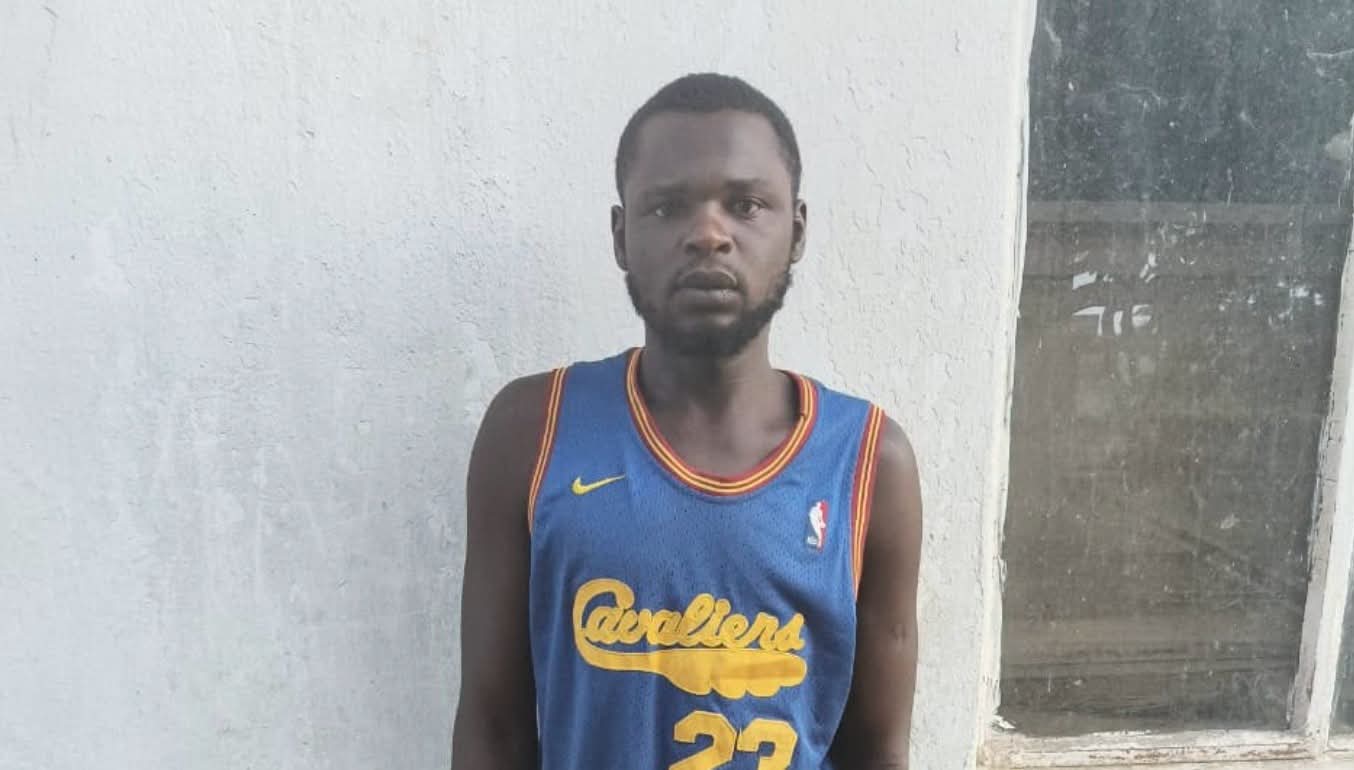
Kebbi State Police Command says it has arrested one Suleman Mamuda, 30, for allegedly killing his wife, Umaima Maidawa, 25, in Bayawa Village, Augie Local Government Area of the state.

This was disclosed by the Police Public Relations Officer in the state, SP Bashir Usman, in a statement issued in Birnin Kebbi on Friday that the incident occurred on Monday.

Usman said the suspect allegedly used the wooden handle of a hoe to strike his wife, resulting in her death.

According to him, “The suspect fled the area after the incident but was later traced and arrested following police investigation and credible information received from members of the community.”

He revealed that, “the Commissioner of Police in the state, Mr Umar Mohammed-Hadejia, has directed that the case to be transferred to the State Criminal Investigation Department (SCID) for discreet investigation and prosecution.”

The PRO urged the members of the public to promptly report incidents and continue to support law enforcement efforts aimed at maintaining peace and security across the state.

Defence minister rejects talks with bandits, warns state govts

By Abdullahi Mukhtar Algasgaini

The Minister of Defence, General Christopher Musa (rtd), has issued a stern warning to state governments against entering into peace agreements with armed bandits, declaring such deals harmful to national security.

In an interview with BBC Hausa Service, Musa stated the Federal Government’s clear position against negotiations, asserting that bandits are untrustworthy and any agreements with them undermine counter-insurgency efforts.

“There will be no peace deal with bandits,” he said, noting that while the government cannot force compliance in a democracy, strong advisories have been sent to those engaging in such talks.

He also firmly denied any federal involvement in ransom payments to kidnappers.

“The Federal Government does not pay ransom. Anyone doing so is acting on his own,” he clarified, attributing recent successful rescues to intense military pressure rather than financial settlements.

On security strategy, the Minister highlighted intensified military operations, the use of technology, and strengthened regional cooperation to secure borders.

He reiterated support for physical border controls to curb criminal movement.

Musa appealed directly to the public to cease all collaboration with insurgents, including providing food, supplies, or intelligence.

He labelled such transactions as dealing in “blood money.”Addressing international perceptions, he dismissed claims of religiously targeted genocide, stating the violence affects all Nigerians indiscriminately.

He noted that U.S. leadership has acknowledged this reality.

Commenting on a recent U.S. airstrike in Sokoto State, Musa described it as “very successful,” noting that surviving fighters fled to Niger Republic.

The minister reaffirmed the military’s resolve to defeat insurgent groups, identifying sustained pressure, public cooperation, and a rejection of negotiations as critical to restoring lasting peace.

Bank officials testify, detail transactions in Yahaya Bello’s N110.4bn fraud case

By Abdullahi Mukhtar Algasgaini

The prosecution of former Kogi State Governor, Yahaya Bello, advanced on Thursday as the Economic and Financial Crimes Commission (EFCC) submitted detailed bank records as evidence in the alleged N110.4 billion fraud case.

Bello is standing trial alongside Umar Shuaibu Oricha and Abdulsalami Hudu before Justice Maryanne Anineh of the FCT High Court, Abuja, facing 16 counts of criminal breach of trust and money laundering.

Prosecution led by Kemi Pinheiro, SAN, continued the cross-examination of a Zenith Bank compliance officer, Mashelia Arhyel Bata (PW6).

The witness clarified entries in bank statements, confirming transactions including a cheque of N10 million for Abdulsalami Hudu and a N2.45 million payment to Halims Hotels and Tours, Lokoja.

He stated he did not know the purpose of these payments.

Under cross-examination by defence counsel J.B. Daudu, SAN, the witness confirmed a N74.3 million credit from the Kogi State Internal Revenue Service on December 6, 2016, followed by a N10 million cheque payment to Mohammed Jami’u Sallau, with no stated purpose in the narration.

Counsel for the third defendant, Abdulsalami Hudu, established that his client made withdrawals via duly signed cheques as an accountant and listed signatory to the Government House account.

The witness detailed several large inflows into the account, often described as “security fund” or “His Excellency Special Sec Vote,” followed by withdrawals.

The prosecution then called three more bank officials. A Keystone Bank executive trainee (PW7) presented records showing ten transfers of N10 million each, totalling N100 million, into the account of Dantata and Sawoe Construction in February 2021 from individuals named Maigari Murtala and Yusuf Mubarak.

A compliance officer from FCMB (PW8) testified about transactions for Kunfayakun Global Limited, including a N30 million debit for school fees at the American International School for one Abdul Bashir in November 2021.

Finally, a Sterling Bank official (PW9) presented statements for Bespoke Business Solutions Limited, showing massive inflows from the Kogi State Internal Revenue Service in 2019, including sums of N138.4 million, N136.8 million, and N183.6 million described as “NAFFS Kogi State payment commission.”

Defence counsel for the third defendant objected to the admissibility of some documents, reserving reasons for later.

Justice Anineh adjourned the case until Friday, January 16, 2026, for the trial to continue.

Tax authority clarifies: VAT on bank fees “not new”

By Abdullahi Mukhtar Algasgaini

The Nigeria Revenue Service (NRS) has issued a statement to correct what it calls misleading reports about the introduction of Value Added Tax (VAT) on banking services.

In a press release dated January 15, 2026, the NRS categorically denied that the Nigeria Tax Act had newly imposed VAT on banking fees, commissions, or electronic transfer charges.

The Service clarified that VAT has always been applicable to fees for services rendered by banks and other financial institutions under the country’s longstanding VAT regulations.

It stated there is no new tax obligation for customers arising from recent legislation.

The NRS urged the public and all stakeholders to disregard the misinformation and to depend only on its official channels for accurate tax information.