Nigeria

Major Al-Mustapha cleared as supreme court dismisses Lagos murder case

By Abdullahi Mukhtar Algasgaini

The Supreme Court has definitively ended the murder trial of former Chief Security Officer, Major Hamza Al-Mustapha (rtd), over the 1996 killing of Kudirat Abiola, wife of the acclaimed winner of the June 12, 1993 presidential election, MKO Abiola.

In a unanimous ruling on Friday, the apex court dismissed the case, citing Lagos State’s complete abandonment of the appeal.

Justice Uwani Aba-Aji, presiding, noted that the state had failed to take any legal steps for over nine years despite being granted permission in 2014 to challenge an appellate court’s decision.

Lagos State, which had sought to overturn Al-Mustapha’s 2013 acquittal by the Court of Appeal, was absent from the proceedings and had filed no documents since the Supreme Court’s 2014 order gave it a 30-day window to act.

Al-Mustapha’s counsel, Paul Daudu, successfully argued that the state had lost all interest, urging the court to dismiss the matter entirely.

“The appellant has abandoned the case,” Justice Aba-Aji declared, stating that nine years was more than sufficient for Lagos to pursue the appeal.

The court also expressed displeasure that the state offered no representation or explanation despite receiving hearing notices since 2020.

This ruling seals the legal saga that began with Al-Mustapha’s 2012 death sentence by a Lagos High Court for his alleged role in Kudirat Abiola’s murder, a sentence overturned on appeal in 2013 due to insufficient evidence.

The Supreme Court’s dismissal closes the final chapter, affirming Al-Mustapha’s acquittal.

NERDC debunks claims of religious exclusion in revised school curriculum

By Uzair Adam

The Nigerian Educational Research and Development Council (NERDC) has dismissed claims circulating on social media that the newly revised Basic and Senior Secondary Education Curriculum excludes religious subjects, describing the information as false and misleading.

In a statement signed by its Executive Secretary, Professor Salisu Shehu, the Council said it was responding to allegations by “some people” who claimed that the new curriculum made provision for Christian Religious Studies (CRS) alone, with no space for Islamic Studies (IS), while others alleged the reverse.

According to NERDC, both claims amount to disinformation and do not reflect the approved curriculum.

The Council clarified that the revised curriculum, developed under the Federal Ministry of Education’s National Education Sector Initiatives (NESRI), clearly provides for both CRS and Islamic Studies at all relevant levels of basic and senior secondary education.

It explained that the subjects are offered on the basis of pupils’ religious affiliation, with CRS designated for Christian pupils and Islamic Studies for Muslim pupils.

Contrary to previous practice where religious studies were largely optional, NERDC said the revised curriculum accords greater importance to religious education by making it a consistent component of learning from Primary One through Senior Secondary School Three.

“The claim that either CRS or Islamic Studies has been removed from the curriculum is completely false,” the Council said, noting that the approved subject offerings comprehensively accommodate both religions in line with Nigeria’s plural society.

According to the Council, the curriculum review was designed to streamline content, reduce overload and improve learning outcomes, while still ensuring balance across sciences, humanities, vocational studies and religious education.

It added that the Federal Ministry of Education has officially released the list of approved subjects for all levels, and that any other versions in circulation are unauthentic.

NERDC explained that at the basic education level, pupils are required to study a broad mix of core subjects alongside either CRS or Islamic Studies, while at the senior secondary level, both subjects are clearly listed among the humanities offerings.

However, science, technology and commercial students that are interested in offering CRS and IRS can pick them as elective.

This, it said, demonstrates that the curriculum council adopted an inclusive and comprehensive approach rather than favouring one religious subject over another.

Professor Shehu urged parents, teachers and other stakeholders to ignore “fake and unauthorised” subject lists circulating online, warning that such misinformation could cause unnecessary confusion and tension.

He said the Council is already planning nationwide sensitisation and teacher capacity-building programmes to support smooth implementation of the revised curriculum.

He further explained that implementation will begin at the start of each three-year education cycle—Primary One, Primary Four, JSS One and SS One—whenever the revised curriculum is introduced.

NERDC assured the public that the revised curriculum reflects national values, respects religious diversity and remains focused on improving the quality and relevance of education across the country.

FG moves to end HND–B.Sc divide, grants polytechnics degree-awarding powers

By Uzair Adam

The Federal Government has announced plans to abolish the long-standing dichotomy between Higher National Diploma (HND) and university degrees by empowering polytechnics to award degrees, a reform aimed at repositioning technical and vocational education as a key driver of national development.

The Minister of Education, Dr. Tunji Alausa, disclosed this on Wednesday in Abuja while addressing a high-level retreat of council chairmen, commissioners of education, rectors, registrars and bursars of polytechnics across the country.

Describing the move as a landmark policy shift, the minister said the reform would end decades of discrimination against polytechnic graduates and reposition the institutions as centres of excellence within Nigeria’s higher education system.

He explained that the initiative would strengthen polytechnic education while preserving its core advantage of hands-on, industry-oriented training.

According to Dr. Alausa, Nigeria’s future competitiveness depends largely on a workforce capable of creating, building and solving real-world problems.

He added that the policy was in line with President Bola Ahmed Tinubu’s Renewed Hope Agenda, which prioritises job creation, industrial growth and human capital development.

With the new degree-awarding status, polytechnics are expected to attract stronger industry partnerships, improved funding opportunities and increased public confidence.

The minister assured stakeholders that the transition would be guided by clear standards, strong regulation and robust quality assurance mechanisms to ensure global competitiveness.

Speaking on the theme, “Transforming Polytechnic Education in Nigeria: Innovation, Good Governance and Sustainability for National Development,” Dr. Alausa noted that polytechnics remain critical to building a skills-driven economy.

He said the ministry had placed priority on Technical and Vocational Education and Training (TVET) to ensure graduates are industry-ready, innovative and capable of driving economic growth.

He urged polytechnic leaders to promote innovation through entrepreneurship centres, research hubs and strong industry linkages, identifying renewable energy, agri-technology, digital manufacturing and climate-resilient solutions as key priority areas.

On governance, the minister warned that transparency, accountability and ethical leadership must define the new era of polytechnic administration.

He called for fiscal discipline, timely audits, prudent management of resources and zero tolerance for corruption.

Dr. Alausa also emphasised sustainability, encouraging institutions to boost internally generated revenue through production and services, develop eco-friendly campuses and build resilient infrastructure.

Polytechnics, he said, should aim to produce what they consume and contribute to reducing Nigeria’s dependence on imports.While acknowledging challenges such as funding gaps, outdated facilities and societal bias in favour of university degrees, the minister maintained that the opportunities ahead were far greater.

He reaffirmed the federal government’s commitment to supporting polytechnics through policy reforms, infrastructure upgrades and strategic partnerships.

He further announced a special TETFund intervention this year to upgrade engineering schools in polytechnics with modern equipment, following a similar intervention for 12 medical colleges last year.

Charging participants to return to their institutions as agents of change, Dr. Alausa said, “The future of our youth, our economy and our nation depends on the transformation we ignite here today.”

Education experts at the retreat described the announcement as a turning point, noting that it would boost enrolment, motivate students and staff, and enhance the contribution of polytechnics to sectors such as manufacturing, technology, agriculture and renewable energy.

Neighborhood residents who spread false claims about murdered mother, six children exposed by police

By Abdullahi Mukhtar Algasgaini

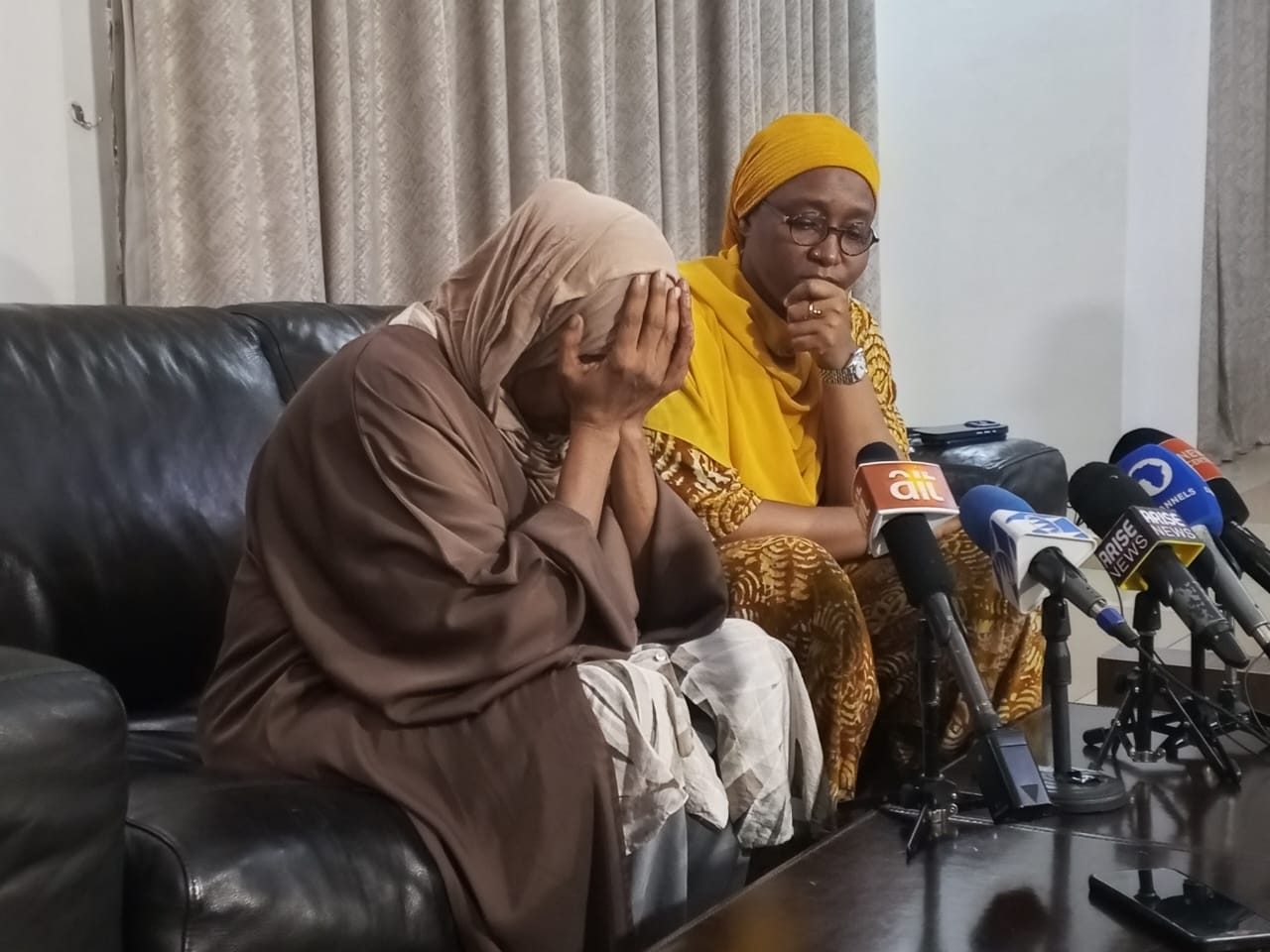
The Kano State Police Command has finally identified and exposed individuals from the local community who failed to assist Fatima Abubakar and her six children while they were alive, but later took to social media to spread fabricated stories after the family was tragically murdered.

The police spokesperson, Abdullahi Haruna Kiyawa, revealed this development in a short video posted on his official Facebook page.

The video featured the implicated individuals, alongside a stark caption that translates to: “It’s easy to be brave after the deed! You refused to help the woman and her children, only to come and weave lies.”

This statement directly contradicts earlier sensational claims made by these residents, who had given conflicting accounts to the police before presenting a different narrative on social media.

The police action aims to set the record straight and condemn the exploitation of the tragedy for attention.

The case of Fatima Abubakar and her six children, who were all killed, has shocked the state.

The police have reiterated their commitment to the investigation and warned against the circulation of unverified information that can hinder justice and cause further pain to the bereaved.

Truck rollaway in Gombe leaves two dead, six injured

By Abdullahi Mukhtar Algasgaini

A fatal road crash claimed two lives and left six others seriously injured on Tuesday night along the Gombe–Yola Road.

The incident occurred around 10:20 pm at New Mile 3, near the entrance to the main dual carriageway. Preliminary investigation by authorities points to negligence by the driver of a heavy-duty truck loaded with rice.

Ambassador Yusuf Danbayo, Senior Special Assistant on Security Matters, confirmed that the truck was improperly parked with its handbrake not fully engaged. It subsequently rolled uncontrollably, colliding with a Toyota Hilux and striking several individuals at the scene.

The two deceased victims were pronounced dead on arrival and deposited at the Specialist Hospital, Gombe. Six injured persons received emergency care at the Federal Teaching Hospital.

Police have arrested the truck driver, who is currently held at the Tumfure Police Division pending transfer for further investigation and prosecution.

Authorities have advised motorists, especially drivers of heavy vehicles, to exercise utmost caution when parking on major highways to avoid similar tragedies.

When silence kills: Lessons from Kano’s daylight tragedy

By Ibrahim Aliyu Gurin

What is more terrifying than violence? It is the sound of someone calling for help, with no one responding. That cry, unanswered, is the quiet horror that haunts our communities.

Last week in Kano, a family was killed in broad daylight. Neighbours reportedly heard the screams but stayed indoors. Outrage spread on social media. How could people hear such suffering and do nothing? How could an entire community remain silent while lives were being taken right next door?

At first, the silence felt unforgivable. Then I remembered something my Media and Society lecturer, Binta Suleiman Gaya, once said: crime is rarely about criminals alone. It is often a mirror of the society that allows it. Suddenly, the tragedy began to make painful sense.

I thought of my own experience. We grew up in a different Nigeria. Then, whenever discipline crossed into anger in our house, our neighbour was always the first to intervene. Once her name was mentioned,  “Hajja Mamma Yidam! Yidam!” (Rescue me), she would rush out immediately, pleading on our behalf. Sometimes we would deliberately call her name, knowing she would come to our rescue. That was how our society functioned. Not because everyone was perfect, but because everyone was involved.

We grew up in Nigeria, where even if a neighbour was beating a child, people would rush out to ask questions. Elders would intervene. Women would shout across fences. Youths would gather instinctively. No cry was ignored. No pain was considered private. That society shaped our humanity.

Today, a person can scream until their voice disappears into death, and doors remain locked. People now live only metres apart, yet are emotionally separated by fear. In Media and Society,  this condition is described as “alienation”, which is the gradual breakdown of social connection and communal responsibility.

Modern media culture has accelerated this separation. Through phones, television and social platforms, we are exposed to violence such as daily killings, kidnappings, and accidents, which are endlessly replayed. Human suffering now competes for attention in timelines and headlines.

Over time, this constant exposure creates “desensitisation”. What once shocked us now barely interrupts our scrolling. Tragedy becomes routine. Death becomes familiar. Media and Society argues that when violence becomes normalised in the media, society unconsciously absorbs that normalisation.

Alongside this is the rise of individualism. Survival has become personal. Safety has become private. The collective spirit that once defined African communities has been replaced with the logic of “mind your business.”  So when danger appears, people retreat indoors, but not always out of wickedness, but because society has trained them to think first of self, not community.

The course also explains the bystander effect, a psychological phenomenon in which individuals fail to act in emergencies because responsibility feels shared. Everyone assumes someone else will intervene. In moments like the Kano tragedy, everyone heard, and everyone waited.

Fear worsens this silence. Media reports of mob justice, wrongful arrests and police brutality have created deep public distrust. Many citizens now fear becoming suspects more than becoming helpers. The result is a society paralysed.

Media and Society helped me understand that insecurity is not only about criminals and weapons. It is also about broken trust, weakened communal values and a media environment that has reshaped human behaviour.

Our old society relied on communal vigilance. When danger came, the community itself became the first responder. Today, citizens wait for institutions that often arrive too late. The killers in Kano did not act alone. They were aided by fear and protected by our silence. 

The government must rebuild trust between citizens and security agencies. Community policing must be strengthened. Media institutions must go beyond reporting bloodshed and begin promoting empathy, social responsibility and communal vigilance. Religious and traditional leaders must revive the values that once made indifference shameful.

Beyond policies lies humanity. Every life lost affects us all. Speak up, protect your neighbours, and restore the community we once had.

We pray for the souls of those who lost their lives in Kano. May their families find strength, and may we as a society learn to act before it is too late. Let their cries not be in vain.

Ibrahim Aliyu Gurin wrote via ibrahimaliyu5023@yahoo.com.

Zamfara ambush claims six security forces in clash with terrorists

By Abdullahi Mukhtar Algasgaini

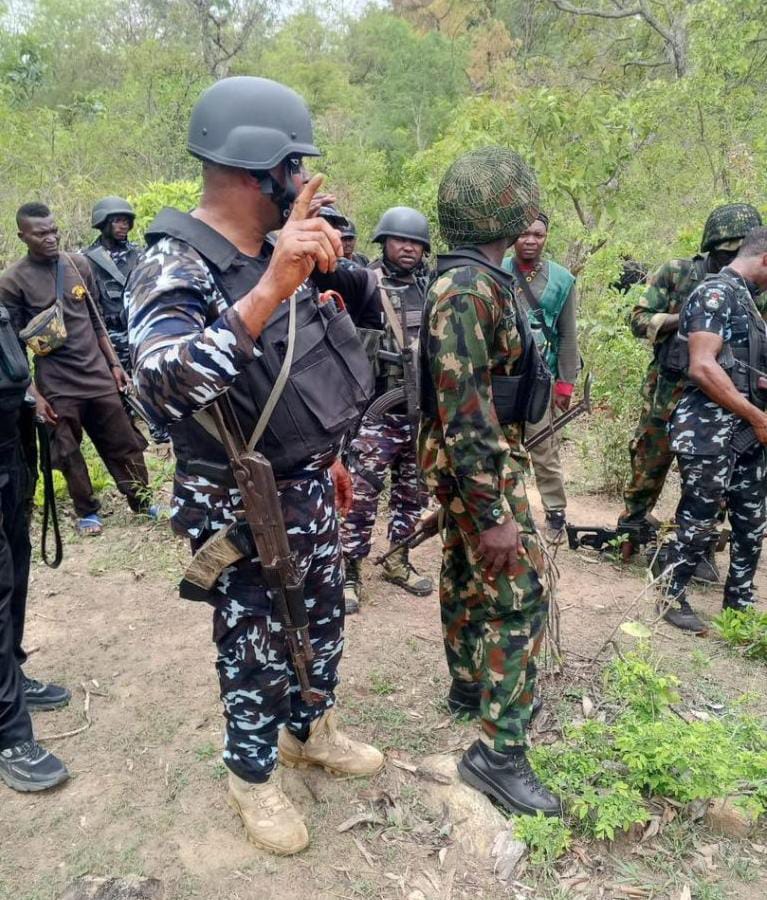
Troops in Zamfara State demonstrated “exceptional bravery” but suffered significant losses during a terrorist ambush over the weekend, military authorities confirmed.

The incident occurred on January 19, 2026, along the Bingi–Kekun Waje–Gusau Road. Soldiers from Operation FANSAN YAMMA (OPFY) were returning from a series of successful offensives and responding to a distress call when they were attacked at Gidan Wagni.

Despite the surprise assault, the troops fought back, preventing the attackers from reaching nearby communities. The engagement, however, came at a high cost, with five soldiers and one police officer killed.

Reinforcements, including a Mobile Strike Team and a Quick Reaction Force personally led by a Brigade Commander, swiftly mobilized to the scene. A counter-ambush forced the terrorists to withdraw.

Credible intelligence suggests the fleeing terrorists suffered heavy casualties, with notorious kingpins JANWUYA and ALHAJI BELLO—a top lieutenant to bandit leader KACHALLA SOJA—seriously injured.

The ambush followed a major three-day operation from January 17-19, where troops raided terrorist enclaves in Birnin Magaji and Anka. Those earlier operations led to three arrests, four terrorists killed, and the recovery of a cache of weapons, including a PKT machine gun, five AK-47 rifles, and communication radios.

The Theatre Commander has condoled with the forces and commended their courage. Operation FANSAN YAMMA assures the public that the situation is under control and has urged citizens to continue supporting security efforts with timely information.

As a sideline to every soccer tournament

By Abubakar Muhammad

AFCON has just concluded. Senegal won the trophy, but many football enthusiasts know that the actual play of the game is only half of the big spectacle. There are many things going on backstage that take time to materialise. When you look at the countries, roll the camera, and see them doing well, you will see patterns lock into place. There might be visible investment and development of physical infrastructure, but there is also something more to it. 

As a sideline to every soccer tournament, one of the things I pay attention to is the grassroots, street-level infrastructure that feeds talent to the national team. In these tournaments, you would not only pay attention to the official game or what happens in the big arenas, but also to the images that come out from foreign visitors depicting themselves playing outside the formal venues. The soccer crowd, wherever they are, tend to find where to play.  To host a tournament, you really need a solid infrastructure for both formal and informal arenas. But more so, this tells us stories about the status of the game, leisure and where citizens play. 

As usual, it seems Nigeria is left behind when it comes to grassroots soccer infrastructure. Senegal, Algeria, Angola, etc, have a thriving street soccer infrastructure. This infrastructure is not formal, but it seems to enjoy greater consensus that cuts across the formal-informal divide between citizens and governments. 

In Latin America, there are spaces in favelas and barrios where local kids can play the game. The spaces may not be the same, may use different nomenclature, may straddle the line between the formal and the informal, but they retain the same purpose and spirit.

In Senegal, they are in the form of navétanes, a semi-formal regional tournament played in local spaces. These spaces are not owned by the government or private individuals, unlike, say, primary school premises or other government buildings. They are simply communal spaces where the navétanes games are played. These spaces are respected by everyone; no encroachment or erection of structures, public or privately owned. Kids start their careers in their neighbourhoods and progress to regional teams, then to the professional league, the national team, and onward to international careers. You find similar spaces in Brazil as developing ground for talents that would later go on to dazzle a global audience. 

In North Africa, they have a thriving culture of street football played in what we can call in Nigeria a 7-aside stadium. The difference is that these spaces in North Africa are free and open to everyone. They sit in open spaces in the middle of neighbourhoods. The key idea here is access and openness. The use of open space for soccer must not require any payment and must remove any other impediments that can exclude people. A truly public space is one that lets you in without charging a fee or asking for proof of innocence.

In Nigeria, empty lots and vacant spaces are constantly being developed. There is no respect for spaces where kids can play. The idea is that in places where formal sporting infrastructure is not in place, small-scale community members use these spaces for leisure and sporting activities. Kids will have a chance to play the game from a very young age until they dribble their way to the national team. The grassroots in many parts of the world are where players are developed and imbued with the spirit of the nation before they enter the academy for the refinement of their talents. 

African soccer, like its South American counterpart, is largely dependent on informal infrastructure, with local people coming together to build their own. People-as-infrastructure is a concept in which citizens enter into a series of temporary, makeshift arrangements with one another to provide services that authorities are unable to deliver.

By killing these spaces, Nigeria is killing her young talents. It makes it difficult for the local kids to develop an interest, let alone play the game and nurture their talents. Angola, not really a footballing nation, has a thriving street football culture. I noticed from the videos I watched that street lots exist, and they are everywhere. They don’t seem to be developed or encroached so rampant as we see in Nigeria. It seems these spaces are protected by consensus, just like they are protected in Brazilian favelas and Argentina’s barrios. 

Football is the game of the poor. Commercialise football, and you create a barrier where only the rich can afford to play. Commercial football delivers more money to the pockets of a few individuals without bringing much-needed collective glory to the national team. The English Premier League is the wealthiest league in the world, but the country has fallen far behind other footballing nations.  Germany has an academy system in place, but their overall sporting culture is anchored around a process that resembles socialist democratic football more than an individualistic, capitalist model that Nigeria tends to lean towards. 

One of the biggest problems that Nigeria’s football faces as an institution is the seeming, increasing reliance on the academy for its national talents. Academies are simply there for money. Another thing is the seeming sole reliance on foreign-based players. This is understandable for the refined talents abroad, but there seems to be a problem with that in Nigeria. 

There is nothing wrong with foreign-based players populating the national team. Countries tap into their talents abroad, sharpened by cutting-edge training models and infrastructure. One of the biggest problems with this, in the case of Nigeria, is that players know exactly why they’re called up to the national team. They understand why, and there is no confusion about the nature of the transaction. There is nothing that dilutes or softens the nature of the transaction. The country only sees them when it needs them. The country is not there when they need her, and so, in their bloom and glory, they may not give their all. They will not play with their blood and heart. 

Secondly, tapping into foreign players in Nigeria is not grounded in any philosophical sporting policy. For instance, what does it mean for a player to play for the national team? What does the national team mean to them? What is that one thing that all players can understand as a common language and shared values? Something like a unique national culture common among the youth? You can only find this in street football played across the country. Pick that ideology and craft it into the national sports policy. What we see instead is total indifference at best, if not outright obstacles thrown in the way of the nation’s youth by the government and private interest groups. 

By eliminating informal spaces, we have destroyed the conviviality and socio-spatial relations that emerge from street games. Street soccer gives the manager of the national team a foundation, something to start with. The street is where every player understands what it means to play for the national team. From the ground up, the Nigerian player can develop a sense of Nigerianness, just as French players are instilled with French values and what it means to play for the national team. But since we don’t have the formal structures and arrangements of the French, Germans, or English, where players are developed through various academies under the guidelines of the national football federations, the street is where our players should build their character. The Senegalese have taken the navétanes and use it as a national sports policy. It is an informal, grassroots football that develops independently of the government. The coach and players speak the same football language that came from the streets. 

By erecting structures on every available space in Nigeria, you tighten the rope for the children in local communities and make it hard for ordinary folks to make their way to the national team. So many talents would slip through the cracks before rising to the top and reaching their full potential. We are already importing a dangerous trend from abroad, where only kids from wealthy backgrounds can play the game and reach the professional level.

And since we don’t have meaningful ways in which citizens feel indebted to their governments and their countries beyond familial ties, the very few that already found their way to the highest level of the game know why they’re playing. They’re simply playing commercial football. They have already paid the price on the way to Europe without the aid of any national structure. When you call them up to the national team after this, they will not play with their heart and their blood. 

Abubakar Muhammad is from Kano, Nigeria. 

Governor Yusuf meets President Tinubu amid defection rumors

By Abdullahi Mukhtar Algasgaini

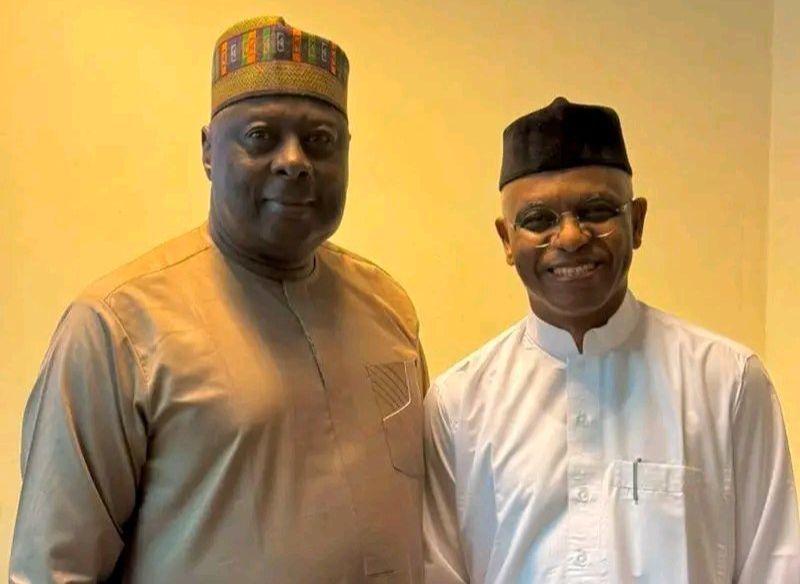
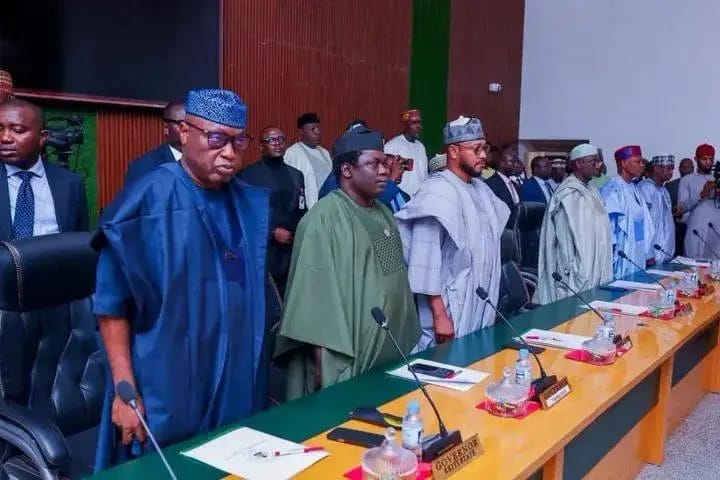
President Bola Tinubu is currently holding a closed-door meeting with Kano State Governor, Abba Kabir Yusuf, at the State House in Abuja.

Governor Yusuf arrived at the Presidential Villa shortly after 4:00 PM West Africa Time on Monday. He was received and escorted to the President’s office by the Chief of Staff, Femi Gbajabiamila.

The high-level meeting is taking place against a backdrop of sustained political speculation. There have been persistent reports suggesting Governor Yusuf may soon defect from the New Nigeria People’s Party (NNPP) to join the ruling All Progressives Congress (APC).

Neither party has officially commented on the agenda of the private discussion. The outcome is being closely watched by political observers, given Kano State’s significant influence in national politics.

Nigeria–UAE Relations: Between economic partnership and global controversies

By Zayyad I. Muhammad 

During President Bola Ahmed Tinubu’s official visit to the United Arab Emirates to participate in the 2026 edition of Abu Dhabi Sustainability Week (ADSW), Nigeria announced that it will co-host Investopia with the UAE in Lagos, Nigeria, in February. The initiative aims to attract global investors and accelerate sustainable investment inflows into Nigeria.

Nigeria has also concluded a Comprehensive Economic Partnership Agreement (CEPA) with the UAE to deepen cooperation across key sectors, including renewable energy, infrastructure, logistics, and digital trade. The agreement is expected to significantly strengthen trade relations and deliver tangible benefits for Nigerian businesses, professionals, and workers.

Overall, this expanding trade and economic relationship between Nigeria and the UAE represents a welcome development for both countries, with the potential to drive growth, job creation, and long-term economic collaboration.

However, on the international security front, the UAE is increasingly viewed through a more complex lens. Over the past decade, the country has pursued a more assertive foreign policy, particularly in parts of the Middle East and Africa.

The UAE has faced allegations and scrutiny from some governments, international organisations, media outlets, human rights groups, and analysts regarding its involvement in conflict-affected and politically fragile environments. These debates often centre on whether UAE actions have influenced or intensified existing crises, especially in several Muslim-majority countries.

In Sudan, various reports have alleged that the UAE was involved in the supply of weapons, including drones, to actors in the ongoing conflict. Some accounts claim that arms transfers were routed through neighbouring countries such as Chad, Libya, and Uganda, and that humanitarian operations served as logistical cover. Emirati authorities have denied these allegations, maintaining that the UAE supports humanitarian relief efforts and political solutions to the crisis.

In Yemen, the UAE was a key member of the Saudi-led coalition opposing the Iran-aligned Houthis. At the same time, analysts have pointed to UAE support for the Southern Transitional Council (STC), which seeks greater autonomy or independence for southern Yemen. Critics argue that this support contributed to political fragmentation, while others describe it as a pragmatic response to local security challenges and counter-terrorism objectives.

In Libya, the UAE has frequently been cited in international reports as a major external supporter of forces led by Khalifa Haftar and the Libyan National Army. Allegations include the provision of military assistance during operations against Tripoli-based authorities. UAE officials have consistently rejected claims of direct military involvement, emphasising their support for stability and counter-extremism.

In Somalia and the wider Horn of Africa, some observers have raised concerns about the UAE’s engagement with regional authorities and security actors, particularly in Puntland and Somaliland, suggesting that this involvement may have influenced internal political and security dynamics.

More recently, the Federal Government of Somalia announced the cancellation of all agreements with the UAE, including deals covering port operations, security cooperation, and defence. Somali authorities cited alleged violations of national sovereignty as the reason for the decision. The UAE, however, maintains that its activities in Somalia and the region are conducted within frameworks of cooperation, development assistance, and mutual security interests.

In 2022, the United States Treasury sanctioned six Nigerian individuals for allegedly raising funds in the UAE to support Boko Haram. This followed earlier actions by UAE authorities in 2021, when individuals were arrested and prosecuted for operating a fundraising network linked to the group. Despite these incidents, Nigeria–UAE relations remain largely focused on investment, trade, and broader economic cooperation.

Zayyad I. Muhammad writes from Abuja via zaymohd@yahoo.com.