Nigeria

Kano Governor Abba Yusuf officially defects to APC at Government House ceremony

By Sabiu Abdullahi


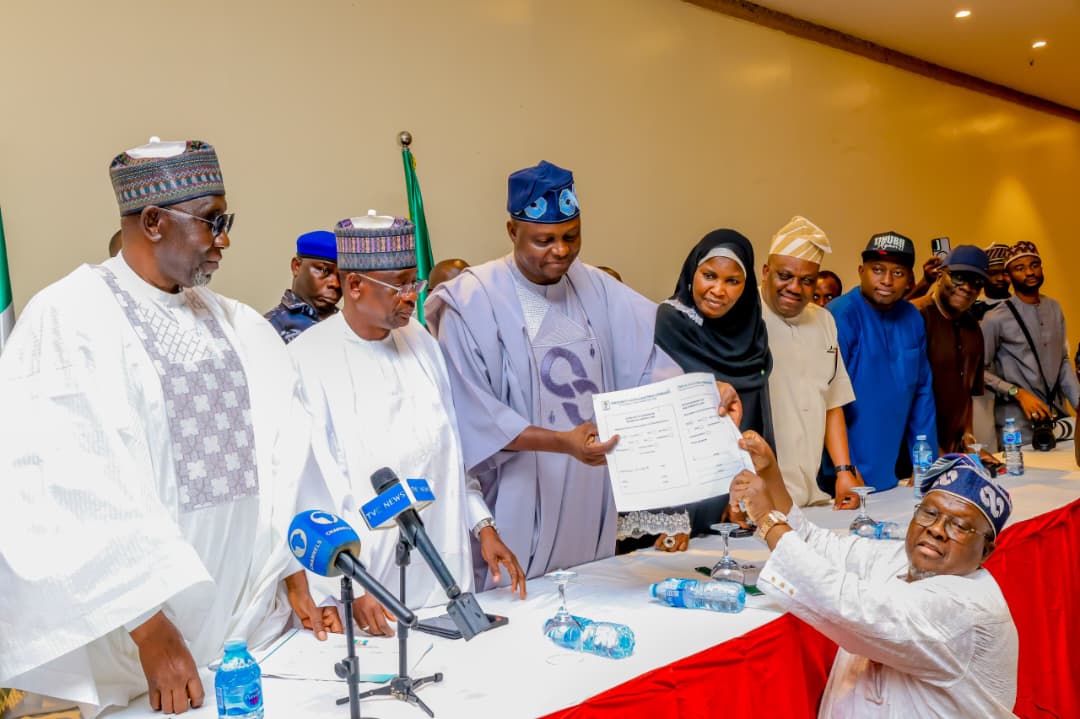
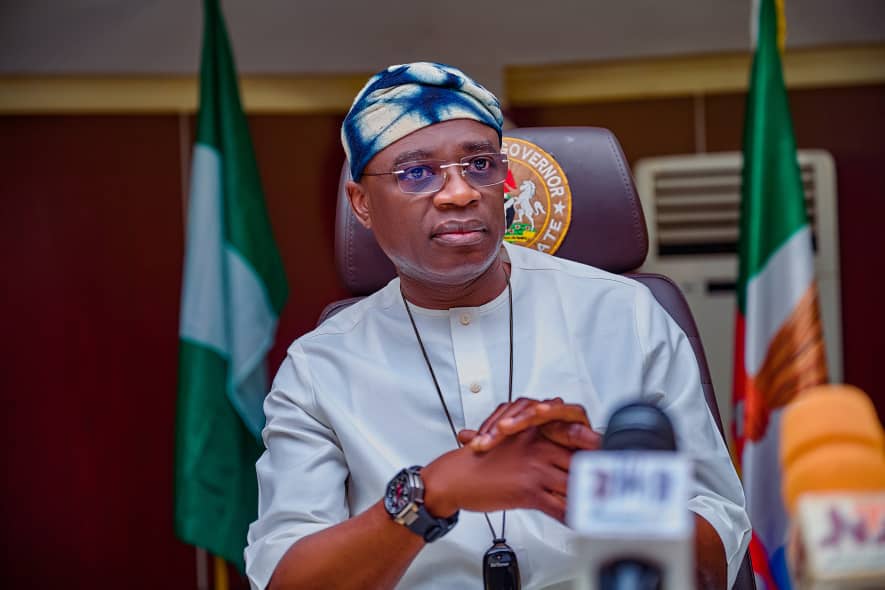
The Governor of Kano State, Abba Kabir Yusuf, has officially joined the All Progressives Congress (APC), ending weeks of political speculation over his party affiliation.

Yusuf completed his defection on Monday during a formal ceremony held at the Coronation Hall of the Kano State Government House. Senior figures of the APC received him at the event.

Among those present were former APC National Chairman and former Kano State Governor, Abdullahi Ganduje; the Deputy President of the Senate and Senator representing Kano South, Barau Jibrin; and the Minister of State for Housing and Urban Development, Yusuf Abdullahi Ata. Other top party leaders and officials also attended the ceremony.

Addressing the gathering, the governor explained that his return to the APC followed his desire to work more closely with the Federal Government under the leadership of President Bola Ahmed Tinubu, with the aim of speeding up development in Kano State.

Yusuf won the 2023 governorship election on the platform of the New Nigeria Peoples Party (NNPP). He later resigned from the party alongside several members of the Kano State House of Assembly and the House of Representatives, a move that cleared the path for his re-entry into the APC.

More details are expected to emerge as reactions continue to trail the development.

16 Officers indicted in alleged coup to face special military court-martial — DHQ

By Anwar Usman

The Defence headquarters revealed on Monday that the Investigative Panel established to investigate 16 officers of the armed forces, alleged to have been indicted for acts of indiscipline, acts contrary to service regulations, and other breaches, has concluded its investigations, adding that the officers will face a military Court Martial.

Director of Defence Information, Major General Samaila Uba, made this known  in a statement in Abuja.

Recall that the Defence Headquarters (DHQ) had, in October 2025, announced the arrest and detaintion of the officers, saying that the investigations had now been completed in line with established military procedures and extant regulations.

Major Gen Uba said the investigation examined all circumstances surrounding the conduct of the affected personnel and identified a number of officers with cases to answer, including allegations bordering on plotting to overthrow the government.

He said such actions were inconsistent with the ethics, values and professional standards expected of members of the Armed Forces of Nigeria.

He reiterated that the measures being taken were “purely disciplinary and part of internal institutional mechanisms to preserve discipline, cohesion and operational effectiveness within the ranks”.

Uba further noted that, “the commitment of the Armed Forces to professionalism, loyalty and respect for constitutional authority, assuring the public that due process and fairness would be strictly observed throughout the proceedings”.

Reports revealed that the detained officers included a Brigadier-General, a Colonel, four Lieutenant Colonels, five Majors, two Captains, a Lieutenant, a Lieutenant Commander from the Nigerian Navy and a Squadron Leader from the Nigerian Air Force.

Sources familiar with the development said most of the officers belong to the Infantry Corps, Signals Corps, and Ordnance Corps.

APC dismisses speculation over 2027 presidential running mate

By Sabiu Abdullahi

The All Progressives Congress (APC) has dismissed reports suggesting a possible replacement of Vice President Kashim Shettima as President Bola Ahmed Tinubu’s running mate ahead of the 2027 general elections.

In a press statement issued and signed by the APC National Publicity Secretary, Felix Morka, CON in Abuja on January 26, 2026, the ruling party said it had observed increasing media attention around what it described as unfounded claims concerning the vice president’s position on the party’s future presidential ticket.

The APC noted that while the reports initially appeared subtle, they later escalated with the mention of specific individuals alleged to be under consideration as replacements for Vice President Shettima.

Reacting to the development, the party stated that “the stories are purely speculative, untrue and utterly baseless.”

The APC warned media organisations against providing platforms for what it called rumour merchants and unreliable sources, urging journalists to exercise caution and responsibility in their reporting. According to the party, such narratives were designed only to create tension and confusion within the political space.

The statement further reminded the public that political activities remain restricted under existing laws and electoral guidelines. It stressed that the party’s current priority is governance, with full support for President Tinubu and Vice President Shettima as they pursue the administration’s Renewed Hope Agenda.

The APC said its focus remains on policies and reforms aimed at economic transformation, national prosperity, and improved living standards for Nigerians.

The party also advised ministers, senior government officials, and party leaders to avoid comments or actions that could fuel unnecessary speculation. It urged them to concentrate on effective service delivery and to strengthen public confidence in the achievements of the Tinubu-led administration.

Author, Dr. Aisha Musa Auyo, launches relationship-focused book, Between Hearts and Homes

By Sabiu Abdullahi

A Nigerian academic and writer, Dr. Aisha Musa Auyo, has announced the release of her new book titled Between Hearts and Homes. The book is a collection of articles drawn from her personal experiences, observations, and long-standing interest in human relationships.

In a post shared on her Facebook profile, seen by the Daily Reality on Sunday, Auyo stated that the book reflects her journey as an aspiring relationship expert and coach, with a strong focus on relationships between couples. She noted that her background played a major role in shaping her love for books and reflection.

Auyo recalled growing up in a home headed by librarian parents, where reading became a constant companion. She said her education spanned both secular and Islamic schools, and she devoted much of her free time to books. That lifestyle, she explained, affected her social interactions during childhood.

According to her, frequent bullying and repeated disappointments made her question her role in those experiences. That period later pushed her towards social psychology, as she sought to better understand herself and how people relate with one another.

Her studies and observations, she said, revealed the strong influence of family structures on individual behaviour. As divorce cases and unhappy marriages increased within her community, she developed a stronger desire to promote healthy relationships, especially among couples. She described happy families as the backbone of a stable society and a prosperous nation.

The author stated that the book draws lessons from her interactions with parents, siblings, husband, in-laws, friends, teachers, and students. She said she carefully reflects on these relationships, learns from them, and passes the lessons to her readers so they can gain insight without going through similar difficulties. Responses and discussions from readers, she added, have continued to deepen her understanding of relationship matters.

Auyo also revealed her experience in offering free marital and parenting coaching, which exposed her to the realities many families face. She said this experience expanded her understanding of the challenges linked to marriage and interpersonal relationships.

Through Between Hearts and Homes, the author said she aims to present a realistic picture of marital and other relationships, while encouraging more understanding and compassion in interactions between spouses and within society.

She added that her broader objective is to address common relationship issues and support the well-being of individuals and the community at large.

The book is available in paperback in Nigeria, while readers across the world can access it on Amazon in both paperback and Kindle formats.

Tinubu heads to TĂĽrkiye for key state visit


By Abdullahi Mukhtar Algasgaini

In a move to bolster bilateral relations, President Bola Ahmed Tinubu will on Monday commence a state visit to the Republic of TĂĽrkiye.

The visit is designed to enhance cooperation in critical sectors including security, aviation, and innovation. It comes in reciprocity to Turkish President Recep Tayyip Erdogan’s official visit to Nigeria in October 2021.

During the engagement, both leaders are expected to oversee the signing of several memoranda of understanding (MoUs). These agreements will span areas such as scientific research, energy, military cooperation, and media communications.

A business forum featuring investors from both nations will run concurrently to explore economic partnerships.

The President’s delegation comprises top government officials: the Ministers of Foreign Affairs, Justice, Defence, Women Affairs, Interior, and Culture & Creative Economy. Also included are the National Security Adviser and the Director-General of the National Intelligence Agency.

President Tinubu is scheduled to return to Nigeria after the visit.

2026 budget appropriation bill, Abuja Accord, and the future of Nigeria’s health sector

By Ali Tijjani Hassan 

On December 19, 2025, President Bola Tinubu presented Nigeria’s 2026 budget to the National Assembly. As a health advocate, I was curious about sector allocations, especially in health, aligned with his Renewed Hope Agenda to revitalise Nigeria’s healthcare system. I hope the administration commits to the 2001 Abuja Declaration, in which African leaders pledged to allocate at least 15% of their budgets to health to address chronic underfunding and improve health sector outcomes. Nigeria proposed spending 2.82 trillion naira, only 4.26% of its 2026 budget.

 I was nearly buried in shame when I heard the president repeating that “this health allocation represents approximately 6% of the total budget net of liabilities.” Meaning that, excluding the net liabilities, the health sector’s take-home after deduction of debt servicing of almost 15 trillion Naira from the gross budget will be only 4.26%. Which makes me pause and ask myself, “Is this allocation holistic toward changing the narrative of the dilapidated healthcare system in Nigeria?” 4.26% against the 15% is relatively less than one-third of the Abuja Declaration—a beacon of hope to combat the ravages of HIV/AIDS, tuberculosis, malaria, and other scourges plaguing our continent.

Yet here we are in 2025, over two decades later, and Nigeria, the self-proclaimed Giant of Africa, continues to stumble in the darkness of illusion, allocating a paltry 4-6% to health in the just-presented 2026 budget. How can a nation so rich in oil, talent, and potential treat its people’s health like an afterthought?

This is not just negligence; it is a disappointment that endangers millions, especially as the United States government slashes its global health aid, leaving citizens exposed to infectious diseases, non-communicable ailments like chronic kidney disease (CKD), and a rapid population boom that threatens to overwhelm our fragile systems. The Abuja Declaration was no mere rhetoric; it was a collective vow by African Union members to prioritise health financing, recognising that without robust funding, diseases would continue to feast on our people like vultures on carrion.  Nigeria is a party to this decree, but history shows we’ve never come close to honouring it. From 2001 to now, our health allocations have hovered below 10%, peaking at around 5.95% in recent years before dipping again in the 2026 proposal of ₦2.48 trillion out of ₦58.18 trillion—a measly 4.26% when liabilities are included.

Our leaders always cite debt servicing, infrastructure, and security as excuses, but I want to ask a single question: “Is the life of a Nigerian child not worth more than another flyover or armoured vehicle?”

Although they are relatively important, one thing is certain: no nation can grow beyond the quality of its people. Apology to President Tinubu.

I can’t comprehend how we can parade ourselves as Africa’s economic powerhouse yet fund health like beggars at the roadside. In comparison to our African brothers, who have shown what true commitment looks like. Rwanda, rising from the ashes of genocide, consistently meets or exceeds the 15% mark, allocating up to 18% in recent budgets, which has built a universal health coverage system envied across the continent. 

In Botswana, with its prudent diamond revenues, which hit 15-17%, investing in HIV programs that have slashed infection rates. On the other hand, the CĂ´te d’Ivoire joined this elite club, channelling funds into preventive care that keeps NCDs at bay. Even Tanzania briefly touched the target in 2011. While we proclaimed the giant of Africa’s band, these nations have long proved it’s possible by prioritising health as a national security issue, not an optional charity. The Giant of Africa lags behind most West African peers, where allocations average below 10%. 

We boast the largest GDP in Africa, yet our per capita health spending is a shameful $15-20 annually, far below Rwanda’s more than $50. This comparative disgrace isn’t just numbers; they represent the lives lost. While Rwanda’s life expectancy climbs to 69 years, ours stagnates at 55, a gap widened by our funding failures. The consequences are alarming, starting with the relentless burden of infectious diseases that stalk our land like ghosts in the night. 

Nigeria bears the heaviest malaria load globally, with millions infected annually and economic losses of $1.1 billion each year from treatment and lost productivity. In 2025 alone, Lassa fever has claimed 195 lives, with over 1,069 confirmed cases amid 9,041 suspected—a fatality rate hovering at 18.5%, higher than previous years. Cholera surges during rains, diphtheria ravages unvaccinated children, and HIV/AIDS affects millions, with Nigeria hosting the second-largest HIV population worldwide. These figures aren’t abstract statistics; they are the number of our brothers dying in rural clinics without drugs and mothers burying infants from preventable fevers.

Underfunded surveillance systems mean outbreaks explode before a response, as seen in the 2025 Lassa resurgence, which cost billions in emergency measures. If we met the 15% pledge, we could bolster primary health centres, stockpile vaccines, and train more community health workers—turning defence into offence against these microbial invaders. But wait, the horror deepens with non-communicable diseases (NCDs), silent killers creeping up as our lifestyles urbanise. Chronic kidney disease (CKD) exemplifies this scourge, with prevalence rates of 10-19% among adults, yet awareness is abysmally low. 

In Lagos alone, hypertension affects 29% of adults, fueling CKD and cardiovascular woes.  NCDs now cause 73.6% of deaths in developing nations like ours, surpassing infectious ones. Diabetes and cancer add to the tally, with households spending fortunes on out-of-pocket care—up to ₦384 billion annually, pushing families into poverty. The double burden is real: As we fight malaria, the CKD dialysis costs bankrupt families, while public facilities are overwhelmed. In armed conflict zones of Northern Nigeria, NCD prevalence hits 15% for hypertension and diabetes, compounding the trauma of insurgency. Without the pledged funding, proper disease-screening programs remain dreams, and preventive education is scarce. 

Compared to Botswana, where 15% allocation funds are for NCD clinics, reducing mortality by 20% in a decade. Exacerbating Nigeria’s demographic tsunami. Our population stands at 237.5 million in 2025, growing at 2.5-3% annually, and is projected to hit 380 million by 2043 and 440 million by 2050. Nearly half are under 15, a youthful bulge that could be a dividend but risks becoming a curse without health investment. More mouths mean more disease vectors: crowded slums breed cholera, and rapid urbanisation spikes NCDs driven by poor diets and pollution. By 2050, we’ll add 130 million souls, straining hospitals already at breaking point.

Rwanda, with controlled growth and high health spending, harnesses its youth; we risk a generation crippled by untreated ailments. And now, the dagger twist: US funding cuts. In early 2025, the Trump administration froze billions in global aid, slashing USAID programs by 23-40%. Nigeria lost over $600 million—a fifth of our health budget—crippling HIV treatment for millions, dropping coverage from 1.1 million to 350,000. Malaria and TB programs falter, with NGOs downsizing and lives lost estimated in the thousands.

We’ve long relied on foreign donors for 30-40% of health funding; now, with cuts, the gap yawns wider. Botswana and Rwanda, self-reliant through domestic pledges, weather this storm; we scramble with supplements like ₦4.8 billion for HIV packs, mere band-aids.

To redeem ourselves, the government must urgently ramp up to 15% by redirecting funds from wasteful subsidies, tax evasion loopholes, and corruption black holes. Invest in primary care: build 10,000 more health centres and train 50,000 midwives and doctors annually. Prioritise prevention: free CKD screenings, anti-malaria campaigns, and NCD education in schools. Forge public-private partnerships, like Rwanda’s with tech firms for telemedicine. Address demographic needs through family planning integrated into health services. And hold leaders accountable—civil society, demand audits; lawmakers, reject budgets below 10% as a start.

My compatriots, the clock ticks. It’s high time to hold our leaders accountable for their words and actions. If we sleep on this, infectious outbreaks will merge with NCD epidemics amid population surges, turning Nigeria into a health wasteland.

But with resolve, we can honour the spirit of the Abuja Declaration, outshine our peers, and build a nation where health is a right, not a lottery.

Arise, O Nigerians—demand better, for our future’s sake!

Ali Tijjani Hassan is a public health enthusiast, civil society actor, and public affairs analyst. He writes from Potiskum, Yobe State, and can be reached at alitijjani.health@gmail.com.

Unity among healthcare professionals: A key tool for effective service delivery

By Mallam Tawfiq

The scaffold that sturdily supports the pillar of success in everything is “unity”, without which we will somberly watch every beautiful thing in our everyday life running into a complete fiasco.

In healthcare settings, unity and peaceful coexistence among healthcare professionals are of paramount importance and a necessity for ensuring the delivery of effective, high-quality healthcare services.

To easily fathom the significance of that, should we reflect and ponder on the biological level of organisation of life? It succinctly and holistically depicted that the degree of unity among various cells leads to the formation of “body tissues”, and that the harmonious agreement among these tissues leads to the formation of “organs”.

Organs, however, organise to form a system, and thus the effective functioning of the respective systems yields a healthy life. Snags created by pathological factors deflect the spirit of harmonious union at different levels of this organisation, resulting in abnormality and disruption of robust, sound well-being.

The milieu of the hospital/healthcare settings comprises various health specialities from different professional backgrounds. This includes Medical Laboratory Science, Medical Radiography, Physiotherapy, Pharmacy, Nursing Science, Dentistry and Medicine, among others. The aims and objectives of each and every profession can only be appraised by rendering its best to the prime concern, and that is the patients.

As interdependent social animals tightly bound by the strong bond of humanity, we must interact, socialise, and, above all, reciprocate love and respect everywhere, be it in worship places, hospitals, banks, medical schools, and so on. The essence of so doing is to set our hearts and souls free from the bondage of emotional malice, attain optimum peace and maintain both physical and emotional well-being within ourselves. Unfortunately, the hostility, ranging from an exaggerated self-compliment and a show of self-worth and superiority to contempt for other professions in the name of rivalry amongst medical students and, to some extent, healthcare professionals, is worrisome and indeed condemnable.

Under whose tutelage in the medical school are students being mischievously taught that the six years of MBBS discipline should make them condescend and disregard other professions from being part of the healthcare system? Or the greater dispersion in the juxtaposition of the tense and heinous atmosphere under the five years of Radiography training with that of Medical Laboratory Science or Nursing renders the significance of the former and the insignificance of the latter. This is absolutely puerility of the highest degree. Each profession is worthwhile, and its ethics are centred on meeting the needs of patients.

Can we patiently have a proper dekko at how the systems of our body unite to execute their functions and maintain an equilibrium conducive to survival? What will happen if, for instance, the neural tissue says it is superior and appears to boss other systems, while the circulatory system, in response, denies it sufficient oxygen to meet its basic metabolic demand? Or what do we think is going to happen when the renal system quarrels with the immune system, whose function serves the body best, and both react so that one can predominate over the other and effectively carry out both the functions concurrently? Will this ever happen!? Capital NO.

Conspicuously, the hospital/healthcare environment is analogous to our biological level of organisation and how bodily systems work.

Togetherness leads to the existence of all sorts of misunderstandings; this is inevitably true, and the ripple effect of us not allying with one another is directed towards our subject of interest, which is the patient, because a medical doctor alone cannot efficiently run a whole hospital, nor can pharmacists or physiotherapists. As such, we need to come close, close enough together, thus respect our differences and welcome each other to specialise in one skill or the other and benefit from each other’s knowledge. Only by doing so can we render our best compassion to our patients.

There is a saying, “united we stand, divided we fall.”

Service to humanity is service to the Lord. May everything we do be solely for the sake of God and to attain the reward of God. Ameen.

Mallam Tawfiq, Physiotherapist, writes from Federal Teaching Hospital, Gombe.

Troops foil bandits’ attack, neutralise one terrorist in Kaduna

By Sabiu Abdullahi

Troops of 1 Division, Sector 1 of Operation FANSAN YAMMA, have foiled a bandit attack and neutralised one suspected terrorist during an operation in the Maraban Rido area of Kaduna State.

The operation followed a distress call received late on January 22, 2026, which reported the presence of armed bandits who had rustled livestock in Anguwan Fulan village within the Rido axis.

Acting on the information, troops moved quickly to the area to set up a snap ambush.On arrival, the troops encountered the fleeing bandits and engaged them with superior firepower.

This forced the attackers to retreat in disarray, with several sustaining gunshot wounds. The troops later extended the operation to nearby forested areas, including the Kankomi forest.

Another encounter occurred around Anguwan Sarki, which was identified as a suspected crossing point.

During the clash, the troops again overwhelmed the terrorists with heavy fire. The criminals abandoned the stolen livestock and fled the area. Some of the rustled animals were recovered during the operation.

Further exploitation of the ambush location in the early hours of January 23, 2026, led to the neutralisation of one terrorist. Troops also recovered two AK-47 rifles, four magazines, and fifteen rounds of 7.62mm special ammunition.

The General Officer Commanding 1 Division of the Nigerian Army and Commander of Sector 1, Operation FANSAN YAMMA, Major General Abubakar Sadiq Mohammed Wase, commended the troops for their bravery and professionalism during the encounter.

He urged them to maintain the momentum of operations against criminal elements and their hideouts.

The GOC reassured members of the public of the military’s unwavering commitment to protecting lives and property. He also called on citizens to continue providing timely and credible information to security agencies.

The update was signed by Bello Nuradeen, Captain and Acting Staff Officer Grade 2, Community Relations, Army Public Relations, 1 Division Nigerian Army, Sector 1, Operation FANSAN YAMMA.

Niger detains DW Hausa correspondent

By Muhammad Abubakar

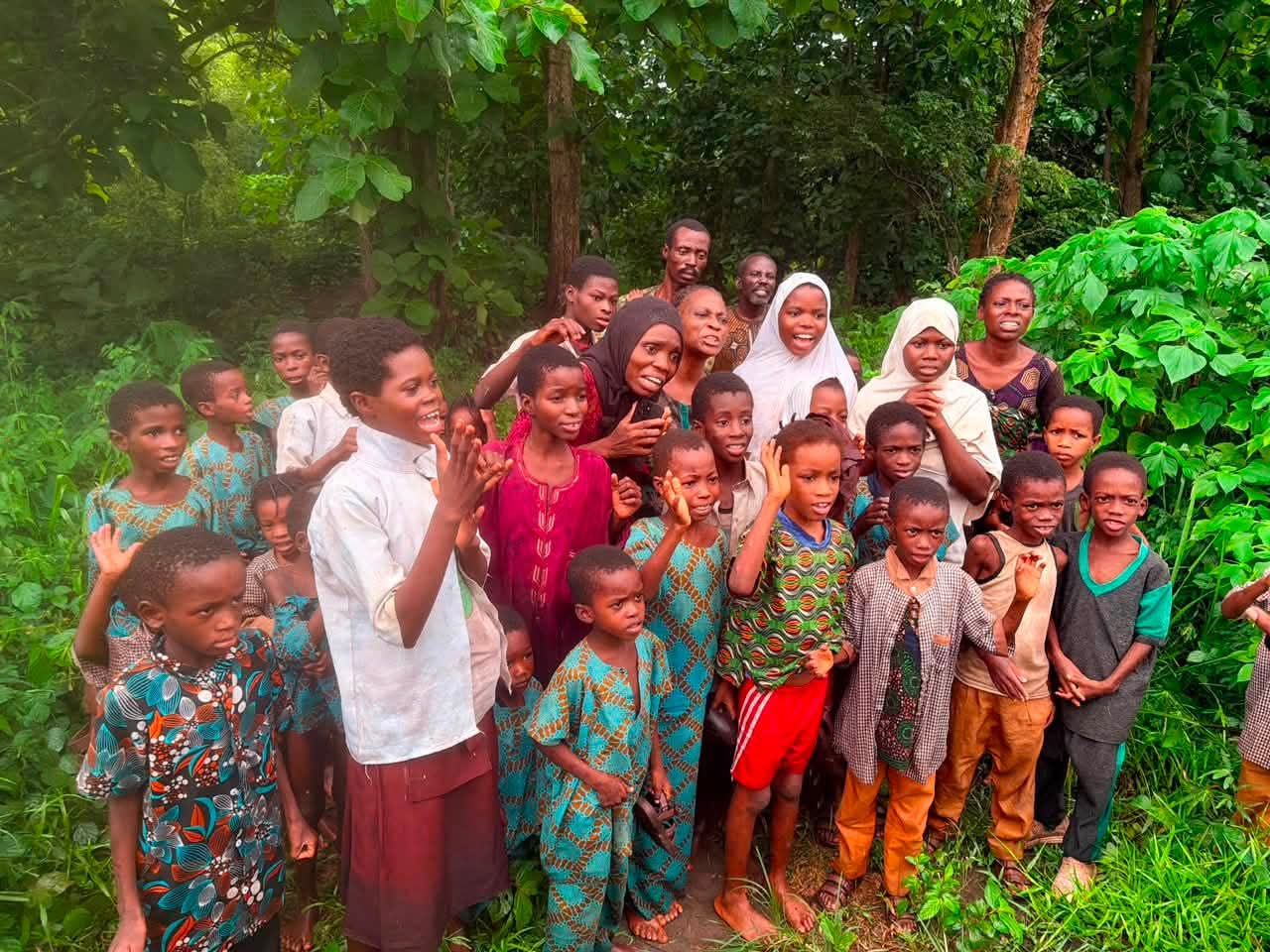
Authorities in Niger have detained DW Hausa journalist Gazali Abdou Tasawa and placed him in Niamey Central Prison following a court summons on Thursday, January 22, 2026. The journalist appeared before the public prosecutor at the Niamey High Court for questioning related to a video report he produced.

The report highlighted the difficult living conditions of refugees from Katsina State in northern Nigeria who have sought refuge in Niger. However, no official statement has yet been issued detailing the specific charges against the journalist.

The detention has raised concerns among media observers and press freedom advocates, particularly regarding the treatment of journalists reporting on humanitarian and refugee issues in the region.

Kano court remands cleric over alleged land document forgery

By Sabiu Abdullahi

A Magistrate Court in Kano State has ordered the remand of a popular Islamic cleric, Ibrahim Makwarari, over allegations of forgery linked to land ownership documents.

Mr Makwarari appeared before Magistrate Court No. 53, sitting at Normansland, Kano, on Wednesday. He is facing charges bordering on illegal possession of land and forgery of land documents in connection with two properties located along Ahmadu Bello Way in the Kano metropolis.

The charges were filed by the police after a petition submitted by the Kano State Ministry of Land. The ministry alleged that the cleric forged title documents that were originally issued in the names of Kassim Usman Baba and Audu Yaro Fagge.

According to investigators, the disputed documents were recovered from the defendant. The police stated that Mr Makwarari failed to give a satisfactory explanation concerning the authenticity of the documents.

When the charges were read in court, the defendant pleaded not guilty.Counsel to the defendant, A. T. Shehu, applied for bail and assured the court that his client would be available for trial. The prosecution counsel, Nura Salisu, opposed the request.

Mr Salisu told the court that the defendant had previously ignored police invitations and was arrested only after a specific court order was issued.

In his ruling, the magistrate, Mustapha Datti, granted bail to the defendant in the sum of ₦20 million with two sureties. The court directed that the sureties must include a district head from any local government area in the state, supported by an official letter from the relevant Emirate Council, and a Kano-based businessman with verifiable property.

The magistrate also ordered the defendant to submit his international passport to the court. Both sureties are required to provide recent passport photographs.

Mr Datti further ruled that the defendant should be remanded in a correctional facility until all bail conditions are met.

The case was adjourned to 12 February for hearing.