By Aliyu Ya’u Baraje
I have consistently written against the greediness of Nigerian agricultural produce suppliers since the implementation of the cashless policy. I am now fully convinced that a typical Nigerian is potentially greedy and corrupt, especially when presented with the opportunity.
There is no doubt about the scarcity of Naira, which economics has taught is a characteristic of money. This scarcity has created hardships for Nigerians, particularly for rural dwellers whose voices are hardly heard. This is partly due to a lack of modern education, IT literacy, and little or complete absence of media coverage. When visited, rural areas now seem like mourning grounds, faces barely smile, just silence, and black faces.
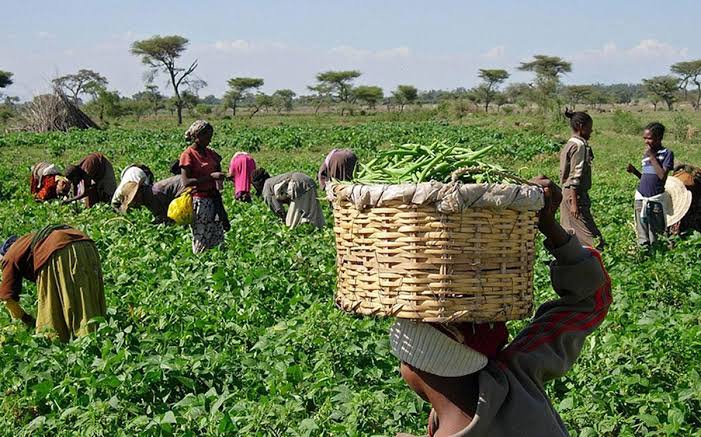
As a farmer and rural dweller, I feel it’s my duty to bring to light the ongoing exploitation of local farmers by produce suppliers. These suppliers are taking advantage of the cashless policy to profit at the expense of farmers whose main source of income is selling produce or livestock.
The prices of produce and livestock have plummeted dramatically. For example, the price of maize per 100kg has fallen from 22,000 to 13,000, rice from 26,000 to 15,000, beans from 42,000 to 25,000, and soybeans from 32,000 to 18,000. This trend is also seen in other produce such as millet, groundnuts, sesame, sugarcane, yams and cassava.
Farmers are offered two prices, one for a cash-and-carry deal and another for bank transfers. Those who need cash are given the lowest price, while those who require a transfer receive an increase of about 3,000 to 4,000.
This exploitation is unacceptable, especially since prices of other commodities have skyrocketed. I stand against this mistreatment of farmers and the erosion of their livelihoods.
I am from the southern part of Katsina State, which includes the local government areas of Sabuwa, Dandume, Funtua, Faskari, Danja, Qafur, and Malumfashi. This region is renowned as an agricultural hub not only in Katsina State but throughout northern Nigeria. This is due to the fertile land and extensive use of industrial
fertilizers and manure. The local government areas are rivaled only by the Saminaka, and neighboring local government areas.
Those who are familiar with this region will attest to the fact that its inhabitants are engaged in farming activities, not just subsistence farming but also what could be described as mechanized farming. In this region, farmers producing hundreds of tons or thousands of bags of the listed produce can easily be found. If one is a resident of this region, he is either a farmer or from a farming family. Even those who have switched to other businesses or occupations, most of their extended families are still farmers.
Given this, it should not be surprising that the exploitation of farmers by suppliers is a source of concern for those in the region.
2) In today’s Nigeria, the prices of processed and refined commodities have risen dramatically, with some even doubling, tripling, or quadrupling. The price increase for some commodities is so significant that it’s difficult to describe. So, why are farmers the only target for this exploitation?
3) In southern Katsina State, farming is done on a large scale, making it more of a business. This leads to the excessive use of agricultural chemicals, the prices of which have skyrocketed multiple times. For example, NPK fertilizer is sold for 32,000 Naira, Urea is sold for 22,000 to 23,000 Naira, Moroccan OCP (mixed fertilizer) is sold for 15,000 to 17,000 Naira, and the locally made Dan-Buhari fertilizer made from Kankara Local Government is sold for 10,000 to 15,000 Naira. Given these high prices, it’s understandable why a farmer would not be happy with selling their produce for less than 15,000 Naira.
Moreover, the use of tractors and other heavy engines for farming activities such as harrowing, tilling, harvesting, and transportation requires diesel, which now costs over 900 Naira per liter. The use of small equipment for dry-season farming, mobilization, pesticides, and herbicide spraying also requires petroleum, which now costs between 350 and 400 Naira. The prices of other chemicals such as pesticides, herbicides, and preservatives have not only doubled but have tripled or even worse.
This means that when a farmer who needs cash takes their produce or livestock to local markets, they feel like they are being shortchanged or receiving only a fraction of what they spent months or years nurturing. As a result, many farmers go home feeling like they have been robbed and have nowhere to turn for help
4) I seek to draw public attention to the exploitation of farmers in Southern Katsina state. The rise in prices of agricultural chemicals and equipment, along with the exploitation of farmers by produce suppliers, have led to a situation where farmers are not able to make a fair profit from their hard work. I categorizes those who are happy with the situation into two groups: those who are exploiting the farmers for their own gain (like suppliers) and those who are not involved in farming and only care about purchasing cheaper produce for domestic consumption (the consumers).
5) It is unfortunate that the farmers who work hard to produce the commodities are being exploited by the suppliers, hoarders, and processing industries. The lack of government price control mechanisms, excessive taxes and restrictions on foreign goods, and competitors. The selling of finished products at high prices, even higher than those imported from other countries has shown that farmers are intentionally targeted. This creates a situation where the farmers receive low prices for their produce while the final products are sold at high prices, leaving the farmers with little profit and often feeling exploited. It is important to address this issue and find ways to support and protect the livelihoods of local farmers
6) The exploitation of farmers in Nigeria has become a major concern as they are being targeted by suppliers, hoarders, and companies. The prices of agricultural chemicals and equipment used in farming have skyrocketed, making it difficult for farmers to make a profit from their produce. The lack of government price control and foreign competition, as well as excessive tax charges, have added to the farmers’ burden. Despite the high prices of commodities, the owners of processing, refining and packaging factories have not reduced their prices (per kg from suppliers), and instead sell the finished products at exorbitant prices. This has made life in rural areas even tougher, as the local farmers are unable to compete with foreign imports and are being forced to sell their produce at low prices. The suppliers have also adopted a cashless policy, which has made it difficult for farmers in rural areas to receive payment for their produce. The lack of recognition of wired transfers and poor network and electricity coverage in rural areas has further complicated the situation.
It’s important for the government to consider all factors and individuals, including rural settlers, when making decisions on the cashless policy. The government should strive to ensure that all citizens have equal access to financial services, regardless of their location.
Aliyu Yau Baraje, Dandume Local government area Katsina. He can be reached via: aliyuyau900@gmail.com fb: Aliyu Baraje