Katsina

Hisbah shuts down hotel for allegedly lodging underage girls in Katsina

By Uzair Adam Imam

The Katsina State Hisbah Board has shut down New Palace Hotel in Katsina metropolis for allegedly corrupting the morals of underage girls.

The hotel was found to have violated an agreement with hoteliers across the state by allowing underage girls to stay on the premises.

Despite previous warnings, the hotel management failed to comply with the board’s regulations, leading to the hotel’s closure.

According to Dr. Aminu Usman (Abu Ammar), the Hisbah Commander General, the hotel was found to have lodged two underage girls in the same room during a recent inspection, which contravenes the Hisbah laws.

This is the second time the hotel has committed this offense, despite previous warnings and a promise by the hotel’s management to stop such incidents.

The Hisbah Board had earlier reached an agreement with hotel managers across the state that no hotel would accommodate underage children.

The hotel’s failure to comply with this agreement led to its closure.

The Hisbah Commander General reiterated the board’s commitment to enforcing reforms and instilling discipline that aligns with the state’s religious and cultural values.

The closure of the hotel is part of the Hisbah Board’s efforts to enforce reforms and ensure that hotels in the state comply with moral standards.

The board has been working to prevent the exploitation of underage girls and promote a culture of decency and respect for human rights.

Bandit attacks plague Katsina, dozens abducted

By Uzair Adam Imam

Suspected bandits have unleashed terror in Katsina State, kidnapping at least 28 individuals, including men, women, and children from Zamfarawar Madogara in the Batsari Local Government Area.

The abduction occurred Thursday night, as armed bandits raided the village, according to a reliable source who disclosed the incident to journalists on Saturday.

Batsari, a frontline area, has endured years of banditry, adding to the region’s longstanding security challenges.

In a separate incident within Batsari LGA, suspected terrorists targeted Naduai village, where they kidnapped villagers and set portions of the area ablaze.

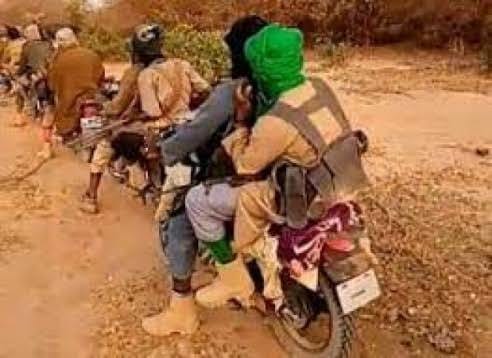
This further compounds the plight of residents already reeling from insecurity.Meanwhile, in Na-Alma village, Malumfashi Local Council, gunmen on motorcycles abducted at least 20 individuals, predominantly women, in an early morning attack earlier in the week.

Describing the harrowing ordeal, a resident who narrowly escaped abduction recounted how the assailants not only kidnapped women and children but also looted homes, taking valuable possessions.

Despite these distressing events, inquiries made to the Katsina State Police spokesperson, ASP Abubakar Sadiq Aliyu, regarding the incidents remained unanswered at the time of reporting, leaving the community anxiously awaiting updates on the situation.

Notorious bandit leader Dogo Gide loses life to gunshot injuries in clash with security forces 

By Sabiu Abdullahi 

Dogo Gide, the notorious bandit leader responsible for spreading terror across the North, has met his end.

The demise of Dogo Gide marks the conclusion of his reign of terror that had plagued the region for an extended period. 

Dogo Gide succumbed to gunshot wounds sustained during a fierce confrontation with Operation Hadarin Daji (OPHD) forces.

The encounter occurred amidst the rugged terrain of Madada Forest, located within the Maru local government area, on March 12, 2024. 

Despite sustaining severe injuries during the clash, Dogo Gide was reportedly transported clandestinely to a hospital in Mabera, Sokoto, Sokoto State.

However, his injuries proved fatal, leading to his demise. The demise of Dogo Gide, a fugitive wanted for a string of atrocious crimes in the region, was followed by his burial in Dandalla Village on March 24. 

Nevertheless, concerns have arisen regarding the circumstances surrounding Dogo Gide’s hospital admission.

It has come to light that a security official, now under detention, allegedly facilitated his access to medical care, raising apprehensions about potential collusion within the security apparatus. 

The successful elimination of Dogo Gide stands as a significant accomplishment for the Nigerian security forces.

Deadly attack on mosque leaves two worshipers dead, family members kidnapped 

By Uzair Adam Imam 

The Chairman of Faskari Local Government Area in Katsina State, Musa Faskari, has confirmed a tragic incident where two worshippers were killed during Ramadan prayers in the Mairua community of the council. 

Speaking in an interview with BBC Hausa Service, as reported by Vanguard, Faskari disclosed that the attack occurred during Tarawih prayers on Saturday night.  

He recounted how the assailants barged into the home of Alhaji Lado Mairua during prayers, demanding his compliance.  

When Mairua refused, they fatally shot him. Additionally, a neighbor who arrived at the scene on a motorcycle was also killed after witnessing the incident and raising an alarm. 

Faskari sadly confirmed that the attack resulted in the abduction of Alhaji Lado Mairua’s wife and their 15-year-old daughter.  

This marks the second time Mairua’s wife has been kidnapped by bandits, highlighting the dire security situation in Faskari. 

Expressing deep concern over the escalating boldness of the bandits, Faskari recounted another incident earlier on Saturday where they attacked Malalai village, killing two individuals and abducting two women.  

Tragically, a soldier was also killed in Ruwan Godiya on the same day. Faskari urged the Federal Government to intervene urgently, stating that the state alone cannot effectively address the escalating security challenges.  

He stressed the necessity for security forces to launch decisive actions against the bandits, including invading their hideouts to neutralise their operations and ensure the safety of residents. 

The recurring attacks by bandits have plunged Faskari and its residents into a state of fear and insecurity, demanding immediate and robust measures to restore peace and stability to the area.

Not all street beggars are actual Almajirai

By Muhammad Isyaku

I closed late in the shop the other day at around 11:00 pm and went straight to our plaza’s parking space to take my bike since our shop was upstairs. I drove earnestly home, knowing it was already night and there was nothing I had to buy. From Malumfashi’s township market to our community is a journey. I have to pass many communities before reaching ours. 

Along my way down home, around the Gwamutsawa community, I saw a small boy of 7 to 8 years crying loudly and terribly on the other side of the road. The road has a long-cemented expressway that divides it for motorists’ passage. I had to stop by and call the boy to cross the road by climbing the expressway to come and meet me where I parked. He did as I instructed but still kept on crying, which utterly moved me. I have to overpower the pity and emotions to interrogate him. 

What was the matter, and from where is he? He told me he is an Almajiri of one Malam at Hawan-Usman-Lado. He added that he was hungry and didn’t want to go to school because their Malam would beat him. I asked what you did to him. He answered that he didn’t return to school for the evening lesson, for which the offence attracts a penalty. 

I admonished him to return to school on time so that he would not miss any lessons that would make their Malam flog him. He obediently said, “Okay, I would.” I asked him where he was from, and he said Maraban Jos. I further asked if his parents were alive, and he answered no. His answer nearly made me shed tears, as I thought only an orphan who is abandoned by his family and a child born by a careless parent could be sent to a traditional Qur’anic school in such a faraway place at this tender age. 

Two passers-by also met us on the spot and joined me in sympathy and condemnation. One of them even cursed the teacher (Malam) the child mentioned. The other person who didn’t curse the teacher, as his ally did, put his hand in his pocket and brought out some change, which he gave to the boy. I gave him my change, too, and asked him to climb my bike to take him to school and apologise to the teacher on his behalf. 

Upon hearing that, he continued to cry by firmly refusing to climb my bike. Those two people asked to follow me, and he said their teacher would flog him after I left. We insisted he climb, assuring him we would not allow him to flog him. He had no option but to climb, and he did, so I made a U-turn and headed to the community where he alleged their school was located.

Unfortunately for the boy, he started asking me to drop him off before I reached the roundabout, saying he would go by himself. I ignored him and continued moving until I reached the roundabout and saw a group of Almajirai by the other roadside. I asked them if they knew him and were from the same school; they said yes. I then asked him to use the money we gave him to buy food and eat after he should then follow them to school. 

They all started shouting ‘Dangari ne fa’, meaning he’s an indigenous boy! I was shocked by their confession. When I turned to him, he was nowhere to be found. They asked, “How much did you give him?’ I told them it was a small amount just for food.

I bid them good night and went home. However, I still questioned the kind of home training that boy was given and the level of his smartness for mischievously looking innocent and faking his identity. If a boy of such age could lie that way, then I wonder what he might be capable of doing if he grows into a full-fledged man.

In Allah, we seek rectitude!

Customs speak on loss of teenager in Katsina, condole with bereaved family 

By Sabiu Abdullahi 

The Nigeria Customs Service issued a press statement today in response to the tragic loss of a young man in the Jibia Border Area of Katsina State on Saturday, February 3, 2024, to provide clarity on the incident and express deep sympathy to the family of the deceased teenager. 

The Chief Superintendent of Customs and National Public Relations Officer, Abdullahi Maiwada, stated, “Our attention has been drawn to the devastating loss of a young life… We extend our heartfelt condolences to the family and loved ones of the innocent teenager whose life was tragically cut short.” 

Addressing media reports, Maiwada clarified, “It is pertinent to address the misinformation circulating in the media regarding the reported killing of the teenager by a reckless driver of a J5 vehicle.”

He stated that Customs operatives were not involved, saying, “Our operatives neither drove the J5 vehicle nor intercepted it during the reported incident, contrary to some press allegations of the involvement of our Officers.” 

Maiwada shared preliminary findings, noting, “Preliminary reports suggest that the J5 vehicle was transporting soya beans, and the driver is currently in Police custody pending further investigation.” 

The press statement conveyed the sentiments of the Comptroller General of Customs (CGC), Bashir Adewale Adeniyi MFR, stating, “The CGC, alongside the officers and men of the service, expresses profound sympathy with the bereaved.” 

Reiterating the commitment to community relations, the CGC said, “He also urges members of the public to adhere to Government directives and cooperate with law enforcement agencies to maintain peace and security in our communities.”

The customs spokesperson appealed for calmness, further expressing gratitude for ongoing cooperation from border communities and stated the importance of working together to address challenges and promote safety and prosperity for all.

Bandits kill 7, injure many at Maulud event in Katsina

By Sabiu Abdullahi 

Armed bandits on Sunday attacked a religious gathering in Kusa Town, Musawa Local Government Area of Katsina State.

The attackers, armed with AK-47 rifles, stormed the Maulud procession, firing indiscriminately at attendees. 

The Katsina State Police Command confirmed that seven people lost their lives and 16 others sustained gunshot injuries during the attack.

A swift response from law enforcement agents led to the repelling of the attackers.

In the wake of the assault, injured victims were rushed to nearby hospitals for medical treatment. 

Katsina State Governor, Dikko Radda, visited the affected community to express his condolences and assure residents of the government’s commitment to restoring peace.

The governor’s visit was met with gratitude by the villagers, who appreciated his support during this difficult time. 

As investigations continue, the community mourns the loss of their loved ones, noting the need for increased security measures to prevent future tragedies.

Corps members advised to desist from seeking relocation

By Muhammadu Sabiu 

The 2023 Batch ‘B’ Stream II Corps members deployed to Katsina State have received advice from retired deputy director of the National Youth Service Corps (NYSC), Fadimatu Muhammad, to refrain from seeking relocation and instead embrace their mandatory one-year service in the assigned state. 

This advice was given during a lecture at the NYSC permanent orientation camp along Mani Road in Katsina. With a total of 1,070 corps members inducted on August 18, the three-week orientation course aims to provide participants with a solid foundation for their upcoming service year. 

Mrs. Muhammad emphasised the significance of unity among Nigerians and explained that continuous requests for relocation could undermine the very purpose of the NYSC scheme. 

During her lecture, Mrs. Muhammad delved into the historical background, mission, and vision of the NYSC, urging corps members to participate actively in the in-camp Skills Acquisition and Entrepreneurship Development (SAED) program. 

She stressed that cultivating relevant skills would be essential in a landscape where traditional white-collar jobs are becoming scarcer.

Katsina gov’t reacts to receiving palliative from FG

By Uzair Adam Imam

The Katsina State Government disclosed that it received the sum of N2 billion out of the N5 billion palliative approved to states by the federal government.

The state Commissioner for Information, Culture and Home Affairs, Malam Salisu-Zango, relayed the clarification to journalists in a statement on Wednesday.

Zango’s disclosure was in reaction to the insinuation that the federal government released N5 billion to the state.

He said that: “The attention of the state government has been drawn to news going round in the media that N5 billion has been released to states by the Federal Government for palliative.

“I wish to state that, [the] Katsina State Government received only N2 billion for procurement of grain to be distributed to the citizens of the state”.

Zango further stated that the state government had so far utilised N2 billion to procure 40,000 bags of rice for distribution to vulnerable persons in all the polling units across the state.

He added that the government would also utilise the next tranche of the fund from the federal government to purchase maize for distribution to deserving households.

How Naira redesign, cashless policy, affect prices of farm produce in Katsina

By Aliyu Ya’u Baraje

I have consistently written against the greediness of Nigerian agricultural produce suppliers since the implementation of the cashless policy. I am now fully convinced that a typical Nigerian is potentially greedy and corrupt, especially when presented with the opportunity.

There is no doubt about the scarcity of Naira, which economics has taught is a characteristic of money. This scarcity has created hardships for Nigerians, particularly for rural dwellers whose voices are hardly heard. This is partly due to a lack of modern education, IT literacy, and little or complete absence of media coverage. When visited, rural areas now seem like mourning grounds, faces barely smile, just silence, and black faces.

As a farmer and rural dweller, I feel it’s my duty to bring to light the ongoing exploitation of local farmers by produce suppliers. These suppliers are taking advantage of the cashless policy to profit at the expense of farmers whose main source of income is selling produce or livestock.

The prices of produce and livestock have plummeted dramatically. For example, the price of maize per 100kg has fallen from 22,000 to 13,000, rice from 26,000 to 15,000, beans from 42,000 to 25,000, and soybeans from 32,000 to 18,000. This trend is also seen in other produce such as millet, groundnuts, sesame, sugarcane, yams and cassava.

Farmers are offered two prices, one for a cash-and-carry deal and another for bank transfers. Those who need cash are given the lowest price, while those who require a transfer receive an increase of about 3,000 to 4,000.

This exploitation is unacceptable, especially since prices of other commodities have skyrocketed. I stand against this mistreatment of farmers and the erosion of their livelihoods.

I am from the southern part of Katsina State, which includes the local government areas of Sabuwa, Dandume, Funtua, Faskari, Danja, Qafur, and Malumfashi. This region is renowned as an agricultural hub not only in Katsina State but throughout northern Nigeria. This is due to the fertile land and extensive use of industrial

fertilizers and manure. The local government areas are rivaled only by the Saminaka, and neighboring local government areas.

Those who are familiar with this region will attest to the fact that its inhabitants are engaged in farming activities, not just subsistence farming but also what could be described as mechanized farming. In this region, farmers producing hundreds of tons or thousands of bags of the listed produce can easily be found. If one is a resident of this region, he is either a farmer or from a farming family. Even those who have switched to other businesses or occupations, most of their extended families are still farmers.

Given this, it should not be surprising that the exploitation of farmers by suppliers is a source of concern for those in the region.

2) In today’s Nigeria, the prices of processed and refined commodities have risen dramatically, with some even doubling, tripling, or quadrupling. The price increase for some commodities is so significant that it’s difficult to describe. So, why are farmers the only target for this exploitation?

3) In southern Katsina State, farming is done on a large scale, making it more of a business. This leads to the excessive use of agricultural chemicals, the prices of which have skyrocketed multiple times. For example, NPK fertilizer is sold for 32,000 Naira, Urea is sold for 22,000 to 23,000 Naira, Moroccan OCP (mixed fertilizer) is sold for 15,000 to 17,000 Naira, and the locally made Dan-Buhari fertilizer made from Kankara Local Government is sold for 10,000 to 15,000 Naira. Given these high prices, it’s understandable why a farmer would not be happy with selling their produce for less than 15,000 Naira.

Moreover, the use of tractors and other heavy engines for farming activities such as harrowing, tilling, harvesting, and transportation requires diesel, which now costs over 900 Naira per liter. The use of small equipment for dry-season farming, mobilization, pesticides, and herbicide spraying also requires petroleum, which now costs between 350 and 400 Naira. The prices of other chemicals such as pesticides, herbicides, and preservatives have not only doubled but have tripled or even worse.

This means that when a farmer who needs cash takes their produce or livestock to local markets, they feel like they are being shortchanged or receiving only a fraction of what they spent months or years nurturing. As a result, many farmers go home feeling like they have been robbed and have nowhere to turn for help

4) I seek to draw public attention to the exploitation of farmers in Southern Katsina state. The rise in prices of agricultural chemicals and equipment, along with the exploitation of farmers by produce suppliers, have led to a situation where farmers are not able to make a fair profit from their hard work. I categorizes those who are happy with the situation into two groups: those who are exploiting the farmers for their own gain (like suppliers) and those who are not involved in farming and only care about purchasing cheaper produce for domestic consumption (the consumers).

5) It is unfortunate that the farmers who work hard to produce the commodities are being exploited by the suppliers, hoarders, and processing industries. The lack of government price control mechanisms, excessive taxes and restrictions on foreign goods, and competitors. The selling of finished products at high prices, even higher than those imported from other countries has shown that farmers are intentionally targeted. This creates a situation where the farmers receive low prices for their produce while the final products are sold at high prices, leaving the farmers with little profit and often feeling exploited. It is important to address this issue and find ways to support and protect the livelihoods of local farmers

6) The exploitation of farmers in Nigeria has become a major concern as they are being targeted by suppliers, hoarders, and companies. The prices of agricultural chemicals and equipment used in farming have skyrocketed, making it difficult for farmers to make a profit from their produce. The lack of government price control and foreign competition, as well as excessive tax charges, have added to the farmers’ burden. Despite the high prices of commodities, the owners of processing, refining and packaging factories have not reduced their prices (per kg from suppliers), and instead sell the finished products at exorbitant prices. This has made life in rural areas even tougher, as the local farmers are unable to compete with foreign imports and are being forced to sell their produce at low prices. The suppliers have also adopted a cashless policy, which has made it difficult for farmers in rural areas to receive payment for their produce. The lack of recognition of wired transfers and poor network and electricity coverage in rural areas has further complicated the situation.

It’s important for the government to consider all factors and individuals, including rural settlers, when making decisions on the cashless policy. The government should strive to ensure that all citizens have equal access to financial services, regardless of their location.

Aliyu Yau Baraje, Dandume Local government area Katsina. He can be reached via: aliyuyau900@gmail.com fb: Aliyu Baraje