Federal Government of Nigeria

Misconception about ASUU

By Sulaiman Maijama’a

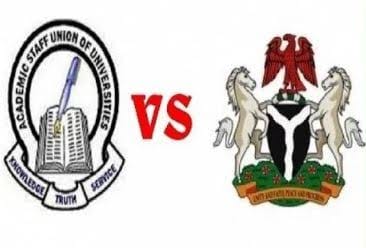
If not because of the dogged determination and great perseverance of the Academic Staff Union of Universities (ASUU) in defence of education in Nigeria over the years, public universities in the country would have since been in a dilapidated condition with poor infrastructure, poor remuneration of staff.

Moreover, the universities would have been stocked with unqualified teachers, just like what is happening to our public primary and secondary schools or perhaps worse than that. Those who misconceive ASUU, for its struggles, as being selfish know nothing about what education takes to be efficient.

It is common knowledge that people who had the luxury of attending private primary and secondary schools in Nigeria earn more prestige than those who attended public ones. This is so because the quality of education in public schools at the basic level has since been diminished. But the reverse is the case at the university level; products of public universities in Nigeria can show a trick or two to their counterparts who are produced by private institutions. This is to the credit of the ASUU.

The Union, despite the meagre resources it receives and the poor funding the universities suffer, is able to produce professionals who are rising and shining in respective disciplines globally. Notwithstanding this feat, the union has been pushed over the years to go into industrial action at the detriment of students and the action by the ASUU is always greeted with criticisms from the public domain.

As a university student, the fact that our academic pursuit is being elongated owing to strikes is paining, and so, I agree wholeheartedly that strikes embarked upon by the ASUU almost annually are not the best solution and not the best way to put pressure on the government to meet its demands but, to crucify the union for its doggedness is not fair at all. If we ever dug deep to understand how much education costs in the countries across the globe and compared it to the demands of the striking ASUU members that are yet to be met for over a decade, for which they have always protested, we would discover that education in Nigeria is as worthless as a waste dump.

According to the United Nations Educational, Scientific and Cultural Organisation (UNESCO) recommendation, for any nation that wants to adequately meet the demands of education, 15 to 20 per cent of its annual budget should be earmarked for the sector. Unfortunately, Nigeria’s budget for education has always fallen below the recommended benchmark.

Despite the daunting tasks and the challenges that are posing threat to the sector and the need for additional funding, President Buhari’s 2021 budget share for education is the lowest in ten (10) years. Out of N13.08 trillion budgeted for the year, only N742.5 billion, which is equivalent to 5.6 per cent, was allocated to education, which is the lowest allocation since 2011. This is about half of what President Jonathan earmarked for education in the 2015 budget.

In 2011, President Goodluck Jonathan allocated 9.3 per cent of the total budget to education. It was further increased to 9.86 per cent in the 2012 budget; elevated to 10.1 per cent of the total 2013 budget. It was 10.5 per cent in the 2014 budget, and the same President Jonathan earmarked 10.7 per cent of the 2015 budget, which happened to be the highest in the last decade.

However, when President Muhammadu Buhari came on board, in his first budget in 2016, the education share was cut short drastically to 7.9 per cent of the total budget, and in 2017, it was reduced to 7.4 per cent of the total budget; in 2018 it was 7.04 per cent, while 7.05 per cent of the 2019 budget was allocated to the sector and in 2020 it was 6.7 per cent, and 5.6 and 7.9 in 2021 and 2022 respectively.

While former President Jonathan had every year increased the budget share for education throughout his stay as president from 9.3 per cent in 2011 to the highest 10.7 in 2015, President Buhari has been drastically reducing the budget from 7.9 in 2016 to the lowest 5.6 in the 2021 budget.

In any case, the Buhari/APC-led administration’s lackadaisical approach toward education is indisputably disastrous to the lofty dreams of young Nigerians to attain global recognition academically. How could a serious government that values education give only 5 per cent of its annual budget to the most sensitive sector like education? This is beside the series of outstanding memoranda of understanding the government signed with the ASUU in 2009, 2013 and 2017, as well as the Memorandum of Action (MoA) of 2019 and 2020, but yet to be implemented. How on earth could you expect the ASUU not to be aggrieved?

And now, the Minister of Education is further fuelling the disagreement by telling the ASUU members that their six months denied salaries during which they were on strike would not be paid, making reference to the “no work, no pay policy”. I don’t know the provision of law on this, but my concern is, how can you come to meet with a union of intellectuals like ASUU and dare to tell them that this is the final government’s offer and that there is no need for negotiation; it is either they accept or reject it? This is highly ridiculous.

In my view, education is a treasure. Whatever huge amount of money is invested in it, it will definitely pay off eventually. A member of the Senate Chamber, whether or not they raise a motion, whether or not they contribute to a debate, earn a whopping thirty 30 million or thereabout monthly. This is minus all other illegal earnings which are obtained through leakages and corruption. In comparison to academics, a professor who spends his life sacrificing his time and pleasure doing research to contribute to knowledge does not earn a mere five hundred thousand a month, with all the inflation.

I don’t want to dwell much on making comparisons with the fortune allocated to the National Assembly. But, if such an amount of Naira notes which is beyond imagination, would be given to the National Assembly, why can’t the Federal Government meet all the demands of the ASUU to proffer a lasting solution to this lingering strike that is jeopardizing the future of the Nigerian youth, wreaking havoc on the economy and threatening the fabric of our social structure?

It is evident during the EndSARS protest in 2020, when students were on strike, that the strike was a contributing factor that fueled the agitation, which later turned tragic. Had it been the youth who were mostly the ones at the forefront of the demonstration who were on campuses, busy coping with their academic activities, the move would not have been accepted to such an extent, and therefore, the government would have easily controlled it.

As the saying goes, “an idle mind is a devil’s workshop”. Now, the 2023 forthcoming elections are fast approaching, and the youth are bored doing nothing and, therefore, can indulge in anything that comes their way. Who knows what could possibly be the next trend if the youth remain idle?

The Federal Government must understand and appreciate the value and power of education, respect all agreements reached with the ASUU and invest more resources in the sector in order to save the future of young Nigerians. This is because, without education, man is like an animal.

The ASUU, on the other hand, needs to understand that strike is nothing but a calamity to education. They should adopt amicable and diplomatic ways of engaging the government. “When two elephants fight, grasses suffer the most”.

Maijama’a is a student at the Faculty of Communication, Bayero University, kano. He can be reached via sulaimanmaija@gmail.com.

One condition stops FG and ASUU from reaching agreement 

By Uzair Adam Imam 

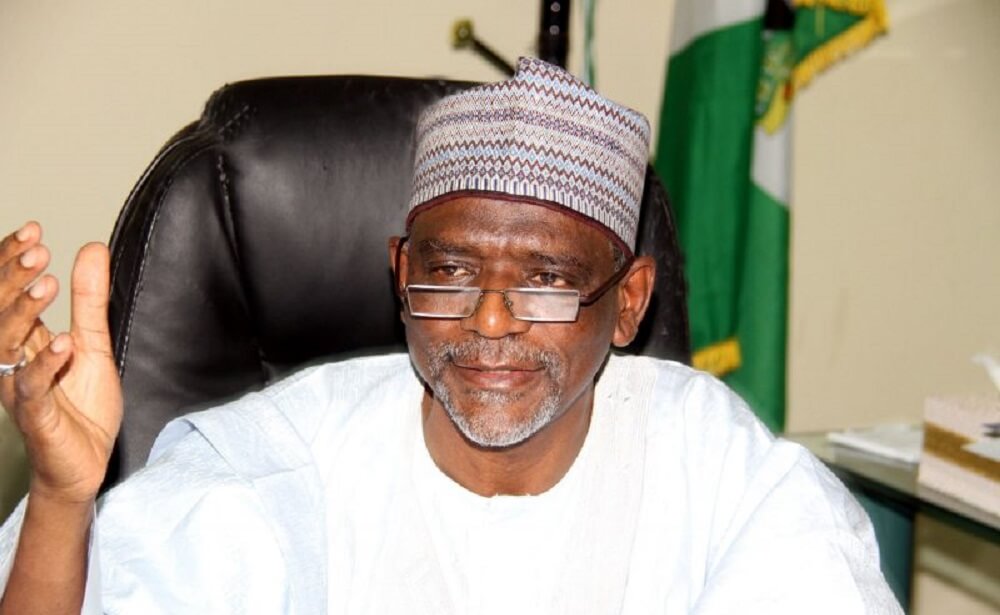
The Minister of Education, Malam Adamu Adamu, said the Federal Government has sorted out issues with the Academic Staff Union of Universities (ASUU), adding that the ‘no-work-no-pay’ policy is the only condition delaying the truce.

The minister said this Thursday at the 47th session of the State House Briefing organised by the Presidential Communications Team in Abuja.

According to him, four of five unions in the tertiary institutions across the country had agreed to call off strike within the next week.

Regarding compensating students for time wasted from the six-month strike, the minister said ASUU  should be held responsible for that.

The minister stated, “the affected students should ‘take ASUU to court’ to get compensated for the time wasted.”

ASUU strike continues as meeting with FG ends in deadlock

By MMuhammad Sabiu

The Federal Government and the Academic Staff Union of Universities (ASUU) meeting on Tuesday came to an end once more without a resolution.This indicates that the six-month-old lecturers’ strike at public universities will continue.

The Professor Nimi Briggs Committee and the striking academics met on Tuesday at the National University Commission in Abuja in the hope of breaking the deadlock.

Members of the Briggs renegotiation committee did not present any new offers to the table, according to a top member of ASUU who requested anonymity.

Instead, the committee begged the professors to cease their strike, the ASUU source claimed, assuring them that their issues would be addressed in the 2023 budget.

The discussion, which began at noon, reportedly lasted for about three hours without producing a resolution.

FG/ASUU to resume negotiations as strike enters seventh month

By Muhammad Sabiu

The Academic Staff Union of Universities (ASUU) will resume talks today, over their protracted strike, with representatives of the Federal Government.

The meeting, according to the organization’s president, Professor Emmanuel Osodeke, is meant to discuss on one of the seven topics that ASUU is protesting about and “That’s the issue of renegotiation,” Osodeke said.

The chairman stated this in a Channels Television’s Politics Today yesterday Monday.

It is about “the renegotiation of the 2009 agreement. It’s not just about wages. It has to do with the system. The structure, the autonomy and other issues and how to fund universities.

“The government has reduced it to just salaries alone. But if they had looked at the whole agreement and implemented it, we would not be talking about funding.” Osodeke added

It can be recalled that on February 14, ASUU shut down public universities citing as their reason the Federal Government inability to respect prior agreements that both sides had made in their previous face-offs.

The issues of contention include funding for the revitalization of public institutions, earned academic allowances, the University Transparency Accountability Solution, promotion backlogs, among other grievances.

ASUU, FG, what happens to students after the strike?

By Fatima Usman

The saying, “when two elephants fight, the grass gets to suffer,” is nothing but a fact. But unfortunately, in the case of the Academic Staff Union of Universities (ASUU) and the federal government (FG), the students are always at the receiving end, and students suffer the consequences of the fight.

At last, ASUU members will get paid and return to classes. What then happens to the students?

In 2020, when ASUU embarked on a strike that lasted for a good nine months coupled with COVID19, what did the students get in return after everything? Nothing! We only got expired rent, a disrupted academic calendar, and some items stolen from our various lodges.

After the 2020 strike, we never knew that another bigger one would await us soon. However, on February 14, 2022, another strike loomed again with the same demands the government failed to fulfil for nine months. This time around, only God knows our fate; five months strike and still counting, yet no positive response.

The Federal Government does not care about whether the poor masses get a quality education. They deny us our right to education by not providing enough equipment that students are supposed to use, not enough classes for lectures, and the teachers do not get well paid.

The ASUU strike has done more harm than good to the students. Some students don’t always get to serve their father’s land due to the age limit placed on NYSC. Once a student is 30 years they can no longer go for the one-year compulsory service. So many disadvantages come with embarking on this strike.

Because of these endless strikes by ASUU and the negligence of the Federal Government, we now have more cybercrime everywhere (Yahoo-Yahoo!), and some girls are now into prostitution as a means of survival.

We want to be compensated too after everything by increasing the age limit one can do the one-year compulsory service if we can’t get other compensation. At least this should be done.

Fatima Usman is a 300-level student of mass communication at IBB University, Lapai. She can be reached via usmanfatima499@gmail.com.

ASUU Strike: Endless negotiations and FG’s disregard for the future of Nigerian students

By Babatunde Qodri

Since Nigeria’s independence in 1960, we have never witnessed such a long and suffocating strike as it is at the moment when public tertiary institutions would be closed down, and there would be no serious move by those concerned to avert it. In two years, our universities have suffered unprecedented deterioration due to incessant industrial action by the Academic Staff Union of Universities (ASUU).

Consequently, students are often condemned to stay at home. But this is what we get any time we elect a leader that cares less about the education sector. Ministers of Education and Labour Adamu Adamu and Chris Ngige, respectively, largely contribute to this agelong industrial action. Yet, despite a series of meetings, nothing tangible has happened to facilitate the return of students to class. This is unarguably appalling. 

Professor Emmanuel Osodeke, ASUU Chairman, recently revealed the lack of readiness by the Federal Government to yield to the demands of striking lecturers when he appeared on Channels TV. Osodeke slammed the Minister of Labour for misleading the public on the development while accusing the Federal Government of insincerity in its dealing with the Union. One then wonders whether this administration actually places a premium on the future of Nigerian students. The government’s body language is symptomatic of what these abandoned students have to contend with for years.

This is not to throw a jab at the Minister of Education or the Labour Minister. Unarguably, however, I am disturbed by the carefree approach of the Federal Government to the situation that affects millions of young Nigerians. It is sad to stress that this unfortunate development has resulted in many problems.

For instance, several Nigerians affected by the industrial action have been forced into activities that negatively affect society and their future. Because they say idle hands are susceptible to devilish errands, most students are now into internet fraud and other related engagements to the country’s detriment. This is in addition to the fact that some of these students, having stayed at home for a long, have lost interest in education, thereby engaging in unprofitable endeavours.

It is necessary also to admit that the protracted strike translates to a waste of time, with students spending more time than necessary. And this puts them at a disadvantage. While their counterparts in private and state universities have seamlessly unhindered years to run and complete their programs, students in public universities are trapped. Those supposed to be used as innovation agents are abandoned to situations that delimit them. This is thoroughly depressing.

Moreover, the strike has a way it contributes to the debilitating nature of the Nigerian education system. Today, Nigerian lecturers seek opportunities outside the country to make their skills and knowledge relevant. There are cases of Nigerians in the medical fields going to countries abroad in search of better conditions. This is not good for the country as it ultimately leads to a shortage of competent lecturers in our various public tertiary institutions. Even if the industrial action is called off, the fact that it has forced talented Nigerians to opt to lose confidence in the system remains a threat.

My final take: If the Federal Government cannot meet up with the demands of the Union, at least it must identify with its clamour since it is in the best interest of public tertiary institutions. Both parties must forge a new mode of communication that recognizes the yearnings of Nigerians. Done based on sincerity, the government might agree to attend to the union’s demands in batches. Between all of these is the need for committed Ministers of Labour and Education who can drive the Government to do the needful. This is necessary to put the country on the path of steady development.

Babatunde Qodri wrote via babatundelaitan@gmail.com.

On derogatory comments and memes about ASUU members

By Kasim Isa Muhammad

Someone I will not mention by name forwarded memes written in the Hausa language to my WhatsApp number. The content reads: “Tunda naga level coordinator din mu ya sa Shadda a status, na karaya.” This means “I lost hope upon viewing the brocade on the status of our level coordinator.” At first glance, of course, one would laugh it out. But, on second and more critical thought, the memes are a deliberate attempt to ridicule members of the Academic Staff Union of Universities (ASUU), whose salaries have been stopped for the past four months or so by President Buhari-led government.

That is one of the several unhealthy memes spreading on social media about ASUU members and their predicament due to the strike. Unsurprisingly, the person who intentionally shared this meme and his likes are bent on making caricatures of ASUU members. This explains the level of irresponsibility and how mean people can be.

In the first place, a university lecturer that converted their social media page for the sole purpose of business enterprise signifies that the lecturer in question is responsible and utilizing the strike effectively. When did engaging in business become a subject of ridicule? Or a sheer violation of the code of conduct?

Let me educate the public a little. The job description of all Nigerian academics includes teaching, research, home and community service, or any other duty as assigned by the Head of the Department. The work has been made flexible to enable lecturers interested in other genuine businesses to complement the paltry salary they receive each month.

Notably, lecturers in departments that are practice-based, such as law, medicine, mass communication, theatre, fine arts, and engineering, to mention a few, have the upper hand in multiple sources of income. This is because they engage in private practice outside the university job, which serves as’ Plan B’. 

Sadly, a portion of the blame goes to the government for reducing the profession to ridicule and making it less attractive because of the absence of a decent salary and deliberate stoppage of salaries whenever members embark on strike. Nothing like this can happen in a saner society.

Kasim Isa Muhammad is a student at the Department of Mass Communication, University of Maiduguri.

ASUU Strike: Negotiations end, ASUU awaits FG’s position

By Uzair Adam Imam

Reports from different sources have indicated that negotiations between the federal government of Nigeria and the Academic Staff Union of Universities (ASUU) have been completed.

Meanwhile, ASUU awaits reports from the federal government to decide the fate of many promising students in the country.

However, demands of the union were made through a committee set up by the government to negotiate with it. The committee was reportedly headed by Prof. Nimi Briggs.

Speaking, the ASUU President, Prof. Emmanuel Osodeke, stated that the union had done its best in the circumstance.

He added, “we have made our presentations to the committee, and there is nothing more to add.”

Dear children of the masses, wake up

By Hassan Ahmad Usman

What else do we need to see before we believe that we don’t have anyone to cry out to, fight with, or even be our hope? 

Two things happened over the weekend that explained clear how dualism exists in Nigeria. First, the gap between the so-called “elites” and the masses is so wide that you can’t imagine these two people living and sharing a country.  It is a clear call for us, the less privileged children, to have sense and redirect where we burn our energies and pursue a realistic future.

First, when airline operators announced their resolution to stop operations on May 9 due to the ever-increasing prices of aviation fuel, we thought it was time for them too (elites) to feel how discomfort Nigeria can be and how a malfunctioning Nigeria is not suitable for anyone. But our curiosity got punctured when we woke to the news that the operators had suspended the planned stoppage of operations.  Why? How? We only have one answer – it is something that has to do with them (“elites ” or “big men” if you like). They don’t deserve humiliation. On the contrary, they deserve a swift response to what affects them (even behind closed doors). They are the true Nigerians.

 How do you expect an Atiku, Tinubu, Moghalu, Wike, Amaechi and the rest to campaign without air transport? Osinbajo will undoubtedly use the presidential fleets. So he’s a bigger boy. 

On the hand, ASUU announced the end of their warning strike of three months with another three months of strike ( it doesn’t even sound logical). How can you go on strike while on strike? So it is another painful morning for the children of the poor and their parents. 

It is high time we understood that to survive in Nigeria with these same elites; we must go beyond being their praise singers or political foot soldiers for actualizing their political dreams.  We must understand that our unborn children deserve much more than we have.  

Our schools have been closed for a quarter of this year, and we’ve braced up for another quarter to go unaccounted for.  Unfortunately, given the political atmosphere looming for the next general election, the ground is set for them to cultivate many young, hungry people for political thuggery with the help of our lecturers who never see sense in keeping us in school to shape us for the future.  

My dear children of the masses, our lives and future are not and never tied to any politician.  Therefore, despite our condition, we can dream and aspire just like their children. What we need is to focus and keep building in ourselves.

Let’s equip ourselves with relevant skills. The certificates ASUU and the Federal Government of Nigeria are denying us are becoming irrelevant on the global stage. Yes,  education is good, but there is no specified timeframe for it. We can build ourselves before going back to classes. So, let’s endeavour to show that we’ve not only come of age, our senses, too, have come of age.  

Hassan Ahmad Usman writes from Lafia, Nasarawa State, Nigeria. He can be reached via basree177@gmail.com.

There’s unholy handshake between bandits, Boko Haram insurgents – FG

By Uzair Adam Imam

The Federal Government of Nigeria said the preliminary reports of what transpired at the Kaduna train attack had revealed a kind of collaboration between the bandits and the dislodged Boko Haram terrorists from the northeast. 

The Minister of Information, Lai Mohammed, disclosed this Wednesday while responding to the State House reporters in Abuja.

Recall that The Daily Reality reported how no fewer than nine persons died, hundreds sustained injuries while over sixty were kidnapped when terrorists stormed a passenger train along the Abuja-Kaduna railway a few weeks ago.

Mohammed reportedly intervened after the Minister of Defence, retired Major General Bashir Salihi Magashi, was questioned to provide details on the perpetrators of the train attack.

He said: “What is happening now is that there is a kind of an unholy handshake between bandits and Boko Haram insurgents. 

“Preliminary reports of what transpired at the Kaduna train attacks show that there is a kind of collaboration between the bandits and the dislodged Boko Haram terrorists from the northeast. I can tell you very confidently that the Federal Government is on the top of this matter.”

Magashi, in his earlier response to the question, stated that: “Honestly, I think the security chiefs are working hard to unveil those that are involved, and we will tell you very soon those that are carrying out these attacks. 

“Both Jos and Kaduna, we will come and explain to the public what is really going on and our efforts to ensure that all these activities are stopped once and for all. We are rarely on top of the situation, we are planning hard, and we will get it out as soon as possible.”