Federal Government of Nigeria

Nigerian doctors in diaspora: Brain drain or money drain?

By Khadijah Tijani

I have read many reactions to the recent trend of young and vibrant Nigerian doctors leaving the country for greener pastures. I also saw the interview with the minister who said the doctors are free to go because “we already have too many of them”. Some people even blamed these “selfish” doctors for refusing to stay after benefitting from “ridiculously cheap” medical education, blah, blah.

Oh well… Maybe I missed it, but I don’t know if anyone has talked about what these doctors are paying in exchange for their right to leave. Where these funds are going is another question begging for clear answers. 

For you to get a new passport or renew an old one, you need to pay something between 35k and 70k depending on the number of pages and the validity period. But you also need to tip some officers so that your passport can be issued on time.

Some universities do not issue your final certificate until years after graduation. Transcripts are not available online. You need to travel down from wherever you are and go to your university to make a request. If you are lucky, you will get it after several weeks. And yes, they will also charge you a not-so-little administrative fee for that.

Suppose you are asked to send a source-verified copy of your credentials to a regulatory body, for example, Saudi Council for Health Specialties. In that case, you need to pay up to 30k for each document to be verified and additional fees for courier services. Moreover, since many universities still don’t have functional emails or reachable phone numbers, you still have to travel down to get it done or pay someone to do it for you.

Talking of regulatory bodies, they also want to be sure that you are a good doctor and have never been in trouble while practising in Nigeria. So, they will ask you to submit a certificate of good standing, which goes for 66k. Some will also ask for detailed medical checks and police clearance certificates – more expenses. You have to pay for the medicals even if it’s where you currently work. 

When you are done with all that, and you finally move out of the country, you will still get yearly reminders to pay your dues to remain a licenced doctor in Nigeria. Of course, some people stop paying, but I know many doctors who still send their 10 to 20k annually. They even mandated us to pay 40k contributions towards the new NMA building last year.

Every university and medical college have their respective association of alumni in the diaspora. They contribute millions of naira to their alma mater each year. In addition, they send expensive machines to help in-patient care and loads of materials to aid in medical teaching. Unfortunately, some of these supplies might become sabotaged by the killjoys within the institutions if there is no direct supervision and maintenance. 

I have not even mentioned the off-record funds you have to send to family and friends back home every month. Or the huge amount of money that doctors have invested in small to large businesses in the country. Or the free medical and surgical services many have provided to the people whenever they come home on vacations. Or the big hospitals many have established to create employment for the people, among other things.

I am worried about the brain drain, but I am also concerned about the people who do not understand the pain of an average doctor who wants to leave. They think it is easy to wake up one morning and jump on the next flight. And oh! Flight ticket and all the hurdles you need to pass through before you cross the border… Phew! 

Since they think we are too many and can be exported like cash crops, we also need to ask them where the money from the foreign exchange is going. Are they building more hospitals or renovating the old ones? Are they providing enough medical supplies to work with? Are they paying the salaries of the few or “just enough” doctors left behind? 

We need answers, please.

Khadijah Tijani is a medical doctor, she writes from Ibadan, and she can be reached be through Askodoctorkt@gmail.com or @AskDoctorKT.

The 61-year-old Nigeria I want

By Adamu Usman Garko

The 61-year celebration of independence by Nigeria in 2021 will be a celebration of faux independence as Nigeria has yet to emancipate herself from the shackles of slavery fully. This slavery, however, isn’t covert but overt; it isn’t manifest but subliminal. Before the independence in 1960, that slavery was manifest. However, the contemporary form of slavery is reflective in the abysmal display of patriotism on all fronts and regards. 

If, in 61 years of existence as an independent nation, Nigeria has yet to boast of policies that favour her citizens confidently and can only boast of policies copied from her colonialists hook, line and sinker, then what independence is there to celebrate? If we have yet to absolve plagues like ethnic rivalry, corruption, the proliferation of theft, among other issues, then these calls for recourse in our actions. These are calls for a pictorial representation of the kind of Nigeria we want and deserve. Maybe that way, we would be able to plan towards the actualisation of our dream Nigeria.  

As a millennial, the first archetype I nurse is a Nigeria that appreciates creativity and innovation; there is no gainsaying that we are people blessed with talents, innovative and creative abilities, clarity of vision, resilience, and other virtues. Yet, the sickening reality is that these virtues are not duly apportioned the appreciation and support they deserve. Because of this, hordes of talents have been silenced and/or lost to countries where they are well appreciated. But, if schemes geared towards supporting and motivating the innovative abilities of young minds are instituted by the Federal Government of Nigeria, I believe that this subtle form of intellectual slavery will be absolved. 

Second, a Nigeria controlled by leaders who nurse a burning desire for recourse and restitution is what I desire. Young minds like myself have, over the years, witnessed so many transitions in government, but these transitions influence nothing; there is a continuum of hunger and pain despite the transitions. 

Leaders elected into public offices are elected on the grounds of financial strength, not on the grounds of shown community service, not on displayed prestige and honour, not on the grounds of brilliance and zeal for change.

During election periods, contestants for public offices litter our streets with faux promises only to be elected and trail the path of their predecessors. So, I want a Nigeria controlled by patriotic, sane, brave leaders who are not afraid to take the bulls of change by the horn. 

Also, a peaceful Nigeria is everything; a Nigeria devoid of violence, one where the insurgency is a word found in the pages of history, not on the daily newspapers, one where the safety of lives and properties is guaranteed. I am honestly tired of embodying fear in the crevices of my body, fear of being kidnapped, fear of leaving home whole and getting back unwhole, fear of losing all I’ve gathered as properties to the hands of thieves or the hands of ruins because this fear cripples the creativity of young minds like myself and this conversely affects our individual contribution to the development of the country. 

A peaceful Nigeria is not the only key to development but also key to the solidification of whatever changes occur. So I want a Nigeria devoid of favouritism, one other cankerworm that has eaten deep into the sinews of all fronts, even the healthcare system, even the judiciary. 

I want a Nigeria I can call home, and a home is a place of respite. I want a Nigeria that is kind. A Nigeria brimmed with people who are open and ready to embrace diversity in culture and language, choked with humane, open-minded people who see life as a commonplace for collaboration and not one for unhealthy competition. 

I want a Nigeria that can boast of being a giant, a Nigeria that isn’t a phoney or paperish giant but one that is living up to the giant tag by being the cheerleader of progress and development on the continent. A Nigeria that is clever in her use of raw materials, one that wouldn’t be exporting crude oil to other countries and rebuy. 

Until the Nigeria I described above is actuated, we would continue celebrating decades of independence without knowing that we are still enslaved in regards stated above; intellectual slavery, financial slavery, mental slavery and even developmental crippling.

Until we have a structured model out in place to actualize the kind of Nigeria stated above, I am afraid we shouldn’t be celebrating independence. And, we need not wait any further, for the future is now. 

Adamu Usman Garko writes from Gombe. He can be reached through poetadamu@gmail.com.

Fulani as Endangered Species in Nigeria (I)

By Ahmadu Shehu, PhD.

It is generally considered an impossible hyperbole when the current trajectory of ethnic profiling against the Fulani people in Nigeria is linked with the road to Kigali. But, except something drastic is done, for most dispassionate observers, this is as sure as the sun rises from the east. Therefore, as Mbororo (i.e. a herdsman), I write from experience to call the attention of Nigeria and the world to the danger facing not only the Fulani but also millions of Nigerians who look like them. With this article, I hope to save the world from escapism and blame-game when our negligence eventually allows the deed.

Let me quickly disabuse the minds of my audience. I do not stand for any criminal, regardless of ethnic, religious or regional background. I do not also hold excuses, whatsoever, for any form of criminality. However, the world needs to understand that the unfolding events in Nigeria are beyond ordinary and are very alarming, even intimidating for every Fulani person of whatever background and socioeconomic status. We are all sinking into a dark hole, scared of what tomorrow may hold for our children or us for simply being Fulani and herders.    

The Rwandan, Bosnian and Burmese genocides, and indeed the worst human tragedies in history, such as the Holocaust in Europe, are all events no one anticipated as possible outcomes of “simple” stereotypes, ethnic and social profiling. For instance, when the Rwandan actors of genocide characterised the Tutsis as cockroaches, not even the victims of that profiling imagined that they were meant to be crushed and eliminated like cockroaches without a drop of human sympathy. But such is the power of language. Its control over our minds and worldviews means that our emotions and worldly experiences are conceptualised, i.e. conceived, and coded, i.e. expressed, based on metaphors that underlie our bodily experiences. This is the subject of Conceptual Metaphor theory[1]

The world looked on as the influential media of Nazi Germany propagated hateful stereotypes against the Jews, poisoning the minds of the majority, providing a fertile ground for the emergence of one of the most despicable men in history, Adolf Hitler, as the Chancellor of Germany. Coming to power under these circumstances, Hitler had all he needed to implement his long-desired goal of “cleansing Europe” from the Jews.

It began by implementing bigoted policies, such as boycotting Jewish businesses and isolating the Jewish population in segregated ghettos, followed by the policy of extermination fondly described as “the solution to the Jewish question” in Europe. The so-called “Jewish question” tells you that Jews were objectified, problematised and removed entirely from the human society of Europe. It went to the extent that most people saw them as a nuisance, a source of their problems, and therefore, unsympathetic to their course. Today, there is seemingly a sad “question of the Fulani problem” in Nigeria, on which the dubious media and politicians thrive.

Today’s Nigeria is to a Fulani what Rwanda of the 1990s was to a Tutsi. The prerequisites for the looming disaster have been met and are consistently, persistently and comprehensively being propagated, promoted and disseminated. Of this, the world must not claim ignorance. Despite their historical contributions to the Nigerian and African civilisations, the economic value chains they have helped sustain and subsidise for centuries, the scholarship they have institutionalised on the continent, and their passionate, patriotic contributions in the creation and growth of this entity called Nigeria, the Fulani are today being commodified and dehumanised in deliberate ethnic profiling.

Like the Jews in Europe, Fulani folks are the herders of Nigeria, holding the largest share in the country’s livestock sector. Unfortunately, this cultural means of livelihood has fallen under persistent attacks and other bigoted attempts to impoverish the herding population. Once the most prosperous, most self-reliant and wealthy in northern Nigeria, millions of the Fulani people have become destitute, impoverished by the twin evils of bad governance and climate change. The results of this are apparent: many have turned to criminality as means of survival. Instead of treating the root causes of this menace, the Nigerian governments at all levels have resorted to criminalising every Pullo and whoever that looks like “them”.  

At every checkpoint of the Nigerian security agencies, one demography is a primary target: The Fulani. The state that has deliberately refused to educate and enlighten them, despite being the highest tax-paying single ethnic group, has turned its security agencies into lions that hunt and extort these vulnerable citizens without discrimination. Police stations, prisons and other detention centres around this country are filled with innocent, young Fulanis without being charged or tried.

The results of this indiscriminate maltreatment are blanket distrust, anxiety and hopelessness that eventually provide the basis for these people to see no reason to abide by the law. Such people are hardened and no longer fear the law, for whatever the law was to do against them for being criminals have been meted against them as innocent citizens. They have lost their livelihood and now their dignity. They have nothing to lose for being a criminal or even a terrorist. This natural law of social injustice applies to all human beings, regardless of ethnic, religious or other backgrounds. 

Similar policies to those deployed to ensure the exclusion of Jews and their final settlement into ghettos designed for their final extermination have long been propagated in Nigeria. It is no coincidence that ethnic warlords who gained political power in Plateau and other middle-belt states in 1999 orchestrated the indigene–settler dichotomy deeply rooted in the hatred for peace-loving neighbouring ethnic groups, perceived as prosperous minorities.

False stories of dominance have been normalised and entrenched in the minds of unsuspecting innocent citizens for political purposes. This deliberate and dangerous xenophobia have plunged these areas into endless ethnoreligious crises, animosities and restlessness. The far more dangerous outcome from this is the reactionary tendencies that have continued to be the basis for the emergence of ethnic chauvinists and bigots as leaders, ala Jonah Jang and that buffoon called Samuel Ortom, the governor of Benue State.

The decades of cattle route blockades across the country has confided herders, who are mostly the disadvantaged category of the Fulani people, to the deserts. More than anyone else, livestock herders cannot do without water and green vegetation. Those are the only sources of livelihood for their stock and subsequently their only means of subsistence and culturally the essence of their lives. But, of course, a country such as Nigeria that cannot help cater for its human population may not be expected to care for its environment – forests, waterways, trees, vegetation have all disappeared, leaving us on drylands. These social and ecological factors have pushed millions of Nigerians whose livelihoods depend on the livestock to possible extinction. I will show you how.

My father had three herds of cattle and two of sheep. Each pack was around 70 to 80 heads of cattle. Each cattle would approximately sell for 80 – 100 thousand naira. Do the math. From the late ’80s to the early 2000s, less than ten cattle were left in my extended family. Add this to family growth and needs. Now you can imagine! Our family had moved thousands of kilometres through these years, from Maini in Niger to Dapci in Yobe, up to the Mambilla Plateau, down to Banyo, Doualayel in Cameroon, and finally Mamukan in Jada LGA, all in search of pastures to nurture the cattle.

With everything lost to the criminal state actors, ethnic discords, climate change and economic instability, an ever-growing family of four is now over twenty and can no longer sustain its only means of livelihood. Sad as this may sound, my story is humane and less tragic than what the herders go through today. The rate at which herders lose their means of subsistence is alarming. By a stroke of a police pen or at gunpoint by cattle rustlers or kidnappers, a Fulani may lose everything he ever worked for to escape detention or rescue himself or his loved ones. Why are we surprised at the natural consequences of this cruelty?       

What has been discussed so far may seem to be based on the unintended consequences of a dysfunctional state, corruption, population explosion, climate change, and the failure of the Nigerian state to implement developmental and social programs for its citizens, which arguably affect all citizens, albeit disproportionately. However, the resulting crises have provided fertile ground and ample opportunity for bigoted politicians to seize power and deliberately formulate and implement desperate, dangerous, racist, chauvinistic policies aimed at ethnic cleansing of the herders’ population. Mind you, herders, not Fulani population, for now, because the road to Kigali is systematic. This is the subject of the second part of this essay.        

Dr Ahmadu Shehu is a nomad cum herdsman, an Assistant Professor at the American University of Nigeria, Yola, and is passionate about the Nigerian project. You can reach him at ahmadsheehu@yahoo.com.

[1] If you are interested in the details of this theory, read Lakoff & Johnson, 1980.

Media as watchdog: foe to government, friend to masses

By Ishaq Habeeb

The media serves as the fourth estate, or the fourth arm of government, that works to ensure that the rights and privileges of Nigerian citizens; rights such as freedom of expression, freedom of information, among others, are well protected and granted under the provisions of the constitution of the Federal Republic of Nigeria.

The media carry out the daunting task of holding the government accountable for their deeds, misdeeds, actions or inactions, by informing and educating the citizenry about the state of the nation, which motivates people to insist that the government keep its campaign promises and are sticking to the rule of law in ways that wouldn’t tamper with the lives and well-being of the citizenry.

In present-day Nigeria, however, practising balanced journalism is arguably one of the most demanding jobs, as Journalists are torn between two dilemmas. On the one hand, they have to own up to their responsibility of informing the people of daily happenings and state of the nation, being as informative and as accurate as possible while at it.

While on the other hand, they can’t do that now without inadvertently giving criminal elements, e.g., bandits, unmerited media popularity. This subsequently encourages them and their heinous activities, plus undermining government efforts in tackling the state of wanton insecurity, currently bedevilling us in Nigeria.

Take today, for example, virtually every news media platform in the country is carrying a headline detailing reports of bandits’ attack on the Nigerian Defence Academy (NDA) in Afaka, Kaduna state. In the attack, two or so officers were reportedly shot dead and one other allegedly abducted.

Recently, rumours were that the APC government, in its autocratic fashion, attempts to gag Nigeria’s media from reporting successful terror attack stories. It is part of its efforts to demoralise the terrorists, instead of emboldening them with catchy news headlines by the media, especially about such embarrassing attacks on key federal facilities as NDA and/or it’s personnel, whenever there’s any.

The policy, undemocratic as it may seem, may not be entirely misplaced. However, if there’s strong political will, the government can do a lot better in handling the insecurity problem than just gagging the news media for simply doing their job legitimately.

As i penned this, the bandits that attacked, killed and kidnapped Nigerian army personnel today, at their strongest base, are probably out there somewhere right now, reading the trending news headlines, gloating, having a house party and perhaps, promoting their daredevil commandants behind the brazen attack on Nigeria’s strongest military facility, for their dare devilishness.

Now you can see how the media, by simply doing their job, are inadvertently giving the bandits undeserved media popularity, which is what the government was thinking – in their narrow approach – when they moved to regulate the way media reports such news, which is, of course, morale-depleting for the security operatives and morale-boosting for the terrorists.

Ishaq Habeeb is a pubic affairs analyst and a freelance journalist; he writes from Nigeria and can be reached through simplyishaqhabeeb@gmail.com.

CBN abandons non-interest loan facility for Nigerian Muslims

By Muhammad Abdurrahman

Despite millions of applications by Nigerian Muslims for the Central Bank of Nigeria’s interest-free interventions, the apex bank decides to discard this critical project.

A year ago, on July 24, 2020, the Central Bank of Nigeria (CBN) unveiled series of guidelines for the non-interest financial interventions under its Agri-Business, Small and Medium Enterprise Investment Scheme (AGSMEIS), Micro, Small and Medium Enterprises Development Fund (MSMEDF), the Accelerated Agricultural Development Scheme (AADS) and host of others. Millions of Nigerians, especially Muslims guided by the sermons of prominent clerics and the assistance of many Muslim IT specialists and academics, applied for these CBN’s interventions.

Nevertheless, more than a year later, there has not been any information or explanation from the CBN regarding these crucial programmes. As a result, Nigerians are now left only with speculations, which are gradually gaining ground.

Many people alleged that some interests within the bank and the country’s financial architecture sabotage the interventions, with all the consequences on the Federal Government’s acclaimed concern for integrated development.

In a statement signed by the National Secretary-General of the Da’awah Coordination Council of Nigeria (DCCN), Engr Ahmad M.Y. Jumba said, “It will be a great disservice for the Federal Government, which has been widely applauded for this milestone, to allow this intervention to end up in the dustbin of calculatingly sabotaged policies and programmes. If the CBN is serious, why then the delay in implementation even as it continues to implement other programmes?

“The Da’awah council calls on the authorities concerned to expedite action and make those interventions immediately available, accessible and affordable. At a time when many Nigerians are suffering from extreme poverty and hunger, when small businesses are crumbling due to lack of capital, when millions of youth are roaming the streets with no jobs and no access to start-ups; at this time of hyperinflation amidst dwindling incomes, we find it suicidal for the CBN to remain conspicuously silent about a programme that has all it takes to support Nigerians get out of poverty and put our dear nation on the path of inclusive growth and sustainable development,” Jumba lamented.

Some applicants contacted by The Daily Reality cried out that as is the norm for Muslim faithful, they had resorted to prayers and anticipation for God’s intervention. On this note, Jumba also added that:

“It is our hope that the Federal Government will fulfil its promise by directing the CBN to immediately release the modalities for accessing those interventions in the shortest possible time.

“We will call on all religious leaders, Imams, in particular, to use their pulpits and deliver QUNUT against any person who is deliberately engaged in sabotaging the interventions,” Jumba concluded.

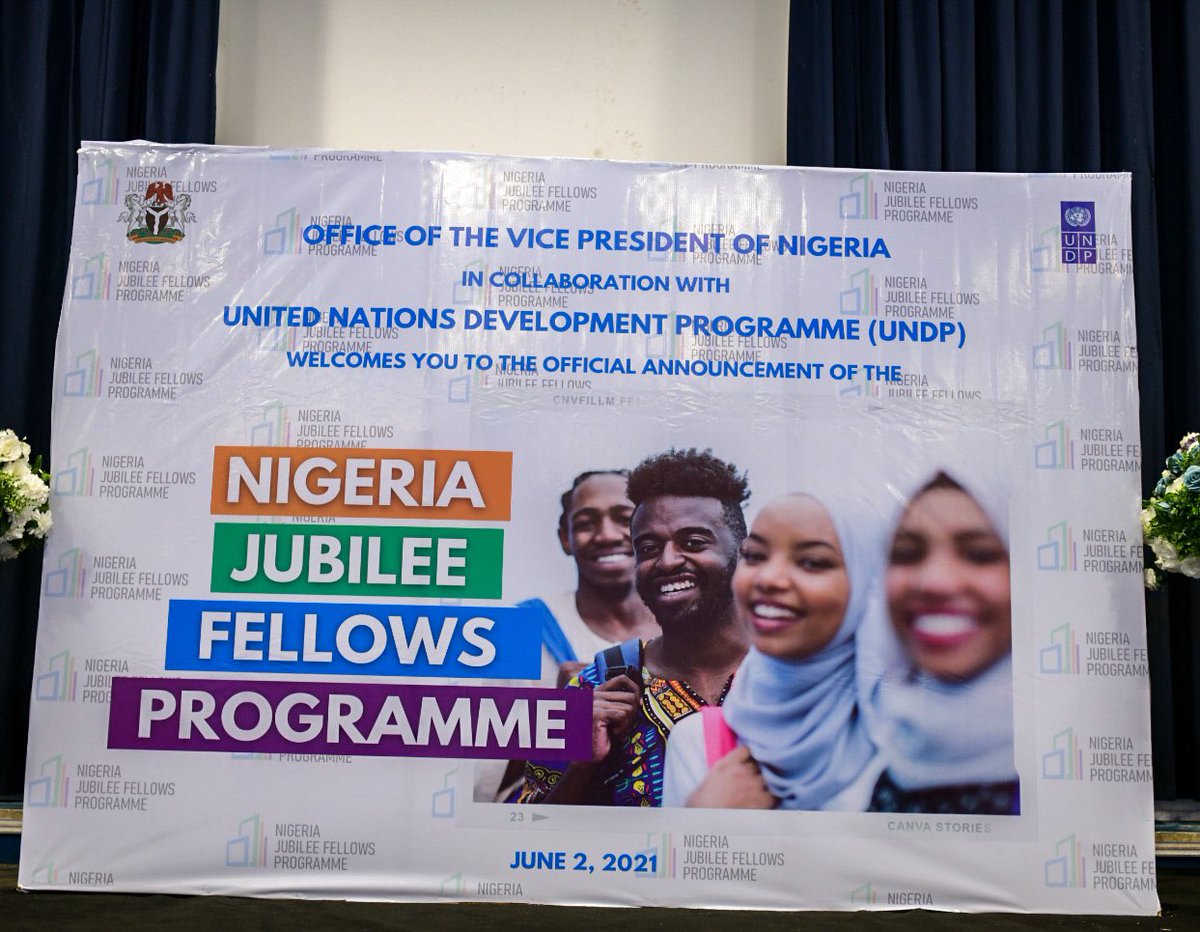
Nigeria Jubilee Fellows Programme: Why you should apply

By Ishaka Mohammed

After many fruitless applications, job seekers in Nigeria get frustrated. As some delve into crime, others retire to idleness, leaving everything to fate. Neither of these options is advisable. Nevertheless, there’s no need to stop trying. The following instances might suffice.

In Nigeria, being called a SAN comes with prestige. The bearer of the title is an experienced legal practitioner, considered professionally (and to a large extent, economically) successful. It means Senior Advocate of Nigeria (SAN), yes? But, no, there’s a different angle to it.

Many young Nigerians can bear an unfortunate version of the acronym SAN. They don’t have to study law, not to talk of being called to the Bar.

To cut it short, a guy and two ladies meet (for the first time). In response to the question of what he does for a living, he replies, “I’m a SAN.” The ladies are amazed due to his age, so they try to congratulate him, but his conception of the acronym fills the scene with abundances of laughs. He gently says, “I am a Senior Applicant of Nigeria (SAN).” The guy has applied for many jobs, but he has yet to secure employment. After listening to his story, the ladies offer him a job.

That’s in a Nollywood movie, though. Now, let’s discuss reality. A friend and former colleague is currently an officer in the Nigerian military. At a point in his life, he handed copies of his credentials to a cybercafé attendant and asked him to keep applying for jobs that matched the credentials; he would pay after every application. That was after being tired of visiting the café all the time.

Road Safety, Prison Service (now Correctional), Navy, name it — my friend had sat tests or gone for physical screenings, but none had worked in his favour. He was literally tired, so exhausted that when he was called for a physical screening after his last application, he had concluded to ignore it. If not for the timely intervention of his family, he wouldn’t have gone for the screening. He made it afterwards and the rest is history.

The above instances clarify that you have no reason to give up. You don’t have to wait for the required “connection”. Keep trying. Thomas Edison once said, “Our greatest weakness lies in giving up. The most certain way to succeed is always to try just one more time.” That one more time might be the last effort required. That one more time shouldn’t be about today or tomorrow; it shouldn’t be about the number of attempts; it should simply be about whether or not you have attained your desired goal.

As a Nigerian, you can irrevocably say that many things have gone wrong in your country. The rate of unemployment is high and scary. Thanks to members of the political elite, who are busy hijacking what is meant for the citizenry.

Attempting to minimise unemployment in the country, successive governments have come up with beneficial programmes targeting the youth. However, the politicisation of selection processes and inconsistent remunerations have sabotaged the otherwise commendable initiatives. For instance, many of the past N-Power volunteers are still owed stipends after one year of exiting the programme. And even while in the scheme, a significant number of these youth often received overdue allowances. What about the Special Public Works Programme for 774,000 unskilled labourers? The three-month programme ended in March 2021, but many of the beneficiaries have yet to be paid. It’s worth stressing that each beneficiary is entitled to just N60,000 (spread across three months).

Despite the ugly situations in Nigeria, try this one. In collaboration with the United Nations Development Programme (UNDP), the Federal Government of Nigeria is enrolling 20,000 recent graduates in full-time paid employment for twelve months. In addition, the Nigeria Jubilee Fellows Programme is for young graduates.

I partook in a briefing session on Zoom with one of the programme’s team members, Erere Oghoghome, on Tuesday the 17th of August, 2021. According to her, the programme will engage 100,000 people across five years, and the first cohort will be inducted by October 2021. That means the call for applications will be out in the coming weeks. Every eligible and interested person is expected to have developed a craving for a particular skill.

Aside from being paid employees for the period of the programme, fellows stand the chance of being retained by their host organisations. Plus, they’ll join the alumni network upon completion of the programme, and the team will be the first choice for organisations seeking personnel to fill vacancies.

The basic requirements are: graduated not earlier than 2017, less than 30 years of age, unemployed, and possessing NYSC discharge or exemption certificate.
At this juncture, I implore anyone who meets the requirements to keep tabs on the UNDP in Nigeria for this rare opportunity. It might just be that one more step to their dream job.

Other than using the experience to land a job after the programme, one can deploy the skill, money, or both in self-employment. Remember, fellows will be paid as graduate employees, not given stipends.

Therefore, it’s vital that unemployed graduates apply for the programme. There’s no harm in trying.

Ishaka Mohammed writes from Kaduna. He can be contacted via ishakamohammed39@gmail.com.

In Search of Solutions for Northern Nigeria

By Ahmadu Shehu, PhD.

The current situation in northern Nigeria is very discouraging, even depressing. But it is not hopeless. Daunting as the current challenges seem, they are far from insurmountable. Before sounding over-optimistic, let me admit that things can head south and that the danger ahead is by no means to be underestimated. The problems bedevilling this country have been dissected, analysed, revised and reviewed regularly. They are well-known to the extent that a curious baby could make a list of them; insecurity, poverty, joblessness, poor education, healthcare, lack of power, water, and all other social amenities. That is how obvious our problems are.

Unfortunately, although various solutions to the above problems have been proposed over time, few improvements are being recorded. On the contrary, things have become worse by the day. What this means is that either the proposed solutions are wrong, inadequate or that these solutions are not well-implemented. Regardless, we shall acknowledge that these problems have been with us throughout our recent history; they have been acerbating all through the decades of our independence, and that they are not going away on their own. Though, it is not as if nothing is being done to ameliorate this sorry situation; it is just not enough.

For instance, as people of faith and conscience, we have been encouraged to pray hard, submit to the true spiritual powers that create and sustain the universe. Luckily, Nigeria is reportedly the most religious country globally, and our attitude to religiosity attests to this claim. As a nation of faith, we have benefitted from our dedication to prayers and spirituality in many ways. However, the deteriorating state of our affairs shows that something is definitely wrong with this approach. We can see that as hard and as much as we pray, these problems are not going away – they have refused to disappear after the night vigils. The home truth is that they will not disappear because they are man-made and, therefore, require human solutions. Consequently, we have to undo them by matching our spirituality with the necessary practical actions.

As concerned and enlightened citizens, we have cried out as loudly as possible, written treatises, provided all the analyses in this world. Still, that is undoubtedly not going to do much in salvaging this precarious situation. This decay is beyond words. As individuals, each of us has a responsibility to this country. Therefore, some pundits claim that we shall quickly solve these problems if we do our parts as individuals. Well, yes and no. Resorting to self-help is itself a measure of failure in a cooperative society. We can only do so much as individuals, but not enough to correct the ills of this society. That is why human society is politically structured since time immemorial. We have never heard of a country, an entity – not even a family system – without a workable structure. As Femi Falana says, “there is indeed no republic of non-governmental organisations”. 

As citizens and subjects of a political structure, we have always pushed all the blame to the region’s political leadership. Indeed, the responsibility of a people is absolutely on the political leaders who have all the instruments of power, administrative and constitutional resources, privileges and responsibilities. But, this too is very much debatable. One undeniable truth is that while political leaders are responsible for the development of a society, the quality of followership has a significant stake in the success of public policy and programs.  Is leadership not the product of followership? Or is it the other way round? This is the case with chicken and egg. Your guess is as good as mine.

As a government, various laws, policies and programs have been formulated, enacted, assented, proposed, implemented, or use any vocabulary that suits your purpose. The bottom line is that we are sinking deeper, moving in reverse order, and things are getting worse. Governments at all levels adopt often conflicting policies and programs on various challenges facing the region. For instance, on insecurity, the Zamfara state government embraces negotiations and amnesty for criminals, while Katsina state adopts the often faulty stick and carrot approach. On the contrary, the Kaduna state government insists on non-negotiation with criminals, without any alternatives for the victims. The governments apply the same conflicting methods to other critical issues such as education, employment, poverty eradication, healthcare, etc. If results are to judge actions, we can loudly, albeit sadly, say that successive governments at all levels have failed in basically everything.

The evidence of the failure of these approaches lies in the fact that there is no sector – one aspect of life – that is better than it was years ago. But at the same time, this evidence is the same reason we should do more because our problems are bigger and more today than yesterday. It means, therefore, that the people of this region must continue brainstorming and inventing new, dynamic solutions in tandem with the current challenges facing it. Northern Nigeria is full of potentials and opportunities to get out of this mess and attain its developmental goals.

The best way to do this, in my opinion, is by focusing on the human capital of the region. The problems mainly result from neglecting the wealth of human resources, both in quality and quantity, by undermining critical social development issues, especially education and skills acquisition. Yes, this region might be rich in natural resources, such as gold, ore, iron, and other geological elements. Still, the truth of the matter is that no society has ever mined itself to greatness. In recent years, the federal government has been fond of oil exploration in the north to counter the southern narrative of “oil-producing states”. But, the essential truth is that the so-called oil-producing states are as underdeveloped as any other state of the federation, except that they alone have the environmental degradation of that magnitude. This tells us that our society cannot drill itself to development.

Likewise, we may argue that agriculture has sustained us for millennia, but the population explosion, waning natural resources, desert encroachment and other global factors mean that the current scale of subsistence farming does not feed us, let alone sustaining our economy. Thus, we cannot farm ourselves out of these troubles.  

I believe we can think and invent ourselves out of these problems. The surest way to development is education – education that develops the minds of the citizens to think, organise and prosper. Fundamentally, this is what only education (in its real sense[1]) can do. Many countries and societies have done this in recent decades. Nations are not born or produced by the roads, farms, bridges, mines, oil fields or industrial estates. They are born by the minds of citizens. The growth of societies is not measured and cannot be attained or sustained by the physical attributes, items and objects on the ground but by the enlightened minds of their citizens. Thus, learning from both our history and the history of nations worldwide, the north can and will be developed, but only through quality education and nothing else. If we can get this right, we will be able to think ourselves out of these problems.

Dr Ahmadu Shehu is an Assistant Professor at the American University of Nigeria, Yola. He writes from Yola, the capital of Adamawa state.


[1] My definition of education and the model that I believe can do this is explained in my article entitled Towards a Community-Based Model of Basic Education in Nigeria published in Chido Onuma’s Remaking Nigeria: Sixty years, sixty voices.

River Jama’are needs ecological fund attention

By Mallam Musbahu Magayaki

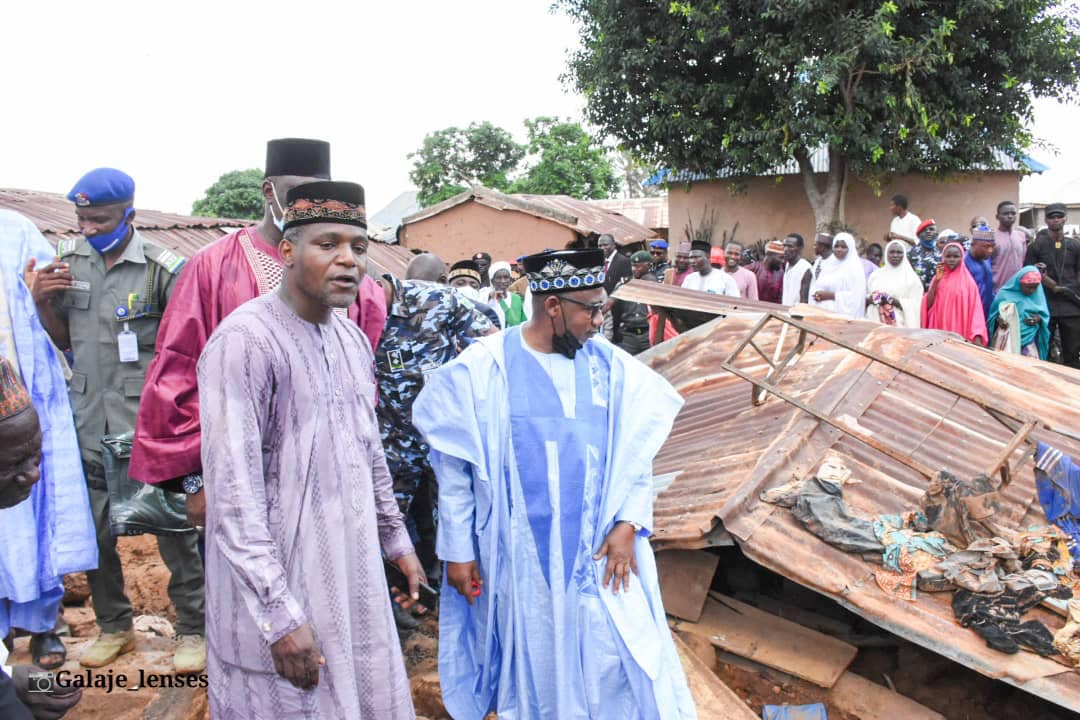
It is no longer news that flooding has washed away about 1,567 farmlands on Tuesday 10 August 2021 in Jama’are Local Government Area of Bauchi State. According to reports by Daily Trust, there were seven villages affected by the menace.

However, Jama’are River, also known as the Bunga River in its upper reaches, starts in the highlands near Jos, Plateau State, Nigerian, and flows northeast through Bauchi and Yobe States before joining the Hadejia River to form the Yobe River. Therefore, if and when over flooding occurs, the resultant effect would undoubtedly lead to the loss of countless lives of peoples’ and destroy their farmlands because of its wide range.

Furthermore, mitigating flooding hazard is one of the responsibilities of ecological fund management by funding the projects to alleviate and manage social-ecological knots. And by extension, the management concerned can liaise with the state government witnessing devastating and uncontrollable flooding risk.

Remember that almost 80 per cent of Jama’are dwellers are farmers where they find it too difficult to get their farming crops for sale in the market when flooding occurs. People from various regions of this country are struggling in Jama’are to buy farming materials. As a result of continuous flooding each rainy season, there are attendant of loss of farming produce.

The government is negligent in mitigating the flooding menace. As the federal government fully knows all the areas submerged by flooding in the rainy season, the government should do the needful before the season.

Advisably, the government should set up committees for monitoring flooding affected areas by observing the type of works that the site needs.

In a nutshell, ecological fund management and state government should, in a matter of urgency, collaborate with World banks flood protection projects to seek their assistance because the projects are capital intensive.


Mallam Musbahu Magayaki writes from Sabon Fegi, Azare, Bauchi State. He can be reached via usbahumuhammad258@gmail.com.