Federal Government of Nigeria

Musings on the solution to university education in Nigeria

By Ahmadu Shehu, PhD

Once again, there is a total blackout in Nigerian public universities. Last week, the Academic Staff Union of Universities (ASUU), the umbrella Union of academics working in Nigerian public universities, declared a one-month warning strike to remind the government of their promises signed just a year or two ago. 

It has been decades since the rift between ASUU and the Federal Government of Nigeria took the lives and progress of Nigerian students to ransom without a foreseeable end to the debacle.

ASUU was a child of necessity born out of the precarious situation Nigerian lecturers found themselves in the 70s under the various military juntas bent on killing the tertiary education in Nigeria as they did basic education. 

Thanks to radical scholars and the rise of socialism as an alternative economic and political ideology to capitalism the government prefers, ASUU got a deep ideological rooting. It also gets a wide acceptance among diverse social domains of the Nigerian society, who, like ASUU, were disenfranchised by and dissatisfied with the tyranny of successive regimes. 

The confrontations between ASUU and the military junta of Ibrahim Babangida and Sani Abacha made the association a front-wheel of social activism in Africa and gave it a legitimate voice that is believed to stand for the masses not just on education but also human rights and socioeconomic advancement. 

Over the decades, ASUU became very wealthy and stubbornly anti-establishment, which had assisted in its success against the government and lost popularity among Nigerians. But, these are topics for another day. 

While there are physical successes credited to ASUU struggles, the incessant strikes have killed many, delayed millions and subverted trillions of aspirations, destinies and successes of millions of Nigerians. Thus, one of the emergencies facing Nigerian university education today is this endless and worthless rift between ASUU and the Federal Government. 

A serious-minded government in Nigeria should have education as a priority. Any education policy that does not consider the solution to this rift is not comprehensive enough and may not solve the quagmire of education in Nigeria. 

How do we end this decades-old problem that has defied most solutions? Some people have advocated for the privatisation of Nigerian universities to have a purely money-driven university system reminiscent of the US-style, where citizens have to pay through their noses to acquire tertiary education. 

An opposite idea is one the one ASUU pursues. It is a totally free, accessible, and one hundred per cent public university education where all willing and qualified citizens can enrol and acquire tertiary education in fields of their choices and mental capabilities. 

ASUU’s idea is noble and ideal of a functional socialist society where education is an inalienable right of citizens. However, the situation in Nigeria and our economic ideology doesn’t allow for either of these ideas to work. It is why ASUU and the government have been going around the same hole of self-deceit and conscious pretence. 

To provide a lasting solution to this endless crisis that have killed our education and our economy,  I believe that privatisation is not the right solution, just as a costless education is not. We’re not America that the insensitive capitalists admire without reason nor the defunct Soviet Union that ASUU loves to imitate. These approaches do not fit our realities.

The alternative is for the government to collect and allocate special taxes to fund education. Again, we can see the models in Western and Central Europe, even in Asia, where citizens pay special taxes to fund education. In this regime, a specific percentage of all taxations will be allocated to education, and citizens will access this service which has been paid for in a different way, supposedly free of charge. 

Then, all federal universities shall submit and defend their budgets at the national assembly, effectively giving universities financial autonomy and removing them from the shackles of the ministry of education and, by extension, the cumbersome nature of mainstream Nigerian civil service. 

That means that each university will be an independent government entity responsible for 100% of its affairs without recourse to other government agencies. This equally requires that we abolish bottlenecks such as Tetfund or limit their capacity to specific funds. The ministry of education will only be a regulatory body in collaboration with the National Universities Commission (NUC). 

That way, the university management can be charged with the responsibilities of funds generation and management to the extent that lecturers no longer need ASUU as an association as all employees of a given university are totally within the purview of the university that employs them. The Federal Government doesn’t need to deal with the basic needs of university academics, such as salary and allowances.

In this model, academics take up their jobs knowing that their remuneration and social welfare are subject to their immediate employers, which is the university management. In turn, they submit their budgets yearly to the national budget and planning office, which will be debated and approved by the national assembly. Whatever they get is their own cup of tea. 

That effectively means that ASUU as an association will cease to exist because each of its members will be totally and absolutely under the purview of their immediate employers  – their home universities. There won’t be the federal government to fight. The common enemy will be gone, and there won’t be the basis for a national strike because each is on their own. 

This, as simple as it is in words, is a herculean task that cannot be easy to achieve. It requires a huge political will, legislative and administrative changes. 

No matter how long it takes, making universities entirely independent and autonomous while subjecting them to the same accountability measures prevalent on other government agencies is the surest, if not the only way to achieve a stable, qualitative and functional university system.

That way, there won’t be ASUU talk more of strikes, and the quality and quantity of education will be solely a responsibility of the universities and, therefore, the academics. 

Dr Ahmadu Shehu writes from Kaduna and can be reached via ahmadsheehu@gmail.com.
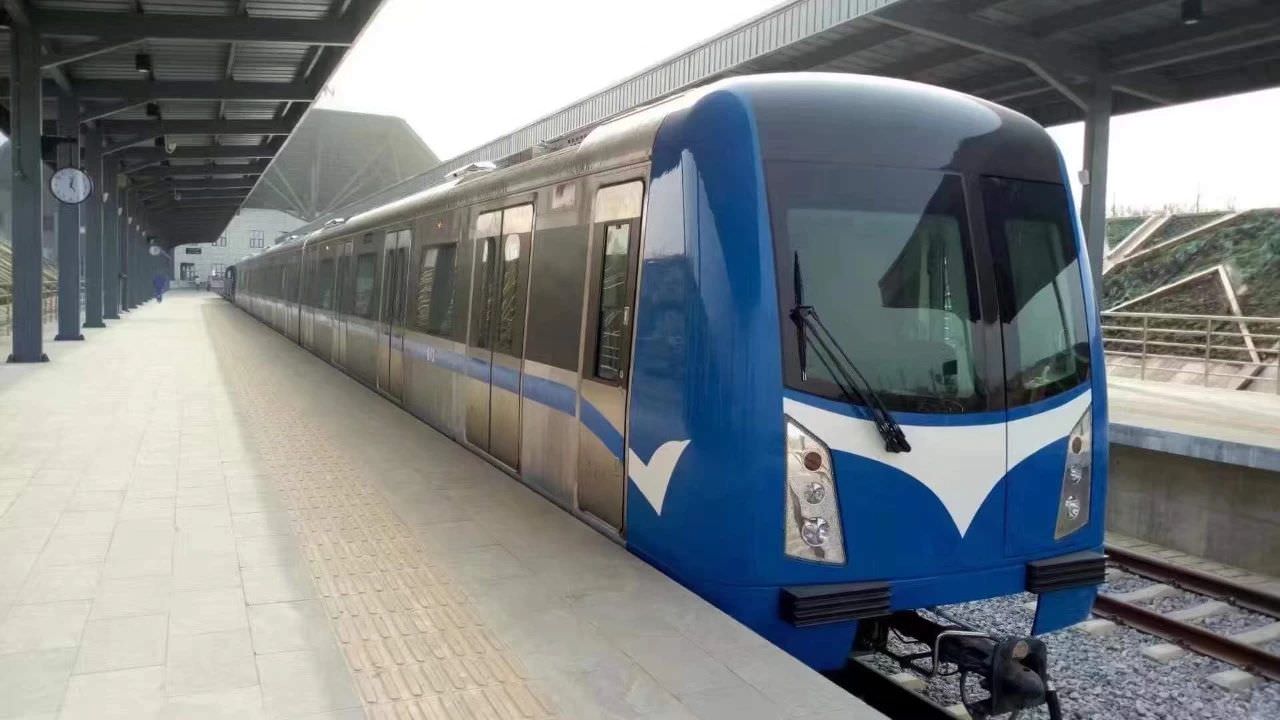
Light Rail: A panacea for Abuja traffic jam

By Tajuddeen Ahmad Tijjani

The increasing traffic gridlock in Abuja is simply nerve-wracking. A journey that, in normal circumstances, would have taken 30 minutes takes more than an hour now. This has not only caused daily waste of precious man-hours but has also inflicted enormous pain on commuters who have to contend with extra costs at this challenging time of a shrinking economy. It’s not a changing time for Nigeria to borrow a leaf from the developed world. We should not continue suffering since there are long-term and short-term solutions.

To be specific, here are some notable spots where heavy traffic snarls are a constant feature, which unfortunately affects the well-being of the people. They include Mararaba-Nyanya Bus Stop; AYA Roundabout along the Abuja-Keffi corridor; Madala-Zuba-Kubwa-Gwarinpa-Aso Radio Junction, along the Abuja-Kaduna corridor; and Girri Junction-Alaita-City Gate, along the Abuja-Gwagwalada corridor. Indeed, a lot of concern was raised about these notorious traffic hubs. And I can’t believe it if someone tells me the FCT administration is not aware of this development.

To be fair to the FCT minister, he’s trying, though his best is not enough. It’s gruesomely inadequate. We must come to terms with the fact that we’re in the 21st century and that new technology should be put in place to reduce the long-suffering of commuters. The axes mentioned above need to be expanded to accommodate the daily traffic volume.

I’d be willing to bet my bottom dollar that if the FCT administration built “railroad tracks” from end to end of the city, beyond a shadow of a doubt, this unbearable traffic jam would disappear in no time. Both the income and the revenue generation will increase. An uncountable number of commuters will drop their vehicles.

The transportation system will give cheerful colour, beautify the city, and compete with global best practices. Can’t we do these for the benefit of all? But, someone might decide to ask, where should we get the funds? Yes, there it is. Invite investors and strike a Public-Private Partnership. I believe we can do it. Building, operating, and transferring is one of the surest ways of getting it done. 

I urge the FCT administration to look inward and try railway tracks in the city. For instance, the same should be in place in other axes from Zuba to Dey Dey, Kubwa, Dutsen Alhaji Junction, Gwarimpa, Maitama to Mararraba, etc. It would be a life-changing event for both the government and the people. Indeed, this will enhance internally generated revenue and increase work productivity. It will be a win-win for the country.

Tajuddeen Ahmad Tijjani writes from Abuja. And can also be reached via sen.taju@gmail.com.

FG is ready to meet with ASUU on all issues they’ve raised – Education Minister

By Uzair Adam Imam

 The Minister of Education, Malam Adamu Adamu, has said that the federal government is ready to meet with the Academic Staff Union of Universities (ASUU) on all issues they have raised.

Adamu said that he was surprised by the decision of the union to embark on a four-week strike. 

He added that the decision of the university lecturers came abruptly amidst ongoing meetings that aimed at resolving the menace.

The minister stated this on Wednesday while fielding questions from State House reporters after the Federal Executive Council (FEC) meeting in Abuja. 

However, despite several negotiations, the minister also cleared the government of any fault over failure to reach an agreement with ASUU. 

According to him, “ASUU, unfortunately, they have gone on strike, and I am looking for them because all the issues are being addressed. The last thing that happened was that our committee looked at their demands, but there are renegotiations going on. They submitted a draft agreement which the ministry is looking at.”

Speaking on ASUU’s draft agreement, Adamu said, “A committee is looking at it. Immediately it finishes, the government is meant to announce what it had accepted. Then suddenly, I heard them going on strike.”

Clearing his name over allegations from ASUU about his absence from meetings, the minister said, “ASUU will never say that. I always call the meeting myself. The meetings I didn’t attend were those that happened when I was in hospital in Germany.

“We want a peaceful resolution. The federal government is ready to meet them on all issues they have raised, and if there are so many meetings and the gap is not closing, then I think it’s not the fault of the government.

Asked about the possibilities of reconciliation between the FG and ASUU  before the end of the 30-day strike, he said, “I can’t give you time. I am ready to reach an agreement with ASUU now, but since I’m not the only one, I can’t give you time, but certainly, we are going to reach an agreement very soon.”

How to make the month-long ASUU strike a win-win situation – Don

By Uzair Adam Imam

A senior lecturer with the Department of Mass Communication, Bayero University, Kano (BUK), Dr Ibrahim Siraj, has described the four-week strike of the Academic Staff Union of Universities (ASUU) as a necessary evil Nigerians must learn to live with.

Siraj said that as we could not stop the strike, we could do whatever we could to minimize the ‘losses’ that come with it while anticipating the benefit.

The academic who disclosed this on his social media platform stated that if only we could use some formulas, we are all winners – driving many benefits from the strike.

The writing he titled, “How to Make the Month-Long ASUU Strike a Win-Win Situation”, provided some formulas which he married them up with the benefits worth driving if put into practice.

Dr Siraj wrote, “Federal Government is given an ample opportunity to study ASUU demands, engage in serious and sincere negotiation and finally seal a deal. This will save the system from further disruption and damage.

“And with the countdown to 2023 general elections just starting and political activities expected to reach their peak later in the year, no better time than now to do it. They can resolve this one and concentrate on their politicking. Win.”

He added that “for lecturers, this is a time to sort out all issues relating to continuous assessment (CA), have some rest, finish writing that paper, gain some renewed energy and hope for the best from the struggle. In-sha-Allah it will usher into a better university system: better teaching and learning conditions, better remuneration, and more productive scholarship. Win.”

Moreover, Siraj stated that this is also an opportunity for the students to prepare for the coming exams “eat up the notes, ‘cram’ the handouts and do additional reading and consultation on the topics. This could translate into better performance and ultimately higher grades. Win”.

“Final year students could use the window to invest more time in writing their projects. So, in addition to aiding timely completion, it could also enhance the quality of the output. Win,” he stated.

The lecturer stated that the adjustment in the calendar means that BUK students will spend a better part of the blessed month of Ramadan at home. Thus, he said, “this means students and teachers will have more time to devote to seeking Allah’s pleasure in the holy month. Win.”

Dear Governor Bala Mohammed, listen to Jama’are people

By Y. Z. Yaú

In 2018, the Jamaare Local Government Area of Bauchi State suffered a devastating flood that destroyed farms and houses and the central market. There was a Government in Bauchi State, but it did not respond to the crisis. Those who died due to the flood ended up as mere flood statistics. The descendants of Dilara took it calmly and in their strides.  They consulted among themselves and prayed to God to answer their prayers. In his infinite mercies, God answered and wiped their tears: the federal government through the Ecological Fund responded with an intervention to mitigate the effect of the flood.

In a three-part initiative, the Ecological Fund financed a new drainage network in the town and promised to rebuild the market destroyed by the flood. The third aspect was the dredging of the river so that the flood could be reduced if not altogether eliminated. The state government was to contribute as counter funding. But, unfortunately, it did not, and the flood came back with more vengeance during the last raining season, and for the first time in over 50 years, the flood got into town, occupied and destroyed many houses. Several people, mainly farmers and their children, died while crops were damaged in the waves. The loss to the community was shuttering. Again, not a whimper of sympathy from the state government. 

Over five years ago, as part of the ecological intervention, the Federal Government decided to upgrade the power sub-station, which serves more than four local governments, to improve the electricity supply in the area. A significant new sub-station was to be built on the understanding that the State Government would do the civil works while the Federal Government does the engineering component. The Federal Government delivered its part, and to date, the State Government has not delivered its component, so the project remains uncompleted. 

What does the frequent flood tell? While flood in itself is destructive, it reveals that if the water can be controlled, agricultural production can be improved to raise the national food production capacity. After all, already along with the Hadejia wing of the Hadejia-Jamaare Rivers basin, this area is perhaps the largest rice production belt of the country. Stabilization of the flood plain of the Jama’are river is, therefore, a project not meant for the benefit of the Jamaare people only. It is to improve national food security and farming resilience in the country. It is thus in the national interest. 

The flood plain of the Jama’are river is a fertile agricultural area and a ready-made natural laboratory for agricultural research that will improve farming systems and practices across the country. This consideration led the Faculty of Agriculture of the Bauchi State University in Jama’are to leverage this natural laboratory for research, experimentation and teaching. In addition, Jama’are people will benefit from agricultural extension services, agricultural advice from experts, improved skills and knowledge for the farmers, and uptake of research outcomes to address agricultural, livestock, and horticultural issues.

It will also benefit from the usual town-gown interaction that a university made possible. But above all, however, the state and the country stand to gain in enhanced agricultural production, livestock production and development of horticulture. The foresight of the Committee that searched and selected the site of the Faculty of Agriculture must be commended for their deep sense of patriotism and adherence to professional ethics. 

The Faculty is already on the ground with hundreds of students and over 100 academic and non-academic staff engaged in academic activities in the college. Academic activities have stabilized, and a sense of synergy between the campus and the host community has taken shape. 

Suddenly, there are rumours making rounds that the state government is planning to relocate the Faculty to another place for the Federal College of Education takeoff that the federal government recently decided to establish in the town. This move to relocate the Faculty that was sited based on clear reasons of functionality and leverage not only smacks of the politics of blockage but also totally lacking in appreciation of the considerations for the setting up of both the Faculty of Agriculture and the Federal College of Education in Jamaare. It certainly does not show concern for the deep patriotic thinking of sitting the Faculty. But this apart, the argument of justice and fairness has led to the establishment of the Federal College of Education. 

Jama’are is one of the oldest local governments in the state, established in the country’s first wave of local government creation. Jamaáre Emirate is a foundational emirate, resulting from the Dan Fodio Jihad and not a recent political design of some politicians. Of the four emirates in the state, until 2014, it was the only one lacking in any institution of higher learning. Even when the Faculty of Agriculture was established, the Emirate was nowhere near the others in terms of the number of higher institutions. It was to promote equitable educational development and the spreading of educational opportunities across the state that reinforced the rationale for selecting the site of the Faculty of Agriculture and the establishment of the Federal College of Education in Jamaare. 

It is difficult for the people of Jamaáre not to read the purported attempt to remove the Faculty as one more instance of deliberate discrimination against people known for their peaceful disposition. For all the deprivations, they have never taken to a protest. Not that they value their rights nor that they cannot fight for their right. They believe that what you do not get in peace will not necessarily come in violence. They live in the humble Fulbe spirit of not giving to showing pains or pleasure. Therefore, when last Monday they met from all corners of the Emirate at the Jamaare central mosque and led by the leadership of the scions of the Dilara dynasty, the community has taken this attempt to disinherit them calmly and resorted to prayers, in the hope that as usual, Allah will ensure that justice is done. As a peace-loving community, we take solace in our patience and trust our density. 

It is still not late for the Bauchi State Governor, Bala Mohammed (Kauran Bauchi), to dispel these rumours and assure the people of Jamaáre, and indeed the whole country (which stands to lose from this move) that what is theirs shall remain theirs. They will embrace him with brotherly love and in that spirit. We hope that Kaura hears our humble request for his heart to take flight into the hearts of Jamaáre people who would warmly embrace him in eternal gratitude for acting as a true leader who treats all parts of his constituency equally. We are waiting and watching.

Ya’u is the executive director of the Center for Information Technology and Development.

ASUU to embark on a fresh strike soon

By Uzair Adam Imam


The Academic Staff Union of Universities (ASUU) has said that there is a possibility of going on a strike if the government does not address its demands.


The union said that the N52.5bn it received from the Federal Government would not be sufficient to deal with the challenges facing the university system in the country.


Prof Emmanuel Osodeke, the ASUU President, disclosed this in an interview with the journalists.


“There was a possibility that the union would still go on strike unless the government addressed its demands, including the 2009 agreement,” he said.


The Daily Reality gathered that the Federal Government had released N30bn Revitalisation Fund and N22.5bn Earned Academic Allowance totalling N52.5bn to the union.


Osodeke added that: “The Federal Government had said it paid lecturers N30bn Revitalisation Fund and N22.5bn Earned Academic Allowance.
“It noted that it had made some progress in implementing the Memorandum of Understanding the government reached with the union,” he stated.


However, Osodeke also described the fund released by the government as a token payment, reiterating that it was not enough for lecturers to change their minds on the suspended strike.

ASUU: FG impoverishes us, no going back on strike

By Uzair Adam Imam

The Academic Staff Union of Universities (ASUU) has threatened that there is no going back on its planned strike action as long as the government did not meet its demands.

The union also tackled members of the National Assembly for earning  ₦1.5 million or thereabout monthly to the detriment of professors with ₦416 000 monthly takehomes.

Mr Adelaja Odukoya, the Zonal Coordinator of ASUU, Lagos Zone, made the disclosure on Tuesday while addressing journalists at the end of the zonal meeting of the union held at the Federal University of Agriculture Abeokuta (FUNAAB), Ogun State.

Odukoya also criticized Senators and House of Representatives members over “jumbo pay”, adding that academic members “are being impoverished by the federal government.”

COVID-19: FG directs civil servants from level 12 and below to resume work

By Sumayyah Auwal Ishaq

The Nigerian government has directed federal civil servants from Grade Level 12 and below to resume full duties on Wednesday December 1, 2021.

The Head of the Civil Service of the Federation, Dr. Folashade Yemi-Esan, gave the directive in a circular on Friday in Abuja. Dr. Yemi-Esan, further said that President Muhammadu Buhari has approved the vaccine mandate policy to all Federal Government employees.

The new development follows a recommendation by the Presidential Taskforce (PTF) on COVID-19, urging workers to resume full working hours and days.

Nigerian military neutralizes many ISWAP terrorists

By Muhammad Sabi’u

The Nigerian military on Saturday has an encounter with members of the deadly Islamic State of West African Province (ISWAP) in Askira Uba of Borno State.

A number of the terrorists were said to have been neutralized in the said encounter, which also led to the recovery of arms vehicles by the military.

This was disclosed in a statement released today via Nigerian Army’s official Facebook page and signed by Brigadier General Onyema Nwachukwu, who is the Director Army Public Relations.
However, four soldiers, unfortunately, lost their lives in the course of the encounter.
Read Nigerian Army’s full statement:
OPERATION HADIN KAI: TROOPS NEUTRALIZE SEVERAL ISWAP TERRORISTS DESTROY, EQUIPMENT IN ASKIRA UBA ENCOUNTER
 
Troops of Joint Task Force, North East Operation HADIN KAI have neutralized several Islamic State West Africa Province (ISWAP) terrorists during a recent encounter in Askira Uba Local Government Area of Borno State. In the fierce encounter which is still raging as at the time of filling this report, troops supported by the Air Component of OPHK have destroyed five A – Jet, two A-29, two Dragon combat vehicles and nine Gun Trucks.
 
Sadly, a gallant senior officer Brigadier General Dzarma Zirkusu and three soldiers paid the supreme sacrifice in a very rare display of gallantry as they provided reinforcement in a counter offensive against the terrorists, and successfully defended the location. The family of the senior officer and soldiers have been contacted.
 
The Chief of Army Staff Lt Gen Faruk Yahaya deeply commiserates with the families and relations of the fallen heroes. He has also directed that the troops continue in the ferocious counter offensive and hot pursuit to eliminate the remnant of the fleeing terrorists.
 
ONYEMA NWACHUKWU
 
Brigadier General Director Army Public Relations 13 November 2021

Nigeria’s Development: The Daunting Doom

By Lawi Auwal Yusuf

Leaders are preoccupied with self-centred political hustles, party meetings, extravagant banquets and flying their private or chartered jets over the country attending various lavish occasions. On the contrary, Nigerians turned wistful and sad about the terrible fate of the country and the gloomy future. As they get more concerned, their hope becomes less.

The country is endowed with efficacious potentials for its development to become a global power. It has a strategic location, sizable landmass, enormous young population, highly educated elites and abundant natural resources. In addition, favourable climate, fertile farmlands, and the shores that give it access to the Atlantic Ocean in the South are all added advantages.

In the last sixty-one years, Nigeria has reaped hundreds of billions of petrodollars in total revenues as one of the major producers and exporters of oil to the global market. It is the 12th largest producer of oil in the global ranking, 8th largest exporter and the 10th largest proven reserves. According to the Department of Petroleum Resources, it has about 159 oil fields and 1481 wells in production.

Apart from petroleum resources, Nigeria has multiple precious mineral resources in massive deposits. Moreover, cocoa is the largest foreign exchange earner to Nigeria besides oil and rubber, the second largest.

Similarly, as the most populous state in Africa and the 7th in the world with over 211 million people, Nigeria is a vast market. Its mixed economy is the largest on the continent. It is the 27th largest economy in the world by nominal GDP as of 2021 estimate. By GDP per capita, it is the 137th in the global ranking and the 25th largest by PPP.

However, these unique and extraordinary endowments are rare for a country to possess. These are the best opportunities and possibilities for its advancement. Unfortunately, poor leadership, endemic corruption and mismanagement have been the greatest obstacles in realising the potential. These precious endowments were not genuinely and diligently used. Hence, it has not made appreciable progress in those years. Had they been utilised at the best and maximum capacity, the sky would have been the limit.

More than 40% of Nigerians are living below the poverty benchmark in May 2020 estimates. They are destitute and cannot afford the three daily meals. Today, pervasive poverty depicts the lives of most Nigerians. The life expectancy is as low as 54.7 years on average. Infant mortality reached 74.2 deaths per 1,000 live births in 2019, and maternal mortality was 814 per 100,000 live births in 2015.

Moreover, the stagnant economy, inflation and the perpetual falling value of the naira have aggravated the plight of the masses, making life worse, more challenging and more miserable for ordinary Nigerians. There has been a swift rise in the cost of living and a concurrent decline in the living standard. Therefore, poverty, inequality, mass idleness, underemployment and wretchedness are at the highest pinnacle. This made Nigeria always emerge winner of the global rankings of the poorest nations.

It is appalling that the masses are becoming poorer while the nobles are getting more affluent. There has been a persistent widening inequality between the rich and the poor. Transparency International ranked Nigeria 136th out of 182 in the 2014 Corruption Perceptions Index. It was estimated that more than $400 billion were embezzled by corrupt leaders from independence to 1999. Nonetheless, President Muhammadu Buhari in 2015 said that corrupt officials had squandered more than $150 billion in the last decade. As a result, the country is synonymous with corruption. And the most astonishing is that it is among the wealthiest countries and also the poorest simultaneously. This is because the state wealth is enjoyed only by the aristocrats while the commoners are destitute.

Rule by theft known as ‘kleptocracy’ has deteriorated into kleptomania. They are strongly obsessed with stealing to the level that they don’t even have a material need for it. It degenerated into highly competitive accumulation syndrome. The monies that are ideal for the development of Nigeria are stashed at its detriment in Western countries and therefore become beneficial to their contented economies.

On the other hand, in the early 1960s, Nigeria was self-sufficient in food. But after the Civil War in 1970, the government failed to reinvigorate agriculture, resulting in failure to meet the acute population growth. It had to depend primarily on importation to fill up the supply gap. Sadly, in the 21st-century world, farmers are still tilling the ground with simple implements like hoes and cutlasses to feed a population of over 200 million. As of 2010, almost 30% of Nigerians are employed in agriculture and still have not met up the national demand.

The leaders had failed to provide the basic necessities of life to the citizens. As a result, after more than six decades of self-governance, there is no stable electricity supply, safe drinking water, standard healthcare, adequate and affordable food, qualitative education, social housing estates, infrastructures and social amenities. Nonetheless, the problems of the country in the1960s are yet to be resolved. Poverty, corruption, rule by theft, secessionism, tribal and religious antagonisms are lingering today. Regrettably, terrorism, kidnappings, cattle rustling, banditry and other current collective problems have deepened the crises.

Not being able to diversify the monocultural economy that largely depends on oil plays a significant role in the economy, accounting for 40% of GDP and 80% of the government earnings. Moreover, Nigeria does not adequately exploit the vast array of mineral resources in colossal deposits while the mining industry is still in its early stage of development. Moreover, other sectors of the economy that will help tremendously grow the economy and raise revenues are also underdeveloped. Contrarily, it has remained a perennial borrower of funds in the global capital market. Recently it emerged as the 5th most debt-ridden country in the world. The World Bank in August 2021 said that it had accumulated $11.7 billion in debt.

There has been deficient human development, especially the youths folk. In 2019, it ranked 161st in the world in the Human Development Index with a 0.539 score, which was very low. Millions of school-age children are out of school while some wander the streets freely with torn-out clothes and scavenging through rubbish looking for food. These miserable children are left on their own to live their entire unwholesome lives on the streets in search of a living. They have no qualifications or skills to make them employable in the labour market. Similarly, graduates searching for employment happened also to be idle many years after they had left school. Therefore, almost half of Nigerians are unemployed.

Furthermore, the emigration by professional Nigerian doctors to the diaspora known as the “brain drain” due to adverse working conditions in the country led to shortages of doctors in the healthcare system. It was estimated in 1995 that roughly 21,000 indigenous doctors were working in America alone, which was almost equal to those in the public health service then.

When you make a comparative analysis between Nigeria and its peers to assess its performance, you will realise that it had performed poorly. For example, look at the High Performing East Asian Economies (HPEAEs) that include Malaysia, Taiwan, Thailand, Singapore, Indonesia, South Korea and Japan. They are the fastest-growing economies in the world after the first world countries. Some had launched rockets into space. They manufacture aircraft, ships, automobiles, computers and smartphones while Nigeria still imports razor blades, pencils, toothpicks, including its most abundant petroleum products. Singapore and Japan developed from the less developed countries and joined the first world nations.

Look at other countries like UAE, India, Brazil and South Africa that recently established a consociational democracy in 1994. Nigeria played a significant role in fighting the apartheid regime and helped in establishing the multiracial democracy in the country. South Africa is now regarded as a highly developed state and has become a better haven for Nigerian youths who emigrated there in search of greener pasture.

Finally, Nigeria still has the chance to do better and start developing once more to realise its long-lost potential.

Lawi Auwal Yusuf wrote from Kano. He can be reached via laymaikanawa@gmail.com.