Federal Government of Nigeria

President Tinubu appoints new ambassadors after 18-month diplomatic hiatus

By Hadiza Abdulkadir

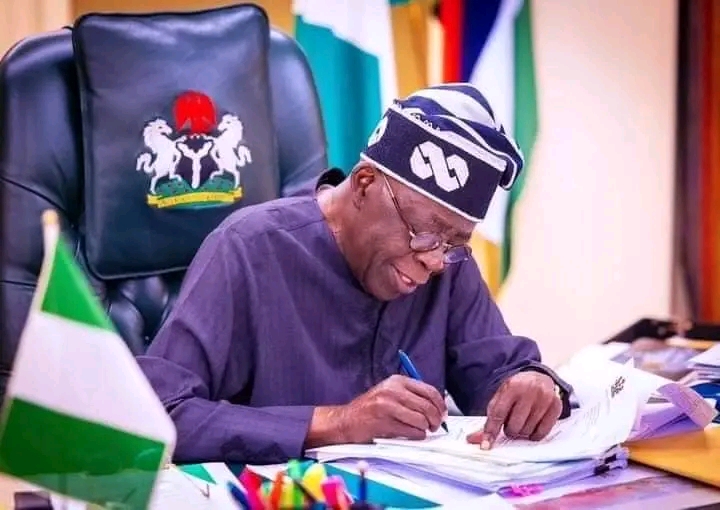
President Bola Ahmed Tinubu has approved the appointment of new ambassadors to represent Nigeria in its foreign missions. This ends an 18-month diplomatic vacuum that began after all ambassadors were recalled in September 2023.

The recall, which impacted both career and non-career ambassadors, was due to funding constraints and a wider restructuring of Nigeria’s diplomatic engagements. However, sources within the presidency confirm that the financial issues have now been resolved, clearing the path for new appointments.

The selection process for the new envoys is already underway, with security agencies conducting background checks on nominees before their formal announcement and confirmation. The move is expected to restore Nigeria’s diplomatic presence globally and strengthen bilateral relations with key partners.

Nigeria currently operates over 100 embassies and high commissions worldwide, and the prolonged absence of ambassadors has raised concerns about the country’s foreign policy direction. Despite these challenges, President Tinubu’s administration has prioritized economic recovery, allocating N302.4 billion ($198.3 million) in the 2025 budget for Nigeria’s foreign missions.

During meetings with foreign leaders, President Tinubu assured that vacancies would be filled soon, recognizing the need for a strong diplomatic corps to advance Nigeria’s global interests. The new appointments are expected to refresh Nigeria’s foreign policy and enhance its influence internationally.

Observers note that the new ambassadors will foster economic partnerships, attract foreign investments, and promoteNigeria’s image abroad. With their deployment approaching, stakeholders are watching how the diplomatic team navigates the global landscape to advance Nigeria’s interests.

BREAKING: FG, labour reach agreement on minimum wage

By Uzair Adam Imam

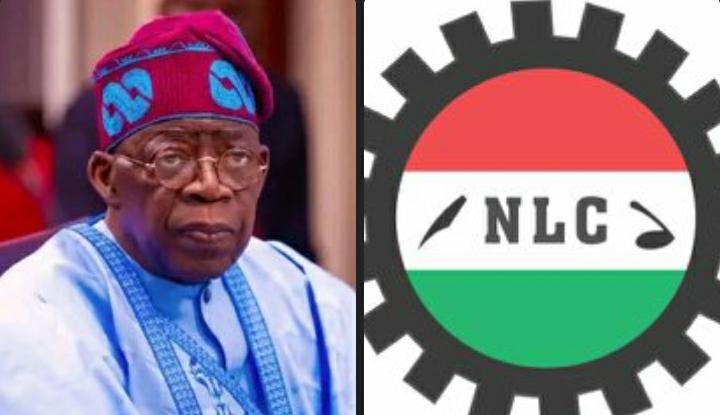
The Federal Government and the organised labour have reached an agreement on the minimum wage, ending the strike action that started on June 3, 2024.

The agreement was signed on Monday night after a meeting that started at 5:00 pm and ended at 11:00 pm.

Although the details of the agreement are not yet public, the Secretary to the Government of the Federation, George Akume, confirmed that the government is committed to paying a minimum wage higher than N60,000.

He also assured that no worker would be victimized for participating in the strike.

The national tripartite committee on minimum wage will meet daily for the next week to finalize the details of the agreement.

The labour leaders and government officials expressed optimism that the agreement would bring an end to the strike and restore normalcy to the country.

The strike, which started on June 3, had paralyzed economic activities in the country, with many businesses forced to shut down.

The agreement is seen as a positive development, and many are hoping that it would bring an end to the strike and restore normalcy to the country.

Yobe Assembly appeals to FG to rehabilitate bad roads

By Muhammad Suleiman Yobe.

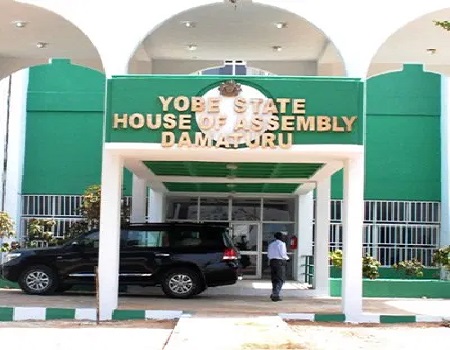
Yobe State House of Assembly has appealed to the Federal Government of Nigeria to rehabilitate dilapidated federal roads in the state. 

The House made the plea in a motion presented by the majority leader of the House, Hon. Nasiru Hassan Yusuf, on behalf of all members. 

Presenting the motion, the majority leader of the House said the federal roads constructed over the years are now dilapidated and need to be built for effective and efficient transportation within the state. 

Hon Nasiru Hassan Yusuf said most of the bridges and culverts at the federal roads that linked Potiskum to Jakusko, Babbangida to Bayamari, Buni Yadi to Gulani and Gujba to Ngalda was destroyed in last year’s flood and need federal government intervention. 

The majority leader of the House, who spoke at length on the importance of the roads to the development of the economy, said the poor conditions of the federal roads have affected the state’s commercial activities. 

In their separate contributions to the motion, the members representing Geidam, Damaturu,  Mamudo, Gujba and Machina constituencies described the motion as apt and timely. 

They expressed dismay over the delay in completing some federal roads awarded over the years in the state. 

Presiding over the sitting, the speaker of the House, Rt Hon Chiroma Buba Mashio, appealed to members of the National Assembly representing Yobe to present the matter at the upper chamber for quick response by the federal government.

Hike in registration fee in Nigerian varsities: A result of FG’s negligence

By Najeebullah Lawan

It becomes a new normal that the Academic Staff Union of Universities (ASUU) embark on a strike to press demand on one issue or another almost every year in Nigeria. This menace has been here since 2009, with each year’s strike becoming worse than the previous one. The feud between ASUU and the Federal Government (FG) has badly, as it is clear, affected the education system in Nigeria.

The battle corners include revitalisation of the universities, providing infrastructure, enhancing research conducts, and reviewing lecturers’ salaries and allowances, among others, as contained in the MoU signed by the Nigerian government and ASUU.

It is essential to note that ASUU is a union of Academic Staff of Universities consisting of [except a few] lecturers from the Nigerian public universities.

These lecturers have wives, children and relatives in the schools they teach nationwide who are under their sponsorship from their hard earnings.

I believe these people will never do anything that could temper with the system because their close relatives and children benefit from it.

Moreover, our lecturers spent decades without substantial review of their salaries despite all the hikes in the price of foodstuffs and other necessities in Nigeria. It is heartbreaking that a university professor earns less than the salary of some government appointees – SAs and PAs.

It is unbecoming to leave these people alone fighting the government that leaves them without the good welfare their counterparts enjoy, even in many African countries. This fight is for all of us.!

In 2020, ASUU stood up to fight for their rights and the students in general, which led to the total closure of all universities in Nigeria. However, the coronavirus pandemic also contributed immensely to the longevity of this strike, making it one of the worst and longest strikes ever in the history of Nigerian universities.

Unfortunately, the Nigerian government did nothing to stop the strike. It betrayed the university lecturers, leaving them and their students stranded amidst a dilemma.

Again, in 2021, there was another strike by the university lecturers who demanded FG to fulfil its promises made in 2012 and 2020. This strike lasted eight months, and the lecturers were not paid a single kobo. As I write this, FG still owes lecturers months’ salaries and areas.

For all the struggle by ASUU, they were doing this for the betterment and standardisation of higher institutions nationwide. However, they got nothing from most of the students and parents in return except insults and mocks.

As of that time, ASUU warned students and parents that if FG defeated them in that fight, there would be a serious problem for students and parents that not everyone could bear.

Defeating ASUU, the Federal Government deliberately refused to fund its universities with enough funds.

As a result, in 2023, there was an increment in registration fees by many universities, such as the University of Maiduguri, University of Benin, University of Lagos, ATBU, ABU and a host of others. However, the one by Bayero University, Kano (BUK), brought a loud noise in the entire north, probably due to its status. Here are some clarifications:

1:- We heard that the university Vice-Chancellor, Prof. Adamu Abbas, made an explanation concerning the situation of the universities in Nigeria, saying that everything related to running the administration of the university is costly.

2:- Recently, ABU extended the resumption date for students due to an outage by the Kaduna Electric Distribution Company (KAEDCO) over alleged millions of Naira debt, which ABU owes KAEDCO.

3:- The monthly budget for running Bayero University is close to N100m. This money is spent on KEDCO for power, diesel, water and security.

4:- The FG is giving only N11m, which represents only 1% out of 10% BUK is spending every month, and the management of the university manages to utilise the system with the little they are getting from the government.

5:- The current economic situation of Nigeria and the Federal Government’s manner towards universities has left the management of Bayero University, Kano, with no option but to increase the central registration fee for students.

Despite these, BUK remains the cheapest Federal University in the entire north except for a few varsities currently in the second semester, and a review of their registration fees could be seen as something inevitable.

Regarding the just concluded points, we can say that ASUU does not hate education, and its fight is for the system’s revival. Also, the increment of university registration comes from negligence by the Federal Government. Meanwhile, without this kind of increment, the system will undoubtedly collapse.

Najibullah writes from Kano, Nassarawa Local Government. He can be reached via najeebullahlawan@gmail.com

MURIC to FG: Give Muslims non-interest loans

By Muhammad Abdurrahman

President Bola Ahmed Tinubu offered some palliatives in his address to the nation yesterday, 31st July 2023. Among the palliatives were interest loans of about N75b at 9% interest, N500,000 loan to N1 million at 9% and another N100 billion transportation loan also at 9%. However, an Islamic human rights organisation, the Muslim Rights Concern (MURIC), has requested soft loans for Nigerian Muslims instead of interest loans.

In a statement circulated among journalists on Tuesday, 1st August 2023, by the group’s Executive Director, Professor Ishaq Akintola, the group explained that it is haram (forbidden) for Muslims to receive or give interest on loans.

Akintola spoke further :

“President Bola Ahmed Tinubu offered some palliatives in his address to the nation yesterday, 31st July 2023. Among the palliatives were interest loans of about N75b at 9% interest, N500,000 to N1 million loan at 9% and another N100 billion transportation loan also at 9%.

“We appreciate the concern of President Bola Ahmed Tinubu for Nigerians, particularly in these difficult times. The offer of loans to cushion the effect of the withdrawal of oil subsidy shows that the president cares about the citizenry.

“However, Nigerian Muslims cannot and will not take interest loans as the latter is capable of constituting a wedge between Nigerian Muslims and their Creator (Almighty Allah). We prefer the everlasting peace of al-akhirah (the Hereafter) to the material gains of this world.

“Interest is haram, and Allah explicitly forbids it when He said, “Oh you who believe, fear Allah and give up that interest which is still due to you if you are true believers. But if you do not desist, then you are warned of the declaration of war against you by Allah and His Messenger….” (Glorious Qur’an 2:278 – 279).

“The interest loan being offered by President Tinubu cannot benefit Muslims in this country. We, therefore, suggest that the Federal Government (FG) should arrange soft loans for the Muslim population in particular and any other citizens who may desire it.

“One of the problems with Nigeria is that the system bequeathed to us by the colonial master is not Islam-compliant. It, therefore, conflicts very often with the Islamic way of life. This is why FG needs to prepare alternatives for Muslims,who are more than 130 million in the country, in the name of fairness, equity and justice.

“We reiterate that interest loan is haram, and Muslims will not touch it with a long pole. FG should therefore expedite action on introducing Islam-compliant palliatives such that it is made available for Muslims at the same time that interest loans are accessible to others because hunger is spreading fast among the populace as prices sky-rocket daily.

“We advise FG to consult Islamic scholars regularly, particularly on policy issues, in order not to cause misunderstanding between the government and Nigerian Muslims. We also suggest that an expert in Islamic finance should be a member of the National Economic Council (NEC).”

Nigerian students in Sudan beg FG for evacuation

By Muhammadu Sabiu 
 
Nigerians studying in Sudan have written the Nigerian government to evacuate all its citizens trapped there, especially in the capital city of Khartoum where the military and paramilitary are fighting.
 
This is coming after some days since the fight had started, which left hundreds either killed or injured.
 
Reports have indicated that thousands of people are trapped in the city of Khartoum with no access to basic needs like food and medicine.
 
The National Association of Nigerian Students in Sudan made this request in a letter to the federal government.
 
The letter reads, “We write this to Nigerian Government in respect to the current and ongoing conflict that erupts between the Sudan military and paramilitary forces in these past days; particularly in Khartoum, the capital city where constant gunfire, explosions and airstrike attacks dominate its vicinity and environs (where a score of Nigerian Students study).
 
“2. The Nigerian Students have been stranded in fears with no access to basic needs equipment and have been facing dangerous threats. We hereby write soliciting and yearning for the Nigerian Government’s intercession to rescue and send for an immediate evacuation of the Nigerian students that are stuck in the center of the ongoing war.
 
“3. We strongly hope that our call for rescue to our dear nation Nigeria will be responded to with immediate effect.


Naira Scarcity: Peter Obi urges Nigerians to be patient with FG

By Ahmad Deedat Zakari

The Presidential Candidate of the Labour Party, Peter Obi, has urged Nigerians to be patient with the Federal Government as regards the hardship caused by the new currency redesign.  

Mr Obi made the appeal in the early hours of Sunday in a tweet via his official Twitter handle.

The redesign of Nigeria’s currency has enthroned scarcity of Naira notes and caused severe hardship to Nigerians who are unable to get cash to carry out their daily transactions. 

Mr Obi, while pleading with Nigerians, said currency redesign is not peculiar to Nigeria, and it comes with long-term economic advantages despite the initial inconveniences. 

He tweeted: “The currency redesign is not peculiar to Nigeria. It is an exercise that comes with some inconvenience and pain, but it has significant long-term economic and social benefits. Even though there are improvements that can be made, I urge Nigerians to bear with the CBN and Federal Government with the hope that the general populace and Nigeria will harvest the gains that will come with the reforms.”

Christmas: FG approves return of Nigerians with expired passports

By Uzair Adam Imam

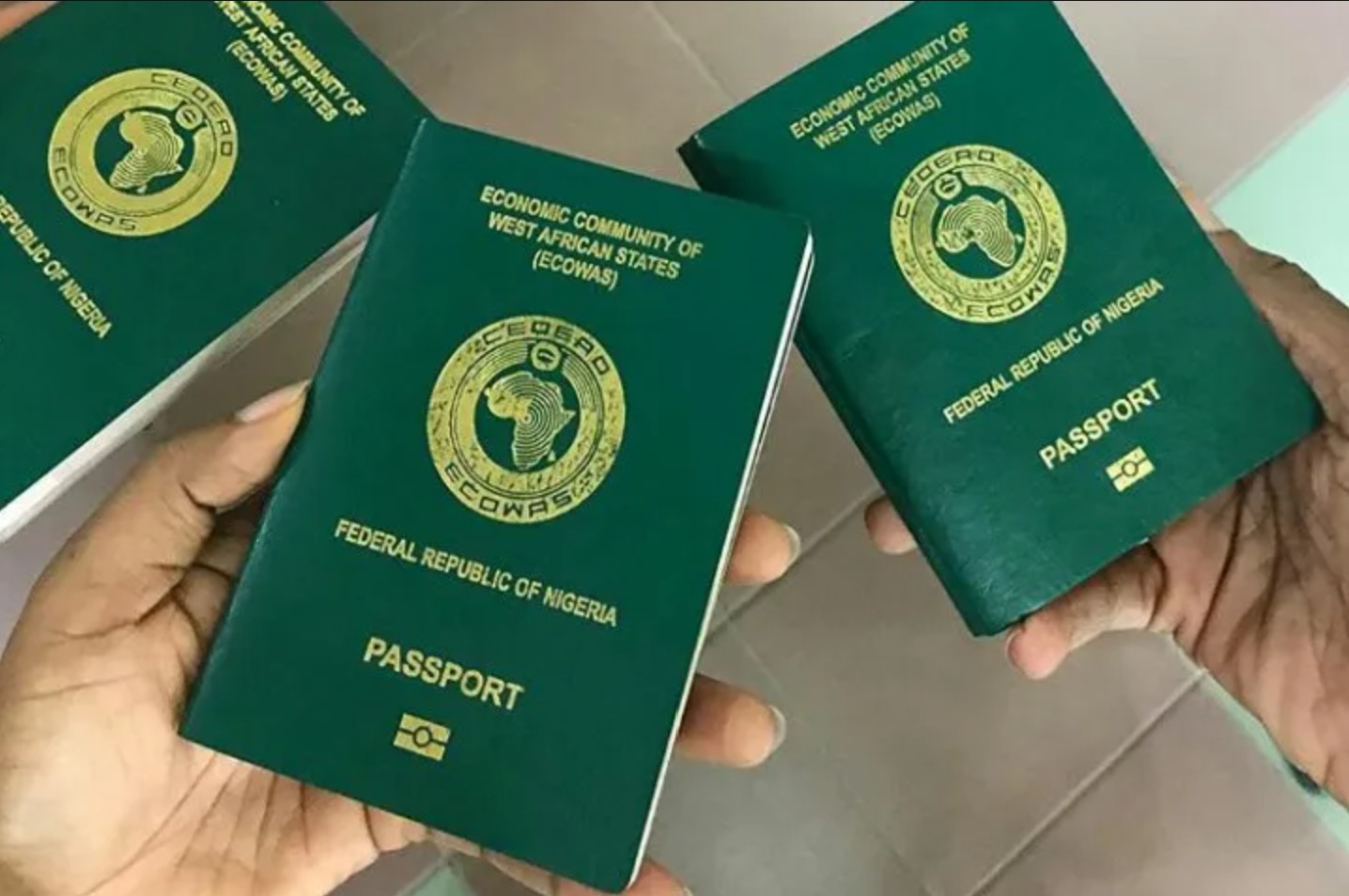
The Federal Government of Nigeria has approved the return of Nigerians into the country with their expired Nigerian passports.

FG requested that all the airlines allow holders of expired Nigerian passports to board without delay.

The approval was in a letter from the Comptroller-General of Immigration Service (CGIS) Isah Jere Idris, addressed to the Minister of Foreign Affairs, Geoffrey Onyeama and dated December 9th 2022.

The reason for the permission is believed to be connected with the forthcoming Yuletide period on December 25th.

The letter said, “Consequently, all Airlines are requested to allow holders of expired Nigerian passports to board without let or hindrance.

“In addition, all Nigerian Diplomatic Missions abroad are kindly requested to circulate this information to airlines operators and border authorities of host countries for their necessary action,” the letter said in part.

Nigerian gov’t reverses directive for reopening universities

By Muhammad Sabiu

The National Universities Commission, on behalf of the Federal Government, today rescinded the circular that earlier instructed vice-chancellors, pro chancellors, and governing councils to reopen federal universities.

Recall that it was early on reported that all vice-chancellors, pro chancellors, and chairmen of governing councils of federal universities received a circular with the subject line NUC/ES/138/Vol.64/135, directing them to reopen their institutions.

However, the commission reverses the directive few hours later, in a subsequent circular with the reference number NUC/ES/138/Vol.64/136, which was also signed by Sam Onazi, the NUC’s director of finance and accounts.

Without categorically stating the reason behind the U-turn, the letter tagged, “withdrawal of circular NUC/ES/138/Vol.64/135 dated September 23, 2022” noted, “I have been directed to withdraw the NUC Circular Ref: NUC/ES/138/Vol.64/135, and dated September 23, 2022, on the above subject.

“Consequently, the said circular stands withdrawn. All pro-chancellors and chairmen of governing councils, as well as vice-chancellors of federal universities, are to please note. Further development and information would be communicated to all relevant stakeholders.

“Please accept the assurances of the Executive Secretary’s warmest regards”

ASUU strike: Socio-economic theories and everything in-between

By Sagiru Mati, PhD 

I’m an academic and, therefore, a member of the adamant trade union known as the Academic Staff Union of Universities (ASUU), which has been on strike since 14th February. However, I’m not writing to judge who is right or wrong, as both the Federal Government (FG) and ASUU have their share of the blame. Caveat: this write-up does not represent the position of ASUU; all opinions are mine.

To understand the genesis and dynamics of the contention, it is crucial to see the issues through the lens of the theories proposed by Emile Durkheim’s consensus theory, Karl Marx’s socialism and Adam Smith’s concepts of rivalry and excludability, which form the basis of modern capitalism. I will briefly explain these concepts in light of the ASUU-FG imbroglio.

Durkheim asserts that humans, as political animals, are innately egoistic, and only the “collective consciousness” – in the form of social facts such as values, norms and beliefs – controls the egoism and ensures the stability of the society. He developed the consensus theory, which studies society holistically rather than individualistically. Durkheim believed that social reality should be found in the collective consciousness, not individual consciousness. The whole is greater than the sum of its parts.

The societal equilibrium is attained through consensus by the parts based on social facts: language, norms, customs, values and so on. The society itself metamorphoses from a simple society that correlates with mechanical solidarity, where individuals are brothers’ keepers, to a complex society that corresponds with organic solidarity, where individualism prevails.

Nigeria is currently in a transition from a simple to a complex society. Hence, unlike a few years ago, it is now easy to distinguish the children of the poor from those of the rich, even if they come from the same family or neighbourhood. Gone are those days when one man in a family provided for his family’s needs and that of his close relatives. The main argument of the consensus theory is that societies don’t always have to resort to raising their contradictions to crisis and then resolving them through conflict.

Socialism advocates the total ownership and control of economic entities by the authority rather than private individuals, with the main motive of maximising citizens’ welfare. Karl Marx, as its proponent, grouped the individuals into Proletariat and Bourgeoisie. The former is the working class, while the latter controls the means of production. The ASUU’s members and students are the epitome of the Proletariat and subscribe to socialism as they fight to improve their service conditions and university funding and reject the idea of transferring the burden of tuition fees on students.

Capitalism is the direct opposite of socialism and promotes private ownership of the means of production, with the sole aim of maximising profits. Adam Smith, as a proponent, explained what goods and services private individuals and authorities should own based on two concepts: rivalry in consumption and excludability.

Rivalry in consumption implies prevention or reduction in the ability of simultaneous consumption of goods and services. Excludability refers to the extent to which non-payers can be restricted from consuming goods or services. If goods or services are rivalrous and excludable, like university education, they should be owned by private individuals. On the other hand, the state should own the national defence, which is, to a great extent, non-rivalrous and non-excludable. The FG, which subscribes to capitalism, has been privatising and commercialising public economic entities since the introduction of the Structural Adjustment Program (SAP) in 1986.

The capitalistic FG utilises three tools to manipulate the Proletariat: starve them, don’t educate them and divide them. The FG has been starving ASUU’s members as it has been withholding their salaries since March in the name of the no-work-no-pay policy. Barriers to education have been created by not funding universities adequately. Hence admission seekers may meet all requirements but may not get admitted due to the admission limit imposed by the FG. The FG is trying to divide ASUU by considering registering a splinter union known as the Congress of University Academics.

The FG has recorded little success regarding the first and second tools. However, ASUU has fallen into the FG’S trap, as evident by the recent ASUU Chairman’s no-pay-no-work utterances, which hint at venting their frustrations on students and calling some universities quacks, thereby emboldening the line between the State and Federal universities. Obviously, the FG has divided the Proletariat into State Universities and Federal Universities, and into ASUU and students, even though most students have supported ASUU.

Given the foregoing, we can discern that the ASUU-FG face-off is nothing but the clash between socialism and capitalism in a society transitioning from Durkheimic mechanical solidarity to an organic one. Therefore, ASUU needs to change its modus operandi so that its efforts to liberate the Proletariat shouldn’t be hurtful to themselves. The ASUU Chairman needs to be cautious of his utterances. He should understand that both states-owned universities and students share the same economic class with ASUU: Proletariat.

A recent proposal by the National Parent-Teacher Association of Nigeria (NAPTAN) to offer ten thousand Naira (10,000.00), and subsequent rejection of the offer by ASUU, indicates that the two bodies are not working together. ASUU alone cannot win this “battle”; it will be a good idea if it involves the NAPTAN. The duo may develop better wisdom and influence to make things happen, as two good heads are better than one.

The FG should fund universities adequately as Nigeria is too unripe for privatisation or commercialisation of university education, which deserves public finance as it is a merit good. The FG should pay the ASUU’s withheld salaries on the condition that the universities run three semesters a year until they compensate students for the striking period.

Sagiru Mati, BSc (BUK, Nigeria), MSc, PhD (NEU, North Cyprus), wrote from the Department of Economics, Yusuf Maitama Sule University Kano, Nigeria. He can be reached via sagirumati@yahoo.com.