Boko Haram

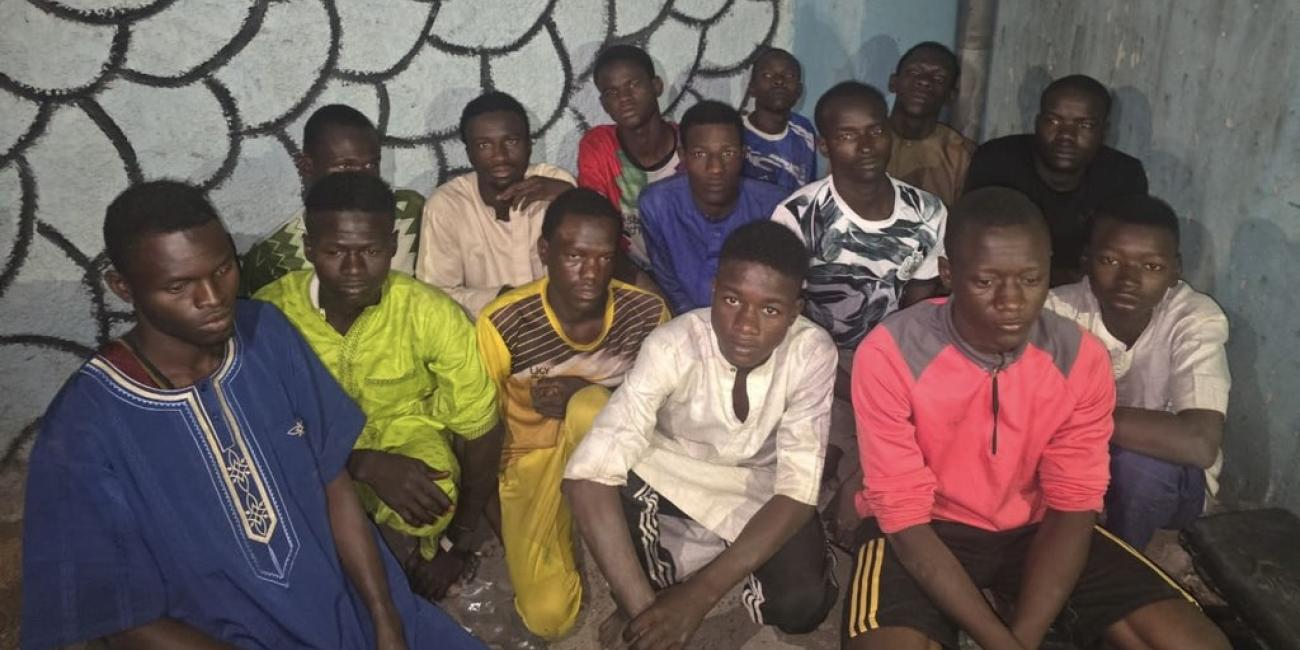
Troops free 86 abducted civilians, arrest 29 Boko Haram suppliers in Borno

By Uzair Adam

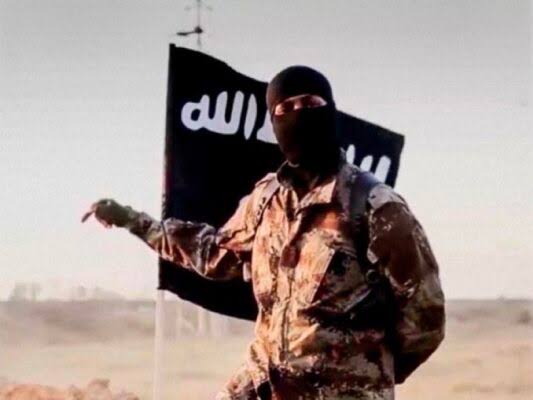
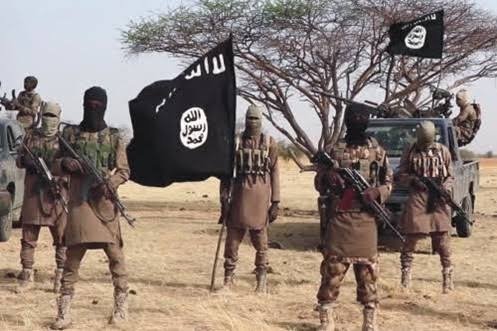
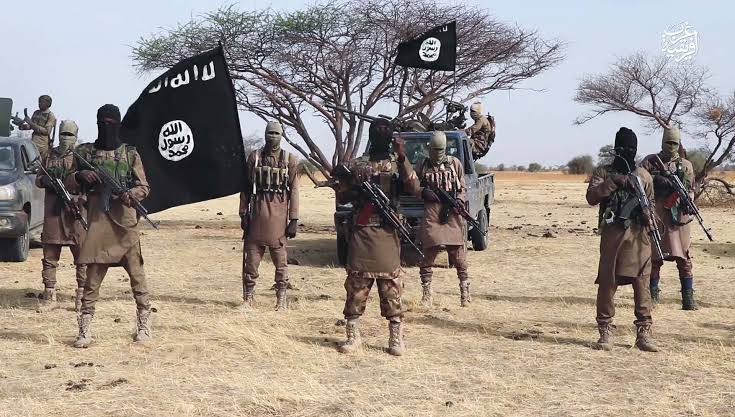
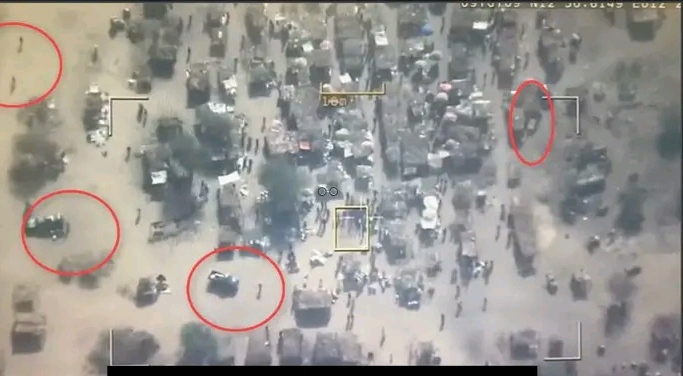
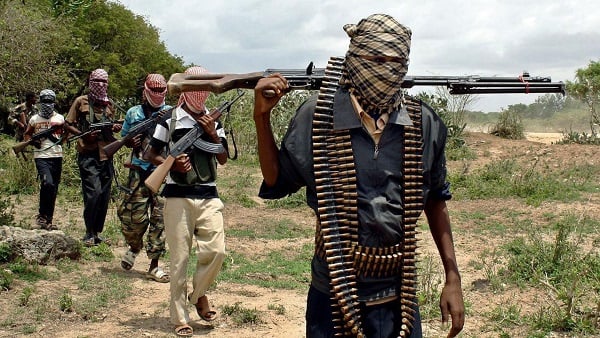
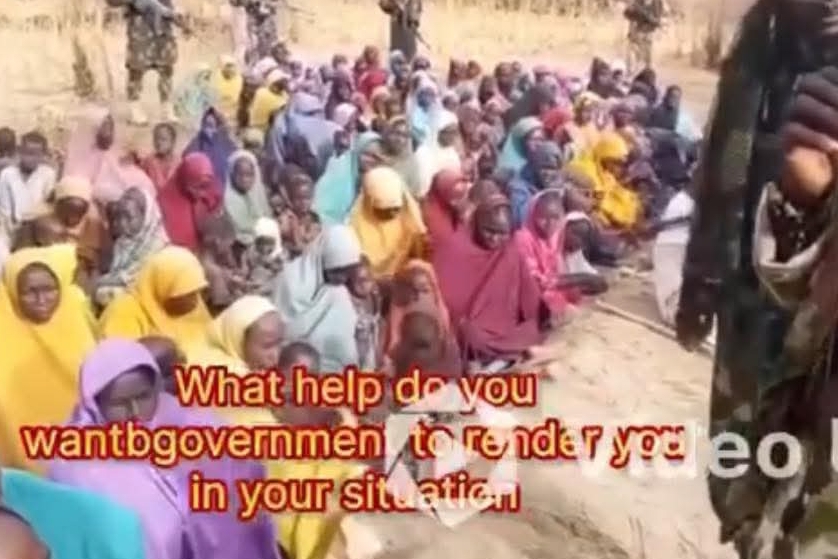
Troops of Operation HADIN KAI (OPHK), Joint Task Force North East, have rescued 86 civilians, mostly motorists and passengers, who were abducted by Boko Haram/ISWAP insurgents around Dutsen Kura along the Damaturu–Buratai–Biu road in Borno State.

According to a senior military officer who was not authorised to speak to the press, the incident occurred on Sunday, November 9, 2025.

The troops also destroyed 11 makeshift structures belonging to the terrorists during the operation.

The officer disclosed that troops of the 135 Special Forces Battalion under Sector 2, OPHK, encountered the insurgents after discovering they had abducted civilians and seized vehicles along the Buratai–Kamuya road.

“The troops immediately engaged the terrorists, pursued them towards Mangari, and overpowered them in a follow-up encounter near their camp, forcing them to flee in disarray,” the source said.

A thorough search of the area led to the rescue of 86 victims, including men, women, and children.

Items recovered from the scene include one AK-47 rifle, five magazines loaded with 73 rounds, four PKT ammunition belts, five civilian vehicles, five motorcycles, eight bicycles, and two logistics tricycles.

The camp was later destroyed after clearance operations.In a separate operation, troops deployed at Mangada arrested 29 individuals suspected to be logistics suppliers for Boko Haram while en route to Chilaria.

The suspects were found with two pickup vans and a tricycle loaded with over 1,000 litres of petrol, four gallons of engine oil, two new gun truck tyres, a cache of medical supplies, and large quantities of foodstuffs and provisions.

The source confirmed that all operations were conducted successfully without any casualties among the troops.

The Military High Command commended the soldiers for their gallantry and professionalism and urged them to sustain the momentum to deny terrorists any freedom of action in the North East.

CAN rejects claims of Christian genocide in Nigeria

By Muhammad Abubakar

The Christian Association of Nigeria (CAN) has denied claims of a Christian genocide in Nigeria, calling such reports misleading and lacking a consistent pattern, as reported by The Guardian (Nigeria).

The claims gained attention after U.S. comedian Bill Maher and Senator Ted Cruz accused Islamist groups and Nigerian officials of persecuting Christians. Cruz even proposed sanctions through the Nigeria Religious Freedom Accountability Act. 

At the same time, U.S. lawmaker Riley Moore urged the U.S. government to halt arms sales and label Nigeria a “Country of Particular Concern.”

In response, Nigeria’s Presidency denied any religious war, stressing that the violence affects all citizens regardless of faith.

CAN’s Director of National Issues and Social Welfare, Abimbola Ayuba, acknowledged widespread killings but said they were not targeted solely at Christians. He noted that both Christians and Muslims have fallen victim to terrorist attacks, adding that bullets “don’t look for a Christian or spare a Muslim.”

Ayuba cautioned against foreign interference and urged Nigerians to work collectively to end the insurgency through local institutions rather than seeking sympathy abroad.

Christians are not persecuted in Nigeria

By Bashir Jelani, PhD

It has been trending over the past two days that Boko Haram killed more than 500,000 Christians and burned 18,0000 churches in Nigeria since 2009. Local and international news media are spreading false information that Muslims are carrying out ethnic cleansing against Christians. 

Till now, no news media from Arewa has debunked this news. No Arewa intellectual, writer, or public figure responded to this. It is a big shame on us. Thanks to Femi Fani-Kayode for sincerely putting the record straight.

This phoney propaganda did not start today. Some insincere Nigerian Christians have been working hard to blackmail Muslims on the international stage. I don’t know what they want to get by fabricating that fake news. The dead silence from Arewa is what makes this misleading information gain momentum. 

I have debated this issue with Christian friends for many years. I have maintained that the majority of the victims of Boko Haram and bandits are the Muslims themselves. The Boko Haram terrorists do not spare Muslims. They don’t care about your religion. 

Boko Haram wouldn’t be operating in Northern Nigeria if its target were to cleanse Christians. I sympathise with some Christians who were affected, but the truth is that the Muslims are Boko Haram’s target. That is why they do their evil atrocities in the Muslim dominated regions, mainly killing Muslims.

Arewa needs to wake up. Debunking this dangerous propaganda is very important.

Kidnapping ransoms drain N2.2trn from Nigeria in one year—Report

By Uzair Adam

Nigeria lost an estimated N2.2 trillion to ransom payments between May 2023 and April 2024 — an amount higher than the country’s 2024 defence budget — according to the 8th Nigeria SDG 16 Shadow Report released by the Civil Society Legislative Advocacy Centre (CISLAC) and Transparency International (TI) Nigeria.

The report, titled “Leaving No One Behind: Anti-Corruption, Right to Information, and Justice for All,” was unveiled during a side event at the United Nations General Assembly in New York on Tuesday.

At the launch, CISLAC’s Executive Director and Head of TI Nigeria, Comrade Auwal Ibrahim Musa (Rafsanjani), warned that the country is “trapped in a dangerous cycle of corruption, weak institutions, and worsening insecurity,” which could derail its chances of meeting the 2030 Sustainable Development Goals.

He described kidnapping for ransom as fully “commercialised,” revealing that more than 2.23 million incidents were recorded within the one-year period, with payments amounting to N2.2 trillion — about US $1.4 billion.

Rafsanjani noted that this figure surpasses Nigeria’s entire 2024 defence allocation, stressing that insecurity has been effectively “privatised” at the cost of national stability.

He also linked governance failures to political impunity, pointing out that many leaders routinely ignore constitutional requirements to declare their assets before the Code of Conduct Bureau.

According to him, such disregard erodes public trust and undermines anti-corruption efforts, while some politicians divert taxpayers’ money to luxury properties in Nigeria and abroad, fueling illicit financial flows.

The report further raised alarm over opaque asset recovery processes, allegations against judicial figures, irregularities in the electoral commission, and weak vetting of political appointees — warning that democratic institutions are increasingly viewed as compromised.

Examples cited include the arrest of Katsina whistleblower Mubarak Bello after he exposed police payroll fraud, and a UK Tribunal ruling against Chief Mike Ozekhome and his son in a case involving a property transfer linked to General Jeremiah Useni.

It also referenced allegations of luxury property purchases in the United States linked to Nigeria’s FCT Minister, Nyesom Wike.

On fiscal transparency, the report highlighted Nigeria’s poor scores in the 2024 Open Budget Survey (31/100) and Freedom of Information Act compliance (11.4%), while noting that the Open Treasury Portal has become inactive.

It also identified procurement fraud, vote-buying, campaign finance violations, and repression of civic space as persisting threats.

Rafsanjani described the report as both “a mirror and a roadmap,” stressing that Nigeria risks missing the 2030 goals not because of weak laws but due to a lack of political will.

He called for stronger institutions, an open civic space, and true respect for the rule of law to ensure that “no one is left behind.”

NAF launches night raids, kills 25 terrorists in Borno, Yobe

By Anas Abbas 

The Nigerian Air Force (NAF) has killed more than 25 terrorists in a coordinated night air raid around Bula in Yobe State and the Banki axis of Borno State.

Director of Public Relations and Information, Air Commodore Ehimen Ejodame, disclosed this in a statement issued on Saturday in Abuja. 

He explained that the operation was carried out on September 18, following actionable intelligence provided by ground troops.

According to Ejodame, a combination of Intelligence, Surveillance and Reconnaissance (ISR) assets and strike aircraft tracked terrorist movements and spotted multiple groups north of Banki. The terrorists were then hit in three successive precision strikes along their movement routes and assembly points.

“Real-time updates were relayed to ground forces and base operations, enabling synchronised action. The strike aircraft engaged the terrorists in three successive precision strikes, effectively neutralising more than 25 fighters,” Ejodame stated.

He added that post-strike surveillance confirmed that ground forces had maintained their defensive positions, with no further threats detected.

Ejodame said the operation highlighted the Air Force’s unwavering support for ground troops and its commitment to denying terrorists freedom of action in the North-East.

The operation comes just days after Boko Haram insurgents attacked the Darajamal community in the Bama Local Government Area of Borno on September 8, killing at least 63 people, including five soldiers. The attackers, who rode in on motorcycles, shot indiscriminately, razed houses and vehicles before military reinforcements arrived.

Governor Babagana Zulum had described that incident as “very sad,” confirming the death toll and pledging government support to the affected families.

Mattress of terror: Can Nigeria ever be truly secure?

By Haroon Aremu Abiodun

“Any country where lawmaking is more lucrative than law enforcement, there must be insecurity.”

That was the piercing submission of veteran Nollywood actor Kanayo O. Kanayo in a podcast interview. This quote still lingers in my mind like a haunting prophecy. Sadly, Nigeria appears to be a textbook example of that paradox.

This raises a chilling question: can we ever be safe in a nation where those crafting the laws live like kings, while those enforcing them die like pawns?

The roads tremble with fear, and villages sleep with one eye open. From Abuja to Zamfara, from the creeks of the Delta to Anambra, to the rocky hills of Birnin Gwari, the word “insecurity” has become a national refrain. 

In whispered conversations and on trending hashtags, Nigerians continue to ask: Can banditry, kidnapping, and terrorism ever truly end in Nigeria?

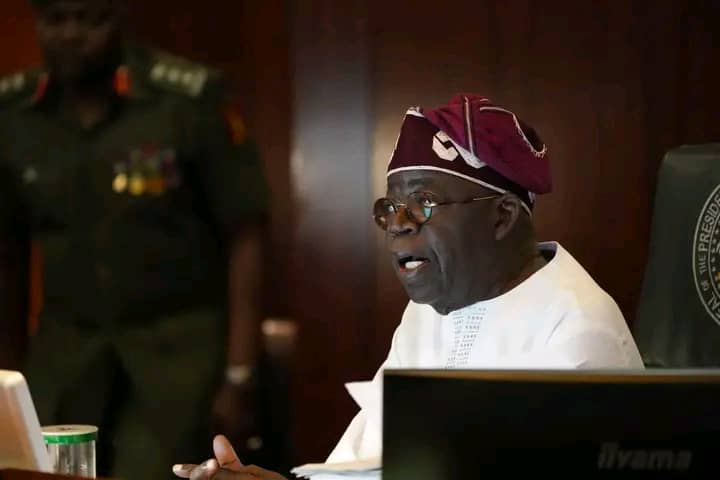
While President Bola Ahmed Tinubu continues to pledge security reforms, and National Security Adviser Nuhu Ribadu issues strategic statements, the reality on the ground often contradicts this. The Chief of Defence Staff, General Christopher Musa, may be leading an army of patriots. Still, their valour is constantly undermined by systemic inequality, in which the pen is paid more than the gun.

I Witnessed the Truth

In early June, I attended a deeply insightful citizenship engagement forum hosted by Voice of Nigeria (VON). Dignitaries, including the Minister of Information, NSA Ribadu, the Chief of Defence Staff, and other notable figures,were present. But one story shared by the Chief of Defence Staff froze the air.

He recalled a young bandit who surrendered. The military, adopting a “soft approach,” chose not to brutalise him but instead treated him humanely. He was given food, a warm bath, and, for the first time in his life, a mattress.

This wasn’t just about physical comfort. It was symbolic. The boy, barely old enough to vote, said he had never lain on a mattress before. That was his first taste of civilisation, and it came not from a school or community, but from an army barracks. The boy had joined a group of killers not out of hatred, but out of hopelessness.

The Root of the Rot: 3Es

With what the Chief of Defence Staff said, I was able to conclude that part of the root of Nigeria’s security crisis lies in the absence of the “3Es”: Education, Exposure, and Enlightenment. These are not luxuries; they are necessities. And in the North, where banditry has gained a more frightening foothold, their absence is glaring.

It is time for Northern governors to rise beyond rhetoric. The federal government cannot win this war alone. State leaders must begin by reforming their education systems, investing in enlightenment campaigns, and introducing programs that truly expose their youth to life beyond the confines of their communities. Kano State has led the way in propagating and championing this initiative among the northern states, but efforts should be intensified.

Can we save Nigeria? Yes, but not with a centralised, top-down approach. What we need is collaborative security. Community policing must be revived with village chiefs and family heads forming the first line of surveillance.

Security consciousness must be made more crucial and integrated into school curricula and public messaging. Employment generation must become more than a campaign slogan. A graduate left idle is one WhatsApp message away from recruitment into darkness.

“If community policing is fully implemented, it will become far easier to identify and expose those secretly sponsoring or benefiting from terrorism right from the grassroots. Local vigilance, trust networks, and community-driven intelligence can expose hidden collaborators who often conceal their activities behind political or economic influence. Such a system not only strengthens national security but also empowers citizens to take active ownership of their safety and future.”

This is to say, the fight against terror will not be won by guns alone, but by communities standing as the first line of defence

The Role of Institutions

The Ministry of Education and the National Orientation Agency (NOA) must now take centre stage. It is no longer enough to teach arithmetic and grammar; we must now teach security literacy. The young must understand the real consequences of crime. They must be exposed to alternatives.

This encompasses school tours, street theatre, online campaigns, community mentorship, and genuine partnerships between public and private stakeholders.

There is hope. There are patriots in uniform. There are children yet untouched by corruption. There are teachers still driven by conscience. However, all their efforts will be for nothing if lawmakers continue to earn more than those who risk their lives.

The EFCC may chase funds across Iceland and Dubai. The DSS may foil plots in Lagos and Maiduguri. However, until we address the imbalance and make justice more rewarding than crime, we will remain trapped in this cycle.

Let us not wait until another child lies on a mattress in a military cell to realise what he has never had.

Let that mattress be our wake-up call.

So, to President Tinubu, to the NSA Ribadu, to the Defence Chief, and to every governor who still believes in this country: The war will not be won on the battlefield alone; it will be won in the classroom, in the family compound, in the village square, and in the heart of every Nigerian.

Before we talk about weapons, let’s talk about mattresses.

Haroon Aremu Abiodun, An Author, public Affairs Analyst, PRNigeria fellow and wrote in via exponentumera@gmail.com.

Military airstrikes hit ISWAP, Boko Haram hideouts in Sambisa, Mandara mountains

By Sabiu Abdullahi

The Nigerian military has recorded significant victories against Islamic State of West Africa Province (ISWAP) and Boko Haram fighters in recent coordinated operations in Borno State.

The raids, carried out through combined air and ground assaults in Sambisa Forest and the Mandara Mountains, forced the insurgents into confusion and led to the emergency burial of dozens of their fighters.

The offensive followed last Friday’s attack by ISWAP gunmen on Darajamal village in Bama Local Government Area, where about 60 civilians were killed.Residents reported to Zagazola Makama that the terrorists stormed the community, shooting indiscriminately before retreating toward the forest.

Their movements, however, were detected by military Intelligence, Surveillance and Reconnaissance (ISR) aircraft, which guided airstrikes against them.

“The ISR platforms picked up multiple terrorist movements. The Air Component swiftly engaged them with devastating precision, instantly neutralising more than 30 fighters,” a senior security source told Zagazola.

Following the air bombardments, ground troops from nearby Forward Operating Bases entered Darajamal to restore calm and provide support to survivors.In another phase of the operation, armed drones targeted terrorist hideouts and movement routes within the Mandara Mountains.

At least four locations were struck, leading to the deaths of several commanders and fighters. Survivors fled in disorder, leaving behind both weapons and corpses of their colleagues.

Intelligence further revealed that the Ali Ngulde faction of Boko Haram, which has been weakened by sustained military pressure in the Sambisa axis, buried not less than 47 bodies of slain members in hurried ceremonies at scattered sites.

Zulum condemns killing of 63 in Bama attack, calls for deployment of forest guards

By Anas Abbas

Governor Babagana Umara Zulum of Borno State has condemned the killing of 58 civilians and five soldiers by Boko Haram insurgents in Darajamal, a community in Bama Local Government Area.

Zulum, who visited the community on Saturday, expressed deep grief over the attack, which occurred on Friday night.

He sympathized with the families of the victims and assured residents of government’s commitment to strengthening security.

“We are here to commiserate with the people of Darajamal over what happened last night that claimed the lives of many people. It is very sad,” the governor told journalists.

“This community was resettled only a few months ago, and people had returned to their normal activities. Unfortunately, they have now suffered another Boko Haram attack.”

Confirming the casualty figures, the governor disclosed that 63 persons were killed, including nearly 60 civilians and five soldiers. He stressed the urgent need to complement the efforts of the military with the newly trained Forest Guards.

“The numerical strength of the military is not enough to cover everywhere,” Zulum noted. “So far, two sets of Forest Guards have been trained. Deploying them to vulnerable communities and forests will go a long way in preventing further attacks.”

Also reacting, Senator Kaka Lawan of Borno Central, whose constituency covers Darajamal, condemned the killings, describing the attack as a crime against humanity.

He pledged legislative support to Governor Zulum’s efforts to restore lasting peace in the state.

Against Shaykh Masussuka: A Qur’anic case for the reliability of Hadith

By Ibraheem A. Waziri

About three decades ago, at the beginning of my youthful years, around Bakinruwa, Sabongari, Kaduna, I first encountered the idea of “Qur’an-only” Islam. Shaykh Uthman Dangungu, who had passed through the Izala movement, began to promote it in our neighbourhood mosque near Kasuwan Gwari. He was not the first—Muhammadu Marwa Maitatsine had pushed something similar in Kano State in the 1980s, though in a harsher, less workable form. Since then, my philosophical self has wrestled with such currents—Wahhabism, Shi‘ism, Sufism, Boko Haramism, and more. Each encounter has been a struggle for clarity and stability, for faith, and for cultural continuity in our fragile postcolonial Nigerian modernity.

Now, with Shaykh Yahya Ibrahim Masussuka—my generational peer—reviving the Qur’an-only argument, it seems fitting to reflect again. This time, however, I do not begin from theology alone. I lean on the wear and tear of intellectual toil, and on the reflective gifts of experience—what philosophy, logic, and science have taught me about human beings and the trustworthiness of transmission.

Philosophy has long asked: Can knowledge survive without tradition? Plato, in The Republic, warned that truth severed from the teacher–student chain becomes mere opinion. Aristotle, more grounded, argued that reason itself grows from custom, habit, and inherited practice. If Plato guarded against instability, Aristotle reminded us that even rationality needs a body —a living community —to give it shape.

Modern science adds its own perspective. Research in psychology shows that while humans are prone to bias or fatigue, under structures of accountability and community, they are remarkably capable of fairness and truth-telling. Integrity, in fact, often comes naturally. In other words, people can be trusted, though they must be guided.

The Qur’an itself affirms this. It does not portray humanity as unfit to bear the truth. Instead, it honours our moral agency while calling for systems of verification. “And thus We have made you a just community that you may be witnesses over mankind, and the Messenger a witness over you” (2:143). To be a witness requires the ability to observe, remember, and transmit faithfully. Surah Al-Tawbah (9:122) goes further, encouraging some believers to remain behind, study religion deeply, and teach others. That is nothing less than a Qur’anic endorsement of scholarship—the very task Hadith scholars later undertook.

The Qur’an also acknowledges our dual moral compass— “By the soul and He who proportioned it, and inspired it with its wickedness and righteousness” (91:7–10). Hence, the command in Surah Al-Hujurat (49:6) to verify reports before acting. That balance between trust and scrutiny is the same principle that shaped the science of Hadith.

Even in worldly matters, the Qur’an demonstrates confidence in structured testimony. The long verse of debts in Surah Al-Baqarah (2:282) lays out detailed rules for recording contracts with witnesses. If humans can be entrusted with preserving financial records, surely they can also be tasked with documenting the Prophet’s words—so long as there is a system of accuracy and verification.

This brings us to the heart of the matter. The Qur’an-only stance insists that Hadith is unnecessary. Yet the Qur’an itself says otherwise: “We revealed to you the Reminder so that you may explain to people what was sent down to them” (16:44). The Prophet’s explanatory role is not contained in the Qur’an’s text—it lives in his sayings, actions, and approvals. Surah Al-Ahzab (33:21) refers to him as “an excellent example” for believers. But how would later generations know his example without the Hadith?

Other verses go further: “Whoever obeys the Messenger has obeyed Allah” (4:80); “Whatever the Messenger gives you, take it; and whatever he forbids you, abstain from it” (59:7). These are not time-bound commands. They apply to all Muslims across generations. And they assume access to the Prophet’s guidance—something only Hadith provides.

Seen this way, Hadith is not an intrusion upon the Qur’an but its necessary partner. The Prophet was sent not only to recite but to teach and model. His companions and the generations after them, through discipline and painstaking verification, preserved that model. The Hadith tradition is not perfect—no human endeavour is—but it was forged as a check from within Islamic culture, not imposed from outside. It is part of the Qur’an’s own vision of a community of witnesses.

At its core, then, the debate is not only about scripture but also about how we see human beings. If we assume people are too weak or biased to preserve truth, the Hadith collapses. But if we recognise—as both the Qur’an and science do—that humans, when guided and structured, can be reliable witnesses, Hadith stands on solid ground. The Qur’an-only position misses this deeper point. It mistrusts human agency in a way the Qur’an itself never does.

In Nigeria, where cultural streams converge and clash—Sahelian traditions meeting global influences—the Qur’an-only approach risks severing us from the rich heritage that has sustained Muslim communities through colonialism, civil strife, and modern pressures. My own journey—from that mosque in Kaduna to today—has taught me that certainty lies not in subtraction but in integration: the Qur’an as foundation, illuminated by the Prophet’s Hadith, upheld by our God-given moral agency.

As this debate resurfaces in our time, we would do well to remember: the Qur’an trusts us, commands us, and makes our testimony central to its unfolding. To follow the Qur’an, then, is to follow the Prophet. And to follow the Prophet is impossible without Hadith.

Ultimately, as Surah Al-Baqarah reminds us, we are called to be witnesses. Let us honour that calling by trusting the mechanisms Allah has provided—including Hadith, which brings the Prophet’s example to life for every generation 

Son of Boko Haram founder arrested in Chad

By Hadiza Abdulkadir

Chadian authorities have arrested Muslim Muhammad Yusuf, identified as the son of Boko Haram’s late founder, Muhammad Yusuf. Muslim, believed to be 18 or 19 years old, was captured along with five others while leading an Islamic State West Africa Province (ISWAP) cell.

Analyst Bulama Bukarti confirmed Muslim’s identity after speaking with family friends and relatives, who said he is the son of Bintu, Muhammad Yusuf’s first wife. His arrest reportedly followed a tip-off from Nigerian intelligence.

The development comes in the same week Nigeria announced the capture of two top leaders of Ansaru, a Boko Haram offshoot, and the head of the Mahmuda Group, active in parts of North Central Nigeria.

Security experts describe the arrest as a turning point, marking the first time a major faction leader has been taken alive. They warn, however, that Nigerian authorities must now focus on dismantling bandit groups wreaking havoc in the North West and North Central regions.