Boko Haram

Boko Haram Origin: The fact, the fiction and the singularity of story in David Hundeyin’s “Cornflakes for Jihad” and more

By Aminu Nuru

 “The most dangerous untruths are truths moderately distorted”. – George Lichtenberg

It is not uncommon that some public commentators and analysts could be mischievously deceptive in their narratives and analyses of history to accomplish an end. They could quote historical facts, mix them with fiction, and frame narratives to promote a single story. In some cases, they deliberately relegate and ignore some significant events or points to suit the writer’s bias. Recent writings on the origin and rise of Boko Haram demonstrate how some writers distort facts to frame narrative and promote bigotry.

For instance, if one can closely study the framing of Boko Haram and how it is brazenly becoming one-sided, then one can say that the whole history is rewritten to massage and satisfy the ego of some group’s bigotry. It is not farfetched to say that some of these bigots will soon claim that the generality of the Muslim North endorsed and supported Boko Haram and Nigerian Christians were the only targets and victims of the group’s deadly attacks. Why would I make such a sweeping projection with every sense of finality? To respond to this question, let’s go back to 2013.

While speaking at the 14th meeting of the Honorary International Investor Council (HIIC) held at the Banquet Hall of the Presidential Villa on June 22, 2013, former Nigeria’s President, Goodluck Jonathan, a Christian, disclosed that the Boko Haram sect had killed more Muslims than Christians in Nigeria. This is not just hearsay but a verifiable fact that is naked in vision to people that are not be-clothed with hatred, ethnic and religious jingoism.

However, the Christian Association of Nigeria (CAN) couldn’t swallow this fact and, therefore, issued a statement to disagree with him vehemently. In a press statement credited to the Northern chapter spokesperson, Elder Sunday Oibe, CAN said that Jonathan’s assertion was “misleading and unacceptable”. They further stated that,

“We want to believe that the president was misquoted; we don’t want to believe that with the security apparatus and report from security intelligence network at his disposal, he made this assertion. If it is true that Mr President actually made this assertion, then, we are highly disappointed and sad at this veiled attempt to distort the fact as it concerns the activities of the Boko Haram sect. The purported statement by the President is highly disappointing considering the facts that Christians, churches and their businesses have been the major targets of Boko Haram” (Sahara Reporters, June 23, 2013. http://saharareporters.com/2013/06/23/northern-can-disagrees-jonathan-says-boko-haram-has-killed-more-christians-muslims)

For CAN, the Boko Haram crisis was/is “religious by nature” – the familiar we-versus-them religious clashes and conflicts in Nigeria, although in different outlooks and techniques; it is a plot by some Muslims to reduce the populations of Christians in Nigeria and crackdown their businesses. Since then, CAN sympathisers subsequently frame their narrative of Boko Haram from this angle. An article titled “Cornflakes for Jihad: The Boko Haram Origin Story” by David Hundeyin, widely shared on social media in the last few days, aimed to promote this kind of narrative. Unfortunately, the author skillfully filled the article with half-truths and a mixture of facts and fiction to push the CAN’s sentiment. Hundeyin is practically siding with his former religion.

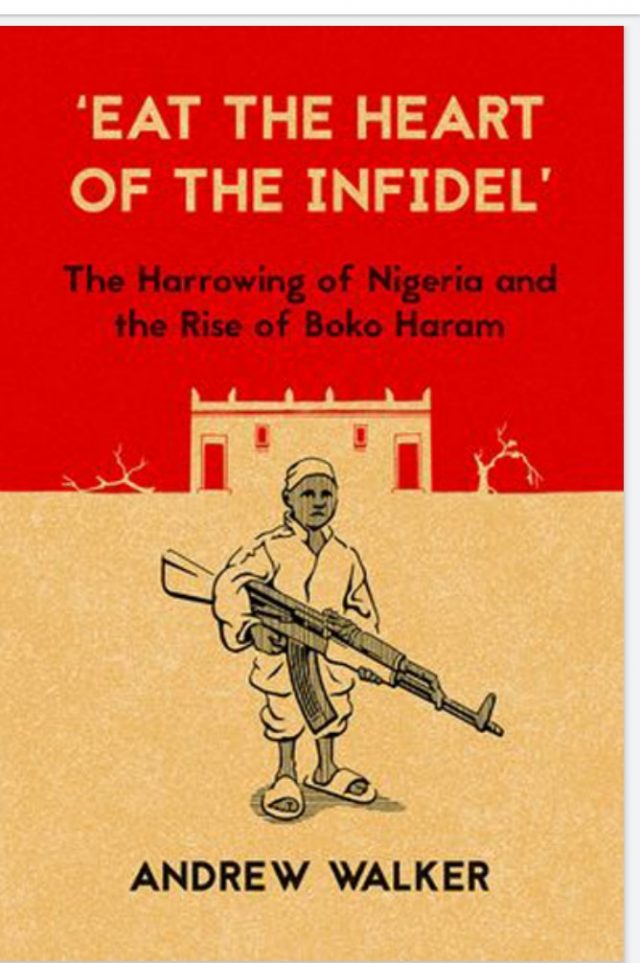
Firstly, Hundeyin makes an effort to link Sheikh Abubakar Mahmoud Gumi with the origin of Boko Haram. Many people think that Hundeyin’s “Cornflakes for Jihad” is the first futile effort by an “investigative” journalist, analyst, historian or whatever to make this manipulative effort. However, Andrew Walker’s thesis, “Eat the Heart of the Infidels: The Harrowing of Nigeria and the Rise of Boko Haram” (Oxford University Press, 2016), preceded it in that exercise. Therefore, it is not likely to be a false accusation if it is argued that Hundeyin copied the idea of featuring Gumi in discussing Boko Haram, almost verbatim, from Walker. From the arguments of Sheikh Gumi’s “influence” in the “political” realm of Nigeria to his “friendship with Ahmadu Bello”, to pioneering the “propagation of Wahabism” in post-independent Nigeria, to his contribution in the creation of Izala and his “Saudi connection” are equally and loudly echoed in Walker’s thesis.

For both Walker and Hundeyin, Sheikh Abubakar Mahmoud Gumi championed the Sunni/Salafi/Izala movement in Nigeria. Therefore, any account of the origin and rise of Boko Haram – a so-called Sunni/Salafi-fundamentalist terrorist group – must be traced back to him. Albeit impliedly, their submissions suggest that there would be no Boko Haram if Gumi did not “disrupt” the Sufi order and influence of Qadiriyya and Tijjaniya in Northern Nigeria. They claim that Gumi’s campaign of a corrupt-free practice of Islam inevitably gave birth to the radical movements in Northern Nigeria. This is to say, although without explicitly stating it in their works, every Sunni/Salafi-based movement in Nigeria, whether moderate or violent, must have had their inspirational source from Gumi. On the link between Boko Haram founder, Muhammed Yusuf, and Sheikh Gumi, Walker writes: “The title of Yusuf’s book deliberately echoes the titles of similar treatises by Sunni preachers, like Sheikh Gumi’s “The Right Faith According to the Sharia”, perhaps in order to lend his ideas credence…the two clerics share a revulsion for secularism..” (Walker, 2016:144).

This line of argument is even less faulty in logic and spirit of “balanced story” than what Hundeyin further orchestrated in his article. According to Hundeyin, Sheikh Gumi admonished Muslims, particularly his Sunni/Salafi followers, to reject a non-Muslim as a leader and advocated “for insurrection against a Christian Nigerian President” and, of course, his Christian followers. In the successive paragraphs that supported this claim, Hundeyin apprises his readers on the “consequence” of Gumi’s propagation; he states that after Gumi’s death, a Sunni/Salafi-indoctrinated group, which bears the name “Boko Haram”, toed to the path of his admonishment to carry weapons against Nigerian Christians, killing and bombing them in their churches. He wittingly makes reference to the bomb blast at “St. Theresa Catholic Church”, Madalla that “killed 37 people”, and other subsequent “killings of Christians” in Jos and Damaturu.

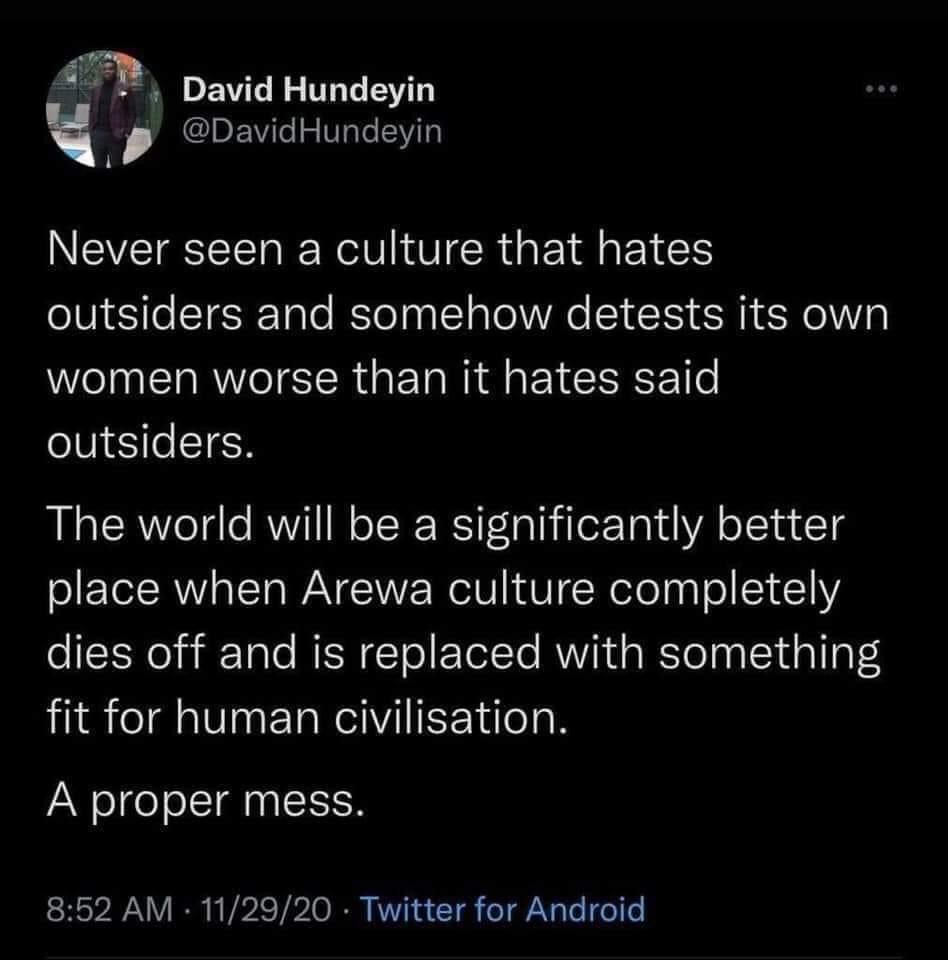
The implication of this narrative on an outsider, who does not know the context of Boko Haram terrorism in Nigeria, is that s/he would begin to see Sheikh Gumi as “problematic” and a source of Boko Haram’s inspiration and violent extremism. Secondly, a non-pragmatic reader may also assume that the group only targets Nigerian Christians in their series of attacks in the country. Hundeyin’s article aims to peddle that twisted narrative for no reason other than the writer’s hatred for the Muslim North (Arewa) and their Islamic culture. In one of his previous tweets, he heedlessly says that: “The world will be a significantly better place when Arewa culture completely dies off and is replaced with something fit for human civilisation” (David Hundeyin/Twitter, November 29, 2020).

In the spirit of fair analysis, it is expected that an impartial analyst would compare the socio-religious ideas Gumi propagated in his lifetime and the ideologies of Boko Haram. But this would not sell out Hundeyin’s bigotry, and so he ignored that vital aspect. The core centre of Boko Haram dogmatic tenets is a war against “western-styled” education, democracy and civil service. On the other hand, Sheikh Gumi was both a product and proponent of western-styled education; he worked with the government as a civil servant and received salaries from the state resources. As he proudly opined in his autobiography, “among [his] children were army officers, civil servants, medical doctors, an engineer…lawyers, teachers and workers in finance houses and private businesses. There was hardly any profession in which [he] did not have representation from [his] family” (Gumi with Tsiga, 1991:202).

Gumi was also pro-democrat, as evidence from his recorded preaching suggested so. He is famously quoted to have said, “siyasa tafi sallah”, which could loosely mean “politics is more significant than prayers”. This was the extent Gumi had gone to support democracy in Nigeria, and believe me, Shekau would not hesitate to call him “taghut” – an idolatrous tyrant. He had also worked closely with the Christian Head of States. They had a cordial relationship and respect for each other: Ironsi invited him to lead a delegation to North Africa and the Middle East to carry goodwill messages of his new regime; Gowon appointed him Chairman of the Nigerian Pilgrims Board and gave him “all the necessary support, although he himself was a Christian”; with Obasanjo, he could “freely talk” and express his mind on relevant socio-political issues (Gumi with Tsiga, 1991:203).  However, Hundeyin willfully refuses to draw this analogy to give a sense of what Achebe called “a balanced story”. Instead, he purposely portrays Sheikh Gumi on the wrong page in the book of terrorist origin in Nigeria.

Contrary to the insinuation of Hundeyin moreover, the truth of the story is that Boko Haram did/do not target Christians only. In fact. Nigerian Muslims suffer(ed) more causalities than Christians in the Boko Haram conflict. Hundeyin refuses to mention the main enclaves of Boko Haram activities and the population ratio of Muslims and Christians there. Stating this factual data will indeed not favour his intended, warped story. The reality is that Muslims have the predominant population in Borno, Yobe and Adamawa States. Arguably, the cumulative of all Boko Haram killings of innocent people would show nothing less than 70% of Muslim casualties.

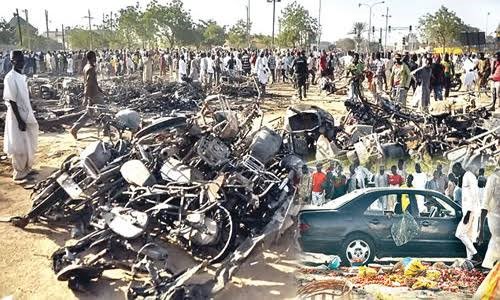
On a specific, direct attack on religions, Hundeyin only mentions the bomb blast at St. Theresa Catholic Church, ignoring similar incidents on August 11, 2013, at a mosque in Konduga where 44 people were killed and on November 28, 2014, at the central mosque in Kano where 120 people were killed (BBC Hausa, 2013, 2014). It is understandable if Hundeyin re-echoes the bomb blast at St. Theresa Catholic Church in his article; it is a show of solidarity to his ex-religion. However, what is faulty and even worrisome is the selective exemplification of the direct attacks on religions by the Boko Haram insurgents. A reader who is unacquainted with the details of Boko Haram attacks on places of public worship would feel that churches and Christians were the only victims.


Scenes from Kano Central Mosque Bomb Blast. Source: The Eagle Online


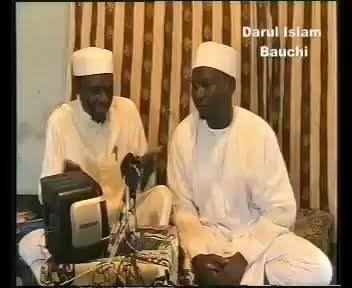
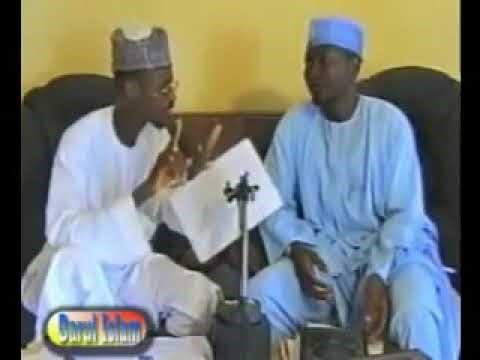
To further promote this half-truth, Hundeyin moves on to tell us how a Salafi/Sunni preacher was directly linked with the funding of Boko Haram. I will neither attempt to exonerate Sheikh Yakubu Musa nor believe those serious allegations in toto without reading or hearing the Sheikh’s version of the story. However, my problem here is with Hundeyin’s failure, which is intentional, to mention the Salafi/Sunni preachers that fought Boko Haram vehemently and even paid the ultimate price with their lives. It is on record that at the early stage of the Boko Haram crusade, Salafi scholars debated Mohammed Yusuf. In Bauchi, for instance, Ustaz Idris Abdulaziz Dutsen-Tanshi, a Salafist to the core, invited and challenged Muhammed Yusuf at his mosque and in the presence of his followers; so also a young Isa Ali Pantami – the then Imam of ATBU Juma’at mosque.


Imam Idris Abdulaziz debating Muhammed Yusuf
Imam Isa Ali Pantami Debating Muhammed Yusuf

These Salafists continued to be critical of Muhammed Yusuf and his sect. They consistently delivered lectures to denounce his fatwa. Sheikh Ja’afar Mahmoud Adam, an unapologetic Salafist, was particularly vocal in his public censure and condemnation of Boko Haram. Unlike Hundeyin, Walker states this fact in his book:

“In 2007, Yusuf ’s former teacher, Sheikh Ja’afar Mahmud Adam, himself an ardent Salafist, had gone on record to denounce the group and warn that these ideologues were heading for a violent confrontation with the state” (Walker, 2016:148).

For many, Sheikh Ja’afar was the spiritual successor of Sheikh Abubakar Mahmoud Gumi. Some influential people requested and later attempted to transfer his annual Ramadan Tafseer to Gumi’s preaching base, Sultan Bello Mosque, Kaduna. He conducted his annual Ramadan Tafseer in Maiduguri, the early and central territory of Boko Haram terrorism. During his Tafseer sessions, Sheikh Ja’afar was not reluctant to criticise Yusuf and his new sect. On April 13, 2007, a day to general elections in Nigeria, and barely 48 hours after delivering a talk in Bauchi on Islamic views on thuggery, violence and widespread killing of innocent souls, Sheikh Ja’afar was murdered in Kano while observing Subh prayer and “it is thought to be members of Yusuf’s sect” (Walker, 2016:148).

Another prominent voice among Salafists in the fight against Boko Haram was Sheikh Muhammad Auwal Albani, Zaria. But, unfortunately, he was also killed in cold blood. In a video released to the public, Muhammed Yusuf successor, Abubakar Shekau, took responsibility for the assassination (Sahara Reporters, February 20, 2014, http://saharareporters.com/2014/02/20/bo-haram-leader-claims-responsibity-killing-kaduna-cleric-sheikh-albani-threatens).

Hundeyin has ignored all these facts about Salafi preachers in Northern Nigeria but brought a single dubious claim to frame a narrative that would deceive an uncritical, vulnerable audience. His motive is clear: he wants to rebrand the entire population of Salaaf and the Muslim North as pro-terrorist, supporting the killings of Christians in Nigeria. It is rather unfortunate that this is where the discussion is heading, and it is a wake-up call to those of us that witnessed and had a first-hand experience of the Boko Haram crisis to begin to write our counter-narrative. If we don’t write it, others will write for us. And before we retrieve our consciousness, we will be afloat in a sea of half-truths and stereotypes on Boko Haram, Islam and the North.


Aminu Nuru wrote from Bauchi. He can be contacted via aminuahmednuru@gmail.com.

Self-styled investigative journalist Hundeyin under fire over anti-Arewa tweet

By Muhammad Sabiu


David Hundeyin, a self-styled investigative journalist who has in recent months become popular on social media, has come under fire over his about-a-year-old tweet condemning “Arewa” and its culture.


According to Mr. Hundeyin, the world would be a better place to live in without the “uncivilised” Arewa culture because he has“[n]ever seen a culture that hates outsiders and somehow detests its own women worse than it hates [the] said outsiders.”

“The world will be a significantly better place when Arewa culture completely dies off and is replaced with something fit for human civilisation,” he added.


The digging up of the tweet could not be unconnected with a recent, viral, controversial article he wrote titled “Cornflakes for Jihad: The Boko Haram Origin Story”, in which he tried to give the history of Boko Haram in Nigeria and presented what many described as “conspiracy theories” and “hasty conclusions.”


Airing their grievances against Mr. Hundeyin’s derogatory tweet, many Facebook users from the North took the issue to their timelines.


For instance, Dr. Ahmad Shehu suggested that legal action should be taken against people making such negative stereotyping.


“The north should make an example of these idiots. I hate it when we seem passive against these kinds of bigots. I enjoin our legal activists to take these kinds of people to court for stereotyping,”Dr. Shehu wrote.


Similarly, another user, who goes by the name Abubakar Sulaiman, sees him as somebody with a dangerous mindset. “The question that crosses my mind is simply why do they hate us? This is the dangerous kind of mindset David Hundeyin and his ilks use to delve into archives.


“So what was made to look like an investigative journalistic endeavour by the likes of David Hundeyin was simply a pre-conceived idea supported by witty though foolish biased selection of data while ignoring a significant portion of related data that may contradict that pre-conceived idea. A clear case of cherry picking,” he said.


Also, according to Adam Baba Yamani, Hundeyin is nothing but a bigot and hater of anything that has to do with the North and Muslims.


He wrote,“Hello my people of the North (Arewa), if you think David Hundeyin is not a bigot and a hater of anything North and Muslims, take your time and glance at what he wrote on his Twitter handle, don’t be deceived by the cloak of journalism he is wearing, his intent is to replace you, your culture and Way of life with the one of his choice, for those among us that are applauding David Hundeyin for his “Conflakes..”, please read, research and cogitate.”

Nigeria at 61: A giant with challenging crises amid opportunities

By Terhemba Wuam, PhD

As Nigeria marks its 61st anniversary of independence, its citizens are stuck in general anomie of despondency. This is due to general insecurity in the country, rising unemployment and high cost of living.

It is also an age of anxiety, with many measures of Nigeria’s socio-economic progress painting a picture of a nation in great distress. Nigeria’s economy has been stagnant, growing at less than 1% cumulatively during the past six years, far below population growth of 2.6%. It also has about 40% of the population of about 200 million living below the poverty line.

The country is equally beset by security and political challenges. Boko Haram insurgents still operate in the North-East. In the North-West, bandits are overwhelming the security forces. In North-Central Nigeria, deadly clashes between farmers and herders continue. And separatist and irredentist agitations resonate in the South-East and the South-West of the country.

Despite these problems, Nigeria has made substantial socio-economic progress, at least since 1999 when it returned to democracy after decades of military rule. It is also a country with huge resources that have yet to be fully tapped. The biggest of these is Nigeria’s educated citizens. The country had a literate population of less than 5% at independence. Now, more than 60% of the population is literate. Also, enrolment into tertiary education keeps increasing.

The past 60 years
A review of the past six decades shows that the Fourth Republic, which took off in 1999, has been Nigeria’s golden era in terms of economic and social indicators. This reality is, however, a difficult one to present to the millions of unemployed who are out of work and struggling to cope with inflationary pressures on food and other basic livelihood requirements.

Since 1999, Nigeria’s economy has grown more than sevenfold. A big chunk of this is explained by the rebasing of the economy in 2014. It was found that the economy was 60% bigger than previous estimates.

Before 2014, Nigeria had been using the 1990 prices and the composition of the economy to determine its size. Yet, a lot had changed since then. For example, telecommunications had grown substantially with the introduction of mobile telephony. Nollywood, Nigeria’s movie industry, has also expanded and morphed into a more professionally organised and run sector.

Nigeria moved from lower-income to lower-middle-income status, based on national income per head of population, during the Fourth Republic. That’s based on World Bank rankings. Other countries in this category include Algeria, Egypt, Kenya, Tunisia, India, Iran and Ukraine.

Economic difficulties
Nigeria’s economic difficulties started in the mid-2010s. Nigeria’s economic fortunes are closely aligned with oil prices which showed a sharp decline between 2014 and 2016.

The World Bank has described the 70% drop during that period as one of the three biggest declines since World War II, and the longest lasting since the supply-driven collapse of 1986.

In response, Nigeria’s economy, which had recorded an average growth rate of 6.68% between 1999 and 2015, has plunged in and out of negative figures since 2016. Within this period, it entered recession twice. Cumulative growth since 2016 has averaged below 1%.

Nigeria has taken steps to reduce its reliance on oil. These measures include the revival of the agricultural sector as well as reducing government reliance on oil revenues by tax revenue from other sources. These have yet to pay off. And the COVID-19 pandemic has aggravated the economic downturn, plunging more people into unemployment and poverty.

Nigeria’s government has invested in agriculture and has articulated economic programmes for other sectors, progress has been hampered by inflationary pressures, low oil prices and a weak currency. The government’s inability to arrest the security crises in several states has also affected agricultural productivity. Other factors include the government’s inability to articulate a clear economic agenda for the country. In addition, its monetary and fiscal policies favouring dual exchange rates, and restrictions on foreign trade through border closures have limited recovery and growth.

A national call to action
Nigeria requires a national leadership with the understanding and capability to set the tone and direction for national growth and development. This must incorporate all citizens, irrespective of ethnic or geopolitical affiliations in a grand vision of collective dynamic growth.

A lack of such political leadership denies the country the possibility of meaningful growth and critical citizenry.

Nigeria remains a country of great potential. Her fountain of possibilities can be found in its growing population of educated citizens. The population of the educated at this very moment in the country’s history is at the threshold or point of national acceleration. An example is the country’s burgeoning tech ecosystem largely driven by young people. It is at a point conterminous with those of the Asian Tigers before their rapid transformation to the developed world and high-income status.

All the fundamentals are indicative of a country at the point of a great leap forward, the role of an enlightened and well-educated population is crucial to that process.

Despite limitations in the education sector, Nigeria has more than 190 universities, the largest university and tertiary education sector in Africa. The country churns out millions of graduates annually, creating the most educated workforce on the continent.

This growth represents both a challenge and an opportunity. It will be a challenge and a huge economic burden if productive opportunities are not found for their engagement. Gainfully employed, these educated millions can be harnessed to drive Nigeria’s economic growth, thus promoting social stability.

Political leadership
Nigeria challenge is not that its political leadership has been corrupt, but that it has had limited ability to govern the country effectively. Nigeria needs a modern political administration where the state is not about maintenance of the status quo and the mere allocation of existing economic values for project and self-aggrandisement.

The state should be reoriented and directed purposely towards a more expansive interpretation with a focus on rapid economic growth and the provision of public goods that empower citizens to become meaningful actors in the overall positive transformation of their society.

Such purposeful action by the national leadership, who must be clearly reformist, is required to alter the trajectory of poor economic growth. It is also required to foster sustained productivity gains in the country’s economy to generate growth to average 6%-10% annually. Such growth is what will enable Nigeria to triple and possibly quadruple its economy within the next 10-15 years in a repeat of the first 20 years of the Fourth Republic.

Inevitably, a growing economy represents the best pathway toward addressing many of the social and economic challenges Nigeria now faces in its seventh decade of independence.

Dr Terhemba Wuam can be reached via terhembawuam@yahoo.com.

That essay, Cornflakes for Jihad!😃

By Ibrahim A. Waziri

To most non-Muslims researching and writing about Boko Haram, the problem generally begins with Muslims and Islam in Northern Nigeria and, to some degree, across the globe.

To them, BokoHaram is synonymous with the issues of ontology and epistemology of Islam. That is why their narrative of it can encircle Shehu Dan Fodio, Late Sheikh Mahmud Gumi or even Ahmadu Bello Sardauna, the Premiere of Northern Region, during Nigeria’s first republic. They also do find its bits of ideological nuggets in the earliest of the Islamic literature!

But to most Muslims or their sympathisers, Boko Haram is a persistent story of fringe, rebellious elements among the larger Muslim population across history. These elements are primarily rigid and resistant to any contemporary interpretation of the Islamic canons, which goes with the present circumstances and gives maximum peace, harmony and cooperation among Muslims; and between them and non-Muslims.

The non-Muslim researchers generally point to Islam as the source of the problem. The Muslims point at Khawarijism (rebellion) against any Muslim broad social consensus (like Nigeria as it is presently constituted), at a particular point, as the problem.

The non-Muslims argue that the problem is profoundly historical. So they travel back the archives and exhume positions, at one time, of individuals, such as Sheikh Daurawa, Sheikh Gumi, Sheikh Dahiru Bauchi, Sheikh Auwal Albani, Sheikh Jaafar Mahmud, etc., to drive home their points.

While the Muslims are inclined to reject such a notion, arguing that social consensus is a transitional thing by nature, and Muslims embody the concept of Transition Personalities most. [Transition person as a concept is sufficiently delineated by Stephen Covey, in his, The Seven Habit of Effective People].

That, it is embedded in Muslims traditions and part of their essential social jurisprudence, that what is a norm today may not necessarily be the norm tomorrow. And that, the internal problem of the Muslim communities are those fringe elements who do not reflect the power of transition and acknowledge the value of consensus building, with new variables that new situations always present.

The very recent article by a certain David Hundeyin making waves through social media, Cornflakes for Jihad, also reflects the usual sentiments identified with many non-Muslims types of research about BokoHaram.

Apart from the basic factual errors it contains – which Abdulbasit Kassim diligently pointed out – it also concluded with logic barren childish conspiratorial arguments that send us millennia backwards in our struggle searching for the appropriate problem definition, analysis and solution recommendations on the issues of BokoHaram.

Contrary to the essay’s claims against Ahmed Idris Nasiruddeen (NASCO), Nasiruddeen has lived a life of a pious Muslim who was using his wealth to help Muslim friends, associates and organisations.

Of course, as any other friend or associate one might have helped, they too are naturally transitioning personalities (not necessary in the positive sense) living in a transitional world. One can help a person or an organisation, for a specific general reason or objective, only later in life for them to shift their objectives, metamorphosing into something different.

The fact that the NASCO conglomerate was once allegedly accused of financing terrorism (by whoever) does not mean it intentionally did that. Likewise, Sheikh Yakubu Musa was once allegedly accused of funding terrorism (by whoever) does not mean he is guilty.

Until we begin to look at the ontology and epistemology of issues around BokoHaram in this kind of light, our analysis about it will always leave undesired dangerous results born of misdiagnosis. We may begin to indict people like Alhaji Aliko Dangote and Abdussamad Isiyak Rabiu (BUA) because we are likely to find that the Imams, Mosques or organisations now or in the future they have once helped are enmeshed in terror wave of related accusations. Then we will begin to write warped essays like Cement or Sugar for Jihad.

Writing informed public commentaries or being a sound public intellectual is beyond the ability to flawlessly and flowerily write essays, making endless references to a large swathe of literature and records. No. It requires multidisciplinary insights, a great deal of patriotism, a deep sense of intuitive social measurement, appreciation of people and cultures from both etic and emic perspectives, history, and sound ability in social system projections.

Indeed, one cannot have a Nigeria of great value today or in future if they have a large heart sufficient enough to accommodate Ahmadu Bello, Sheikh Gumi, President Buhari, BokoHaram founder, Muhammad Yusuf and Abubakar Shekau, lumping them as the same people, who worked or are working, to turn Nigeria into an absolutely imaginary Islamic state.

Ibrahim A. Waziri writes from Zaria, Kaduna.

Insecurity is corruption-in-motion

By AF Sessay

The data you don’t talk about comes back to haunt you!  And when it does come, it comes violently. Many years of corruption, nepotism and neglect of the basic rights of citizens quickly metamorphose into all forms of crime. While government inaction is not and cannot always be the cause of citizen-on-citizen crime, yet research suggesting the correlation between corruption in public places and crimes on the streets should not be taken with a pinch of salt.  

This is also true for the failings in high places and the ugly effect this has on battlefields. Because beyond artillery and manpower, there is a great need for strategy, intelligence, consistent supply of food, effective and top-notch communication and above all, sincerity of purpose. Unfortunately, in the situation where the cankerworms of embezzlement latch and sucks blood out of any of these in the security value, the figurative blood usually becomes pools of real blood. So, when it lingers, question the data. Who does what, and where are the numbers to say they are really doing it? 

Nigeria currently stands on a tripod of corruption, injustice and hope (no matter the percentage of that hope). 

Corruption keeps the corrupt healthy and well-nourished to perpetrate more acts of corruption with hands, heads, tongues and minds.

Injustice keeps the people blind to the truth. It is an essential spear in the hands of many African leaders and former leaders to strike and blind the advocates for truth, make deaf the masses, and cripple the nation.

As for Hope, it is always a ‘good’ magic wand, or opium, or weapon (depending on who is defining it) to mobilize the people for elections, discourage them from revolting and contain them till the next election.

On top of this tripod rotates the head of change. In every season, every decade, every century, there is always one head dressed with a different colour to match the epoch and circumstance. The change of this era is the change from a corruption-ridden nation to a corruption-free state.

Now, how many people are not corrupt so that they can serve as models of integrity for the corrupt? It seems this is a difficult question; let’s turn it the other way round. How many people are corrupt and ready to serve as models of corruption to others? The statistics here are too terrifying to betray the calculus of any optimist on the future of Nigeria and the African continent.

While the masses shy away from their responsibility to come out and spearhead this journey to a reformed Nigeria, the corrupt are on the other side of the divide, ever determined to embolden their fingerprint on the face of civilization! No wonder they get most of the honours, most of the honorary degrees, most of the titles, most of the praises, most youths ready to die for the “good cause”, most of the best universities for their children…

Are you surprised? Why should they not be determined and willing to sacrifice their wealth and might to fight for the continuation of corruption? See! Listen! They were born in it, bred and nourished in it, educated in it, employed in it, voted in it and possibly wish to die in it.

They are not scared of sitting on the corpses of millions of their brothers if that is the only throne they can find to sustain their Kingdom of Corruption. They are very okay with the fact that the millions awaiting their grave permit languish and die in scarcity, adversity, poverty, obscurity – you name it. This is nothing compared to losing a single day in their lives to integrity and probity.

They will fight, hire the best lawyers, get the cruellest thugs, sponsor many false reports to raise public ire and angst against the people who seek to “unjustly” drive them from their ‘paradise.’ They will make many human sacrifices. They will even invent new smart devices of iniquity. Don’t underestimate their ingenuity when it comes to protecting corruption. Never underestimate them.

Alas, how long will they fight before they run out of vim? How long will they endure against the harsh winds of change? How long will they live to eat the billions they have amassed over seasons and seasons of rot, corruption and cruelty in this farmland of the world. How long will they procure mass graves for hundreds of citizens so as to exercise their will to power? They call our youths to their graves while their duplexes and children and girlfriends enjoy the loots of Nigeria in Dubai and London.

They will fight, but the people will also fight back. And as far as I know, no Empire or force or fight is powerful enough to stop the might of the people when they are determined for reform.

Do you want to join this fight? In which army will you prefer to fight? If you must join the side of those who want reform in the polity, then you must do so while you are well armed with patience and firm belief in God then the leader’s ability to bring change. Don’t be carried away by the plots and ploys of the corrupt. Correct when mistakes are made, tell the truth where and when needed, be just and bold in your assessment but never be a recruit (though subconsciously) in the army of the corrupt!

AF Sessay writes from Lagos. He can be reached via amarasesay.amir@gmail.com.

6 ISWAP insurgents eliminated, arms, other items recovered

By Muhammad Sabiu

Nigerian soldiers have killed 6 ISWAP terrorists in 2 separate operations, recovered, arms, ammunition and other items in Borno State.

Brigadier-General Onyema Nwachukwu, who is Director Army Public Relations made the disclosure in a statement on Thursday via Nigerian Army’s official Facebook page.

“Troops of 25 Brigade operating under the aegis of Joint Task Force, North East, Operation HADIN KAI (OPHK) have neutralised 4 terrorists of the Islamic State West Africa Province: (ISWAP) on Wednesday 31 August 2021. The terrorists who were on espionage along Damboa -Bulabulin-Maiduguri road ran into a fighting patrol team at Kukawa and were neutralised in the firefight that ensued with the troops. On further exploitation after the encounter, the gallant troops recovered from the terrorists, four AK 47 rifles and four Magazines, each loaded with 30 rounds of 7.62mm (Special) ammunition,” the statement indicated.

The brigadier-general further recounted how troops killed 2 more terrorists and recovered some logistic items.

He said, “In a separate operation, troops of 195 Battalion, Sector 1 OPHK in conjunction with elements of Civilian Joint Task Force (CJTF) at Dusman Muna Garage, Borno state have eliminated two ISWAP terrorists in an ambush operation conducted along an identified ISWAP terrorists crossing point at Musari village. 

“The troops also captured and destroyed an ISWAP logistics vehicle conveying assorted goods and contraband items belonging to members of the terrorist group. Items recovered by troops from the terrorists’ vehicle are two bags of Hemp (Cannabis Sativa), 2 bags of Detergent, 120 packets of mosquito coils, 12 mosquito nets and five textile materials. Other items recovered are two bycicles, two bags of beans, a bag of corn and some quantity of fish.”

Waiting for repentant bandits

By Ibrahim Mustapha

The war against Boko Haram is nearing an end. The news emerging daily that many members of the deadly group are surrendering is cheering. However, mixed reactions have continued to trail their repentance. Since the group appeared to wage war against Nigeria, Boko Haram is reported to have killed over 100,000 Nigerians in addition to displacing millions of others. However, our committed and gallant soldiers deserve a pat on their back for ensuring they sustained the onslaught against the insurgents.

At least, the northeastern states, especially Borno, which is ravaged by the group’s activities, are heaving a sigh of relief after many years of horrible experiences. For the group members believed to have a strong link with ISIS to backtrack, repented and embraced amnesty, this is an indication of victory over them. Also, in a country overwhelmed by many security problems, the news of their repentance is a welcome development.

Ironically, while many Boko Haram members are surrendering and the government is rolling out programs to rehabilitate them, bandits in the northwestern states inflict more harm on the helpless, poor communities. In Kaduna, Katsina, Zamfara and Niger states, bandits have become kings. They impose taxes and only allow local farmers to harvest their crops if certain levies are paid.

In the last three months, there have been increasing cases of students’ abduction for ransom. The continued abduction of students has forced governments to close schools with dire consequences to the education development of the region. Sadly, these daredevil bandits have continued to rake billions of naira from the victims’ low-income families. Disturbed by the continued killings of his people, Governor Aminu Bello Masari of Katsina State recently directed his people to arm and protect themselves against the rapacious bandits. However, Governor Masari’s self-defence statement indicates the government’s failure or inability to protect the lives and property of Nigerians as guaranteed by the constitution.

The last straw that broke the camel’s back was the recent shameful invasion of the Nigerian Defence Academy (NDA) by bandits. Whether it was a security breach as alleged by the military or not, the audacity of those bandits proved the poor security network in our military formations. The unfortunate attack should serve as a wake-up call to the government that, like Boko Haram, the bandits are not only attacking soft targets but also highly secured places.

Ibrahim Mustapha writes from Pambegua, Kaduna State. He can be reached via imustapha650@gmail.com.

Who is behind the NDA invasion?

By Abdulhaleem Ishaq Ringim

The invasion of the Nigerian Defence Academy (NDA) is indeed embarrassing and extremely unsettling. But what is more unsettling is the fact that this high-level security breach is said to be orchestrated by “bandits”. While I had never underestimated these bandits’ lethality and offensive capacity, I still find it hard to believe they planned this attack. 

And here is why: 

Although most of us are unaware of the very nuanced categorisation of bandit groups operating in Northwest and Northcentral Nigeria, still, whenever we hear the word “bandit”, our minds go to the Fulani militias that have been meting out mayhem on innocent civilians. 

Channels TV reported that “The bandits who came in a vehicle were said to have passed through the security gate into the academy, disguised in military uniforms, after which they proceeded to the officers’ quarters.”

And this is where the question mark is. 

A Fulani person is the most recognisable of all the ethnic groups in Nigeria by his physique, phenotype and accent. And with the high level of stereotypes and profiling of members of this ethnic group as even innocent Fulanis on the streets get harassed, it makes it hard to believe that a vehicle full of bandits (of Fulani extraction) passed through the gates of NDA without being recognised and raising the suspicion of the guards. The press statement released by the academy also described the invaders as “Unknown Gunmen” instead of “Bandits”. 

However, this is not only the reason that informs my suspicion. 

The Nigerian terrorism network has been very volatile lately owing to the recent escalation of the rift between the two major terrorist organizations in Nigeria —the late Shekau-led Jama’tu Ahlis Sunna Lidda’awati wal-Jihad (JAS) and Al-Barnawi-led Islamic State in West Africa Province (ISWAP) — who were initially a single entity until they split in 2016 due to certain ideological differences and have been fighting each other since then. This rift, escalation of which has been attributed to the Nigerian Armed Forces Operation Hadin Kai spearheaded by the late Chief of Military Defense Brig. Gen Abdulrahman Kuliya was what consumed Abubakar Shekau in May 2021 and rendered his faction rather defenceless. 

Following this incidence, it was reported that more than a thousand JAS fighters have surrendered to the Nigerian Army – a gesture most people believe to be a positive sign and a product of enhanced military offensives against the terror groups. 

However, that is hardly the case, for, after Shekau’s death, ISWAP received some JAS commanders and fighters that pledged allegiance to their leader Al-Barnawi and then issued an ultimatum to those who refused while assuring them of continuous attacks. This is actually what motivates them to surrender to the Nigerian Army to leverage on the Nigerian Government’s amnesty program, the Operation Safe Corridor, and escape ISWAP’s wrath. But even before this incidence, defection from JAS to ISWAP was common among commanders and fighters, as in the case of Adamu Bitri in 2019. 

In December 2020, I explained in an article titled “Insecurity in North-West: Armed Banditry or Boko Haram Expansionism” the operational dynamics of all the three terrorist groups — JAS, ISWAP and Ansaru — in the Northwest and the possibility of them executing expansionist agenda in North-West Nigeria through infiltration, training, assimilation and arms supply. Before the fall of Shekau, reports suggested that the JAS and Ansaru groups had closer ties with bandit gangs in North-West. Adamu Bitri, for example, while he was with JAS, was instrumental in forging an alliance between JAS and bandit groups. He later moved to ISWAP before he died. It is believed that he might have shifted the allegiance of some of the bandit gangs he was in contact with to ISWAP. 

With Shekau’s death and the subsequent carpet-crossing of his commanders (some of whom are the keepers of the link between JAS and the bandit gangs in the North West just as Adamu Bitri) to the ISWAP side, there is a high possibility that bandits who were initially aligned to JAS are now under ISWAP’s control. Also, some JAS fighters who refused to surrender to both ISWAP and the Nigerian Army might consider joining bandit gangs in the northwest, just as it was the case for some fighters who fled ISWAP to join bandit groups before this recent incident. 

With the possible control ISWAP might have gotten over a greater number of bandit groups in the North-West due to recent events, the NDA invasion makes me wonder if it is just ISWAP’s way of signalling their newest expansionist achievement and presence in the North-West by staging such an operation in usual “bandit” territory perhaps with the help of the bandits, for the attack was done in usual ISWAP style of attacking military bases. And whether it is indeed purely a “bandit” affair or ISWAP’s or both, it signals a failure of our government, a serious increase in security vulnerability in the country and calls for renewed strategic action against bandits, the broader terrorism network in Nigeria and their expansionist tendencies. 

Abdulhaleem Ishaq Ringim is a political and public affairs analyst. He writes from Zaria and can be reached through haleemabdul1999@gmail.com.

Media as watchdog: foe to government, friend to masses

By Ishaq Habeeb

The media serves as the fourth estate, or the fourth arm of government, that works to ensure that the rights and privileges of Nigerian citizens; rights such as freedom of expression, freedom of information, among others, are well protected and granted under the provisions of the constitution of the Federal Republic of Nigeria.

The media carry out the daunting task of holding the government accountable for their deeds, misdeeds, actions or inactions, by informing and educating the citizenry about the state of the nation, which motivates people to insist that the government keep its campaign promises and are sticking to the rule of law in ways that wouldn’t tamper with the lives and well-being of the citizenry.

In present-day Nigeria, however, practising balanced journalism is arguably one of the most demanding jobs, as Journalists are torn between two dilemmas. On the one hand, they have to own up to their responsibility of informing the people of daily happenings and state of the nation, being as informative and as accurate as possible while at it.

While on the other hand, they can’t do that now without inadvertently giving criminal elements, e.g., bandits, unmerited media popularity. This subsequently encourages them and their heinous activities, plus undermining government efforts in tackling the state of wanton insecurity, currently bedevilling us in Nigeria.

Take today, for example, virtually every news media platform in the country is carrying a headline detailing reports of bandits’ attack on the Nigerian Defence Academy (NDA) in Afaka, Kaduna state. In the attack, two or so officers were reportedly shot dead and one other allegedly abducted.

Recently, rumours were that the APC government, in its autocratic fashion, attempts to gag Nigeria’s media from reporting successful terror attack stories. It is part of its efforts to demoralise the terrorists, instead of emboldening them with catchy news headlines by the media, especially about such embarrassing attacks on key federal facilities as NDA and/or it’s personnel, whenever there’s any.

The policy, undemocratic as it may seem, may not be entirely misplaced. However, if there’s strong political will, the government can do a lot better in handling the insecurity problem than just gagging the news media for simply doing their job legitimately.

As i penned this, the bandits that attacked, killed and kidnapped Nigerian army personnel today, at their strongest base, are probably out there somewhere right now, reading the trending news headlines, gloating, having a house party and perhaps, promoting their daredevil commandants behind the brazen attack on Nigeria’s strongest military facility, for their dare devilishness.

Now you can see how the media, by simply doing their job, are inadvertently giving the bandits undeserved media popularity, which is what the government was thinking – in their narrow approach – when they moved to regulate the way media reports such news, which is, of course, morale-depleting for the security operatives and morale-boosting for the terrorists.

Ishaq Habeeb is a pubic affairs analyst and a freelance journalist; he writes from Nigeria and can be reached through simplyishaqhabeeb@gmail.com.

ISWAP suffers heavy casualty as 43 members die in gun duel with troops

By Muhammad Sabiu

The ISWAP terror group in the northeastern part of Nigeria has suffered a heavy casualty on Wednesday as at least 43 of its members were killed in a gun duel with troops of the Multinational Joint Task Force (MNJTF).

Unfortunately, a military official said that seven soldiers also lost their lives during the battle.

Sources in the know of the incident stated that the troops came under a heavy attack by members of the terror group in Diffa province of Niger Republic.

A spokesman of the joint task force, Colonel Mohammed Dole, praised the soldiers for preventing the insurgents from attacking them.

The colonel, in a statement, said, “Troops of the Sector deployed in Baroua came under heavy attack by suspected BHT/ISWAP criminals in the small hours of Wednesday 25 Aug. 2021.”

“At the end of the encounter, a total of Forty-Three (43) dead bodies of BHT/ISWAP insurgents were scattered around the engagement areas.”

Colonel Dole also disclosed that an unnamed leader of the terrorists was captured alive. 

He added that a “large cache of arms, ammunitions were recovered, and four enemy gun trucks were destroyed.”