Boko Haram

Troops Rescue 47 Captives During Operation In Borno

By Sabiu Abdullahi


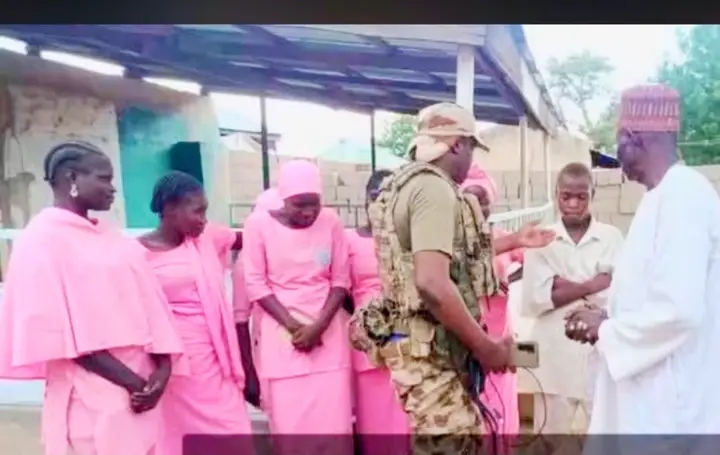
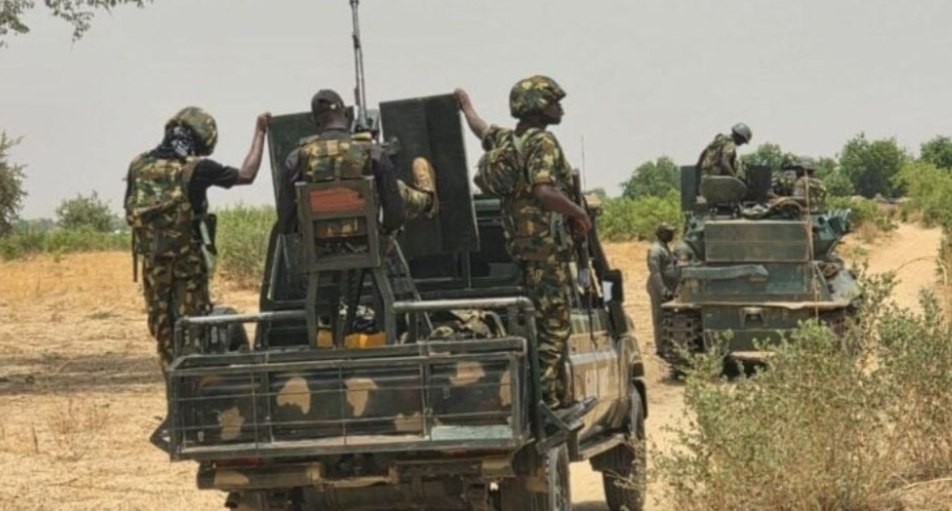
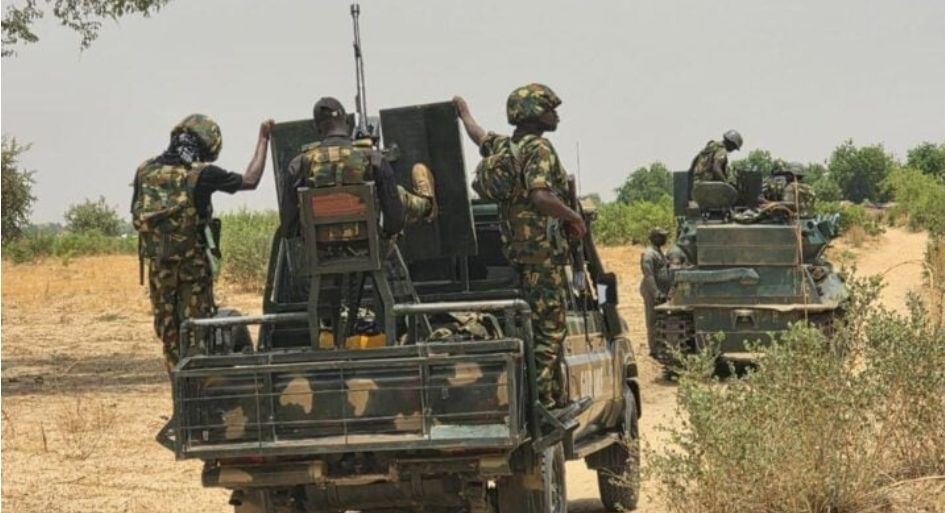
Troops of Operation HADIN KAI under the Joint Task Force, North East, have rescued more than 47 people, mostly women and children, from suspected Islamic State West Africa Province, ISWAP, fighters in Borno State.

The victims regained freedom during a military operation carried out in Kangarwa area of Kukawa Local Government Area.

The Acting Military Information Officer of Operation HADIN KAI, Captain Mohammed Goni, disclosed this in a statement released on Monday.

According to the military, the rescue operation took place on June 20, 2026, after troops intensified attacks against terrorist hideouts around the Lake Chad region.

The statement explained that coordinated land and air assaults forced the insurgents to flee their camps, which created an opportunity for the captives to escape.

“The successful rescue operation was made possible through sustained aggressive pressure and relentless offensive operations conducted by OPHK troops against ISWAP enclaves in the Lake Chad region,” the statement said.

Military authorities stated that the continuous offensive weakened activities within the terrorist camps and helped the victims regain freedom.

“The unrelenting ground and air offensives forced the terrorists to abandon their positions in confusion, enabling the victims to escape from prolonged captivity,” the statement added.

The military also confirmed that the rescued individuals have been relocated to a secure facility, where they are currently receiving medical care and humanitarian assistance.

Authorities added that relevant agencies are already working on plans to reunite the victims with their communities.

“This rescue further highlights the commitment of OPHK troops to not only degrade terrorist capabilities but also to secure the release of innocent civilians held against their will,” the statement said.

Operation HADIN KAI further reaffirmed its resolve to continue military offensives across the North-East until terrorist groups operating in the region are dismantled and peace is restored in affected communities.

Army Detains Soldier Over Accidental Shooting of Colleague in Borno

By Sabiu Abdullahi

The Nigerian Army has detained one of its personnel after an accidental shooting left another soldier injured at a military base in Borno State.

Security analyst Zagazola Makama disclosed the incident in a post on X, citing military sources.

According to the report, the incident involved a soldier attached to the Army’s 25 Brigade. It reportedly happened around 6:00 a.m. on June 20 at Sierra 7, a military defensive position in Damboa Local Government Area.

Sources said the soldier mistakenly fired his weapon while inside the military facility, which resulted in a gunshot injury to a fellow soldier.

“According to the sources, the soldier negligently discharged his weapon while within the military position, resulting in a gunshot wound to a fellow soldier,” Makama said.

The injured personnel reportedly received immediate medical attention before he was moved to a field ambulance facility for additional treatment.

Military authorities also confirmed that the soldier involved in the incident was quickly disarmed and taken into custody.

Sources added that he remains under detention as investigations continue and possible disciplinary measures are being considered.

The Army stressed the importance of strict compliance with weapons-handling procedures and established safety measures to avoid similar incidents in operational areas.

According to military authorities, adherence to safety protocols is necessary for the protection of personnel and to prevent avoidable accidents during operations.

Investigations are ongoing to determine the circumstances surrounding the accidental discharge.

Nigerian Troops Arrest Three Suspected Female ISWAP Collaborators in Borno IDP Camp

By Sabiu Abdullahi


Troops of the Nigerian Army have arrested three women suspected of collaborating with ISWAP terrorists during an operation carried out in Konduga Local Government Area of Borno State.

Security analyst and counter-insurgency expert in the Lake Chad region, Zagazola Makama, disclosed the development in a post shared on X.

According to Makama, the arrest followed intelligence reports and intercepted communication that suggested plans to move a woman into a terrorist-controlled area.

He explained that troops of the 222 Battalion (Mechanised) conducted the operation at an Internally Displaced Persons, IDPs, camp in Konduga, where the suspects were apprehended based on intelligence findings.

Makama stated that the women were suspected of assisting communication and movement between civilians and terrorist groups operating in the region.

He added that military authorities had placed the suspects in custody for further investigation and other necessary actions.

“The operation forms part of ongoing efforts to disrupt support networks and dismantle collaboration channels aiding terrorist activities in the North-East.

“Investigations are ongoing to determine the extent of their involvement and possible connections to other elements within the network,” Makama said.

Did Oyo Bandits Really Talk About Shariah?

By Abdussamad Umar Jibia

On May 15, 2026, 39 school children and seven teachers were abducted from three schools in Oyo State. Since then, the incidence has been the major headline in Nigerian traditional and social media.

This is not the first time criminals have stormed a school and abducted school children and teachers. The first known mass abduction of school children in Nigeria occurred in 2014 at Government Girls Secondary School, Chibok, in Borno state. It was followed by a series of similar abductions in different states of the North. This is the first time such a mass abduction has taken place in Southern Nigeria. Hence, the storm.

One piece of information that has been circulated is that the bandits have demanded the implementation of Shariah in the South West as a condition for the release of the children and their teachers. This is something I have found difficult to believe from my knowledge of bandits and their operations.

First and foremost, we have to distinguish among the different types of criminals who operate in Northern Nigeria. Boko Haram, which originated from the North East and later integrated with ISWAP (Islamic State of West Africa), claims to be fighting for Islam and has religion as part of its agenda, just like similar groups around the globe. Boko Haram/ISWAP mainly operates in the North East.

However, the bandits, as they are popularly called, who originated from the North West and are mainly of Fulani extraction, have nothing to do with religion, do not advocate it, and, in fact, most of them do not pray five times a day like Muslims do and cannot even recite the opening chapter of the Qur’an. This group, sometimes referred to as Fulani herdsmen to avoid ethnic profiling, is the group said to have abducted the Oyo pupils.

The bandits are not a single group. They are different groups, each with its leader, who live in the forest and are believed to have their informants in townships. The informants gather detailed information about their potential victims before striking. This is well known to anyone living in Northern Nigeria.

As a person who hails from the western part of Katsina State, I am one of the earliest victims of banditry. For example, in August 2016, my maternal uncle, who is the Imam of his village, was killed by bandits who shot him 11 times, injured his 10-year-old son and raped two of his daughters. In addition, more than 300 cows were rustled from the village. We reported the matter to the Katsina State Commissioner of Police, but nothing was done. 

Two months later, the government announced amnesty for all the bandits in Katsina State. The suspects were brought to the village with Police escort, and the villagers were told they must forgive them because they were “their brothers”. In all of these, religion was not mentioned. It was never an issue because the bandits were not a religious people.

After the amnesty, banditry continued as usual until 2019, when the Federal Government under Buhari asked all the state Governors to enter into peace agreements with the bandits in their states. The vividly uncomfortable Katsina State Governor held meetings with bandit leaders across the affected local governments of Sabuwa, Dandume, Faskari, Safana, Dan Musa, Kankara, Batsari and Jibia. The meetings took place in the forest under heavy security and before press cameras. The military support in the escort of the Governor was enough to crush all the bandits. Ironically, the Government decided to beg them. Videos of some of the meetings are still available online.

It is noteworthy that all the bandit leaders who attended those meetings were Fulani; they were all Nigerians, and none of them was religious. No one talked about religion, and the only complaint from most of them was that some of their gang members were in police custody and should be released. 

It is also not a Hausa-versus-Fulani affair. Some of the early victims of banditry were Fulani who refused to join banditry and refused to give their support to it. There are still many rural Fulani communities in the North West who are against banditry and do not harbour bandits. 

Now, at what point did banditry begin to be associated with religion? Different possibilities.

The Zionist entity

One of the biggest mistakes made by the General Ibrahim Babangida administration was normalising diplomatic ties with the Zionist occupation called Israel. Zionists are believed to be behind some of the crimes committed in the Northern part of Nigeria. 

The former deputy speaker of the House of Reps, Alhaji Abdullahi Wase, alleged that 300 youths from the Christian majority state of Plateau were given training in Israel and that four containers of arms were brought in by an Israeli security company to a politician’s house in Plateau state.

Alhaji Abdullahi Wase called for an investigation by the government. The investigation was not conducted. It is thus not out of place if Zionists, through some hirelings, introduced religion into the discussion of banditry in order to cause further internal crisis or use their American boys to attack innocent Muslims in Nigeria.

Sheikh Ahmad Gummi

The involvement of Dr Ahmad Gummi with bandits leaves more questions than answers. Gummi is an Islamic scholar who views issues from an Islamic perspective. Did he ever tell the bandits to shift their focus to religion rather than remain common criminals? I have no answer to this question. Only the Government and Sheikh Gummi have.

Elements in the Tinubu administration

A young Islamic scholar, Sheikh Munir Koza, once claimed that he was among the many influential young Islamic scholars invited to a meeting by some defence officials of the Tinubu government not long after the Government took over. With a financial reward, they were asked to emphasise three things in their preaching. 

One. That banditry by Fulani groups is justified because Fulani have been subjected to neglect and injustice over a long period. 

Two. Call on the government to engage in dialogue with bandits and offer them political appointments. 

Three. The Governors of Zamfara and Katsina are wrong to have set up security outfits to confront bandits. 

According to Sheikh Koza, he was the only person who expressed his disagreement at the first meeting and was thus not invited to subsequent meetings.

If Sheikh Koza’s claim is true, it means there are bandits’ sympathisers in the Tinubu Government. One would ask, is Mr President not aware? Did he appoint them because he believes insecurity is a Northern Nigerian affair, and he has thus appointed Northerners to go and eat themselves? Now that it has spread to the South, is he ready to make amendments?

Or, who actually introduced religion into it?

Professor Abdussamad Umar Jibia wrote from the Department of Mechatronics EngineeringBayero University, Kano. He can be reached via aujibia@gmail.com.

Presidency Says Earlier Report On ISIS Commander’s Death Was Mistaken Identity

By Sabiu Abdullahi

The presidency has said reports circulated in 2024 about the death of Abu-Bilal Al-Manuki, the second-in-command of ISIS, were based on mistaken identity.

The clarification followed Saturday’s announcement by United States President Donald Trump that Al-Manuki had been killed during a joint military operation involving Nigerian and American troops. President Bola Tinubu also confirmed the operation.

After the announcement, several online users revisited claims that the insurgent leader had already been declared dead by the Nigerian military in 2024.

In response, Bayo Onanuga, special adviser to the president on information and strategy, said security agencies explained that the earlier report connected to a military operation in Kaduna State was inaccurate.

According to Onanuga, Al-Manuki, who is also known as Abu-Mainok or Abu-Bilal Al-Minuki, had appeared on a list of suspected ISWAP commanders reportedly killed during military operations around the Birnin Gwari forest area.

“It is acknowledged within military and intelligence circles that Al-Manuki’s name had appeared among lists of suspected ISWAP/Boko Haram commanders reportedly killed in 2024 during operations around the Birnin Gwari forest axis in Kaduna State,” the statement reads.

“However, security officials now clarify that the earlier listing was a case of mistaken identity or misattribution in the fog of sustained counterinsurgency operations.”

The presidential aide said intelligence findings later showed that Birnin Gwari was not part of Al-Manuki’s area of operation. He said that discovery raised questions about the earlier claim.

Onanuga also stated that the latest mission against the ISIS commander came after several months of intelligence work carried out by Nigerian and American operatives. He said the operation involved surveillance, phone interceptions, and human intelligence tracking.

He added that intelligence agencies began monitoring Al-Manuki in December 2025 and tracked his movements across different locations in northern Nigeria, including Abuja and Maiduguri.

“Security officials said efforts were initially aimed at capturing him alive before the final operation was carried out,” he said.

“Unlike the previous report, security authorities insist that the latest strike was executed with a significantly higher degree of precision, target validation, and multi-source intelligence confirmation.”

Onanuga said security agencies carried out several layers of verification before approving the final operation.

“In their assessment, ‘this time, there is no ambiguity,’” he said.

The presidential spokesperson also defended public communication about counterterrorism operations. He noted that similar mistaken reports had occurred in international campaigns against terrorism, including cases involving former Boko Haram leader Abubakar Shekau and ex-ISIS leader Abu Bakr al-Baghdadi.

“Such cases highlight not failure but rather the evolving, often imperfect nature of intelligence gathering in asymmetric warfare,” he added.

He warned that dismissing joint counterterrorism efforts involving Nigerian authorities and foreign partners could affect public confidence and military morale.

“While public scrutiny remains an essential part of democratic accountability, security experts caution that premature dismissal of military claims can inadvertently undermine operational morale and strategic messaging,” the presidential spokesperson said.

“For now, military authorities remain firm in their position: The latest operation that targeted Abu-Bilal Al-Manuki represents a validated, intelligence-driven success against a senior figure of the Islamic State network. And in their words, this time, they are “100 per cent certain.”

Terrorists Abduct Students From Borno School

By Sabiu Abdullahi

Suspected terrorists have abducted an unspecified number of students from a school in Mussa village, located in Askira/Uba Local Government Area of Borno State.

According to Reuters, the attack happened around 9 a.m. on Friday while lessons were in progress at Mussa Primary and Junior Secondary School.

Residents told the news agency that the gunmen stormed the school and took away several students.

A teacher at the school said the attackers arrived on motorcycles before carrying out the abduction.

“Despite some students escaping into the bushes, I can tell you many were taken away,” the teacher said.

Midala Balami, the lawmaker representing Askira-Uba/Hawul Federal Constituency in the House of Representatives, described the incident as disturbing and called for urgent action from security agencies.

Reuters quoted the lawmaker as describing the attack as “heartbreaking”.

As of the time this report was filed, neither the Borno State Police Command nor the military had issued an official statement on the incident.

School attacks and mass abductions have continued to pose serious security concerns in parts of northern Nigeria in recent years, with armed groups often targeting students for ransom.

In November last year, at least 303 students were kidnapped from St. Mary’s Catholic Primary and Secondary School in Papiri, located in Agwara Local Government Area of Niger State.

That same month, gunmen also attacked Government Girls Comprehensive Senior Secondary School in Maga, Danko/Wasagu Local Government Area of Kebbi State, where 25 students were abducted.

The Accountability Dilemma at the Heart of Borno’s Integration Model

By Abdulsalam Alkali

In the scarred landscape of Northeast Nigeria, where Boko Haram’s insurgency has claimed thousands of lives and displaced millions since 2009, the quest for peace remains a daily struggle. As military campaigns degraded the group’s territorial hold, a more complex and contentious challenge emerged. What to do with the thousands of fighters and their associates who surrendered or were captured?

The Federal Government’s answer was Operation Safe Corridor, a deradicalization program run from a military-controlled camp in Gombe State. But for the epicentre of the conflict, Borno State, this felt distant and disconnected from the realities of its ravaged communities.

In response, the Borno State Government, under Governor Babagana Zulum, began crafting its own approach, which later became known as “The Borno Model.” 

The model is a non-kinetic approach that handles former Boko Haram/ISWAP fighters through disarmament, demobilization, deradicalization, rehabilitation, reconciliation, and reintegration known as the (Triple D, Triple R).

Unlike the military-run, camp-based system, the Borno Model is fundamentally community-centric. According to the document, “The Borno Model’s philosophy is rooted in an audacious blend of practicality and traditional norms. The model argues that sustainable peace cannot be achieved by isolating ex-combatants in distant camps, only to return them as strangers. Instead, it advocates for a localized process of rehabilitation and reintegration directly into communities, heavily mediated by local organizations, traditional rulers, religious leaders, and victims.

“The model operates on the premise that a significant portion of those in Boko Haram/ISWAP were either forcefully recruited, coerced, or driven by poverty rather than ideology, and that the path to peace requires a form of conditional forgiveness”.

This model has translated into a bold and visible policy as thousands of “repentant Boko Haram” members and their families have been received, housed in temporary “transition camps,” and then resettled in their (or new) communities, often with vocational training and start-up kits.

According to an Institute for Security Studies research document, over 160,000 people had left Boko Haram/ISWAP, with over 100,000 fighters and their families, and an additional 6,900 minors surrendering unconditionally since the program commenced.

Nevertheless, this bold program unfolds against a background of profound pain and frustration, especially for the victims of Boko Haram. 

For communities that have endured massacres, abductions, and arson, the sight of former perpetrators receiving housing and support is a bitter pill to swallow.

Many survivors ask: where is our own rehabilitation? The fears of recidivism, accusations of injustice, and deep-seated trauma that no government program has adequately addressed persist. In the streets of Maiduguri, there is a blend of emotions and concerns among its residents. While some people view this program as a viable way of achieving peace, others see it as something forced upon them by the government.

WHAT VICTIMS SAY

For Bakura Modu, who lost his parents to the insurgents, “Only God will reward us for what we have gone through,” he said with mixed emotions. Bakura Modu lost his entire family, three of his brothers and his parents were killed during the 2014 Bama attack. Bakura escaped the attack and came to Maiduguri, later took shelter with his uncle. Now he struggles to live in Maiduguri with no support from the government. Bakura has not heard or felt carried along in the rehabilitation program.

Like Bakura Modu, Ya Kaltum Bukar, 58, lost her husband and six of her children to Boko Haram insurgents. During the peak of Boko Haram insurgency in Maiduguri, “They came during Ramadan in 2012 and killed my husband and three of my biological children, and after two weeks, they returned and shot three again,” she said. 

YaKaltum only became familiar with the rehabilitation and reintegration program on Radio Programs. Now she struggles to survive in this economy, coupled with health complications.

On returning ex-Boko Haram fighters, Bakura Modu was skeptical, having had no previous knowledge or involvement: “The government has done a lot in resettling people and building homes, but not all victims of the insurgency were carried along,” he said.

According to Barrister Abba Kyari Muhammad, the Borno Model does not strictly adhere to the standard model of transitional justice. He stated that the model largely focuses on disarming insurgents, rehabilitating and reintegrating them back into society, while neglecting other core components of transitional justice, including prosecution, truth-seeking, reparation, and institutional reforms. “These obvious lapses in the implementation of the Borno Model render it something other than transitional justice,” Barr. Kyari stated.

Barr. Kyari lost his mother to the insurgents in 2013, skipped classes while at school, lost his livelihood, and was displaced multiple times within Maiduguri as a result of the insurgency. He said, “Upon all that happened, I am still yet to receive an apology from the government or other authority, let alone compensation.”  He further stated that it is evident there is no meaningful victim compensation within the current transitional justice framework.

LACK OF COMMUNITY PARTICIPATION IN THE PROGRAM

Research by the Institute for Security Studies (ISS) clearly outlined the lack of community participation in the rehabilitation and reintegration program, stating that “Communities are not involved enough in reintegration even though they facilitated disengagement and are the first point of contact for ex-Boko Haram associates.”

Speaking as both a victim of the insurgency and a professional, Barr. Abba Kyari stated that “I cannot recall encountering any form of victim compensation, reparation, or even apology to those who lost their loved ones. Available evidence suggests that internally displaced persons who are the true victims are largely abandoned, while repentant Boko Haram members are housed, clothed, and well taken care of in government-owned facilities.”

PROSPECTS AND CHALLENGES OF THE PROGRAM.

Moreover, a source from the Ministry of Rehabilitation, Reconstruction, and Resettlement (RRR) stated that the program has had both its prospects and challenges, but the government is doing everything within its powers to carry all people along. He noted that victims are also supported with skills and are resettled in their communities as peace gradually returns.

The anonymous source also noted that the Reintegration Committee was constituted by Governor Babagana Umara Zulum, and it is working round the clock to return refugees from neighbouring countries like Niger, Cameroon, and Chad.

He also clarified that not only ex-fighters undergo rehabilitation it also includes victims, abductees, and communities ravaged by Boko Haram. “All are being rebuilt and resettled, apart from Abadam Local Government that was recently opened after more than a decade of desertion, and it has improved peace in the state,” he noted.

Similarly, Samuel Orahii, reintegration coordinator at Allamin Foundation for Peace and Development, a. leading organisation working with the government on community engagement and reintegration, noted that some of their work is confidential and sensitive, however, a lot of success has been achieved, and normalcy has almost been sustained. On the Borno Model, Mr. Samuel stated that “the Borno Model is more of a traditional justice, as communities are involved,” noting that ex-Boko Haram fighters are remorseful, recently, one ex-Boko Haram fighter sought forgiveness on a live radio program on transitional justice sponsored by Allamin Foundation”.

The ISS findings, however, show a lack of adequate funding for the program, stating that “The Borno Model faces persistent challenges, especially in providing sufficient economic support to deserters once they leave the camp. Many former Boko Haram members interviewed in March and June 2025 said they left the group with few employable skills, little start-up capital, and no tools to begin a livelihood. The state has introduced vocational training in the camps, teaching skills such as carpentry, tailoring, welding, and mechanics. It also provides a one-off payment of ₦100,000 (about US $67), but this isn’t enough to restart a life after years in the bush.”

On issues around sustainability of the program, Barr. Kyari noted that the sustainability of the program lies in its economic implications, which largely remain unaddressed. “These people are accustomed to a lavish lifestyle and unrestricted control over territories and resources, yet they are now expected to survive on minimal support. This arrangement is neither realistic nor sustainable and represents a ticking time bomb if left unsolved.”

DOES THE REHABILITATION PROGRAM LEAD TO PEACE?

Moreover, despite the sustained rehabilitation and reintegration program, communities resettled, and livelihoods restored, it remains debatable whether the rehabilitation and reintegration of ex-Boko Haram combatants have brought peace or otherwise. Many experts agree that since the collapse of leadership upon the death of Abubakar Shekau, many ex-fighters have retreated and laid down their arms, surrendering to Nigerian authorities. Subsequently, with intensified military aggression by Nigerian forces and the loss of many territorials holds by the insurgents, the group has systematically shifted its focus from ransacking communities to abductions, collecting ransom, and taxing in some areas within the Lake Chad region.

A HumAngle tracker from the last quarter of 2025 indicated that Borno State experienced the highest number of abductions, with over 161 people in a total of 31 kidnapping incidents. “A total of 116 incidents with fatalities were experienced,” the report stated. According to sources interviewed by HumAngle, the group has raked in over ₦1 billion through these random operations. 

This report is corroborated by Yerwa Express News’s recent report of the abduction of seven fishermen from Doron Baga in Kukawa Local Government Area in Borno State by suspected Boko Haram insurgents, with a ransom demand of ₦30 million.

This report is supported by HumAngle Foundation under ‘Fellowship on Strengthening Community Journalism and Human Right Advocacy In Northern Nigeria (SCOJA)’.

Top Nigerian Army Commander Killed in Boko Haram Ambush in Borno

By Abdullahi Mukhtar Algasgaini

Nigeria’s military has suffered another devastating loss after a senior army officer was killed in a coordinated attack by Boko Haram insurgents in Borno State.

Colonel I.A. Mohammed, Commander of the 242 Battalion, died when his convoy was ambushed by fighters in the Moguno area, near the town of Boron. According to military sources, the troops were reinforcing a military camp under attack when their formation was struck by an improvised explosive device (IED), followed by heavy gunfire from insurgents hidden along the route.

Several other soldiers also lost their lives in the attack. Casualty figures have not been officially released, but a military source confirmed that the death toll includes the commanding officer and other ranks.

Colonel Mohammed’s death marks the fifth loss of a top-ranking military officer in Nigeria in 2026 alone — all within the first four months of the year. The repeated targeting of senior commanders has raised urgent questions about operational security and the resilience of the military’s command structure in the northeast counterinsurgency campaign.

As of press time, the Nigerian Army has not issued an official statement, but an internal security briefing described the incident as a “well-planned ambush with high-grade explosives.”

The insurgency in Borno, which has persisted for over a decade, continues to exact a heavy toll on both combatants and civilians, despite repeated government claims that Boko Haram has been largely defeated.

B’Haram Deploys Armed Drones In Attack On Army Convoy In Monguno

By Sabiu Abdullahi


An attack by Boko Haram insurgents on Nigerian troops in Monguno, Borno State, involved the use of armed drones, a military source has revealed.

The assault targeted soldiers under Sector 3 of Operation Hadin Kai. It led to the death of several personnel, including Colonel I.A. Mohammed. The incident followed an earlier report that troops were ambushed by fighters linked to the Islamic State-backed faction of Boko Haram.

The soldiers had set out on a patrol mission to clear insurgents from the area after receiving intelligence reports. According to a serving Major, the attackers struck around 2 a.m. on Monday and deployed drones against the advancing convoy.

The officer explained that the drones used in the operation are similar to those seen in conflict zones such as Israel and Ukraine.

“The 242 Battalion Commander and soldiers were ambushed around 2 a.m. this morning by terrorists in Monguno Sector 3. The Commander was with some soldiers, and we don’t know the number of casualties yet,” the source said.

“They were going for reinforcement; it was drones that they used on them. The terrorists sent bombs with drones; those things shelled them. It’s very unfortunate.

“I could remember the Army explaining last year how these terrorists have been deploying weaponised drones, similar to those used in Israel and Ukraine. These drones are hard to detect with conventional radar.”

Earlier accounts had suggested that the senior officer died after an Improvised Explosive Device detonated along the route. Sources said the attack began on Sunday night and focused on a Forward Operating Base under the 242 Battalion in Monguno.

“One of our senior commanders, Colonel I.A. Muhammad, was killed last night when Boko Haram attacked Monguno. They also killed some soldiers during the attack,” a soldier on the front lines said.

Monguno serves as a key military location in the North-East. It hosts several units under the supervision of senior commanders. During the incident, insurgents reportedly concentrated their firepower on a smaller but vital position, which prompted a call for reinforcement.

“The Colonel got information that troops at the FOB were under heavy attack. As a committed commander, he mobilised to lead reinforcement to the location,” another source said.

According to the accounts, the Colonel did not reach the embattled troops. His convoy ran into an ambush along the way. Insurgents had planted a remotely controlled explosive device on the route.

“He did not die inside the camp. He was on his way to support his men when Boko Haram fighters ambushed them with a controlled landmine. It was not the type you step on; it was detonated remotely at the exact moment his vehicle approached,” the source added.

The explosion killed the Colonel on the spot. It also claimed the lives of an unspecified number of accompanying soldiers.

In 2025, a lawmaker from Borno State, Ahmed Jaha, raised concerns about the growing use of drones by insurgents. He claimed that Boko Haram fighters were deploying more advanced weapons than those available to Nigerian forces.

Nigeria has faced insurgency in the North-East for more than two decades. The latest attack highlights evolving tactics by militant groups in the region.

Air Strike Destroys ISWAP Logistics Hub in Borno, Dozens of Terrorists Killed

By Abdullahi Mukhtar Algasgaini

The Air Component of Operation HADIN KAI has destroyed a major terrorist logistics hub and enclave near the abandoned village of Jilli in Gubio Local Government Area of Borno State, following a precision air strike on April 11, 2026.

Military authorities said the operation was driven by sustained Intelligence, Surveillance, and Reconnaissance (ISR) missions over the Bindul–Jilli axis—a known corridor for Islamic State West Africa Province (ISWAP) terrorists and their collaborators.

The strike came after a series of deadly attacks linked to the same network. In January 2026, troops moving from Gubio toward Damasak suffered an Improvised Explosive Device (IED) attack at Bindul, killing eight soldiers and wounding several others. More recently, on April 9, coordinated attacks in Ngamdu and Benisheik were traced back to the same logistics cell.

On the day of the strike, surveillance spotted multiple gun trucks and motorcycles moving toward Jilli, with additional vehicles converging at the same point. Human intelligence sources confirmed the gathering included terrorists, logistics handlers, and collaborators. Following a rigorous targeting process, precision strikes were launched while surveillance aircraft monitored the scene in real time.

Post-strike assessment confirmed the enclave was destroyed with high accuracy. Scores of terrorists were neutralized, and their vehicles and technicals were wrecked. Survivors were seen fleeing in multiple directions. Intelligence later revealed the group was finalizing logistics for coordinated attacks on military positions in the Gubio axis.

In a related development, on April 12, a terrorist logistics courier named Turja Bulu was arrested at Ngamdu Town. During preliminary interrogation, he confessed to participating in the April 9 attack on 29 Brigade location at Benisheik. He also stated that ISWAP had dispatched him from Jilli—where many of his fellow terrorists were hiding—to deliver food to another terrorist group around the Magumeri-Gubio area.

The Theatre Command reiterated that the use of motorcycles remains strictly prohibited across the North East operational theatre, especially in Borno and Yobe States, due to their role in terrorist movement and attacks.

Lieutenant Colonel Sani Uba, Media Information Officer for the Joint Task Force (North East), assured residents that operations would continue with renewed intensity until all terrorist enclaves are dismantled and lasting peace is restored.