Boko Haram

Northern insecurity and politicisation of terror

By Tahir Ibrahim Tahir

It is no longer news that on December 7, 2021, 42 innocent travellers were gruesomely burnt in a bus as they moved through Gidan Bawa village of Sabon Birni local government of Sokoto state. Thirty-five died instantly, and seven survived with very severe burns. May Allah shower their souls with his mercy.

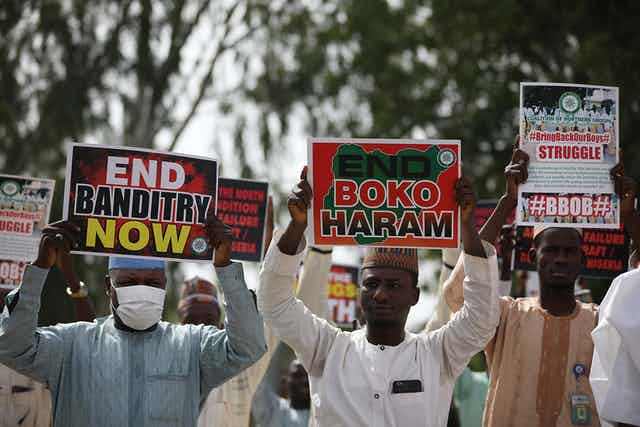
The attack is one of the most horrendous and inhumane acts of the bandits that have since visited Northwestern Nigeria with an orgy of violence. I believe this barbaric act accounts more for Sheikh Gumi excusing himself from speaking on behalf of the bandits than the reason he gave – citing their proclamation by law as terrorists. This heartless, baseless and demonic act of burning a fellow human being alive has laid bare the true nature of what Nigeria has been fighting for so many years.

Fighter jets bombarded many enclaves of the bandits, east of Dumburoum forest in Zurmi, Zamfara, and also in Sokoto and Kaduna states, as well as ISWAP locations in far away Borno state, a day before this inhuman slaughter at Gidan Bawa. It is evidently a reprisal attack and an inadvertent confirmation of the nexus between ISWAP, Boko haram and Bandits – the same hydra-headed terrorism monster.

It is no longer news that northerners are moaning beneath the anguish of the mayhem that these ‘organisations’ have visited upon their people – annihilating human lives like they were crickets. More lives are lost to terror, and there doesn’t seem to be a decline. A 100 lives are lost in a week sometimes. Northerners are increasingly livid over the fact that PMB is a northerner. As President, he ought to secure his northern constituency – letting their governors, legislators, service chiefs and other top government functionaries off the hook for the bizarre and profoundly depressing situation of the North.

It is no longer news that the FG has made massive investments in security, purchasing no less than 60 fighter jets (fighter helicopters, FJ-17s, Super-Tucano, M346 Italian jets) along with battle tanks, MWRAPS, TAVORS, Armored navy vessels, and sophisticated surveillance systems. Bases have been positioned throughout the length and breadth of the war theatre. More boots are on the ground than ever, most definitely more than the civil war. All air assets have been deployed in the North to fight terrorism. So what in God’s name could be the problem?

It is no longer news that the weaponisation of poverty, in the long term, especially in Northern Nigeria, is mainly responsible for the hell pit we’ve found ourselves in. We watched our leaders dig us in and did us in while we egged them on for as long as it favoured us. We genuflected before them, made them take bows, applauded them – and allowed them to go scot-free. The masses and the village dwellers suffered this weaponisation with years of untold hardship, weeping blood. In contrast, we, the elite and the city dwellers, enjoyed all the blood money and whatever elitist pleasures therein. Now the shoe shiner is wielding an AK-47, so is the Maiguard. The herdsman is a warlord, so is the Vectra driver an informant. One of the Northern universities’ security chiefs is a kidnap kingpin, and a Hajiya in the village is the supplier of thousands of rounds of ammunition to bandits. The questions bang your scalp like the heavy August rainfall; who is not a bandit, or a terrorist, or an informant, or a kingpin or some helper of a sort to these terrorists? The North is hardly an image of its once prestigious self, now hunched with woes and barely a shadow of its erstwhile esteem. The hypocrisy screams to the high heavens, muttering sulky and morose invectives at PMB alone as the bane of our problems. Indeed.

It is no longer news that a foreign journalist, in an article titled, “The bandit warlords of Nigeria”, navigated the nooks, crannies and alleyways of bandits in the North, unharmed by these demons; inadvertently betraying the conspiracy of banditry in the North. He waxed politics with the bandits, claiming OBJ and Jona are far better than PMB, who the bandits say stifles Islam! Lord have mercy on our souls. He also erroneously put Fulani bandits as conquest driven Islamic extremists. This faulty description only further lumps Boko haram and Bandits together.

The news headline that should be etched into our consciousness is the reality of Nigeria long being marked as a state for Balkanisation. A proxy war is being fought out with our homeland as the battlefield. Eastern merchants versus western warlords are slugging it out, punch for pound. Islamic North, its idealistic and archaic ways are a thorn in their meal. As they carve their diamonds clean, our population suffers the brunt of their steel.

What is left for us is the Sunna of the Prophet (SAW), backed by his hadith, describing the bigger Jihad as striving for one’s cleansing and towing the path of righteousness – backed by Q22:78. The strange situation in the North is the duty of every northerner to un-knot, un-tie, and crack. Prophet SAW was the last one, so we have to be messiahs unto ourselves.

We must encourage ourselves to eradicate this phenomenon that has become the new Yahoo or money bet of the North. We must expose ourselves and fight ourselves by ourselves. No war ends with a gunshot. It can only start it. So we must sit together, back-benchers, frontliners, warts and all, voodoo if you like – and do the needful. As our faith is in our hearts, so is our fate in our own hands.

Tahir is Talban Bauchi. He wrote from Bauchi via talbanbauchi@yahoo.com.

Nigeria: A nation with nominal Commander-in-Chief

By Amiru Halilu
“Nearly all men can stand adversity, but if you want to test a man’s character, give him power.” – Abraham Lincoln. 
When insecurity and ineptitude became the hallmark of former President Jonathan’s administration, Nigerians opted for a greener pasture in APC in 2015. People hoped that the candidate featured by the then major opposition party, APC, would be a leader with a big picture and capacity to overcome the deep-seated insecurity that bedevilled the country. Why? He depicted himself as someone, who was actuated by altruistic desire. But, sadly, President Buhari has never been that someone.
In less than one year in office, his ineptitude and lack of competence became apparent. At present, Nigerians feel like a lost cause, trapped in a lacklustre, ennui, directionless and uninspiring leadership. We have been bearing the brunt of his gross incompetence, cluelessness and nonchalant attitude towards compelling issues and burning problems. Nigerians now feel what it means to have a president who is so wildly unable to fulfil his responsibilities.
To Buhari, being a president is just to occupy the highest office in the land, chairing executive council meetings, delivering empty speeches, sitting at the comfort of the presidential Villa while assenting to bills that have nothing to do with citizen’s well-being, junketing from one country to another dissipating our little resources and wooing ghost investors. These are the major duties Buhari has been performing as a president and the requirements of being a president in his school of thought.
From the day former President Jonathan and President Buhari were inaugurated as the fourth and fifth democratically elected president of the Federal Republic of Nigeria, ‘competence’ got missing from the country’s leadership code. What do I mean by “competence?” The Oxford English Dictionary defines it as “the ability to do something successfully or efficiently.” What has Buhari done impeccably to distinguish himself from his predecessor? Virtually nothing! To some extent, he ends up making his predecessor a hero in the eyes of many.
Nigeria is technically at war yet, we have an intellectually handicapped president, who doesn’t even have accurate information of what is happening around the nation, who cannot do serious preparation of any kind, who has hollowed out the government, filled critical posts with lackeys and selfish money-grubbers, and who has taken governance like sophomoric kid stuff. Buhari has been behaving like a president of the most peaceful nation on earth, where citizens go to bed with their two eyes closed.
What is the essence of a president under whose stewardship the country becomes a shrink tree with dead branches. Anything that will make Nigeria a subject of ridicule in the comity of nations is happening under this amateurish government. So many embarrassing events that had caused the resignation of government officials in live and breathing countries had already occurred in this lethargic and non-functional regime yet, no one was sacked because the president is grossly incompetent; he accommodates mediocre and appreciates mediocrity.
Buhari’s leadership is characterised by disappointment, uncertainty, instability — occasion by emotional trauma, grief, sorrow and misery. The only dividend his administration is paying to Nigerians is precious living. The most disastrous event now in Nigeria is travelling by road. His so much indifference to the burning topic of the day — insecurity had set off a wave of opportunities for high-profile criminals to graduate from armed robbery to kidnapping.
Travellers are unsure of getting to their final destination without being kidnapped and taken to the bush in exchange for ransom. Just as other countries are progressing in other walks of life, ours is vice-versa. Northern Nigeria is about to be taken over by armed bandits and other terrorist groups, and Buhari is leaving a dangerous vacuum filled by increased attack after attack after attack! Incessant killings are gradually becoming a daily routine in northern Nigeria.
Education, the backbone of any developed society, is under a serious threat as many schools were compelled to close down owing to a series of kidnappings. Farming, the only recourse to abject penury, was since crippled by gruesome murders. Most of the farmers who have access to their farms have met the demands of the armed bandits operating in their respective areas.
When a nation had a nominal commander in chief, it’s doom.
Amiru Halilu writes from Kaduna and can be reached through haliluamiru@gmail.com or @AmiruHalilu.

Russia to support Nigeria fight terrorism

By Uzair Adam Imam

The Russian president, Vladimir Putin, has promised Nigeria his support in fighting terrorism and countering religious extremism.

Receiving the Nigerian Ambassador to Russia, Professor Abdullahi Y. Shehu, the president gave his words.

President Putin made the assurance to Nigeria adding that a “very promising expansion on substantive dialogue on topical issues related to maintaining stability in the world hydrocarbon markets, combating terrorism and countering religious extremism.”

He stated that Russia was open to mutually beneficial partnership with all countries without exception.

Putin declared that “Russia is ready for multifaceted interfaces for mutual interests with the countries that their new envoys have come to represent in Russia.”

Nigerian soldiers kill many insurgents in Yobe

By Muhammad Sabiu

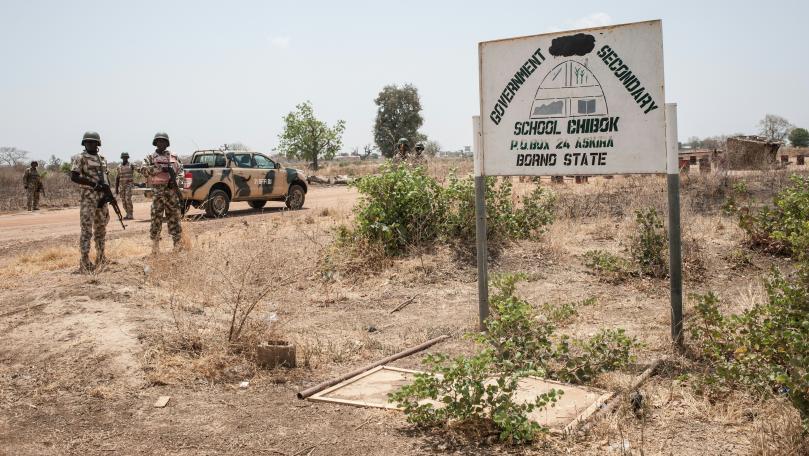
The Nigerian Army announced that its troops killed Boko Haram (BH) and Islamic State’s West Africa Province (ISWAP) terrorists in a fierce battle in Buni Yadi, Gujba Local Government Area of Yobe State, on Tuesday.

The terrorists were met with stiff resistance from troops of 27 Task Force Brigade and Nigerian Army Special Forces School, supported by the Nigerian Air Force Component and personnel of the Nigerian Police, according to Onyema Nwachukwu, Director, Army Public Relations, in a statement on Wednesday.

The fierce gun duel, he said, drove the criminals to flee in different directions after suffering huge losses while the troops took out numerous gun trucks and their occupants.

The accuracy with which Air and Land soldiers engaged the terrorists, destroying their gun trucks, was revealed in a preliminary battle damage assessment.

Troops are still using exploitation to take out fleeing terrorist remnants, he added.

Lieutenant General Faruk Yahaya, Chief of Army Staff, praised troops for their operational success and urged them to maintain the current operational pace in order to deny the insurgents from moving further.

Scores of ISWAP terrorists killed as Nigerian military launches offensive airstrike

By Muhammad Sabiu

No fewer than 26 insurgents of the Islamic State of West African Province (ISWAP) have been eliminated in Gajiram town, Borno State, after the Nigerian military launched airstrikes on them.

Reports show that the military made the attacks after the insurgents, who came on their gun trucks, made an attempt to invade the town.

A military officer in the know of the incident, whose identity is made anonymous, reliably told journalists that 26 bodies of the insurgents were counted.

Confirming the heavy casualty inflicted on the terrorists, he said, “The aircraft arrived timely and bombarded the locations of the terrorists and burned some of them beyond recognition.

“We have so far counted 26 bodies of the terrorists, but unfortunately, we lost two gallant soldiers while tackling other fleeing enemies.

“More bodies of the terrorists could be seen from afar in their burning trucks along Kunli village road and on the eastern side of the town.”

Again, Nigerian military engages ISWAP terrorists in Borno, kill 4

By Muhammad Sabiu

Nigerian soldiers combating the insurgents terrorising the northeastern part of Nigeria have again succeeded in eliminating some members of the Islamic State of West African Province (ISWAP) in Ngwom community under Mafa Local Government Area of Borno State on Tuesday.

A source whose identity has not been revealed disclosed that the military acted swiftly by mobilising troops of 195 Battalion Operation Hadin Kai in Jere to engage the insurgents.

The source was quoted as saying, “We have counted four corpses of the invaders and still pursuing others using the track of blood in the bush.

“After our clearance operation on their escape routes, detailed updates can be provided.”

This is not the first time Nigerian soldiers engaged insurgents, who usually in recent times suffer a heavy casualty.

Nigerian military repel ISWAP’s attack, eliminate 5 insurgents

By Muhammad Sabiu

Reports coming from northeastern Nigeria have indicated that Nigerian soldiers have successfully repelled an attack on their convoy by combatants of the Islamic State of West African Province (ISWAP) along Maiduguri-Damaturu road.

The soldiers were said to have acted based on an intelligence report they received after the “terrorists’ communication was intercepted.”

The terrorists also attempted to abduct travellers who were plying the Maiduguri-Damaturu road.

A source in the know of the incident, who pleaded anonymity, confirmed to journalists that “the armed terrorists had stormed Tamsukawu community in Kaga local government with the intention to attack a military convoy on a special mission/movement.”

He added: “Unfortunately for them, a signal was received on the movements of terrorists from various directions for the attack.

“The troops’ movement was well fortified with adequate security and air cover from the air task force.

“The movement was very successful even though with some confrontation which we tackled.

“Meanwhile, the troops were also mobilised to deal with another remnant of ISWAP fighters who attempted to attack and abduct travellers at Tamsukawu community.”

Confirming the number of casualties on the side of the insurgents, the source said, “The troops and the terrorists engaged in a heavy gun battle before they were subdued, killing five of them after the arrival of the Air Task Force and Rapid Response Squad Team from a Super Camp at Ngamdu.”

This is not the first time the Nigerian military has engaged terrorists in a gun duel, which has made a number of the insurgents meet their Waterloo.

Ensuring security through private sectors’ initiatives

By Mukhtar Ya’u Madobi

Subject to its wider ramifications, the burden of maintaining security is too cumbersome to be single-handedly by a solitary institution in a heterogeneous country like Nigeria.

Thus, the multi-stakeholders’ approach is often more necessary where there is a rise in security challenges. Therefore, security should be a collective effort of the government plus other state and non-state actors, including the private sectors.

The word ‘security’ simply implies the protection of the lives and properties of people from various forms of threat. It occupies the highest level of priority in the hierarchy of responsibility by the government as one of the core values that the state cherishes as non-negotiable and that does not admit compromise.

The contribution of private sectors in ensuring security can be rendered through various channels, including the construction of security facilities, donations of logistics to security services and providing equipment at their disposal during emergency response situations such as fire outbreaks, accidents, building collapse and natural disasters such as flooding, earthquake, etc.

Other alternatives include community participation in securing their locality in collaboration with police, i.e. the neighbourhood watch or vigilante group, involvement of religious and traditional leaders in disputes resolution among their followers and services provided by the business enterprises to their host communities through corporate social responsibility (CSR) initiatives.

To that effect, the role being played by the famous Civilian Joint Task Forces (Civilian JTF), through collaboration with the security agencies in countering the violent extremism of Boko Haram terrorists in the North-East (Borno), is very commendable. Such volunteer groups provided invaluable intelligence that led to the uncovering of many deadly terrorist cells and their subsequent elimination.

Now that the terrorists are surrendering, community leaders, civil society groups and NGOs have a greater job to embark on sensitizing the mindsets of the public in de-radicalization, rehabilitation and reintegration of the repentant terrorists into society. This will go a long way in maintaining the security of lives and properties of people.

It is noteworthy that the CSR initiatives of the Aliko Dangote Foundation donated 150 operational vehicles to the Nigeria Police Force in 2018, which was described as the single most significant gift ever by a private sector operator to the police.

In the Niger Delta region, where the problem of insecurity is mainly attributed to the feeling of anger and frustration by host communities due to negligence of CSR initiatives, the oil companies have turned a good leaf by changing the narratives.

Multinational corporations are now actively involved in providing infrastructural facilities such as schools, hospitals, roads, and water supply to their host communities. In the long run, they also designed a special scholarship scheme for the indigenes. They are provided with tuition fees and reading and learning materials to further enhance their educational careers. This initiative has undoubtedly contributed immensely to reducing the militants’ activities and other security tensions in the oil-rich Niger Delta region.

Moreover, several societal figures and organizations were known for their efforts in constructing and rehabilitating security outfits across the country. Recall that, immediately after the #EndSARS protests in which several lives of both civilians and security personnel were lost, many properties were destroyed, police stations looted, their firearms carted away and subsequently destroyed.

The giant private sector-led Coalition Against COVID-19 (CACOVID) procured new equipment for police officers and pledged to rebuild the burnt police stations destroyed during the civil unrest to restore security to the affected locations across the country.

Even the traditional institutions were not left out as Oba (Alhaji) Dauda Ajolola Adebimpe Akinfolabi of Ayedade Local Government Area of Osun State built a divisional police headquarters and the office for the Nigeria Security and Civil Defence Corps (NSCDC) office. The monarch noted that the gesture was necessary to protect his people and ensure safety in his community, considering the rising insecurity in the country.

In addition, private security companies are also part and parcel of the security architecture of every country. The responsibility of a private security guard is ‘securing the lives and properties of the client’. The client may be an individual, organization, private institution, government, etc. However, experience has shown that guards can perform additional functions other than just protecting the lives and properties of the client.

Their large number and widespread presence make them a critical part of the security system of the nation. The NSCDC is the ultimate regulator of all private guard companies in Nigeria and has so far licensed over 1000 companies. Almost all residences, offices, schools, shopping malls, parks etc., especially in the city, are staffed by private guards securing their location. To that effect, their number has even exceeded that of the entire Police Force in the country.

Therefore, the government and the security agencies can take advantage of this opportunity to collaborate with private guard companies, especially in areas of intelligence gathering and sharing, training and joint task operations towards securing the country from the activities of criminal forces.

Sequel to that, Nigeria’s Policy Framework and National Action Plan for Prevention and Countering Violent Extremism, produced by the Office of the National Security Adviser (ONSA), retired Major General Babagana Monguno have succinctly acknowledged the role of the prominent private sector in national security.

As they say, Emergency Management is everyone’s business.

Mukhtar sent this piece from Kano. He can be contacted via ymukhtar944@gmail.com.

Arewa, religious intolerance and the road to Afghanistan

By Aminu Mohammed

“Aminu! I cannot travel to Afghanistan. I am afraid that the Taliban will kill me. I am not going anywhere and will rather die in Germany”.

These are the exact words by my friend and neighbour, Suroosh, who incidentally is from Afghanistan. According to him, going to Afghanistan is akin to signing his death warrant. Suroosh also narrated a gory tale about how a relative was hacked to death a few weeks ago by the Taliban just because he worked as a translator for the United States Embassy in Kabul.

This issue got me perplexed, and I became curious about why the Taliban wanted Surrosh dead. My neighbour revealed that he previously worked for an international non-governmental organisation in Kabul before moving to Germany for further studies. This alone puts him on target for elimination by the Taliban if he decides to visit Afghanistan.

I usually perform my Friday prayer at the Afghan mosque in my city here in Kiel. However, from my interaction with some Afghan nationals, I observed that feeling of hopelessness and agony. These people cannot go back to their country for fear of the unknown. Most of those I engaged in conversation with are afraid to go home for fear of being killed by religious zealots.

This article is not about the Taliban or Afghanistan; I want to draw our attention to the negative trend and how lack of proper understanding of Islamic tenets can lead to chaos and anarchy, resulting in mass suffering among the citizens. It should be noted that this discussion with my neighbour took place shortly after the Taliban took over the mantle of leadership in Afghanistan.

I have always refrained from engaging in any discussion about the myriad of challenges bedevilling Northern Nigeria. However, I realised that one could not continue to maintain silence when it comes to issues about one’s homeland. I am compelled to write this because I am worried about the current security situation in the North, especially kidnapping and banditry. The issue at home has become critical that we need to do whatever it takes in one way or the other to change the narrative.

I have observed with keen interest and dismay the incessant verbal attacks and altercation among our people, particularly our youths, over religious issues in various social media platforms and offline. We attack one another and show hatred and bitterness to our fellow Muslims just because of sectarian differences. This has degenerated to the extent that people within a particular sect will be tagging others who do not believe in their doctrine as infidels.

The Islamic scholars from various sects are not left out in this altercation and dangerous trend. Some make uncomplimentary remarks against other scholars and sects during their preaching and sermon, which always elicit amusement rather than condemnation from their audience. This has become constant and worrisome that we must try as much as possible to propagate against this; otherwise, it will not augur well for our society if we all keep quiet and refuse to act.

Let me, first of all, clarify some issues. First,  I am not an Islamic scholar, and I do not claim to have a vast knowledge of Islam. However, having been taught by Sunni Islamic scholars from Pakistan, India, and Egypt at the College of Arabic and Islamic Studies, Afikpo, Ebonyi State, I can distinguish between right and wrong in Islam. Our teachers (at Markaz) never taught us to discriminate against other sects or abuse people that do not believe in our doctrine. I still don’t understand why our people dissipate energy on religious arguments and trivial issues to the extent of cursing one another.

Today, the North is no longer secure and safe. People are being hacked to death in large numbers. Religious intolerance has become a significant challenge in our society. We derive joy in casting aspersion on people and mocking those who do not believe in our ideology.  This got me wondering whether there is something wrong with us. Why should we be fighting one another over different doctrines and sects? Is Islam in Nigeria different from the one being practised in other saner climes and countries?

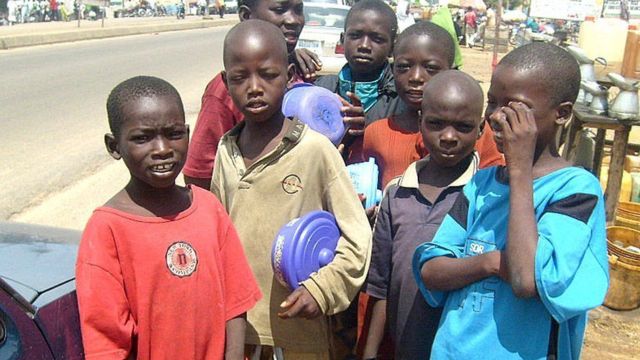
Are we not concerned with the number of out-of-school children, illiteracy, industrial stagnation, high unemployment and the raging inflation in the North?  Are the incessant killings of hapless villagers perpetrated by marauders and bandits in our rural communities not enough to wake us up from our slumber? I am afraid that if we continue on this trajectory, we will wake up one day and discover that we have no place to call home because of what we have done to ourselves.

Afghanistan is in chaos and ruins today because of this religious rascality, and I am afraid the North is heading in that direction. Prayer alone without action cannot stop the calamity that may happen if we fail to take action. Therefore, it behoves us as individuals and groups to start a conversation and see how we can live in unity and harmony with our fellow Muslim brothers irrespective of their sect and ideology.

We should learn to accommodate people in our midst irrespective of the sect they belong to or the religion they practice. We should endeavour to voice out against Islamic preachers who abuse other sects or do not share their ideology.  Tolerance should be our watchword and the only key to our progress and prosperity as a people. We need peace and security for us to grow as a nation.  Silence is no longer a virtue. We cannot remain silent and continue to watch as spectators while our region degenerates into anarchy.

Aminu Mohammed is at the School of Sustainability, Christian-Albrechts-Universität zu Kiel, Schleswig Holstein, Germany. He can be reached via gravity23n@gmail.com.

Borno Hospitals, telecommunications under attack by ISWAP fighters

By Hussaina Sufyan Ahmad

There have been reports of attack by ISWAP fighters on a com­munity hospital and telecommunication mast in the town of Mugumeri Local Government Area of Borno State on November 3, 2021.

It was gathered that the at­tackers stole some drugs and other medical consumables from the facility.

While the military ex­changed gunfire with a group of the ISWAP fighters, the other group sneaked into the hospital to steal drugs, a refrigerator and some bedsheets, according to a source.

“They attacked the town from behind, burnt down Airtel mast and ransacked the hospital.

“They went away with drugs, a refrigerator and some bedsheets.”

Magumeri is about 40 kilo­meters away from Maidugu­ri, the state capital.