ASUU

Our varsities don’t deserve another strike – Buhari pleads to ASUU

By Uzair Adam Imam

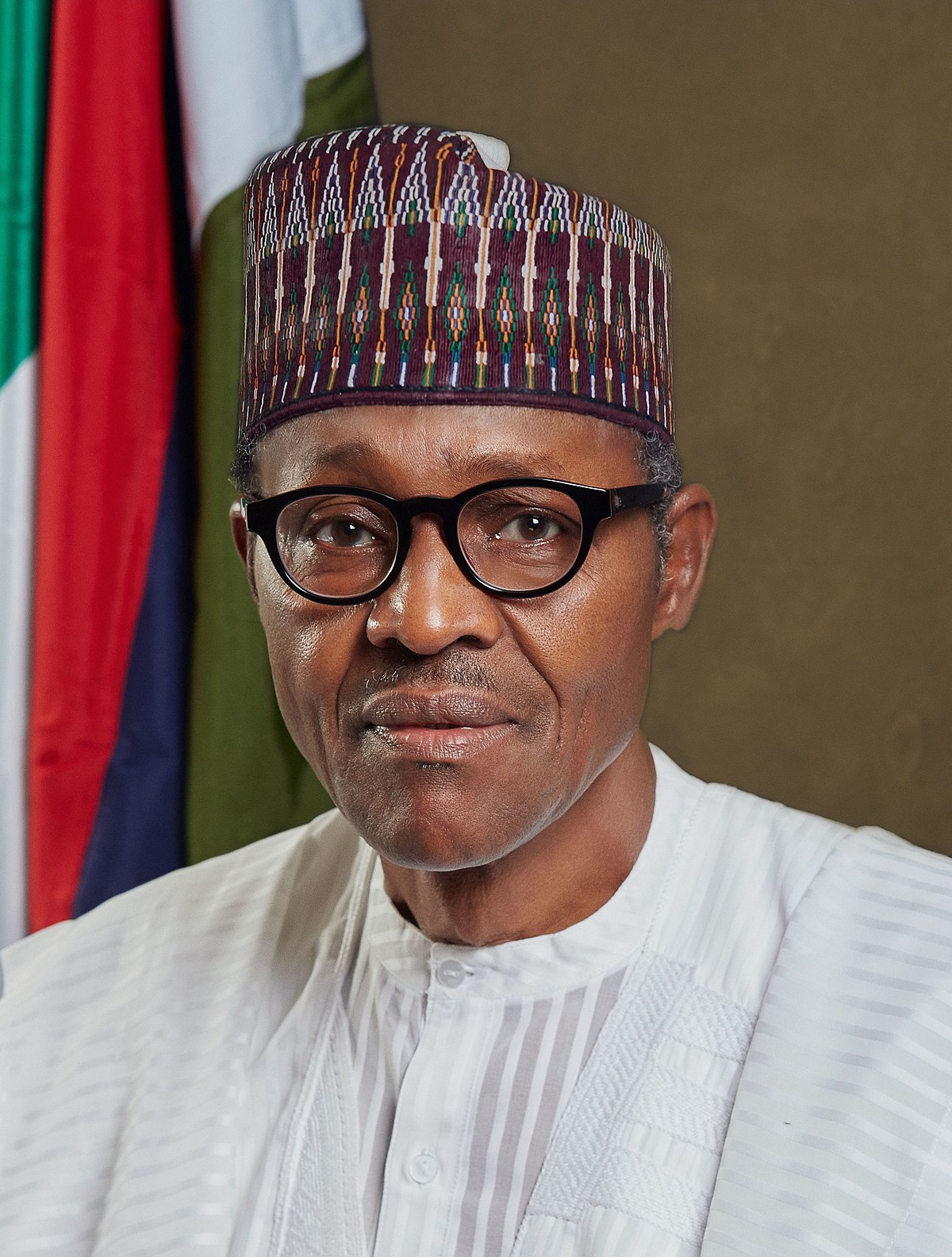
President Muhammadu Buhari has appealed to the leadership of the Academic Staff Union of Universities (ASUU) to embrace peace, stating that Nigerian universities have had enough strikes.

Buhari, who was representated by Professor Ingnatuis Onimawo, made the plea on Saturday, 23-10-2021 as he was delivering a speech at a convocation ceremony in the University of Ilorin.

The president also stated that the dialogue is always better than the conflict as no any gain ever driven from crisis.

However, he added that a lot of time had been wasted as a result of Corona virus pandemic, thereby saying the university system cannot afford to withstand any crisis now.

  1. The president was quoted saying: “Let me also use this opportunity to appeal to members of ASUU to embrace peace. They should realise that dialogue is always better than conflict. No one gains from crisis. While government alone cannot solve all challenges facing a society, this administration is willing to listen to complaints and alternative points of views to managing a situation.”

“The university system cannot withstand any crisis now considering the time it had lost to Coronavirus pandemic,” he said.

Speaking on the issue of Corona virus, the president said: “I expect our universities to conduct researches targeted at discovering an antidote to it. Universities are expected to focus their research on challenges facing our societies and find practical solutions within the context of national development.”

“I therefore challenge the Universities to give their best in the fight against this common and unrelenting enemy of humanity. I enjoin our researchers to collaborate among themselves and look forward to bringing an effective solution to this medical challenge.”

“The nation expects University of Ilorin to play a leading role in the research efforts to develop Covid 19 in Nigeria.

“The nation expects nothing less from the Nigerian University system”, he added.

TETFund should abolish foreign scholarships

By Abdelghaffar Abdelmalik Amoka

The presence of ETF and later TETFund became more visible after the suspension of the 2009 ASUU strike in October 2009, thanks to the ASUU strike. You enter the campus of some universities, especially the state government-owned universities and it appears as if TETFund is the only funder of the infrastructures in the universities. No wonder Professor Mahmood Yakubu’s NEEDS Assessment committee referred to them as “TETFund universities”.

The intervention from TETFund did not end on infrastructures and other physical projects but also on training. Quite a number of University academic staff obtained their PhD abroad, thanks to the TETFund Academic Staff Training and Development Intervention and ASUU. That ASUU’s achievement has increased the number of quality PhDs across the departments in our universities. About 6 colleagues in my department are beneficiaries of the TETFund PhD grant.

It did not stop at that. TETFund has also established research grants. The TETFund Institutional Based Research (IBR) grant for basic research and the TETFund National Research Fund for developmental research.

When TETFund announced the call for the 2016 National Research Fund (NRF) grant proposal submission, I got it forwarded to me by several people that knew I was passionately looking for research grants to set up my lab since my return from Europe to ABU in September 2015. I was excited with the call for proposals and I prepared my proposal and submitted it with others. It was well coordinated by the university, thanks to the efforts of Prof. Husseina Makun and the Directorate of Academic Planning and Monitoring of my university.

Not long after then, there was a change in the leadership of the agency and I never get to hear anything about that submission to date. My guess was that the usual Nigerian factor may have played a role and you possibly need to know somebody that knows another body that knows someone that can help facilitate it.

The call for the submission of a “concept note” for the 2019 NRF grant after your return did not excite me. I was informed by several people but I ignored it. I was like this is a repeat of what I called the “2016 call for grant proposal scam”. But few days to the expiration of the call, I decided to make a submission, after all the application doesn’t cost anything. It will only cost my time and effort. I was actually not expecting a response like it happened in 2016, but a few weeks later, you “shocked” me as I received an email requesting to submit the full proposal. I did, and a few weeks later I got an invitation to Abuja to defend the proposal. In January 2020, the grant award letter was issued.

That was the first very transparent exercise I have participated in in Nigeria in recent times. No personal contact. All correspondence was through email and you don’t have to wet anybody’s palm. Unbelievable! That exercise gave me a renewed hope that with responsible leadership, we can make every unit work as it should and the sum will make Nigeria work. Sir, you renewed my hope that Nigeria is going to work and we can regain the lost glory in academia.

TETFund is making a lot of impact in public universities even though some universities may not get the true value of the allocated funds due to several reasons including the possible manipulation of the procurement process. TETFund is also doing a lot to build research capacity in our universities and over the last 10 years, the number of quality PhDs has increased. But my worry is that these researchers may end up being more frustrated if they get back without the necessary research facilities and incentives to give back to the system.

The TETFund PhD training scheme is a train-the-trainers program but there seems to be no preparation to utilize the knowledge acquired by these scholars on their return. We seem to be just training without any provision for their return. The scholars were sent for training as researchers but returned to meet little or no improvement on research facilities. So, how do we intend to utilize these well-trained scholars that have returned?

Their research work seems not to be well coordinated, unlike the NRF grants. They are mostly not towards the critical needs of the country. Some of the scholars who have got no idea of what to work on may sometimes end up using our fund to implement the supervisor’s idea. The idea may not be something that is of very importance to our country. Going abroad for quality research in that state-of-the-art laboratory but on research that does not tend towards our national need and without adequate provision for their return will make them more frustrated on their return.

Quite a number of PhDs in our universities, colleges of education, and polytechnics trained over the last 10 years are TETFund Scholars. Thanks to the overseas training scheme. The question then is; What is the strategic plan for the scheme? How long is the scheme meant to last? When is it going to end? What are the exit plans?

A lesson from other countries.

During my PhD, I met a number of Malaysians doing PhD at the University of Southampton. One of those Malaysians was on 3 months research visit to the lab I did my PhD. They were all on a Malaysian government scholarship. They have all returned to their respective universities in Malaysia with well-established laboratories and access to funds for research. Most of the funds for PhD training are in Malaysian universities.

Malaysia now earn foreign exchange from international students, especially Nigeria students. These my colleagues and contemporaries in the UK universities are among the researchers/Lecturers training my Nigerian university colleagues that have gone to Malaysia to study. What is the difference between us and them? They return to a functional lab but we returned to an empty space and we are struggling to build a lab. Our situations are different because their training and return were well planned out. What are the plans for our trained colleagues?

It is possibly time to re-channel the funds for overseas scholarships to funded PhDs in our universities.

South Africa has National Research Foundation (NRF) that gives grants for research PhD training in South African universities. NRF is so well established that they are collaborating with DAAD in Germany for a funded PhD in South Africa. There is also the TWAS-NRF funded PhD but in South African university. We can take a lesson from that

The Research Council of Norway usually contributes 50% of research project funds while the other 50% is from industrial partners, but the condition on the government 50% is to train a PhD or postdoc in Norwegian university. Norwegian universities are tuition-free like Nigerian universities. The grant covers living costs, travel, conference attendance anywhere in the world, etc.

There is the UK Research and Innovation (UKRI), Engineering and Physical Sciences Research Council (EPSRC), that provides UK universities with grants – awarded through a competitive process – to cover the fees and living costs of postgraduate students. Each place a university offers as a result of this funding is called a studentship. Application for the studentship is done through the university you want to study.

These countries would not have being able to comfortably execute research and training without capacity building. We surely need capacity building scheme and TETFund and PTDF have done great in that respect. But the scheme should have a well-defined timeline. At the expiration of the timeline, the overseas scholarship should be converted to full national scholarships for the trained scholars to train PhDs in funded laboratories in our universities. Forex is already becoming a big challenge. The funds are then domicile here rather than shipping the fund out.

TETFund may need to produce a database of their scholars in the various tertiary institutions in Nigeria and even the ones that have refused to return to the country. There should also be a database for successfully completed TETFund NRF projects and their Principal Investigators. The TETFund Academic staff training and development intervention can then be converted to Nigeria’s university-based training. Scholars are only sent abroad for subjects that we lack expertise in Nigeria.

So what do we do?

We can adopt the German model. To get a DAAD-funded PhD training in Germany, you must first get a supervisor in a German university that is willing to work with you. With the consent of the supervisor, you can then apply and the application is endorsed by the supervisor.

In our case, the prospective TETFund PhD scholar will first get a supervisor from TETFund recognized researchers/Professors. Application is then made through the university and endorsed by the prospective supervisor. If the scholarship grant is like 20 million naira, for example, up to 10 million naira can be mandated for laboratory equipment, the rest will be used for living expenses for the scholar, International conference participation, purchase of consumables, etc.

You can imagine the value Dr. Mansurah Abdulazeez will add to the existing facilities for Cancer research in their Biotech lab in BUK if they are awarded the 20 million naira by TETFund to train 1 TETFund scholar each year for the next 10 years. That will be another investment of about 200 million naira in our university that would have being taking out.

Just a little effort and we got the Materials Physics Research lab. Imagine getting 10 TETfund scholars to train over the next 10 years in high voltage materials engineering and 50% (about 100 million naira) of the PhD grant is approved for research facilities. Unlike the PhD done abroad, the facilities procured during the PhD will remain in the Nigerian university for others to use after the PhD. Just imagine how the lab will be in the next few years.

I was at the Biotech lab at IAR, ABU Zaria last year, I saw the IAEA-funded research facilities, and I was like wow! Just imagine the steady growth of the lab, research output, and visibility if Prof Husseina Makun for example, gets the funded PhD scholars to work with instead of taking the money to universities abroad. We have quite a number of serious-minded researchers among senior colleagues across our university and a large number of bright and exposed early career researchers.

We have trained enough PhDs abroad over the last 15 years through PTDF, TETFund, NITDA, etc that are back and capable. Some of them are not doing badly even with all the challenges as they have been able to publish quality papers in indexed journals. I want to believe that we can give quality training to PhD scholars in Nigeria.

We have several challenges in Nigeria that the universities can develop solutions for. But personally funded PhDs cannot give that quality PhD research to achieve that. I advertised 2 research topics on my Facebook page recently and I got responses from prospective research students. But the question they were asking was; is it funded? Some of the people that responded are students that received their MSc abroad.

A timeline should be rolled out on when to end the overseas scholarships and focus on using the fund meant for that to further develop the research capacity of our universities to make them attractive to foreign students. It is time to keep the money at home to develop our research and development capacity and use PhD programs to find solutions to our numerous problems.

Abdelghaffar Abdelmalik Amoka

If your children cannot study here, don’t take gov’t appointments – ASUU President

By Uzair Adam Imam

ASUU President, Prof Emmanuel Osodeke, urged the National Assembly to formulate a law that will ban government officials from taking their children to study abroad. He added that if one knows his children cannot study here, one should not take government appointments.

Osodeke made the disclosure in Abuja at the reconvene meeting with the federal government, chaired by the Minister of Labour and Employment, Dr Chris Ngige.

Daily Trust reported that ASSU also called on the National Assembly to formulate a law that makes it compulsory for the public office holders to send their children to public schools in the country, saying such a step would let the officials know the decay in the public universities.

Speaking, Osodeke stated that, “We hope that the government will make it mandatory that if you accept a government appointment, your children must attend universities in the country.

“The National Assembly must formulate a law that if you take an appointment, your children must study here. If you know that your children cannot be here, don’t take government appointments.

“When you hear those in the government who send their children to schools abroad say that ASUU goes on strike, they should know that strike is not the problem. The problem is the issues afflicting the universities; nobody is interested in tackling them.

“Look at the budget we have seen recently, it is exactly the same thing we have been seeing. Nothing has changed. And this country is paying the high price for neglecting education – the banditry you see, the kidnapping and what have you, is because people are not being taken care of.

“That is why ASUU has been struggling so that Nigerian universities will be revamped so that as our children go outside for learning, other children from other countries will come here too and pay to this country in hard currency.”

We are all guilty of the state of the nation

By Abdelghaffar Amoka Abdelmalik

The trending news/video of the over 500 doctors that turned up in Abuja at the Saudi health ministry organised recruitment meeting to pick Nigerian doctors for work in Saudi Arabia reminded me of a comment by a Nigerian Professor in a university in the UK sometime in 2008 or so. There was a discussion on the management of PTDF oversee scholarship scheme, the scholars in the UK, their future, Nigeria, and capacity building. He said Nigeria is perhaps the only country in the world that spends a lot of money to train scholars and doesn’t care what becomes of the scholars after the training.

This scenario is common to all the scholars funded with government money. We send scholars to the UK and other countries under PTDF, TETFund,  NEEDS Assessment, NITTDA, etc., and we do not care if they return home or not. As a matter of fact, there is no provision at the home institutions to utilise the knowledge acquired by the scholars during the training on their return. It’s like you were trained for yourself and not for the system. Those who return are not better than they were before they left as no laboratory to train others. They most times become more frustrated.

Then, how do you expect a system that makes no provision for scholars sent abroad for training to make provision for those we managed to train at home? This is the case with our Medical Doctors moving to other countries to practice. Even though we do not have enough medical personnel, medical doctors sometimes find it challenging to get a job as Consultants after their residency. So, why they should not move to the UK, Canada, Dubai, Saudi Arabia, etc., to practice?

We need to deal with the lack of respect and value for our universities, professionals, and intellectuals. It worsened when our leaders abandoned our institutions while taking their families abroad for education and medical care. They are not even ashamed to post their graduation pictures on social media and shamelessly requesting us to celebrate with them. I thought COVID-19 and the lockdown would teach us lessons, especially our leaders, but it seems we have not learned any lesson from experience.

I read a comment sometime back that during the slave trade, our people were forced into slavery, but if it is now, Nigerians will give themselves up to be taken away. They believe that whatever the challenges are in those countries, it will still be better than Nigeria.

The gathering of over 500 professionals (Consultants and Resident Doctors), both Muslims and Christians, for a recruitment exercise to Saudi Arabia called for sober reflection and not throwing insults. These guys do not care about the Shariah law and the stories of racism in Saudi Arabia from those that have worked there. They just want to leave. So we need to sit down and reflect and ask ourselves questions. What future do we want to create for Nigeria and Nigerians?

Our leaders don’t believe in the country. They instead take our money to London, Dubai, and Saudi Arabia, etc., to secure the life of their family members. They patronise medical care in first-class state-of-the-art hospitals established by the leaders of those countries since they can’t make our health sector desirable. And they are not ashamed of that as leaders. On the contrary, they travel for medical tourism with pride and class.

You will not blame our doctors who were trained nearly for free in our “ASUU Strike” public universities by our “ill-equipped” professors to move to London, Canada, Dubai, Saudi Arabia, etc., to help those countries treat our politicians. But, of course, they want a better life too, and they will be paid better there. So, why should they be ashamed of running away when our leaders are not? Why should they endure and MILT (manage it like that) when our leaders aren’t prepared to MANAGE our hospitals and schools LIKE THAT for their kids?

It is unfair to expect the people to be patriotic when the leaders are not — and don’t even seem to believe that Nigeria can work. The president, Vice President, the Governor, the Senators, others that are supposed to make our schools work have their kids in schools in the UK. The president and other political leaders that are supposed to make our hospitals work receive medical care in the UK, Dubai, Saudi Arabia, etc. How will they make a system they don’t patronise to work? They will just think the system is OK for us as they are, and we can MILT.

Come to think of it. How can our doctors be on strike and hospitals shut for patients for over three weeks? It is not surprising. After all, they allowed the ASUU strike to last for nine months and public universities closed for that nine months. They would not have let that happen if they and their immediate families patronised the system that was and is on strike.

The leaders don’t believe that the country can be fixed, and the led also don’t believe the country can work. So let all of us just run away, even to Niger, Cotonou, Rwanda, etc., and let Nigeria fix itself before we return.  

While I am in solidarity with our Medical Doctors on strike, I only wish that the strike is not just about salaries and allowance but also on the proper funding of the healthcare sector so that we can have hospitals similar to the ones they patronise in the UK, Dubai, and Saudi Arabia.

The question now is: Do you want Nigeria to work? Just be the change that you desire—both the leaders and the led.

Meanwhile, the Punch newspaper has reported that the organisers have suspended Saudi Arabia recruitment as DSS disperses doctors, arrests journalists. Is that the way to fix the problem?

It is relieving that despite the ASUU strikes, the breaks, and all the insults on lecturers, our graduate doctors can still pass International examinations and are qualified to work in the UK, Canada, Dubai, and Saudi Arabia. To God be the Glory.

Kudos to our “ill-equipped” professors who have helped train this Nigerian workforce from 100 Level till graduation for the UK, Canada, Saudi Arabia, Dubai, etc.

Maybe I need to run too. Meanwhile, I am still thinking of the country to run to. 

Abdelghaffar Amoka Abdelmalik writes from zaria can be reached via aaabdelmalik@gmail.com.