ASUU

Parents, students plead to FG as ASUU mulls over fresh strike

By Uzair Adam Imam

Students and their parents are worried as the Academic Staff Union of Universities (ASUU) threatens to embark on a fresh indefinite strike.

Recall that ASUU suspended its nine-month-long strike in 2020 after reaching an agreement with the Federal Government. Still, after a year, the government is yet to fulfil its promises to the union.

The ASUU’s strike has been described as one of the most lingering issues that has been paralysing Nigerian universities, leading to the delay in students’ graduation and the deterioration of the education system in the country.

Not only that, many people argue that the strike has destroyed the future of many promising youths.

In a statement on Thursday, the Chairperson of ASUU Kano State Branch, Comrade Haruna Musa, and the Union’s Secretary, Comrade Yusuf U. Madugu, declared Monday, February 7, 2022, as a lecture-free day.

Its essence is for ASUU to use the day to sensitise university students, parents and other stakeholders on the brewing crisis arising from the Federal Government’s failure to implement the existing agreements with the union judiciously.

Educational sector at the receiving end

A lecturer at the Department of Nigerian Languages, Bayero University, Kano, Dr Muhammad Sulaiman Abdullahi, said that the strike was killing the country’s educational sector and the economy.

Dr Abdullahi cried: “It is a sad development. It looks childish and an endless menace, especially to the Nigerian educational system. Strike has become a thorn in the flesh of Nigeria’s general development. No nation can prosper morally in such a nasty situation. It is, indeed, unfortunate.”

He added that the situation “generally makes people, teachers, students and their parents to become very dull and uncertain of their future. You can take it to the banks that crime rate will somersault, and new bad things will manifest within the wider community”.

Students at risk

The president of the Mass Communication Students Association (MACOSA), Bayero University, Kano chapter, Comrade Sadisu Sada, decried that industrial action in Nigerian universities had been there for quite a long time.

He said, “It is worrying. The issue affects students directly. And for me, the government is to blame.

“ASUU is doing her best to give the educational system all that it requires. If not, education would have died.”

Umar Isah Dandago, an undergraduate of the Department of Mass Communication in the university, also voiced his grievance, saying this would delay his graduation.

Dandago said: “We would have graduated if not for the 2020 strike. This is a serious problem. A lot of people want to do something, like setting up a new business after university, but because of the strike, it’s becoming almost impossible.”

He, therefore, urged the Federal Government to give ASUU what it demanded, saying, “I believe it’s not even half of what’s being squandered in some things that are not important to us. So let’s get the education we deserve as Nigerians so that we’ll be proud of our leaders and our country.”

Also speaking, Comrade Ibrahim Mukhtar Sulaiman, a level 300 student, said: “Sadly, students taking a four-year course will graduate in five, six or seven years. And this affects not only their academic careers but also their personal life.”

Parents raise alarm

As the strike looks imminent, some parents lamented that the brewing crisis between the government and ASUU jeopardises their children’s future.

A parent, Malam Adamu Kolo, who looked disturbed by the imminent strike, said that his son would have graduated if not for ASUU incessant strike.

Malam Adamu Kolo said, “My son would have graduated this year if not because of ASUU incessant strike. You can see that I am poor. I am hopeless. Our hope is on this boy.”
ASUU to embark on a fresh strike soon

By Uzair Adam Imam


The Academic Staff Union of Universities (ASUU) has said that there is a possibility of going on a strike if the government does not address its demands.


The union said that the N52.5bn it received from the Federal Government would not be sufficient to deal with the challenges facing the university system in the country.


Prof Emmanuel Osodeke, the ASUU President, disclosed this in an interview with the journalists.


“There was a possibility that the union would still go on strike unless the government addressed its demands, including the 2009 agreement,” he said.


The Daily Reality gathered that the Federal Government had released N30bn Revitalisation Fund and N22.5bn Earned Academic Allowance totalling N52.5bn to the union.


Osodeke added that: “The Federal Government had said it paid lecturers N30bn Revitalisation Fund and N22.5bn Earned Academic Allowance.
“It noted that it had made some progress in implementing the Memorandum of Understanding the government reached with the union,” he stated.


However, Osodeke also described the fund released by the government as a token payment, reiterating that it was not enough for lecturers to change their minds on the suspended strike.

NUC University ranking and the looming 2021 ASUU strike

By Abdelghaffar Abdelmalik Amoka

There was this piece of trending news over the last week on a certain ranking from the National University Commission (NUC) where the University of Ibadan was the best, and Abubakar Tafawa Balewa University came last. The ranking received a lot of reactions. While there were jubilations from the graduates and students of the relatively younger universities (TETFund Universities as they are popularly called) as they were highly rated on the ranking, the students of some old universities (allegedly living on past glory) were not pleased with the ranking, especially those that were ranked very low despite their gigantic structures. On the other hand, some new universities without research infrastructures were reported to have high per capital google scholar index. Not sure how that was achieved, though.

While the argument was going on among the students about the ranking, ASUU members were having meetings across the universities on another looming strike. The ASUU NEC was reported to be in a meeting this weekend to decide on the looming 2021 strike. While we are awaiting the outcome of the meeting, the students seem to be more concerned with the ranking than the state of the universities and the ASUU strike.

I have been trying to imagine the merits and demerits of the NUC ranking but still trying to figure out one. All the public universities are in terrible shape. Is the ranking based on the best among the chronic underfunded public universities? The 2013 NEEDS Assessment committee of the former president, Goodluck Jonathan, chaired by Prof Mahmood Yakubu, the then TETFund Boss and currently the INEC Boss, revealed the terrible state of public universities and their lecture halls/rooms, and students’ hostels. Some of the hostels occupied by the students were reported not fit for humans.

Has all that changed in 2021? What are we ranking? FG is still dragging the revitalisation of public universities and releasing crumbs to the universities whenever ASUU barks. What are we ranking? Research is not adequately funded in public universities, younger universities have no research structure, and most of us are publishing papers just for promotion’s sake. What are we ranking? We can’t address several challenges from the university, a supposed hub for solution development. We can’t even develop solutions to solve our own challenges within the university. So, what are we ranking?

Who is NUC ranking the universities for? The government, with their deep poverty of sincerity on education, political class so that they can start patronising the universities rather than taking their kids abroad? The parents/students who care not about the quality but certificate, the few committed lecturers or the meal “ticketers”, or the International communities? If we have a structure to rank, there won’t be anxiety over another ASUU strike just a year after the suspension of a nine months strike.

Rather than expending resources on a ranking that changes nothing, the commission should have rather diverted the resources towards putting up a structure that will make the universities rank-able. We must develop strategies to fight both external and internal aggression.

The owners terribly underfund the Universities (Federal and state governments), and the academics are dreadfully paid with an Assistant Lecturer earning a net salary of about N115,000 per month and a Professor on the last step earning a net salary of N416,000. The quest for proper funding and better welfare has resulted in uncountable strike actions. However, I still maintain that if we define our priorities well, there is the fund to provide quality education for Nigerians.

Meanwhile, we also have internal issues to sort to improve the system. For example, we have Civil Engineering, Building, and Architecture departments in the universities where we train Civil Engineers, Builders, and Architects. Yet, we have awfully built new buildings and poorly maintained old buildings. We are training leaders in the universities but have terrible leaders in the universities who behave more like local politicians. We are training business and financial experts, but we can’t help the universities manage their resources and can’t help the universities to make money from the resources within the universities. We are training researchers to develop solutions for the world, but we can’t develop solutions for our challenges within the universities.

While the universities need proper funding, we have a lot to do internally to make the university work. Else, no matter how much money is injected into public universities, without responsible leadership to properly utilise the available resources for optimum impact, without academics (not meal ticketers) that are prepared to make things work and will objectively perform NUC accreditation, the funds will never produce the desired result.

Let’s do the cleanup, and everyone will be eager to see the ranking of our universities. You will see healthy competition where universities and departments compete to outperform each other.

Abdelghaffar Amoka Abdelmalik writes from Zaria and can be reached through aaabdelmalik@gmail.com.

ASUU: FG impoverishes us, no going back on strike

By Uzair Adam Imam

The Academic Staff Union of Universities (ASUU) has threatened that there is no going back on its planned strike action as long as the government did not meet its demands.

The union also tackled members of the National Assembly for earning  ₦1.5 million or thereabout monthly to the detriment of professors with ₦416 000 monthly takehomes.

Mr Adelaja Odukoya, the Zonal Coordinator of ASUU, Lagos Zone, made the disclosure on Tuesday while addressing journalists at the end of the zonal meeting of the union held at the Federal University of Agriculture Abeokuta (FUNAAB), Ogun State.

Odukoya also criticized Senators and House of Representatives members over “jumbo pay”, adding that academic members “are being impoverished by the federal government.”

KASU VC: The battle for Prof. Tanko’s successor thickens

By Sumayyah Auwal Usman

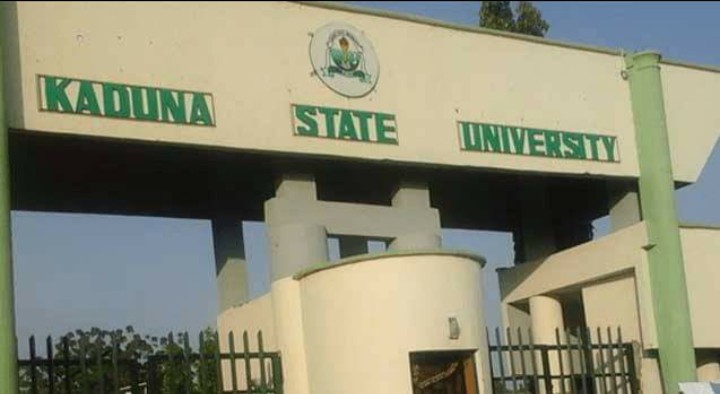
With time racing down to the end of the administration of the incumbent Vice-Chancellor of the Kaduna State University, Professor Muhammad Tanko, schemings have begun by many academics who have indicated an interest in clinching the highest executive but challenging position in the university.

Indications emerged recently that there are strong contenders within the university who are out to slug it out to succeed Prof. Tanko, as the 6th Vice-Chancellor of the University. Even though the names of the candidates have remained top secret up to the time of filing this report, there are contestants that are believed to have applied.

One of the leading contenders in the race, who many believe should have naturally been the successor to Professor Tanko is the incumbent Deputy Vice-Chancellor in charge of Academic matters, Professor Abdullahi Musa Ashafa. Before his appointment as the DVC, Academic, Professor Ashafa served as Head, Department of History, Dean, Faculty of Arts, a member of the 2nd Governing Council of the university led by Professor Idris Abdulkadir, and also Dean, School of Postgraduate Studies on two occasions. Ashafa and the outgoing VC were the first set of KASU to become Professors by promotion over ten years ago.

Another contender is Professor Yusha’u Ango, the Dean School of Postgraduate Studies. Although he was only promoted to the rank of professor last year, Ango is seen as a force to reckon with based on his political standing. He is believed to be supported by the one commissioner in Governor Nasiru El-Rufa’i cabinet, and he also held some administrative positions in the university as a Head of Department and Director.

It has also been gathered that Professor Bala Dogo, Department of Geography who was the first to be appointed a Professor from NDA Kaduna where he was an Associate Professor, is seriously in the race. Dogo has been a regular customer in applying for the post even outside KASU, but his low rating may likely see his ambition fly to anywhere. Others who are said to be in the race include Prof. John Laah, Department of Geography, Prof. Ahmed Kofa Babajo, Department of English and Drama, Prof. Hauwa Evelyn Yusuf, Department of Sociology, Prof Zainab Dabo of the Department of Business Administration & current Director of KASU Global Consult among others.

However, a source in the university said there are many Professors outside the university that have also indicated an interest in becoming the next VC. Other academics within KASU eyeing the position but are not from Kaduna State include Professor Ibrahim Malumfashi, Department of Nigerian Languages.

The major controversy in the process were the two contradictory advertisements made for the position. The first advertisement, signed by the then Commissioner of Education, Hon. Dr Shehu Usman Makarfi, instead of the University Registrar, stipulated the major criteria as a candidate must be a Professor of at least ten standing. But the second advertisement came out a week to the expiration of the deadline. In the new advertisement, the ten years standing for a professorship was removed. Contradictorily, it was signed by the same Commissioner Makarfi who had by then been redeployed to the Ministry for Local Government. This was said to have been made neither with the knowledge of the current Hon. Commissioner of Education nor her input.

The most controversial aspect of the second advert is that it did not indicate if it supersedes the previous one or not. The question interested parties thus asked is which of the advertisements would be used for the selection process of the new VC for KASU?

Another issue is that there is no Governing Council currently in the University to take charge of the process as stipulated in the University laws. It was reliably gathered that the academic union, ASUU, Kaduna State University Chapter have written to the Visitor of its opposition to the process outside the Council mandate. Though the Visitor was said to have directed for the collation of names for the constitution of a Council, how soon would it come out? If the Council is eventually constituted, observers expressed the likelihood of doing another advertisement without controversy. This, they also observed, will further delay the process. If this should happen until the incumbent Vice-Chancellor vacates office in January 2022, this will mean leaving the University with an Acting VC.

What pundits argue on this matter is why should a serious government like that of Governor El-Rufai who has another excellent and brilliant personality like Emir Muhammad Sanusi II as Chancellor allowed KASU’s excellent academic and administrative reputation tainted. The tenure of the current VC, Prof. Tanko is expiring on January 22, 2022.

ASUU vs FG: the three weeks ultimatum and the EAA Blackmail

By Abdelghaffar Abdelmalik Amoka

We woke up Monday morning to meet the bold Newspapers’ headlines of ASUU’s 3 weeks ultimatum to FG after the NEC meeting. In response, FG through Ngige promised to disburse the withheld 2019/2020 EAA on Wednesday. Another promise and Wednesday is gone. Of all the none implemented agreements, it’s EAA that came to their mind. Is the 3 weeks ultimatum all about EAA or they feel that another promise of a meager allowance called EAA will calm the nerves of those “poor lecturers”? I guess they are thinking they have impoverished us to that level that we jump on a promise of little “change”.

In December 2020 and a few days before the suspension of the 2020 edition of the ASUU Strikes, an agreement was reached, and with a clause that the failure of the government to fulfill the signed 2020 MoU with the agreed timeline, the strike will resume without any notice. It’s almost 11 months when the strike was suspended and some of us can’t really figure out the part of the agreement that has been implemented.

After 11 months, UTAS is on voicemail and ASUU members have been tactically dragged into IPPIS using their BVN. 11 months and still counting, no information on the renegotiation of the 2009 agreement that involves salary review. While no information on the accumulated EAA till 2019, the 2019-2020 EAA that is part of the 2021 budget is hanging and the year 2021 will end in about 6 weeks.

This reminds me of the last meeting for the strike suspension referendum at the branches. A senior colleague stood up during the meeting to pour out his mind that with his experience from the ASUU and FG negotiations, suspending the strike based on the usual promises and signing of MoUs will be a regret. The opinion of the colleague and other factors may have possibly made the ABU Branch of ASUU to vote against the suspension of the 2020 strike.

After the strike was suspended, I had an encounter with Dr. Salihu Lukman, the DG of Progressive Governors’ Forum on the ASUU strike. He made a comment that is still in my head since December 2020. That statement featured in the conclusion of my book titled: Nigeria’s university industrial unrest and poverty of sincerity. Dr. Lukman said, “We should not deceive ourselves to imagine that simply because there is an agreement, leaders will voluntarily implement it”. Hate him or like him for that statement, the statement has been true and is still true.

It is 11 months after the strike and ASUU members are on IPPIS, directly or indirectly. I doubt if there are any visiting professors in any federal universities, UTAS has been under test for the past 11 months with all the delaying tactics. The highest-paid Professor in 2009 received a net salary of about N450,000, including all the allowances. The salary remained that till January 2020. From February 2020 till date, and despite the minimum wage implementation, the net salary of the highest-paid Professor with all the allowances dropped to N416,000. With the inflation since 2009, the salary of academics was static till January 2020 after which it start to decrease.

And to attain the level of highest-paid Professor with that net salary, you must have been employed as an Assistant Lecturer with a Masters degree on a salary of N115,000 per month (all allowances included), worked for a minimum of 15 years to be promoted to the rank Professor and be on that rank for 9 years. So, to earn N416,000 as a Professor in any Nigerian university, you must have worked for a minimum of 24 years.

In the book that was recently published, I described the 2020 strike suspension as just like a temporary “ceasefire” and that FG will have to be forced to implement the signed agreements with another strike as usual. That is exactly where we are today with another ultimatum that may very likely lead to another strike.

But most colleagues are actually tired of strikes. Despite the 9 months of torture during the strike without salary, nothing seems to have changed and we are struggling more than ever to get home with our take-home pay. Are we ready to go for another round of months without a salary? Will the coming strike be focused on the revitalisation as number one on the list of demands? Or be silent on revitalisation for now and focus on 2009 renegotiation and pursue the review of salaries and welfare of lecturers to a logical conclusion?

The question coming from younger Academics is this: Why the continued fight for the system by academics while most others are fighting for themselves? They are saying that it is time for ASUU to focus on the welfare and conditions of service of their members. They said they feel more comfortable for their salaries to be withheld for a demand for improved salaries and welfare than for the fight to uphold university autonomy and funding which parents and students don’t even think is necessary.

A graduate of physics working in a bank visited the department last week and we got talking and the issue of salaries popped up. I told him our salaries which include all the allowances from Graduate Assistant to Professor and he was like that is unbelievable. He opened his mouth in disbelief. He thought my salary was like N700,000 and a Professor earned something close to a million naira. I could not stop laughing at his thoughts. I told him that those figures only exists in his head and that the reality was the figure I just rolled out. He felt that way because he is about 2 years in the bank and his salary is higher than the salary of a senior lecturer in the University. It made no sense to him. He can’t believe he earned more than a senior lecturer, a PhD holder, that has spent a minimum of 9 years in the University.

Dear ASUU President and ASUU NEC, convincing some ASUU members, especially the younger ones to vote in favour of another strike that will not prioritize their salaries and welfare may be a hard nut to crack. We have suffered enough and still suffering. We are meant to be solution developers but we are definitely not in the right frame of mind to develop solutions. How do you expect an academic to think when his brain is filled with the thought of how to get home with his salary? We need to set our priorities right. This is 2021 and we are living on a salary that is lower than the 2009 salary table. That is not sustainable.

Dear Federal Government of Nigeria, university lecturers don’t need that EAA that they are not sure when it will come but an academic living wage to live a life. Having refused to fully implement the 2020 MoU as Dr. Lukman postulated and some of us expected, ASUU members will be more than willing to embark on another strike to get that academic living wage from the conclusion and implementation of the 2009 renegotiation.

Abdelghaffar Abdelmalik Amoka writes from ABU, Zaria.

Nigerian Universities to embark on fresh strike

By Khadija Muhammad

The national president of the Academic Staff Union of Universities (ASUU), Professor Emmanuel Osodeke, expressed concern over how the Federal Government of Nigeria is handling the demands of the universities unseriously. Together with other union leaders, he expressed their dismay at a press conference in Abuja on November 15, 2021.

The Academic Staff Union of Universities (ASUU) issued a three-week ultimatum to the Federal Government to address all issues as agreed in the December 2020 Agreement.

ASUU President, Professor Emmanuel Osodeke, stated this on Monday while addressing reporters in Abuja.

The president warned that the union might be compelled to embark on another nationwide strike should the government fail to implement the Memorandum of Action signed with ASUU before suspending the last industrial action.

According to the ASUU President, all the issues, including unpaid academic earned allowances and the universities revitalisation fund, have not been addressed almost one year after an agreement was reached.

The ultimatum is part of the resolutions reached at the National Executive Council (NEC) meeting of ASUU held in the nation’s capital.

It can be recalled that ASUU embarked on a nationwide strike in March 2020 following its disagreement with the government over the funding of the universities and the Integrated Payroll and Personnel Information System (IPPIS), among other issues. Accordingly, it had proposed the University Transparency and Accountability Solution (UTAS) to replace IPPIS. But in a bid to get the lecturers back to class, the Minister of Labour and Employment, Chris Ngige, convened a series of meetings with leaders of the union and relevant government officials.

Amid the strike that lasted several months and negotiations that ended in a deadlock, the government and ASUU later signed a Memorandum of Action in December 2020. This led to the suspension of the protracted industrial action that lasted nine months. However, not after the government offered a cumulative N65 billion to the lecturers to address earned academic allowances and revitalisation of universities.

On the IPPIS tussle, both parties agreed on the UTAS, while the government would pay the university lecturers’ salary arrears on a different platform.

ASUU had on several occasions warned that it would indeed go on strike if the federal government continued to break the promises and throw away all the agreements reached.

Pantami: The Return of Professorship Debate

By Zayyad I. Muhammad

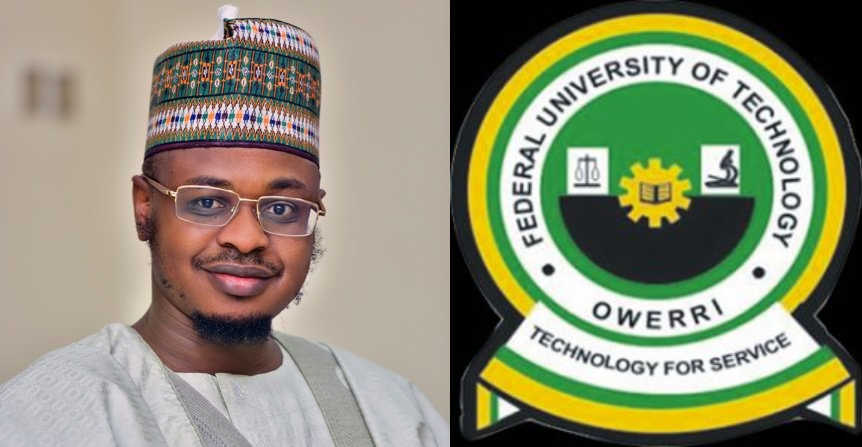
The Federal University of Technology, Owerri chapter of the Academic Staff Union of Universities (ASUU) inaugurated a five-person probe panel on September 22, 2021, to assess the procedures used to appoint the Minister of Communication and Digital Economy, Dr Isa Ali Pantami, as a Professor of Cybersecurity. The panel said due process was followed by the governing council and the management of the university in the appointment. The report by the panel is an interesting one considering the heated public debates generated by the appointment.

Most of the people who criticized the appointment were academics. As expected, the majority of those who supported the critics were Pantami’s political adversaries. Pantami’s appointment supporters were either some academics, his political supporters, and those who sat on the fence.

The verdict by the five-person probe panel certainly gives Pantami and FUTO some respite. His political supporters will be delighted, while opponents of the appointment will fire more because the majority of them are academics. Tenacious criticism on issues that concern knowledge is an attitude of academics.

During the first debate, Pantami’s ‘friend’ Professor  Farooq Kperogi said: “There are basically three legitimate ways to become a professor: by climbing the professional ladder in a university; by being appointed to the position from outside academia in recognition of vast and varied industry experience or artistic wizardly in a field; and through a courtesy appointment. Isa Ali Ibrahim Pantami’s record does not qualify him for any”.

However, Prof. Tukur Sa’ad, a former Vice-Chancellor, said, countering Kperogi, “A University can decide to appoint an individual to a position either through promotion or straight appointment based on the criteria they set up independent of the National University Commission (NUC).”

Pantami’s political allies and supporters are delighted with the report of the ASUU panel because they see Pantami as a potential vice presidential candidate with many advantages.  To all Pantami’s supporters, his professorship is a big addition to his credentials which his potential rivals don’t have. They believe that Patnami is young, highly educated with a PhD. from the United Kingdom (UK) at Robert Gordon University, Aberdeen.

These supporters add that politically, Pantami is a good ‘material’ to balance a presidential ticket. He is from North-East Nigeria; he fits into the agitation for the northeast to present the vice-presidential candidate in 2023. Moreover, he is a household name in the North-west. They will feel at home with him – he is their cousin.

Additionally, he is an Islamic scholar with vast cult-like followership nationwide. Pantami is Buhari’s strong confidant and ally. The general belief among Pantami’s promoters is; Pantami from the northeast as vice-presidential candidate with any presidential candidate from the south, especially the southwest, will balance a presidential ticket and serve as a strategy for the APC to retain the presidency in 2023.

Nevertheless, academics and oppositions against Pantami’s professorship will continue to hit hard while his political rivals will clap for them. So Pantami and his supporters should be well-prepared for the game.

Zayyad I. Muhammad writes from Abuja. He can be contacted via zaymohd@yahoo.com.

TETFund 2022: Research Grants targets N10bn

By Hussaina Sufyan Ahmad

The Tertiary Education Trust Fund (TETFund) has announced its target to raise the annual allocation to the National Research Fund (NRF) from N8.5 billion in 2021 to N10 billion in 2022, during a virtual meeting on the marking of the International Open Access Week October which holds October 25th – 31st, Nairobi, Kenya.

TETFund executive secretary, Professor Suleiman Bogoro, stated this for the theme “Democratisation of Higher Education in Nigeria through Open Access.” A meeting co-hosted by the Fund and the Training Centre in Communication, Nairobi.

According to the TETFund boss, following the agency’s proposal, the Board of Trustees’ had in 2019 graciously approved N5 billion for NRF, which was raised to N7.5 billion in 2020 and N8.5 billion in 2021.

“Over the last two and half years now, we have raised funds available for research. There are two categories; institution-based and National Research Fund.

“The institution based has a ceiling of N3,600 US dollars and it is mainly for basic research while the higher ceiling grant of about 92 – 93,000 US dollars is the National Research Fund aimed at promoting applied research. To this extent, in 2019 I made it a case to the Board of Trustees of TETFund to increase the threshold.”

“It used to be a kind of seed money. Seed money of N4 billion for eight years but from the year 2019 to last year and this year, 2021, we have increased it to N5 billion annually. Last year we increased it from N5 billion to N7.5 billion and this year it is N8.5 billion; and we are hoping in 2022 it will move to N 10 billion.”

Of Professors in the Ivory Tower: Inner Rumblings

By A. A. Bukar

Let me preface this with the caveat and confession that part of the reason I recently slow down hobnobbing with professors is my increasing abhorrence of this culture of excessive bootlicking and kowtowing that is creeping into academia and eroding the ideals of independent thought, spirit of free inquiry and detachment that hitherto characterise intellectual discourse. The radical critique of issues and events for the betterment of humanity and irradiating the society is slowly taking a wing, supplanted with overt politicisation of minor issues (and even non-issues). Today, young academics, like myself, are becoming increasingly afraid to express even simple admiration of who they consider as the IDEAL TYPE among their teachers and mentors in academia because of “interpretations”. For this, you can even be reported to the enemy of such a scholar to possibly victimise you “sabida ai yaron wane ne! Ku kyale shi, ai zai zo defence, ai za’ a kawo papers dinsa for assessment”. And on and on. Such pettiness and vendetta. Hence, many – out there – see  Nigerian academics as the worst enemies of themselves and are happy with how FG is dealing with them.

Little wonder whether this culture is obtainable in other parts of the world. Departments are compartmentalised into cliques and camps a la political parties in the larger society. Professors are becoming like emirs fortified by sycophants, making them unnecessarily snobbish and covetous of flattery. PhDs are deliberately delayed or tactically killed because a candidate does not BELONG. A blind eye is turned to obvious wrongs, mediocrity, and crass injustice because “our oga” is INVOLVED. Entitlements and privileges (especially of the younger ones) are stampeded to settle SCORES.

A friend sent me a Jumaat goodwill message, a quotation from Rumi which reads: “Listen to silence; it has so much to say”. How many PhD/MSc candidates do you know writhing in silent pain of frustration? Prof sirs and mas: listen to our silences and that shy smile that says “ba komai sir”. When I was an undergrad, I once overheard my teacher, Dr Gausu, talking about one of his colleagues in Economics, Business or Accounting (I can’t remember exactly) who’d become agoraphobic and almost schizophrenic because of PhD manhandling from a senior colleague. Of course, then I was too inexperienced to understand the heck that was about. They sarcastically even refer to the initials as “Pull Him Down”.

Whether this augurs well for generation, production and dissemination of ideas and knowledge typical of the Ivory Tower, I leave it to your imagination.

For these and more, many ideal intellectuals are on the lookout for escape windows from the suffocating atmosphere of poverty and frustrations taking over academia like a thick cloud on the horizon. Many are “diversifying”, hence diverting their attention from the absolute commitment ideal scholarship demands. Others are increasingly becoming nonchalant – that I-don’t-care attitude of: “if the department or unit fuels the generator set, fine, otherwise I teach the SPSS or Word Processing on the whiteboard”. Elsewhere blackboard. So Nigerian hospitals are not alone; medical practitioners are just a cohort.

Despite all odds, I love being at the University. It is a place where I feel I naturally belong. And our campuses are still dotted with the IDEAL TYPE (just as there are IDLE TYPES who do not “profess” any knowledge) that constantly bring back to one’s memory my favourite: Edward Said. Critically engaging. Highly unassuming – like Mazrui. Passionate about nourishing the mind; concerned with the public good and Humanity as a whole. People who will unconsciously make you feel you are far from arriving without making you feel embarrassed. I have recently met and enormously admire one such intellectual is Professor Abubakar Mu’azu of the Mass Communication department, UNIMAID.

Interpret this one too the way you like. Report me anywhere. Land me into trouble. I no longer care. But Allah knows whether this is coming from the bottom of my heart or elsewhere. Such as an attempt to curry favour.

After all, what use is admiring people if you cannot tell them or others you do? Or should we hold on till they are no more? Wouldn’t that serve as a token of encouragement to maintain the course and tempo against all odds?

I have earmarked a few other similar intellectuals I will write about in due course on this space. I will unburden my heart about people I feel positively towards. Yes, I will specify those who fit my definition of the ideal intellectual. Part of this is, of course, honesty. Wallahi, no matter how engaging you are, you are out of the equation once it comes to the light you are dubious and too self-centred. If you’re extorting money or sex from your vulnerable students, you cannot be my model. But again, I am not looking out for an angel.

Back to the subject, I have met with Prof Muazu only a few times. One was when he came as an external examiner to my thesis in April 2018 and some months earlier as an accreditation team member for the college I taught in Yobe state. The last, some weeks back. Each, he left me with nothing but admiration and deep respect.

When I phoned my referee and supervisor at undergrad, late Prof Maikaba, to congratulate him on his last promotion, he typically enquired about the progress of my thesis. I told him then, “I was done with viva yesterday and effecting corrections now”. Curiously, he returned with a finder about the examiner. When I replied that it was Mu’azu, he said: “kace an sha aiki”. Toh Bukar. PhD beckons. You can’t wait, especially for one in this business. He admonished me as usual; I giggled, thanked and said my goodbye.

I don’t know whether it’s appropriate to reveal this too. Some hours before the viva voce, my supervisor, Dr Binta Kasim Mohammed, called alerting me “to prepare very well. Because the external examiner brought is extremely thorough and critical”. Sir, you are appreciated and held in high esteem not only by nonentities like us but also by your colleagues. But my assessment of you from afar is that: these things matter little to you (if at all) – out of humility.

From both you and the late Maikaba, I graduated with distinction. But each time we met, you left me feeling inadequate, making me wonder ‘when will I arrive?’. Parts of this are the books you recommend, which I never read, or know not exist. But somewhere in WHERE I STAND, Sheikh Gumi has opined along this line that knowledge is such enigmatic that the more you learn, the more you realise that you know very little. I wonder whether you feel something similar sometimes. Yes, despite the accomplishments. In just your last visit, you recommended, as the situation warranted, many texts. Among these are Peter Winch’s THE IDEA OF A SOCIAL SCIENCE AND ITS RELATION WITH PHILOSOPHY. Then the POSITIVIST DISPUTE IN GERMAN SOCIOLOGY. The latter is such a rare collection – in fact, my first time to meet Adorno, Habermas and Karl Popper in one place. Both books remind me of similar stuff I read from the staple of Claude Ake and Yusuf Bala Usman of blessed memory.

In this vein of characteristic modesty, you specifically asked me to read Ben Bagdikian’s MEDIA MONOPOLY after the viva voce in order to steel my argument on the influence of profit drive in media content production. A copy of my thesis still carries your adorable handwriting suggesting the title and other points. But little wonder you never drew my attention to the fact that you have written extensively on media in peacebuilding until my curiosity took me to the internet and a bookshop where I stumbled CONFLICT MANAGEMENT AND THE MEDIA IN NIGERIA  – a book coedited by you and Gani Yoroms. This was despite your awareness that my thesis is squarely about this matter of controversy. Quite recessive indeed.

With the crisis engulfing Nigerian Universities (the worst I have ever seen) and academics running helter-skelter for greener pasture, I equally wonder what becomes of the academia after the few of you that remain out of passion pass on to something else or the inevitable great beyond. And especially if this maddening ill-treatment continues from the federal government. Allah Ya kiyaye, amin.


Bukar teaches Mass Communication & Journalism at Ahmadu Bello University, Zaria.