ASUU

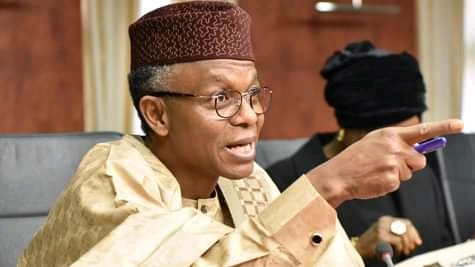
ASUU seeks withdrawal of El-Rufa’i ABU degree

By Ahmad Deedat Zakari

The Academic Staff Union of Universities (ASUU) Ahmadu Bello University branch has advised the institution to withdraw the degree it awarded Kaduna State Governor, Malam Nasir Ahmad El-Rufai.

This was contained in a statement jointly signed by the Chairman and Secretary of ABU-ASUU, Haruna M. Jibril and Hussain A. Abdullahi, released to the public on Wednesday, March 2, 2022.

The statement is an aftermath of a congress meeting held by the union at the Abdullahi Smith Lecture Theatre in ABU.

The union said it discussed the attempt of Elrufai to illegally and forcefully take over lands belonging to ABU despite a court order restraining him from doing so.

According to the Union, El-Rufai’s actions are in contravention of the requirement of character by the institution before awarding a degree. Therefore it becomes necessary to ask for his degree certificate to be withdrawn.

The statement partly reads: “The ASUU- ABU branch at its congress meeting of March 2, 2022, deliberated on the matter of the attempt by Nasiru El-Rufai, the Executive Governor of Kaduna State, to illegally and forcefully in utter disregard of an order by a competent court of law, take over lands belonging to the Ahmadu Bello University, an institution of the Federal Republic of Nigeria and a historic and premier University.”

According to the Union, as contained in the statement, the Congress, therefore, resolved to seek the withdrawal of the El-Rufai degree certificate.

Are you wasting time or wasting data – or both?

By Engr. Mustapha Habu Ringim

There is a significant thing for university students doing nothing at home, in their neighbourhoods, or going from one town to another town. Still, some of these students just waste their precious time on social media, which can be described as a “waste of data.” Thanks to the students’ lack of the mindset to learn a skill or handwork.

Learning skills will benefit them even after graduating from university. Therefore, the fruitful result is that they will become employed or employers, instead of moving up and down looking for an even non-existent job, just like everyone following events in Nigeria knows today.

Engausa Global Tech. Hub hereby welcomes all enlightened students who have realised that we are now in the age of “Digital Technology”. Thus, because we know of such challenges and joblessness, we established EngausaHub.com, whose main aim is “Breaking Barriers and Bridging Gaps.”

Before suspending the ongoing ASUU strike, students can gain a lot. And even afterwards, what they must have learnt will benefit them, in and outside the university. In fact, it’s ridiculously unwise for a young person not to have where he acquires a modern skill or handwork. Otherwise, he would just be going to the university with an empty pocket, with nothing to buy anything they desire.

The universities themselves should have skills acquisition centres because it has become pervasive for graduates—sometimes, including master’s and PhD holders—to finish school and never get a job. They would just “enmesh” themselves in the so-called “Labour Market” without any fruitful result in the end.

Hence, I advise the ASUU, federal and state governments to establish vocational training centres in our universities and other tertiary institutions. Most of these sustainably developed countries also adopted this same method of getting exceptionally good young people. The Vice-chancellor of Skyline University, an Indian, confirmed this assertion to me when he recently paid us a familiarisation visit at ENGAUSA HUB. 

We seek Allah’s guidance.

Engr. Mustapha Habu Ringim is the Founder/CEO Engausa Global Tech. Hub, Kano. He can be reached via ringims@gmail.com or 070383224643. Their websites are www.engausahub.com and www.chosenglobalech.com.

ASUU Strike: Students protest in Kano, other cities

By Uzair Adam Imam

The National Association of Nigerian Students (NANS) has stormed Kano State roads to protest against the ongoing nationwide strike by the Academic Staff Union of Universities (ASUU).

The association that has frowned upon the incessant strike in the country is protesting to tell the world the situation they are facing in the country regarding their education.

The students who converged on the Kofar Nassarawa bridge in Kano City decried over delays in academics.

Singing solidarity songs against ASUU’s action with their hands clinking placards, the students said the menacing issue of the strike should by now be put to an end.

They also called on the federal government to intervene and call off the strike.

Recall that the Vice President of the Union, Comrade Yazid Tanko Muhammad, disclosed their intention to protest on Monday.

Comrade Yazid added, “So, it is a protest which, if we start, will not stop until the issues are resolved, and the lecturers resume work.

Pantami’s professorship debate and 2023 elections

By Zayyad I. Muhammad

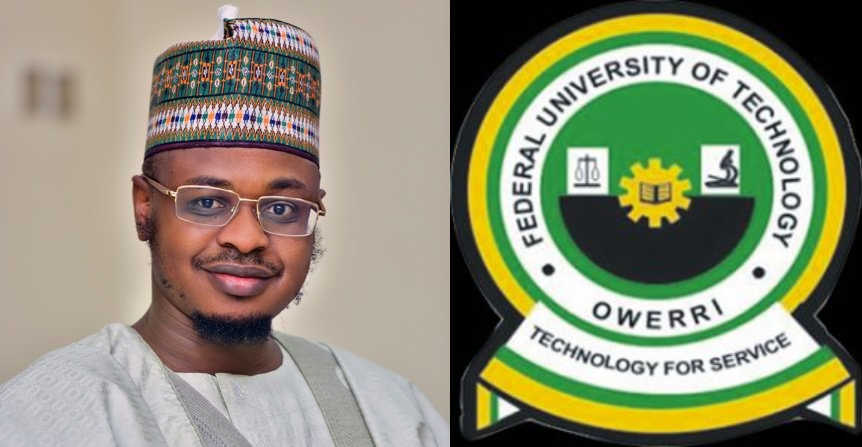
The debate on the legitimacy of  Dr Isah Ali Ibrahim Pantami’s professorship is back.  The National Executive Council (NEC) of the Academic Staff Union of Universities (ASUU) said that the professorial conferment on Pantami’s didn’t follow the laid-down procedures of the Nigerian university system.  Accordingly, the union directed all its members and branches throughout the country not to recognize, accord, or treat him as a professor of Cybersecurity under any guise.

On the other hand, the Vice-Chancellor of the Federal University, Owerri (FUTO), Prof. Nnenna Oti, has said that the management of FUTO will sue against ASUU’s rejection of Dr Pantami’s promotion to the rank as a professor of Cyber Security by his university. When asked to comment on the issue, Minister Pantami – said ‘No Comment, No Comment, No Comment’- the matter is in the court.

The 2023 election campaigns, horse-trading, politicking, and strategizing have begun. Thus, the debate on Pantami’s professorship will linger, especially in the political arenas, notwithstanding the litigation. How Pantami’s political handlers manage the issue will determine the direction and weight of the debate, including the political impact on him. In contrast, how FUTO’s lawyers handle the case will determine the future of Pantami’s professorship.

Isa Ali Ibrahim Pantami – Honorable Minister of Communication and Digital Economy, an Islamic Sheik, a UK-trained PhD holder,  has found himself in a triangular situation – a federal political appointee, an Islamic Sheik and an academic. This revered status means any issue that affects his personality will always be a hot one.  

Most of the people who criticized Pantami’s appointment as a Professor were academics. So, ASUU’s NEC stand is not a surprise. But, equally, the majority of those who supported the critics were Pantami’s political adversaries.  On the other hand, the supporters of Pantami’s professorship are academics who have soft spots for him, members of religious bodies, his students and his political friends,  and those who are sitting on the fence.

In retrospect, the FUTO chapter of ASUU had set up a five-person panel chaired by Prof. M. S. Nwakaudu, with members: G.A. Anyanwu, C. E. Orji, Mrs O.P. Onyewuchi; and T. I. N. Ezejiofor (Member/Secretary), which cleared the appointment and asserted that due process was followed, a verdict that gave Pantami and FUTO some respite. However, ASUU NEC has reversed the verdict, giving Pantami’s political opponents more strength to fire at him more.

Pantami’s political allies, supporters, and students will be prayerful for the courts of law to clear this issue once and for all. This is because to Pantami’s supporters, his professorship is a significant addition to his already ‘unmatched’ credentials in his own rights. Pantami’s supporters believe that he is young, highly educated with a PhD. from the United Kingdom (UK) at Robert Gordon University, Aberdeen. They argue that Pantami is a good material to balance a presidential ticket politically.

Moreover, Pantami is from northeast Nigeria and fits into the agitation for the northeast to present the vice-presidential candidate in 2023. He is a household name in the northwest. They will feel at home with him – he is their cousin. He is an Islamic scholar with immense, even cult-like, followership nationwide. Pantami is Buhari’s strong confidant and ally.

The general belief among Pantami’s promoters is; Pantami from the north-east as vice-presidential candidate with any presidential candidate from the south, especially the southwest, will balance a presidential ticket and serve as a strategy for the APC to retain the presidency in 2023. Nevertheless, opposition against Pantami’s professorship will continue to have a field-day, striking him. At the same time, his political rivals will clap for them as the nation awaits the courts’ verdicts on the Professorship.

Zayyad I. Muhammad writes from Abuja, 08036070980, zaymohd@yahoo.com

ASUU Strike: We’ll protest to the world the situation of our education in Nigeria – NANS

By Uzair Adam Imam

The National Association of Nigerian Students (NANS) has threatened to occupy all roads to Abuja Monday if the Academic Staff Union of Universities (ASUU) ’s strike is not brought to an end.

The association stated that the protest would involve students, parents and civil servants.

The Vice President of the Union, Comrade Yazid Tanko Muhammad, disclosed this to BBC Hausa on Tuesday, February 22, 2022.

He added that they would all gather to tell the world the situation they are facing in the country with regards to their education.

Muhammad also reiterated that the protest had become necessary to rescue the country’s educational system from incessant strike actions.

Comrade Yazid Tanko Muhammad said: “The reason we choose to embark on a protest is that it is the only language that can be understood, and it is the only way we can show the world our situations and feelings towards the strike.

“So, it is a protest which, if we start, will not stop until the issues are resolved, and the lecturers resume work.

“So we will block the roads linking Abuja from Kogi, Abuja from Kaduna and Abuja from Nasarawa states.

“That means we will block the whole Abuja on that day. We will also block the Federal Secretariat.

“That is why we are calling on Mr President to show concern and solidarity to us by not attending to work on that day.

“He should please remain at home. Since everyone is a student, either a Minister, Senator, House of Representatives member, they were all students before they reached the level they are now.

“So, we are doing this because of the future of our education and the country.

“We can’t just stay at home and watch. No country in the world can go on strike for a whole month without any concrete reasons like a pandemic or similar things,” he stated.

As an affected student, I have solutions to ASUU’s strikes

By Hassan Ahmad Usman

As a student in a public university in Nigeria, I don’t need anyone to tell me how devastating and frustrating the Academic Staff Union of Universities (ASUU) strike is. Before that, I spent three years trying to secure admission into a university. Registering JAMB year-in-year-out and despite, not for once, failing to make it, I couldn’t secure admission until the fourth attempt. Finally, I got admission into the Federal University of Lafia in September 2018 for a four-year programme. At that time, our colleagues with silver spoons were already in their final year in other private universities. We might claim not to envy them, but we were left with no option other than to play catch-up.

My first taste of the ASUU strike did not take long after I started enjoying academia. It happened just a few weeks upon resumption and lasted for four months. To cut a long story short, this is 2022, and I’m still halfway into my level three. There have been debates since ASUU declared a one-month warning strike on whether or not the strike is the only tool that ASUU can use to press home their demands from the Nigerian government, considering that it is the students that bear the brunt of these strike actions, the most, for the past twenty years.

To some, ASUU has achieved some progress with strikes, and the most notable achievement they cite is the creation of TETFUND. While others believe there is no significant progress that ASUU achieved with strike actions for the past twenty years. Hence, the need for a change of approach. As a directly affected student, I am with the latter group. Whenever one speaks against the embarking on strike by the union, one thing they and their apologists challenge you on is to bring a workable approach aside from the strike. I took that challenge, and here, I’ll provide a possible two-step way out:

To be realistic, the fight against this administration by ASUU is over. ASUU wasted another eight years fighting in vain. This is primarily due to their short term fighting tactics. In 15 months, a new administration will take over. ASUU should forget this administration and set its eyes on the next one. The two steps to be taken are as follows;

ASUU should meet the candidates of the two leading political parties (no disrespect to other political parties) and discuss their plans to bring a solution to the unending issue. However, this should be just the preliminary.  

The first step of action from ASUU should come after the new administration has taken the mantle of leadership. Let’s say six months unto assumption of power. ASUU, at this stage, should seek an audience with the president himself and should not entertain sitting with any minister, cabinet members or the so-called religious bodies. I did not see the president denying them a chance of meeting him. After all, we’ve seen different groups – some with no meaning and motive – meeting the president, so why not ASUU?

The meeting (with the president) will make Nigerians know and have the feeling that the failure comes from the president himself/herself if he/she could not keep to promises made before the election. They should not meet people like Chris Ngige or another Adamu Adamu. ASUU starts losing public sympathy, and they need it to succeed.

They should make sure they strike a deal within a year with the administration with the president himself in attendance and watch how things unravel within the first two years of the administration. A 55% achievement of their demand within two years is a success. 

After seeing and realizing how committed the administration is towards meeting their demands, ASUU can decide to take the second step if there is no significant progress. Let’s say a less than 50% attainment of their needs. Then, I suggest a strike as the second step, yes, a strike action! It has always been what is effective in this country. And I only blame ASUU because it becomes a recurrent issue for them.

This strike should come in the third year of the new president and the year in which the atmosphere is filled with political activities heading to the polls in the succeeding year. Therefore, they should declare a strike that the only condition to suspending it is by granting their request in toto. They should resist any sweet words from the FG. And they should also withdraw all their members from participating in the election activities.

Let the average Nigerians go to the polls with the anger of their children being out of the school walls for over a year. Let the oppositions have what to campaign with and have the neck of the administration in their hands. Let the president face his reelection bid with voters’ anger. Let the world see a president who prioritizes his stay in power without education more than the country’s future. I think only a coconut head leader would fail to succumb! ASUU, please try this. I am your obedient student.

Hassan Ahmad Usman writes from Lafia, Nasarawa State, Nigeria. He can be reached via basree177@gmail.com.

Musings on the solution to university education in Nigeria

By Ahmadu Shehu, PhD

Once again, there is a total blackout in Nigerian public universities. Last week, the Academic Staff Union of Universities (ASUU), the umbrella Union of academics working in Nigerian public universities, declared a one-month warning strike to remind the government of their promises signed just a year or two ago. 

It has been decades since the rift between ASUU and the Federal Government of Nigeria took the lives and progress of Nigerian students to ransom without a foreseeable end to the debacle.

ASUU was a child of necessity born out of the precarious situation Nigerian lecturers found themselves in the 70s under the various military juntas bent on killing the tertiary education in Nigeria as they did basic education. 

Thanks to radical scholars and the rise of socialism as an alternative economic and political ideology to capitalism the government prefers, ASUU got a deep ideological rooting. It also gets a wide acceptance among diverse social domains of the Nigerian society, who, like ASUU, were disenfranchised by and dissatisfied with the tyranny of successive regimes. 

The confrontations between ASUU and the military junta of Ibrahim Babangida and Sani Abacha made the association a front-wheel of social activism in Africa and gave it a legitimate voice that is believed to stand for the masses not just on education but also human rights and socioeconomic advancement. 

Over the decades, ASUU became very wealthy and stubbornly anti-establishment, which had assisted in its success against the government and lost popularity among Nigerians. But, these are topics for another day. 

While there are physical successes credited to ASUU struggles, the incessant strikes have killed many, delayed millions and subverted trillions of aspirations, destinies and successes of millions of Nigerians. Thus, one of the emergencies facing Nigerian university education today is this endless and worthless rift between ASUU and the Federal Government. 

A serious-minded government in Nigeria should have education as a priority. Any education policy that does not consider the solution to this rift is not comprehensive enough and may not solve the quagmire of education in Nigeria. 

How do we end this decades-old problem that has defied most solutions? Some people have advocated for the privatisation of Nigerian universities to have a purely money-driven university system reminiscent of the US-style, where citizens have to pay through their noses to acquire tertiary education. 

An opposite idea is one the one ASUU pursues. It is a totally free, accessible, and one hundred per cent public university education where all willing and qualified citizens can enrol and acquire tertiary education in fields of their choices and mental capabilities. 

ASUU’s idea is noble and ideal of a functional socialist society where education is an inalienable right of citizens. However, the situation in Nigeria and our economic ideology doesn’t allow for either of these ideas to work. It is why ASUU and the government have been going around the same hole of self-deceit and conscious pretence. 

To provide a lasting solution to this endless crisis that have killed our education and our economy,  I believe that privatisation is not the right solution, just as a costless education is not. We’re not America that the insensitive capitalists admire without reason nor the defunct Soviet Union that ASUU loves to imitate. These approaches do not fit our realities.

The alternative is for the government to collect and allocate special taxes to fund education. Again, we can see the models in Western and Central Europe, even in Asia, where citizens pay special taxes to fund education. In this regime, a specific percentage of all taxations will be allocated to education, and citizens will access this service which has been paid for in a different way, supposedly free of charge. 

Then, all federal universities shall submit and defend their budgets at the national assembly, effectively giving universities financial autonomy and removing them from the shackles of the ministry of education and, by extension, the cumbersome nature of mainstream Nigerian civil service. 

That means that each university will be an independent government entity responsible for 100% of its affairs without recourse to other government agencies. This equally requires that we abolish bottlenecks such as Tetfund or limit their capacity to specific funds. The ministry of education will only be a regulatory body in collaboration with the National Universities Commission (NUC). 

That way, the university management can be charged with the responsibilities of funds generation and management to the extent that lecturers no longer need ASUU as an association as all employees of a given university are totally within the purview of the university that employs them. The Federal Government doesn’t need to deal with the basic needs of university academics, such as salary and allowances.

In this model, academics take up their jobs knowing that their remuneration and social welfare are subject to their immediate employers, which is the university management. In turn, they submit their budgets yearly to the national budget and planning office, which will be debated and approved by the national assembly. Whatever they get is their own cup of tea. 

That effectively means that ASUU as an association will cease to exist because each of its members will be totally and absolutely under the purview of their immediate employers  – their home universities. There won’t be the federal government to fight. The common enemy will be gone, and there won’t be the basis for a national strike because each is on their own. 

This, as simple as it is in words, is a herculean task that cannot be easy to achieve. It requires a huge political will, legislative and administrative changes. 

No matter how long it takes, making universities entirely independent and autonomous while subjecting them to the same accountability measures prevalent on other government agencies is the surest, if not the only way to achieve a stable, qualitative and functional university system.

That way, there won’t be ASUU talk more of strikes, and the quality and quantity of education will be solely a responsibility of the universities and, therefore, the academics. 

Dr Ahmadu Shehu writes from Kaduna and can be reached via ahmadsheehu@gmail.com.

FG is ready to meet with ASUU on all issues they’ve raised – Education Minister

By Uzair Adam Imam

 The Minister of Education, Malam Adamu Adamu, has said that the federal government is ready to meet with the Academic Staff Union of Universities (ASUU) on all issues they have raised.

Adamu said that he was surprised by the decision of the union to embark on a four-week strike. 

He added that the decision of the university lecturers came abruptly amidst ongoing meetings that aimed at resolving the menace.

The minister stated this on Wednesday while fielding questions from State House reporters after the Federal Executive Council (FEC) meeting in Abuja. 

However, despite several negotiations, the minister also cleared the government of any fault over failure to reach an agreement with ASUU. 

According to him, “ASUU, unfortunately, they have gone on strike, and I am looking for them because all the issues are being addressed. The last thing that happened was that our committee looked at their demands, but there are renegotiations going on. They submitted a draft agreement which the ministry is looking at.”

Speaking on ASUU’s draft agreement, Adamu said, “A committee is looking at it. Immediately it finishes, the government is meant to announce what it had accepted. Then suddenly, I heard them going on strike.”

Clearing his name over allegations from ASUU about his absence from meetings, the minister said, “ASUU will never say that. I always call the meeting myself. The meetings I didn’t attend were those that happened when I was in hospital in Germany.

“We want a peaceful resolution. The federal government is ready to meet them on all issues they have raised, and if there are so many meetings and the gap is not closing, then I think it’s not the fault of the government.

Asked about the possibilities of reconciliation between the FG and ASUU  before the end of the 30-day strike, he said, “I can’t give you time. I am ready to reach an agreement with ASUU now, but since I’m not the only one, I can’t give you time, but certainly, we are going to reach an agreement very soon.”

How to make the month-long ASUU strike a win-win situation – Don

By Uzair Adam Imam

A senior lecturer with the Department of Mass Communication, Bayero University, Kano (BUK), Dr Ibrahim Siraj, has described the four-week strike of the Academic Staff Union of Universities (ASUU) as a necessary evil Nigerians must learn to live with.

Siraj said that as we could not stop the strike, we could do whatever we could to minimize the ‘losses’ that come with it while anticipating the benefit.

The academic who disclosed this on his social media platform stated that if only we could use some formulas, we are all winners – driving many benefits from the strike.

The writing he titled, “How to Make the Month-Long ASUU Strike a Win-Win Situation”, provided some formulas which he married them up with the benefits worth driving if put into practice.

Dr Siraj wrote, “Federal Government is given an ample opportunity to study ASUU demands, engage in serious and sincere negotiation and finally seal a deal. This will save the system from further disruption and damage.

“And with the countdown to 2023 general elections just starting and political activities expected to reach their peak later in the year, no better time than now to do it. They can resolve this one and concentrate on their politicking. Win.”

He added that “for lecturers, this is a time to sort out all issues relating to continuous assessment (CA), have some rest, finish writing that paper, gain some renewed energy and hope for the best from the struggle. In-sha-Allah it will usher into a better university system: better teaching and learning conditions, better remuneration, and more productive scholarship. Win.”

Moreover, Siraj stated that this is also an opportunity for the students to prepare for the coming exams “eat up the notes, ‘cram’ the handouts and do additional reading and consultation on the topics. This could translate into better performance and ultimately higher grades. Win”.

“Final year students could use the window to invest more time in writing their projects. So, in addition to aiding timely completion, it could also enhance the quality of the output. Win,” he stated.

The lecturer stated that the adjustment in the calendar means that BUK students will spend a better part of the blessed month of Ramadan at home. Thus, he said, “this means students and teachers will have more time to devote to seeking Allah’s pleasure in the holy month. Win.”

ASUU declares four-week warning strike

By Hussaina Sufyan Ahmed

Following up on the meeting between the Academic Staff Union of Universities (ASUU) and the federal government in the early morning of February 14, 2022, has declared a four week comprehensive and total strike.

On Monday, the President of ASUU, Prof. Emmanuel Osodeke, announced the strike at a press conference.

The strike takes effect from Monday, February 14, 2022.

He said, “The union tried to avoid the strike, but the Federal Government was unresponsive to the union’s demands.”

Prof. Osodeke also said that ASUU NEC faulted the creation of new universities.

“NEC resolved to embark on the four-week roll-over total, and comprehensive strike as the government has failed to implement the Memorandum of Action it signed with ASUU since December 2020.