

As Governor Fintiri constructs the first superhighway in the Northeast
By Zayyad I. Muhammad
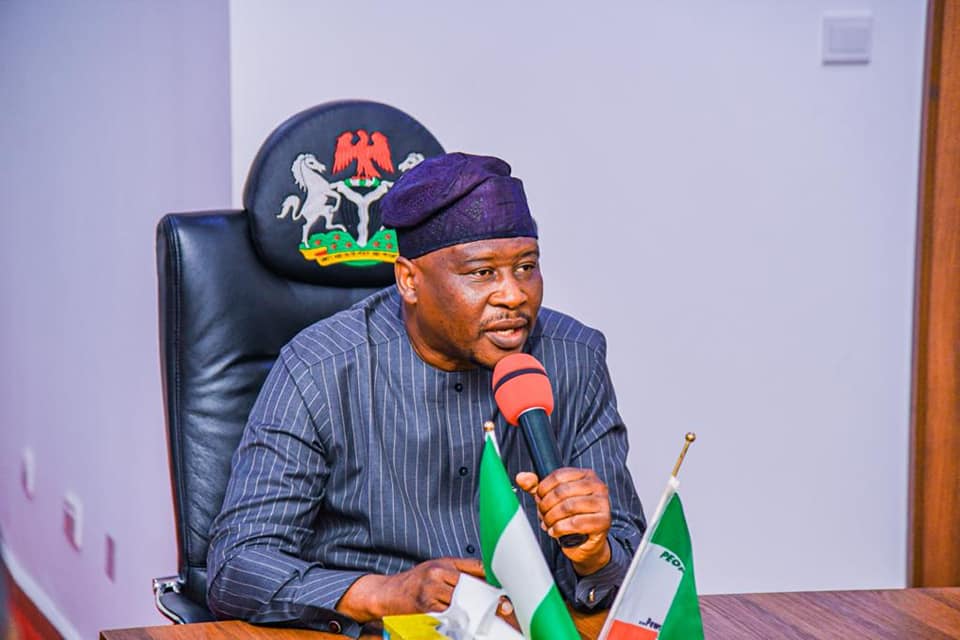
The Adamawa state government, under the leadership of Governor Ahmadu Umaru Fintiri, has commenced the construction of a 20.8-kilometre superhighway in Yola, the Adamawa state capital.
The Superhighway, starting from the Yola City Gate and ending at AA Lawan Junction inside the city of Yola, will open up a new corridor in the Jimeta-Yola metropolitan area as the superhighway is passing through virgin land, though there is massive building activity along the way—new housing estates, including the 2000 housing units constructed by the Governor Fintiri Government for civil servants and other citizens of the state. Other activities along the corridor are industries, farmhouses, schools, and commercial activities.
Some critics have been accusing state governors of neglecting basic needs while constructing big roads and flyovers, but Governor Fintiri is different—he has struck a balance between human development and infrastructure, rural needs and urban development, and community engagement, and political engagement. Governor Fintiri has built cottage hospitals and rehabilitated general and specialist hospitals throughout the states. He built new schools and improved the existing ones, including the payment for WAEC and NECO for all Adamawa State students.
In the just-released 2023 NECO Results, Adamawa State recorded the highest number of candidates with five credits, including English and mathematics. Recently, Governor Fintiri launched the Adamawa Human Development Council to drive Adamawa’s human development initiatives and oversee all human development issues in the state. Furthermore, Adamawa State has one of the most well-structured and sustainable poverty alleviation and wealth creation agencies in the northeast: the Adamawa Poverty Alleviation and Wealth Creation Agency (PAWECA). The agency trains and develops skills for youth and women; it’s doing well in that its core mandate
Coming back to the main topic, the superhighway, it is simply a product of knowledge-driven governance, which always strives to strike a balance between development and expansion, rural needs and urban requirements, and people’s needs and wants. This balance is essential for any state government to fulfil its vital role in how its citizens and businesses travel, commute, and transport goods and services. One of the crucial components of modern transportation in this era of high-speed technology is superhighways.
Like any other huge construction project, superhighways have their challenges, but the importance and the need for the 20.8-kilometre superhighway along that corridor overshadow its challenges.
City expansion, urban congestion, population growth, and modernization necessitate the need for better roadways on a global scale. Superhighways in towns and cities bring efficiency to businesses that depend on transportation, reduce commuter time, and are designed to enhance road safety while reducing accidents. Their economic impact is substantial, improving connectivity between different sections of the city, reducing congestion, and diverting long-distance traffic away from the inner town’s roads. Governor Fintiri’s 20.8km superhighway stretching from the Welcome Yola City Gate to AA Lawan Junction inside the city, which will be the first in any state capital in the Northeast, will offer these benefits, including opening a new corridor in the Jimeta-Yola capital city.
Zayyad I. Muhammad writes from Abuja via zaymohd@yahoo.com.
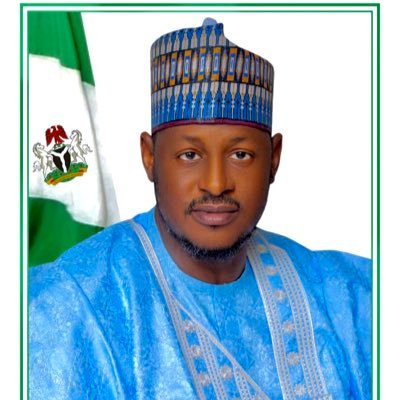
Governor Dikko deprives local government pensioners of their benefits
By Muhammad Malumfashi
It is no longer intriguing to discuss with the victims of withheld pension payments under the current administration in Katsina State. The pensioners are experiencing severe hunger, their children are unable to attend school, and as a result, their families are vulnerable to social problems for which the governor of Katsina is responsible.
How can a rational government extend the screening process until salary time, knowing that their screening team is not mature and time-conscious enough to complete their work before the start of the salary period? This government, which claims to be ‘intelligent’, is creating unnecessary chaos.
I have listened to the accounts of the victims. Regrettably, this government is not taking significant steps to address the issue. These unpaid pensioners dedicated their lives to serving our state. Some could have found lucrative jobs elsewhere but chose to remain in Katsina and serve their home state until retirement. And now, the government is rewarding them with starvation. What an ungrateful government!
If Governor Dikko Umar Radda (PhD) indeed possesses a doctorate, he should not have merely stated it through words, but instead, he should have demonstrated it through his actions. Unfortunately, his actions don’t even match those of someone who has never had the opportunity to attend elementary school. A PhD, in my opinion, should be characterised by excellence, compassion, promptness, and exceptional decision-making. However, the current government, led by Dikko, is the complete opposite of what we expected.
Dikko should not give us the impression that we are moving from frying pan to fire under the APC’s administration in Katsina. We have long to witness a significant distinction between educated leaders and those lacking education. But Dikko demonstrates, through his actions, that the only difference lies in whether they attain power. They are all birds of the same feather.
Dikko started impudently with a fervent religious overtone and resolute vigour regarding his esteemed doctorate. Katsina’s initial expectations were that a transformation would ensue, surpassing the advancements of neighbouring states in infrastructure development, educational excellence, scholarly interventions, agricultural sustainability, and unexplored approaches to security intelligence. However, to our dismay, we regret electing this incapable and uninspiring PhD holder to lead our state affairs.
We earnestly implore Governor Dikko to take compassionate action, whether motivated by his moral duty or the preservation of his scholarly prestige and promptly provide the pensioners with their long-overdue pensions. Their current living conditions have reached an unacceptable state, bordering on the unimaginable, and if not addressed promptly, dire consequences may unfold.
It is disconcerting to witness the sight of workers and pensioners protesting on the streets, exemplifying the government’s ill-treatment towards them. Should our esteemed governor not execute the necessary actions, it would mark an unfortunate first during his tenure and harm the state’s harmonious relationship with its workforce.
A thorough assessment of his achievements thus far has made it evident that a degree or doctorate certificate is not a prerequisite for government appointments or the ability to govern effectively. Dikko’s PhD has not set him apart from his predecessors; instead, he merely builds upon their legacies. The sole accomplishment I can attribute to his tenure is the establishment of the ‘Katsina State Security Watch Corps,’ which emerged as a product of his government initiative. Unfortunately, there seem to be no further substantial achievements to highlight.
Nonetheless, our followers are responsible for recognising that even the constitution does not require a specific educational qualification, such as a degree or PhD, for individuals seeking governance. We should disregard excessive education and prioritise transparency, credibility, competence, experience, past performance, and a candidate’s track record to determine their eligibility for our vote. This is because having a PhD has not translated into tangible benefits for our society, such as improved living conditions or economic prosperity.
Initially, I believed that with the grandiose claims made by Dikko and his supporters about his PhD degree, Katsina would have transformed into a modern metropolis like Dubai or Qatar by now. However, disappointingly, we have yet to surpass the standards set by even neighbouring states in the northwest, let alone compete with the more developed southern states.
We have now realised that all the hype and celebration surrounding Dikko’s qualifications were falsehoods (duk karya ne). He has failed to deliver on his promises, and the role of the governor surpasses that of the Director-General of Smedan. Furthermore, Katsina is not simply a local government like Charanchi.
Muhammad Malumfashi wrote via muhammadisyakumalumfashi@gmail.com.

WhatsApp enables multiple accounts on Android phone
By Ishaka Mohammed
Meta’s instant messenger, WhatsApp, has allowed Android users to have two active accounts on one phone.
The Daily Reality confirmed the development after accessing a Facebook post by one Pal Kelly Media.
Recall that on October 19, 2023, the Chief Executive Officer of Meta Platforms, Mark Zuckerberg, revealed the company’s intention to enable multiple WhatsApp accounts on Android.
WhatsApp also reported the same in a blog post guiding users on how to add a new account. Part of the post reads as follows:
“Today, we’re introducing the ability to have two WhatsApp accounts on Android logged in at the same time. Helpful for switching between accounts – such as your work and personal – now you no longer need to log out each time, carry two phones or worry about messaging from the wrong place.
“To set up a second account, you will need a second phone number and SIM card or a phone that accepts multi-SIM or eSIM. Simply open your WhatsApp settings, click on the arrow next to your name, and click ‘Add account’. You can control your privacy and notification settings on each account.”
However, users are required to update their WhatsApp to enable them to access the new feature.
Prioritising skills and knowledge
By Salisu Uba, PhD FCIPS
Let’s discuss why it’s crucial to focus on gaining knowledge and skills as you step into the post-graduation world. Instead of chasing influence or hoarding resources, the real power lies in arming yourself with knowledge and skills.
Being well-known might seem appealing, but the true influence isn’t about being the talk of the town. It’s about leveraging your understanding and expertise to make a positive impact. Genuine influence comes when you navigate challenges with the wisdom gained through knowledge and skills.
Accumulating wealth and resources can be tempting, but having a vault of riches won’t get you far if you don’t know how to use them wisely. It’s not just about having resources; it’s about being savvy enough to transform them into meaningful contributions. Knowledge and skills are the keys to unlocking the full potential of the resources at your disposal.
Think of knowledge as a vast kingdom waiting to be explored. It’s about understanding the rich history, diverse cultures, and the broader world. The more you know, the better equipped you are to connect the dots and see the bigger picture. Knowledge acts as the map that guides you through the complexities of the professional journey, especially when combined with digital skills.
Imagine having the ability to navigate complex tasks, communicate effectively, or solve intricate problems. These skills set you apart in the professional world. Furthermore, being skilled means being prepared for the challenges that come your way, making you a valuable asset in any field, anywhere, at any time.
When you combine knowledge and skills, you become an unstoppable force. For example, graduates who merge theoretical understanding with practical abilities can turn ideas into reality. With the wisdom of knowledge and the practicality of skills, you’re equipped to find innovative solutions, inspire others, and contribute to building a brighter future not just for yourself but for generations to come.
Finally, remember this; while influence and resources might glitter, it’s knowledge and skills that truly shine with everlasting brilliance. Equip yourself with the finest tools, explore diverse knowledge, and let your skills improve your professional path.
Dr Salisu Uba, PhD FCIPS, writes from the United Kingdom.
Tragedy as ex-student stabs teacher to death in Taraba
By Sabiu Abdullahi
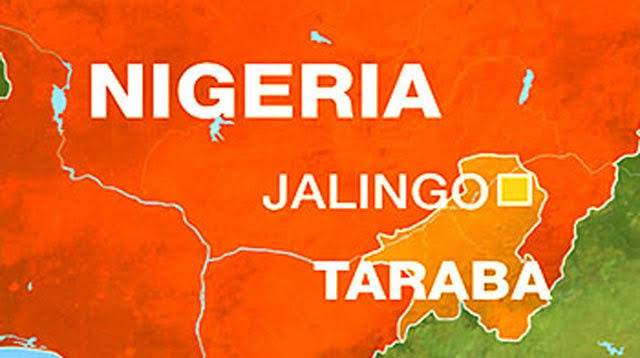
Mr Bassey Sardauna, a secondary school teacher at Government Model School, Jalingo, met a tragic end when he was fatally stabbed by a former student, who remains at large, on Thursday evening.
The incident was confirmed by the state Police Public Relations Officer, SP Abdullahi Usman.
According to Usman, the attack occurred in a tricycle following an earlier altercation between the teacher and his assailant, identified as James Williams.
The police are actively pursuing Williams, emphasizing their commitment to bringing him to justice.
In a statement condemning the attack, Dr Augustina Godwin, the state Commissioner for Education, shed light on the events leading to the tragedy.
The confrontation began when the former student, accompanied by a friend, walked through a line of students awaiting inspection.
An argument ensued after the deceased teacher questioned the behavior.
“The deceased asked why he walked through the students instead of passing behind them and while the former student made his way back to follow as the deceased teacher had directed, his friend asked why he should obey and do what the deceased said.
“From there commotion started and the deceased hit one of the two of them with a stick. The former student came to the school because he wanted one of his teachers to sign his Air Force application form, which his father made a call earlier asking for assistance for his son from one of the teachers.
“When the incident got to the knowledge of the school authority, they quickly called for the local vigilante in the area to keep watch over the school until closing time. The vigilante personnel left the school shortly before closing time. Some teachers decided to go with the deceased to take a tricycle the boys who were hiding attacked and stabbed him, leading to his death,” explained Commissioner Godwin.
Governor Agbu Kefas, responding to the incident, has directed a thorough investigation and increased security surveillance to prevent such tragedies in the future.
In a statement released by his Special Adviser on Media and Digital Communication, Mr Emmanuel Bello, the Governor expressed profound sadness and called for swift justice for the grieving family and the school community.

Bayelsa, Imo, Kogi States hold governorship elections amidst security concerns
By Sabiu Abdullahi
After months of rigorous campaigns and preparations, Bayelsa, Imo, and Kogi States are set to elect new governors today.
The Independent National Electoral Commission (INEC) reported that 5,169,692 voters collected their permanent voter cards out of the 5,409,438 registered voters across the three states.
In Bayelsa State, out of the 1,056,862 registered voters, 1,017,613 collected their PVCs, leaving 39,249 PVCs uncollected. Imo State witnessed 2,318,919 collected out of 2,419,922 registered, with 101,003 PVCs still uncollected.
Meanwhile, Kogi State reported 1,833,160 collected PVCs out of 1,932,654 registered, leaving 99,494 uncollected.
Incumbent governors Douye Diri (Bayelsa) and Hope Uzodimma (Imo) seek re-election, while 18 candidates vie for the Kogi State governorship.
In Imo State, the APC’s Hope Uzodimma faces stiff competition from 17 candidates, with Samuel Anyanwu (PDP) and Athan Achonu (Labour Party) emerging as top contenders.
In Bayelsa, Governor Douye Diri (PDP) contends with 15 other candidates, notably Timipre Sylva (APC).
Kogi State sees a race between APC’s Usman Ododo, PDP’s Dino Melaye, SDP’s Muri Ajaka, and ADC’s Leke Abejide, among others.
Despite confidence from incumbent governors, opposition candidates in Imo and Bayelsa assert that the current leadership has performed poorly.
Unfortunately, all three states have witnessed instances of violence resulting in casualties. The police and security agencies assure voters of their safety during the election, emphasizing a commitment to maintaining order and safeguarding the democratic process.

Negligence of technology careers in northern Nigeria
By Salim Sani Haladu
The medical industry held the most lucrative career prospects in the past, and parents encouraged their children to study medical-related courses. During those days, parents were willing to invest any amount to see their children as doctors, nurses, and pharmacists. Some even compelled their children to study these courses. Consequently, these children achieved remarkable success in these fields.
However, the landscape of lucrative careers has shifted in contemporary times. Technology-related careers have emerged as the new leaders in terms of profitability and job opportunities. According to the US Bureau of Labor Statistics, “the projected employment growth for computer and information technology occupations from 2021 to 2031 is 15 per cent, significantly above the average for all occupations”. This shift is becoming evident even to a layperson.
This change has led many parents to guide their children toward technology careers. Nevertheless, there exists an uneven distribution of this awareness within Nigeria. While parents in southern regions have readily embraced this change, their counterparts in the northern areas lag in grasping its significance. As a result, the northern part finds itself taking a backseat in technology careers.
In 2000, the former governor of Jigawa State, Saminu Turaki, established one of the first ICT institutes in Northern Nigeria—the Jigawa State Institute of Information and Technology, located in Kazaure. Strikingly, several students who enrolled in the institute did so solely to acquire a free laptop. They then sold the computer to fund their journey to Lagos, where they eventually engaged in dead-end handwork.
Furthermore, a project manager’s experience at the NITDA Blockchain meeting in Kano State last year highlighted the technological apathy, stating, “It is evident how far behind Northerners are in the world of technology.” Even in technology projects directly related to the Hausa Language, the predominant ethnic group in the northern region, participation was surprisingly minimal. I was astonished that only two of us from the North joined a Hausa transcription project I recently participated in.
Moreover, looking at the UTME cut-off marks for most northern universities reveals that tech-related courses like Information Technology and Cybersecurity have low cut-off marks, reflecting the limited number of applicants. Numerous examples abound, illustrating how Northerners are trailing behind in technology careers. The prevailing aspiration revolves around courses that promise a meagre N150,000 salary job.
A primary reason behind this negligence is that Northerners view technology careers as unconventional, failing to perceive them as real jobs. Mainly, if someone is working from home, it is often seen as a sign of aimlessness or lack of purpose. Unfortunately, some Northerners still hold the negative stereotype that individuals working in the technology industry are merely scammers.
Another reason is many people’s preference for security. Consequently, many opt to stay within their comfort zones rather than take risks to pursue greater opportunities. Most technology careers offer wages instead of salaries, which aligns with the Northern preference for security. It’s disheartening to learn that some people are even selling their farms to secure low-paying jobs, a profoundly unfortunate decision.
I recommended an IT course to a young man inquiring about a lucrative career. He expressed concerns about finding a job immediately after graduation. I suggested he consider creating jobs instead of continuously seeking employment.
With the rapid development of Artificial Intelligence (AI), there’s a legitimate concern that the careers Northerners heavily invest in might eventually become automated. For instance, professions involving routine tasks and predictable outcomes, such as data entry, assembly line work, and customer service, are particularly susceptible to automation. As AI technologies advance, they can handle these repetitive tasks more efficiently and accurately, potentially displacing human workers. It would be disheartening for someone to invest significantly in a career only to discover that their desired job has already been automated.
Prominent figures like the late Sheik Muhammad Auwal Adam Albani and Dr. Isa Aliyu Pantami are examples from the North who have embraced technology and achieved remarkable success. They’ve made indelible marks on the country’s technological landscape through innovative technology use.
Enhancing the curriculum of high schools is essential to address this challenge. While Data Processing and Computer Studies are part of the curriculum, introducing practical skills like coding and web development is crucial. Equipping students with these skills will better prepare them for the digital age and empower them to thrive in today’s tech-driven world.
In conclusion, the negligence of technology careers in Northern Nigeria presents a concerning trend that warrants immediate attention. The shift in lucrative career prospects from traditional fields to technology careers is undeniable, with evidence supporting the exponential growth and opportunities in technology-related jobs. While the southern regions have recognised and embraced this change, the northern regions lag due to a lack of awareness about technology careers, negative stereotypes, and a preference for security over risk-taking. Educational institutions and policymakers must take proactive measures to address this issue. By integrating practical technology skills into the curriculum and promoting a positive perception of technology careers, Northern Nigeria can bridge the gap and empower its youth to thrive in the dynamic world of technology.
Salim Sani Haladu is a Pharmacy student at Bayero University, kano. He can be reached via pharmsaleemskhaleed@gmail.com.
Naira-Dollar crisis: Some takeaways
By Baffa Kabiru Gwadabe
Over the past few months, Nigeria has been suffering from continuous depreciation of its currency, the naira. The naira has depreciated from barely ₦600/$ in the last three months to ₦1,300/$ today, the 27th of October 2023. This is enormous, considering the loss of value by more than 120%. Many are worried, including my little self, about this development. But the recent propositions of solutions by many provoke such a write-up.
It is good to start with some questions concerning the crisis. What is happening? What went wrong? Who is to blame? What are the ways out? What will be the lasting solutions?
The above questions may not be provided with answers, as many out there know the answers already. The focus should remain on some best practices or exchange rate regimes to hinge on. Let me start with some highlights on the developments in Nigeria’s foreign exchange market.
In 1971, when the Gold Standard was abolished under the Bretton Woods System, several foreign exchange rate management regimes were pursued in Nigeria and other parts of the world. These include the independently adjustable peg, crawling peg, independent peg, collective exchange arrangement, dual exchange and floating regimes. IMF member countries practice six (6) other exchange rate regimes, which were later compressed into three (3) regimes to include pegs, limited flexibility, and great flexibility. These were later decomposed into fifteen (15) regimes, mainly from 1975 to 1998 (see Mishkin, 2007).
All those regimes were adopted unevenly by the IMF countries. This means they practice one or more of the regimes based on their choices and persuasions. By 1999, the IMF proposed eight (8) different exchange rate regimes. They include separate legal tender, currency boards, conventional fixed (pegged against a single currency or basket of currencies or other commodities like gold), pegged within horizontal bands, crawling pegs, crawling bands, managed floating and independent floating (see Mishkin, 2007).
Still, these interchanging regimes continued in Nigeria depending on the available foreign reserves, capital inflows and current account balances. Nigeria’s forex crisis worsened in the 1980s when the US economy pursued Nigeria to devalue its currency by 10% and other scenarios. However, some attention will be given to the last ten years or so, particularly the administration of President Muhammadu Buhari or the reign of Godwin Emefiele as the CBN Governor (2014 – 2023). Some reflections would also be made on earlier antecedents before the Buhari’s and current administrations.
Nigeria has pursued two dominant exchange rate regimes: the Retail Dutch Auction System (RDAS) and the Wholesale Dutch Auction System (WDAS). The RDAS is an exchange rate regime introduced in Nigeria in 1987. It focuses on buyers (end-users or customers) of Forex (USD) to bid for the prices, and the marginal bidder is supplied with the quantities by the CBN through authorized dealers. Under the RDAS, the inept dealers are supplied less, while the highest bidders are penalized for rent-seeking and invitation for depreciation.
The WDAS, on the other hand, is an exchange rate regime targeted at maintaining the gains of the RDAS and the continued liberalization of the forex market. The WDAS came into operation in Nigeria in February 2006 and allows authorized dealers to buy forex on their accounts rather than on behalf of end-users. Also, the authorized dealers are carefully watched by the CBN, and the dealers are also allowed to trade in the interbank forex market. During that time, the CBN pursued other special interventions of forex sales to Deposit Money Banks (DMBs) and direct sales to licensed Bureau de Change (BDCs). The CBN further mandated that DMBs increase Business Travel Allowance (BTA) and Personal Travel Allowance (PTA) from $2,500 and $2,000 to $5,000 and $4,000 per quarter, respectively. All these policies were sustained in positive directions as the naira continued to appreciate by 2.6%, 8.7% and 5.8% for 2006, 2007 and 2008, respectively.
However, at the beginning of 2009, there was an observed forex policy reversal and the reintroduction of RDAS to reduce capital outflows and depletion of foreign reserves. The interbank trading segment was suspended. This was followed by sales restriction of forex to oil companies and government agencies and sales of forex to BDCs. But towards the end of 2009, the CBN called for recapitalization of BDCs in what they call ‘Class A’, while those that did not recapitalize are called ‘Class B’ BDCs. Both ‘Class A’ and ‘Class B’ BDCs can bid a maximum of $1 million and $250,000 respectively.
Similarly, by 2016, Nigeria’s forex market was further liberalized. During the period, the average naira-dollar exchange rate was N197/$ at the interbank window, representing a depreciation of 18.7% (as the exchange rate was N160/$ before 2016). However, one worrying thing remains: the premium between the interbank and BDC sections was about 41.5%. After this, some other forex regimes were still embraced under the administration of President Buhari and Godwin Emefiele. For instance, forex primary dealers (FXPDS) and non-FXPDS were introduced into the forex market in 2017.
In addition, longer-term derivatives like forwards trading from 1 to 3 months tenor and up to 2 years were introduced. The exchange rate was relatively stabilized at averages of N231.76/$ and N351.82/$ at interbank and BDCs, respectively. This has created many arbitrage opportunities for those with access to the interbank rates to continue to worsen the forex market. Such a trend continued for 2020, 2021, 2022 and until 2023. For instance, as of March 2023, the official rate was N462/$, while in the black market, it was an average of N750/$.
The sacking of Emefiele as the CBN Governor and the appointment of the acting CBN Governor, Mr Shunobi, in June 2023, where the latter tried to close the gap and arbitrage opportunities, moved the official rate from N474/$ to N664/$. With the appointment of substantive CBN Governor in September 2023, Mr Cardoso, the apex Bank, moved on with complete deregulation of the forex market, and this has led to incessant depreciation of the naira to a historic level of N1,300/$. However, it now appreciates an average rate of N1,000/$ and other rates depending on information and locations.
The next thing to talk about is the proposed solutions to the lingering naira-dollar crisis. However, it is important to note that the CBN’s recent and previous exchange rate policies are floating in nature or simply deregulating the forex market, and this is counterproductive as it has not provided the desired results, especially recently. This is because floating regimes are usually for export-dominant countries such as China, the United States, Japan, Germany, India, Russia and Saudi Arabia, among others, as argued by the Mundell-Fleming model. Nigeria is a predominantly import-dependent economy. As such, depreciations affect inflationary levels in the first round (exchange rate pass-through to inflation) and at the ‘second-round’, popularly known in the current literature as the ‘second-round effect’.
To end this submission, the CBN needs to do one or two things to exit from the naira-dollar crisis, and these include:
(1) Invite a small but huge ‘Conference of the Parties’ (COP) to deliberate and take appropriate decisions for implementation immediately;
(2) Under the COP, dollarization with its components; official dollarization, unofficial dollarization, partial dollarization, etc should be reviewed;
(3) Hard-peg exchange rate regime should be deliberated;
(4) Managed-floating regime should be discussed;
(5) Most importantly, sources of the forex demand pressures must be exposed.
Baffa Kabiru Gwadabe wrote from Bayero University, Kano, via bkabirugwadabe@gmail.com.
Lost Heritage Series: Furakenstein Monster and the Rufaidahization of Tradition
By Prof. Abdalla Uba Adamu
Birnin Kudu. The 1960s. An incredibly wonderful town. Still a wonderful town! Even more, wonderful, friendly people. So far away from Kano that a whole limerick was composed to warn of its distance ‘Birnin Kudu da nisa take / ɗa ya ɓata bare jika /.
For me, the town evokes memories of wonderful summer months spent there in my auntie’s house in ‘Gangare’ quarters, literally, a sloppy part of the town located in a depression. Years later, they filled the depression on the main road, making it easier for motorists to travel through the town easily. The mountain range has a wonderful greenback during the rainy season. The range stretches as far as the eyes can see, providing a wonderful wallpaper for the students in the secondary school (BKSS) at the foot of the mountain.
Memories of her earthen water storage pot (randa) with jema-scented grass floating in to give the water a cool, pleasant scented taste. The mere presence of the jema grass also scented the room. Then there is the river, about two kilometres away from her house. More like a brook than a river, the clear water flowing over the underlying rock bed was a wonderful sight for a city boy. I used to spend hours just watching the water bubbling gently under the bridge towards an unknown destination and trying to read my African Film (Lance Spearman) pictorial novels
And the rocks that littered the town – dark, broody, holding centuries of secrets. Massive rocks – you can see them from the atrium of her house. It became a pleasure to sleep in the open atrium, the night sky framed with those slabs. The rock paintings enhanced the appeal of the town discovered a decade earlier, in the 1950s. Conferring on the town an ancient status – and they had evidence of a 2,000-year human artistic activity.
However, the best memory was the kindirmo (yoghourt) market, right by the roadside near the entrance to the market. Sold by the stereotypical Fulani milkmaids. Kindirmo is so thick that it breaks up like ice floes on a frozen river when you hit the skin film on top of the large calabash holding it. Kindirmo is so sweet that it harks back at an ancestral memory of existence. Pure. Natural.
My old aunt was an artist and adept at churning up the thick kindirmo with equally massive balls of fura. Using a ludayi (ladle) carved from a gourd plant, she was adept at blending the fura right into the kindirmo floes in a calabash. The end product was a supremely nourishing, rich, tasty meal of classic fura – containing all the ingredients needed to nourish the body. Absolutely no sugar is needed or even desired. As you slurp it, you are often lucky to come across an unblended fura – gaya. Taken in a calabash container with ludayi. The ecstasy can only be imagined.
Sold with the kindirmo was fresh butter. Aunt used to fry the butter into a ghee. Pour a spoonful into any meal – ecstasy reloaded! Evoked Hassan Wayam’s verse:
Ga fura ta mai nono /
Tuwo na mai nama /
Years passed by, and my childhood memories of Birnin Kudu were kept in storage in my mind. Whenever I passed by the town – my aunt had left the place in mid-1980s when her husband passed on – and crossed the bridge, the memories came flashing by. Of the only friend I made, a Yusha’u, whom I cannot trace.
The daily grind made it difficult to re-create the culinary pleasures of my aunt’s fura. Further, I was too occupied with other things. One day, the urge came back after my return from studies. The question was, where would one get a fura meal? I was told it has now become a franchised business, and right opposite the block of flats I was staying in, Zoo Road, was what I called ‘Fura Café’ run in a kiosk. I dashed up there for a treat.
I was shocked. First, the fura balls were tiny. Like a baby’s fist. And white – not enough millet, obviously. Then, horror of horrors, he dropped three of them into a BLENDER! Would you believe it? A BLENDER! That’s the machine I saw my wife using to grind those ingredients used in making a soup! The worst was yet to come.
Next, he poured WATER into the blender. I could not stand it any longer, and I stopped him, asking for the kindirmo. ‘That was it. I just poured it into the blender,’ he saucily replied. Nothing like kindirmo – more like ‘tsala’ – watered down milk. He pressed buttons. Everything churned and chugged in the blender cup. He stopped, removed the cup, and then poured the lot into a PLASTIC cup – more like moɗa! I was speechless throughout this charade. I decided to see it through.
I asked for the ludayi. He gave me a look that clearly indicated he had never heard the word and passed on a PLASTIC spoon – y’know, the kind that comes with a cheap rice takeaway. I paid, took the cup, and had a sip. It was horrible. Sour. No pleasant flavour (garɗi) of a true kindirmo. Seeing the expression on my face, he offered cubes of sugar. I passed. I handed the entire sludge to him and left. That was the end of my first attempt at rekindling a memory.
Years later, after a five-year absence from Kano, I came back to see modernised Fura Cafes all over – Habib, Yusrah and the new kid on the block – Rufaidah. I was told some, e.g., Habib, had been around for a long time. Knowing I might regret it, decided to relive Birnin Kudu again. So, I popped into Rufaidah for a treat. Better than the horrid kiosk I had been to before. I was attracted by the post-modernist décor. Like the airport in Dubai.
Ahaf! The same Furakenstein monster was there. A blender, watery milk, lots of sugar, tiny chunks of unblended greyish fura, and a ‘dambu’ – moistly powdered fura as a spare. All are neatly packaged in a pretty container. It’s not as bad as what I had before, but it’s still a Furakenstein monster. Seems the Rufaidah Fura Café is the ultimate in the fura business. I am happy for them and impressed by their franchise. But for old codgers like me, even at our Fresh Young Dattijo (FYD) phase? Thanks, but no thanks. I can’t stand the monster – Furakenstein – that is the modern blender-churned fura, no matter how ‘ultra-modern’ their café is. Young people who throng the place, happily taking selfies, have no idea what they have missed in the generational journey.
Fura, as a meal, should be churned in massive chunks of kindirmo floes, the likes of which I am pretty sure can only be found in Birnin Kudu, Bulkachuwa and Danbatta. With huge dark grey fura balls providing high millet content. Spicy fura. Thick floes of yoghurt. No sugar. Not because you are on a health kick, but because it is almost a sacrilege to put sugar in such yoghourt.
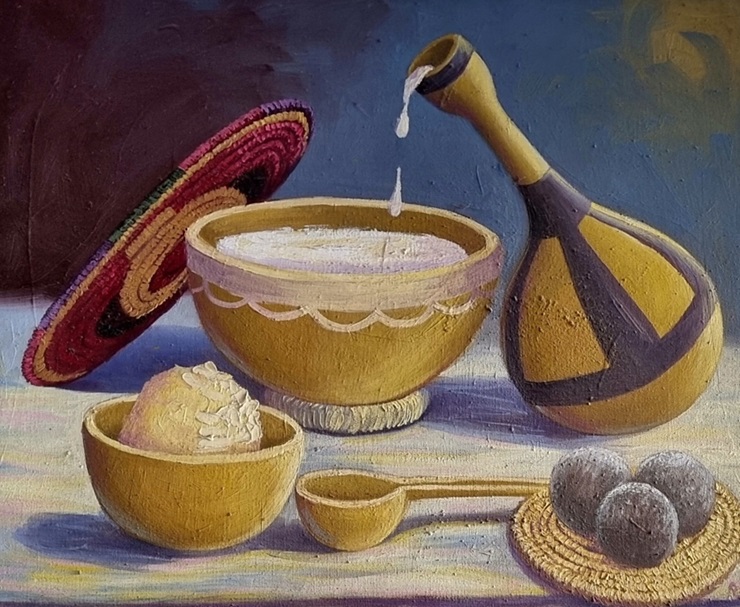
So, to celebrate this culinary purity, I am sharing the third painting in my office of classic Fura da Nono and fresh butter lost heritage scene painted on a medium canvas by the brilliant Bashir Abbas of Kano Polytechnic. It reminds me of the idyllic, peaceful and wonderful Birnin Kudu, with its rolling hills, tema grass (still available?), and the now drying river.
Bugaje in Gombe, the question of competence
By Musa Kalim Gambo
To start with, it must be easily concluded that Usman Bugaje is an excellent speaker for any gathering that seeks to place Nigeria on a microscopic slide to analyse its minutest of details. Therefore, Gombe State University made the best choice when it invited Bugaje to serve as the keynote speaker for the 10th,11th, 12th, and 13th pre-convocation lectures of the university last week.
Given Bugaje’s multi-disciplinary background, there could have been no doubt about his competence to speak on the theme of the pre-convocation lecture “Education and Development: The Challenge of Content, Competence, and Character in Nigerian Universities”. While a topic of this nature may sound like a cliché-ic abstraction of the troubles in the Nigerian university system, Bugaje’s treatment and perspective of the topic are both fresh and passionate.
Bugaje was out on a journey to establish the nexus between education and development. With the oft-repeated argument that there can be no meaningful progress without education, it is clearly established that Africa has had a flourishing system of knowledge transmission until the coming of the colonials. When they came, they suffocated the existing system in favour of their own.
Among the gathering, mostly the graduating students who listened to Bugaje’s lecture, not many may be aware of Africa’s glorious past and pioneering role in the development of universities around the world. Indeed, not many may be aware that what the West regards as an Arab contribution to education is largely a veil over the combined Persian and African efforts. It is a clear attempt to obscure the true position of Africa as a pacesetter in the world of knowledge and the evolution of civilisation. As poignantly described in his citation, Usman Bugaje is a pan-Africanist. This simple description as a pan-Africanist will not allow him to deliver such an important lecture without exposing the true fallacies that represent Western intervention in African education.
In many respects, Bugaje’s generation of the past benefited from a functional, effective, and not defective education system. It was such a system that prepared them to be competent for a diverse set of roles within the country and around the world. As a matter of doubt, were they so well equipped or was it simply the scarcity of manpower at that time? I have listened to many elderly people, mostly those who studied in Nigerian universities in the ‘70s and ‘80s, who, in their critique of the education and governments of today, make mention of the number of jobs they had at their disposal when they graduated. What was the Nigerian population size at that time? What was the manpower needed? And what was the economic power of the country then? These are questions that must be answered before a comparison is made between the glorious past and the gloomy today of our nation.
With the bulk of information, and indeed knowledge at the disposal of the student today, competence should not be a problem. Unfortunately, it is in many areas of modern endeavour. Within the educational system, quality of content and competence of output are intertwined, like the Staff of Asklepios or the Caduceus Wand, a symbology of the healthcare background of Bugaje.
An educational system where teachers have problems of competence across all levels will definitely have to deal with the complex question of the quality of content imparted to the students. The issues at stake here are – the relevance of the content being taught and the capacity of the teacher to deliver.
A friend of mine from one of the first-generation universities in Nigeria narrated the difficulty of his lecturer. This lecturer has taught the same content in phytochemistry for almost twenty years. He was on the verge of becoming a professor in that field of chemistry. However, he has this handwritten note that has spanned his career in this field.
In spite of being an expert in this phytochemistry, any day his handwritten note was not with him, his class would not hold. There was a day my friend and his colleagues sat for a very tough test by this soon-to-be professor of phytochemistry. They were asked to draw the chemical structure of a certain phytochemical, which was passively mentioned as an example during one of their sessions. Most of the members of the class couldn’t get the correct structure. They, therefore, requested the lecturer to help answer the question. It was quite interesting that this soon-to-be professor of phytochemistry could not answer the same question he set for his students. This suggested that in spite of his years of experience teaching the course, he would have failed if he sat for the same test.
This interestingly sad anecdote paints the picture of the Nigerian university in response to the question of competence.
Kalim writes from Zaria via gmkalim@hotmail.com.