


The Spirit of Kano Photo Competition
By Prof. Abdalla Uba Adamu
For some weeks, I had been involved in judging a photo competition themed “Spirit of Kano”. One way or another, I was made the “Chief Judge” by the Curator, Dr. Shuaib Sani Shuaib, Executive Director, Makuba Center for Arts and Culture, Kano. He is also the Curator for Global Shapers Community, Kano Hub. Overall financial support was also provided by Engr. Anas Yazid Balarabe, who is also the founder of the cooperative.
As an amateur photographer with a deep and intense interest in art and the aesthetics of the environment, coupled with a fanatical advocacy for the best State on this side of the Milky Way Galaxy, I was honored to be appointed the Chief Judge. However, since it was an open competition and open voting, I designed the judgement criteria for the photos,which were used to judge the 100 or so entries by other judges. Photographers were urged to send pictures that, in their view, capture the “Spirit of Kano”. Many people participated, and many photos were sent.
These entries were beautifully shot and captured the Spirit of Kanawa and Kananci. They were all beautiful. However, I judged them based on what the images conveyed about Kano in various visual ways—history, architecture, food, clothing, urban life, historiography, etc. For me, choosing the best three was really difficult because there was so much beauty and talent in each photograph—faces, places, spaces. The entire collection was a riot of colorful visual poetry that describes Kano.
Each picture in the entries has unique features and communicates the dynamism of both urban and rural Kano. Thousands of words could be woven around each picture that communicate the vibrancy of Kano. My selection cuts across history, trade and lived-in experiences. I would have loved to see some architectural shots – the ones I saw were mainly Emir of Palace pictures (Ƙofar Kudu or thereof). A few shots of ‘mansions’ and ‘haciendas’ would have given an evolutionary trajectory of the Spirit of Kano, in addition to the alleyways and gidan kara.
Four judges trudged through the 100 or so entries and made their choices. These were then further pooled by common choice from each judge to pare down the selection to six, on which the final judgment of three was made. To ensure a fair and transparent selection process, the top three winners were chosen based on a combination of judges’ evaluations and public voting. The final ranking was determined by taking an average of the judges’ scores and the public vote ranking in which the winners emerged. Very transparent. Further, everything was done online.
The final judgment of the top three (shown here) truly deserves it. The winners, based on the highest scores, along with their prizes, were:
1- Muhamad Sani Abbas (₦250,000)
2- Alamin Mohammed (₦150,000)
3- Aisha Suleiman Halili (₦100,000)
Muhammad Sani Abbas’s best picture was of a young greengrocer measuring a customer’s order in a local market. The intensity of his face captured everyone’s imagination and admiration. The photo of the boy is a bookmark on Kano and its commerce—never too young to start. It was indeed a beautiful shot.

Alamin Mohammed took second place. Interestingly, the picture also shows another young lad galloping on a horse in full ‘royal’ regalia. Frozen in time, the horse rider captures Kano’s ancient tradition and royal heritage.

Third place went to a composite study of the Kano Emir’s palace guards (Dogarai) from a truly sensitive POV. The winner, Aisha Halilu’s portrait of a shadowed Dogari, makes the maximum use of light and shadows to accentuate the beauty of the setting. The Dogari, with his back to the camera, clearly was not the focus of the shot but the far houses he was gazing at—a contrast between the traditional Hausa architecture of the palace and the post-modern bungalows he was gazing at.

A picture by Ahmad Sufi, which I voted for, did not win, but that’s alright; after all, it was aggregate scores that mattered. I didn’t place it number one, but I had expected it to be at least number three. The outcome only highlights the high quality of the visual appeal of the photos entered in the competition.
The one that did not make it on my list was a market scene with an Arab (at least the guy looks like an Arab but dressed in Babbar Riga) holding on to a camel. Far in the distance is a communication tower. To me, the pictures talk volumes about migration, cultural adaptation, trans-Saharan road networks and contemporary communication – all visually encapsulating what Kano has been for centuries and those to come.
I think it is wonderful that an NGO of young, committed individuals could come up with this. It should be the purview of the Kano State History and Culture Bureau. A letter was sent to the Kano State Government requesting partnership/sponsorship, but there was no response at all. Even the prize money was sourced by Dr. Shuaibu, showing a commitment to Kano far greater than many of us.
What could the next steps be? Perhaps an annual event? Or a regionalisation of the competition? For instance, it would be fantastic to see the “Spirit of Zazzau”, followed by Rano, Daura, Katsina, Gobir, and so on, all the way to Niamey. This way, we could have an annual Spirit of Hausa Kingdoms as visual poetry, encouraging young people to appreciate the historical, cultural, and aesthetic qualities of their environment.

The fractured compass: El-Rufai, Ribadu, and the quest for Nigeria’s “North Star”
By Ibraheem A. Waziri
I am a son of Northern Nigeria, born into the 5th generational cohort—those of us ushered into life between 1968 and 1983, as the civil war’s echoes faded. From here, I’ve watched two giants of the 4th cohort, Nasir El-Rufai and Nuhu Ribadu, shape my homeland’s fate. They’ve lifted it at times, fractured it at others. To me, they’re more than names—they’re lodestars. Their brilliance has guided my hopes and, too often, left them drifting.
El-Rufai has fueled my writing since 2013; his ideas have been a steady muse. Ribadu entered my life that same year, stepping into my Zaria home during my wedding week celebration, his vision setting my spirit ablaze. Now, in February 2025, their legacies show a compass split—its needle quivering between rival trails. For the North, for Nigeria, their reunion isn’t a wish. It’s a lifeline.
My tie to El-Rufai is ink, not intimacy. We met once, briefly, after he claimed Kaduna’s governorship in 2015—a moment too quick for him to recall. His ideas, though, I’ve known deeply. His 2015 election plans for Kaduna stunned me—clear, ambitious, a reformer’s blueprint. I dissected them as a commentator, later mapping his neoconservative path in my 2019 reflections.
El-Rufa’i’s nine-page manifesto promised education, security, and infrastructure. He mostly delivered. I saw justice in his 2015 demolition of illegally grabbed lands at Alhudahuda College—even as friends grieved homes I’d known, now dust. El-Rufai is the architect and the systems man. A neoconservative who bets order can revive a stumbling North.
Ribadu came with a handshake and a dream. In my wedding week, through Abdulaziz Abdulaziz and Gimba Kakanda, he arrived at my Zaria doorstep, joining the celebration and seeking my support. Over tea and warmth, he sketched a Nigeria free of corruption’s grip. With my friend Dr. Waziri Garba Dahiru (now a professor), we told him how Dr. Aliyu Tilde’s pre-2011 presidential elections essay about him won us—and many Northerners—to his side over Muhammadu Buhari, the people’s hero then. His EFCC days had already made him a legend—a crusader chasing the mighty with a fire that echoed the North’s heart. He left my home with admiration, hoping that his progressive flame could guide us.
As a commentator, I’ve watched him and El-Rufai since—two men who once moved in harmony under President Olusegun Obasanjo. El-Rufai restored Abuja’s master plan with a surveyor’s eye. Ribadu hunted corrupt titans. Together, they danced a tandem of renewal. Both of the 4th cohort, born amid the civil war’s shadow, inherited a Nigeria of strife and potential. But ambition and ideals broke them apart. By 2011, Ribadu’s Action Congress of Nigeria presidential run clashed with El-Rufai’s loyalty to Buhari’s Congress for Progressive Change. The North’s compass cracked—progressive zeal versus conservative steel.
El-Rufai’s rise in Kaduna cemented his neoconservative crown. Ribadu’s drift to the PDP and 2015 Adamawa loss dimmed his star. Yet his 2023 ascent as Tinubu’s National Security Adviser reignited it—tackling banditry and Boko Haram with a seasoned hand, though not without stumbles. Now, I see their rift clearly.
El-Rufai’s Kaduna triumphs in 2015 earned my praise then. Ribadu’s path has shifted over time. Their jabs—subtle or stark—echo a generational clash I explored in my 2023 piece on the 4th cohort overtaking the fading 3rd. El-Rufai’s 2023 attack on Buhari’s inner circle, claiming they sabotaged Tinubu, and Ribadu’s quiet rise in Abuja hint at distance—yet also hope they might align again.
Why does this split haunt me? Northern Nigeria, my home, is a paradox—brimming with promise, torn by poverty, insecurity, and neglect. Bandits mar its forests. Boko Haram stalks its northeast. Education lags despite a proud past.
As I wrote in 2019, the North’s fate is Nigeria’s pulse; its 19 states beat with the nation’s life. El-Rufai and Ribadu, with their tested mettle, stand among its best shots—but only together. El-Rufai’s Kaduna model—retooling institutions, lifting schools—maps a revival. Ribadu’s anti-corruption past and NSA role could strangle chaos at its source. Alone, they falter. Ribadu’s moral blade needs El-Rufai’s structural frame.
Reconciliation demands humility—something both have shown in fleeting glimpses. Why now? Nigeria’s security bleeds worse in 2025—bandits bolder, insurgents entrenched—while Tinubu’s early presidency offers a window for bold moves. Their Obasanjo-era alliance proves they can align. Back then, they were reform’s twin engines under his steady hand. Obasanjo could call them to the table again, his voice a bridge.
Tinubu, as Ribadu’s boss and one whom El-Rufai respects, could push them too, melding Ribadu’s security clout with El-Rufai’s administrative spine. Friends like Abdulaziz or Dr. Tilde might spark it, but these giants could seal it. A Northern summit could fuse their strengths: Ribadu choking chaos at its roots, El-Rufai rebuilding what’s left. Nationally, their pact could drive devolution—state police, fiscal federalism—easing the North’s woes and binding Nigeria’s seams.
I’m no bystander. El-Rufai’s policies reshaped the Kaduna streets I walk. Ribadu’s 2013 visit lingers in my home’s walls. Their rift cuts me because I’ve staked my words—hundreds since 2013—on their promise. The compass lies broken but not lost. El-Rufai, the builder; Ribadu, the purifier—two halves of a whole I’ve followed for a decade. Their reunion could heal the North’s scars, pointing it toward hope.
For Nigeria, it’s a shot at a shared destiny. As a 5th cohort voice, I plead in 2025: Mend the rift, reforge the compass, and let El-Rufai and Ribadu rise as our North Star. The stakes are mine. The hour is now. Our future demands it.

Gov Yusuf’s special adviser Abdussalam Abdullateef passes away
By Uzair Adam
Kano State Governor Alhaji Abba Kabir Yusuf has lost his Special Adviser on Intercommunity Relations, Alhaji Abdussalam Abiola Abdullateef, who passed away after a brief illness.
Family sources confirmed to journalists that Abdussalam died on Saturday and was laid to rest in the evening at Hajji Camp burial ground.
Originally from Osun State, the late Abdussalam was a graduate of accountancy from Bayero University Kano and had recently retired from the National Orthopedic Hospital Dala in Kano.
He previously served as a special adviser from 2011 to 2015 under the administration of Engr. Rabiu Musa Kwankwaso.

NYSC member kidnapped on Benin-Ore expressway freed after ransom payment
By Abdullahi Mukhtar Algasgaini
A National Youth Service Corps (NYSC) member, Rofiat Lawal, has regained her freedom after being kidnapped along the Benin-Ore Expressway on Tuesday.
Lawal, who was traveling from Benin, Edo State, to Ibadan, Oyo State, where she was set to resume her primary assignment, was held captive by the abductors until her family paid a ransom of N1.1 million.
The incident occurred as Lawal was on her way to begin her service year, but she is now safely back with her family following the payment. Authorities are yet to make any arrests in connection with the kidnapping.

Borno opposition leader sues state govt over shopping mall demolition
By Uzair Adam
A former senatorial candidate of the New Nigeria Peoples Party (NNPP) in Borno Central, Hon. Attom Magira, has filed a lawsuit against the Borno State Government following the demolition of his multi-million naira shopping mall in Maiduguri.
The demolished property, a four-story commercial shopping complex with a multi-purpose hall, was situated along Sir Kashim Ibrahim Road, opposite the state low-cost housing estate.
In a press statement issued on Saturday, Magira’s lawyer, Hamza N. Dantani of Kayode Ajulo & Co., described the demolition as an unlawful act. He revealed that his client had sought legal protection against the action through a suit filed at the Borno State High Court (Suit No. BOHC/MG/CV/8/2025) against the Borno State Urban Planning and Development Board (BOSUPDB).
Dantani alleged that the demolition was politically motivated and carried out under the direct instruction of Governor Babagana Zulum’s administration.
He also criticized the state government for disregarding legal procedures, arguing that the demolition undermined the rule of law and economic development in the state.
“The demolition of my client’s plaza is not just an attack on his investment but a blatant disregard for judicial authority and the economic future of Borno State,” Dantani stated.
According to him, Magira had obtained all necessary approvals, including a statutory right of occupancy and a development permit (No. BSUPDB/DC/2194). He added that no concerns were raised by BOSUPDB during the construction phase.
Dantani further claimed that after the building’s completion, BOSUPDB revoked the development permit and issued an ultimatum, demanding the removal of a supposed “fifth floor” within seven days or face full demolition. He insisted that the property had only four stories.
Despite Magira’s appeal against the revocation, which should have automatically halted any demolition under the law, the government allegedly proceeded with the destruction of the property.
“The law is clear—where a statutory provision outlines a procedure, it must be strictly followed,” the lawyer argued, citing relevant constitutional provisions and legal precedents. The court has adjourned the matter to April 22, 2025, for a hearing.
Dantani maintained that the demolition, carried out while the case was still in court, violated due process and constituted an abuse of power.
As of press time, the Borno State Government has not officially addressed the reasons behind the demolition. However, past demolitions in the state have often been linked to urban planning regulations and public interest concerns.

APC Kaduna stakeholders praise Tinubu, Uba Sani, pass vote of confidence
By Abdullahi Mukhtar Algasgaini
Kaduna State stakeholders of the All Progressives Congress (APC) convened on Thursday, 27 February 2025, at the Kaduna State Liaison Office in Abuja.
The meeting, chaired by Governor Uba Sani, focused on welcoming new and returning party members, reviewing recent zonal and state-level stakeholder meetings, and evaluating the performance of the APC-led administrations at both federal and state levels.
Key attendees included Rt. Hon. Abbas Tajudeen, Speaker of the House of Representatives; former Governor Mukhtar Ramalan Yero; Hon. Minister of Environment, Malam Balarabe Abbas Lawal; and other prominent party leaders and officials.
After thorough discussions, the stakeholders resolved to organized caucus meetings at zonal, local government, and ward levels to introduce new and returning members before the administration’s second anniversary; revitalize or establish party offices at ward, local government, and zonal levels within the next three months.
They also unanimously pass a vote of confidence in President Bola Ahmed Tinubu and Governor Uba Sani, commending their exemplary leadership and people-focused governance.
The stakeholders expressed strong support for the current administration’s efforts and reaffirmed their commitment to strengthening the party’s grassroots presence.

EPA backs senator Natasha, calls for fair treatment in Senate
By Abdullahi Mukhtar Algasgaini
The Ebira People’s Association (EPA) has expressed its full support for Senator Natasha Hadiza Akpoti-Uduaghan, representing Kogi Central Senatorial District, while urging the Nigerian Senate to prevent any form of intimidation or harassment within the legislative chamber.
In a statement issued on Friday, the National President of EPA, Dr. Oyibo Godwin, condemned recent developments in the Senate, including Senator Natasha’s removal as Chairperson of the Senate Committee on Local Content and the sudden relocation of her seating position.
Dr. Godwin described these actions as politically motivated and deliberate, sparking widespread reactions on social media and traditional news platforms.
“We have closely followed the events in the Senate, from the ‘nightclub’ comment saga to Senator Natasha’s removal from her committee and the abrupt change of her seating position. These actions clearly indicate a targeted and unjust treatment,” the statement read.
The association emphasized that while it had previously refrained from commenting on the matter, it believed the Senate would resolve internal issues fairly and ensure the rights of all senators, regardless of gender, ethnicity, or political affiliation.
However, EPA expressed concern over the involvement of certain ethnic groups in the controversy, stating that this has compelled the people of Kogi Central to respond.
“We are closely monitoring any steps the Senate Committee on Ethics and Privileges may take. We continue to gather all relevant information and will respond appropriately at the right time,” the statement added.
The association reiterated its unwavering support for Senator Natasha, praising her for carrying out her legislative duties competently and vowing not to allow her to be victimized or punished for any ulterior motives.
“Senator Natasha has demonstrated excellence in her role, and we will not stand by while she is unfairly targeted or marginalized,” the statement concluded.
The EPA’s statement comes amid growing tensions in the Senate, with calls for transparency and fairness in the treatment of lawmakers.
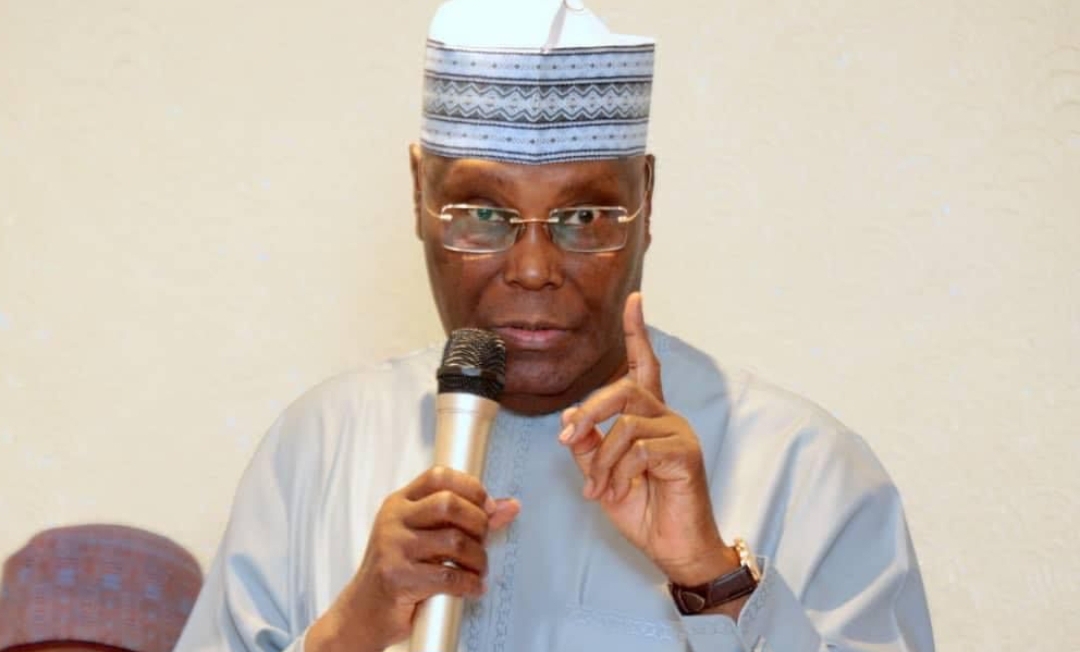
Ramadan: Atiku urges Nigerians to extend charity beyond family
By Uzair Adam
Former Vice President Atiku Abubakar has called on Nigerians to extend acts of charity and kindness beyond their immediate families, especially during the holy month of Ramadan.
In a statement issued in Abuja to mark the commencement of Ramadan, Abubakar emphasized the importance of generosity, urging Muslims to follow the example of Prophet Muhammad (SAW).
The statement qouted him to have said, “It is important that in Ramadan, we extend our hands of charity and affection far beyond our immediate families.
“The lifestyle of noble Prophet Muhammed (SAW) should be our guide, as he taught us the immense benefits of being generous, especially during the month of Ramadan,” he said.
The former presidential candidate of the People’s Democratic Party (PDP) in the 2023 general elections also called on Muslims to pray for Nigeria.
Additionally, he urged governments at all levels to provide necessary support to ease the hardships faced by citizens during Ramadan and beyond.

NATCA warns of air traffic risks amid severe staff shortage
By Uzair Adam
The Nigerian Air Traffic Controllers Association (NATCA) has raised concerns over a critical shortage of Air Traffic Controllers (ATCOs) in the country, calling for urgent recruitment and training.
Speaking at Murtala Muhammed International Airport in Lagos, NATCA President Amos Edino highlighted excessive workloads, prolonged duty hours, and mounting stress among ATCOs, warning that these factors are affecting performance and overall well-being.
He noted that due to manpower constraints, controllers often work beyond the standard two-hour shift, with some enduring continuous shifts of four to five hours.
He also pointed out capacity limitations at the Nigerian College of Aviation Technology (NCAT), Zaria, which is responsible for ATCO training.
Edino urged the government to review the salary structure to align with international standards and implement a comprehensive healthcare package to address occupational health risks.
He further lamented poor working conditions in control towers, including non-functional elevators that force controllers to climb over 250 steps daily.
On Air Traffic Management (ATM), he emphasized the urgent need to upgrade the Total Radar Coverage of Nigeria (TRACON) system, which has exceeded its 10-year operational lifespan and is now nearly 20 years old.
He stressed that resolving these challenges would secure Nigeria’s place among the top global air traffic control systems.

HardFacts Studios to premier “The Bitter Feminist” docudrama series
By Hadiza Abdulkadir
HardFacts Studios has announced the upcoming premiere of The Bitter Feminist, a docudrama series that addresses the challenges faced by women in Nigeria and sub-Saharan Africa.
Set to debut at the iRep Festival in Lagos in March 2025, the series, created by Daniel Chukwuemeka and Ijeoma Chinonyerem, centres on Ringret, a young woman from Northern Nigeria who endured rape and forced marriage.
Co-creator Ijeoma Chinonyerem stated, “This project is significant for us. It’s about giving [a] voice to women whose stories often go unheard and challenging narratives perpetuating inequality.”
The five-episode series illustrates the lives of women identifying as feminists, highlighting their resistance to traditional gender roles. Through impactful storytelling and candid interviews, The Bitter Feminist addresses critical issues, including misogyny, child marriage, and consent.
Directed by Priye Diri and produced by Isaac Newton Akah, the series promises to empower viewers and stimulate meaningful conversations about gender inequality.