

MURIC calls out CAN for overstepping in Muslim concerns
By Abdullahi Mukhtar Algasgaini
The Muslim Rights Concern (MURIC) has responded to the Christian Association of Nigeria (CAN) regarding four northern states’ decision to close schools until after Ramadan.
Bauchi, Katsina, Kano, and Kebbi are among the states involved. These states announced the closure of schools until the end of the Ramadan fasting period.
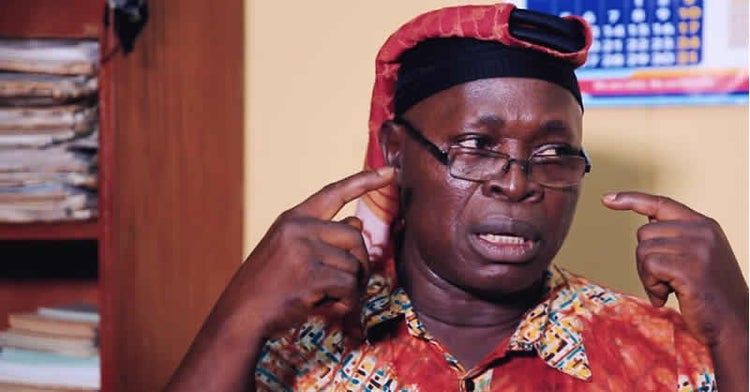
The Director of MURIC, Professor Ishaq Akintola, accused CAN of interfering in Muslim matters and Islam. He argued that this indicated that CAN wants to speak on behalf of both Christians and Muslims, which he believes is inappropriate.
MURIC called on CAN to focus on its own affairs and refrain from commenting on matters that are not of concern to it.

Seven confirmed dead in Bauchi almsgiving stampede
By Uzair Adam
The death toll from Sunday’s stampede during an almsgiving exercise at Shafa Holdings Company Plc in Bauchi has risen to seven, the police confirmed on Monday.
The police spokesperson in the state, SP Ahmed Wakil, said three additional women lost their lives following the incident that occurred at about 10:20 a.m. on Jos Road, where the company was conducting its annual Zakat exercise to support the less privileged.
A medical doctor at the Abubakar Tafawa Balewa University Teaching Hospital (ATBUTH) confirmed that two of the women died while receiving treatment, while another passed away at home after being taken away by her family.
Wakil assured that further details would be made available as the investigation continues.
A witness, Laraba Saleh, said several other individuals, including women and children, sustained injuries during the stampede.

NDLEA nabs wanted drug baron in Lagos after 17-year manhunt
By Abdullahi Mukhtar Algasgaini
The National Drug Law Enforcement Agency (NDLEA) has arrested a notorious 59-year-old drug baron, Ogbonnaya Kevin Jeff, at his hideout in Lagos after 17 years on the run.
The arrest followed an Interpol red notice and intelligence from South Korea’s National Intelligence Service.
NDLEA Chairman Brig. Gen. Mohamed Buba Marwa (Retd) disclosed that Jeff, a key figure in an international drug trafficking syndicate, had been smuggling illicit drugs worth billions of naira into South Korea.
His arrest on February 12, 2025, led to the recovery of multiple passports, Korean visas, and illicit substances at his residence.
Jeff, who previously served a one-year prison term in South Korea in 2007, continued his operations remotely, recruiting couriers and laundering drug proceeds through electronics imports.
He is wanted in South Korea for multiple drug trafficking offences, with two arrest warrants issued by the Seoul Central District Court in 2024.
Marwa reaffirmed NDLEA’s commitment to dismantling drug networks and ensuring Nigeria is not a haven for drug cartels.

From confusion to excitement: The untold story of ‘Jambites’ in university
By Rashida Aliyu
The term ‘Jambites’ refers to new or fresh students at the university, and they often display certain characteristics that set them apart from returning students.
Upon their arrival at Usmanu Danfodiyo University Sokoto, the faces of Jambites reflected a mixture of excitement and confusion, marking their transition from a secondary school environment to university life.
In observations, Jambites often exhibit behavior characterized by anxiety, as the university setting is entirely new to them. Many struggle with finding their way, navigating registration processes, and adapting to the academic system. As a result, they frequently seek assistance from returning students or university staff to understand how things work.
The fashion of Freshers and their engagement on social media is notable; Jambites tend to wear trendy outfits in an attempt to make a good first impression. They often document their initial experiences by sharing pictures and updates online to inform friends and family about their new journey.
Financial mismanagement is a common issue for many new students, particularly those living on campus. They often receive significant amounts of money from their parents to cover expenses, but inadequate financial planning—largely due to a lack of understanding of the environment—can lead some to spend extravagantly on unnecessary items during the initial weeks, resulting in financial difficulties later.
Eager to attend lectures, Jambites typically arrive early and try to secure seats at the front of the lecture hall to impress their lecturers. However, as the semester progresses, some may become less punctual as they settle into their new school life.
Jambites often seek guidance from senior students, who may either genuinely help them or exploit their naivety. Some returning students mislead newcomers by either exaggerating school rules or soliciting money for the assistance they provide.
Additionally, members of the local community and operators of computer business centers can sometimes betray the trust of new students. For instance, during the accommodation process, many new students are deceived by locals who take their money without providing housing. Furthermore, computer business centers and stationery shops often overcharge freshers for items and services compared to what regular students pay.
Hafsat Muhammad Tsamaye from the Faculty of FEED shared her experiences of life as a Jambite. She mentioned enjoying wandering around the campus without any specific purpose, simply to observe the movement of people. “During my first year, which people referred to as Jambito, it was amusing and easy because I was a Jambito. There were three things I normally did during that time: I was always looking for free Wi-Fi to download more movies than I could watch, even though I didn’t end up watching a lot of them,” she recalled.
Hafsat also shared her experience of attending night classes, remarking, “During my first semester as a Jambito, I always attended night classes, but I didn’t study much; I mostly just slept and changed classes every hour, spending money without any control. The funniest part was that I always cooked for others.”
The behaviors exhibited by Jambites upon their arrival at UDUS vary, but most of them show excitement, anxiety, and a strong desire to fit in.
In my opinion, the university management should implement a comprehensive orientation program to guide newcomers and facilitate their smooth transition into university life. This would help prevent potential issues. Additionally, returning students should treat freshers as their juniors and ensure they do not mislead them.

CAN threatens lawsuit over school closures in northern Nigeria
By Anas Abbas
The Christian Association of Nigeria (CAN) has issued a firm ultimatum to the governments of Bauchi, Katsina, Kano, and Kebbi states.
The Christian body also called for the immediate reversal of their recent directives that mandate a five-week closure of schools in observance of Ramadan.
In a statement released on Sunday in Abuja, CAN President Daniel Okoh, expressed strong disapproval of the policy, and reiterated its potential to exacerbate the ongoing educational crisis in these states, which already account for 44% of Nigeria’s out-of-school children.
CAN condemned the decision as discriminatory and a violation of the rights of non-Muslim students, warning that legal action would be pursued if the directive is not rescinded.
“Education is a fundamental right and the foundation of progress. Closing schools from nursery to tertiary levels for such an extended period disrupts academic schedules and jeopardizes the educational futures of millions of students,” Okoh stated.
He further criticised the lack of transparency in the decision-making process, noting that it failed to involve consultations with key stakeholders, including Christian leaders, educators, and parents.
“Policies that affect diverse populations Muslims, Christians, and others must be shaped through transparent and inclusive dialogue with all relevant parties, including parents, educators, religious leaders, and school proprietors,” he added.
As the situation unfolds, CAN remains steadfast in its commitment to advocating for equitable educational opportunities for all students in Nigeria.

Armed bandits attack hotel in Niger state, abduct 10
By Abdullahi Mukhtar Algasgaini
Armed bandits in Niger State, Nigeria, have launched a daring raid, impersonating officials from the Economic and Financial Crimes Commission (EFCC).
The criminals targeted the White Hill Hotel, located in the Chanchaga Local Government Area, where they abducted ten individuals.
Reports indicate that the assailants, disguised in EFCC uniforms, disabled the hotel’s CCTV surveillance system before storming the building.
They then proceeded to forcibly take the ten people from their rooms.
The state police command has confirmed that an investigation into the incident is ongoing.
Authorities are working to track down the perpetrators and ensure the safe return of the victims.

President Tinubu appoints Brigadier-General Nafiu Olakunle as NYSC Director-General
By Abdullahi Mukhtar Algasgaini
Brigadier-General Nafiu Olakunle, a distinguished artillery officer from Ileogbo in the Aiyedire Local Government Area, Osun State, has been appointed the new Director-General of the National Youth Service Corps (NYSC).
This prestigious appointment has brought pride to the people of Ileogbo, Iwoland, and Osun State and marks a significant milestone in the nation’s progress.
Brigadier-General Olakunle is recognized for his unwavering commitment to national service, exemplary leadership, and dedication to the country’s development.
With his appointment, many expect Brigadier-General Olakunle to drive positive changes within the NYSC and reinforce its vital role in uniting and empowering Nigeria’s youth.
His leadership is anticipated to enhance the NYSC program’s contribution to fostering national unity and progress.
This achievement represents not only a personal triumph for Brigadier-General Olakunle but also a significant moment for the Osun State community.

Corruption and market distortions in Nigeria: A historical perspective
By Muhammad Usman
Markets do not exist in isolation; they rely on trust, fair competition, and robust institutions. When corruption remains unchecked, the market becomes skewed in favour of a select few, and ordinary individuals bear the consequences.
Over the decades, Nigeria has experienced corruption at different levels, from the military era to democratic governments. This article examines corruption under different administrations and how it has affected various sectors of the economy, benefiting elites like MKO Abiola, Aliko Dangote, Mike Adenuga, and other politically connected businessmen.
Under General Ibrahim Badamasi Babangida (IBB), Nigeria’s oil and gas industry, which should have been a national blessing, became a tool for personal enrichment. Instead of promoting a competitive and transparent market, Babangida awarded oil licenses to individuals and companies with close government ties.
A clear example is Mike Adenuga’s rise, who received an oil block from Babangida’s government. This preferential treatment enabled him to build a substantial business empire, including Conoil, while smaller enterprises lacking political connections were excluded. Likewise, Aliko Dangote, who later became Africa’s richest man, gained immensely from government-backed monopolies and exclusive importation rights.
During the first Gulf War (1990–1991), Nigeria earned an estimated $12.4 billion in oil revenue, which was never accounted for. The Pius Okigbo Panel (1994) revealed that these funds were squandered on questionable projects and private accounts instead of being used for national development. Ordinary Nigerians saw no benefit from this windfall, facing rising inflation and economic hardship, while a few became extraordinarily wealthy.
One of Babangida’s most significant economic policies was the 1986 Structural Adjustment Program (SAP). While it was meant to liberalize the economy, it favored those with government connections. Under SAP, state-owned enterprises were privatized, but instead of an open and competitive process, these businesses were sold at giveaway prices to Babangida’s allies.
For example, MKO Abiola, a wealthy businessman and close associate of the regime, gained immensely from these privatisation deals. Meanwhile, ordinary Nigerians suffered as the naira was massively devalued (that’s the beginning of the naira devaluation) that continues to haunt us to this day.
Babangida’s government also enabled massive corruption in public contracts. One infamous case was the $150 million Ajaokuta Steel project, which was riddled with mismanagement and corruption. Similarly, when Babangida moved Nigeria’s capital from Lagos to Abuja in 1991, many development contracts were inflated or abandoned, yet payments were made to political allies.
Furthermore, consider the power sector scandal during Olusegun Obasanjo’s administration, in which over $16 billion was allocated to electricity projects with little to show for it. Examine the Halliburton bribery case from that period, where Nigerian officials allegedly received $180 million in bribes from foreign contractors in exchange for lucrative government contracts. Despite the overwhelming evidence, many individuals implicated were never prosecuted.
During this period (Obasanjo), Aliko Dangote’s business empire expanded rapidly, as he received exclusive waivers and importation rights. While many businesses struggled with high tariffs, Dangote was given government-backed monopolies in cement, sugar, and flour, ensuring that competitors could not challenge his dominance.
Muhammad Sani Usman writes from Zaria and can be contacted at muhdusman1999@gmail.com.

Trump signs executive order designating English as official language of the U.S.
By Hadiza Abdulkadir
President Donald Trump has signed an executive order designating English as the official language of the United States. The order, announced at a press briefing at the White House, aims to standardise government communications and promote the use of English in official capacities.
“This is a step towards unity and efficiency,” President Trump stated. “English has always been the common language of our nation, and this order reinforces that tradition.”
The executive order directs federal agencies to conduct all official business in English and encourages state and local governments to adopt similar measures. It also outlines provisions for English-language education programs to support immigrants in learning the language.
Before this order, the U.S. had no official language at the federal level, and multiple languages were widely used, including Spanish, Chinese, French, German, Tagalog, Vietnamese, and Native American languages such as Navajo and Cherokee. Spanish, in particular, has been a dominant language in several states, especially in the Southwest and large urban centers.
Critics argue that the move may marginalise non-English speakers and undermine the country’s linguistic diversity. Advocacy groups have vowed to challenge the order, citing concerns over accessibility and inclusivity.
Supporters, however, praise the decision as a necessary step in strengthening national identity and simplifying government operations.
It remains to be seen how the order will be implemented and whether it will face legal challenges in the coming weeks.

Police arrest man for allegedly killing wife over iftar meal dispute
By Uzair Adam
The Bauchi State Police Command has confirmed the arrest of a 50-year-old businessman for alleged culpable homicide after a domestic dispute with his 24-year-old second wife turned fatal.
Command spokesperson CSP Ahmed Wakil, in a statement on Sunday, said the incident happened in the Fadaman-Mada area of Bauchi during an argument over food ingredients and fruits for breaking the Ramadan fast.
Reports indicate that the disagreement escalated, leading to the husband allegedly striking his wife with a cane.
She reportedly collapsed and lost consciousness in their home.
Authorities rushed her to the Abubakar Tafawa Balewa University Teaching Hospital, where medical personnel confirmed her death.
Wakil said the police have taken the suspect into custody and recovered the cane allegedly used in the assault as evidence.
The deceased’s body has been placed in the mortuary pending an autopsy.
Commissioner of Police Auwal Musa reassured the public of the command’s commitment to justice, stressing that domestic violence is a serious offense with severe consequences.
“The Police Command remains dedicated to ensuring the safety and security of all citizens while holding perpetrators of criminal acts accountable,” he said.