





The other side of Japa syndrome: Over 140 dreams drowned in Yemen’s waters
By Gambo Zilkifilu Mohammed
The turquoise waters off Yemen’s coast, often a beacon of hope for thousands fleeing despair, have once again become a graveyard. In a chilling echo of tragedies past, more than 140 African migrants are feared dead after their overcrowded boat capsized late Saturday night on one of the world’s most perilous journeys, the so-called “Eastern Route” to survival.
Imagine the desperation that drives you onto a fragile vessel, crammed shoulder to shoulder with strangers, knowing the journey could end beneath the waves. For at least 74 souls, that nightmare became reality.
They are missing, vanished into the vastness of the sea. The cruel waves have already surrendered 68 bodies to the shores of Abyan province in southern Yemen, a grim testament to the disaster. Only 12 shattered survivors bear witness to the final, terrifying moments.
These weren’t just numbers
They were individuals, mostly young Ethiopians, carrying the crushing weight of poverty, conflict, or climate-driven devastation back home.
They clung to the fragile dream of menial work in the glittering Gulf states—a chance to feed families, build a future, survive. Yemen, itself ravaged by a decade of brutal civil war, famine, and disease, was never their destination, merely a deadly transit point on a path paved with broken promises.
“Many of the bodies have been found scattered along various parts of the coastline,” authorities in Abyan posted somberly on Facebook, sharing images that revealed a haunting truth: most had no life vests.
They were utterly defenceless against the indifferent sea. Abdusattor Esoev, head of the UN’s International Organisation for Migration (IOM) in Yemen, pointed the finger squarely at the ruthless calculus of human smuggling: “The underlying cause… is due to smugglers filling boats over capacity and not providing enough life vests on board.” Profit over people, yet again.
This latest catastrophe is not an isolated horror. It’s part of a relentless, bloody pattern. Just four months ago, in March, at least 188 migrants drowned in similar circumstances between Yemen and Djibouti. The Eastern Route consumes lives with terrifying regularity.
Why do they keep coming?
Because the alternative, staying in communities gripped by violence, starved by drought, or hollowed out by poverty, feels like a slower death. They gamble everything for a sliver of hope. Yet, reaching Yemen offers no sanctuary. The country, fractured by war between the Houthis and the internationally recognised government, is a lethal labyrinth. Migrants face not only the sea’s fury but also airstrikes, exploitation, trafficking, and detention. Remember April? When US-made bombs obliterated a migrant detention centre in Saada, killing at least 60 souls who had already survived the crossing?
Many who do survive the voyage find themselves trapped in Yemen’s nightmare borders closed, opportunities vanished, preyed upon by smugglers demanding ransom, and subjected to abuse. The dream of the Gulf becomes a cruel mirage, replaced by a daily struggle for survival in a land consumed by its own suffering.
The bodies washing ashore near Abyan are more than a statistic; they are a searing indictment. They represent the crushing weight of global inequality, the failure to protect the most vulnerable, and the deadly consequences of conflicts and climate crises they did not create. Each recovered body leaves a family across the Red Sea shrouded in agonising uncertainty, waiting for news that may never come. The waves took their lives, but the world’s indifference drowns their hopes.
How many more mothers must mourn before this deadly exodus is met not with apathy, but with action?

Ex-agric minister Audu Ogbeh dies at 78
By Uzair Adam
Former Minister of Agriculture and Rural Development, Chief Audu Ogbeh, has Saturday died at the age of 78.
In a statement issued the same day, the Ogbeh family said the elder statesman died peacefully.
“It is with deep sadness that we announce the passing of our beloved husband, father, and grandfather; Chief Audu Ogbeh. He passed away today at the fulfilled age of 78,” the family said.
They described him as a man of integrity, service, and dedication to the nation and his community, noting that his life left an enduring impact on many.
“We are comforted by the many lives he touched and the example he set,” the statement added.
The family said funeral arrangements will be announced later and expressed gratitude to friends, colleagues, and well-wishers for their prayers and support.
They also requested privacy during the mourning period.

Political realities could force you beyond one term – Gov Sule warns Obi
By Uzair Adam
Nasarawa State Governor Abdullahi Sule has urged 2023 Labour Party presidential candidate Peter Obi to reconsider his vow to serve only one term if elected in 2027, warning that Nigeria’s political landscape often makes such commitments difficult to fulfil.
Obi has consistently maintained that he would be content with a single term in office, but Sule cautioned that the realities of governance and the influence of vested interests could force a change in such plans.
Speaking on Arise Television’s Prime Time programme on Friday, Sule noted that while a president might begin with the intention of serving for just one term, the pressures from political stakeholders could make the plan unrealistic.
“Peter Obi might say he wants to do one term, but it is not up to him,” Sule said. “Once he assumes office, powerful interests will pressure him, saying, ‘It’s our turn; you cannot do that to us,’ or even threaten legal action.”
Turning to the current administration’s performance, Sule commended President Bola Tinubu for economic reforms and efforts to bolster national security.
He highlighted the rise of Nigeria’s foreign reserves to about $40 billion and an increase in oil production from around 1.1 million to 1.8 million barrels per day as notable achievements.
“This government is indeed going in the right direction,” he said, while acknowledging that insecurity remains a challenge.
Sule called on governors and local government chairmen to use improved revenues to directly address the hardships citizens face.

Baba Buhari: The leader we lost
By Abubakar Musa Idris
I will never forget the 2015 elections. The chants of “Sai Baba!” were everywhere. We had fallen in love with a man. To us, he wasn’t just Muhammadu Buhari—he was Baba, the man who had captured the imagination of a weary nation.
In those moments, Nigerians didn’t just vote for a candidate; they believed in a symbol, a promise that something better was possible. As the election results came in, I sat glued to the television, pen and paper in hand.
Each state collation felt like history unfolding. There was electricity in the air—a kind of national awakening. It wasn’t just that we were watching a man become president; it was the quiet miracle of a peaceful democratic transition. We believed we were witnessing the rebirth of our nation.
Baba had his flaws, like every human being. But I will never forget what he did for agriculture, for infrastructure, and most especially for security. As a son of Yobe, I saw firsthand the fear that once gripped our people—the empty markets, the shuttered schools, the silence that replaced the sound of daily life.
But I also saw how things slowly began to change. Soldiers came. Communities began to breathe again. It wasn’t perfect, but it was something. It was hope. In agriculture, the Anchor Borrowers’ Programme lifted countless farmers. The vision of feeding ourselves, of restoring dignity to rural life, started to take root.
In infrastructure, we saw roads, rails, and power projects long spoken about finally begin to materialise. You didn’t need a policy paper to understand it—you just had to look outside your window. But what stayed with me most was his integrity. In a land where power often corrupts, Baba remained astonishingly simple. No long convoys, no palatial estates.
Just his home in Daura, another in Kaduna, and a reputation built not on wealth, but on character. He reminded us that leadership doesn’t have to be loud or luxurious to be meaningful. Now that he’s gone, we mourn not just a man, but an era. Baba showed us that leadership could be humble, disciplined, and deeply patriotic.
He may have left Aso Rock, but his footprints remain in our fields, our roads, our memory. May Allah forgive his shortcomings and grant him al-jannah firdaus. Nigeria will never forget Sai Baba.

Falcons, D’Tigress receive millions — Northern world champions snubbed by Tinubu, rescued by Atiku
By Salisu Uba Kofar-Wambai
There is no doubt that football remains one of the strongest unifying forces for Nigerians, especially during major tournaments when our national teams fly the green-white-green flag at continental or global competitions. The story was no different recently.
The nation erupted in joy when the Super Falcons delivered a stellar performance at the recently concluded African Women’s Championship, coming out victorious in style. For their success, the players were rewarded with ₦160 million, luxury apartments in Abuja, and national honours of Officer of the Order of the Niger (OON).
Before the cheers died down, another shock arrived from the basketball court. Nigeria’s women’s basketball team, D’Tigress, achieved victory in Africa for the fifth time — an unprecedented milestone in the continent’s history. They also received ₦160 million, national honours, and additional perks from the Tinubu administration as recognition for making the country proud.
These are well-deserved accolades, and we congratulate them wholeheartedly. But in the backdrop of Nigeria’s biting economic hardship — worsened by currency devaluation and the removal of fuel subsidy — one cannot ignore that the families of these women are now among the lucky few.
It is also not lost on observers that all these celebrated athletes hail from southern Nigeria, where culture and religion give more room for women to thrive in such sports. For northern women, however, social norms and religious considerations largely shut the door on similar opportunities.
The resentment deepens when we recall another recent achievement — this time not on the field, but in the arena of intellect. A group of Nigerian students from the North travelled to London and conquered the world, emerging champions at the prestigious English-Speaking and Debate Competition. Unlike the Falcons and D’Tigress, these young women did not just defeat African teams; they beat the entire world.
Yet, to the disappointment of many, the president’s response was a mere congratulatory statement issued through his media aides. No grand reception, no cash reward, no national honours. To some in the North, this is another example of what they perceive as a lopsided and selective reward system — a reflection of the same imbalance they accuse the administration of in project allocations. This, despite the North delivering 64.5% of the votes that secured the president’s 2023 electoral victory.
Thankfully, there was a silver lining. Former Vice President Atiku Abubakar stepped in, awarding the victorious students scholarships to pursue their education to any level they desire. This gesture is commendable and serves as a reminder that recognition and reward should not depend on geography or political convenience.

WAEC releases revised 2025 results after grading errors
By Anas Abbas
The West African Examinations Council (WAEC) in Nigeria has announced the release of revised results for the 2025 West African Senior School Certificate Examination (WASSCE) for school candidates, following the identification of grading errors that impacted performance statistics.
During a press briefing held at WAEC’s national office in Yaba, Lagos, Dr. Amos Dangut, the Head of WAEC Nigeria, expressed regret over the discrepancies, particularly in the marking of serialised papers.
Dr. Dangut revealed that a new security feature known as paper serialisation, which had been successfully implemented by another national examination body, led to errors in scoring the English Language Objective Test (Paper 3).
This was due to the use of an incorrect serialised code file during the marking process. Other affected subjects included Mathematics, Biology, and Economics.
He clarified that candidates who took the exams via computer-based testing were not impacted by these issues.After correcting the errors, WAEC reported that 1,794,821 candidates 91.14% achieved credit or higher in at least five subjects, regardless of whether they included English and Mathematics.
Specifically, 1,239,884 candidates (62.96%) obtained five credits including both English and Mathematics, a significant increase from the previously reported figure of 38.32%. Among those who achieved this milestone, 53.05% were female and 46.95% were male.
Despite these improvements, there was still a decline in overall performance compared to the previous year, with a 9.16% drop from the 72.12% success rate recorded in 2024.
A total of 1,969,313 candidates sat for the examination, including students from neighboring countries like Benin Republic, Côte d’Ivoire, and Equatorial Guinea.
WAEC also highlighted its commitment to inclusivity by processing results for 12,178 special needs candidates.
“While 1,763,470 candidates (89.55%) had their results fully processed, 205,916 (10.45%) still had pending subjects due to technical issues. The council is actively working to finalize these outstanding results”.
Additionally, results for 191,053 candidates (9.7%) have been withheld due to allegations of examination malpractice, a reduction from the previous year’s rate of 11.92%.
Investigations are ongoing, and affected candidates can seek redress through WAEC’s official complaints portal.
Dr. Dangut also explained that WAEC’s commitment to tackling examination malpractice and encouraged candidates to access their results via the official website.
He also noted that candidates sponsored by state governments with outstanding debts would not have access to their results until payments are made.

PDP warns members endorsing Tinubu of stiffer sanctions
By Uzair Adam
The National Working Committee (NWC) of the Peoples Democratic Party (PDP) has issued a stern warning to party members openly supporting President Bola Tinubu, urging them to withdraw their stance or face tougher disciplinary measures.
In a statement on Friday, PDP National Publicity Secretary, Debo Ologunagba, described such actions as anti-party and a direct violation of the party’s constitution.
He stressed that the NWC, acting under Section 59 (1) of the PDP constitution, had reprimanded those involved and cautioned them to retrace their steps to protect the party’s unity and electoral chances.
The NWC expressed concern over the growing trend of public statements from prominent PDP figures declaring their support for Tinubu and even pledging to work for the All Progressives Congress (APC) ahead of the 2027 presidential election.
According to the committee, these actions breach Section 10 (6) of the PDP constitution, which prohibits members from aligning with other parties in ways that undermine the PDP or its elected governments.
“These anti-party activities have caused division, disaffection, and significant loss of members, posing a serious threat to the party’s stability and electoral fortunes if left unchecked,” the statement warned.
The party leadership urged members to remain loyal, stay focused, and work towards the successful conduct of the PDP National Convention slated for November 15 and 16, 2025, in Ibadan, Oyo State.
The warning comes amid ongoing internal crises within the PDP, as several high-profile members have openly endorsed Tinubu’s re-election bid.
On July 28, 2025, former Ekiti State Governor Ayodele Fayose publicly declared support for Tinubu’s second term and also endorsed Ekiti State Governor Biodun Oyebanji and his deputy for re-election at an APC event in Ado Ekiti.
Similarly, Osun State Governor Ademola Adeleke and the PDP in Osun State announced their endorsement of Tinubu for the 2027 elections.
Adeleke, while affirming his loyalty to the PDP and announcing his own second-term endorsement for 2026, described Tinubu as a “proud son” of Osun State.

BUK student slumps to death, university community mourns
By Uzair Adam
A 100-level student of Computer Science at Bayero University, Kano (BUK), Ameh Lawrence Ihotu, has died after reportedly slumping unexpectedly.
The incident, which occurred on Wednesday, was confirmed by his elder brother, Ameh Ibeh Edeh, a student in the Department of Biochemistry.
He said the deceased was rushed to the National Orthopaedic Hospital, Dala, where he was pronounced dead.
In a statement issued by the Director of Public Affairs, Lamara Garba, on behalf of the Registrar, the University expressed deep sorrow over the death of the young student, describing him as vibrant and full of potential.
The statement noted that the University has contacted the bereaved family and is working to assist in transporting the body to Orokam, Benue State, for burial, in accordance with the family’s request.
“This painful loss has thrown the entire University community into mourning,” the statement said, adding that BUK remains committed to improving student welfare and emergency response services on campus.
The University offered its heartfelt condolences to the family, friends, classmates, and all those affected by the tragic loss.
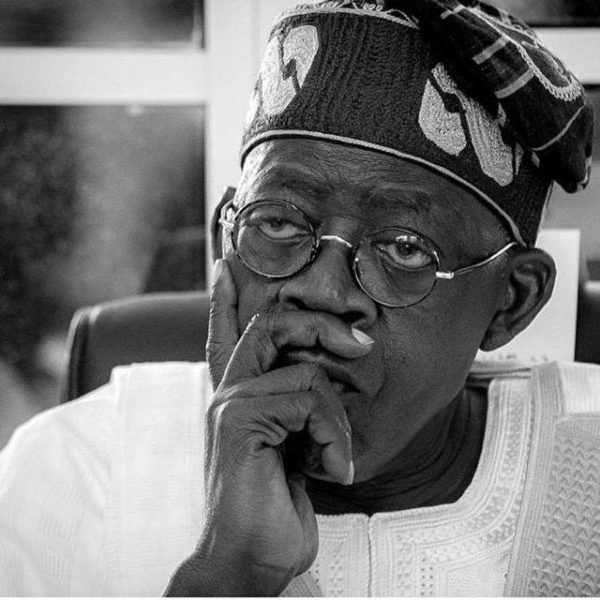
Why sermons won’t save President Tinubu’s re-election
By Malam Aminu Wase
As 2027 approaches, political activities are beginning to intensify, and the ruling party appears to be doubling down on a familiar strategy, leveraging religious platforms to soften public perception and garner support. Prominent scholars, respected within their communities and beyond, have begun to echo the call for the re-election of President Bola Ahmed Tinubu (PBAT). However, no matter how persuasive or well-intentioned their sermons may be, they are unlikely to succeed. The real barriers to re-election lie not in public misunderstanding, but in harsh realities, widespread economic hardship and perceived religious marginalisation.
For millions of Nigerians, the daily struggle for survival has reached unbearable levels. The cost of living has skyrocketed, inflation is biting, and essential commodities have become luxuries. Unemployment, insecurity, and a declining naira have added to the misery. No sermon can explain away the pain of a father who cannot feed his family or a mother who must choose between school fees and food.
These issues are not simply the result of global economic trends; they are widely seen as the direct consequence of poor policy decisions and failed leadership. The fuel subsidy removal, naira redesign, and other policies implemented under the administration of PBAT have plunged the nation into deeper poverty. The promises made have not matched the lived experiences of ordinary Nigerians.
But the issue runs deeper than economic pain. From the outset, the PBAT ticket was mired in controversy due to its Muslim-Muslim composition, a bold and, to many, insensitive political gamble in a nation as religiously diverse as Nigeria. While religion should not define leadership capability, the symbolic message of that choice alienated a significant portion of the population, particularly Christians in the North and across the north central, who felt unrepresented and sidelined.
Now, as sermons and appeals emerge urging the faithful to give PBAT another chance, they appear tone-deaf to these deeper grievances. Nigerians are not voting out of loyalty to religious leaders; they are voting out of lived reality, one marked by pain, exclusion, and hopelessness. Religious endorsements may have once carried weight, but today, the electorate is more discerning and less forgiving.
The nation is yearning not for sermons, but for solutions. Not for promises, but for results. Not for symbolic gestures, but for genuine leadership that reflects the diversity and aspirations of its people. Trying to wrap political desperation in religious robes will only deepen the resentment.
In 2027, the real campaign message will not be on posters or pulpits; it will be in the stomachs of the hungry, the frustration of the jobless, and the prayers of those seeking justice and inclusion. If the ruling party fails to address these concerns directly, no endorsement, religious or otherwise, can rescue what is already a sinking ship.
Malam Aminu Wase is a political analyst and advocate for good governance and Youth inclusion. He can be reached at aminusaniusman3@gmail.com.

2027: Why replacing Shettima with Kwankwaso would be Tinubu’s biggest mistake
By Musa Shehu
The rising speculation that President Bola Ahmed Tinubu may replace Vice President Kashim Shettima in the 2027 elections is not just a distraction—it is a dangerous political gamble that could cost the All Progressives Congress (APC) everything it has built since 2015.
While official voices try to downplay the narrative, recent events—especially within the party’s North-East wing—indicate that the matter is no longer mere rumour. What happened in Gombe, the calculated omissions in party endorsements, and the president’s deafening silence all point to a coordinated, if cautious, effort to test the waters of a political switch. But history, logic, and the current political climate all speak clearly against such a move.
Also, there has been another disturbingly growing speculation that President Tinubu may consider replacing Vice President Kashim Shettima with Dr. Rabiu Musa Kwankwaso. While this idea may appear strategic on the surface, it would be a serious miscalculation.
Kwankwaso is not as capable or disciplined as Shettima. He lacks the patience, composure, and loyalty that Shettima has consistently demonstrated both during the 2023 campaign and throughout his time as vice president. Unlike Shettima, who has proven to be a team player and a stabilizing figure in the presidency, Kwankwaso is widely seen as a local champion whose political relevance rarely extends beyond Kano.
Again, Kwankwaso is also known for his domineering style and confrontational approach. He often moves with a crowd of blindly loyal supporters who tend to stir division rather than build consensus. Tinubu needs a dependable and steady partner, not a disruptive and self-centered figure who could complicate governance. Replacing Shettima with Kwankwaso would be inviting internal crisis, not national progress.
Moreover, Shettima is not just a placeholder or ceremonial figure in the Tinubu presidency. He was a key player in Tinubu’s emergence, standing firmly with him when many in the North, especially the political elite, were either undecided or opposed to Tinubu’s ambition.
His nomination as vice president was not just strategic—it was loyal, bold, and calculated to balance the controversial Muslim-Muslim ticket in a way that maintained the party’s regional grip while managing national tension. Attempting to discard him now undermines that delicate balance and sends a dangerous message to APC loyalists and the broader Northern constituency: loyalty is negotiable, and regional representation can be sacrificed at will.
Recent developments in the APC suggest that some within the party see Shettima as expendable. His name was glaringly omitted during key moments in the party’s North-East stakeholders’ meeting in Gombe. The violent reactions from party delegates who stormed the stage, chanting Shettima’s name and attacking speakers, are not random acts of protest. However, they reflect genuine political frustration and a deep sense of betrayal.
The North-East, especially Borno—Shettima’s home state—has stood firmly behind the APC even in difficult times. Discarding its most prominent representative in the federal government would not only be unwise, but also politically suicidal.
Moreover, dropping a sitting vice president in a bid for second term is historically rare and politically dangerous. Nigeria’s democratic experience, shaky as it is, has shown that stability in leadership tickets often yields better results.
Obasanjo retained Atiku in 2003 despite personal and political differences. Jonathan ran with Sambo in both 2011 and 2015. Buhari did not drop Osinbajo in 2019. In each of these cases, keeping the vice president on the ticket was a signal of continuity, unity, and loyalty to political partnerships. So why does Tinubu attempt to break from this tradition? This, according to many, will not be seen as strategic—it will be interpreted as cold, calculated betrayal.
Moreover, there is also no credible reason that has been given—or can be given—for dropping Shettima. He has not been involved in any scandal. He has not rebelled against the president or the party. He continues to represent the administration with measured tone, loyalty, and a calm that contrasts with the chaos in some parts of the country.
The idea that he lacks “visibility” is hollow. Shettima has always been a backroom operator, more interested in delivering results than seeking applause. That was his style as governor of Borno, and it remains his approach as vice president.
Furthermore, the APC risks opening old wounds and repeating past political mistakes if it proceeds with this plan. In 2015, the PDP lost its northern base largely due to internal exclusion and the perception that it had betrayed zoning arrangements. That single miscalculation allowed a coalition to form around Buhari, ultimately bringing the APC to power. Tinubu himself benefitted from that revolt. For him to now allow—or lead—a similar alienation of a key northern figure would be politically disastrous.
What is unfolding now mirrors the political climate of 1983, when President Shehu Shagari removed his vice president, Alex Ekwueme, under pressure from internal party factions. That decision split the party, weakened Shagari’s legitimacy, and accelerated the military coup that followed. The cost of betraying one’s political base in a fragile democracy like Nigeria’s is always steep. APC leaders, especially those urging a replacement, would do well to revisit that history.
Perhaps the most unsettling part of this entire episode is President Tinubu’s silence. Unlike his predecessors, who openly reaffirmed their vice presidents ahead of their second-term bids, Tinubu has allowed ambiguity to take root. The clarification by his media aide, Bayo Onanuga, that the president will only choose his running mate after accepting the party nomination is technically correct—but politically tone-deaf. The impression it leaves is that Shettima’s position is hanging by a thread. That kind of uncertainty does not build party confidence; it fractures it.
In truth, the campaign to replace Shettima is less about religion or regional balance and more about ambition—by those who believe they deserve the VP slot, and by those who think they can engineer a political realignment in their favour. But these short-term calculations ignore the long-term damage they could cause. The North-East has already shown signs of agitation, and the idea of switching loyalty to the PDP or other parties is no longer hypothetical. If APC loses that bloc, no amount of last-minute reconciliation will save it in 2027.
President Tinubu still has time to shut this rumour down and make it clear that the 2023 ticket remains the 2027 ticket. Anything less will continue to create chaos within the party and hand the opposition a ready-made campaign message. Nigerians are watching.
The North-East is watching. The APC base is watching.
Musa Shehu wrote in from Kano State, Nigeria.