

Nigeria@65: Nigeria’s worst economic pains are over—Tinubu
By Abdullahi Mukhtar Algasgaini
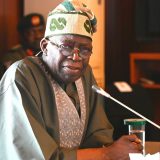
President Bola Ahmed Tinubu has assured Nigerians that the worst of the country’s economic challenges are behind them, saying the nation has “finally turned the corner.”
In a nationwide broadcast on Tuesday to mark Nigeria’s 65th Independence Anniversary, Tinubu admitted that his economic reforms, including the removal of fuel subsidy and the unification of exchange rates, brought temporary hardship.
However, he defended the policies as crucial to saving the country from what he described as a “near-collapsed economy” and “economic chaos.”
“The worst is over, I say. Yesterday’s pains are giving way to relief,” the President declared from the Presidential Villa.
He praised Nigerians for their patience, resilience, and support during the difficult period.
Tinubu used the address to present what he described as his administration’s progress report, outlining 12 key milestones achieved since May 2023.
He cited recent economic growth of 4.23 percent in the second quarter of 2025, the fastest in four years.
Inflation, he said, had eased to 20.12 percent in August, the lowest in three years, while external reserves had climbed to $42.03 billion, the highest since 2019.
Other achievements highlighted include a ₦7.46 trillion trade surplus, improved oil production at 1.68 million barrels per day compared to under one million in 2023, and the stabilisation of the naira, with the gap between official and parallel market rates narrowing significantly.
On security, the President praised the armed forces for “making significant sacrifices to keep us safe,” noting that peace was gradually returning to previously troubled communities in the North-East and North-West.
He also addressed the youth, pointing to programs such as the National Education Loan Fund (NELFUND), which has disbursed ₦99.5 billion, and the YouthCred initiative for corps members.
“We will continue to give you wings to fly sky-high,” he assured.Tinubu called on Nigerians to embrace a culture of production rather than consumption, urging citizens to farm the land, build factories, and support made-in-Nigeria goods.
“Let us be a nation of producers, not just consumers,” he said.
The President closed his address on a hopeful note, expressing confidence in a “new, prosperous, self-reliant Nigeria.”
He declared that with divine guidance, the nation’s brighter future had already begun.

FG disburses N330bn to 8 million poor Nigerians -Tinubu
By Anwar Usman
The President of Nigeria, Bola Tinubu, on Wednesday stated that his administration has disbursed N330 billion to eight million households under the Federal Government’s social investment programme, designed to support poor families and vulnerable Nigerians.
The president disclosed this in his 65th Independence Day broadcast, noting that the disbursement was part of his administration’s resolve to cushion the impact of economic reforms on the most disadvantaged groups.
He noted that many of the beneficiaries had already received one or two out of the three tranches of N25,000 each.
“Under the social investment programme to support poor households and vulnerable Nigerians, N330 billion has been disbursed to eight million households, many of whom have received either one or two out of the three tranches of the N25,000 each,” Tinubu said.
The President further admitted that Nigeria had for many years failed to make critical investments in infrastructure, power, and public services, leaving a heavy burden on the present generation.
“Fellow Nigerians, we are racing against time. We must build the roads we need, repair the ones that have become decrepit, and construct the schools our children will attend and the hospitals that will care for our people,” he said.
According to him, the neglect of the past has resulted in poor electricity supply, crumbling roads, and a lack of modern facilities that can compete globally.
He further stated, “We have to plan for the generations that will come after us. We do not have enough electricity to power our industries and homes today, or the resources to repair our deteriorating roads, build seaports, railroads, and international airports comparable to the best in the world, because we failed to make the necessary investments decades ago. Our administration is setting things right”.
The President assured Nigerians that his government was already implementing corrective measures to reverse the country’s decline in infrastructure and the economy.
He praised Nigerians for their resilience in enduring tough times, pledging not to betray the trust that had been reposed in him.

President Tinubu names new heads for biosafety, tourism, investment agencies
By Abdullahi Mukhtar Algasgaini
President Bola Ahmed Tinubu has approved the appointment of three new heads for federal agencies in a move aimed at strengthening key sectors and institutions across Nigeria.
The announcement was made in a statement on Tuesday by Segun Imohiosen, Director of Information and Public Relations in the Office of the Secretary to the Government of the Federation.
The President tasked the new appointees to contribute their expertise to the development of their respective agencies for the good of the nation.
In the National Biosafety Management Agency (NBMA), President Tinubu has appointed Bello Bawa Bwari from Niger State as the new Director-General.
His appointment is for an initial term of four years, effective from September 18, 2025, and is in accordance with the provisions of the National Biosafety Management Agency Act, 2015.
For the Investment and Securities Tribunal, Hon. Barrister Aminu Junaidu of Zamfara State has been appointed as Chairman and Chief Executive Officer.
He is set to serve a five-year term, which also began on September 18, 2025.Similarly, the President approved the appointment of Olayiwola Nurudeen Awakan as the new Director-General of the Nigerian Tourism Development Corporation (NTDC).
His initial four-year term took effect earlier, on September 2, 2025.
The Presidency stated that these appointments underscore President Tinubu’s commitment to repositioning strategic institutions for greater efficiency and impact.

Ex-DR Congo leader Kabila sentenced to death for treason, war crimes
By Abdullahi Mukhtar Algasgaini
A military court in the Democratic Republic of Congo (DRC) has sentenced former President Joseph Kabila to death in absentia after convicting him of war crimes, treason, and a range of other serious offenses.
The verdict, delivered on Tuesday, marks a dramatic escalation in the political conflict between the former president and his successor, Felix Tshisekedi.
The High Military Court in Kinshasa found Kabila guilty of charges including treason, crimes against humanity, murder, sexual assault, torture, and insurrection.
Lieutenant General Joseph Mutombo Katalayi, presiding over the tribunal, stated that the court applied the most severe penalty under the military penal code.
Kabila, who led the DRC from 2001 to 2019, did not attend the trial and was not represented by legal counsel.
His current whereabouts are unknown, though he has been living primarily in South Africa since 2023 . The former president had previously dismissed the case against him, calling the courts “an instrument of oppression”.
The case stems from accusations that Kabila provided support to the Rwanda-backed M23 rebel group.
The prosecution alleged he was plotting to overthrow President Tshisekedi and that the other charges were linked to the M23’s activities.
The court concluded that Kabila “had always been the undisputed leader of M23” and had led meetings and inspected training centers for the group.
The M23 has seized large swaths of territory in the eastern DRC this year, including the major cities of Goma and Bukavu.
The sentence intensifies a long-simmering political feud. Kabila handed power to Tshisekedi after the 2018 elections, but their alliance quickly soured.
In May 2025, Kabila made a highly publicized visit to the rebel-held city of Goma, where he met with religious leaders and expressed his desire to help achieve peace in the troubled eastern region .Earlier this year, the DRC Senate voted to repeal Kabila’s immunity from prosecution, a move he denounced as dictatorial.
The government has also moved to suspend his political party and seize its leaders’ assets .Despite the verdict, Kabila’s arrest seems unlikely in the immediate future.
An appeal is possible before the Court of Cassation, though only on procedural grounds . The DRC lifted a moratorium on the death penalty last year, but no judicial executions have been carried out since.
The sentencing comes amid ongoing violence in eastern DRC, where numerous armed groups operate. While a U.S.-brokered peace agreement was signed in June, and churches have launched peace initiatives, violence and atrocities against civilians persist.
The verdict against Kabila risks fueling further divisions in the vast, mineral-rich nation.

Nigeria@65: President Tinubu to address Nigerians as FG cancels anniversary parade
By Abdullahi Mukhtar Algasgaini
President Bola Ahmed Tinubu will broadcast to the nation on Wednesday, October 1, 2025, at 7 a.m., in commemoration of Nigeria’s 65th Independence Anniversary.
All television, radio stations, and other electronic media outlets are urged to join the network services of the Nigerian Television Authority (NTA) and the Federal Radio Corporation of Nigeria (FRCN) for the broadcast.
The announcement was made by Bayo Onanuga, the Special Adviser to the President (Information & Strategy).
In a related development, the federal government has announced the cancellation of the Independence Anniversary parade, which was previously scheduled for the same day.
The government clarified that this decision does not diminish the significance of the milestone and that all other anniversary programs will proceed as planned.
The government expressed regret for any inconvenience and appreciated the understanding of the public, while also urging Nigerians to support the president’s reforms.

NUBA polytechnic unions declare indefinite strike over unpaid salary structure
By Abdullahi Mukhtar Algasgaini
Academic and non-academic activities in Nuhu Bamalli polytechnics are set to be paralyzed as staff unions have declared an indefinite strike, effective Tuesday, September 30, 2025.
The decision was reached following a meeting between the unions and government officials.
According to the unions, while the Permanent Secretary, acting on behalf of the State Commission, appealed for patience, he also indicated that the Governor had given an implied approval to their key demands, including the implementation of a new Polytechnic Salary Structure.
However, the unions unanimously resolved to withdraw their services until this approval is officially and formally granted by the Governor Uba Sani.
In a statement, the union leadership referenced a prior mandate from its Congress, which authorized an indefinite strike if the new salary structure was not implemented after the payment of the September 2025 salaries.
“In line with that mandate, and with the permission of the Congress, I hereby declare an indefinite strike effective from tomorrow, Tuesday, 30th September, 2025,” the statement read.
The declaration ended with the solidarity phrases: “An injury to one is an injury to all. Solidarity forever.”
The strike is expected to bring all academic and administrative operations within the affected polytechnics to a complete halt.

ASUU gives FG 14 days to address outstanding issues
By Sabiu Abdullahi
The Academic Staff Union of Universities (ASUU) has handed the Federal Government a 14-day ultimatum to resolve long-standing issues affecting Nigeria’s university system.
The decision followed a National Executive Council (NEC) meeting held on Sunday at the University of Abuja.
In a statement signed by the union’s national president, Prof. Chris Piwuna, ASUU criticized what it described as government neglect and persistent refusal to meet its demands.
“At the National Executive Council meeting held at the University of Abuja on the 28th of September, 2025, the Union decried the neglect of the University system and the government’s consistent refusal to heed to its demands,” the statement read.
The union warned that failure by the Federal Government to take action within two weeks could force it to embark on industrial action.
“Accordingly, ASUU has given the Federal Government of Nigeria an Ultimatum of fourteen (14) days within which to address these issues. If at the end of the fourteen-day ultimatum, the Federal Government fails to address these issues, the Union may have no option but to, first, embark on a two-week warning strike and thereafter, a total and indefinite strike,” Prof. Piwuna said.
It will be recalled that the Federal Ministry of Education had set up a committee, chaired by the ministry’s permanent secretary Abel Enitan, to review ASUU’s proposals.
As of the time of this report, the committee has not communicated any outcome publicly.
ASUU’s major demands include the renegotiation of the 2009 agreement, provision of revitalisation funds for universities, payment of outstanding salary arrears, and a sustainable system of funding tertiary education in Nigeria.

West African nations to name Nigerian politicians backing militants
By Abdullahi Mukhtar Algasgaini
Intelligence agencies from Niger, Mali, and Burkina Faso are preparing to publicly identify high-ranking Nigerian politicians they accuse of supporting militant groups terrorizing Nigeria.
According to a report from the German news agency DW, these foreign agencies have already compiled the names of politicians allegedly involved in financing militants and selling them weapons.
The report further stated that some of these individuals have already been arrested, and investigations into their activities are underway.
For decades, Nigeria has struggled with severe insecurity, often accompanied by allegations that politicians are secretly sponsoring the very armed groups destabilizing the country.
Echoing these long-standing concerns, the Governor of Borno State, Babagana Zulum, claimed in May that some politicians and even members of the armed forces act as informants and collaborators for Boko Haram insurgents.
This potential exposure aligns with a vow made in August by Nigeria’s Chief of Defence Staff, General Christopher Musa, who promised to reveal the identities of those supporting terrorism.
However, General Musa noted that the process has been delayed by “legal issues” and “international connections,” despite years of public pressure to name the financiers.

Between the modern Dangote Refinery and the old-fashioned oil and gas unions
By Khalid Imam
Today, it is undeniable that only a handful of Nigerian workers’ unions genuinely care about or operate in the overall interest of their collective members without brazenly exploiting (or, if you like, say, robbing) their loyal members, who pay through their skin all union dues monthly, year in and year out. The leadership of these seemingly monopolistic and rigid unions often lives flamboyantly, like kings, in the public glare at the expense of their poorly paid or oppressed members. Mostly, we only hear the phrase “injury to one, injury to all” as a slogan, drummed up by greedy leadership when it fits their vested interests, not those of dutiful Nigerian workers.
For instance, I have been paying NUT/ASSU dues nonstop for over 20 years now without any appreciable benefits – no workshops, nothing. Despite formally withdrawing my membership, along with other colleagues, our deductions continue to this day by the said self-serving unions, which have been overseeing the collapse of the education system for decades. This lack of freedom to associate or not, plus serious issues of accountability, raises many questions about unions’ purpose and continued relevance in the fast-changing world and strategic economic competitions and innovations we are witnessing, as Nigerians, in other sane nations now strategising to lead in industrialisation, investment, technology, and science, especially in artificial intelligence and artificial super intelligence.
One may ask: Are unions advocating for their members’ rights and welfare, or are they simply enriching only the vultures parading as their leaders? The answers to these questions are evident. Now more than ever before, Nigeria requires a radical systemic overhaul of the whole labour union system and operation, to ensure even unions and the country are rescued from the hawks called labour union leaders, if indeed the unions are to serve their foundation purposes – protecting members’ welfare, etc and helping to develop our betrayed and badly raped country, not enriching insatiable individuals living extravagantly unchecked.
Without genuine reform, unions like those fighting the Dangote Refinery now may continue to hold the entire country hostage. Patriotic Nigerian unionists must wake up from their docility to fight to save our unions. Subjecting all labour unions to public scrutiny should be our collective duty as citizens. Now, if any union with strategic responsibility fails to innovate, it should not blame anyone when it risks losing credibility and relevance in the scheme of things.
We must resist any attempt by any union to insist that Nigeria must live in the past, or Nigerians will continue to suffer in long queues buying fuel at a high cost. The world is fast-changing and innovating; the earlier our so-called labour unions wake up to these realities, the better. Change can’t wait for anyone, and Nigeria must reform to develop.
My sincere advice to serious investors like Dangote is that they should refrain from engaging in verbal battles or heated exchanges with PENGASSAN, etc., and instead focus on effectively mitigating their excesses by boldly advocating for a comprehensive overhaul of trade union laws in the country. There is no harm in pushing for new legislative bills or fighting hard in courtrooms to silence corrupt union leaders shouting about workers’ rights to join unions, all in the pretence of saving Nigerian workers from enslavement. Who is enslaving employees in the real sense: the oligarchy that hijacked the unions or employers striving to create more jobs for our teeming jobless youths while contributing billions to our national treasury? Aren’t most domestic union leaders, in some cases, in the forefront of enslaving Nigerian workers by living lavish lives with their union’s funds?
Yes, let there be unions, but not exploitative and monopolistic ones. I repeat, let there be unions, but not ones that block the country from progressive developments and innovative transformations, like the one we have witnessed with the arrival of the Dangote Refinery. Flexible labour union laws are the water and fertilisers Nigeria needs now. The Dangote refinery represents a significant step forward not only for Nigeria’s economic growth and development but also for Africa as a whole. Unions should support such initiatives rather than hindering them with outdated and rigid labour market laws.
At a time in the US President Trump, was and still woos American tech giant investors like the owner of Facebook to the White House to discuss the future of America, as a Nigerian with Nigeria first in my heart, I urge my President, Asiwaju Bola Ahmed Tinubu, to act as a strategic leader he has been since his days as governor of Lagos state. The President, more than any other person, now has an onerous duty not to allow unionists to prostrate national heroes like Dangote.
PBAT must, in the overall interest of present and future generations of Nigerians, wade in to champion flexible labour union market reforms. This is the best time, presenting him with a rare opportunity to put Nigeria first and attract numerous patriotic investments, not just from visionaries like Dangote, but from both domestic and international investors. Clinging to outdated and rigid labour laws is detrimental to our economy both now and in the future.
The flexibility of labour laws in countries like Germany and China has contributed to their economic stability and China’s soaring dominance amidst global competition. Nigeria should draw valuable lessons from these nations rather than adhering to outdated British-style labour laws that have hindered the UK’s economy from soaring like an eagle.
Finally, I invite all patriotic Nigerians to reject exploitative and monopolistic unions. Dangote is a national asset! His refinery is also a national asset. Dangote, too, must put Nigeria first, always. We have a duty to protect both Dangote and his refinery from vultures who have held our country captive for decades. May God bless Nigeria, Dangote, and his Refinery. Amin.
Imam is a Kano-based published writer of over two dozen books, a teacher, and an Art Administrator. He can be reached via email at khalidimam2002@gmail.com.

Christians are not persecuted in Nigeria
By Bashir Jelani, PhD
It has been trending over the past two days that Boko Haram killed more than 500,000 Christians and burned 18,0000 churches in Nigeria since 2009. Local and international news media are spreading false information that Muslims are carrying out ethnic cleansing against Christians.
Till now, no news media from Arewa has debunked this news. No Arewa intellectual, writer, or public figure responded to this. It is a big shame on us. Thanks to Femi Fani-Kayode for sincerely putting the record straight.
This phoney propaganda did not start today. Some insincere Nigerian Christians have been working hard to blackmail Muslims on the international stage. I don’t know what they want to get by fabricating that fake news. The dead silence from Arewa is what makes this misleading information gain momentum.
I have debated this issue with Christian friends for many years. I have maintained that the majority of the victims of Boko Haram and bandits are the Muslims themselves. The Boko Haram terrorists do not spare Muslims. They don’t care about your religion.
Boko Haram wouldn’t be operating in Northern Nigeria if its target were to cleanse Christians. I sympathise with some Christians who were affected, but the truth is that the Muslims are Boko Haram’s target. That is why they do their evil atrocities in the Muslim dominated regions, mainly killing Muslims.
Arewa needs to wake up. Debunking this dangerous propaganda is very important.